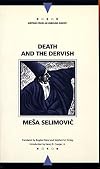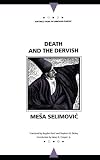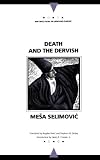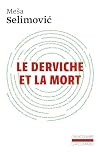
Death and the Dervish
by Meša Selimović
On This Page
Description
Death and the Dervish is an acclaimed novel by Bosnian writer Mesa Selimovic. It recounts the story of Sheikh Nuruddin, a dervish residing in an Islamic monastery in Sarajevo in the eighteenth century during the Ottoman Turk hegemony over the Balkans. When his brother is arrested, he must descend into the Kafkaesque world of the Ottoman authorities in his search to discover what happened to him. He narrates his story in the form of an elaborate suicide note, regularly misquoting the show more Koran. In time, he begins to question his relations with society as a whole and, eventually, his life choices in general. Hugely successful when published in the 1960s, Death and the Dervish is an enduring classic made into a feature length film in 1974. show lessTags
Recommendations



























Member Reviews
[b:Death and the Dervish|358846|Death and the Dervish|Meša Selimović|https://i.gr-assets.com/images/S/compressed.photo.goodreads.com/books/1347814584l/358846._SY75_.jpg|348971] took me a while to get into. As the introduction repeatedly acknowledges, it is not an easy book. The narrator, a dervish at an unnamed monastery, is very slow and digressive. The reader is presented with all his thoughts as he contemplates every little thing in great depth. Only after 192 pages (when the dervish learns his brother is dead) did I really grasp the book's appeal, although I appreciated moments of beautiful writing in the first half. As it went on I was increasingly reminded of Kafka, especially [b:The Trial|17690|The Trial|Franz show more Kafka|https://i.gr-assets.com/images/S/compressed.photo.goodreads.com/books/1320399438l/17690._SY75_.jpg|2965832]. Selimovic is similarly adept at demonstrating the momentum and arbitrary cruelty of administrative systems. Yet his narrator is not helpless and his choices have powerful consequences. Observing every justification for his decisions in great detail becomes increasingly compelling as the book goes on. The dervish is an intelligent and reflective man, yet also self-serving and weak. His insights into his own and other's behaviour do not necessarily lead him to do good and he is aware of this:
There are some wonderful turns of phrase and striking insights to be found in the dervish's narration. Although Selimovic's writing is undoubtedly long-winded, certain brief comments struck me, like: 'The empty sponge of my brain began to soak itself full again.' and, 'Because even the Koran is dangerous if you use God's words about sinners to refer to those who decide who the sinners are.' One bleak and vivid passage stood out as the most memorable, on why people don't resist being taken to their death:
I gave [b:Death and the Dervish|358846|Death and the Dervish|Meša Selimović|https://i.gr-assets.com/images/S/compressed.photo.goodreads.com/books/1347814584l/358846._SY75_.jpg|348971] an additional star on the strength of such arresting paragraphs, despite its ponderousness. In addition to a great deal of reflection upon death, duty, fear, and love on the individual level, there are a few notable passages on Bosnia itself. As the introduction notes, the novel is set in an ambiguous location and time, but details in the narrative suggest Sarajevo in the 17th century. A time and place I know little about, so I was interested to learn from the introduction that the novel's popularity seems in part linked to its resonances for 20th century Yugoslavia. The narrator quotes his dear friend's defense of his homeland to people he met in Constantinople:
Although [b:Death and the Dervish|358846|Death and the Dervish|Meša Selimović|https://i.gr-assets.com/images/S/compressed.photo.goodreads.com/books/1347814584l/358846._SY75_.jpg|348971] is an effort to read, it rewards persistence with flashes of extraordinary writing and a carefully-woven examination of human weakness within capricious systems. show less
My hidden instincts, which protected me even without my conscious will, generously granted me such beautiful, noble thoughts, without curtailing them: they knew that these thoughts were not dangerous, that they could not turn into deeds. But they helped me to take revenge for the shame that had filled me as I stood before the mufti.
If anyone considers this strange, or even unlikely, I can only say that the truth is something very strange, and we convince ourselves that it does not exist because we are ashamed of it, as we are of a leprous child, although in this manner the truth is not rendered any less truthful. We usually beautify our thoughts and hide the vipers that slither within us.
There are some wonderful turns of phrase and striking insights to be found in the dervish's narration. Although Selimovic's writing is undoubtedly long-winded, certain brief comments struck me, like: 'The empty sponge of my brain began to soak itself full again.' and, 'Because even the Koran is dangerous if you use God's words about sinners to refer to those who decide who the sinners are.' One bleak and vivid passage stood out as the most memorable, on why people don't resist being taken to their death:
That's why no-one ever runs; everyone knows it. Maybe they're hopeful. Hope is the pimp of death, a murderer more dangerous than hatred. It's deceptive; it knows how to win you over, to calm you and lull you to sleep, whispering whatever you want to hear, leading you to the blade.
I gave [b:Death and the Dervish|358846|Death and the Dervish|Meša Selimović|https://i.gr-assets.com/images/S/compressed.photo.goodreads.com/books/1347814584l/358846._SY75_.jpg|348971] an additional star on the strength of such arresting paragraphs, despite its ponderousness. In addition to a great deal of reflection upon death, duty, fear, and love on the individual level, there are a few notable passages on Bosnia itself. As the introduction notes, the novel is set in an ambiguous location and time, but details in the narrative suggest Sarajevo in the 17th century. A time and place I know little about, so I was interested to learn from the introduction that the novel's popularity seems in part linked to its resonances for 20th century Yugoslavia. The narrator quotes his dear friend's defense of his homeland to people he met in Constantinople:
"Here, in your back yard, not far from this Byzantine splendour and wealth, which has been hauled here from the whole empire, your own brothers live like beggars. But we belong to no-one, we're always on some frontier, always someone's dowry. It is then surprising that we're poor? For centuries we've been trying to find, trying to recognise ourselves. Soon we won't even know who we are, we're already forgetting that we've even been striving for anything. Others do us the honour of letting us march under their banners, since we have none of our own. They entice us when they need us, then reject us when we're no longer any use to them. The saddest land in the world, the most unhappy people in the world. We're losing our identity, but we cannot assume another, foreign one. We've been severed from our roots, but haven't become part of anything else; foreign to everyone, both to those who are our kin and those who won't take us in and adopt us as their own. We live at a crossroads of worlds, at a border between peoples, in everyone's world. And someone always thinks we're to blame for something. The waves of history crash against us, as against a reef. We're fed up with those in power and we've made a virtue out of distress: we've become noble-minded out of spite. You're ruthless on a whim. So who's backward?"
Although [b:Death and the Dervish|358846|Death and the Dervish|Meša Selimović|https://i.gr-assets.com/images/S/compressed.photo.goodreads.com/books/1347814584l/358846._SY75_.jpg|348971] is an effort to read, it rewards persistence with flashes of extraordinary writing and a carefully-woven examination of human weakness within capricious systems. show less
Rating: 3.5* of five
An intense read. Beautiful translated words confronting and comforting the human fear of love by the means of examining the easier-to-grasp fear of death.
I've chosen some favorite phrases and liked them from the quotes. They appear below the review. (This describes a wonderful and useful function available on Goodreads; I've ported them over here in 2026 because Bezoselzebub appears determined to kill Goodreads like he did the Washington Post.) I think the patience required to read a footnoted and glossary'd read won't allow its subtleties and tremendous pleasures to spread widely among US English-speaking readers.
Make no mistake: Ahmed Nuruddin is you, reader, a man whose loves and One True Love don't mark him out show more from the herd but place him in the center of it. He doesn't do a single thing that any one of us couldn't do, be it generous or cowardly or divinely inspired. It is simply that we wouldn't tread in his footsteps, wouldn't elect to give ourselves to an ideal in a world without respect for them.
I give the book a paltry rating, based on those comments; I found it necessary to break my reading into smaller bites than I would have liked to do. The feast is so rich, satisfying my word-lust in such short order, that I ended up feeling disconnected by the enforced consumption of many amuse-bouche reads between this book's courses.
I suspect many readers will be defeated by that very need. This is a book that, due to its own delights, ends up unfinished, bookmark poking the piles of paperbacks athwart its spine, a guilty glance sliding past it as the New Year's Resolution cry "I WILL FINISH THIS SHELF!" rings its falsely sincere echoes into our shared shame.
THE QUOTES
“But that’s the point of it all: to come back. To long for someplace else, to leave and to arrive again at the place where you started. If it weren’t for the place that you’re tied to, you wouldn’t want it or any other world, either; you wouldn’t have anywhere to depart from, because you’d be nowhere. And you’re also nowhere if that’s the only place you have. Because then you don’t think about it, long for it, or love it. And that’s not good. You need to think, to long for something, to love.”
“Fear is flooding over me, like water.
The living know nothing. Teach me, dead ones, how to die without fear, or at least without horror. Because death is senseless, as is life.”
“People in fact talk most often for their own sake, and with a need to hear the echo of their words.”
“And what never happened always seems beautiful. You are a deception that gives birth to discontent, a deception that I cannot and do not wish to drive away, since it disarms me and protects me from suffering with a quiet grief.”
“Friendship is not chosen, he said, it happens, who knows why, like love. And I haven’t bestowed anything on you, but on myself; I respect men who remain magnanimous even in their misfortune.”
“The earth is uninhabitable, like the moon, and we only delude ourselves thinking that it’s our true home, since we have no other place to go. The earth is good for those who are irrational or invulnerable.”
“Do you know what I was thinking while you spoke? That some people can say whatever they want, and whether you agree or not, it doesn’t upset you. Others throw themselves into a single word, and suddenly everything glows red-hot and no one can keep calm. We sense that something important is happening. That’s no longer conversation.”
“People easily forget what they’re not proud of.”
“Sincerity is the certitude that we speak the truth (and who can be certain of that?), but there are many kinds of honesty, and they do not always agree with one another.”
“He examined everything freely, I hesitated in front of many things. He destroyed but did not build, saying what was not, but not what was. And denial is convincing; it sets neither boundaries nor goals for itself. It strives toward nothing; it defends nothing. It is harder to defend something than to attack it, because everything that is made reality constantly wears down, constantly deviates from the initial idea.”
“Cruelty in the name of kindliness is terrible; it would bind our feet and hands; it would kill us with hypocrisy. Cruelty based on power is better—that we can at least hate.”
“Life is larger than any principle. Morality is an idea, but life is what we live. How can we fit it into this idea without damaging it? More lives have been ruined in attempts to prevent sin than because of sin itself.”
“But there could be no new beginning, nor would one be important. We are not aware when new beginnings arrive; we only discover them later when they have already engulfed us, when everything merely continues. Then we believe that everything could have been different, but it could not have, and so we rush into springtime, so as not to think about nonexistent beginnings or unpleasant continuations.”
“I love words; it doesn’t matter which, it doesn’t matter about what. (I am writing down, at random, things that he said one night, while the kasaba slept in the darkness.) Conversation is a link between people, maybe the only one. That’s what an old soldier taught me, we were captured together, thrown into a prison together, chained together and bound to the same iron ring on the wall.”
“It became clear to me how men die. I saw that it is not so hard. Or easy. It is nothing. One just starts living less and less, being less and less, thinking, feeling and knowing less and less. The rich flow of life dries up, and only a thin thread of uncertain consciousness remains, more and more meager, more and more insignificant. And then nothing happens, there is not anything, there is nothing. And nothing matters—it is all the same.”
“I caught myself feeling that vile need for others to be grateful to us, to show themselves as small and dependent, because that is what creates our favor, nurtures it, and heightens the importance of our deeds and kindness.”
“Death is a certainty, an inevitable realization, the only thing that we know will befall us. There are no exceptions, no surprises: all paths lead to it. Everything we do is a preparation for it, a preparation that we begin at birth, whimpering with our foreheads against the ground. We never move farther away from death, only closer. But if it is a certainty, then why are we surprised when it comes? If this life is a short passage that lasts only an hour or a day, then why do we fight to prolong it one more day or hour? Worldly life is treacherous, eternity is better.”
“At first I followed her deliberately soft voice, which had the timber of a zurna,* and listened to her speech, which resembled embroidery or a string of pearls, words and phrases completely different from those of the townspeople, somewhat withered yet ornate, with the aura of those old chambers and something enduring.”
“What is the purpose of piety if there are no temptations to resist? Man is not God, his strength is the ability to restrain his own nature, so I thought, and if he has nothing to restrain, then what are his merits?”
“We should kill our pasts with each passing day. Blot them out, so that they will not hurt. Each present day could thus be endured more easily, it would not be measured against what no longer exists. As things our, spectres mix with our lives so that there is neither pure memory nor pure life. They clash and try to strangle each other, continually.” show less
An intense read. Beautiful translated words confronting and comforting the human fear of love by the means of examining the easier-to-grasp fear of death.
I've chosen some favorite phrases and liked them from the quotes. They appear below the review. (This describes a wonderful and useful function available on Goodreads; I've ported them over here in 2026 because Bezoselzebub appears determined to kill Goodreads like he did the Washington Post.) I think the patience required to read a footnoted and glossary'd read won't allow its subtleties and tremendous pleasures to spread widely among US English-speaking readers.
Make no mistake: Ahmed Nuruddin is you, reader, a man whose loves and One True Love don't mark him out show more from the herd but place him in the center of it. He doesn't do a single thing that any one of us couldn't do, be it generous or cowardly or divinely inspired. It is simply that we wouldn't tread in his footsteps, wouldn't elect to give ourselves to an ideal in a world without respect for them.
I give the book a paltry rating, based on those comments; I found it necessary to break my reading into smaller bites than I would have liked to do. The feast is so rich, satisfying my word-lust in such short order, that I ended up feeling disconnected by the enforced consumption of many amuse-bouche reads between this book's courses.
I suspect many readers will be defeated by that very need. This is a book that, due to its own delights, ends up unfinished, bookmark poking the piles of paperbacks athwart its spine, a guilty glance sliding past it as the New Year's Resolution cry "I WILL FINISH THIS SHELF!" rings its falsely sincere echoes into our shared shame.
THE QUOTES
“But that’s the point of it all: to come back. To long for someplace else, to leave and to arrive again at the place where you started. If it weren’t for the place that you’re tied to, you wouldn’t want it or any other world, either; you wouldn’t have anywhere to depart from, because you’d be nowhere. And you’re also nowhere if that’s the only place you have. Because then you don’t think about it, long for it, or love it. And that’s not good. You need to think, to long for something, to love.”
“Fear is flooding over me, like water.
The living know nothing. Teach me, dead ones, how to die without fear, or at least without horror. Because death is senseless, as is life.”
“People in fact talk most often for their own sake, and with a need to hear the echo of their words.”
“And what never happened always seems beautiful. You are a deception that gives birth to discontent, a deception that I cannot and do not wish to drive away, since it disarms me and protects me from suffering with a quiet grief.”
“Friendship is not chosen, he said, it happens, who knows why, like love. And I haven’t bestowed anything on you, but on myself; I respect men who remain magnanimous even in their misfortune.”
“The earth is uninhabitable, like the moon, and we only delude ourselves thinking that it’s our true home, since we have no other place to go. The earth is good for those who are irrational or invulnerable.”
“Do you know what I was thinking while you spoke? That some people can say whatever they want, and whether you agree or not, it doesn’t upset you. Others throw themselves into a single word, and suddenly everything glows red-hot and no one can keep calm. We sense that something important is happening. That’s no longer conversation.”
“People easily forget what they’re not proud of.”
“Sincerity is the certitude that we speak the truth (and who can be certain of that?), but there are many kinds of honesty, and they do not always agree with one another.”
“He examined everything freely, I hesitated in front of many things. He destroyed but did not build, saying what was not, but not what was. And denial is convincing; it sets neither boundaries nor goals for itself. It strives toward nothing; it defends nothing. It is harder to defend something than to attack it, because everything that is made reality constantly wears down, constantly deviates from the initial idea.”
“Cruelty in the name of kindliness is terrible; it would bind our feet and hands; it would kill us with hypocrisy. Cruelty based on power is better—that we can at least hate.”
“Life is larger than any principle. Morality is an idea, but life is what we live. How can we fit it into this idea without damaging it? More lives have been ruined in attempts to prevent sin than because of sin itself.”
“But there could be no new beginning, nor would one be important. We are not aware when new beginnings arrive; we only discover them later when they have already engulfed us, when everything merely continues. Then we believe that everything could have been different, but it could not have, and so we rush into springtime, so as not to think about nonexistent beginnings or unpleasant continuations.”
“I love words; it doesn’t matter which, it doesn’t matter about what. (I am writing down, at random, things that he said one night, while the kasaba slept in the darkness.) Conversation is a link between people, maybe the only one. That’s what an old soldier taught me, we were captured together, thrown into a prison together, chained together and bound to the same iron ring on the wall.”
“It became clear to me how men die. I saw that it is not so hard. Or easy. It is nothing. One just starts living less and less, being less and less, thinking, feeling and knowing less and less. The rich flow of life dries up, and only a thin thread of uncertain consciousness remains, more and more meager, more and more insignificant. And then nothing happens, there is not anything, there is nothing. And nothing matters—it is all the same.”
“I caught myself feeling that vile need for others to be grateful to us, to show themselves as small and dependent, because that is what creates our favor, nurtures it, and heightens the importance of our deeds and kindness.”
“Death is a certainty, an inevitable realization, the only thing that we know will befall us. There are no exceptions, no surprises: all paths lead to it. Everything we do is a preparation for it, a preparation that we begin at birth, whimpering with our foreheads against the ground. We never move farther away from death, only closer. But if it is a certainty, then why are we surprised when it comes? If this life is a short passage that lasts only an hour or a day, then why do we fight to prolong it one more day or hour? Worldly life is treacherous, eternity is better.”
“At first I followed her deliberately soft voice, which had the timber of a zurna,* and listened to her speech, which resembled embroidery or a string of pearls, words and phrases completely different from those of the townspeople, somewhat withered yet ornate, with the aura of those old chambers and something enduring.”
“What is the purpose of piety if there are no temptations to resist? Man is not God, his strength is the ability to restrain his own nature, so I thought, and if he has nothing to restrain, then what are his merits?”
“We should kill our pasts with each passing day. Blot them out, so that they will not hurt. Each present day could thus be endured more easily, it would not be measured against what no longer exists. As things our, spectres mix with our lives so that there is neither pure memory nor pure life. They clash and try to strangle each other, continually.” show less
This is an undoubtedly great book. It is not an easy read but is very rewarding. The main plot is simple – Sheikh Ahmed Nuruddin, the dervish of the title, deals with the fact that his brother has been unjustly arrested. In the first half, he attempts to learn about the arrest and the reasons behind it, coming up against a slothful, corrupt bureaucracy. In the second half, he deals with the fallout of his brother’s imprisonment, alternating between hatred and forgetting. There are numerous side plots, ambling tangents and stories from the past. These stories serve as a comment on the narrator’s situation and give insight into some of the characters. Selimovic’s writing is complex and beautiful, wonderfully conveying the show more narrator’s doubts and inertia.
Nuruddin is Hamlet-esque in that he learns of the crime committed against his brother but dithers and equivocates endlessly. While describing a conversation, he analyzes it so thoroughly that the actual dialogue is dominated by his nuanced, conflicted interpretations. Some of his inaction is pragmatic – he is aware that the normal actions that he takes will do nothing for his brother. His puzzling of moral and logistic concerns can seem sympathetic – who has not worried over the right thing to do? – but gradually he starts to alienate the reader. He cannot work himself up to take one or the other side and his actions – or lack of action – turn him into a hypocrite. He’s unable to float above worldly concerns like Hafiz-Muhammed or shamefully conform, like Mullah-Yusuf. He can’t advocate cheerful civil disobedience like Hadji-Sinanuddin or smoothly bribe his way and play the game like Ali-aga. The madman who tells the truth, as embodied by the beggar Ali-hodja, certainly isn’t a role he can occupy. The other important character is Hassan, the disobedient scion of a wealthy family, who is open, friendly and willing to break the law to help his friends. The narrator looks up to him but is unable to imitate him. In the spirit of the book, however, these characters also have their faults, hypocrisies or admirable qualities. Religion is a crutch and a comfort for Nuruddin but not much of either. His act of rebellion at the end is violent, hypocritical and ends up being a Pyrrhic victory.
The book feels timeless and also like an unending nightmare. There’s something of a flat, grey atmosphere (which can make it a bit slow at times) which is occasionally relieved by stories from the past - Nuruddin previously fought in the war, Hassan’s adventures show up and the history of Mullah-Yusuf becomes important. The authorities who jailed the narrator’s brother are remote and impersonal but also embodied in various minor officials who can’t do anything or talk in circles. We are stuck in Nuruddin’s head and his constant questioning and dithering contributes to the claustrophobic atmosphere. The synopsis says that the book takes place in Sarajevo in the 17th century, based on some geographic clues and historical references, but this is only established indirectly (though there are some nice thoughts on the divided nature of Bosnia which relate to Nuruddin as well). This vagueness contributes to the impression that nothing can be known and that the grounds are constantly shifting. I was extremely impressed with this well-written, thoughtful, wonderfully atmospheric book but would recommend it with the caveat that some may find it slow or frustrating. show less
Nuruddin is Hamlet-esque in that he learns of the crime committed against his brother but dithers and equivocates endlessly. While describing a conversation, he analyzes it so thoroughly that the actual dialogue is dominated by his nuanced, conflicted interpretations. Some of his inaction is pragmatic – he is aware that the normal actions that he takes will do nothing for his brother. His puzzling of moral and logistic concerns can seem sympathetic – who has not worried over the right thing to do? – but gradually he starts to alienate the reader. He cannot work himself up to take one or the other side and his actions – or lack of action – turn him into a hypocrite. He’s unable to float above worldly concerns like Hafiz-Muhammed or shamefully conform, like Mullah-Yusuf. He can’t advocate cheerful civil disobedience like Hadji-Sinanuddin or smoothly bribe his way and play the game like Ali-aga. The madman who tells the truth, as embodied by the beggar Ali-hodja, certainly isn’t a role he can occupy. The other important character is Hassan, the disobedient scion of a wealthy family, who is open, friendly and willing to break the law to help his friends. The narrator looks up to him but is unable to imitate him. In the spirit of the book, however, these characters also have their faults, hypocrisies or admirable qualities. Religion is a crutch and a comfort for Nuruddin but not much of either. His act of rebellion at the end is violent, hypocritical and ends up being a Pyrrhic victory.
The book feels timeless and also like an unending nightmare. There’s something of a flat, grey atmosphere (which can make it a bit slow at times) which is occasionally relieved by stories from the past - Nuruddin previously fought in the war, Hassan’s adventures show up and the history of Mullah-Yusuf becomes important. The authorities who jailed the narrator’s brother are remote and impersonal but also embodied in various minor officials who can’t do anything or talk in circles. We are stuck in Nuruddin’s head and his constant questioning and dithering contributes to the claustrophobic atmosphere. The synopsis says that the book takes place in Sarajevo in the 17th century, based on some geographic clues and historical references, but this is only established indirectly (though there are some nice thoughts on the divided nature of Bosnia which relate to Nuruddin as well). This vagueness contributes to the impression that nothing can be known and that the grounds are constantly shifting. I was extremely impressed with this well-written, thoughtful, wonderfully atmospheric book but would recommend it with the caveat that some may find it slow or frustrating. show less
Kafka meets Dostoevsky in Ottoman-era Bosnia; I say this not to diminish the book's originality, because I've never read anything quite like it, but just to give it a tradition. Unfortunately, the second half is nowhere near as interesting or gripping as the first, and the flurry of events suggests that Selimovic either couldn't be bothered making it as long as it needed to be, or just didn't have it in him to follow the meditations to their conclusion without having some ACTION. Part I, taken on its own, might be the best novel I've read this year.
This was a difficult book to read. Not because the author has no skills. Not because the storyline is boring or confusing. At it's best, which is a great deal of the time, the book is lucid, interesting, compelling even, and easily relatable for the reader. Written almost entirely in the first person of the main character, it is often like walking around inside someone's head, listening to them sharing their thoughts with you, and occasionally just slipping off to talk only to themselves. And that is when the problems with the narrative develop. We, as humans, sometimes have quite chaotic thoughts as we sort through what we are absorbing. Ideas bounce around seeking some clarity. In this book's case, the character's search for clarity show more seems to derive directly from the author's own search for clarity, making the chaos real, not manufactured by the author. There is even a rare portion of the book where the author gets so imbedded into the character describing another character that the narrative shifts fully from first person to third person. Then, as though the author comes out of his own lost thoughts, the narrative returns as before. There is a great deal of insight to human behavior in this book, both personal and societal behavior, making it a solid candidate for a repeat reading. show less
Në një Kasaba të vogël në Bosnje, në periferi të Perandorisë Osmane, një Dervish mundohet të shkruajë historinë e jetës së tij. Ka dhe pak çaste. Jashtë troku i natës po afrohet bashkë me fundin e jetës së tij. Pena i dridhet, ndërsa ajo që do të shkruajë si dëshmi të jetës, është e madhe.
Ahmed Nuredini, personazhi kryesor i "Dervishit dhe Vdekja", i ka humbur të gjitha. Fillimisht të vëllanë, pastaj veten. Qetësinë. Është futur në rrotullën e frikshme të shtetit dhe tashmë i ka ardhur fundi: Po ulem në gjunjë dhe po dëgjoj.
Në dhomën e qetë, diku tutje murit, nga tavani, nga hapësira e pashquar rreh Kudret-sahati, e në tejnatë tingëllon i pandalur fati. Po kridhem në llahtar, si uji. show more Të gjallët nuk dinë gjë. Më mësoni, o të vdekur, si mund të vdes pa tmerr, ose të paktën vetëm me pak llahtar. Sepse vdekja është pakuptim ashtu si edhe jeta. Në këtë pezull të pafundmë, Mesha Selimoviq, solli një nga historitë më të bukura, që është shkruar ndonjëherë në letërsinë e Ballkanit.
"Dervishi dhe Vdekja", botuar më 1966, tregoi sfilitjen shpirtërore të vetë autorit dhe ndjesinë e pamasë të fajit ndaj vëllait të tij të vrarë në Goli Otok. Vetëm se ndryshe nga Dervishi, autori mundi që ta përçojë në letërsi ankthin e tij, pasi libri u përkthye në të gjithë gjuhët e Perëndimit dhe më gjerë dhe vazhdon të ekranizohet e të vendoset shpesh në skenën e teatrit. Për autorin, pas vdekjes, u thanë shumë gjëra, por në një pikë ish-bashkëkohësit e tij ishin të bashkuar: Dervishi duhet ta përcillte Selimoviqin tek Nobeli... Këtë rrekej të më shpjegonte gjashtë vjet më parë boshnjakja Merima në Skadarlija, kur më shikonte që po merresha me librin. "Nuk do të mundesh kurrë ta kuptosh si duhet dhe jo më ta përkthesh", më qesëndiste me ndjesinë e pronës mbi autorin. Në fakt, dikush, pa zë, ishte munduar.
Dyzet vjet më parë mësuesi Tajar Hatibi kishte filluar librin, për të mbaruar një variant parësor me poetin Esat Mekuli. Atë ditë, vërtet, mikja ime më kishte shtyrë të bëja të kundërtën, siç ndodh rëndom me qenien njerëzore. Ishte dita e parë e përkthimit të "Dervishit dhe Vdekjes", një ëndërr, që do gjallonte pas takimit me botuesin e "Papirus", pak muaj më vonë. show less
Ahmed Nuredini, personazhi kryesor i "Dervishit dhe Vdekja", i ka humbur të gjitha. Fillimisht të vëllanë, pastaj veten. Qetësinë. Është futur në rrotullën e frikshme të shtetit dhe tashmë i ka ardhur fundi: Po ulem në gjunjë dhe po dëgjoj.
Në dhomën e qetë, diku tutje murit, nga tavani, nga hapësira e pashquar rreh Kudret-sahati, e në tejnatë tingëllon i pandalur fati. Po kridhem në llahtar, si uji. show more Të gjallët nuk dinë gjë. Më mësoni, o të vdekur, si mund të vdes pa tmerr, ose të paktën vetëm me pak llahtar. Sepse vdekja është pakuptim ashtu si edhe jeta. Në këtë pezull të pafundmë, Mesha Selimoviq, solli një nga historitë më të bukura, që është shkruar ndonjëherë në letërsinë e Ballkanit.
"Dervishi dhe Vdekja", botuar më 1966, tregoi sfilitjen shpirtërore të vetë autorit dhe ndjesinë e pamasë të fajit ndaj vëllait të tij të vrarë në Goli Otok. Vetëm se ndryshe nga Dervishi, autori mundi që ta përçojë në letërsi ankthin e tij, pasi libri u përkthye në të gjithë gjuhët e Perëndimit dhe më gjerë dhe vazhdon të ekranizohet e të vendoset shpesh në skenën e teatrit. Për autorin, pas vdekjes, u thanë shumë gjëra, por në një pikë ish-bashkëkohësit e tij ishin të bashkuar: Dervishi duhet ta përcillte Selimoviqin tek Nobeli... Këtë rrekej të më shpjegonte gjashtë vjet më parë boshnjakja Merima në Skadarlija, kur më shikonte që po merresha me librin. "Nuk do të mundesh kurrë ta kuptosh si duhet dhe jo më ta përkthesh", më qesëndiste me ndjesinë e pronës mbi autorin. Në fakt, dikush, pa zë, ishte munduar.
Dyzet vjet më parë mësuesi Tajar Hatibi kishte filluar librin, për të mbaruar një variant parësor me poetin Esat Mekuli. Atë ditë, vërtet, mikja ime më kishte shtyrë të bëja të kundërtën, siç ndodh rëndom me qenien njerëzore. Ishte dita e parë e përkthimit të "Dervishit dhe Vdekjes", një ëndërr, që do gjallonte pas takimit me botuesin e "Papirus", pak muaj më vonë. show less
This luminous, philosophical novel can only be described as a masterpiece, and one of the best works to emerge from the former Yugoslavia. Ivo Andrić, the first and only Nobel laureate writer from Bosnia, is the most well-known Bosnian writer in the West. However, Meša Selimović is a writer absolutely on the same level as Andrić.
This novel is by no means an easy read, but it is not difficult in a pretentious way. It's demanding, but absolutely rewards the reader's attention and effort. The story is not really driven by plot - much of it is instead focused on the psychology of the characters and on their philosophical and spiritual concerns. These concerns, though, aren't presented as philosophizing - instead, these internal show more monologues are striking in their dignity and subtlety.
As if this wasn't enough, "Death and the Dervish" has significant historical and cultural resonance. One of the best books not only of Yugoslav literature, but of the entire world.
(A) show less
This novel is by no means an easy read, but it is not difficult in a pretentious way. It's demanding, but absolutely rewards the reader's attention and effort. The story is not really driven by plot - much of it is instead focused on the psychology of the characters and on their philosophical and spiritual concerns. These concerns, though, aren't presented as philosophizing - instead, these internal show more monologues are striking in their dignity and subtlety.
As if this wasn't enough, "Death and the Dervish" has significant historical and cultural resonance. One of the best books not only of Yugoslav literature, but of the entire world.
(A) show less
Members
- Recently Added By
Lists

Top Five Books of 2014
1,064 works; 397 members

Books written in uncommon languages
97 works; 8 members

100 knjiga
100 works; 1 member
Author Information

26+ Works 871 Members
Some Editions
Awards and Honors
Series
Belongs to Publisher Series
Common Knowledge
- Canonical title
- Death and the Dervish
- Original title
- Derviš i smrt
- Original publication date
- 1966
- People/Characters
- Ahmed Nuruddin
- Important places
- Sarajevo
- Related movies
- Dervis i smrt (1974 | IMDb)
- Dedication*
- Kad bih umio da napišem najlјepšu knjigu na svijetu, posvetio bih je svojoj ženi Darki.
Ovako ću zasvagda ostati dužnik njenoj plemenitosti i lјubavi.
I sve što mogu, to je da sa zahvalnošću pomenem njeno im... (show all)e na početku ove priče, koja, kao i sve druge, govori o traženju sreće.
Pisac - First words*
- Počinjem ovu svoju priču, nizašto, bez koristi za sebe i za druge, iz potrebe koja je jača od koristi i razuma, da ostane zapis moj o meni, zapisana muka razgovora sa sobom, s dalekom nadom da će se naći neko rješenje ... (show all)kad bude račun sveden, ako bude, kad ostavim trag mastila na ovoj hartiji što čeka kao izazov.
- Quotations*
- ... mjesec će sjati cijelu ovu noć, mjesec će zvati cijelu ovu noć, otići treba, s njim, otići sam, otići i lutati, otići i ne vratiti se, otići i umrijeti, otići i živjeti, ove noći što ostaje kad se sve gubi.
Na trenutak uspijevam da mislim kao taj daleki usamljeni dječak, da osjećam i strepim kao on. Sve je lijepa tajna, i sve ima samo budućnost ili neko bezgranično trajanje, oko svega su jaki odsjaji, duboka radost ili dubok... (show all)a tuga. - Last words*
- (Click to show. Warning: May contain spoilers.)Svojom rukom napisao Hasan, sin Alijin:
Nisam znao da je bio toliko nesrećan.
Mir njegovoj namučenoj duši! - Original language
- Bosnian
*Some information comes from Common Knowledge in other languages. Click "Edit" for more information.
Classifications
- Genres
- Fiction and Literature, General Fiction, Historical Fiction
- DDC/MDS
- 891.8235 — Literature & rhetoric Asian Literature East Indo-European and Celtic literatures West and South Slavic languages (Bulgarian, Slovene, Polish, Czech, Slovak, Serbo-Croatian, and Macedonian) Serbo-Croatian Fiction 1900–1991
- LCC
- PG1419.29 .E43 .D413 — Language and Literature Slavic languages and literatures. Baltic languages. Albanian language Slavic. Baltic. Albanian Serbo-Croatian
- BISAC
Statistics
- Members
- 598
- Popularity
- 48,739
- Reviews
- 14
- Rating
- (4.24)
- Languages
- 16 — Bosnian, English, Finnish, French, German, Italian, Japanese, Polish, Romanian, Russian, Serbian, Croatian, Slovenian, Spanish, Swedish, Turkish
- Media
- Paper, Ebook
- ISBNs
- 42
- ASINs
- 7