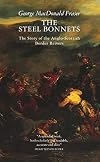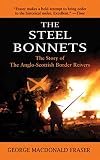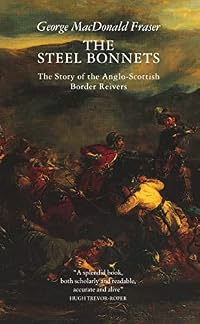
The Steel Bonnets: The Story of the Anglo-Scottish Border Reivers
by George MacDonald Fraser
On This Page
Description
From the thirteenth to the sixteenth centuries, outlaws reigned supreme on the contentious frontier between England and Scotland. Feud and terror, raid and reprisal, were the ordinary stuff of life-and a way of survival. Power was held by the notorious border reivers (the "steel bonnets," named for their flashy helmets), who robbed and murdered in the name of family: the famous clans (or "grains")-like Elliot, Armstrong, Charlton, and Robson-romanticized by Sir Walter Scott. In The Steel show more Bonnets, George MacDonald Fraser, author of the bestselling Flashman novels, and himself a borderer, tells the fascinating and bloody story of the reivers, their rise to power as ferocious soldiers of horse, and their surprisingly sudden fall from grace. show lessTags
Recommendations











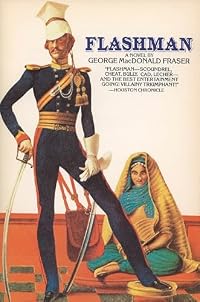


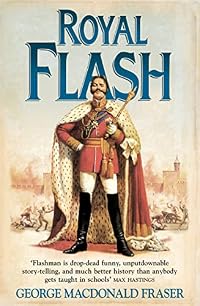
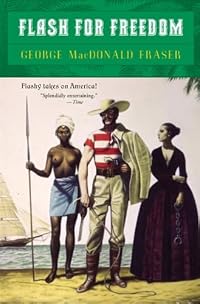
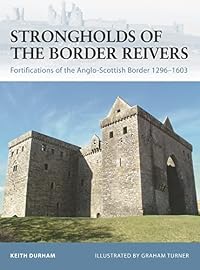



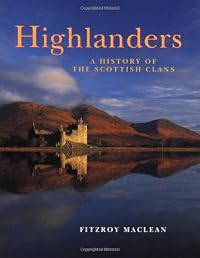
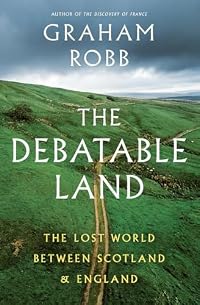

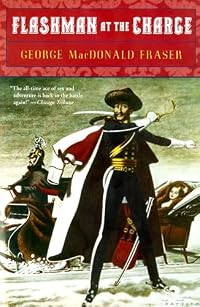


Member Recommendations
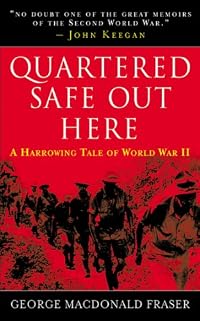
Scorbet A Famine of Horses is the first in a series about Sir Robert Carey, who features in the Steel Bonnets.
Member Reviews
This nearly fifty year old account of the Anglo-Scottish borderlands in the sixteenth century is still frequently reprinted for good reason and deserves re-reading today by anyone with an interest in organised crime and what we now call 'homeland security'.
The author, a journalist, creator of the 'Flashman' series of popular novels, film script writer, former soldier and part-Anglo-Scot borderer himself, writes well and has an eye for a story so the book is generally a good read - although Fraser does not sacrifice fact to fiction.
It tells the tale of the background to and the history of just over a century of state-sanctioned organised crime on the borderlands of two early modern states with a troubled history, a culture only brought show more to heel through the use of state terror when the two states were unified.
Fraser is not averse to occasional contemporary and wider historical references to the late 1960s and early 1970s, likening the Anglo-Scottish border to the Afghan frontier and the mythologisation of brutality to the legend of the West in America.
He holds no truck with the Scottish nationalist romanticisation of the border reivers (riders). The border ballads are often little more than the same sort of voyeuristic fascination of a laddish audience with tales ('ghosted autobiographies') of major criminals today.
However, he is no moraliser while retaining his framework of values. He goes back to the roots of local organised crime, centred on criminal family networks, and finds them in the devastation to the economy left by brutal inter-state war and the inherent administrative incapacity of states.
The century of criminality was not the normal state of the borders but was the result of borders being contested by only partially centralised polities. Men sent, or employed from within the borders, to manage affairs were frequently corrupted and part of the system themselves.
Fifty years on, the book seems more pertinent than ever in understanding why the fringes of globalisation have resulted in blow-back in a world of improved communications. The borders rarely affected the core of England, sometimes Scotland, only because of weak communications.
There are many case studies like this of what happens when emergent border areas are disrupted by war and the incapacity of states - Afghanistan frequently, Sicily, the Balkans and many others. The recent use of war as an instrument of policy by the West now appears all the more negligent.
There is much factual meat in this case study to suggest that, while no historical situation ever precisely is reproduced elsewhere, themes and clues are ever-present in history. Destroy the capacity to rule in an area and it can only be restored through terror is one lesson.
The point here is that, once a non-criminal economy is destroyed, a new economy based on illegality takes its place, whether raiding and brigandage, heroin production and distribution or trafficking in oil and antiquities, to displace farming and trade in goods and services.
Illegality creates its own violent rules and codes of conduct but also its own economic and trading logic. Powerful interests quickly emerge who understand how the new system works, how to corrupt officials, how to use terror and how to create alliances.
The modern West has one thing that Elizabeth I and the Stewarts did not, financial resources. The villains could not be bought off or bribed sufficiently, yet the West is now finding that trying to buy legality simply fuels more corruption and more warlordism. Perhaps only state terror is left.
This is certainly relevant to modern Syria, Iraq and Libya where very weak states are trying to restore order against quasi-criminalised groups creating economies to match those created in Afghanistan or Colombia or Mexico or much of the rest of the emerging world.
Western states want security and human rights but are finding that the purchase of the latter is becoming a bottomless pit just at the time when the homelands are craving some attention and disorder threatens in the cities and townships at the centre of empires.
Having disrupted the world, the current belief is that the problem can be solved with fortress operations combined with overseas safe havens for migrants but this does nothing about the criminalised survival economy in which people are being forced to live.
If the story of the Anglo-Scottish borderlands teaches a lesson, it might be a rather grim one. You either leave the bandits to fight it out and create their own warlord states (which is what IS is doing) or the matter can only be dealt with through full force directly or through proxies.
By full force we may mean the inevitability of reigns of terror like that perpetrated in the first decade or so of the seventeenth century by James I of England and VI of Scotland who finally captured control of both sides of the border and then squeezed it hard.
If he had not done so, one wonders, speculatively, if, having avoided becoming engaged in religious strife within Scotland and England in the previous century, some border political entrepreneurs might have discovered fundamentalist Protestantism or Catholicism as a tool for state creation.
The book needs a bit of attention as it is read because (as Fraser acknowledges) the complexity of clan relationships and even of the system for law enforcement is, given the sources, rife with room for misunderstandings and errors. The same family names prop up time and time again.
This is the story of clans with long histories of feud and violence, with patches or what London gangsters would call 'manors' and with ambiguous relationships to authority much like the sometimes symbiotic relationship in the past between organised crime and the Met.
One major lack in the book is any serious reference to women in the borderlands. This is of its time but it is significant that, in a catalogue of killings (sometimes of women and children), arson and dispossession, there is no mention of rape. This also fits with a cultural model of organised crime.
It is not that we want some feminist bleat about patriarchal society but we want to know more about how male criminality was sustained at home and how women played or failed to play a support function for clan operations.
There are hints that women were important in this capacity as they are no doubt important in all such societies, fiercely loyal to the clan and perhaps a motive force for crime in demanding resources for the households they ran. Was there a culture of 'nagging' men to go and steal?
Certainly marriage alliances between clans seem important although the transfer of a woman from one clan to another meant that her first duty (if I have interpreted the few references in the book correctly) was to her new husband and not to her father.
Women may have been far from passive in this economy. Destroying households seems to have been as important as killing rivals to the clans. The theft of possessions was matched by burnings of houses, often carefully selected, and sometimes whole villages. Rivalries were existential.
All in all, an interesting story closed with two appendices. The most magnificent curse from a Bishop against the reivers - a tirade of learned and vitriolic imprecation - and the misleading ballad of Kinmont Willie that warmed the hearts of border Scots nationalists.
Which brings us to any futile attempt to tell the story of border organised crime as the story of competing nationalisms. It was nothing of the kind. People knew whether they were English and Scots but when it came to business, and this was business, they really did not care.
The point of the border was that two forms of law applied and the Scots and English law enforcement authorities would co-operate only intermittently, warily and half-heartedly, aware that at any time, they might be at war again.
This gave the reivers considerable opportunities for playing off one side against the other. English and Scots reivers raided each others' territories not because they were targeting Scots or English but because the other side was in a law enforcement zone from which they could escape profitably.
In practice, Scots or English gangsters (for that is what they were) would strike up alliances with counterparts over the border to ensure safe passage, share in the spoils and use their influence on corrupt authorities to escape justice and get 'scot free'.
Even when war came between London and Edinburgh, the competing armies could never rely on the borderers ostensibly on their side of the border. The criminal clans would pick and choose sides and alliances and sell their services according to interest and not sentiment.
Local Scottish and English nationalism are later arrivals and probably derive precisely from the settlement of the border and its final demarcation as a division between nation states. The border ballads seem to be more examples of clan pride at doing over the English authorities than anything else.
This is not to say that there was not anti-English or anti-Scottish sentiment but that this was probably to be found more clearly amongst the settled farmers most threatened by war perpetrated by the other side or by the criminal rackets and wanting central authority to be more active.
The overwhelming impression given by this book is of a period of cynical lawlessness based on the profit motive and a dog-eat-dog world where the weak would soon go under, far from romantic and certainly terrible for the vast majority of ordinary people.
When James I and VI comes into the region with the techniques of Mussolini, one finds oneself uncomfortably realising that the temporary tyranny and injustice was probably in the best interests of the majority of the people. The reivers did not use their freedoms kindly. show less
The author, a journalist, creator of the 'Flashman' series of popular novels, film script writer, former soldier and part-Anglo-Scot borderer himself, writes well and has an eye for a story so the book is generally a good read - although Fraser does not sacrifice fact to fiction.
It tells the tale of the background to and the history of just over a century of state-sanctioned organised crime on the borderlands of two early modern states with a troubled history, a culture only brought show more to heel through the use of state terror when the two states were unified.
Fraser is not averse to occasional contemporary and wider historical references to the late 1960s and early 1970s, likening the Anglo-Scottish border to the Afghan frontier and the mythologisation of brutality to the legend of the West in America.
He holds no truck with the Scottish nationalist romanticisation of the border reivers (riders). The border ballads are often little more than the same sort of voyeuristic fascination of a laddish audience with tales ('ghosted autobiographies') of major criminals today.
However, he is no moraliser while retaining his framework of values. He goes back to the roots of local organised crime, centred on criminal family networks, and finds them in the devastation to the economy left by brutal inter-state war and the inherent administrative incapacity of states.
The century of criminality was not the normal state of the borders but was the result of borders being contested by only partially centralised polities. Men sent, or employed from within the borders, to manage affairs were frequently corrupted and part of the system themselves.
Fifty years on, the book seems more pertinent than ever in understanding why the fringes of globalisation have resulted in blow-back in a world of improved communications. The borders rarely affected the core of England, sometimes Scotland, only because of weak communications.
There are many case studies like this of what happens when emergent border areas are disrupted by war and the incapacity of states - Afghanistan frequently, Sicily, the Balkans and many others. The recent use of war as an instrument of policy by the West now appears all the more negligent.
There is much factual meat in this case study to suggest that, while no historical situation ever precisely is reproduced elsewhere, themes and clues are ever-present in history. Destroy the capacity to rule in an area and it can only be restored through terror is one lesson.
The point here is that, once a non-criminal economy is destroyed, a new economy based on illegality takes its place, whether raiding and brigandage, heroin production and distribution or trafficking in oil and antiquities, to displace farming and trade in goods and services.
Illegality creates its own violent rules and codes of conduct but also its own economic and trading logic. Powerful interests quickly emerge who understand how the new system works, how to corrupt officials, how to use terror and how to create alliances.
The modern West has one thing that Elizabeth I and the Stewarts did not, financial resources. The villains could not be bought off or bribed sufficiently, yet the West is now finding that trying to buy legality simply fuels more corruption and more warlordism. Perhaps only state terror is left.
This is certainly relevant to modern Syria, Iraq and Libya where very weak states are trying to restore order against quasi-criminalised groups creating economies to match those created in Afghanistan or Colombia or Mexico or much of the rest of the emerging world.
Western states want security and human rights but are finding that the purchase of the latter is becoming a bottomless pit just at the time when the homelands are craving some attention and disorder threatens in the cities and townships at the centre of empires.
Having disrupted the world, the current belief is that the problem can be solved with fortress operations combined with overseas safe havens for migrants but this does nothing about the criminalised survival economy in which people are being forced to live.
If the story of the Anglo-Scottish borderlands teaches a lesson, it might be a rather grim one. You either leave the bandits to fight it out and create their own warlord states (which is what IS is doing) or the matter can only be dealt with through full force directly or through proxies.
By full force we may mean the inevitability of reigns of terror like that perpetrated in the first decade or so of the seventeenth century by James I of England and VI of Scotland who finally captured control of both sides of the border and then squeezed it hard.
If he had not done so, one wonders, speculatively, if, having avoided becoming engaged in religious strife within Scotland and England in the previous century, some border political entrepreneurs might have discovered fundamentalist Protestantism or Catholicism as a tool for state creation.
The book needs a bit of attention as it is read because (as Fraser acknowledges) the complexity of clan relationships and even of the system for law enforcement is, given the sources, rife with room for misunderstandings and errors. The same family names prop up time and time again.
This is the story of clans with long histories of feud and violence, with patches or what London gangsters would call 'manors' and with ambiguous relationships to authority much like the sometimes symbiotic relationship in the past between organised crime and the Met.
One major lack in the book is any serious reference to women in the borderlands. This is of its time but it is significant that, in a catalogue of killings (sometimes of women and children), arson and dispossession, there is no mention of rape. This also fits with a cultural model of organised crime.
It is not that we want some feminist bleat about patriarchal society but we want to know more about how male criminality was sustained at home and how women played or failed to play a support function for clan operations.
There are hints that women were important in this capacity as they are no doubt important in all such societies, fiercely loyal to the clan and perhaps a motive force for crime in demanding resources for the households they ran. Was there a culture of 'nagging' men to go and steal?
Certainly marriage alliances between clans seem important although the transfer of a woman from one clan to another meant that her first duty (if I have interpreted the few references in the book correctly) was to her new husband and not to her father.
Women may have been far from passive in this economy. Destroying households seems to have been as important as killing rivals to the clans. The theft of possessions was matched by burnings of houses, often carefully selected, and sometimes whole villages. Rivalries were existential.
All in all, an interesting story closed with two appendices. The most magnificent curse from a Bishop against the reivers - a tirade of learned and vitriolic imprecation - and the misleading ballad of Kinmont Willie that warmed the hearts of border Scots nationalists.
Which brings us to any futile attempt to tell the story of border organised crime as the story of competing nationalisms. It was nothing of the kind. People knew whether they were English and Scots but when it came to business, and this was business, they really did not care.
The point of the border was that two forms of law applied and the Scots and English law enforcement authorities would co-operate only intermittently, warily and half-heartedly, aware that at any time, they might be at war again.
This gave the reivers considerable opportunities for playing off one side against the other. English and Scots reivers raided each others' territories not because they were targeting Scots or English but because the other side was in a law enforcement zone from which they could escape profitably.
In practice, Scots or English gangsters (for that is what they were) would strike up alliances with counterparts over the border to ensure safe passage, share in the spoils and use their influence on corrupt authorities to escape justice and get 'scot free'.
Even when war came between London and Edinburgh, the competing armies could never rely on the borderers ostensibly on their side of the border. The criminal clans would pick and choose sides and alliances and sell their services according to interest and not sentiment.
Local Scottish and English nationalism are later arrivals and probably derive precisely from the settlement of the border and its final demarcation as a division between nation states. The border ballads seem to be more examples of clan pride at doing over the English authorities than anything else.
This is not to say that there was not anti-English or anti-Scottish sentiment but that this was probably to be found more clearly amongst the settled farmers most threatened by war perpetrated by the other side or by the criminal rackets and wanting central authority to be more active.
The overwhelming impression given by this book is of a period of cynical lawlessness based on the profit motive and a dog-eat-dog world where the weak would soon go under, far from romantic and certainly terrible for the vast majority of ordinary people.
When James I and VI comes into the region with the techniques of Mussolini, one finds oneself uncomfortably realising that the temporary tyranny and injustice was probably in the best interests of the majority of the people. The reivers did not use their freedoms kindly. show less
A bold and roaring history, The Steel Bonnets is George MacDonald Fraser's ambitious attempt to impose some sort of order on scholarship of the lawless Anglo-Scottish border region of the 16th Century. Naturally, the author of the Flashman stories brings a novelistic flair to large parts of this story. Not only does he delight in all the various stirring episodes of the Border (horseback pursuits, blood feuds, raids by moonlight, larger-than-life scoundrels) but also provides his usual humour and élan to a manuscript that might have otherwise become plodding.
It is not a specialist, academic sort of history: Fraser freely concedes he is more interested in the 'human interest' angle: "The Scottish policy of Henry VIII [for example] is a show more fascinating thing… but I am less concerned with the effect that it had on, say, Franco-Scottish relations than with the more immediate and dramatic impact which it had on the good wife of Kirkcudbright who, during a skirmish near her home, actually delivered her husband up to the enemy for safe-keeping." (pg. 7). Nevertheless, despite this dramatic interest he does provide a great historical narrative of the Borderlands in that turbulent century, and it adds up to an accomplished and very readable history that makes a good fist of explaining what that remarkable time must have been like to live through. The central hook, as I understood it, was that this crime-ridden society considered itself normal: "… great numbers of the people inhabiting the frontier territory (the old Border Marches) lived by despoiling each other, when the great Border tribes, both English and Scottish, feuded constantly among themselves, when robbery and blackmail were everyday professions, when raiding, arson, kidnapping, murder and extortion were an important part of the social system. This had very little to do with war between the two countries, who spent most of the century at peace with each other. It was a way of life pursued in peace-time, by people who accepted it as normal." (pg. 3 – my emphasis). Getting to the root of this peculiar mindset is, as a reader, quite fascinating.
However, whilst Fraser clearly admires the reivers (outlaws) and the other roguish figures of the Border, he is no sentimentalist or romantic. Indeed, he stresses that in his research "a different picture of the Border reiver emerges. He can be seen for what he very often was, not at all heroic, but a nasty, cruel, mean-spirited ruffian, who preferred the soft mark provided by small farmers, widows, and lonely steadings." (pg. 98). He tells the story of one captured reiver who "was burned alive because he had himself burned a house containing a woman and her children; it is worth remembering things like that, when considering the heroic eminence that folk-lore has given" to the likes of these (pg. 239). He points out that the legendary – in all senses of the word – jailbreak of Kinmont Willie from Carlisle Castle was "made possible by informers, traitors and fifth columnists" (pg. 340). Above all, he notes dryly, if the old folklore myth that reivers avoided unnecessary homicide is true, "one can only comment that they seem to have found homicide necessary with appalling frequency" (pg. 122). It is prose like this – so typical of Fraser in his fiction – that makes The Steel Bonnets so engaging at times.
This is not to say that the book does not have its faults. As mentioned, the book is ambitious and tries to impose orderly scholarship on a century of events in a large and fluctuating region defined by lawlessness, oral history and violent turbulence. It is a weighty task and sometimes threatens to get the better of a writer even of Fraser's talent. Many of the raids are so similar they become indistinct. Many of the names and familial ties of the clans are hard to untangle (in a footnote, Fraser laments the 'heart-breaking complexities' of the Border relationships, "fit only for the computer" (pg. 347)). In an oft-cited criticism of the book, he quotes at length from contemporary sources – in hard-to-penetrate dialect and with, shall we say, liberal attitudes to spelling – which drags the pace of the book down as the reader is forced to switch gears to try and decipher the quotation. This latter point is exacerbated by the general structure of the book, which goes into detail about how raids were fought and how the land was governed before even providing a narrative of key events. This not only results in a first hundred pages that struggle to get going but also means Fraser is providing examples to illustrate his arguments that have no context. In this early section, he uses phrases like 'as we shall discover later' or 'which we shall discuss later' with unnerving frequency, and it does little to engage the reader. The scope of the history doesn't become apparent until near half the book has passed. Many readers won't have the patience or the stamina.
But these faults pale beside the force of the book. It is a remarkable period of British history – well-told by an accomplished writer and native Borderer – but, more than that, it is an under-reported period of our country's history. For it was in this period that the modern Anglo-Scottish partnership catalysed, whilst also providing good evidence of why the rivalry persists. In a magnificent passage on pages 22 to 24, Fraser sidebars to discuss this relationship and why it is a truly unique one, in geopolitical, social and, indeed, familial terms.
The narrative among modern tartan-wearing, Twitter-storming little Bravehearts pushing for ruinous 'independence' from English oppression shows a basic and frankly insulting ignorance of history and the nature of Anglo-Scottish fraternization. Bannockburn, Flodden and so on were largely – though not completely – tribal or regional; the ideas of nationalism and populism as we understand them now were constructs that came centuries later. People back then didn't give a damn – they had more important things to worry about: Fraser's book shows us that Scot killed Scot and Englishman killed Englishman just as often as one killed the other, and people didn't care whether the reivers burning their homes or killing their families or extorting blackmail money were Scottish or English, when they could have been either, and often were both. The border was porous, permeable, an incestuous cauldron of violence: certainly not noble Scots vs. evil English. At the end of Fraser's book, it is a Scottish king ascending (peaceably) to the English throne after the death of the childless Elizabeth Tudor. Hardly English oppression. This merger – rather than alliance – set the stage for the Act of Union and all the resultant fruits of Empire, and a relationship that continues to fire a healthy nation today. When I read in Fraser's book of a hostile pre-Union Scotland "offering a stepping-stone to England's enemies, and not infrequently joining in against England when the latter was busily engaged on the Continent" (pg. 23), I cannot help but think of Scotland's – or rather, the SNP's – recent opportunistic and cynical attempts to undermine the country's Brexit result and negotiations; exploiting the country's vulnerable moment for unfair short-termist political advantage and for the shallow satisfaction of poking their 'oppressive' English kinsmen in the eye. For kinsmen is what the two peoples are. The border is porous. There are no longer any battle-lines, and even when there were, Scots and English fought on both sides. The modern politicisation of history (by self-serving charlatans who want to get their names into the history books by foul means or fair) reduces this fascinating tinderbox of bloodlust and begrudging respect to a bland and one-note (and intellectually unsound) narrative, ignoring its richness, variety and flavour. But, fortunately, for those who are willing to seek clearer shores there are people like Fraser and books like The Steel Bonnets that are prepared to deal with these things with a cool and even hand, delighting in the fraternity and the immediacy of history. We are much the better for it, and indeed for a unified country where the violent "extremities of the old kingdoms were now the centre of the new realm" (pg. 362). show less
It is not a specialist, academic sort of history: Fraser freely concedes he is more interested in the 'human interest' angle: "The Scottish policy of Henry VIII [for example] is a show more fascinating thing… but I am less concerned with the effect that it had on, say, Franco-Scottish relations than with the more immediate and dramatic impact which it had on the good wife of Kirkcudbright who, during a skirmish near her home, actually delivered her husband up to the enemy for safe-keeping." (pg. 7). Nevertheless, despite this dramatic interest he does provide a great historical narrative of the Borderlands in that turbulent century, and it adds up to an accomplished and very readable history that makes a good fist of explaining what that remarkable time must have been like to live through. The central hook, as I understood it, was that this crime-ridden society considered itself normal: "… great numbers of the people inhabiting the frontier territory (the old Border Marches) lived by despoiling each other, when the great Border tribes, both English and Scottish, feuded constantly among themselves, when robbery and blackmail were everyday professions, when raiding, arson, kidnapping, murder and extortion were an important part of the social system. This had very little to do with war between the two countries, who spent most of the century at peace with each other. It was a way of life pursued in peace-time, by people who accepted it as normal." (pg. 3 – my emphasis). Getting to the root of this peculiar mindset is, as a reader, quite fascinating.
However, whilst Fraser clearly admires the reivers (outlaws) and the other roguish figures of the Border, he is no sentimentalist or romantic. Indeed, he stresses that in his research "a different picture of the Border reiver emerges. He can be seen for what he very often was, not at all heroic, but a nasty, cruel, mean-spirited ruffian, who preferred the soft mark provided by small farmers, widows, and lonely steadings." (pg. 98). He tells the story of one captured reiver who "was burned alive because he had himself burned a house containing a woman and her children; it is worth remembering things like that, when considering the heroic eminence that folk-lore has given" to the likes of these (pg. 239). He points out that the legendary – in all senses of the word – jailbreak of Kinmont Willie from Carlisle Castle was "made possible by informers, traitors and fifth columnists" (pg. 340). Above all, he notes dryly, if the old folklore myth that reivers avoided unnecessary homicide is true, "one can only comment that they seem to have found homicide necessary with appalling frequency" (pg. 122). It is prose like this – so typical of Fraser in his fiction – that makes The Steel Bonnets so engaging at times.
This is not to say that the book does not have its faults. As mentioned, the book is ambitious and tries to impose orderly scholarship on a century of events in a large and fluctuating region defined by lawlessness, oral history and violent turbulence. It is a weighty task and sometimes threatens to get the better of a writer even of Fraser's talent. Many of the raids are so similar they become indistinct. Many of the names and familial ties of the clans are hard to untangle (in a footnote, Fraser laments the 'heart-breaking complexities' of the Border relationships, "fit only for the computer" (pg. 347)). In an oft-cited criticism of the book, he quotes at length from contemporary sources – in hard-to-penetrate dialect and with, shall we say, liberal attitudes to spelling – which drags the pace of the book down as the reader is forced to switch gears to try and decipher the quotation. This latter point is exacerbated by the general structure of the book, which goes into detail about how raids were fought and how the land was governed before even providing a narrative of key events. This not only results in a first hundred pages that struggle to get going but also means Fraser is providing examples to illustrate his arguments that have no context. In this early section, he uses phrases like 'as we shall discover later' or 'which we shall discuss later' with unnerving frequency, and it does little to engage the reader. The scope of the history doesn't become apparent until near half the book has passed. Many readers won't have the patience or the stamina.
But these faults pale beside the force of the book. It is a remarkable period of British history – well-told by an accomplished writer and native Borderer – but, more than that, it is an under-reported period of our country's history. For it was in this period that the modern Anglo-Scottish partnership catalysed, whilst also providing good evidence of why the rivalry persists. In a magnificent passage on pages 22 to 24, Fraser sidebars to discuss this relationship and why it is a truly unique one, in geopolitical, social and, indeed, familial terms.
The narrative among modern tartan-wearing, Twitter-storming little Bravehearts pushing for ruinous 'independence' from English oppression shows a basic and frankly insulting ignorance of history and the nature of Anglo-Scottish fraternization. Bannockburn, Flodden and so on were largely – though not completely – tribal or regional; the ideas of nationalism and populism as we understand them now were constructs that came centuries later. People back then didn't give a damn – they had more important things to worry about: Fraser's book shows us that Scot killed Scot and Englishman killed Englishman just as often as one killed the other, and people didn't care whether the reivers burning their homes or killing their families or extorting blackmail money were Scottish or English, when they could have been either, and often were both. The border was porous, permeable, an incestuous cauldron of violence: certainly not noble Scots vs. evil English. At the end of Fraser's book, it is a Scottish king ascending (peaceably) to the English throne after the death of the childless Elizabeth Tudor. Hardly English oppression. This merger – rather than alliance – set the stage for the Act of Union and all the resultant fruits of Empire, and a relationship that continues to fire a healthy nation today. When I read in Fraser's book of a hostile pre-Union Scotland "offering a stepping-stone to England's enemies, and not infrequently joining in against England when the latter was busily engaged on the Continent" (pg. 23), I cannot help but think of Scotland's – or rather, the SNP's – recent opportunistic and cynical attempts to undermine the country's Brexit result and negotiations; exploiting the country's vulnerable moment for unfair short-termist political advantage and for the shallow satisfaction of poking their 'oppressive' English kinsmen in the eye. For kinsmen is what the two peoples are. The border is porous. There are no longer any battle-lines, and even when there were, Scots and English fought on both sides. The modern politicisation of history (by self-serving charlatans who want to get their names into the history books by foul means or fair) reduces this fascinating tinderbox of bloodlust and begrudging respect to a bland and one-note (and intellectually unsound) narrative, ignoring its richness, variety and flavour. But, fortunately, for those who are willing to seek clearer shores there are people like Fraser and books like The Steel Bonnets that are prepared to deal with these things with a cool and even hand, delighting in the fraternity and the immediacy of history. We are much the better for it, and indeed for a unified country where the violent "extremities of the old kingdoms were now the centre of the new realm" (pg. 362). show less
George MacDonald Fraser is the author of the Flashman novels; here he takes his hand at history – and it’s very good. Fraser’s focus is the Scottish marches – the borderlands with England – in the 16th century. Raiding across the border was practiced on a large scale – up to thousands of raiders – by both sides, and “lifting” cattle was so common that it makes you wonder how often a particular cow was herded back and forth. Indeed, the Border residents didn’t even consider cattle rustling “stealing” and the Border had special rules (not codified but understood by everybody) for cattle theft; if you immediately followed the thieves, it was a “hot trod” and you could take your cattle back without repercussions; show more if you waited you had to go to the law, such as it was.
Fraser notes that the actions of the Border Reivers were glamorized by latter generations – like a lot of other aspects of Scottish (and to a lesser extent, English) history. According to the mythmakers and balladeers, the Reivers were Robin Hoods in kilts – they robbed from the rich, gave to the poor, eschewed violence, and were polite to women. In fact, Fraser documents: the Reivers usually were the rich (because they could afford the horses and riders it took to make a successful raid); they robbed the poor (because the poor were less able to resist); and they were quite willing to kill, maim, rape and burn if thwarted – or just for the fun of it. Certain of the “riding families” – notably the Armstrongs, Kerrs, and Elliots – became powers until themselves; even the authorities didn’t dare cross them, lest they become embroiled in a feud that might be fatal, be active for years, and involve whole families; in a sense the riding families became like organized crime families of the US.
And as in organized crime, they acquired colorful nicknames – Kinmont Willie, Willie Redcloak, Ill Wild Will Croser, Nebless Clemmie, Little Jock of the Park, Jack of the Peartree, Fingerless Will Nixon. Fraser notes that after the reivers were finally suppressed and dispersed , the names still turn up – it was an Armstrong that did the first raid on the Moon, and Nixon and Johnson figure in US political history.
At any rate, the end finally came when one of their own, so to speak, got in charge; James VI of Scotland became James I of England and decided that since both sides of the border were now ruled by him, he wasn’t going to have any more this. While the reivers may have been locally strong, they were no match for the entire power of the State; their fortified houses were smashed by artillery and their followers cut down by cavalry. James gave a lot of latitude to his field commanders, who didn’t go through the formalities with captured raiders – Jedburgh was headquarters for some of the royal forces and the phrase “Jedburgh Justice” came to mean summary execution first and trial later.
Fraser comments that the romance was gone – but that it was now possible for ordinary people to live in peace on the Marches. An easy read, as you would expect from a novelist. Illustrated by photographs of the landscape, of ruined castles, and of notable personalities; maps of the area, a long bibliography, and a good index. show less
Fraser notes that the actions of the Border Reivers were glamorized by latter generations – like a lot of other aspects of Scottish (and to a lesser extent, English) history. According to the mythmakers and balladeers, the Reivers were Robin Hoods in kilts – they robbed from the rich, gave to the poor, eschewed violence, and were polite to women. In fact, Fraser documents: the Reivers usually were the rich (because they could afford the horses and riders it took to make a successful raid); they robbed the poor (because the poor were less able to resist); and they were quite willing to kill, maim, rape and burn if thwarted – or just for the fun of it. Certain of the “riding families” – notably the Armstrongs, Kerrs, and Elliots – became powers until themselves; even the authorities didn’t dare cross them, lest they become embroiled in a feud that might be fatal, be active for years, and involve whole families; in a sense the riding families became like organized crime families of the US.
And as in organized crime, they acquired colorful nicknames – Kinmont Willie, Willie Redcloak, Ill Wild Will Croser, Nebless Clemmie, Little Jock of the Park, Jack of the Peartree, Fingerless Will Nixon. Fraser notes that after the reivers were finally suppressed and dispersed , the names still turn up – it was an Armstrong that did the first raid on the Moon, and Nixon and Johnson figure in US political history.
At any rate, the end finally came when one of their own, so to speak, got in charge; James VI of Scotland became James I of England and decided that since both sides of the border were now ruled by him, he wasn’t going to have any more this. While the reivers may have been locally strong, they were no match for the entire power of the State; their fortified houses were smashed by artillery and their followers cut down by cavalry. James gave a lot of latitude to his field commanders, who didn’t go through the formalities with captured raiders – Jedburgh was headquarters for some of the royal forces and the phrase “Jedburgh Justice” came to mean summary execution first and trial later.
Fraser comments that the romance was gone – but that it was now possible for ordinary people to live in peace on the Marches. An easy read, as you would expect from a novelist. Illustrated by photographs of the landscape, of ruined castles, and of notable personalities; maps of the area, a long bibliography, and a good index. show less
This is another Did Not Finish -- not because anything is wrong with the book, but because there was no reason for me to continue. The appeal for me was really to know more about the area after reading Dorothy Dunnett's marvelous series about Lymond of Crawford (The Lymond Chronicles. MacDonald is outlining the history of the Border 'Troubles' and those who participated in the mayhem, both sides, with almost shattering detail. Well organized and readable, it is nonetheless information that I cannot absorb or really justify spending hours reading. To anyone who lives near the old Marches and is has a family interest or an abiding historical interest, I have no doubt this would prove deeply fascinating and rewarding. The scope is too show more tight for me -- I've paged through the whole and I think I have grasped the essentials: Reiving has been romanticized, on both sides the violence became a way of life, making it harder to sustain consistent ethical stances, and albeit at the expense of Scotland's full independence, the problems faded away within a decade of England's absorption of Scotland. Maintaining that border as a border was impossible at that time in that place due to the precariousness, really, of the agricultural existence of the people who lived there. Now there could a border much like ours with Canada, I expect, as the economic pressures make that border irrelevant. I was, in some ways, saddened by the cold facts, but not surprised. Those who revere 'the cowboy' really don't know that hard and brutal that life could be. Perhaps it is human nature to fasten on these outlier cultures that are so hard and romanticize them, who knows why? I adored the image, at the start of Richard Nixon, Lyndon Johnson and Billy Graham, all descendants of some of the worst of the worst 'riding' reivers in a photograph together. Still reiving? Favourite words -- going on a hot trod -- that is, galloping out asap after the ****ers who just stole your cattle and burned up your farm. show less
I am an ardent student of history and particularly enjoy English and Scottish history from the period 1300-1750. The author of this work is one of my favorites, having read most of his Flashman novels of historical fiction. That being the case, you would think that this work would be right in my wheelhouse. You would be wrong.
Expecting interesting stories and histories of events along the English/Scottish border, I was instead confronted with a dry, turgid scholarly treatise. Endless citing of English and Scottish village names, multiple variations of spellings and name forms, many times for the same person, illegible maps and a complete lack of any semblance of organization leaves me mystified how on earth this book has garnered so show more many positive ratings. Does the author have so many relatives?
Most annoying is the author’s frequently employed tendency of directly quoting many of the actors in the history. You would think this would bring an authenticity and clarity to the dialogue, but quite the opposite. For you see, the denizens of the border didn’t exactly speak the King’s English as you and I know it. For a good example, read some Robert Burns and explain to me what it says. Page after page of quotations whose meaning can only be vaguely discerned by puzzling over context and possible meanings of words spelled only slightly similar to those with which you are familiar. Loads of enjoyment and enlightenment ensue.
This is, quite frankly, one of the worst books I have ever read. show less
Expecting interesting stories and histories of events along the English/Scottish border, I was instead confronted with a dry, turgid scholarly treatise. Endless citing of English and Scottish village names, multiple variations of spellings and name forms, many times for the same person, illegible maps and a complete lack of any semblance of organization leaves me mystified how on earth this book has garnered so show more many positive ratings. Does the author have so many relatives?
Most annoying is the author’s frequently employed tendency of directly quoting many of the actors in the history. You would think this would bring an authenticity and clarity to the dialogue, but quite the opposite. For you see, the denizens of the border didn’t exactly speak the King’s English as you and I know it. For a good example, read some Robert Burns and explain to me what it says. Page after page of quotations whose meaning can only be vaguely discerned by puzzling over context and possible meanings of words spelled only slightly similar to those with which you are familiar. Loads of enjoyment and enlightenment ensue.
This is, quite frankly, one of the worst books I have ever read. show less
Highly readable and entertaining popular history of the border reivers on either side of the Scottish/English border and particularly it's height and decline during and immediatey after the Elizabethan years. The lawman and the lawless, with often little water beteen them, battle it out, chasing each other up and down mountains after cattle and sheep and horses. Raids, kidnappings, blackmail, murders, and the unique and strange and terrible culture that made these things a way of life superbly surveyed and evoked by Fraser with all the character and personality that goes with it.
George Macdonald Fraser, author of the popular Flashman series, has turned his novelist's skills to good use in this excellent account of the sixteenth-century Border wars. A Borderer himself, he manages to produce a very balanced and readable description of a particularly troubled part of sixteenth-century history. Though the events described are quite as sanguinary as those described in "The Twilight Lords," Fraser retains enough detachment that the reader does not feel as if his nose has been rubbed in it.
Members
- Recently Added By
Author Information

Author George MacDonald Fraser was born April 2, 1925 in Carlisle. He was refused entrance to the medical faculty of Glasgow University, so he joined the army in 1943. He served as an infantryman with the 17th Indian Division of the XIVth Army in Burma, a lance corporal and was commissioned in the Gordon Highlanders. After the war, he became a show more sports reporter with the Carlisle Journal; and during this time, he met and married Kathleen Hetherington, a reporter from another paper. He worked as a reporter and sub-editor on the Cumberland News and then moved to Glasgow, in 1953, where he worked at the Glasgow Herald as a features editor and deputy editor. Fraser's first novel was "Flashman" (1969), which was followed by nine sequels, so far, that deal with different venues of the 19th century ranging from Russia, Borneo and China to the Great Plains of the America West. Some of the other titles in the Flashman Papers are "Royal Flash" (1970), "Flashman in the Great Game" (1975), "Flashman and the Redskins" (1982), and "Flashman and the Angel of the Lord" (1994). Some of his non-fiction work includes "The Steel Bonnets" (1971), which is a factual study of the Anglo-Scottish border thieves in the seventeenth century, and "Quartered Safe Out Here" (1992). Fraser has also written a number of screenplays that include "The Three Musketeers" (1973), "Royal Flash" (1975), "Octopussy" (1983), and "Return of the Musketeers" (1989). He has also written a series of short stories about Private McAuslan whose titles include "The General Danced at Dawn" (1970), "McAuslan in the Rough" (1974), and "The Sheik and the Dustbin and other McAuslan Stories" (1988). He died of cancer on January 2, 2008. (Bowker Author Biography) show less
Series
Belongs to Publisher Series
Harvill (17)
Common Knowledge
- Original title
- The Steel Bonnets: The Story of the Anglo-Scottish Border Reivers
- Original publication date
- 1971
- People/Characters
- Kinmont Willie; William Cecil, 1st Baron Burghley; Lancelot Carleton; Sir John Forster; James VI and I, King of Scots and King of England; Anglo-Scottish Border Reivers
- Important places
- Scottish Borders, Scotland, UK (with England); Anglo-Scottish Borders
- Epigraph
- "If Jesus Christ were emongest
them, they would deceave him,
if he woulde heere, trust and
followe theire wicked councells!"
Richard Fenwick 1597 - Dedication
- In memory of
Corporal IKE BLAKELEY
of the Border Regiment, killed
by a Japanese sniper at Kinde Wood,
Central Burma, 1945, and for
BOB GRAHAM and SLIM IRVINE
wounded in the same action. - First words
- At the moment when President Richard Nixon was taking part in his inauguration ceremony, he appeared flanked by Lyndon Johnson and Billy Graham.
--Introduction
In the beginning was the Wall.
--Body Text - Last words
- (Click to show. Warning: May contain spoilers.)They would have no quarrel with that.
- Blurbers
- Trevor-Roper, Hugh
- Original language
- English UK
Classifications
Statistics
- Members
- 575
- Popularity
- 51,013
- Reviews
- 13
- Rating
- (3.91)
- Languages
- English, French
- Media
- Paper, Ebook
- ISBNs
- 13
- ASINs
- 11