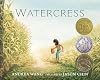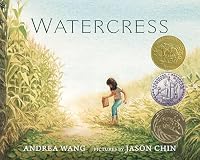
Watercress
by Andrea Wang
On This Page
Description
Embarrassed about gathering watercress from a roadside ditch, a girl learns to appreciate her Chinese heritage after learning why the plant is so important to her parents.Tags
Recommendations







Member Reviews
Chinese-American children's author Andrea Wang, whose previous picture-books include the Chinese New Year's tale The Nian Monster, and the biographical Magic Ramen: The Story of Momofuku Ando, turns to her own childhood in this deeply felt and immensely moving tale of a young girl who is embarrassed by her family. Passing a wealth of watercress by the side of the road one day, the girl's parents stop the car, and the entire family is enlisted to harvest the plants. Uncomfortable and ashamed - what if other people from her Ohio town see her in the muddy ditch? why can't their family have food from the store, like everyone else? - the girl's resentment builds, finally finding its expression at the dinner table. It is then that her mother show more does something she never has before: she gets out a family photograph, and shares the story of her own childhood experience, during a terrible famine in China - a famine that claimed the life of her younger brother. Ashamed of her shame, the girl finally eats the watercress, discovering its sharp pleasure, and making a new memory with her family...
I was close to tears on a number of occasions, while reading Watercress, and suspect that I will be thinking of it for some time to come. Simply but powerfully told, Andrea Wang's story addresses issues of poverty, feeling different, family relationships, and the all-pervasive influence of the past. This last, in particular, stood out to me, and is addressed by Wang in her afterword, as she discusses how important it is for immigrant families to share their stories with the younger generation, so that understanding and compassion can replace resentment and shame. The accompanying watercolor artwork from the marvelously talented Jason Chin, who won a Caldecott Honor for his Grand Canyon, perfectly captures the emotional register of the story, from the girl's acute embarrassment at the side of the road, to her overflowing resentment at the dinner table, to her consternation and grief, when she learns her mother's story. This is a story rooted in the Chinese and Chinese-American experience - although not mentioned specifically, it's clear that the famine experienced by the girls' parents was the Great Chinese Famine of 1959-1961, caused by the disastrous "Great Leap Forward" that was inflicted by the Chinese Communists on their country - but it is also universal, something Chin notes in his own afterword. His artwork captures the feeling of the story and its protagonist, while also situating it in a specifically American context, neatly capturing the two strands of the girl's identity.
Moving, thought-provoking, and immensely beautiful, Watercress is a book that I highly recommend, and gained one of my rare five-star ratings. Of the picture-books I have read thus far, that were published in 2021, it is my top contender for the Caldecott Medal. show less
I was close to tears on a number of occasions, while reading Watercress, and suspect that I will be thinking of it for some time to come. Simply but powerfully told, Andrea Wang's story addresses issues of poverty, feeling different, family relationships, and the all-pervasive influence of the past. This last, in particular, stood out to me, and is addressed by Wang in her afterword, as she discusses how important it is for immigrant families to share their stories with the younger generation, so that understanding and compassion can replace resentment and shame. The accompanying watercolor artwork from the marvelously talented Jason Chin, who won a Caldecott Honor for his Grand Canyon, perfectly captures the emotional register of the story, from the girl's acute embarrassment at the side of the road, to her overflowing resentment at the dinner table, to her consternation and grief, when she learns her mother's story. This is a story rooted in the Chinese and Chinese-American experience - although not mentioned specifically, it's clear that the famine experienced by the girls' parents was the Great Chinese Famine of 1959-1961, caused by the disastrous "Great Leap Forward" that was inflicted by the Chinese Communists on their country - but it is also universal, something Chin notes in his own afterword. His artwork captures the feeling of the story and its protagonist, while also situating it in a specifically American context, neatly capturing the two strands of the girl's identity.
Moving, thought-provoking, and immensely beautiful, Watercress is a book that I highly recommend, and gained one of my rare five-star ratings. Of the picture-books I have read thus far, that were published in 2021, it is my top contender for the Caldecott Medal. show less
Driving through Ohio in an old Pontiac, a young girl's parents stop suddenly when they spot watercress growing wild in a ditch by the side of the road. Grabbing an old paper bag and some rusty scissors, the whole family wades into the muck to collect as much of the muddy, snail covered watercress as they can.
At first, she's embarrassed. Why can't her family get food from the grocery store? But when her mother shares a story of her family's time in China, the girl learns to appreciate the fresh food they foraged. Together, they make a new memory of watercress.
At first, she's embarrassed. Why can't her family get food from the grocery store? But when her mother shares a story of her family's time in China, the girl learns to appreciate the fresh food they foraged. Together, they make a new memory of watercress.
A young girl learns more about her family history when her parents spontaneously stop their car to collect watercress growing on the side of the road. Her parents remember watercress from their lives in China, which they rarely speak of.
At first, the protagonist is ashamed of her parents' behavior and does not want to eat the food collected "from a ditch". But her perspective changes when her mother shares that she grew up being grateful for whatever food she had because her brother died during a famine.
This book is a touching and evocative story that brings the reader into an immigrant home. It challenges perspectives of food and reminds young readers that their parents have lived rich and complex lives full of experiences they show more cannot know unless told. show less
At first, the protagonist is ashamed of her parents' behavior and does not want to eat the food collected "from a ditch". But her perspective changes when her mother shares that she grew up being grateful for whatever food she had because her brother died during a famine.
This book is a touching and evocative story that brings the reader into an immigrant home. It challenges perspectives of food and reminds young readers that their parents have lived rich and complex lives full of experiences they show more cannot know unless told. show less
A Chinese American family pulls their car over to gather wild watercress growing by the roadside.
As the family sheds their shoes and rolls up their pants to wade into the gully, the narrator of Wang’s poignant free-verse text is anything but happy. Mud squelching between toes, holding a soggy brown bag full of what looks like weeds, the preteen ducks down as a car passes lest their family is recognized. But for Mom and Dad, the moment is emotional. In one exceptional double-page spread Chin paints the faded red 1960s-era car parked on the left, with cornstalks bordering the road transforming into bamboo stalks and a soft-focus sepia-toned image of rural China on the right. “From the depths of the trunk / they unearth / a brown paper show more bag, / rusty scissors, // and a longing for China,” reads the text. In another, Mom and Dad praise the watercress for being both fresh and free, but to the next generation, “free is / hand-me-down clothes and / roadside trash-heap furniture and / now, / dinner from a ditch.” It isn’t until Mom finally shares the story of her family in China that her child understands the importance of this simple dish of greens, this “delicate and slightly bitter” watercress. Wang’s moving poetry paired with—and precisely laid out on—Chin’s masterfully detailed illustrations capture both an authentic Midwestern American landscape and a very Chinese American family, together infusing a single event with multiple layers laden with emotion, memory, and significance.
Understated, deep, and heart-rending—bring tissues. (author's note, illustrator's note) show less
As the family sheds their shoes and rolls up their pants to wade into the gully, the narrator of Wang’s poignant free-verse text is anything but happy. Mud squelching between toes, holding a soggy brown bag full of what looks like weeds, the preteen ducks down as a car passes lest their family is recognized. But for Mom and Dad, the moment is emotional. In one exceptional double-page spread Chin paints the faded red 1960s-era car parked on the left, with cornstalks bordering the road transforming into bamboo stalks and a soft-focus sepia-toned image of rural China on the right. “From the depths of the trunk / they unearth / a brown paper show more bag, / rusty scissors, // and a longing for China,” reads the text. In another, Mom and Dad praise the watercress for being both fresh and free, but to the next generation, “free is / hand-me-down clothes and / roadside trash-heap furniture and / now, / dinner from a ditch.” It isn’t until Mom finally shares the story of her family in China that her child understands the importance of this simple dish of greens, this “delicate and slightly bitter” watercress. Wang’s moving poetry paired with—and precisely laid out on—Chin’s masterfully detailed illustrations capture both an authentic Midwestern American landscape and a very Chinese American family, together infusing a single event with multiple layers laden with emotion, memory, and significance.
Understated, deep, and heart-rending—bring tissues. (author's note, illustrator's note) show less
The author recounts a childhood memory of driving with her parents and her brother along the road in rural Ohio in their old Pontiac. Her parents, first generation immigrants from China, were foraging, looking for watercress. When her mother sights some growing in the ditches beside the road beneath tall stalks of corn, her father pulls the car over, and she and her brother have to get out of the car, and into the cold water of the ditch to harvest the watercress. Young Andrea hates this task. The plants she pulls up have muck and snails clinging to their roots; her brother is annoying. She feels humiliated. When they get home, and the watercress is cooked up with oil and sesame seeds she refuses to eat it. She only wants to eat show more vegetables from the grocery store. When her parents try to encourage her to eat because the food is fresh and free, she thinks, “Free is bad. Free is hand-me-down clothes and roadside trash-heap furniture and now, dinner from the ditch.”
Her mother gets up from the table, goes to her room and returns with a family photo from China. In it are her mother as a small girl and her younger brother. It is from the time of the great famine. Andrea gazes at the photo. “I look from my uncle’s hollow face to the watercress on the table and I am ashamed of being ashamed of my family. I take a bite of watercress and it bites me back with its spicy, peppery taste. It is delicate and slightly bitter, like Mom’s memory of home.”
Chin’s watercolor illustrations are a marvelous accompaniment for Wang’s poignant memoir which she referrers to in her author’s note as, “both an apology and a love letter to my parents.” It has been awarded the 2022 Randolph Caldecott Medal for the most distinguished American picture book for children by the American Library Association. show less
Her mother gets up from the table, goes to her room and returns with a family photo from China. In it are her mother as a small girl and her younger brother. It is from the time of the great famine. Andrea gazes at the photo. “I look from my uncle’s hollow face to the watercress on the table and I am ashamed of being ashamed of my family. I take a bite of watercress and it bites me back with its spicy, peppery taste. It is delicate and slightly bitter, like Mom’s memory of home.”
Chin’s watercolor illustrations are a marvelous accompaniment for Wang’s poignant memoir which she referrers to in her author’s note as, “both an apology and a love letter to my parents.” It has been awarded the 2022 Randolph Caldecott Medal for the most distinguished American picture book for children by the American Library Association. show less
In this story, a young girl in a Chinese American family living in Ohio is embarrassed when her parents want to pull over by the side of the road to pull up watercress. At first she even refuses to eat the meal her mother cooked with the watercress, wanting nothing to do with anything that accentuated her difference from her peers.
After her mother explained the significance of watercress to them, and how it sustained them when they were starving in China, she felt remorse for being ashamed of her family. She took a bite of the watercress dish, finding “It is delicate and slightly bitter, like Mom’s memories of home.”
“Together,” the story ends, “we eat it all and make a new memory of watercress.”
In a note from the author show more at the end of the book, Wang states that this story was drawn from her memories of being the child of Chinese immigrants, growing up in a small, mostly white town in Ohio:
“I was very aware of how different my family and I were from everyone else. It’s hard to feel like you don’t belong, and collecting food from a muddy roadside ditch just made that bad feeling more intense for me - something my very practical parents didn’t understand.”
Award-winning illustrator Jason Chin said in his note he could also relate to the story, observing that “It is common for children of immigrants to be unaware of their parents’ stories and culture, and to feel out of place, misunderstood, and even angry.” In an interview with NPR, Chin said:
“'The themes are universal. The themes of being ashamed of your parents, I think. We've probably all experienced that at some point,’ he says. ‘You know, I remember walking 20 feet behind my parents when we were walking down the street, pretending that I didn't belong to them.’"
He said he was “impressed by how Andrea was able to fold so many layers of memory, culture, and emotion into a short text,” and he wanted his illustrations to complement each of those layers as well as both the American and Chinese heritage of the characters. Using watercolor because it is common to both Chinese and western art, he chose his palette to reflect both the yellow of old photographs and the blue common to Chinese paintings, and added a number of historical touches that reflected the time of the author's childhood.
Evaluation: Like the little girl in this book, I too felt ashamed of my immigrant relatives - grandparents in my case, and like Jason Chin, wouldn’t walk with them, to my everlasting shame. Although I would rather go back in time and change what happened, it is reassuring to see this is a common reaction by kids who want so badly to fit in. I hope this book will inspire some readers to give up that unwarranted shame while they still have their immigrant relatives around.
Note: Awards for this book include Newbery Medal Nominee (2022), Caldecott Medal (2022), and Asian/Pacific American Award for Picture Book (2022). show less
After her mother explained the significance of watercress to them, and how it sustained them when they were starving in China, she felt remorse for being ashamed of her family. She took a bite of the watercress dish, finding “It is delicate and slightly bitter, like Mom’s memories of home.”
“Together,” the story ends, “we eat it all and make a new memory of watercress.”
In a note from the author show more at the end of the book, Wang states that this story was drawn from her memories of being the child of Chinese immigrants, growing up in a small, mostly white town in Ohio:
“I was very aware of how different my family and I were from everyone else. It’s hard to feel like you don’t belong, and collecting food from a muddy roadside ditch just made that bad feeling more intense for me - something my very practical parents didn’t understand.”
Award-winning illustrator Jason Chin said in his note he could also relate to the story, observing that “It is common for children of immigrants to be unaware of their parents’ stories and culture, and to feel out of place, misunderstood, and even angry.” In an interview with NPR, Chin said:
“'The themes are universal. The themes of being ashamed of your parents, I think. We've probably all experienced that at some point,’ he says. ‘You know, I remember walking 20 feet behind my parents when we were walking down the street, pretending that I didn't belong to them.’"
He said he was “impressed by how Andrea was able to fold so many layers of memory, culture, and emotion into a short text,” and he wanted his illustrations to complement each of those layers as well as both the American and Chinese heritage of the characters. Using watercolor because it is common to both Chinese and western art, he chose his palette to reflect both the yellow of old photographs and the blue common to Chinese paintings, and added a number of historical touches that reflected the time of the author's childhood.
Evaluation: Like the little girl in this book, I too felt ashamed of my immigrant relatives - grandparents in my case, and like Jason Chin, wouldn’t walk with them, to my everlasting shame. Although I would rather go back in time and change what happened, it is reassuring to see this is a common reaction by kids who want so badly to fit in. I hope this book will inspire some readers to give up that unwarranted shame while they still have their immigrant relatives around.
Note: Awards for this book include Newbery Medal Nominee (2022), Caldecott Medal (2022), and Asian/Pacific American Award for Picture Book (2022). show less
A beautiful tribute to heritage and memory. Picking watercress in a ditch by the highway in Ohio brings strong memories of China to our narrator's mother, but only shame and anger at being demonstratively different to the young girl. She slowly and gently comes to realize the deep well of feeling and memory that fresh watercress evokes for her parents in this "love letter and apology" to the author's parents. All these complex emotions are captured brilliantly by Chin. Certainly a book that will be more meaningful for elementary and older children than the preschool set, though.
Members
- Recently Added By
Lists

Caldecott Medal Books
91 works; 15 members

Newbery Honor Books By year - II - 1981-2035
143 works; 4 members

ELED 460 Book List
61 works; 1 member

Books Read in 2022
5,164 works; 113 members
SYES Library Wishlist
1,080 works; 4 members

Books Read in 2023
5,547 works; 145 members

Rainbow Gardens Wish List: Seedlings & Saplings
104 works; 3 members

Favorite Picture Books
479 works; 160 members
Author Information

14+ Works 1,490 Members
All Editions
Awards and Honors
Awards
Distinctions
Notable Lists
Common Knowledge
- Original publication date
- 2021
- Important places
- Ohio, USA; China
- Dedication
- In memory of my parents, Agnes Shiao-Fung Lee and Edward Chungman Chan, immigrants and inspirations. 我永遠感謝你們。-A.W.
For my father. - J.C. - First words
- We are in the old Pontiac, the red paint faded by years of glinting Ohio sun, pelting rain, and biting snow.
- Last words
- (Click to show. Warning: May contain spoilers.)Together we eat it all and make a new memory of watercress.
- Original language
- English
Classifications
Statistics
- Members
- 759
- Popularity
- 36,763
- Reviews
- 111
- Rating
- (4.50)
- Languages
- English, French, Spanish
- Media
- Paper, Audiobook, Ebook
- ISBNs
- 11
- ASINs
- 1