On This Page
Description
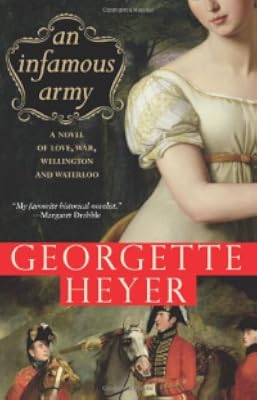
On the eve of battle, passions are running high..."A brilliant achievement...vivid, accurate, dramatic...the description of Waterloo is magnificent."—DAILY MAIL"My favorite historical novelist."—MARGARET DRABBLEIN THE SUMMER OF 1815, with Napolean Bonaparte marching down from the north, Brussels is a whirlwind of parties, balls and soirees. In the swirling social scene surrounding the Duke of Wellington and his noble aides de camp, no one attracts more attention than the beautiful, show more outrageous young widow Lady Barbara Childe. On their first meeting, dashing Colonel Charles Audley proposes to her, but even their betrothal doesn't calm her wild behavior. Finally, with the Battle of Waterloo raging just miles away, civilians fleeing and the wounded pouring back into the town, Lady Barbara discovers where her heart really lies, and like a true noblewoman, she rises to the occasion, and to the demands of love, life and war..."Wonderful characters, elegant, witty writing, perfectperiod detail, and rapturously romantic. Georgette Heyerachieves what the rest of us only aspire to."—KATIE FFORDE. show less
Tags
Recommendations




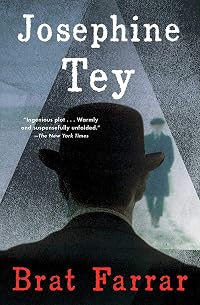

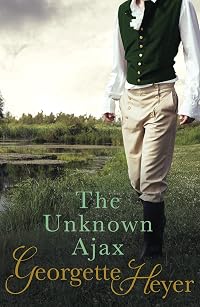



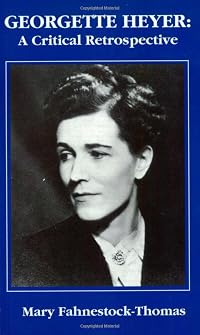
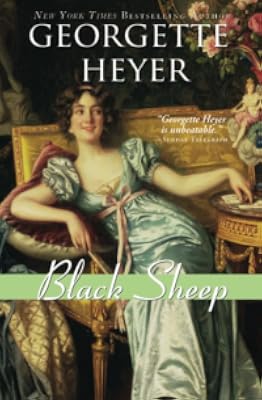





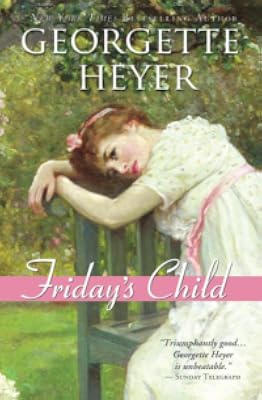




Member Recommendations
arctangent Some of the main characters from An Infamous Army appear first in Regency Buck.
Member Reviews
I didn't expect to love this one, which I have never read being daunted by the close description of the Battle of Waterloo. But. Wow. I listened and the reader was good and I wasn't bored for an instant and even though the details of the battle were intense and much washed right over me, I got the gist (as I realized when I looked up stuff about the battle and looked at the maps) and I ended up in tears over one of the deaths on the field, and very moved. The romance is woven into this narrative better than one would think--the suspense builds as everyone in Brussels waits to see what "Boney" will do and whether the Allied Anglo-Belgian-Prussian troops will be able to work together to defeat him. Colonel Charles Audley, brother of the show more Earl of Worth (you meet him in [Regency Buck]) is a very lovable man indeed about whom you cannot help caring and he ends upin the thick of the battle as an aide-de-camp to Wellington. I will seek out [[Elizabeth Longford]]'s biography of Wellington now because I am fascinated. Judith Worth had a good role, but I felt the Earl, not being in the military, was hard to bring to life. The grandparental Alastairs as a cameo fared a little better, but that's naught but a quibble, really. A final note: Barbara Alastair, to me, hints of how destructive a very intelligent and capable and energetic woman who is bored to death, with no outlet for her gifts, can be.I envision Charles Audley as figuring this out and finding a challenging role for her in their new life together. Bravo Georgette! ***** show less
http://nwhyte.livejournal.com/2482966.html
Heyer is of course one of the twentieth century's most prolific and best-known romance novelists, and many people whose opinions I respect hold her in high regard. It's not a genre I know, and I'd never previously read any of her work. I understand that An Infamous Army is fairly standalone in Heyer's historical timeline, with just a few characters shared with other books - the second written of her famous Regency romances.
I must say that I thoroughly enjoyed it. Heyer's focus is on the aristocratic Englishwomen accompanying the British forces to Belgium, and there is of course a central love affair - between two fairly mature characters, a widow and a veteran soldier - to satisfy those who show more aren't into the military stuff. But I think she does a very good job of portraying the geopolitical situation of Napoleon's return and the uncertainty of where or how the Allies might respond, much better than I have seen elsewhere in fiction, starting from the spring of 1815 and going through to the day after the battle ends. She has her characters go for a picnic to Waterloo in an early chapter, which of course gives her an excuse to set up the topography of the battle without forcing the pace. My only gripes are that while she's very convincing about the battlefield, her Brussels geography feels a bit more wobbly; and I'm also not convinced that the Duke of Wellington and the Duchess of Richmond would have addressed each other as "Duke" and "Duchess" (formally, it should of course be "your Grace"; informally, they would surely have had nicknames for each other).
In particular, this 1937 novel has a conviction about the horror of war that I did not find in Stendhal or Cornwell. The Englishwomen at the centre of the narrative switch from partying to nursing with dismay but also determination. Heyer was born in 1902, and her father fought in the trenches of the first world war; by the time she wrote this, the next global conflict was looming, and it's impossible not to read the shades of Guernica and the foreshadowing of Dunkirk and Nornandy between the lines of her Waterloo. This was my first Heyer novel, but it won't be my last. show less
Heyer is of course one of the twentieth century's most prolific and best-known romance novelists, and many people whose opinions I respect hold her in high regard. It's not a genre I know, and I'd never previously read any of her work. I understand that An Infamous Army is fairly standalone in Heyer's historical timeline, with just a few characters shared with other books - the second written of her famous Regency romances.
I must say that I thoroughly enjoyed it. Heyer's focus is on the aristocratic Englishwomen accompanying the British forces to Belgium, and there is of course a central love affair - between two fairly mature characters, a widow and a veteran soldier - to satisfy those who show more aren't into the military stuff. But I think she does a very good job of portraying the geopolitical situation of Napoleon's return and the uncertainty of where or how the Allies might respond, much better than I have seen elsewhere in fiction, starting from the spring of 1815 and going through to the day after the battle ends. She has her characters go for a picnic to Waterloo in an early chapter, which of course gives her an excuse to set up the topography of the battle without forcing the pace. My only gripes are that while she's very convincing about the battlefield, her Brussels geography feels a bit more wobbly; and I'm also not convinced that the Duke of Wellington and the Duchess of Richmond would have addressed each other as "Duke" and "Duchess" (formally, it should of course be "your Grace"; informally, they would surely have had nicknames for each other).
In particular, this 1937 novel has a conviction about the horror of war that I did not find in Stendhal or Cornwell. The Englishwomen at the centre of the narrative switch from partying to nursing with dismay but also determination. Heyer was born in 1902, and her father fought in the trenches of the first world war; by the time she wrote this, the next global conflict was looming, and it's impossible not to read the shades of Guernica and the foreshadowing of Dunkirk and Nornandy between the lines of her Waterloo. This was my first Heyer novel, but it won't be my last. show less
Another unbalanced Heyeroine, in the midst of a drawn-out recounting of the Waterloo campaign; grounding Georgette Heyer's Regency romances in battleplans and a biography of Wellington doesn't quite work.
Her dedication to historical accuracy is to be admired, but the descriptions of regiments, manoeuvres and pretty uniforms (from lace trimmings to tasselled boots) take up far too much room, and the excess of detail adds little to the story. A blow-by-blow battle plan of Ligny, Quatre Bras and Waterloo might fascinate cadets at Sandhurst and West Point, but most readers who pick up a Heyer novel are more interested in the characters and the romance.
Speaking of which. Lady Barbara 'Bab' Childe - whose frumpy name, along with those of show more Judith and Julian, is more proto-Sloane Ranger than Regency moniker - is a typical Heyeroine. She is described, and describes herself, as 'wild' and 'boyish' - 'It's like talking with a man, only more exciting!' - but is actually only spoiled, spiteful, selfish and obnoxious. She behaves like a child(e), saying and doing hurtful things to gain attention, with the claim that it's in her 'curst nature' to do just as she pleases and get what she wants. The only trouble is that the reader is expected to excuse her behaviour and fall for her 'charms' just as the other characters do, Heyer once again lowering women to the standard of men in a cockeyed, 1930s interpretation of gender equality.
As a Heyeroine, 'Bab' is at once scandalous and safe - her reputation is founded on nothing but flirtations and rumours, while she waits for the 'right man' to whom she can finally give her heart. Although it's fairly obvious why Charles Audley falls for Bab - she's beautiful - the mystery is why she suddenly decides that he is the one for her. It's love at first sight between them, across a crowded ballroom (literally), but the only quality to distinguish the Colonel is that he is the Heyeroe. He doesn't even Resist Her Charms, thus making *him* a challenge for her - wholly unbelievable.
The only refreshing change - for Heyer, at least - is that Bab is not 'tamed' outright by Charles. Mentally unstable as she is (swapping laudanum for a husband), Bab sabotages her own engagement, which is the only exciting spot in the story. Only when Charles is physically incapacitated does Bab feel she can safely sacrifice a little of her proud independence to marry him, a la Jane Eyre - as she corrects him, 'You have come back to me, Charles'.
The dialogue also contributes little to the period atmosphere, historically accurate though it most probably is. The men are either 'stiff' or 'excellent', favourite exclamations include 'capital!' and 'infamous!', and Heyer's 'gurgling laughter' and 'twinkling eyes' make an unattractive return. Though far from anachronisms, these phrases put me more in mind of 1930s radio plays rather than Regency romances. There are some sharp retorts from Bab, and thoughtful insights from the sober Judith, but most of the conversations consist of inane exclamations ('Pooh! Nonsense!')
In the author's note, Heyer recognises that her Waterloo epic is similar in content to Thackeray's 'Vanity Fair', but insists that readers should not compare the two - an honest admission of defeat to be commended. Thackeray's 'novel without a hero' is based in history, whereas Heyer was attempting to cram history into a romance novel. Informative but dull, an unfortunate hybrid of fact and fluff. show less
Her dedication to historical accuracy is to be admired, but the descriptions of regiments, manoeuvres and pretty uniforms (from lace trimmings to tasselled boots) take up far too much room, and the excess of detail adds little to the story. A blow-by-blow battle plan of Ligny, Quatre Bras and Waterloo might fascinate cadets at Sandhurst and West Point, but most readers who pick up a Heyer novel are more interested in the characters and the romance.
Speaking of which. Lady Barbara 'Bab' Childe - whose frumpy name, along with those of show more Judith and Julian, is more proto-Sloane Ranger than Regency moniker - is a typical Heyeroine. She is described, and describes herself, as 'wild' and 'boyish' - 'It's like talking with a man, only more exciting!' - but is actually only spoiled, spiteful, selfish and obnoxious. She behaves like a child(e), saying and doing hurtful things to gain attention, with the claim that it's in her 'curst nature' to do just as she pleases and get what she wants. The only trouble is that the reader is expected to excuse her behaviour and fall for her 'charms' just as the other characters do, Heyer once again lowering women to the standard of men in a cockeyed, 1930s interpretation of gender equality.
As a Heyeroine, 'Bab' is at once scandalous and safe - her reputation is founded on nothing but flirtations and rumours, while she waits for the 'right man' to whom she can finally give her heart. Although it's fairly obvious why Charles Audley falls for Bab - she's beautiful - the mystery is why she suddenly decides that he is the one for her. It's love at first sight between them, across a crowded ballroom (literally), but the only quality to distinguish the Colonel is that he is the Heyeroe. He doesn't even Resist Her Charms, thus making *him* a challenge for her - wholly unbelievable.
The only refreshing change - for Heyer, at least - is that Bab is not 'tamed' outright by Charles. Mentally unstable as she is (swapping laudanum for a husband), Bab sabotages her own engagement, which is the only exciting spot in the story. Only when Charles is physically incapacitated does Bab feel she can safely sacrifice a little of her proud independence to marry him, a la Jane Eyre - as she corrects him, 'You have come back to me, Charles'.
The dialogue also contributes little to the period atmosphere, historically accurate though it most probably is. The men are either 'stiff' or 'excellent', favourite exclamations include 'capital!' and 'infamous!', and Heyer's 'gurgling laughter' and 'twinkling eyes' make an unattractive return. Though far from anachronisms, these phrases put me more in mind of 1930s radio plays rather than Regency romances. There are some sharp retorts from Bab, and thoughtful insights from the sober Judith, but most of the conversations consist of inane exclamations ('Pooh! Nonsense!')
In the author's note, Heyer recognises that her Waterloo epic is similar in content to Thackeray's 'Vanity Fair', but insists that readers should not compare the two - an honest admission of defeat to be commended. Thackeray's 'novel without a hero' is based in history, whereas Heyer was attempting to cram history into a romance novel. Informative but dull, an unfortunate hybrid of fact and fluff. show less
I know I've said before that Heyer is much better at concentrating on the minutiae of life rather than big plots and events, but An Infamous Army she manages to mix both to great effect.
Her account of Waterloo is certainly one of the best I've read of the battle in any work, fiction or non-fiction, and is remarkable both for its clarity and its sense of pace. Heyer had a great eye for detail, and that certainly shows in her description of the awful nature of the battlefield. There were a few occasions where I felt that this plotline was intertwined a little awkwardly with the story of the relationship between Audley and Barbara, and that it made the book a little dry, but for the most part, it worked very well indeed. The dialogue show more wasn't as laugh-out-loud funny as in the previous Heyers that I've read; but the wry tone of much of it suited the subject matter of much of the novel much better, I thought.
Audley and Barbara are certainly one of the more interesting of Heyer's couples. Barbara is certainly as wild as any of Heyer's heroines can be, but the reasons at which Heyer hints for that indifference towards the opinions of others is, I think, more subtle and complex than normal. The reasons as to why Audley falls in love with her are never properly elucidated, I think; though I would be more inclined to view it as an attraction which only grows into love later on, than the instant love which Heyer paints it as.
They are, however, the one couple about whom I would really like to see a follow-up novel written. It's very hard to see them having a happy, fairy tale ending to their romance. Their characters, if not incompatible, certainly have the tendency to rub against one another in the wrong way, and there's no doubt but that Audley's road to recovery after Waterloo is going to be long and rocky. I find their dynamic really interesting, and I would love to have the chance to explore it more. show less
Her account of Waterloo is certainly one of the best I've read of the battle in any work, fiction or non-fiction, and is remarkable both for its clarity and its sense of pace. Heyer had a great eye for detail, and that certainly shows in her description of the awful nature of the battlefield. There were a few occasions where I felt that this plotline was intertwined a little awkwardly with the story of the relationship between Audley and Barbara, and that it made the book a little dry, but for the most part, it worked very well indeed. The dialogue show more wasn't as laugh-out-loud funny as in the previous Heyers that I've read; but the wry tone of much of it suited the subject matter of much of the novel much better, I thought.
Audley and Barbara are certainly one of the more interesting of Heyer's couples. Barbara is certainly as wild as any of Heyer's heroines can be, but the reasons at which Heyer hints for that indifference towards the opinions of others is, I think, more subtle and complex than normal. The reasons as to why Audley falls in love with her are never properly elucidated, I think; though I would be more inclined to view it as an attraction which only grows into love later on, than the instant love which Heyer paints it as.
They are, however, the one couple about whom I would really like to see a follow-up novel written. It's very hard to see them having a happy, fairy tale ending to their romance. Their characters, if not incompatible, certainly have the tendency to rub against one another in the wrong way, and there's no doubt but that Audley's road to recovery after Waterloo is going to be long and rocky. I find their dynamic really interesting, and I would love to have the chance to explore it more. show less
Oh, this series was the first Heyer I have read, and it is sad to come to the end of it. And with what a book!
The first two thirds are textbook Heyer; some people are in love with some people who are unsuitable, some people have secrets; there are balls, there are ridiculously over the top men's clothes.
And then there's the battle of Waterloo. Which, although it leans into the Dashing Heroism of War, does not pull its punches on the Utter Horror of War either.
It's being a bit subversive too,the demure desirable maiden is the one who is untrustworthy and sly, and the brazen hussey is the one who is true and reliable in a crisis.
It is also amusing to have Judith, who in the last book was causing her own scandals by being free spirited, show more work out her own relationship with Bab and her painted toenails and gauzy dresses... show less
The first two thirds are textbook Heyer; some people are in love with some people who are unsuitable, some people have secrets; there are balls, there are ridiculously over the top men's clothes.
And then there's the battle of Waterloo. Which, although it leans into the Dashing Heroism of War, does not pull its punches on the Utter Horror of War either.
It's being a bit subversive too,
It is also amusing to have Judith, who in the last book was causing her own scandals by being free spirited,
Modern romance writers just can't compare with Heyer. This book has a bibliography! The reader really is immersed in the time period and the characters belong there, it's not just period window-dressing on an essentially modern tale. The characters struggle with their own flaws and drive the plot as they live through historic events. Heyer does not rely on transparent plot devices (Oh no! The hero and heroine are trapped by a snowstorm together--Mary Balogh uses that one twice. Twice! And my sample size isn't that big.) and she tells the story through dialogue and description, rather than telling us what the characters are thinking and feeling at every moment.
As others have pointed out, this story is set in Brussels before and during show more the Battle of Waterloo. The description of the Duchess of Richmond's ball on the eve of battle is one of the most haunting. The heroine is driven by inclination and past experiences to badness and troublemaking in ordinary, everyday life, but rises to greatness in adversity. The hero is torn between love and fair-mindedness when his beloved is willfully hurtful. Where do love and forgiveness end? show less
As others have pointed out, this story is set in Brussels before and during show more the Battle of Waterloo. The description of the Duchess of Richmond's ball on the eve of battle is one of the most haunting. The heroine is driven by inclination and past experiences to badness and troublemaking in ordinary, everyday life, but rises to greatness in adversity. The hero is torn between love and fair-mindedness when his beloved is willfully hurtful. Where do love and forgiveness end? show less
The year is 1815, and the British army, along with alliance armies from Prussia, Germany, and the Netherlands among others, are in Belgium awaiting the next move of Napoleon Bonaparte, who has escaped from exile. The army officers are made up of the nobility or those who can afford to purchase such a rank. As the threat from Bonaparte is not immediate, their wives and families travel to Brussels with them and bring their social trappings. Rounds of visits, lavish dinners, parties and balls are all conducted much as they would be at home in England. The Duke of Wellington, commander-in-chief of the allied forces and the nemesis of Bonaparte, is often the host for such affairs.
The structure of this book is slightly different than that of show more most Regency romances. There is the familiar meeting followed by the immediate attraction between the book's two romantic protagonists: Charles Audley, an aide-de-camp to Wellington, and young-but-recently-widowed Barbara "Bab" Childe. Charles is handsome, affable, level-headed and good natured. Bab is outspoken, daring, badly behaved, and drop-dead gorgeous. Where Charles has the respect of everyone, Bab is the most disliked woman in Brussels. She is also its greatest flirt. There is an instant attraction between the two, as nothing Bab says or does seems to shock Charles and Bab is attracted by a man who allows her to be herself. But their road quickly becomes rocky as Bab's relentless flirting affects Charles' relationships with his close friends and ultimately pushes them apart.
What makes this book different from other Regency romances is that while this romantic drama plays out, Heyer adds a great deal of history to the plot. Bonaparte and his magnificent army loom on the horizon. She portrays the Duke of Wellington as someone who enjoyed the social life in Brussels, but in the field became a different creature. When it came to his troops he was serious, and showed great concern about their readiness for battle and victory:
"I have got an infamous Army, very weak, and ill-equipped, and a very inexperienced staff." "Matters look a little serious on the frontier." (pg. 196)
Bonaparte and Wellington do meet, and Heyer spends the last quarter of the book describing the now infamous battle known as Waterloo. She does so in great detail, describing troop movements, the various units and their particular functions, weaponry, battles, communications, and the carnage. One can almost smell the smoke from the battlefield itself.
I really enjoyed An Infamous Army. Bab is one of the most interesting characters to ever come out of a Regency romance, and I loved that Heyer allowed her to be the notorious rake instead of a male character. I also appreciated the history lesson. It was a fascinating look at how wars were conducted during that time period. show less
The structure of this book is slightly different than that of show more most Regency romances. There is the familiar meeting followed by the immediate attraction between the book's two romantic protagonists: Charles Audley, an aide-de-camp to Wellington, and young-but-recently-widowed Barbara "Bab" Childe. Charles is handsome, affable, level-headed and good natured. Bab is outspoken, daring, badly behaved, and drop-dead gorgeous. Where Charles has the respect of everyone, Bab is the most disliked woman in Brussels. She is also its greatest flirt. There is an instant attraction between the two, as nothing Bab says or does seems to shock Charles and Bab is attracted by a man who allows her to be herself. But their road quickly becomes rocky as Bab's relentless flirting affects Charles' relationships with his close friends and ultimately pushes them apart.
What makes this book different from other Regency romances is that while this romantic drama plays out, Heyer adds a great deal of history to the plot. Bonaparte and his magnificent army loom on the horizon. She portrays the Duke of Wellington as someone who enjoyed the social life in Brussels, but in the field became a different creature. When it came to his troops he was serious, and showed great concern about their readiness for battle and victory:
"I have got an infamous Army, very weak, and ill-equipped, and a very inexperienced staff." "Matters look a little serious on the frontier." (pg. 196)
Bonaparte and Wellington do meet, and Heyer spends the last quarter of the book describing the now infamous battle known as Waterloo. She does so in great detail, describing troop movements, the various units and their particular functions, weaponry, battles, communications, and the carnage. One can almost smell the smoke from the battlefield itself.
I really enjoyed An Infamous Army. Bab is one of the most interesting characters to ever come out of a Regency romance, and I loved that Heyer allowed her to be the notorious rake instead of a male character. I also appreciated the history lesson. It was a fascinating look at how wars were conducted during that time period. show less
Members
- Recently Added By
Lists

Favorite Georgette Heyer Novels, Ranked
49 works; 29 members

The Guardian's 1000 Novels Everyone Must Read
1,005 works; 547 members

Best Historical Fiction authors
41 works; 9 members

Mustich's 1000 Books to Read Before You Die: A Life Changing List
1,001 works; 19 members

THE WAR ROOM
813 works; 24 members
Author Information

125+ Works 78,055 Members
Georgette Heyer was born on August 16, 1902 at Wimbledon, London. She wrote The Black Moth as a story for her brother Boris. Her father, impressed with his daughter's imagination, suggested that she prepare it to be published, which it was by Constable in 1921. Having scored an instant success with The Black Moth at the age of nineteen under her show more own name, Georgette Heyer, she experimented with a pseudonym, Stella Martin, for her third book, published by Mills & Boon. She continued writing and in 1925 she married Ronald Rougier, a mining engineer. After reasonable but not spectacular sales from her first few books the instant success of These Old Shades in 1926 brought her a solid source of income which was very necessary at the time since the family relied to a large extent on the income from Georgette Heyer's writing. She wrote over fifty books during her lifetime and created the Regency England genre of romance novels. She died on July 4, 1974 at the age of 71. (Bowker Author Biography) show less
Some Editions
Awards and Honors
Series

Belongs to Publisher Series
Work Relationships
Is contained in
Common Knowledge
- Canonical title*
- Hertigens män
- Original title
- An Infamous Army
- Original publication date
- 1937
- People/Characters
- Dominic Alastair, Duke of Avon; Charles Audley (Colonel); Lady Barbara Childe (née Alastair); Harriet Taverner (Harriet Fairford Taverner); Peregrine Taverner; Judith Audley, Lady Worth (née Taverner) (show all 16); Arthur Wellesley, 1st Duke of Wellington; Julian St John Audley, Fifth Earl of Worth; Harry Alastair; Augusta Alastair, Lady Vidal; Lucy Devenish; Georgiana Lennox (historical figure); William, Hereditary Prince of Orange 'Slender Billy'; Lord George Alastair; Mr. Creevey (historical figure); Comte de Lavisse
- Important places
- Brussels, Belgium; Waterloo, Walloon Brabant, Belgium
- Important events
- Georgian Era (1714 | 1837); Napoleonic Wars (1793 | 1815); Regency Era (1811 | 1820); Duchess of Richmond's ball (1815-06-15); Battle of Waterloo (1815-06-18)
- First words
- The youthful gentleman in the scarlet coat with blue facings and gold lace, who was seated in the window of Lady Worth's drawing-room, idly looking down into the street, ceased for a moment to pay any attention to the convers... (show all)ation that was in progress.
- Last words
- (Click to show. Warning: May contain spoilers.)The pen was flowing perfectly easily now. His lordship continued without a check: 'The Field Marshal requests the General officers commanding divisions in the British Army...to report to him in writing what officers and men (the former by name) are now or have been absent without leave since the 16th instant...'
- Original language
- English
*Some information comes from Common Knowledge in other languages. Click "Edit" for more information.
Classifications
Statistics
- Members
- 1,253
- Popularity
- 19,588
- Reviews
- 37
- Rating
- (3.67)
- Languages
- English, German, Italian, Swedish
- Media
- Paper, Audiobook, Ebook
- ISBNs
- 31
- UPCs
- 1
- ASINs
- 37