On This Page
Description
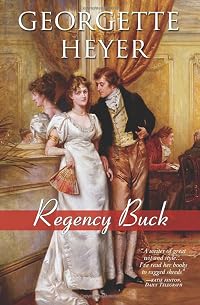
An altogether unsatisfactory arrangementAfter their father's death, Miss Judith Taverner and her brother Peregrine travel to London to meet their guardian, Lord Worth, expecting an elderly gentleman. To their surprise and utter disgust, their guardian is not much older than they are, doesn't want the office of guardian any more than they want him, and is determined to thwart all their interests and return them to the country.
With altogether too many complications
But when Miss Taverner and show more Peregrine begin to move in the highest social circles, Lord Worth cannot help but entangle himself with his adventuresome wards...
Praise for Regency Buck:
"Clever!"— Library Journal
"Georgette Heyer is unbeatable."— Sunday Telegraph
"Light and frothy, in the vein of the author's other Regency novels, this follows the fortunes of Miss Judith Taverner and her brother, Sir Peregrine. A good introduction to Heyer's period stories..." — The Booklist
"Reading Georgette Heyer is the next best thing to reading Jane Austen."— Publishers Weekly
"A writer of great wit and style... I've read her books to ragged shreds"— Katie Fenton, Daily Telegraph
"Wonderful characters, elegant, witty writing, perfect period detail, and rapturously romantic. Georgette Heyer achieves what the rest of us only aspire too."—Katie Fforde
. show less
Tags
Recommendations

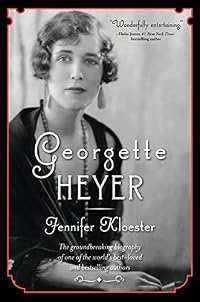














Member Recommendations
arctangent The main characters return, along with descendants of characters from Devil's Cub and These Old Shades, also by G. Heyer.
Member Reviews
When Sir Peregrine and Miss Judith Taverner travel to London, determined to confront their new guardian, they are shocked to discover that Lord Worth is none other than the condescending gentleman who insulted them on their journey. Both high spirited, brother and sister chafe at the limits imposed upon them by the imperious earl, whose arrogance, when combined with Judith's pride, cause more than one confrontation. Constantly at odds with her guardian, Judith is unsure whom she can trust when a plot to harm Perry comes to light...
A great admirer of Georgette Heyer's skills as a writer, I am nevertheless constrained to acknowledge that she frequently displays, through her characters, a contemptible class prejudice, particularly as it show more pertains to women. I am perfectly aware that women of a lower socio-economic status were considered "fair game" by the upper class men of the period which Heyer depicts - it is a sad reality that these attitudes are still with us today - but however historically accurate it may be, this is not an attitude I look for in a romantic hero, and when coupled with arrogance it is - in a word - insufferable.
That Worth feels free to accost Judith at the beginning of the novel - having determined that she will be open to his advances because she is wearing less-than-fashionable clothing, is unaccompanied by a maid, and happens to be passing through a town where a boxing match is to be held - is disgusting. His more reserved behavior once he discovers that she is his ward, I took, not as as evidence of principle, but of hypocrisy. In short: I find Lord Worth one of Heyer's most obnoxious creations, and although I have read Regency Buck a number of times, and enjoy some aspects of the story, I am unable to understand how anyone could find him an appealing character. show less
A great admirer of Georgette Heyer's skills as a writer, I am nevertheless constrained to acknowledge that she frequently displays, through her characters, a contemptible class prejudice, particularly as it show more pertains to women. I am perfectly aware that women of a lower socio-economic status were considered "fair game" by the upper class men of the period which Heyer depicts - it is a sad reality that these attitudes are still with us today - but however historically accurate it may be, this is not an attitude I look for in a romantic hero, and when coupled with arrogance it is - in a word - insufferable.
That Worth feels free to accost Judith at the beginning of the novel - having determined that she will be open to his advances because she is wearing less-than-fashionable clothing, is unaccompanied by a maid, and happens to be passing through a town where a boxing match is to be held - is disgusting. His more reserved behavior once he discovers that she is his ward, I took, not as as evidence of principle, but of hypocrisy. In short: I find Lord Worth one of Heyer's most obnoxious creations, and although I have read Regency Buck a number of times, and enjoy some aspects of the story, I am unable to understand how anyone could find him an appealing character. show less
With any other hero, I might consider this the best of Heyer. As it was, I was torn between hating Lord Worth and being swept up in the story.
Judith Taverner and her younger, sillier brother Peregrine have been recently orphaned, and with spirited curiosity they decide to seek out their new guardian, the high-handed Lord Worth. They are quite surprised to learn he is a young, handsome man who is friends with the Crown Prince and the cream of society. With his help, the Taverners are rapidly enfolded into the bosom of high society. But even as they enjoy great social success, worryingly lethal "accidents" keep happening around Perigrine...and Lord Worth seems to be involved.
Judith and Beau Brummel are great characters, and their show more friendship was the highlight of this novel. I was enthralled by their attempts to both curry favor with, and rebel against, the society to which they are born. Judith has an especially refreshing take on high society manners: she understands which rules she has to follow to me a social success, but refuses to take them seriously. Unfortunately, this is not the focus of [b:Regency Buck|311127|Regency Buck|Georgette Heyer|http://ecx.images-amazon.com/images/I/518V31HAKYL._SL75_.jpg|2682174]; Judith's contentious relationship with her infuriating guardian is.
Speaking of which...SPOILERS AHEAD.
The Taverners meet Lord Worth when he, speeding along the narrow road at a tremendous pace, almost smashes into their little curricle. He refuses to apologize or get down to see if they're ok. When he runs into Peregrine later, he insults him again. Then Lord Worth sees Judith by the side of the road (she was taking a stone from her shoe) and picks her up, puts her into his carriage, and forcibly kisses her. The whole time she protests loudly and without ambiguity. And of course, he just laughs at her. Not realizing his identity, she warns him that her guardian, Lord Worth, will protect her, and he laughs at her again. From then on, whenever they meet, he needles her about the kiss. When they meet again, he reveals his true identity, installs the Taverners into a house of HIS choosing, and refuses to let them have their own aunt stay as chaperone--his relative will be chaperone, instead. Incidents like this continue throughout the book. Judith is a smart, fashionable woman with good instincts, and Lord Worth spends the entire novel manipulating events and people to make her do what he wants.
Two terrible instances spring to mind. The Crown Prince is quite taken with Judith, and at one point in the novel, forces her to be in an isolated and closed room with him. Her chaperone (who Worth chose for her, against her objections) is off playing cards. When the prince tries to take advantage of her (in a scene novel to Heyer in its disturbing realism), Judith is so overcome that she faints for the first time in her life. She is awakened by Worth, who BERATES HER for embarrassing the prince. Then he lambasts her for being so foolish as to be in a room alone with him. When she tries to explain that she couldn't get away, he brushes off her objections.
The second instance is less of a rape-apologia and more of pure insensitivity. As part of his plan to expose Peregrine's would-be-assassin, Worth drugs Peregrine and stuffs him on a yacht to keep him out of the way. After he's been missing for a few days, Judith begins to fear for his life. She goes to Worth repeatedly, literally begging him to look for Peregrine, and he dismisses her fears as overreactions. (Despite the fact that someone really is trying to kill Peregrine, and Judith herself has prevented at least one of the attempts.) Then, the real villain of the story shows up, and convinces Judith that he knows where Peregrine is being kept. Judith goes along for awhile, but quickly realizes that it's a trap, designed to make it look like she has eloped with the villain. Just as the scene reaches a fever pitch of ugly rape-y connotations, Lord Worth steps out of the shadows and punches the villain. Then he and the villain take turns explaining the villain's dastardly plans. There is no concievable reason that Worth couldn't have clued Judith in to his suspicions, or told her that Peregrine was safe. Due to his high-handed douchebaggery, the "love of his life" spent days thinking that her beloved younger brother was dead, then thought she was going to be raped. WOW how ROMANTIC. Given how intelligent and level-headed Judith is throughout the book, I assumed Worth would eventually have a change of heart or realization that he has misjudged her and treated her badly. But no, he never suffers even a moment of doubt.
To me, this book works very well as a close look at upper-class Regency life, and very badly as a romance. show less
Judith Taverner and her younger, sillier brother Peregrine have been recently orphaned, and with spirited curiosity they decide to seek out their new guardian, the high-handed Lord Worth. They are quite surprised to learn he is a young, handsome man who is friends with the Crown Prince and the cream of society. With his help, the Taverners are rapidly enfolded into the bosom of high society. But even as they enjoy great social success, worryingly lethal "accidents" keep happening around Perigrine...and Lord Worth seems to be involved.
Judith and Beau Brummel are great characters, and their show more friendship was the highlight of this novel. I was enthralled by their attempts to both curry favor with, and rebel against, the society to which they are born. Judith has an especially refreshing take on high society manners: she understands which rules she has to follow to me a social success, but refuses to take them seriously. Unfortunately, this is not the focus of [b:Regency Buck|311127|Regency Buck|Georgette Heyer|http://ecx.images-amazon.com/images/I/518V31HAKYL._SL75_.jpg|2682174]; Judith's contentious relationship with her infuriating guardian is.
Speaking of which...SPOILERS AHEAD.
The Taverners meet Lord Worth when he, speeding along the narrow road at a tremendous pace, almost smashes into their little curricle. He refuses to apologize or get down to see if they're ok. When he runs into Peregrine later, he insults him again. Then Lord Worth sees Judith by the side of the road (she was taking a stone from her shoe) and picks her up, puts her into his carriage, and forcibly kisses her. The whole time she protests loudly and without ambiguity. And of course, he just laughs at her. Not realizing his identity, she warns him that her guardian, Lord Worth, will protect her, and he laughs at her again. From then on, whenever they meet, he needles her about the kiss. When they meet again, he reveals his true identity, installs the Taverners into a house of HIS choosing, and refuses to let them have their own aunt stay as chaperone--his relative will be chaperone, instead. Incidents like this continue throughout the book. Judith is a smart, fashionable woman with good instincts, and Lord Worth spends the entire novel manipulating events and people to make her do what he wants.
Two terrible instances spring to mind. The Crown Prince is quite taken with Judith, and at one point in the novel, forces her to be in an isolated and closed room with him. Her chaperone (who Worth chose for her, against her objections) is off playing cards. When the prince tries to take advantage of her (in a scene novel to Heyer in its disturbing realism), Judith is so overcome that she faints for the first time in her life. She is awakened by Worth, who BERATES HER for embarrassing the prince. Then he lambasts her for being so foolish as to be in a room alone with him. When she tries to explain that she couldn't get away, he brushes off her objections.
The second instance is less of a rape-apologia and more of pure insensitivity. As part of his plan to expose Peregrine's would-be-assassin, Worth drugs Peregrine and stuffs him on a yacht to keep him out of the way. After he's been missing for a few days, Judith begins to fear for his life. She goes to Worth repeatedly, literally begging him to look for Peregrine, and he dismisses her fears as overreactions. (Despite the fact that someone really is trying to kill Peregrine, and Judith herself has prevented at least one of the attempts.) Then, the real villain of the story shows up, and convinces Judith that he knows where Peregrine is being kept. Judith goes along for awhile, but quickly realizes that it's a trap, designed to make it look like she has eloped with the villain. Just as the scene reaches a fever pitch of ugly rape-y connotations, Lord Worth steps out of the shadows and punches the villain. Then he and the villain take turns explaining the villain's dastardly plans. There is no concievable reason that Worth couldn't have clued Judith in to his suspicions, or told her that Peregrine was safe. Due to his high-handed douchebaggery, the "love of his life" spent days thinking that her beloved younger brother was dead, then thought she was going to be raped. WOW how ROMANTIC. Given how intelligent and level-headed Judith is throughout the book, I assumed Worth would eventually have a change of heart or realization that he has misjudged her and treated her badly. But no, he never suffers even a moment of doubt.
To me, this book works very well as a close look at upper-class Regency life, and very badly as a romance. show less
Judith and Peregrine Taverner are not quite of age when their father dies and wills guardianship to his old friend the Earl of Worth, rather than to his estranged brother. The siblings have never met their guardian, and when he fails to follow through after a round of correspondence, they travel from their home in the country to his home in London, with a plan to set up residence in the city. Stopping overnight along the way, at a hotel filled to capacity for a boxing match, they cross paths with a man who treats Judith with impropriety, assuming her to be of a lower class. Upon arriving in London, they discover this man is their guardian. Surely not? He is far too young. Alas yes; the intended 4th Earl died before the will was written, show more the will erroneously referred to the 5th Earl, and legally there is no way out. He is no happier about the situation than they are, but he is conscientious about his responsibilities. The Taverner fortune is considerable, and the Taverner siblings are naive, vulnerable to exploitation. The Earl arranges a house and servants, and introduces the siblings to society. Judith is a hit, stylishly attired and advised by Beau Brummel on the skills of being remarkable. She is bombarded with marriage proposals, which must be approved by the Earl, who declares that he will reject every one. She protests, not because she wants to marry but because she wants to decide for herself. The Earl tends to take command with minimal communication. Among the men in attentive circulation are the siblings’ cousin, and the Earl’s brother, both pleasant companions. Peregrine gets caught up in gambling and would rapidly drown in debt if not for the Earl’s strict budget, then is smitten by a young woman from a respectable family, perhaps a steadying influence, and the Earl agrees to a betrothal. Peregrine is prone to trouble: he is challenged to a duel, he is shot at on the road, he becomes oddly ill. His fortune will go to Judith if he dies before marrying. Who can be trusted? The romance and the mystery resolve at a slow pace, often receding into the backdrop of social customs and events.
The characters and locations are historically real; for this reason the novel is interesting (I had to look up “Regency”, which indicates my prior level of knowledge), and I’d be inclined to read another in the future. It is also, at nearly 400 pages, a bit tedious. Not because of the writing, which is engaging, but because apparently people of the upper echelons didn’t _do_ anything; their days were filled with dinners, dances, excursions, theater, cards, clubs, invitations, selecting gowns, folding cravats – leisure activities by current standards, but leisure activities that had to be accomplished with precisely the right appearance and mannerisms and social connections. This is approximately my idea of hell, and I would read for awhile then step away for a break, appreciating my middle class job. show less
The characters and locations are historically real; for this reason the novel is interesting (I had to look up “Regency”, which indicates my prior level of knowledge), and I’d be inclined to read another in the future. It is also, at nearly 400 pages, a bit tedious. Not because of the writing, which is engaging, but because apparently people of the upper echelons didn’t _do_ anything; their days were filled with dinners, dances, excursions, theater, cards, clubs, invitations, selecting gowns, folding cravats – leisure activities by current standards, but leisure activities that had to be accomplished with precisely the right appearance and mannerisms and social connections. This is approximately my idea of hell, and I would read for awhile then step away for a break, appreciating my middle class job. show less
Oh dear. my copy of this is behyond its last legs. It was being held together with selotape of unknown vintage, but certainly old enough to no longer be effective. The book has come away from the cover and there were any number of loose pages. I ended up reading it part at a time to minimise possibility of dropping it all. Which probably just goes to show this is one that Mum read more often - and I can see why. Judith Taverner and her brother Peregine are on their way to London to establish themselves in society, after a lifetime of being secluded in Yorkshire. Their father, in a fit of pique of some description ,has made them wards pf Lord Worth and it is to him the address themselves. On the journey to London, they meet a gathering show more at Grantham and, by chance, meet Lord Worth here in less that ideal circumstances. Judith and he don't hit it off, although he calls her Clarinda, which should give a hint to how he feels from the start. As she is his ward, he feels unable to offer for her until she reaches her majority, and so he spends time rejecting her numerous suitors. There is an air of menace, however, as she stands in inherit a larger fortune if Peregine dies, and so Perry finds himself being called out for a duel, being shot at by a highway man, amongst other adventures. He ends up being kidnapped as his marriage comes closer, but as to who is doing the kidnapping and why, that just goes to muddy the waters.
Oh, it's just a delight. The sparring, the attraction of the heiress and her fortune as well as her determination not to bow to rules, be they of society or Lord Worth's invention, make Judith a real character. Love it. show less
Oh, it's just a delight. The sparring, the attraction of the heiress and her fortune as well as her determination not to bow to rules, be they of society or Lord Worth's invention, make Judith a real character. Love it. show less
A beautiful heiress, a reluctant guardian, cock-fights, duels of honour, carriage races, well-dressed dandies, poison, kidnapping and (of course) a couple of marriage engagements. What else could you want? An entertaining read. Younger brother Perry offers comedic relief throughout the book. There is, however, one uncomfortable scene (a la "metoo") near the beginning of the book that doesn't look too good to modern eyes.
My least favourite kind of Heyer novel—one with a fiery-yet-naive heroine and a hero so full of upper-class, alpha male testosterone that I'd be surprised if he boasts but the one pair of testicles. Judith irritated me, and Worth was the very image of an even more insufferable version of Darcy, who never got the set-down that he so thoroughly required. Heyer lost any interest I might have had in him the moment he started carrying around Judith, touching her against her will and physically intimidating her; by the time he told her she needed a good beating, I absolutely detested him. Thoroughly dislikable characters in this one, every single one of them.
A mistake in the will of Judith and Peregrine Taverner has placed them and their considerable fortune into the care of Lord Worth, who is only slightly older than they are and who doesn't much want the bother. Personalities clash, Peregrine gets himself into scrapes and near-scandals, and it seems there isn't a gentleman in town who hasn't fallen for fair Judith (and her fortune?). But is Lord Worth really as disinterested as he seems? And are all of Peregrine's brushes with death really only accidents? Oh, just as ridiculous as it sounds, and just as much fun. I enjoyed this romp through the regency upper crust thoroughly, though there's no surprises here (it all works out exactly as one it expects it to)--except perhaps that it was show more surprisingly fun. show less
Members
- Recently Added By
Published Reviews
ThingScore 25
After publishing eighteen books, ten of them historical, Georgette Heyer finally turned to the period that she would make her own: the Regency, in a book titled, appropriately enough, Regency Buck.
And oh, it’s awful.
Well, maybe not awful. Let us just say not very good. ...
The failed romance and the borrowings from Pride and Prejudice are, alas, not the only problems with this novel, which show more suffers from two other problems: one, it is frequently dull, partly because two, it contains far, far, far, far far too much dropping of historical facts. show less
And oh, it’s awful.
Well, maybe not awful. Let us just say not very good. ...
The failed romance and the borrowings from Pride and Prejudice are, alas, not the only problems with this novel, which show more suffers from two other problems: one, it is frequently dull, partly because two, it contains far, far, far, far far too much dropping of historical facts. show less
added by lquilter
Lists

Favorite Georgette Heyer Novels, Ranked
49 works; 29 members

The Guardian's 1000 Novels Everyone Must Read
1,005 works; 546 members

Books referenced in A Very Great Profession: The Woman's Novel 1914-39
199 works; 6 members

Books Read in 2025
4,090 works; 97 members
Author Information

127+ Works 77,972 Members
Georgette Heyer was born on August 16, 1902 at Wimbledon, London. She wrote The Black Moth as a story for her brother Boris. Her father, impressed with his daughter's imagination, suggested that she prepare it to be published, which it was by Constable in 1921. Having scored an instant success with The Black Moth at the age of nineteen under her show more own name, Georgette Heyer, she experimented with a pseudonym, Stella Martin, for her third book, published by Mills & Boon. She continued writing and in 1925 she married Ronald Rougier, a mining engineer. After reasonable but not spectacular sales from her first few books the instant success of These Old Shades in 1926 brought her a solid source of income which was very necessary at the time since the family relied to a large extent on the income from Georgette Heyer's writing. She wrote over fifty books during her lifetime and created the Regency England genre of romance novels. She died on July 4, 1974 at the age of 71. (Bowker Author Biography) show less
Some Editions
Awards and Honors
Notable Lists
Series

Belongs to Publisher Series
Work Relationships
Is contained in
Royal Escape / Black Sheep / A Blunt Instrument / Regency Buck / Envious Casca / The Corinthian by Georgette Heyer
Common Knowledge
- Original publication date
- 1935
- People/Characters
- Julian St John Audley, Fifth Earl of Worth; Judith Taverner; Peregrine Taverner; Beau Brummell; Duke of Clarence
- Important places
- Brighton, East Sussex, England, UK; London, England, UK
- First words
- Newark was left behind and the post-chaise-and-four entered on a stretch of flat country which offered little to attract the eye, or occasion remark.
- Last words
- (Click to show. Warning: May contain spoilers.)'I was prepared for worse. I am consoling myself with the reflection that your brother's way of receiving the news cannot be more unflattering to me than my tiger's opinion of it will be to you, my darling!'
- Original language
- English
Classifications
Statistics
- Members
- 1,771
- Popularity
- 12,324
- Reviews
- 50
- Rating
- (3.72)
- Languages
- 5 — Danish, English, Estonian, German, Italian
- Media
- Paper, Audiobook, Ebook
- ISBNs
- 45
- UPCs
- 1
- ASINs
- 35