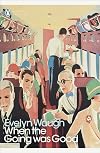
When the Going Was Good
by Evelyn Waugh 
On This Page
Description
Between 1929 and 1935 Evelyn Waugh travelled widely and wrote four books about his experiences. In this collection he writes, with his customary wit and perception, about a cruise around the Mediterranean; a train trip from Djibouti to Abyssinia to attend Emperor Haile Selassie's coronation in 1930; his travels in Aden, Zanzibar, Kenya and the Congo, coping with unbearable heat and plagued by mosquitoes; a journey to Guyana and Brazil; and his return to Addis Ababa in 1935 to report on the show more war between Abyssinia and Italy. Waugh's adventures on his travels gave him the ideas for such classic novels as Scoop and Black Mischief. show lessTags
Recommendations








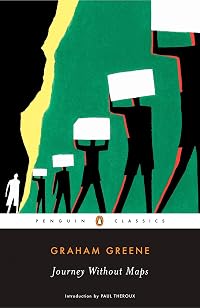

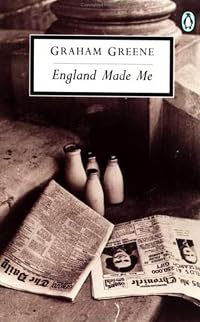


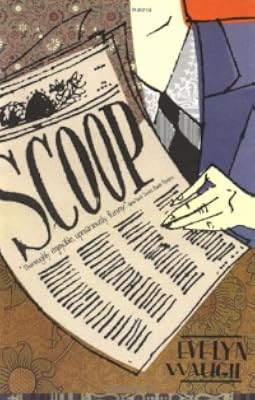



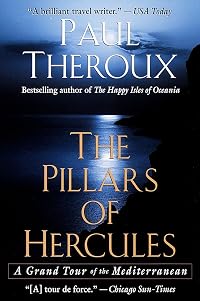
















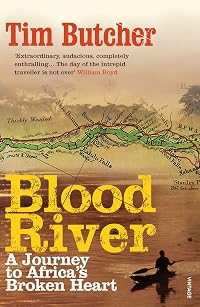

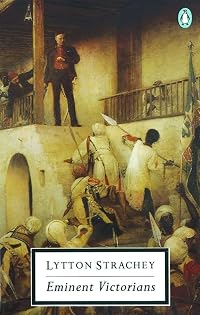



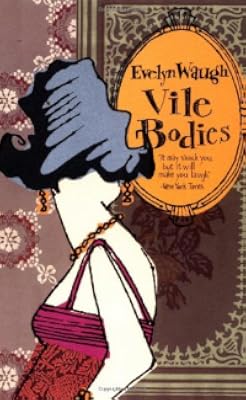

Member Recommendations





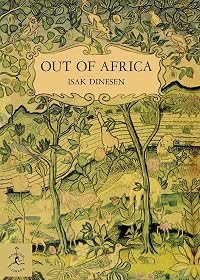
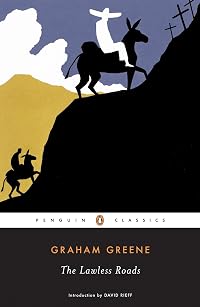
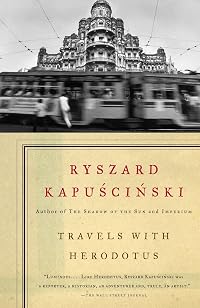
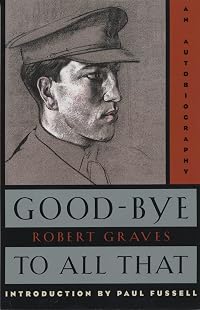
bookwoman247 The keen observations and satirical humor are similar.
bookwoman247 Both of these travel narratives are keenly observed and have a similar satirical humor.

Member Reviews
The best of travel writing and reportage, I fully enjoyed this. Waugh was a brave and adventurous young man when he made these trips. His satiric observations are so often very funny and made more so through his elegant and understated prose. Waugh's assignment to the Ethiopian Coronation in 1930 is a classic piece. Wonderful in every way.
This collection of Waugh's travel writings is for the most part excellent, illustrating his acute eye and gift for the English language. It is of its time, but he displays more liberality of mind than was normal then, although sometimes in blunter language than we are accustomed to. The writing on Africa and cruises is perhaps better than the section on Brazil, but the whole book is well worth reading.
The five travel essays that make up this book are all fresh and entertaining, although the earliest was written ninety years ago. Two concern Ethiopia, snapshots of the coronation of Haile Selassie and the early days of the Italian invasion. The remaining pieces recount travels in Egypt and the Holy Land, South America, and Africa. Apart from the fact that these stories form a sort of background to several of Waugh's novels, they are most readable. Waugh was a keen observer and an elegant and witty writer.
From the inner dustjacket:
About this book
It comprises all that the author wishes to preserve of the four travel books he wrote between 1929 and 1935: Labels, Remote People, Ninety-Two Days, and Waugh in Abyssinia. “These four books,” he writes, “here in fragments reprinted, were the record of certain journeys, chosen for no better reason than I needed money at the time of their completion; they were pedestrian, day-to-day accounts of things seen and people met, interspersed with commonplace information and some rather callow comments. In cutting them to their present shape, I have sought to leave a purely personal narrative in the hope there still lingers round it some traces of vernal scent … I never aspired to be a great show more traveller, I was simply a young man, typical of my age; we travelled as a matter of course. I rejoice that I went when the going was good.”
It’s vintage Waugh, and it’s well-written, the author’s disclaimers aside. Some of it is excellent; it’s all very readable, and it made me brush up on my history; Waugh was of course writing for a contemporary audience, and though I was pleased to realize his references were easy to place, I was quite vague on the details.
Here are the contents:
Preface
From 1928 until 1937 I had no fixed home and no possessions which would not conveniently go on a porter’s barrow. I travelled continuously, in England and abroad… We have most of us marched and made camp since then, gone hungry and thirsty, lived where pistols are flourished and fired. At that time it seemed like an ordeal, an initiation to manhood…”
Chapter One: A Pleasure Cruise in 1929 (From Labels) – London, Paris, Monte Carlo, Naples, Catania, Haifa, Cana (Galilee), Port Said, Cairo, Malta, Crete, Constantinople, Athens, Corfu, Gibraltar, Seville.
Chapter Two: A Coronation in 1930 (From Remote Peoples) – The coronation of Ethiopian Emperor Ras Tafari at Addis Ababa.
Chapter Three: Globe-Trotting in 1930-1 (From Remote Peoples) – Zanzibar, the Congo, Aden, Kenya (Nairobi, the Rift Valley), Tanganyika, Cape Town.
Chapter Four: A Journey to Brazil in 1932 (From Ninety-two Days) – Guiana and Brazil.
Chapter Five: A War in 1935 (From Waugh in Abyssinia) – The Italian invasion of Abyssinia, from a war correspondent’s perspective. Farce versus bloodshed.
*****
If you happen across this little account in your own travels, it is worth the time to read, especially if you are already a Waugh convert. show less
About this book
It comprises all that the author wishes to preserve of the four travel books he wrote between 1929 and 1935: Labels, Remote People, Ninety-Two Days, and Waugh in Abyssinia. “These four books,” he writes, “here in fragments reprinted, were the record of certain journeys, chosen for no better reason than I needed money at the time of their completion; they were pedestrian, day-to-day accounts of things seen and people met, interspersed with commonplace information and some rather callow comments. In cutting them to their present shape, I have sought to leave a purely personal narrative in the hope there still lingers round it some traces of vernal scent … I never aspired to be a great show more traveller, I was simply a young man, typical of my age; we travelled as a matter of course. I rejoice that I went when the going was good.”
It’s vintage Waugh, and it’s well-written, the author’s disclaimers aside. Some of it is excellent; it’s all very readable, and it made me brush up on my history; Waugh was of course writing for a contemporary audience, and though I was pleased to realize his references were easy to place, I was quite vague on the details.
Here are the contents:
Preface
From 1928 until 1937 I had no fixed home and no possessions which would not conveniently go on a porter’s barrow. I travelled continuously, in England and abroad… We have most of us marched and made camp since then, gone hungry and thirsty, lived where pistols are flourished and fired. At that time it seemed like an ordeal, an initiation to manhood…”
Chapter One: A Pleasure Cruise in 1929 (From Labels) – London, Paris, Monte Carlo, Naples, Catania, Haifa, Cana (Galilee), Port Said, Cairo, Malta, Crete, Constantinople, Athens, Corfu, Gibraltar, Seville.
Chapter Two: A Coronation in 1930 (From Remote Peoples) – The coronation of Ethiopian Emperor Ras Tafari at Addis Ababa.
Chapter Three: Globe-Trotting in 1930-1 (From Remote Peoples) – Zanzibar, the Congo, Aden, Kenya (Nairobi, the Rift Valley), Tanganyika, Cape Town.
Chapter Four: A Journey to Brazil in 1932 (From Ninety-two Days) – Guiana and Brazil.
Chapter Five: A War in 1935 (From Waugh in Abyssinia) – The Italian invasion of Abyssinia, from a war correspondent’s perspective. Farce versus bloodshed.
*****
If you happen across this little account in your own travels, it is worth the time to read, especially if you are already a Waugh convert. show less
This book is comprised of a series of travel narratives written between 1925 - 1935.
The keen observatons and satirical humor reminded me of Mark Twain's travel writing, although Twain's satire is sharper.
The historical details were especially interesting.
When the Going Was Good wasn't great, but was still a pleasure to read.
The keen observatons and satirical humor reminded me of Mark Twain's travel writing, although Twain's satire is sharper.
The historical details were especially interesting.
When the Going Was Good wasn't great, but was still a pleasure to read.
Back Cover: Wit and adventure in four continents. Experiences from EW's pre-war travel books which gave him the ideas for such novels as Scoop and Black Mischief
apr 2013
Members
- Recently Added By
Lists

Best of Travel Narratives
142 works; 28 members

Best British Empire History Books
39 works; 8 members
Author Information

132+ Works 56,611 Members
Born in Hampstead and educated at Oxford University, Evelyn Waugh came from a literary family. His elder brother, Alec was a novelist, and his father, Arthur Waugh, was the influential head of a large publishing house. Even in his school days, Waugh showed sings of the profound belief in Catholicism and brilliant wit that were to mark his later show more years. Waugh began publishing his novels in the late 1920's. He joined the Royal Marines at the beginning of World War II and was one of the first to volunteer for commando service. In 1944 he survived a plane crash in Yugoslavia and, while hiding in a cave, corrected the proofs of one of his novels. Waugh's early novels, Decline and Fall (1927), Vile Bodies (1930), and A Handful of Dust (1934), established him as one of the funniest and most brilliant satirists the British had seen in years. He was particularly skillful at poking fun at the scramble for prominence among the upper classes and the struggle between the generations. He lived for a while in Hollywood, about which he wrote The Loved One (1948), a scathing attack on the United States's overly sentimental funeral practices. His greatest works, however, are Brideshead Revisited (1945), which has been made into a highly popular television miniseries, and the trilogy Sword of Honor (1965), composed of Men at Arms (1952), Officers and Gentlemen (1955), and The End of the Battle (1961). (Bowker Author Biography) show less
Evelyn Waugh has a Legacy Library. Legacy libraries are the personal libraries of famous readers, entered by LibraryThing members from the Legacy Libraries group.
Series
Belongs to Publisher Series
Work Relationships
Is an abridged version of
Common Knowledge
- Canonical title*
- Quando viaggiare era un piacere
- Original publication date
- 1946
- People/Characters
- Evelyn Waugh; Haile Selassie; Kiki Preston; Raymond de Trafford
- Last words
- (Click to show. Warning: May contain spoilers.)Like the rest of the world I began to forget about Abyssinia.
*Some information comes from Common Knowledge in other languages. Click "Edit" for more information.
Classifications
Statistics
- Members
- 601
- Popularity
- 48,655
- Reviews
- 9
- Rating
- (3.82)
- Languages
- English, Italian
- Media
- Paper, Ebook
- ISBNs
- 15
- ASINs
- 21