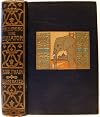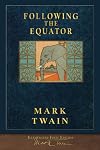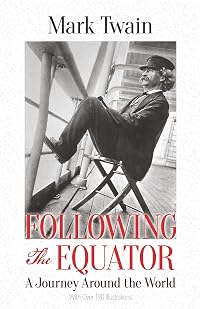
Following the Equator: A Journey Around the World
by Mark Twain 
On This Page
Description
Following the Equator is an account by Mark Twain of his travels through the British Empire in 1895. He chose his route for opportunities to lecture on the English language and recoup his finances, impoverished due to a failed investment. He recounts and criticizes the racism, imperialism and missionary zeal he encountered on his travels - and all with his particular brand of wit.Tags
Recommendations


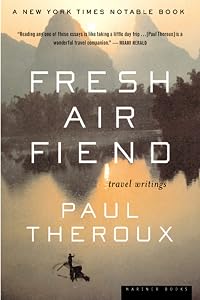
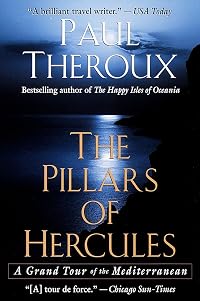
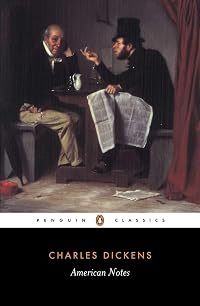
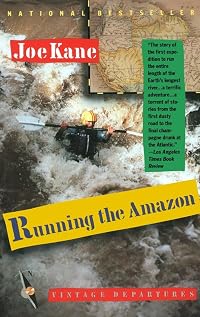





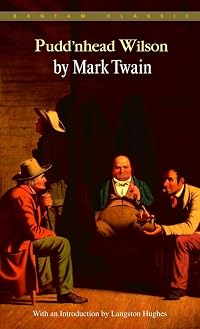
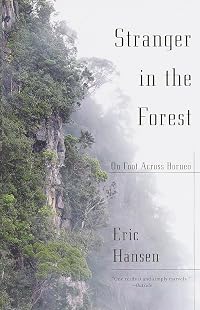





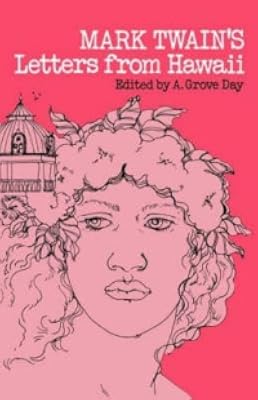


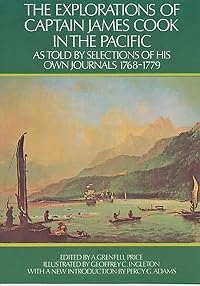



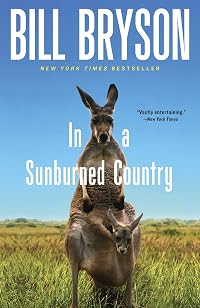
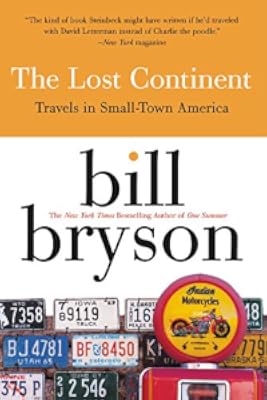

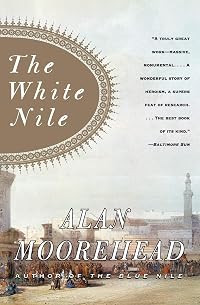


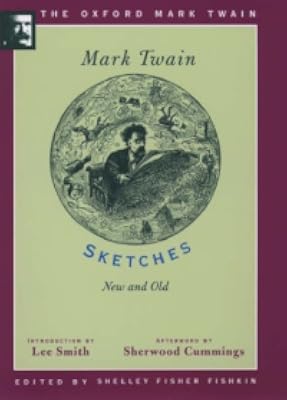




Member Recommendations



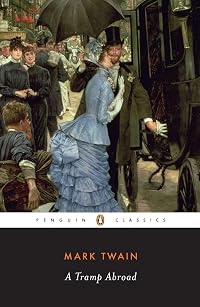
bookwoman247 Both of these travel narratives are keenly observed and have a similar satirical humor.
Member Reviews
A charmingly disinterested account of world travel from the perspective of an American. The author revels in his own prejudice with a deliciously cynical charm. His observations have kept their edge and are still cutting today. None are spared his blistering eye and both high and low find their ways pilloried for fun alone. There is not a jot of malice in the whole book. The author has taken the weight of human nature and knows the frailties of mankind very well. I calming, easy read.
“I never could tell a lie that anybody would doubt, nor a truth that anybody would believe.” — Mark Twain, “Following the Equator”
Truth or lies? There's probably some of each in Mark Twain's “Following the Equator” (1897), although I was more concerned with what was interesting and what was not. And most of Twain's account of his trip around the world is not that interesting, at least not to 21st century readers. There's a lot of stuffing — copied material from other sources, dull stories told by fellow travelers and memories from previous journeys not special enough for other books, for example.
Yet it is a long, long book, and Twain strikes gold here and there. Some of the better portions consist of his diary entries, show more such as this one: "Sailed in the Rosetta. This is a poor old ship, and ought to be insured and sunk." That sounds like the Mark Twain we love. I was fascinated by his long list of odd town names in Australia, such as Goondiwindi, Tungkillo and Woolloomooloo.
He goes into much detail in describing Thuggee and suttee practices in India. The former involved a religious cult of murderers and the latter widows who burned themselves with the bodies of their husbands. The British had mostly eliminated these practices by the time Twain visited.
Although Twain made the journey with his wife and daughter, he hardly mentions his family at all in his book, and never by name.
Much in the book will shock today's readers. He brags about killing 16 tigers in India. About South Africa, he writes, "The great bulk of the savages must go," and suggests humane ways of "diminishing the black population." Elsewhere he writes, "The world was made for man — the white man." One wonders why Adventures of Huckleberry is controversial, while Following the Equator isn't. Perhaps it's because few people still read the latter. And for good reason. show less
Truth or lies? There's probably some of each in Mark Twain's “Following the Equator” (1897), although I was more concerned with what was interesting and what was not. And most of Twain's account of his trip around the world is not that interesting, at least not to 21st century readers. There's a lot of stuffing — copied material from other sources, dull stories told by fellow travelers and memories from previous journeys not special enough for other books, for example.
Yet it is a long, long book, and Twain strikes gold here and there. Some of the better portions consist of his diary entries, show more such as this one: "Sailed in the Rosetta. This is a poor old ship, and ought to be insured and sunk." That sounds like the Mark Twain we love. I was fascinated by his long list of odd town names in Australia, such as Goondiwindi, Tungkillo and Woolloomooloo.
He goes into much detail in describing Thuggee and suttee practices in India. The former involved a religious cult of murderers and the latter widows who burned themselves with the bodies of their husbands. The British had mostly eliminated these practices by the time Twain visited.
Although Twain made the journey with his wife and daughter, he hardly mentions his family at all in his book, and never by name.
Much in the book will shock today's readers. He brags about killing 16 tigers in India. About South Africa, he writes, "The great bulk of the savages must go," and suggests humane ways of "diminishing the black population." Elsewhere he writes, "The world was made for man — the white man." One wonders why Adventures of Huckleberry is controversial, while Following the Equator isn't. Perhaps it's because few people still read the latter. And for good reason. show less
Hawaii, Fiji, New Zealand, Australia and India are all wonderfully described, as well as the platypus! The parts about "recruiting" (slave-catching) are especially powerful! Twain is clearly anti-slavery, anti-politician, and pro woman's suffrage! And his points about education toward the end seem right on for today as well as when he wrote! I wasn't crazy about the chapters on South Africa, but this is one heck of a book!
I can hardly imagine anything better than traveling the globe with Mark Twain. His wit and keen powers of observation were abundantly apparent. Sadly, so was his prejudice; although, one must remember that this was written in an entirely different time, and that, thankfully most people have become more evolved and educated since then. One also has to remember that, as Twain reminds us himself in the book, he was brought up during slavery, to accept slavery and denigration of those of different ethnicity as normal.
One story, that involved him naming an Indian servant Satan had me exasperated at his presumption at making such a joke at someone else's expense and at the same time had me rolling on the floor laughing when Satan brought show more Twain God's calling card. That's just the crux of the story, it was a few pages in length, and the funniest passage I think I've ever read. However, the lack of respect for his servant as a human being and for the religion of others in the story, did, as I say, quite leave me feeling exasperated. show less
One story, that involved him naming an Indian servant Satan had me exasperated at his presumption at making such a joke at someone else's expense and at the same time had me rolling on the floor laughing when Satan brought show more Twain God's calling card. That's just the crux of the story, it was a few pages in length, and the funniest passage I think I've ever read. However, the lack of respect for his servant as a human being and for the religion of others in the story, did, as I say, quite leave me feeling exasperated. show less
Not quite as enjoyable as Twain's [b:The Innocents Abroad|2443|The Innocents Abroad|Mark Twain|http://photo.goodreads.com/books/1320520180s/2443.jpg|6459342]. The latter is more pitched toward travelogue, whereas this is a blend of travel, history, politics, and amusing digressions. This is not to say that it's not a good book, but that it ranges about in a way that readers of Oliver Sacks's [b:Oaxaca Journal|66721|Oaxaca Journal (National Geographic Directions)|Oliver Sacks|http://photo.goodreads.com/books/1320458669s/66721.jpg|386230] may recognize.
Readers who complain of Twain's racism seem to me to be missing the point. Give that this is a man whose childhood was before the US Civil War, he is remarkably respectful and appreciative show more of the people he meets. What some readers seem to miss is that he exaggerates for effect; that the effect sought is to render the racist/colonial/imperialist perspectives of the majority people absurd through exaggeration; and that he mocks everyone. I'm not suggesting that some of his comments aren't problematic by today's standards, but they are less so than much of what I read in US newspapers. show less
Readers who complain of Twain's racism seem to me to be missing the point. Give that this is a man whose childhood was before the US Civil War, he is remarkably respectful and appreciative show more of the people he meets. What some readers seem to miss is that he exaggerates for effect; that the effect sought is to render the racist/colonial/imperialist perspectives of the majority people absurd through exaggeration; and that he mocks everyone. I'm not suggesting that some of his comments aren't problematic by today's standards, but they are less so than much of what I read in US newspapers. show less
In the early 1900s, Mark Twain took a journey around the equator, visiting various countries and lecturing there. This is somewhat of his journal, but is mostly composed of his thoughts after the journey .
It is interesting to read of the countries, and I found the opinions of Twain to be remarkably modern. For any who have called him a racist, I think they should read this book before they decide. His remarks are biting and sharp on the subject. Where he may be misunderstood is his habit of over-exaggerating an opinion to make a the opposite point. I found most of his writings about the islands in the Pacific, Australia and India to be interesting, and in fact learned much about India I had not known before. I found myself frequently show more looking things up thinking he was making up stories, but sure enough, it was true! The part on South Africa dragged for me, I did a lot of skimming there.
This book is not as bitter and dark as some of his other writings. In fact, it seemed as if he was having the time of his life. show less
It is interesting to read of the countries, and I found the opinions of Twain to be remarkably modern. For any who have called him a racist, I think they should read this book before they decide. His remarks are biting and sharp on the subject. Where he may be misunderstood is his habit of over-exaggerating an opinion to make a the opposite point. I found most of his writings about the islands in the Pacific, Australia and India to be interesting, and in fact learned much about India I had not known before. I found myself frequently show more looking things up thinking he was making up stories, but sure enough, it was true! The part on South Africa dragged for me, I did a lot of skimming there.
This book is not as bitter and dark as some of his other writings. In fact, it seemed as if he was having the time of his life. show less
A great slog of a bathroom book. Casual 19th century racism of a genial sort.
But great travel insights from another time.
But great travel insights from another time.
Members
- Recently Added By
Lists

Best of Travel Narratives
142 works; 28 members

Geography and Travel from The Book-Lover
291 works; 1 member
Author Information

2,760+ Works 208,810 Members
Mark Twain was born Samuel L. Clemens in Florida, Missouri on November 30, 1835. He worked as a printer, and then became a steamboat pilot. He traveled throughout the West, writing humorous sketches for newspapers. In 1865, he wrote the short story, The Celebrated Jumping Frog of Calaveras County, which was very well received. He then began a show more career as a humorous travel writer and lecturer, publishing The Innocents Abroad in 1869, Roughing It in 1872, and, Gilded Age in 1873, which was co-authored with Charles Dudley Warner. His best-known works are The Adventures of Tom Sawyer, Mississippi Writing: Life on the Mississippi, and The Adventures of Huckleberry Finn. He died of a heart attack on April 21, 1910. (Bowker Author Biography) show less
Mark Twain has a Legacy Library. Legacy libraries are the personal libraries of famous readers, entered by LibraryThing members from the Legacy Libraries group.
Series
Belongs to Publisher Series
Világjárók (Klasszikus Útleírások - IV.)
Work Relationships
Is contained in
Mark Twain - Gesammelte Werke (Reise um die Welt; Reise durch Deutschland; 1.000.000-Pfundnote; Schreckliche deutsche Sprache; Briefe von der Erde; ... (IRIS®-Leinen) (Anaconda Gesammelte Werke) by Mark Twain
Is abridged in
Common Knowledge
- Original publication date
- 1897
- Important places
- Australia
- Epigraph
- THE PUDD'NHEAD MAXIMS
THESE WISDOMS ARE FOR THE LURING OF YOUTH TOWARD
HIGH MORAL ALTITUDES. THE AUTHOR DID NOT
GATHER THEM FROM PRACTICE BUT FROM
OBSERVATION. TO BE GOOD IS NOBLE;
BUT TO... (show all) SHOW OTHERS HOW
TO BE GOOD IS NOBLER
AND NO TROUBLE. - Dedication
- THIS BOOK
Is Affectionately Inscribed to
My young friend
Harry Rogers
With Recognition
Of What he is, and apprehension of what he may become
Unless he form himself a little more close... (show all)ly
Upon the model of
The author. - First words
- The starting point of this lecturing-trip around the world was Paris, where we had been living a year or two.
- Last words
- (Click to show. Warning: May contain spoilers.)Human pride is not worth-while; there is always something lying in wait to take the wind out of it.
Classifications
- Genres
- Travel, Nonfiction, Biography & Memoir
- DDC/MDS
- 910.41 — History & geography Geography & travel modified standard subdivisions of Geography and travel Pirates & Shipwrecks Circumnavigation of the Earth
- LCC
- G440 .T95 .T93 — Geography, Anthropology and Recreation Geography (General) Special voyages and travels
- BISAC
Statistics
- Members
- 757
- Popularity
- 37,054
- Reviews
- 13
- Rating
- (3.92)
- Languages
- English, German, Hungarian
- Media
- Paper, Audiobook, Ebook
- ISBNs
- 89
- UPCs
- 1
- ASINs
- 42