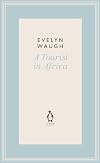
A Tourist in Africa
by Evelyn Waugh 
On This Page
Description
This volume is part of the Complete Works of Evelyn Waugh critical edition, which brings together all Waugh's published and previously unpublished writings for the first time with comprehensive introductions and annotation, and a full account of each text's manuscript development and textualvariants. The edition's General Editor is Alexander Waugh, Evelyn Waugh's grandson and editor of the twelve-volume Personal Writings sequence.A Tourist in Africa was Evelyn Waugh's final travel book, and show more one of his most interesting. Restless and intolerant of the English winter, Waugh boards the Pendennis Castle for East Africa by way of Italy and Suez, going on to retrace the routes of journeys he took as a much younger man throughKenya, Tanganyika, the Rhodesias, and other East African countries. He embarks on his trip at the very moment when many of these countries are beginning to assert their independence after decades of British rule. As he travels, Waugh contemplates the changing face of an Africa he has knownintimately as well as his own increasingly awkward fit in the modern world. Even as he contends with his own encroaching age and the unwelcome changes to international travel, his usual zest for adventure and discovery asserts itself at every turn. A much better sailor than flyer, Waugh laments theimpending eclipse of sea travel as well as the declining appetite for danger and daring he witnesses in some of his companions. This edition provides hundreds of contextual notes to illuminate the historical, cultural, and biographical details of most interest to readers of Waugh, travel writing,and African history; a complete textual history which traces every change made to the text from Waugh's first drafts to the first published British and American editions; new and original illustrations; and a thorough but eminently readable introduction by Patrick R. Query. show lessTags
Recommendations





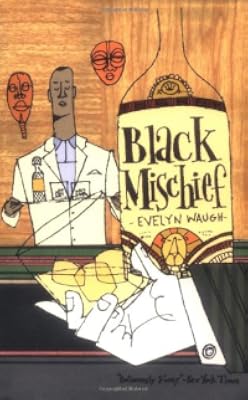





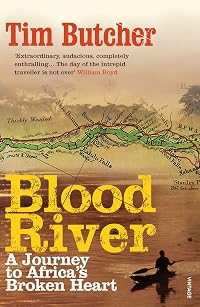
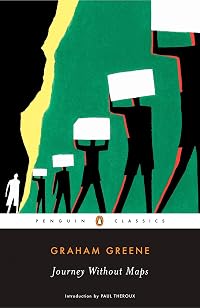


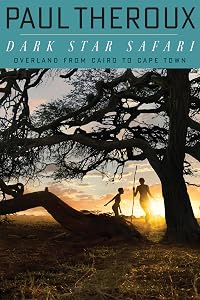

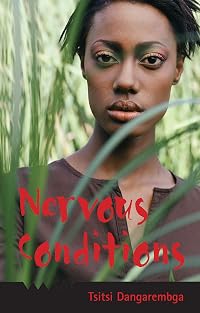










Member Recommendations



John_Vaughan Labels was his first travel narrative and Tourist in Africa his last.


Member Reviews
Most winters, after Childermas, Evelyn escaped from the rigors and his horror of the English winter. In 1985 he undertook a trip to the ”British Africa” of Kenya, Rhodesia and Tanganyika returning in April.
Oh that he took a longer trip and more time. Oh too, that he shared more details of his pleasant and “not too arduous” journey. Now it is too late for us to learn more, those countries are – as he knew and saw them – gone.
Often considered arrogant and a snob, Waugh was a thorough conservative well aware of the system of class divisions and secure in his standing in them. Philip Larkin, in a review for The Guardian critiqued Waugh's elitism; "to receive a letter from him, it seems one would have to have a nursery nickname show more and be a member of White's". But there was a strong core of honor and courage in his character that is apparent in his treatment of his characters, his self-mockery and his wit. His writing is stylish and clear.
Evelyn enjoyed this trip very much but is said to have “despised" the book and it was in fact, his last travel narrative, a genre at which I feel he excelled. I enjoyed this book very much and was sad to finish it so quickly…Cyril Connolly, a friend that Waugh loved to tease, in a review called it ”the thinnest piece of book-making that Mr. Waugh has undertaken".
But, unlike me, it was not the physical size or length he was criticizing! show less
Oh that he took a longer trip and more time. Oh too, that he shared more details of his pleasant and “not too arduous” journey. Now it is too late for us to learn more, those countries are – as he knew and saw them – gone.
Often considered arrogant and a snob, Waugh was a thorough conservative well aware of the system of class divisions and secure in his standing in them. Philip Larkin, in a review for The Guardian critiqued Waugh's elitism; "to receive a letter from him, it seems one would have to have a nursery nickname show more and be a member of White's". But there was a strong core of honor and courage in his character that is apparent in his treatment of his characters, his self-mockery and his wit. His writing is stylish and clear.
Evelyn enjoyed this trip very much but is said to have “despised" the book and it was in fact, his last travel narrative, a genre at which I feel he excelled. I enjoyed this book very much and was sad to finish it so quickly…Cyril Connolly, a friend that Waugh loved to tease, in a review called it ”the thinnest piece of book-making that Mr. Waugh has undertaken".
But, unlike me, it was not the physical size or length he was criticizing! show less
Ratings
Members
- Recently Added By
Lists

Books Read in 2015
3,299 works; 126 members
Author Information

132+ Works 56,605 Members
Born in Hampstead and educated at Oxford University, Evelyn Waugh came from a literary family. His elder brother, Alec was a novelist, and his father, Arthur Waugh, was the influential head of a large publishing house. Even in his school days, Waugh showed sings of the profound belief in Catholicism and brilliant wit that were to mark his later show more years. Waugh began publishing his novels in the late 1920's. He joined the Royal Marines at the beginning of World War II and was one of the first to volunteer for commando service. In 1944 he survived a plane crash in Yugoslavia and, while hiding in a cave, corrected the proofs of one of his novels. Waugh's early novels, Decline and Fall (1927), Vile Bodies (1930), and A Handful of Dust (1934), established him as one of the funniest and most brilliant satirists the British had seen in years. He was particularly skillful at poking fun at the scramble for prominence among the upper classes and the struggle between the generations. He lived for a while in Hollywood, about which he wrote The Loved One (1948), a scathing attack on the United States's overly sentimental funeral practices. His greatest works, however, are Brideshead Revisited (1945), which has been made into a highly popular television miniseries, and the trilogy Sword of Honor (1965), composed of Men at Arms (1952), Officers and Gentlemen (1955), and The End of the Battle (1961). (Bowker Author Biography) show less
Evelyn Waugh has a Legacy Library. Legacy libraries are the personal libraries of famous readers, entered by LibraryThing members from the Legacy Libraries group.
Series
Belongs to Publisher Series
Work Relationships
Is contained in
Common Knowledge
- First words
- On the third day after Christmas we commemorate the massacre of the Holy Innocents.
Classifications
Statistics
- Members
- 136
- Popularity
- 240,363
- Reviews
- 1
- Rating
- (3.50)
- Languages
- English, French, Italian, Spanish
- Media
- Paper, Ebook
- ISBNs
- 13
- ASINs
- 8