On This Page
Description
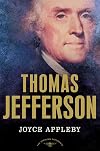
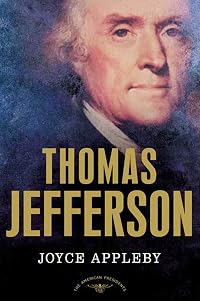
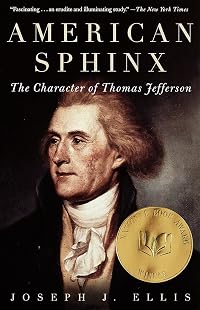
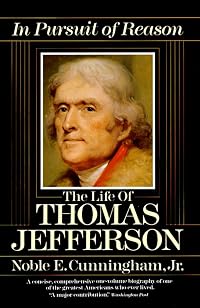
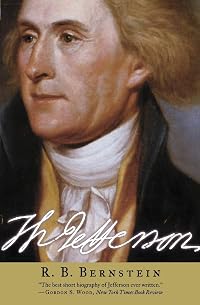
An analysis of the political career of Thomas Jefferson considers his efforts for minimalist leadership, mandates for free public education and the separation of church and state, and contributions to national development.Tags
Recommendations


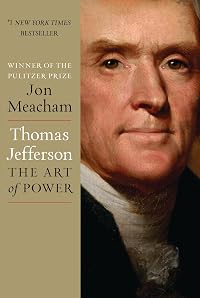






Member Reviews
I've not read a lot of history, so I'm not positive that this isn't biased or something, but it certainly seems to be enlightening. However, I have been a careful student and auto-didact long enough to trust my judgement, and I do feel confident that I learned a lot of valid truth....
Short, fascinating, focused on the years when Jefferson was President, discussed from the perspective of politics. Anyone who follows presidential campaigns nowadays should read this and see how little some things have changed, and how much some current institutions and attitudes owe to Jefferson's vision and work.
You might know I'm interested in the difference between descriptive dictionaries and proscriptive usage manuals (to oversimplify). Jefferson was show more too. "Demoting dictionaries, he called them 'but the depositories of words already legitimized by usage,' while society became 'the workshop in which new ones were elaborated.' The very concept society--a coherent group of people conceptually different from family, church, and state--was novel when he wrote these words."
"It was slavery itself, in Jefferson's opinion, that made necessary the separation of the races after emancipation. Former master and former slave had to avoid the effects of 'deep rooted prejudices entertained by the whites; ten thousand recollections, by the blacks, of the injuries they have sustained.'.... What Jefferson couldn't do was think himself and his country into a solution to the problem as he posed it: the ending of an institution so pernicious that it had permanently poisoned the souls of its perpetrators and victims." At least he did achieve a ban on African slave trade, in 1808.
"Ministers 'dread the advance of science as witches do the approach of daylight' he wrote one friend." Thoughts like this shortly preceded his foundation of the Univ. of VA, which was meant to serve the 'sons of the South' as Columbia and the universities of New England could not properly do.
Well. Lots to think about in this concise work. I should read more history, I think, if I can find more like this (as opposed to the epic and the narrative that dominates the lists). show less
Short, fascinating, focused on the years when Jefferson was President, discussed from the perspective of politics. Anyone who follows presidential campaigns nowadays should read this and see how little some things have changed, and how much some current institutions and attitudes owe to Jefferson's vision and work.
You might know I'm interested in the difference between descriptive dictionaries and proscriptive usage manuals (to oversimplify). Jefferson was show more too. "Demoting dictionaries, he called them 'but the depositories of words already legitimized by usage,' while society became 'the workshop in which new ones were elaborated.' The very concept society--a coherent group of people conceptually different from family, church, and state--was novel when he wrote these words."
"It was slavery itself, in Jefferson's opinion, that made necessary the separation of the races after emancipation. Former master and former slave had to avoid the effects of 'deep rooted prejudices entertained by the whites; ten thousand recollections, by the blacks, of the injuries they have sustained.'.... What Jefferson couldn't do was think himself and his country into a solution to the problem as he posed it: the ending of an institution so pernicious that it had permanently poisoned the souls of its perpetrators and victims." At least he did achieve a ban on African slave trade, in 1808.
"Ministers 'dread the advance of science as witches do the approach of daylight' he wrote one friend." Thoughts like this shortly preceded his foundation of the Univ. of VA, which was meant to serve the 'sons of the South' as Columbia and the universities of New England could not properly do.
Well. Lots to think about in this concise work. I should read more history, I think, if I can find more like this (as opposed to the epic and the narrative that dominates the lists). show less
Being an insightful look at some of the major themes of Thomas Jefferson's career and thought. Since this series is supposed to be about presidential administrations, she's off the rez a little in concentrating on Jefferson's philosophies of society and government, but given the nature of the man, it's difficult not to. In terms of the Jefferson administration, she analyzes his successful attempt to undo the Federalist template of government and bureaucracy as well as his attempts at a balanced foreign policy at a time of world war. However, her main concern is to reconcile Jefferson's philosophy of equality for all with how little he accomplished, or even seemed to try and accomplish, to advance the status of such groups as slaves, show more women, and Indians. She's a friendly guide who asks more questions than she dictates answers to, and the book is pleasant, informative, and thought-provoking. show less
Of the books in this series that I have read to date, this is by far the weakest. To tell the truth, I could not finish it. The author does not present Jefferson as he was, a man exceptional in both his merits and his flaws, but as the perfect human. In fact, after about fifty pages, I began to wonder if the book was going to end with an account of Jefferson's rising from the dead after three days. I highly recommend the American Presidents series as a whole, but you should buy this one only if you wish to complete your collection. It should not be relied on as a description of a real man.
A fairly short book and an enjoyable read, chock full of information and musings of this complicated man -- his huge successes and his unfortunate failings.
The American Presidents Series: The 3rd President, 1801-1809.
An illuminating analysis of the man whose name is synonymous with American democracy. Few presidents have embodied the American spirit as fully as Thomas Jefferson. He was the originator of so many of the founding principles of American democracy. Politically, he shuffled off the centralized authority of the Federalists, working toward a more diffuse and minimalist leadership. He introduced the bills separating church and state and mandating free
An illuminating analysis of the man whose name is synonymous with American democracy. Few presidents have embodied the American spirit as fully as Thomas Jefferson. He was the originator of so many of the founding principles of American democracy. Politically, he shuffled off the centralized authority of the Federalists, working toward a more diffuse and minimalist leadership. He introduced the bills separating church and state and mandating free
Could not get past the 22nd page. Started to read after finishing "John Adams" by David McCullough. Either Mr. McCullough has spoiled me or the book is simply dry.
The American Presidents Series: The 3rd President, 1801-1809
Members
- Recently Added By
Lists

Founding Father
104 works; 11 members

Thomas Jefferson Books
43 works; 1 member
Author Information

36+ Works 2,152 Members
Joyce Oldham Appleby was born in Omaha, Nebraska on April 9, 1929. She graduated from Stanford University in 1950. She worked for the Restaurant Reporter, a trade magazine based in Beverly Hills, and later as a stringer for The Star-News, a local South Pasadena newspaper. She received a Ph.D. from Claremont Graduate University. She taught at San show more Diego State University and at the University of California, Los Angeles. She retired from there in 2001. She wrote several books during her lifetime including Economic Thought and Ideology in 17th Century England, Inheriting the Revolution: The First Generation of Americans, Capitalism and a New Social Order: The Republican Vision of the 1790s, Liberalism and Republicanism in the Historical Imagination, The Relentless Revolution: A History of Capitalism, and Shores of Knowledge: New World Discoveries and the Scientific Imagination. She died from complications of pneumonia on December 23, 2016 at the age of 87. (Bowker Author Biography) show less
Series

Common Knowledge
- Canonical title
- Thomas Jefferson
- Original publication date
- 2003
- People/Characters
- Thomas Jefferson; Aaron Burr; John Adams; John Marshall, 4th Chief Justice of the United States; James Madison; George Washington (show all 7); Alexander Hamilton
- Important places
- Washington, D.C., USA; University of Virginia, Charlottesville, Virginia, USA; Charlottesville, Virginia, USA; Virginia, USA; USA
- Important events
- Declaration of Independence; Election of 1800; Louisiana Purchase; Alien and Sedition Acts of 1798
- Dedication
- FOR KAREN
who shares my love of history - First words
- Preface
The United States in 1800 was a political phenomenon: an independent nation sprung from European colonies, a republic in a world of monarchies, a unique society resting on a broad base of property-owning family far... (show all)mers. - Publisher's editor
- Schlesinger, Arthur M. Jr.
Classifications
- Genres
- History, Nonfiction, Biography & Memoir, General Nonfiction
- DDC/MDS
- 973.4 — History & geography History of North America United States Constitutional period (1789-1809)
- LCC
- E332 .A67 — History of the United States United States Revolution to the Civil War, 1775/1783-1861 By period 1789-1809. Constitutional period Jefferson's administrations, 1801-1809
- BISAC
Statistics
- Members
- 262
- Popularity
- 122,488
- Reviews
- 7
- Rating
- (3.20)
- Languages
- English
- Media
- Paper, Audiobook, Ebook
- ISBNs
- 4
- ASINs
- 3