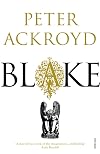
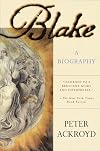
Blake
by Peter Ackroyd
On This Page
Description
"Born in 1757, the son of a London hosier, William Blake - poet, painter, and engraver - possessed one of the most original and fertile creative geniuses of his age. Yet his strange aloofness and claims of supernatural visions caused many in his own time and since to doubt his sanity, and much of his astonishing poetry and visual art remains unfamiliar. Now, Peter Ackroyd gives us a biography of the enigmatic eighteenth-century master, clarifying at last the true nature of Blake's show more extraordinary life and art." "Ackroyd's narrative traces Blake's progression from his childhood in a Dissenting household, through his apprenticeship as an engraver and his studies at the newly formed Royal Academy Schools, to his full maturity, during which he produced his great masterpieces - Songs of Innocence and of Experience, Jerusalem, and Milton, to name only a few - works that were as neglected during his lifetime as they are celebrated today." "Re-creating time and place as only he can, Ackroyd locates Blake in the complex context of his external world - a cross section of eighteenth-century London inflamed by various forms of radicalism, mysticism, and sexual magic, squarely opposed to the age's prevailing faith in rationalism. But he also shows us the cockney visionary as the creator of his own lavish interior world, a universe filled with angels and spirits. It is in Blake's utterly unique art that these two worlds meet, as Ackroyd reveals in his dazzling interpretations of Blake's poetry and the many paintings and engravings beautifully reproduced in this volume."--Jacket. show lessTags
Recommendations














Member Reviews
I've been reading Blake for close to thirty years (in Geoffrey Keynes' "Complete Writings"), but haven't found a satisfying and sympathetic biography until now. As one of the blurbers on the back cover points out, Ackroyd is a native Londoner—he has written authoritatively on its history—and this gives him a particularly fine vantage point from which to examine the life of a man who never lived or traveled more than 20 miles from the city. Ackroyd also is a student and admirer of Blake's epic poems, which are generally considered his most difficult work, and is able to explain them to me in a way no one else ever has. If he gives short shrift to Blake's epigrams and pithier poetic output, such as "Auguries of Innocence," that's fine show more with me, although I have always found them the most personally meaningful. They're easiest to grasp.
For an author, Ackroyd also displays a deep knowledge of engraving and coloring, and gives wonderful context to Blake's eccentric illustrations. Blake would have been appalled at the idea of someone reading his poems without the art that accompanied them.
But the best thing about this biography is that Ackroyd takes Blake's supernatural worldview seriously. Blake was a man who insisted all his life on the truth of his visions; he readily admitted that they were the works of his imagination, but he considered them no less real than the natural world for all that. He reported conversations with his dead brother, with Milton, with Michaelangelo, as matter-of-factly as he would a conversation with his living friends and family. To understand Blake, it's critical to accept his way of being in the world without dismissing him as a lunatic, much less a simpleton. He was neither; he got along in the world of his contemporaries just fine (which is not to say he didn't suffer for his eccentricities). A biographer who does not understand this has no chance of understanding Blake. Fortunately, Ackroyd is suited to this difficult task, and so his book is perceptive and convincing. show less
For an author, Ackroyd also displays a deep knowledge of engraving and coloring, and gives wonderful context to Blake's eccentric illustrations. Blake would have been appalled at the idea of someone reading his poems without the art that accompanied them.
But the best thing about this biography is that Ackroyd takes Blake's supernatural worldview seriously. Blake was a man who insisted all his life on the truth of his visions; he readily admitted that they were the works of his imagination, but he considered them no less real than the natural world for all that. He reported conversations with his dead brother, with Milton, with Michaelangelo, as matter-of-factly as he would a conversation with his living friends and family. To understand Blake, it's critical to accept his way of being in the world without dismissing him as a lunatic, much less a simpleton. He was neither; he got along in the world of his contemporaries just fine (which is not to say he didn't suffer for his eccentricities). A biographer who does not understand this has no chance of understanding Blake. Fortunately, Ackroyd is suited to this difficult task, and so his book is perceptive and convincing. show less
A hundred pages into this book, I was questioning my total acceptance that anything written by Peter Ackroyd would be superb. By the time that I reached the end, I was sad to be leaving an old friend. The reason for this sharp change of attitude to the book is caused, I believe, by the strange nature of Blake's life. He was not considered a great artist by most of the intelligentsia of his age and he wasn't always the most pleasant towards those who tried to help him. It took me a good one hundred pages to bend my mindset to that of Blake (at least Peter Ackroyd's Blake).
The work is lavishly illustrated with Blake's engravings and they still have an unworldly feel: it is not surprising that people were bemused. Add to this the fact that show more Blake insisted that his images were divine presentiments and that he 'saw spirits', and one begins to see the oddity of the man.
Ackroyd's admiration of the man shines through every page and, eventually, won me over, as Blake seems to have been able to gain forgiveness for his rudeness and quick temper towards his friends. He sold very few engravings and books during his life, but there always seemed to be a sponsor handing money to Blake. He was never rich,but he did keep the wolf from the door and in his last years, gained a glimpse of the fame that was to come posthumously.
This is another Peter Ackroyd winner: if like me, you struggle at the start, please keep going; you'll be sorry should you miss out on this fantastic biography. show less
The work is lavishly illustrated with Blake's engravings and they still have an unworldly feel: it is not surprising that people were bemused. Add to this the fact that show more Blake insisted that his images were divine presentiments and that he 'saw spirits', and one begins to see the oddity of the man.
Ackroyd's admiration of the man shines through every page and, eventually, won me over, as Blake seems to have been able to gain forgiveness for his rudeness and quick temper towards his friends. He sold very few engravings and books during his life, but there always seemed to be a sponsor handing money to Blake. He was never rich,but he did keep the wolf from the door and in his last years, gained a glimpse of the fame that was to come posthumously.
This is another Peter Ackroyd winner: if like me, you struggle at the start, please keep going; you'll be sorry should you miss out on this fantastic biography. show less
It must be tough to write a biography of William Blake. There is the usual problem of limited first-hand material on which to base the narrative, but in Blake's case this is hugely compounded by the fact that much of his written and visual output is incomprehensible to modern readers and viewers.
But Ackroyd has done a sound job. I now know the outline of Blakes life, his feisty relationships, and know more about his creative life.
But I would have loved to have seen a modern psychiatric analysis of Blake. I know diagnosis from a distance would probably be unprofessional, but I would really like to know if it is only me that thinks he was seriously mentally unstable. Was it just religious mania? Was he paranoid? Both?
But among the show more craziness, he was a man living his life, and Ackroyd brings that to life. Blake was an artist, but he had to live. Commissions had to be sought and earned. Not easily, with Blake's personality.
I'm glad to have read this volume. show less
But Ackroyd has done a sound job. I now know the outline of Blakes life, his feisty relationships, and know more about his creative life.
But I would have loved to have seen a modern psychiatric analysis of Blake. I know diagnosis from a distance would probably be unprofessional, but I would really like to know if it is only me that thinks he was seriously mentally unstable. Was it just religious mania? Was he paranoid? Both?
But among the show more craziness, he was a man living his life, and Ackroyd brings that to life. Blake was an artist, but he had to live. Commissions had to be sought and earned. Not easily, with Blake's personality.
I'm glad to have read this volume. show less
This is an interesting and informative biography of Blake. A man whose talents were largely unrecognised in his own lifetime, but who is now perceived as a visionary and a great talent. As a biographer Ackroyd really tries to get to the man behind the myth and the Blake who comes across is immensely likeable - I particularly liked his criticism of Wordsworth's 'The Excursion', which 'had provoked in him a bowel complaint' - as well as driven by his art and his spiritual adventures. As Blake himself said, 'I should be sorry if I had any earthly fame for whatever nature glory a man has is so much detracted from his spiritual glory. I wish to do nothing for profit. I wish to live for art. I want nothing whatever. I am quite happy.'
I found this a wonderful aid to my comprehension of Blake’s complete writings. Ackroyd emphasises Blake’s artworks, and gives a clear feel of his influences, locations, and associated friends and acquaintances. It was interesting to hear about the current affairs of the times – the bread crisis, the theatre designs (particularly Eidophusikon), explanations of the Dark Satanic Mills (a new automated mill had suspiciously burned to the ground). I was most pleased to read Ackroyd stating that Blake’s longer poems were hard to understand (with a tip that it helps to read them aloud), and useful too, to know that not all of them were published at the time, and of how Blake reworked them over years and borrowed characters and lines show more from earlier unpublished poems, which explained much of the repetitiveness I experienced. I enjoyed Ackroyd’s account of the life-cast made of Blake’s head, a first attempt by Mr Deville using uncomfortably hot wet plaster with two straws stuck into Blake’s nostrils…Blakes mouth is turned down in an expression of apparent pain, and when the plaster was removed, it also pulled out a quantity of his hair.” Oh dear! The illustrations in this book are very well reproduced, but there are not enough of them! Ackroyd also said Blake often sang his poetry, I wonder to what tunes? show less
I have really enjoyed Ackroyd's writing in the past. His London Biography, in particular, is an outstanding book.
I had, therefore, high hopes for his life of Blake, the 18th century visionary being a famous Londoner and a fascinating man.
I was a little disappointed. It's certainly learned and well researched (though it eggregiously overuses the word "vouchsafe"), but seems to skip over a number of important points: for one thing, Ackroyd hints darkly the Blake may have had misogynistic tendencies, but then declares "this isn't the place for a discussion of such things". Well, if a balanced biography isn't, I don't know what is.
Additionally, Ackroyd is somewhat credulous in his desire to portray Blake as a misunderstood genius, rather show more than a somewhat troubled individual. Serious credence is given to statements that certain people in Blake's circle (including, to an extent, Blake himself) were clairvoyant, whilst on the other hand short shrift is given to far more credible notions: such as that Blake - a man given to regular visions of angels and saints, after all - might have been mentally ill. Blake's behaviour may have been that of a genius, but is equally explainable as that of a flat-out nutcase, which appears to have been the general consensus of the time (and might partly explain Blake's lack of success during his own life). show less
I had, therefore, high hopes for his life of Blake, the 18th century visionary being a famous Londoner and a fascinating man.
I was a little disappointed. It's certainly learned and well researched (though it eggregiously overuses the word "vouchsafe"), but seems to skip over a number of important points: for one thing, Ackroyd hints darkly the Blake may have had misogynistic tendencies, but then declares "this isn't the place for a discussion of such things". Well, if a balanced biography isn't, I don't know what is.
Additionally, Ackroyd is somewhat credulous in his desire to portray Blake as a misunderstood genius, rather show more than a somewhat troubled individual. Serious credence is given to statements that certain people in Blake's circle (including, to an extent, Blake himself) were clairvoyant, whilst on the other hand short shrift is given to far more credible notions: such as that Blake - a man given to regular visions of angels and saints, after all - might have been mentally ill. Blake's behaviour may have been that of a genius, but is equally explainable as that of a flat-out nutcase, which appears to have been the general consensus of the time (and might partly explain Blake's lack of success during his own life). show less
I like Blake's art a lot, and don't know much about his writings except that they were "visionary" (translation: nutty). This is a dense, serious, but very interesting biography that tries to explain his writings, art, and thought processes, while acknowledging that much of it will always be mysterious. I liked Blake the person a lot, too.
Members
- Recently Added By
Published Reviews
ThingScore 75
Dem Novizen allerdings ist Blakes Werk zuerst einmal weitgehend verschlossen, und das aus einem ganz pragmatischen Grund: in der deutschen Ausgabe der Biographie existiert es nur in Übersetzung. Die ist zum größten Teil der Neuübersetzung von Thomas Eichhorn entnommen, die 1996 erschienen ist. Dies ist sicherlich eine gute Wahl, da Eichhorn, der auch die Biographie selbst übertragen hat, show more sich behutsam bemüht hat, Blakes Sprache unserem heutigen Sprachverständnis anzupassen, um so ein Gefühl von seiner zeitlosen Modernität zu vermitteln. Allerdings war Eichhorn sich sehr wohl bewusst, dass eine Übersetzung der Verse Blakes, wie gut sie auch sein mag, nur ein Hilfsmittel sein kann, aber kein Ersatz, weshalb er die Texte zweisprachig herausgab. In der deutschen Ausgabe von Ackroyds Blake-Biographie ist es dem Leser dagegen kein einziges Mal vergönnt, der unvergleichlichen Melodie und Gewalt dieser visionären Worte zu lauschen. Doch dies ist ein leicht zu behebender Mangel in einem ansonsten so informativen wie unterhaltsamen Buch. show less
added by Indy133
Lists

Used books to buy next
565 works; 1 member

Tonikat reading completed on Librarything journals
329 works; 2 members

In Our Time books
4,934 works; 2 members
Author Information

90+ Works 31,852 Members
Peter Ackroyd was born in London in 1949. He graduated from Cambridge University and was a Fellow at Yale (1971-1973). A critically acclaimed and versatile writer, Ackroyd began his career while at Yale, publishing two volumes of poetry. He continued writing poetry until he began delving into historical fiction with The Great Fire of London show more (1982). A constant theme in Ackroyd's work is the blending of past, present, and future, often paralleling the two in his biographies and novels. Much of Ackroyd's work explores the lives of celebrated authors such as Dickens, Milton, Eliot, Blake, and More. Ackroyd's approach is unusual, injecting imagined material into traditional biographies. In The Last Testament of Oscar Wilde (1983), his work takes on an autobiographical form in his account of Wilde's final years. He was widely praised for his believable imitation of Wilde's style. He was awarded the British Whitbread Award for biography in 1984 of T.S. Eliot, and the Whitbread Award for fiction in 1985 for his novel Hawksmoor. Ackroyd currently lives in London and publishes one or two books a year. He still considers poetry to be his first love, seeing his novels as an extension of earlier poetic work. (Bowker Author Biography) Peter Ackroyd is the award-winning author of four biographies, most recently the national bestseller "The Life of Thomas More", as well as ten novels, including "Chatterton" & "Hawksmoor". He lives in London, where he is at work on his next book, "London: The Biography. (Publisher Provided) Peter Ackroyd is a bestselling writer of both fiction and nonfiction. He lives in London. (Publisher Provided) show less
Awards and Honors
Distinctions
Common Knowledge
- Original title
- Blake
- Original publication date
- 1995
- People/Characters
- William Blake
Classifications
Statistics
- Members
- 997
- Popularity
- 26,368
- Reviews
- 12
- Rating
- (3.91)
- Languages
- 7 — Chinese, Czech, English, Estonian, German, Greek, Polish
- Media
- Paper
- ISBNs
- 10
- ASINs
- 12