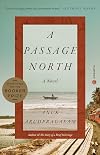
A Passage North
by Anuk Arudpragasam
On This Page
Description
SHORTLISTED FOR THE BOOKER PRIZE • A young man journeys into Sri Lanka’s war-torn north in this searing novel of longing, loss, and the legacy of war from the author of The Story of a Brief Marriage.“A novel of tragic power and uncommon beauty.”—Anthony Marra
“One of the most individual minds of their generation.”—Financial Times
SHORTLISTED FOR THE DYLAN THOMAS PRIZE • ONE OF THE BEST BOOKS OF THE YEAR—Time, NPR
A Passage North begins with a message from out of the show more blue: a telephone call informing Krishan that his grandmother’s caretaker, Rani, has died under unexpected circumstances—found at the bottom of a well in her village in the north, her neck broken by the fall. The news arrives on the heels of an email from Anjum, an impassioned yet aloof activist Krishnan fell in love with years before while living in Delhi, stirring old memories and desires from a world he left behind.
As Krishan makes the long journey by train from Colombo into the war-torn Northern Province for Rani’s funeral, so begins an astonishing passage into the innermost reaches of a country. At once a powerful meditation on absence and longing, as well as an unsparing account of the legacy of Sri Lanka’s thirty-year civil war, this procession to a pyre “at the end of the earth” lays bare the imprints of an island’s past, the unattainable distances between who we are and what we seek.
Written with precision and grace, Anuk Arudpragasam’s masterful novel is an attempt to come to terms with life in the wake of devastation, and a poignant memorial for those lost and those still living. show less
Tags
Recommendations





















Member Reviews
This is a beautifully written, introspective book that follows the thoughts of protagonist Krishan. It is set in Sri Lanka and contains only the barest thread of a plot. His grandmother’s caretaker, Rani, has died after traveling back to her home in northern Sri Lanka. Krishan journeys by train from Colombo to attend the funeral. Rani has experienced multiple tragedies in her life, including the violent deaths of two sons in the country’s civil war. As Krishan travels, he remembers people and events that have had a lasting impact on him and the people he loves.
Krishan’s thoughts address many aspects of life, such as love, loss, grief, aging, death, desire, yearning, and memory. He recalls the violence that changed so many lives. show more His thoughts return regularly to three women: his mother, grandmother, and his first love. He thinks about the war and its lingering impact a decade later. It is a philosophical book that examines the aftermath of the country’s civil war and how we spend our time on this earth.
I am amazed at the author’s ability to capture nuances, subtleties, and interpretations of what is seen, heard, and felt. Krishan’s thoughts flow from one topic to the next, as thoughts tend to do. I felt totally immersed in this story. I stopped several times just to contemplate. It is not one to rush through. I will definitely re-read this novel and can envision it winning literary prizes.
“Waking up each morning we follow by circuitous routes the thread of habit, out of our homes, into the world, and back to our beds at night, move unseeingly through familiar paths, one day giving way to another and one week to the next, so that when in the midst of this daydream something happens and the thread is finally cut, when, in a moment of strong desire or unexpected loss, the rhythms of life are interrupted, we look around and are quietly surprised to see that the world is vaster than we thought.”
The audio book is narrated by Neil Shah. His narration is quiet, almost somber, and fits the content. I listened to it twice and feel audio is a great vehicle for digesting the lengthy, stream-of-consciousness style sentences. show less
Krishan’s thoughts address many aspects of life, such as love, loss, grief, aging, death, desire, yearning, and memory. He recalls the violence that changed so many lives. show more His thoughts return regularly to three women: his mother, grandmother, and his first love. He thinks about the war and its lingering impact a decade later. It is a philosophical book that examines the aftermath of the country’s civil war and how we spend our time on this earth.
I am amazed at the author’s ability to capture nuances, subtleties, and interpretations of what is seen, heard, and felt. Krishan’s thoughts flow from one topic to the next, as thoughts tend to do. I felt totally immersed in this story. I stopped several times just to contemplate. It is not one to rush through. I will definitely re-read this novel and can envision it winning literary prizes.
“Waking up each morning we follow by circuitous routes the thread of habit, out of our homes, into the world, and back to our beds at night, move unseeingly through familiar paths, one day giving way to another and one week to the next, so that when in the midst of this daydream something happens and the thread is finally cut, when, in a moment of strong desire or unexpected loss, the rhythms of life are interrupted, we look around and are quietly surprised to see that the world is vaster than we thought.”
The audio book is narrated by Neil Shah. His narration is quiet, almost somber, and fits the content. I listened to it twice and feel audio is a great vehicle for digesting the lengthy, stream-of-consciousness style sentences. show less
After the war has ended, a man takes a long walk in Columbo, Sri Lanka, and later he takes a train to attend the funeral of his grandmother's caretaker. Along the way, he remembers other walks and other train journeys he took in India with the woman he fell in love with. Anuk Arudpragasam's novel has a deceptively simple framework from which he explores the aftermath of Sri Lanka's long war on its citizens and the life of those who leave their home countries.
And while all that would be reason enough to make this novel a stand-out, the real reason to read A Passage North is for the writing, which is beautiful. Arudpragasam describes the places Krishan travels through and exists in so as to make the reader feel present in a specific show more place and time, to see things through the protagonist's eyes and to understand the people he interacts with. This is a remarkable novel and I'm glad that it has been put on the Booker shortlist. show less
And while all that would be reason enough to make this novel a stand-out, the real reason to read A Passage North is for the writing, which is beautiful. Arudpragasam describes the places Krishan travels through and exists in so as to make the reader feel present in a specific show more place and time, to see things through the protagonist's eyes and to understand the people he interacts with. This is a remarkable novel and I'm glad that it has been put on the Booker shortlist. show less
4.5
Shortlisted for the 2021 Man Booker Award
I read this last week while on holiday in the Adirondack Mountains. The serenity of the place lent itself well to reading this finely crafted, slow-paced, meditative novel that examines the impact of trauma and the search for meaning in the aftermath of war.
The story takes place two years after the Sri Lankan Civil War (1983-2009). ) At the novel's outset, Krishan, a Tamil, who works for an NGO in Columbo, suddenly receives a call that his grandmother's caregiver, Rani, has fallen into a well and broken her neck while visiting her family in the north. Krishan decides to travel north by train to attend her funeral.
He reflects on his life, his broken love relationship, and Rani's death during show more the ride north. Krishan ruminates on the shift in his life's trajectory. As a graduate student in Delhi, he met and fell in love with an Indian activist. Her passion and a sense of purpose made him question his academic existence. Propelled by survivor's guilt and a deep affinity for the Tamil people, he decided to abandon his studies and return to Sri Lanka to help the war survivors.
Rani was a war survivor under psychiatric care who suffered from depression and experienced PTSD. She lost both her sons in the war. Rani's oldest died in battle, and she saw her 12-year-old son killed in front of her as they fled from the Sinhalese. Krishan brought Rani into his mother's home to help care for his grandmother after her stroke. He hoped that the relationship would be therapeutic for them both. It worked well for close to two years, and yet at times, Rani's depression would overtake her. So then, in addition to medication, her psychiatrist would provide shock treatment, a practice with which Krishan disagreed. He wondered if Rani's death was an accident or suicide.
Arudupragasam intersperses passages from Tamil folklore literature and eastern religious philosophy throughout Krishan's meditations, adding depth and local flavor to the narrative. He vividly describes Rani's Hindu funeral ceremony and creates a sense of continuity against a backdrop of suffering and loss.
The book moved me. The characters were well-drawn, and despite the suffering and loss, Krishan's insights, decency, and commitment provided hope for a better future. show less
Shortlisted for the 2021 Man Booker Award
I read this last week while on holiday in the Adirondack Mountains. The serenity of the place lent itself well to reading this finely crafted, slow-paced, meditative novel that examines the impact of trauma and the search for meaning in the aftermath of war.
The story takes place two years after the Sri Lankan Civil War (1983-2009). ) At the novel's outset, Krishan, a Tamil, who works for an NGO in Columbo, suddenly receives a call that his grandmother's caregiver, Rani, has fallen into a well and broken her neck while visiting her family in the north. Krishan decides to travel north by train to attend her funeral.
He reflects on his life, his broken love relationship, and Rani's death during show more the ride north. Krishan ruminates on the shift in his life's trajectory. As a graduate student in Delhi, he met and fell in love with an Indian activist. Her passion and a sense of purpose made him question his academic existence. Propelled by survivor's guilt and a deep affinity for the Tamil people, he decided to abandon his studies and return to Sri Lanka to help the war survivors.
Rani was a war survivor under psychiatric care who suffered from depression and experienced PTSD. She lost both her sons in the war. Rani's oldest died in battle, and she saw her 12-year-old son killed in front of her as they fled from the Sinhalese. Krishan brought Rani into his mother's home to help care for his grandmother after her stroke. He hoped that the relationship would be therapeutic for them both. It worked well for close to two years, and yet at times, Rani's depression would overtake her. So then, in addition to medication, her psychiatrist would provide shock treatment, a practice with which Krishan disagreed. He wondered if Rani's death was an accident or suicide.
Arudupragasam intersperses passages from Tamil folklore literature and eastern religious philosophy throughout Krishan's meditations, adding depth and local flavor to the narrative. He vividly describes Rani's Hindu funeral ceremony and creates a sense of continuity against a backdrop of suffering and loss.
The book moved me. The characters were well-drawn, and despite the suffering and loss, Krishan's insights, decency, and commitment provided hope for a better future. show less
I thought all the writers who could write long, beautiful, luscious prose were...well, dead. (I'm looking at you, Anita Brookner.) But this book is absolutely beautifully written like nothing I've read from other writers recently. Not much plot but a young man is mulling over his life and the war in Sri Lanka as he walks, and later takes a train across the country. It's heartbreaking learning about how the country was devastated by war but the writing is the star here. Just so beautiful. Booker shortlist.
54. A Passage North by Anuk Arudpragasam
reader: Neil Shah
published: 2021
format: 9:15 audible audiobook (304-pages in hardcover)
acquired: October 26
listened: Oct 26 – Nov 7
rating: 4 (maybe 4 plus)
locations: Sri Lanka & parts in Delhi and Bombay, India.
about the author: Tamil author born in 1988 in Colombo, Sri Lanka. Attended Stanford University and received a PhD in philosophy at Columbia University in 2019.
When this book opens and Krishan learns about the death of his grandmother's caretaker, I assumed he was going to focus on his grandmother and his family. But he then gets side tracked and this goes on and on. It took me a little while to realize these sidetracks were the book. And it also took me a while to realize that this show more caretaker, Rani, was the key subject - a representative of the tragedy of the Sri Lanka civil war.
My fifth audiobook from the Booker longlist, this is all in the head of Krishan, a Tamil from Sri Lanka who experienced the civil war only from a distance. His passage north is to Rani's funeral. Rani, we learn, lost two of her three children to the civil war, both her boys, one on the last day of the war, a final shelling. She was broken, and never could recover. As Krishan travels, he reflects... on the Tamil loss, the war‘s horrors, and on his own life, all with some philosophical touches. Rani's funeral serves as a kind of focal point. The text is really fine, although it demands your full attention, so is a little challenging on audio. But it's carefully worded, meaningful and readable. I put this on the high end of 4 stars. I enjoyed it.
2021
https://www.librarything.com/topic/333774#7653632 show less
reader: Neil Shah
published: 2021
format: 9:15 audible audiobook (304-pages in hardcover)
acquired: October 26
listened: Oct 26 – Nov 7
rating: 4 (maybe 4 plus)
locations: Sri Lanka & parts in Delhi and Bombay, India.
about the author: Tamil author born in 1988 in Colombo, Sri Lanka. Attended Stanford University and received a PhD in philosophy at Columbia University in 2019.
When this book opens and Krishan learns about the death of his grandmother's caretaker, I assumed he was going to focus on his grandmother and his family. But he then gets side tracked and this goes on and on. It took me a little while to realize these sidetracks were the book. And it also took me a while to realize that this show more caretaker, Rani, was the key subject - a representative of the tragedy of the Sri Lanka civil war.
My fifth audiobook from the Booker longlist, this is all in the head of Krishan, a Tamil from Sri Lanka who experienced the civil war only from a distance. His passage north is to Rani's funeral. Rani, we learn, lost two of her three children to the civil war, both her boys, one on the last day of the war, a final shelling. She was broken, and never could recover. As Krishan travels, he reflects... on the Tamil loss, the war‘s horrors, and on his own life, all with some philosophical touches. Rani's funeral serves as a kind of focal point. The text is really fine, although it demands your full attention, so is a little challenging on audio. But it's carefully worded, meaningful and readable. I put this on the high end of 4 stars. I enjoyed it.
2021
https://www.librarything.com/topic/333774#7653632 show less
A Passage North, Anuk Arludpragasam, author; Neil Shah, narrator
This most definitely is Krishan’s story, and although it is utterly exhausting in its description and detail, it is also so beautifully written, in a soft voice that neither raises nor lowers one’s blood pressure, that it rolls out without creating any anxiety . As Krishan’s life is examined, as we look through the window of his feelings and examine his behavior, the strife and destruction of war also quietly enter the picture; still, even when that is told, the stress level does not rise; the prose smoothly rolls out, evenly and thoughtfully as it expresses the temperament of its main character.
Told like one long reminiscence, Krishan and Sri Lanka come to life. As show more we learn about Krishan, we go from his time as a professor in India to the war torn north of his country, Sri Lanka, where Tamils largely lived. Using his pen, the author has done a yeoman’s job of presenting the picture of his world, with all of its warts and foibles in a country rocked by civil war for decades. Although Krishan is Tamil, he remained outside the country, in India, during the war with the Sinhalese, who are in the majority. He escaped from the horrors with its brutality and destruction, from the awful emotional crises of those subjected to the violence and the fear, from the pain of the loss of loved ones, property and way of life. Not all could recover from such total devastation, but Krishan is determined to move on as he explores and learns more about what took place and how it affected others, as he explores his life and life’s raison d’être.
As Krishan searches for answers, complex ideas are revealed. How do we approach life, death, and aging? What is our purpose? Getting old involves great loss. He had not realized the effect of it on his grandmother, but as her strength, power and mobility diminish, he is forced to face mortality. How does one deal with the shadow of utter loneliness which can be devastating? How do we approach war and peace if we are removed from the actual violence? What do we ultimately want if not freedom and independence? Is that what we are all searching for as we take different paths? In a story about Sri Lanka, the author has managed to also examine human existence everywhere. He includes current themes like the lgbtq lifestyles, politics, the environment, women’s rights and more without causing any conflict or confusion, so light is his nonjudgmental touch
The book is not exciting, quite the contrary, it is slow moving and not uplifting, but is also so alive with important explanations and revelations, one cannot put it down. The reader is moved to learn more about the customs, the culture and the history, as without expending too much energy, the civil war and its aftermath are illuminated.
The juxtaposition of each word in every sentence was so poetic and eloquent that, at times, I lost sight of the story because of the beauty of the expression. Not one word was wasted. Through Appamma and Rani we learn about loneliness and different kinds of loss, about life and death, the life of a plant the decay of the body and mind. Through Anjun and Krishan we learn about what we search for and how we go about it, how we choose our lifestyles and partners. We are all searching for something, for some purpose.
As if the narrator is watching Krishan’s life on a screen, he relates everything without undue emotion, just refers to facts and events as they come up, sometimes moving back and forth in time. Adding to this, the actual reader of the audio book did a masterful job with this novel, never interjecting himself into the narrative, but rather reading it as if he was viewing it all take place with us. As he narrates the story of Krishan’s feelings and memories to the reader, like the peaceful meandering of a river, this story is told, often quoting from legends and poems that reveal the story of others searching for answers, answers that do not always satisfy the seekers. Float on with these stories and be enlightened. I do not think you will be sorry, for in the end, the experience is quite exhilarating. show less
This most definitely is Krishan’s story, and although it is utterly exhausting in its description and detail, it is also so beautifully written, in a soft voice that neither raises nor lowers one’s blood pressure, that it rolls out without creating any anxiety . As Krishan’s life is examined, as we look through the window of his feelings and examine his behavior, the strife and destruction of war also quietly enter the picture; still, even when that is told, the stress level does not rise; the prose smoothly rolls out, evenly and thoughtfully as it expresses the temperament of its main character.
Told like one long reminiscence, Krishan and Sri Lanka come to life. As show more we learn about Krishan, we go from his time as a professor in India to the war torn north of his country, Sri Lanka, where Tamils largely lived. Using his pen, the author has done a yeoman’s job of presenting the picture of his world, with all of its warts and foibles in a country rocked by civil war for decades. Although Krishan is Tamil, he remained outside the country, in India, during the war with the Sinhalese, who are in the majority. He escaped from the horrors with its brutality and destruction, from the awful emotional crises of those subjected to the violence and the fear, from the pain of the loss of loved ones, property and way of life. Not all could recover from such total devastation, but Krishan is determined to move on as he explores and learns more about what took place and how it affected others, as he explores his life and life’s raison d’être.
As Krishan searches for answers, complex ideas are revealed. How do we approach life, death, and aging? What is our purpose? Getting old involves great loss. He had not realized the effect of it on his grandmother, but as her strength, power and mobility diminish, he is forced to face mortality. How does one deal with the shadow of utter loneliness which can be devastating? How do we approach war and peace if we are removed from the actual violence? What do we ultimately want if not freedom and independence? Is that what we are all searching for as we take different paths? In a story about Sri Lanka, the author has managed to also examine human existence everywhere. He includes current themes like the lgbtq lifestyles, politics, the environment, women’s rights and more without causing any conflict or confusion, so light is his nonjudgmental touch
The book is not exciting, quite the contrary, it is slow moving and not uplifting, but is also so alive with important explanations and revelations, one cannot put it down. The reader is moved to learn more about the customs, the culture and the history, as without expending too much energy, the civil war and its aftermath are illuminated.
The juxtaposition of each word in every sentence was so poetic and eloquent that, at times, I lost sight of the story because of the beauty of the expression. Not one word was wasted. Through Appamma and Rani we learn about loneliness and different kinds of loss, about life and death, the life of a plant the decay of the body and mind. Through Anjun and Krishan we learn about what we search for and how we go about it, how we choose our lifestyles and partners. We are all searching for something, for some purpose.
As if the narrator is watching Krishan’s life on a screen, he relates everything without undue emotion, just refers to facts and events as they come up, sometimes moving back and forth in time. Adding to this, the actual reader of the audio book did a masterful job with this novel, never interjecting himself into the narrative, but rather reading it as if he was viewing it all take place with us. As he narrates the story of Krishan’s feelings and memories to the reader, like the peaceful meandering of a river, this story is told, often quoting from legends and poems that reveal the story of others searching for answers, answers that do not always satisfy the seekers. Float on with these stories and be enlightened. I do not think you will be sorry, for in the end, the experience is quite exhilarating. show less
I simply fell in love with this book. It's so artfully crafted and beautifully written. It's a personal love story, where the fine threads of a young man's memories of lost love weave through myths and questions as he travels through Sri Lanka. All the while he is traveling to the funeral of a loved one, where he presents a tender narrative about life and dying.
I loved this author's long, poetic sentences, his gentle style even as he presented details of a violent and harsh war that ravaged his country.
I loved this author's long, poetic sentences, his gentle style even as he presented details of a violent and harsh war that ravaged his country.
Members
- Recently Added By
Published Reviews
ThingScore 100
It can take just two novels to establish a writer as one of the most individual minds of their generation. Anuk Arudpragasam’s award-winning debut, 'The Story of a Brief Marriage' (2016), heralded him as an author who could tackle big subjects — in this case, the wrenching civil war that tore Sri Lanka apart for two and a half decades — with a striking gift for meditative philosophy. show more With his new novel, a revelatory exploration of the aftermath of war, Arudpragasam cements his reputation. show less
added by kidzdoc
Lists

Booker Prize
491 works; 62 members
Favourite Booker Prize contenders
73 works; 21 members

Anticipated 2021 Reads
231 works; 7 members

Maybe This Year? Books to Look Forward To
412 works; 9 members

FT Best books of 2021: Fiction
12 works; 1 member

A Good Read (Radio 4)
287 works; 1 member

Books Read in 2022
5,226 works; 115 members

Books Read in 2021
5,361 works; 114 members

Big Jubilee List
70 works; 3 members

BBC World Book Club
265 works; 5 members
Talk Discussions
Past Discussions
2021 Booker Prize Longlist: A Passage North by Anuk Arudpragasam in Booker Prize (August 2021)
Author Information

2+ Works 764 Members
Some Editions
Awards and Honors
Awards
Distinctions
Notable Lists
Common Knowledge
- Canonical title
- A Passage North
- Original publication date
- 2021-07-13 (USA) (USA)
- People/Characters
- Krishan; Rani; Anjum
- Important places
- Colombo, Sri Lanka; Delhi, India
- Important events
- Sri Lankan civil war
- First words
- The present, we assume, is eternally before us, one of the few things in life from which we cannot be parted.
- Last words
- (Click to show. Warning: May contain spoilers.)He watched as the scarlet glow of the fire grew brighter in the darkening evening, as the air around it warped with strange clarity in the intensity of the heat, watched as the substantiality of a human life was transmuted, like a mirage or hallucination or vision, into thick clouds of smoke billowing up into the sky, thinning as they rose and then disappearing into the evening, a message from this world to another that would never be received.
- Blurbers
- Marra, Anthony; Greenwell, Garth; Sahota, Sunjeev; Toibin, Colm; Kumar, Amitava; Yoon, Paul
- Original language
- English
- Canonical DDC/MDS
- 823.92
Classifications
Statistics
- Members
- 453
- Popularity
- 67,619
- Reviews
- 14
- Rating
- (3.70)
- Languages
- English, French, German, Spanish
- Media
- Paper, Audiobook, Ebook
- ISBNs
- 17
- ASINs
- 4