There is 1 current discussion about this work.
On This Page
Description
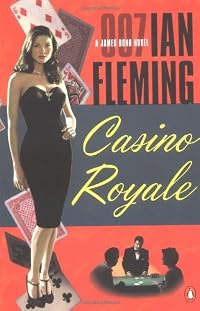
Casino Royale was Ian Fleming's first novel, and the book that launched the global, iconic, legendary action adventure, espionage franchise that is James Bond/007. JAMES BOND PLAYS A DEADLY GAME OF CHANCE IN IAN FLEMING'S UNFORGETTABLE FIRST NOVEL "Le Chiffre" is a ruthless operative and the money-man for a Soviet cell in France, but he's on the verge of disaster after gambling away his client's money. Taking the last of his stash to the casino, he lures a dozen wealthy players to a show more high-stakes game, hoping to hustle his way whole. The British Secret Service would like to see this red thorn plucked from the hide of Europe, and sends their best card sharp, James Bond, to the baccarat table to bankrupt Le Chiffre for good. With the cards running against him and SMERSH operatives threatening to kill him and his beautiful counterpart, Vesper Lynd, 007 needs his luck to turn before he loses their lives to the mission. show lessTags
Recommendations






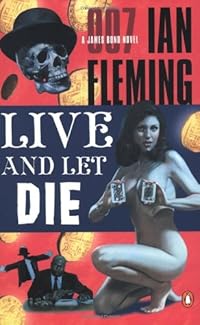





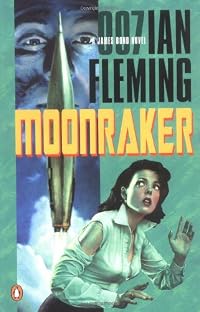



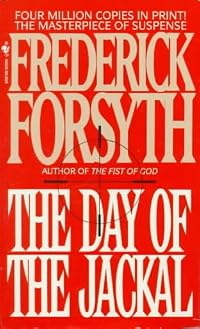


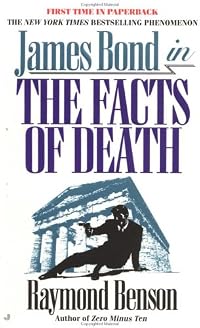



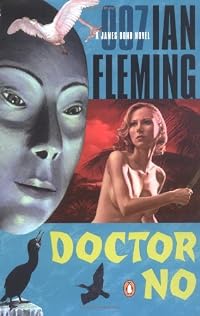
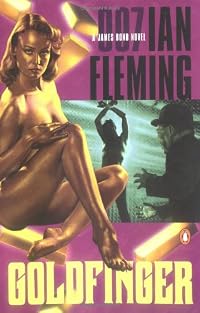


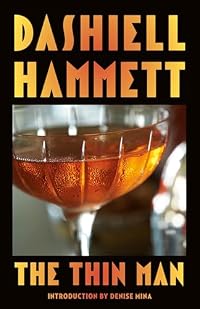

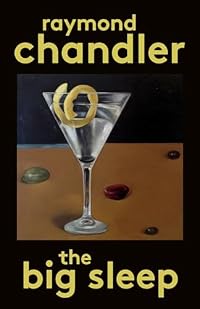




Member Recommendations


Member Reviews
Surprise! Bond is a loser. His courage and suaveness are a cover for a deeply failed human who doesn't understand women, doesn't understand himself, and is buffeted around by powerful emotions and layers of self-deception. Sexist? Of course James Bond the character is sexist, in the deepest and most empathetic way. He's an idiot, he thinks highly of himself, and he trumps up his self-image by insulting women. The movies have it all wrong. The movies are literally sexist, but in Casino Royale the book Bond does nothing but make mistakes, stopping now and then to blame a woman for them. Every single decision he makes, everything he attempts, he fails at. Fleming is not an idiot. He shows clearly that Vesper, the female lead, is actually a show more far more capable agent than Bond. Fleming dissects machismo and masculine bravado and lays it bare for us to see it for what it is: a pathetic, failing strategy. This is not an action hero movie. This is a post-modern upside-down spy novel. And no one knows. show less
"Well, it was not too late. Here was a target for him, right to hand. He would take on SMERSH and hunt it down. Without SMERSH, without this cold weapon of death and revenge, the MWD would be just another bunch of civil servant spies, no better and no worse than any of the western services."
And so begin the extraordinary adventures of the most famous of all spies. Had it not been for his involvement in bringing down the villain known as Le Chiffre, James Bond could just have been another one of such civil servant spies.
Unfortunately, this is the only aspect of the Casino Royale story that I actually liked. The idea of James Bond and his mission is what draws me to the books, but not in fact the character of James Bond himself.
James show more Bond, as a character, is an utterly unlikable, chauvinist, self-centered idiot, who happens to be good at playing cards but is otherwise pretty lucky to have anything go his way - whether it is his involvement with women or his actually staying alive.
I first read Casino Royale some years ago, shortly before the film was released, and really liked it for the plot and the fact that a card game could pose more danger to the world's biggest villains than any attempts of arrest or assassination. Incredible! However, I enjoyed that the book dwelt on thinking through Bond's moves at the baccarat table more than on action scenes.
However, on this particular re-read of the story, I felt more drawn to paying attention to the way Bond interacts with the world around him and was reminded why in some of the subsequent books I tend to root for the villains - I just can't stand James Bond.
Would I still recommend this book? Yes. I think it is important to demystify the legend (and the franchise - even tho I do enjoy the films!) and acknowledge that there was a time when the most popular of books was based on a character that was a snob, a chauvinist, a racist, a misogynist, an egotist, and an utter idiot.
2.5* rounded up. show less
And so begin the extraordinary adventures of the most famous of all spies. Had it not been for his involvement in bringing down the villain known as Le Chiffre, James Bond could just have been another one of such civil servant spies.
Unfortunately, this is the only aspect of the Casino Royale story that I actually liked. The idea of James Bond and his mission is what draws me to the books, but not in fact the character of James Bond himself.
James show more Bond, as a character, is an utterly unlikable, chauvinist, self-centered idiot, who happens to be good at playing cards but is otherwise pretty lucky to have anything go his way - whether it is his involvement with women or his actually staying alive.
I first read Casino Royale some years ago, shortly before the film was released, and really liked it for the plot and the fact that a card game could pose more danger to the world's biggest villains than any attempts of arrest or assassination. Incredible! However, I enjoyed that the book dwelt on thinking through Bond's moves at the baccarat table more than on action scenes.
However, on this particular re-read of the story, I felt more drawn to paying attention to the way Bond interacts with the world around him and was reminded why in some of the subsequent books I tend to root for the villains - I just can't stand James Bond.
Would I still recommend this book? Yes. I think it is important to demystify the legend (and the franchise - even tho I do enjoy the films!) and acknowledge that there was a time when the most popular of books was based on a character that was a snob, a chauvinist, a racist, a misogynist, an egotist, and an utter idiot.
2.5* rounded up. show less
No praise from me for this one. As sexy as Sean Connery was in the role, there is nothing appealing about Fleming's Bond, as portrayed in this first 007 novel. He's just a hired killer with enough finesse to pull off a gambling coup against a Russian agent who both sides want eliminated. His attitude toward women is appalling; even when he finds one who is a technical wizard and a cool agent in her own right, he can't help objectifying her. Even when, by his estimation, he falls in love with her, his feeble attempts to feel and appreciate real emotions are laughable. The book is violent, sadistic, misogynistic and totally lacking in humor or subtlety. Fleming clearly knew what he was doing, as evidenced by this quote: "surround yourself show more with human beings, my dear James. They are easier to fight for than principles. But don't let me down and become human yourself. We would lose such a wonderful machine." I read this book to educate myself, and did not really expect to enjoy it very much. I did expect to see why others might enjoy it, but that did not happen. My husband, who read a great many of the Bond books as a teenager, started with a later entry in the series, and does not recall reading Casino Royale. Maybe they get better. Maybe their optimal audience is 15 year old boys. That particular teenage boy turned out to be a fine fellow with no Bondian characteristics. I think I'll just leave this whole issue alone now. No star for you, Mr. Fleming. show less
My deity, James Bond is a sexist prat. "These blithering women who thought they could do a man's work. Why the hell couldn't they stay at home and mind their pots and pans and stick to their frocks and gossip and leave men's work to the men." "Bond saw luck as a woman, to be softly wooed or brutally ravaged..."
Charming. And I don't think we can really dismiss this as "well, it was the period he was writing in", it's more than that, I feel. Though whether this is Fleming's misogyny, or if he's just writing about Bond's, well, *shrug*, it's still misogynistic.
Anyhow, it was nice having a plot where the baddies are commie pinko bastards (SMERSH! Boo! Hiss!), and it was fascinating seeing the start of the whole Bond phenomenon, which I've show more only known through the movies. (I've seen the first half of the recent Casino Royale adaptation, and I think it's the best Bond movie yet, a lot less glossy than many of the other adaptations.)
It was a remarkably fast and slim read, I was expecting a lot more, given the size of John Le Carre's novels (the only other spy series I know of). Bond goes to Casino Royale to destroy Le Chiffre, who is gambling money the commie pinko bastards gave him. Bond wins, Le Chiffre tortures him, all ends mostly well (I don't want to give away the ending!).
The second half was the more interesting half of the book, when Bond is recuperating from his ordeal. He's questioning the whole evil/good nature of what they do - what makes them "good" and the other side "bad"? - and recognising the grey between the black and the while. Unfortunately, it doesn't last long, and Bond ends up the perfect Double-O at the end of the book. show less
Charming. And I don't think we can really dismiss this as "well, it was the period he was writing in", it's more than that, I feel. Though whether this is Fleming's misogyny, or if he's just writing about Bond's, well, *shrug*, it's still misogynistic.
Anyhow, it was nice having a plot where the baddies are commie pinko bastards (SMERSH! Boo! Hiss!), and it was fascinating seeing the start of the whole Bond phenomenon, which I've show more only known through the movies. (I've seen the first half of the recent Casino Royale adaptation, and I think it's the best Bond movie yet, a lot less glossy than many of the other adaptations.)
It was a remarkably fast and slim read, I was expecting a lot more, given the size of John Le Carre's novels (the only other spy series I know of). Bond goes to Casino Royale to destroy Le Chiffre, who is gambling money the commie pinko bastards gave him. Bond wins, Le Chiffre tortures him, all ends mostly well (I don't want to give away the ending!).
The second half was the more interesting half of the book, when Bond is recuperating from his ordeal. He's questioning the whole evil/good nature of what they do - what makes them "good" and the other side "bad"? - and recognising the grey between the black and the while. Unfortunately, it doesn't last long, and Bond ends up the perfect Double-O at the end of the book. show less
No praise from me for this one. As sexy as Sean Connery was in the role, there is nothing appealing about Fleming's Bond, as portrayed in this first 007 novel. He's just a hired killer with enough finesse to pull off a gambling coup against a Russian agent who both sides want eliminated. His attitude toward women is appalling; even when he finds one who is a technical wizard and a cool agent in her own right, he can't help objectifying her. Even when, by his estimation, he falls in love with her, his feeble attempts to feel and appreciate real emotions are laughable. The book is violent, sadistic, misogynistic and totally lacking in humor or subtlety. Fleming clearly knew what he was doing, as evidenced by this quote: "surround yourself show more with human beings, my dear James. They are easier to fight for than principles. But don't let me down and become human yourself. We would lose such a wonderful machine." I read this book to educate myself, and did not really expect to enjoy it very much. I did expect to see why others might enjoy it, but that did not happen. My husband, who read a great many of the Bond books as a teenager, started with a later entry in the series, and does not recall reading Casino Royale. Maybe they get better. Maybe their optimal audience is 15 year old boys. That particular teenage boy turned out to be a fine fellow with no Bondian characteristics. I think I'll just leave this whole issue alone now. No star for you, Mr. Fleming. show less
(Note:- I'll be discussing some spoilers of the book in this review, but it is an old and very popular book that has inspired a new and very popular film, so you probably know what happens anyway.)
Casino Royale is a novel of two halves – one bad, one good. The first half epitomises everything I disliked about James Bond (more specifically, the literary Bond), who comes across as dour, charmless and snobby. There's a lot of pretentiousness, as Bond (read: Fleming) seems more concerned with cocktail recipes, fine cuisine and fashionable clothes than with the espionage mission. "The trouble always is, he explained to Vesper, "not how to get enough caviar, but how to get enough toast with it."" (pg. 62). A problem that will be familiar to show more secret agents and men of action the world over, no doubt. It seems at times like every fifth word in this half of the book is in italics, denoting something rather pretentious. Tournedos. Sauce Béarnaise. Coeur d'artichaut. Those are just in the first paragraph after that caviar quote above; the same page also has Bond debating champagne with a waiter (the Taittinger 45 or the Blanc de Blanc Brut 1943? Has any spy ever faced such a desperate choice?). I acknowledge that this high-life is part of Bond's appeal, but the attention given to it in the book is grossly excessive; I quickly grew tired of indulging Fleming's boorishness. Vast swathes of it could have been edited out easily; even when Fleming explains in great detail the rules of baccarat (important to the plot, I guess), I skipped over most of it and still adequately understood the subsequent high-stakes gambling scenes.
These gambling scenes are when Casino Royale starts to redeem itself; tension, violence, torture, action all follow in the second half of the book as we move away from Fleming salivating over what vintage to have with his evening meal to the reader salivating over high-stake thrills. Whilst many of the tropes we associate with Bond as a franchise are not yet present in this first book, it is still the 007 we have enjoyed in his many on-screen incarnations. In a way, the book is Bond moving away from the posh-boys-on-a-jolly idea of gentlemanly espionage still persuasive in the early 1950s towards an ever-changing and increasingly ruthless geopolitical landscape where nothing is black-and-white. As Le Chiffre's taunts express, Bond has been playing a "game of Red Indians" and has "stumbled by mischance into a game for grown-ups." (pg. 133). The old patriotic compass doesn't apply ("this country-right-or-wrong business is getting a little out-of-date", Bond muses on page 159) and the good guys, struggling in a brutal new world where the purported villains often win, are trying to adapt. Whilst the bad guys are trying to kill them.
Casino Royale is in essence Bond's attempt to adapt. He is, as the French agent Mathis notes, a machine – a tool, a Double-O – and machines can become obsolete. But he is also a man, and it is to this side of Bond that Mathis is appealing when he encourages him to "surround yourself with human beings… They are easier to fight for than principles." (pg. 164). But in necessarily drawing on his humanity to help him realign his machine-like functionality, Bond leaves himself open to emotion. Taking the form of Vesper Lynd.
Vesper is interesting because it is she who both allows Bond to successfully adapt to the new world and also fundamentally damages him. The taciturn Bond is clearly deeply affected by her betrayal and death; never has a woman been called a 'bitch' with such repressed anguish and heartbreak. But in acknowledging how she was exploited by SMERSH – the Russian villains of the piece – Bond allows himself to fall back on his old black-and-white morality, morphing it into a sort of mutant that can survive in this new morally-grey world. Bastardising Mathis' advice, human beings become his principles; he turns his anguished hatred at those who would exploit people like Vesper: "He would go after the threat behind the spies, the threat that made them spy." (pg. 212). He has identified his villains and, though he recognises the world is no longer black-and-white, he decides to see it as such anyway because it enables him to cope. He rises above and yet at the same time sinks below the morality of the ordinary spy. Vesper has broken him and yet at the same time allowed him to function. And they say the Bond books lack the conflict and the gravity of the likes of le Carré...
In this respect, even Bond's chauvinism serves a purpose. Whilst I can't fully get behind a character who thinks women should stay in the kitchen (pg. 116) and says with apparent sincerity that it's better to seduce enigmatic and reticent women because then every "conquest of her body… would each time have the sweet tang of rape" (pg. 186), his attitude to women is illustrative of his growing and begrudging acceptance of the realities of his new world and the death of the old one. When he ends the book with a seemingly callous "The bitch is dead now" (pg. 213), it is not just Vesper Lynd he is referring to. It is the heroic ideals of the old Empire of Queen Victoria, still clung to by many at the time the book was written. It is the goddess Britannia on her throne, just a few years before the Suez Crisis really drove that lesson home. It is this which gives the book its gravity and illustrates its literary importance; Casino Royale was one of the first books to really acknowledge the frightening reality that, in the decade after the largest conflict in history, the world had fundamentally changed." show less
Casino Royale is a novel of two halves – one bad, one good. The first half epitomises everything I disliked about James Bond (more specifically, the literary Bond), who comes across as dour, charmless and snobby. There's a lot of pretentiousness, as Bond (read: Fleming) seems more concerned with cocktail recipes, fine cuisine and fashionable clothes than with the espionage mission. "The trouble always is, he explained to Vesper, "not how to get enough caviar, but how to get enough toast with it."" (pg. 62). A problem that will be familiar to show more secret agents and men of action the world over, no doubt. It seems at times like every fifth word in this half of the book is in italics, denoting something rather pretentious. Tournedos. Sauce Béarnaise. Coeur d'artichaut. Those are just in the first paragraph after that caviar quote above; the same page also has Bond debating champagne with a waiter (the Taittinger 45 or the Blanc de Blanc Brut 1943? Has any spy ever faced such a desperate choice?). I acknowledge that this high-life is part of Bond's appeal, but the attention given to it in the book is grossly excessive; I quickly grew tired of indulging Fleming's boorishness. Vast swathes of it could have been edited out easily; even when Fleming explains in great detail the rules of baccarat (important to the plot, I guess), I skipped over most of it and still adequately understood the subsequent high-stakes gambling scenes.
These gambling scenes are when Casino Royale starts to redeem itself; tension, violence, torture, action all follow in the second half of the book as we move away from Fleming salivating over what vintage to have with his evening meal to the reader salivating over high-stake thrills. Whilst many of the tropes we associate with Bond as a franchise are not yet present in this first book, it is still the 007 we have enjoyed in his many on-screen incarnations. In a way, the book is Bond moving away from the posh-boys-on-a-jolly idea of gentlemanly espionage still persuasive in the early 1950s towards an ever-changing and increasingly ruthless geopolitical landscape where nothing is black-and-white. As Le Chiffre's taunts express, Bond has been playing a "game of Red Indians" and has "stumbled by mischance into a game for grown-ups." (pg. 133). The old patriotic compass doesn't apply ("this country-right-or-wrong business is getting a little out-of-date", Bond muses on page 159) and the good guys, struggling in a brutal new world where the purported villains often win, are trying to adapt. Whilst the bad guys are trying to kill them.
Casino Royale is in essence Bond's attempt to adapt. He is, as the French agent Mathis notes, a machine – a tool, a Double-O – and machines can become obsolete. But he is also a man, and it is to this side of Bond that Mathis is appealing when he encourages him to "surround yourself with human beings… They are easier to fight for than principles." (pg. 164). But in necessarily drawing on his humanity to help him realign his machine-like functionality, Bond leaves himself open to emotion. Taking the form of Vesper Lynd.
Vesper is interesting because it is she who both allows Bond to successfully adapt to the new world and also fundamentally damages him. The taciturn Bond is clearly deeply affected by her betrayal and death; never has a woman been called a 'bitch' with such repressed anguish and heartbreak. But in acknowledging how she was exploited by SMERSH – the Russian villains of the piece – Bond allows himself to fall back on his old black-and-white morality, morphing it into a sort of mutant that can survive in this new morally-grey world. Bastardising Mathis' advice, human beings become his principles; he turns his anguished hatred at those who would exploit people like Vesper: "He would go after the threat behind the spies, the threat that made them spy." (pg. 212). He has identified his villains and, though he recognises the world is no longer black-and-white, he decides to see it as such anyway because it enables him to cope. He rises above and yet at the same time sinks below the morality of the ordinary spy. Vesper has broken him and yet at the same time allowed him to function. And they say the Bond books lack the conflict and the gravity of the likes of le Carré...
In this respect, even Bond's chauvinism serves a purpose. Whilst I can't fully get behind a character who thinks women should stay in the kitchen (pg. 116) and says with apparent sincerity that it's better to seduce enigmatic and reticent women because then every "conquest of her body… would each time have the sweet tang of rape" (pg. 186), his attitude to women is illustrative of his growing and begrudging acceptance of the realities of his new world and the death of the old one. When he ends the book with a seemingly callous "The bitch is dead now" (pg. 213), it is not just Vesper Lynd he is referring to. It is the heroic ideals of the old Empire of Queen Victoria, still clung to by many at the time the book was written. It is the goddess Britannia on her throne, just a few years before the Suez Crisis really drove that lesson home. It is this which gives the book its gravity and illustrates its literary importance; Casino Royale was one of the first books to really acknowledge the frightening reality that, in the decade after the largest conflict in history, the world had fundamentally changed." show less
I had decided to read this first of the James Bond novels many years ago, and it took me a good long while to get around to it. In the interim, I ended up reading some other Cold War espionage classics that I consider to be much better books, such as Deighton's Ipcress File and Greene's Our Man in Havana. Still, Casino Royale has its charms, tending toward the violence and sex that characterize the enormously popular Bond franchise. It largely lacks the epistemological anxiety that I find to be one of the chief attractions of the spy genre.
The book reads very quickly, but has an unusual pacing, with two major climaxes and plot resolutions accomplished fairly early, and settles into what appears at first to be a long denouement for the show more final third of the book, focusing on Bond's physical recovery from his earlier ordeals and the consummation of his love interest. Fleming is supposed to have drafted the novel just prior to his wedding, which seems a bit alarming in light of the grim eventuation of the romantic plot elements. Also, considering his reported ambivalence about the book prior to publication, it seems odd that its finish clearly intends to provide a point of departure for more stories about Bond.
One of my motives for reading the book was to assess the common claim that its villain Le Chiffre was based by Fleming on his acquaintance Aleister Crowley. Crowley may have contributed a few minor details and physical mannerisms, along with an aura of the sinister, but the resemblance is less vivid than those afforded by other Crowley-based characters in fiction, such as the Oscar Clinton and Apuleius Charlton of H.R. Wakefield.
Bond is no superman in this story, but he is harsh, calculating, particular, and not altogether sympathetic. The French agent Mathis with whom he is teamed comes off as both more fallible and more likable. Fleming's prose throughout is efficient, and shows the fascination with hardware (especially cars and weapons), the predatory attitude regarding sex, and the attention to glamorous settings that would become hallmarks of the Bond works as a whole. show less
The book reads very quickly, but has an unusual pacing, with two major climaxes and plot resolutions accomplished fairly early, and settles into what appears at first to be a long denouement for the show more final third of the book, focusing on Bond's physical recovery from his earlier ordeals and the consummation of his love interest. Fleming is supposed to have drafted the novel just prior to his wedding, which seems a bit alarming in light of the grim eventuation of the romantic plot elements. Also, considering his reported ambivalence about the book prior to publication, it seems odd that its finish clearly intends to provide a point of departure for more stories about Bond.
One of my motives for reading the book was to assess the common claim that its villain Le Chiffre was based by Fleming on his acquaintance Aleister Crowley. Crowley may have contributed a few minor details and physical mannerisms, along with an aura of the sinister, but the resemblance is less vivid than those afforded by other Crowley-based characters in fiction, such as the Oscar Clinton and Apuleius Charlton of H.R. Wakefield.
Bond is no superman in this story, but he is harsh, calculating, particular, and not altogether sympathetic. The French agent Mathis with whom he is teamed comes off as both more fallible and more likable. Fleming's prose throughout is efficient, and shows the fascination with hardware (especially cars and weapons), the predatory attitude regarding sex, and the attention to glamorous settings that would become hallmarks of the Bond works as a whole. show less
Members
- Recently Added By
Lists

Favorite Series
238 works; 94 members

Overdue Podcast
803 works; 9 members

Books Read in 2023
5,547 works; 145 members

Best Spy Fiction
156 works; 103 members

Books Read in 2022
5,164 works; 111 members

Books Read in 2020
4,379 works; 123 members

1950s
340 works; 22 members

Books featured on I Don't Even Own a Television
167 works; 3 members

1,001 BYMRBYD Concensus
723 works; 27 members
Folio Society
831 works; 48 members

20th Century Literature
1,161 works; 54 members

My TBR
371 works; 3 members

Books mentioned in Julian Symons’ Bloody Murder
438 works; 6 members

Thrillers to read
21 works; 2 members
Page Turners
185 works; 11 members

Watched the Movie, Probably Won't Read the Book
185 works; 34 members

Read the book and saw the movie
1,170 works; 195 members
First Novels
373 works; 17 members

Books Read in 2016
4,666 works; 199 members

Books read in 2015
213 works; 5 members

The film surpassed the book
13 works; 3 members

Books I need to read
20 works; 1 member

Short and Sweet
243 works; 23 members
Books Read in 2015
3,298 works; 129 members

Allie's 2015 Reading List
33 works; 1 member
Works Referenced in The League of Extraordinary Gentlemen
122 works; 6 members

NPRs your picks: top 100 Killer Thrillers
100 works; 17 members
The Guardian's 1000 Novels Everyone Must Read
1,005 works; 549 members

Books Read in 2013
1,629 works; 51 members

1001 Books You Must Read Before You Die
1,448 works; 1,132 members

The 100 Best Crime Novels and Thrillers since 1945
100 works; 6 members
Talk Discussions
Current Discussions
New James Bond LE 2023 Casino Royale in Folio Society Devotees (April 23)
Author Information

253+ Works 56,041 Members
Ian Lancaster Fleming was born on May 28, 1908, in London, England. He attended Eton College and then the Royal Military College at Sandhurst. He left there after a year to go study languages in Munich and Geneva. Fleming served as the Moscow correspondent for the Reuters News Agency from 1929 till 1933. he then became a banker and a stockholder show more in London until the beginning of World War II. When the war began, Fleming became the personal assistant to the Director of British Naval Intelligence, where he learned most of his espionage terms. When the war was over, he worked as the foreign manager of The Sunday Times in London. Fleming wrote twelve James Bond novels, nearly all of which were made into Motion Pictures. His works included: Casino Royale, Live and Let Die, Moonraker, Diamonds Are Forever, Dr. No, Goldfinger, Thunderball, Chitty-Chitty-Bang-Bang, and For Your eyes Only. He of died of a heart attack on August 12, 1964. (Bowker Author Biography) show less

Ian Fleming has a Legacy Library. Legacy libraries are the personal libraries of famous readers, entered by LibraryThing members from the Legacy Libraries group.
Some Editions
Awards and Honors
Awards
Distinctions
Notable Lists
Series


Belongs to Publisher Series
Work Relationships
Is contained in
Casino Royale / Live and Let Die / Diamonds Are Forever / From Russia with Love / Dr. No / Goldfinger by Ian Fleming
Casino Royale / Live and Let Die / Diamonds Are Forever / From Russia with Love / Goldfinger by Ian Fleming
Casino Royale / Live and Let Die / Moonraker / Diamonds Are Forever / From Russia with Love / Dr. No / Goldfinger / For Your Eyes Only / Thunderball / The Spy Who Loved Me / On Her Majesty's Secret Service / You Only Live Twice / The Man with the Golden Gun / Octopussy and The Living Daylights by Ian Fleming
Is retold in
Has the adaptation
Is abridged in
Is parodied in
Common Knowledge
- Canonical title
- Casino Royale
- Original title
- Casino Royale
- Alternate titles
- You Asked For it
- Original publication date
- 1953-04-13
- People/Characters
- James Bond; Le Chiffre; Felix Leiter; Vesper Lynd; Miss Fairchild; Monsieur le Victome de Villorin (show all 25); Charles DaSilva; Mr Clements; Mr Fawcett; Bill; Miss Moneypenny; M; Q; René Mathis; Daisy; Monsieur Sixte; Lord Danvers; Lady Danvers; Carmel Delane; Mr Du Pont; Mrs Du Pont; Signor Tomelli; Nurse Gibson; Madame Versoix; Adolf Gettler
- Important places
- Royale-les-Eaux, Normandy, France; Deauville, Calvados, Normandy, France
- Related movies
- Casino Royale (1967 | IMDb); Casino Royale (2006 | IMDb)
- Epigraph
- [None]
- Dedication
- [None]
- First words
- The scent and smoke and sweat of a casino are nauseating at three in the morning.
- Quotations
- The Devil has no prophets to write his Ten Commandments and no teams of authors to write his biography. His case has gone completely by default. We know nothing about him but a lot of fairy stories from our parents and school... (show all)masters. He has no book from which we can learn the nature of evil in all its forms, with parables about evil people, proverbs about evil people, folk-lore about evil people. All we have is the living example of the people who are least good, or our own intuition.
"surround yourself with human beings, my dear James. They are easier to fight for than principles. But don't let me down and become human yourself. We would lose such a wonderful machine."
“Your own injuries are serious, but your life is not in danger... If all goes well, you will recover completely and none of the functions of your body will be impaired... But I fear that you will continue to be in pain for ... (show all)several days...”
'It's not difficult to get a Double O number if you're prepared to kill people,' he said. - Last words
- (Click to show. Warning: May contain spoilers.)'The bitch is dead now.'
- Blurbers
- Chandler, Raymond
- Original language
- English
Classifications
Statistics
- Members
- 7,135
- Popularity
- 1,636
- Reviews
- 287
- Rating
- (3.52)
- Languages
- 19 — Czech, Danish, Dutch, English, Estonian, Finnish, French, German, Hungarian, Italian, Norwegian (Bokmål), Norwegian, Polish, Croatian, Spanish, Swedish, Ukrainian, Vietnamese, Portuguese (Portugal)
- Media
- Paper, Audiobook, Ebook
- ISBNs
- 178
- UPCs
- 3
- ASINs
- 126