
On This Page
Description
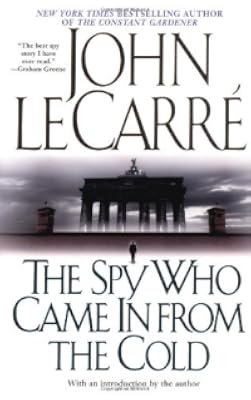
A veteran spy wants to "come in from the cold" to retirement. He undertakes one last assignment in which he pretends defection and provides the enemy with sufficient evidence to label their leader a double agent.Tags
Recommendations

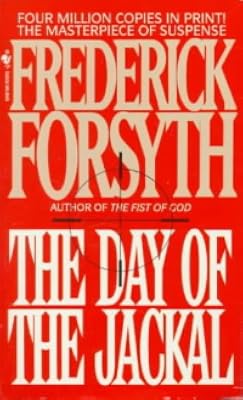

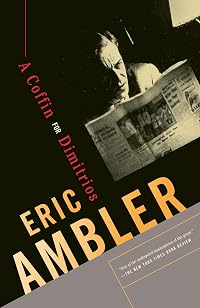
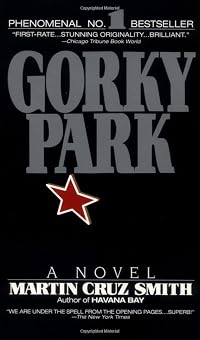

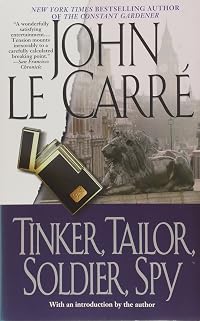

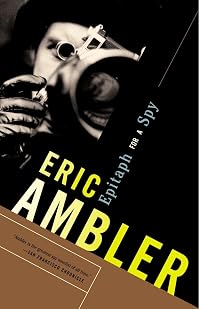

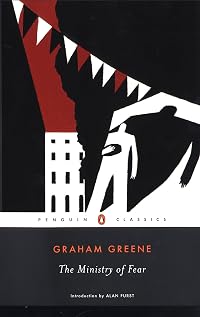

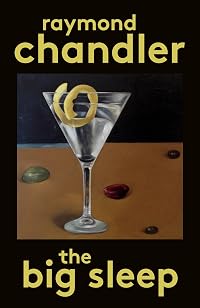
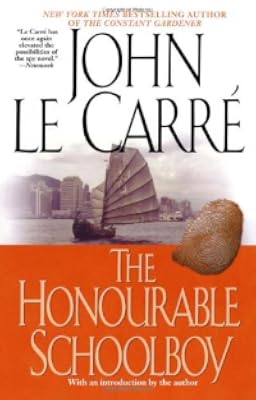







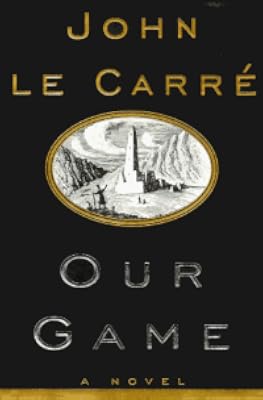
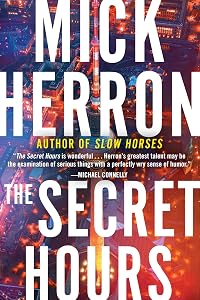
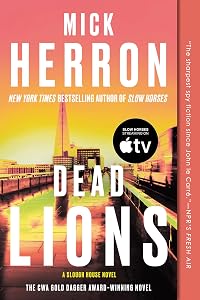
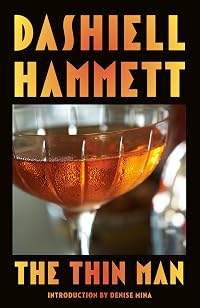


Member Recommendations

Member Reviews
'The Spy Came In from the Cold' lives up to its reputation as a magnificent spy thriller. It is the literary equivalent of cold black coffee; intense, invigorating, yet repugnant. Although I was totally riveted throughout, I can't say that I enjoyed it. As the introduction states, le Carré was very unhappy whilst writing it and this shows. It is a cynical, bitter, and dark book. The characters are entirely convincing, but not appealing.
There is some sardonic amusement to be had, however, in comparing Ian Fleming's glamorous Cold War to le Carré's sordid, soul-crushing, endless machinations. The latter certainly holds my attention far better. Although 'The Spy Who Came In from the Cold' is probably technically a better book, I show more preferred the gentler 'Murder of Quality' (which had moments of humour) and 'Tinker, Tailor, Soldier, Spy'. Perhaps because when George Smiley is the central character he does not often get his hands dirty? Whereas in this novel, no-one's hands are clean. show less
There is some sardonic amusement to be had, however, in comparing Ian Fleming's glamorous Cold War to le Carré's sordid, soul-crushing, endless machinations. The latter certainly holds my attention far better. Although 'The Spy Who Came In from the Cold' is probably technically a better book, I show more preferred the gentler 'Murder of Quality' (which had moments of humour) and 'Tinker, Tailor, Soldier, Spy'. Perhaps because when George Smiley is the central character he does not often get his hands dirty? Whereas in this novel, no-one's hands are clean. show less
The Spy Who Came In From The Cold by John Le Carre is a brilliant literary thriller that was originally published in 1963. This book exposes the dirty, messy business of spies on both sides of the Cold War and is totally unlike James Bond with his martini on one side and a beautiful woman on the other. In this book we meet Alec Leamas, a disillusioned British spy who is both mentally and physically fatigued. He is being used as a faux defector to help a British mole from being exposed.
It’s obvious that the author has a strong understanding of how the British intelligence worked during the Cold War and the result is a unique and flawlessly crafted story. His characters are complex and nuanced to give the book a feeling of authenticity. show more As disturbing as the story content is, I was even more upset by the casual immorality of the characters. They go about their shadowy dealings much like playing a game, there is no sense of right or wrong in the unethical world of espionage.
The Spy Who Came In From the Cold is my first book by this author and I am now looking forward to reading more. This was an intelligent and dark story that shows how the line between good and evil can be blurred and the many twists and turns it takes, along with the excellent writing rises this book beyond the “spy genre” into the Classic it has become. show less
It’s obvious that the author has a strong understanding of how the British intelligence worked during the Cold War and the result is a unique and flawlessly crafted story. His characters are complex and nuanced to give the book a feeling of authenticity. show more As disturbing as the story content is, I was even more upset by the casual immorality of the characters. They go about their shadowy dealings much like playing a game, there is no sense of right or wrong in the unethical world of espionage.
The Spy Who Came In From the Cold is my first book by this author and I am now looking forward to reading more. This was an intelligent and dark story that shows how the line between good and evil can be blurred and the many twists and turns it takes, along with the excellent writing rises this book beyond the “spy genre” into the Classic it has become. show less
'The Spy Who Came In From The Cold' (1963) was John le Carré's third book and his breakthrough novel. Together with Len Deighton's 'Ipcress File' published a year earlier, it changed the tone of spy fiction, moving away from the glamorous image of espionage created by Fleming and, to some extent, Graham Greene, towards something grimly seedy, morally bankrupt and totally credible. Le Carré made the Cold War real, stripping it of its ideological trimmings and displaying it for the covert but ruthlessly brutal conflict that it was.
John Le Carré
Le Carré worked as a British Intelligence Officer in the early 1960s, in Bonn and Hamburg. His career ended a year after 'The Spy Who Came In From The Cold' was published when the double agent show more Kim Philby gave the names of British agents to the KGB. This first-hand experience may explain the confident mastery of an insider's view of a secret world that makes 'The Spy Who Came In From The Cold' seem so authentic.
Although I've read many of Le Carré's later spy novels, I've never read his Cold War stories before. His later stories seem to me to be sophisticated, a little world-weary and totally unromantic but his main protagonists, usually men of few illusions, still find a way to muddle through and at least mitigate disaster. 'The Spy Who Came In From The Cold' isn't like that. It is unremittingly bleak. It's clever, so clever that I didn't see the twists coming, but it's also fundamentally repugnant. There are no heroes in this book, just players and the people being played and you don't know who is which until the novel ends. The novel is as compelling as a slow-motion car wreck, you know it won't end well but you can't look away.
Some of the grimness is simply a reflection of England as it was in the early 1960s, still struggling to achieve more than survival seven years after the end of the war. Some of it comes from a brutal Realpolitik that placed national interest ahead of ideology or personal integrity. Class also plays its part. Alec Leamas, the spy of the title, is, from the point of view of people who run the security service, 'not one of us'. He didn't go to the right schools. He's not a member of the right clubs. He is valued only to the extent that he is successful. If he stops being successful, he will lose all value. That Leamas knows and accepts this only makes everything more depressing. Leamas is a man who does not value himself. He's resilient and persistent but more from an ingrained habit of aggressive belligerence than from any belief in change. I didn't like Leamas but I understood him and believed in him completely. As a character, he's a remarkable achievement.
The plot of 'The Spy Who Came In From The Cold' is fiendishly clever both in its content and its exposition. Even when I knew the outcome I found myself staggered by the depth of deception and the ruthlessness of the execution.
The only false note in the story for me was Elizabeth's love for Alec Leamas. I could see that the plot required it but I struggled to believe it. Partly that was because I couldn't see what there was about Leamas that attracted her. He was significantly older, emotionally withdrawn, secretive, bad-tempered, sometimes violent and often drunk. What was the appeal? I felt that, by comparison to the portrait Le Carré painted of Leamas, Elizabeth was little more than a pencil sketch, an accessory rather than a person.
Even so, most of the novel was strong and it has encouraged me to read the rest of the Cold War books. show less
Out in the Cold
Review of the Pan Books paperback edition (1964) of the Victor Gollancz hardcover original (1963)
I re-read The Spy Who Came In From the Cold due to the recent passing of novelist John le Carré (penname of David Cornwell) (October 19, 1931 – December 12, 2020). His passing brought back memories of my first reading his Cold War novels in the 1970s. Those were probably the first books of somewhat 'serious' writing that I had ever read, after developing an early love of reading with detective and science fiction novels in my teenage years. I had saved all of those paperbacks as well, so it seemed like a good time for some retrospective re-reads.
The Spy... was Carré's breakthrough novel as it portrayed the secret armies of show more the Western allies acting as amorally & cynically as the supposed villains of the Communist East. The out-to-pasture agent Leamas is given one last shot at an operational role which requires him to method-act his way to appearing as a possible English traitor for the Soviet Bloc recruiters. He himself does not know the true target of the deception until it dawns on him towards the very end. By that time he is too world-weary and repulsed to carry on and makes his own decision about his fate.
The Spy... is tagged as #3 in the series of Carré's perpetual character George Smiley, who is the right-arm of Control, the code-named head of the Circus (Carré's nickname for MI-6, the British Secret Intelligence Service). The Smiley character makes only a few cameo appearances though. Regular readers may be pre-conditioned with a few key descriptive words (raincoat, short, plump, spectacles, frog-like) to seeing him perhaps lurking anonymously in the shadows throughout:
The Spy... was as effective now as ever and has lost none of its power of portraying the morality of the individual vs. the powers of the state. Although I plan to continue my revisit through the Carré canon, I'll likely make an early jump to the late addition "A Legacy of Spies" (2017) which revisits the Leamas affair through the eyes of an aging Peter Guillam, disciple of George Smiley.
Trivia and Link
The Spy Who Came In from the Cold was adapted into a film in 1965 directed by Martin Ritt with a screenplay by Paul Dehn & Guy Trosper and starring Richard Burton as Leamas. I couldn’t find an original trailer for it, but this montage trailer (2015) is very atmospheric with its use of more recent music (Iguazu from the soundtracks of the movie Babel & the TV series Deadwood) by Gustavo Santaolalla. show less
Review of the Pan Books paperback edition (1964) of the Victor Gollancz hardcover original (1963)
I re-read The Spy Who Came In From the Cold due to the recent passing of novelist John le Carré (penname of David Cornwell) (October 19, 1931 – December 12, 2020). His passing brought back memories of my first reading his Cold War novels in the 1970s. Those were probably the first books of somewhat 'serious' writing that I had ever read, after developing an early love of reading with detective and science fiction novels in my teenage years. I had saved all of those paperbacks as well, so it seemed like a good time for some retrospective re-reads.
The Spy... was Carré's breakthrough novel as it portrayed the secret armies of show more the Western allies acting as amorally & cynically as the supposed villains of the Communist East. The out-to-pasture agent Leamas is given one last shot at an operational role which requires him to method-act his way to appearing as a possible English traitor for the Soviet Bloc recruiters. He himself does not know the true target of the deception until it dawns on him towards the very end. By that time he is too world-weary and repulsed to carry on and makes his own decision about his fate.
The Spy... is tagged as #3 in the series of Carré's perpetual character George Smiley, who is the right-arm of Control, the code-named head of the Circus (Carré's nickname for MI-6, the British Secret Intelligence Service). The Smiley character makes only a few cameo appearances though. Regular readers may be pre-conditioned with a few key descriptive words (raincoat, short, plump, spectacles, frog-like) to seeing him perhaps lurking anonymously in the shadows throughout:
Some way down the road – not far, twenty yards, perhaps a bit more – stood the figure of a man in a raincoat, short and rather plump. He was leaning against the railings of the park, silhouetted in the shifting mist. As Leamus approached, the mist seemed to thicken, closing in around the figure at the railings, and when it parted the man was gone. - excerpt from pgs. 37-38.
The little sad man with spectacles who sat alone at the neighbouring table, deep in a book on the manufacture of ball bearings, might have deduced, had he been listening, that Leamas was indulging a sadistic nature […] - excerpt from pg. 52.
As they pushed their way through the revolving glass door, Leamas looked back. Standing at the newspaper kiosk, deep in a copy of the Continental Daily Mail, stood a small, frog-like figure in glasses, an earnest, worried little man. He looked like a civil servant. Something like that. - excerpt from pg. 73.
The Spy... was as effective now as ever and has lost none of its power of portraying the morality of the individual vs. the powers of the state. Although I plan to continue my revisit through the Carré canon, I'll likely make an early jump to the late addition "A Legacy of Spies" (2017) which revisits the Leamas affair through the eyes of an aging Peter Guillam, disciple of George Smiley.
Trivia and Link
The Spy Who Came In from the Cold was adapted into a film in 1965 directed by Martin Ritt with a screenplay by Paul Dehn & Guy Trosper and starring Richard Burton as Leamas. I couldn’t find an original trailer for it, but this montage trailer (2015) is very atmospheric with its use of more recent music (Iguazu from the soundtracks of the movie Babel & the TV series Deadwood) by Gustavo Santaolalla. show less
An expertly-crafted, genre-defining spy thriller. I was nervous about reading this book, expecting it to be affected (perhaps due to the author's pen-name) and unceasingly bleak and miserable. Instead, it was taut, real and, though cynical, manages to find the romantic yearning inherent in a practicing cynic.
I was a bit disappointed that there was no development in the romantic relationship between Leamas and Liz, particularly as it becomes such a major plot point. But, aside from that, the story unfolds with care and precision. It has a stellar theme, a ripping pace, and there are few better sensations for a reader than to be gripped by the twists and turns of a good espionage plot, with all the cynical back-stabbings and show more double-crossing that implies. We really feel the spy world and the existential cynicism of its practitioners: "the terrible clarity of a man too long deceived" (pg. 228). The ending is something special – amoral and yet intensely dramatic, and all the more heart-breaking for being on "an empty stage" (pg. 251). show less
I was a bit disappointed that there was no development in the romantic relationship between Leamas and Liz, particularly as it becomes such a major plot point. But, aside from that, the story unfolds with care and precision. It has a stellar theme, a ripping pace, and there are few better sensations for a reader than to be gripped by the twists and turns of a good espionage plot, with all the cynical back-stabbings and show more double-crossing that implies. We really feel the spy world and the existential cynicism of its practitioners: "the terrible clarity of a man too long deceived" (pg. 228). The ending is something special – amoral and yet intensely dramatic, and all the more heart-breaking for being on "an empty stage" (pg. 251). show less
Very good. A sad love story, complicated espionage that amounted to a depressing both side-ism —we are not much better than our enemies —kind of conclusion. War: what is good for. Absolutely nothing, not even a Cold War.
The Spy Who Came in From the Cold has the distinction of being the first universally lauded novel by John le Carre and the one that cemented his reputation as a serious writer of Cold War fiction. As the story opens, Alec Leamas, a British operative who has been running the Berlin office of the British Intelligence Service, watches as his informant attempts an escape from East Berlin and is killed. With his network blown and his main informant dead, Leamas is asked to undertake a mission of his own, going into deep cover and putting his own life on the line.
If you are old enough to remember a divided Berlin and the tensions that swirled around the Berlin Wall, this book will feel almost nostalgic. In some ways, the times were simpler; show more we supposed we knew who the enemy was, and it seemed clear to us what was right and what was wrong. Of course, it wasn’t that simple at all, and John le Carre, a man who served in the intelligence services himself, is in a position to remind us of that.
At one point in the book, a spy from the other side say, “We’re all the same, you know, that’s the joke.” And, perhaps, there is more that is the same about us, regardless of our political or social views, than there is that is different.
And, there is a cynicism that runs through the novel that questions the very premises upon which the system is built. There is no absolute truth and no absolute solution, and many of the players are not even sure of the roles they are playing.
Sometimes she thought Alec was right--you believed in things because you needed to; what you believed in had no value of its own, no function. What did he say? “A dog scratches where it itches. Different dogs itch in different places.”
The major questions I was left pondering after finishing were “When do the ends justify the means, or do they ever?” and “Should the individual matter as much as the collective and who decides when the individual should be sacrificed for the good of the society?”
Didn’t see much of Smiley in this novel, but it certainly sets the mood and the understanding him in those left to come. show less
If you are old enough to remember a divided Berlin and the tensions that swirled around the Berlin Wall, this book will feel almost nostalgic. In some ways, the times were simpler; show more we supposed we knew who the enemy was, and it seemed clear to us what was right and what was wrong. Of course, it wasn’t that simple at all, and John le Carre, a man who served in the intelligence services himself, is in a position to remind us of that.
At one point in the book, a spy from the other side say, “We’re all the same, you know, that’s the joke.” And, perhaps, there is more that is the same about us, regardless of our political or social views, than there is that is different.
And, there is a cynicism that runs through the novel that questions the very premises upon which the system is built. There is no absolute truth and no absolute solution, and many of the players are not even sure of the roles they are playing.
Sometimes she thought Alec was right--you believed in things because you needed to; what you believed in had no value of its own, no function. What did he say? “A dog scratches where it itches. Different dogs itch in different places.”
The major questions I was left pondering after finishing were “When do the ends justify the means, or do they ever?” and “Should the individual matter as much as the collective and who decides when the individual should be sacrificed for the good of the society?”
Didn’t see much of Smiley in this novel, but it certainly sets the mood and the understanding him in those left to come. show less
Members
- Recently Added By
Published Reviews
En este clásico, el autor recrea un mundo jamás conocido antes en la novela de suspense. Con los conocimientos acumulados durante sus años en el servicio de inteligencia británica, le Carré saca a la luz los interiores un tanto turbios del espionaje internacional de la mano de Alec Leamas, un agente británico durante los primeros años de la guerra fría en Berlín. Leamas es responsable show more de mantener a sus agentes dobles protegidos y con vida, pero los alemanes del Este empiezan a matarlos, por lo que su superior, Control, le pide que vuelva a Londres no para echarle del cuerpo sino para encargarle una misión un tanto complicada. Con esta novela clásica de suspense, le Carré cambió las reglas del juego. Esta es la historia de un último encargo que recae sobre un agente que desea desesperadamente retirarse de su carrera de espionaje. show less
added by Pakoniet
The best spy story I have ever read," says Graham Greene, and I am not too far from agreeing with him. Whether "The Spy Who Came in From the Cold" is better than Eric Ambler's "Epitaph for a Spy" or Somerset Maugham's "Ashenden" or Mr. Greene's own "The Confidential Agent" is inconsequential. What matters is that it belongs on the same shelf. Here is a book a light year removed from the show more sometimes entertaining trivia which have (in the guise of spy novels) cluttered the publishers' lists for the past year. show less
added by John_Vaughan
Lists

1001 Books You Must Read Before You Die
1,448 works; 1,132 members

The Guardian's 1000 Novels Everyone Must Read
1,005 works; 550 members
501 Must-Read Books
529 works; 72 members

Best Spy Fiction
153 works; 102 members

Read the book and saw the movie
1,170 works; 195 members

Recommend the 20 best books you've read in the last five years
2,168 works; 601 members

Top Five Books of 2013
1,562 works; 721 members
Best Espionage (Fiction)
55 works; 20 members
20th Century Literature
1,161 works; 55 members

100 Mysteries and Thrillers to Read in a Lifetime
99 works; 22 members

Favorite Literary Love Stories
182 works; 101 members

1960s, Best books published therein
254 works; 22 members

Books With a Twist
69 works; 46 members
Time Magazine's "All-Time 100"
113 works; 15 members

Top Five Books of 2020
982 works; 350 members

The Top 100 Crime Novels of All Time
100 works; 15 members

Canon de la narrativa universal del siglo XX
254 works; 6 members

100 Best Thrillers of All Time
100 works; 6 members

1,001 BYMRBYD Concensus
723 works; 27 members
TML 200 Best Books 1950-1999
202 works; 10 members
Time's All-Time 100 Novels
100 works; 27 members

Fiction For Men
142 works; 11 members

Top Five Books of 2015
811 works; 240 members

NPRs your picks: top 100 Killer Thrillers
100 works; 17 members
Top 100 Mystery Novels of All Time
98 works; 9 members

Survey of Mysteries and Crime Fiction
96 works; 17 members

Books set in Berlin
46 works; 4 members

Favorite Audiobooks Listened to in 2011
33 works; 11 members

Publisher's Weekly Bestsellers - Part II - 1940 - 1979
355 works; 5 members
discontinued
24 works; 4 members

Books Read in 2017
4,249 works; 130 members
Overdue Podcast
805 works; 9 members

Mad Men Reading List
25 works; 5 members

Books Read in 2015
3,299 works; 129 members

Books Read in 2018
4,360 works; 110 members

Retrospective of 20th- and 21st-century literature
154 works; 1 member

Books We Couldn't Put Down
443 works; 197 members

.
194 works; 2 members

Books Read in 2026
1,856 works; 66 members
My Mad Men Reading List
47 works; 1 member
Tozai Mystery Best 100 | The Top 100 Mystery Novels
111 works; 3 members

GREAT 1960s BOOKS
37 works; 1 member
.
396 works; 1 member

The Modern Library (The Two Hundred Best Novels....
202 works; 1 member

Fiction: Thriller
78 works; 1 member

Las mejores obras literarias releídas en 2022 (R. D.)
19 works; 1 member

Biggest Disappointments
606 works; 168 members
Canon de la narrativa universal del s. XX (cicutadry)
499 works; 3 members
Books We Love to Reread
688 works; 296 members

The 100 Best Crime Novels and Thrillers since 1945
100 works; 6 members

Books Read in 2011
684 works; 20 members

Mustich's 1000 Books to Read Before You Die: A Life Changing List
1,001 works; 19 members

Crime Writers' Association Daggers
76 works; 4 members

Best books I read in 2013
152 works; 3 members

Thrillers to read
21 works; 2 members

Edgar Award
418 works; 15 members

Books mentioned in Julian Symons’ Bloody Murder
438 works; 6 members

Anthony Boucher's Best Crime Fiction of the Year
115 works; 5 members

Books - Le Carre, John: George Smiley
10 works; 1 member
Author Information

207+ Works 98,985 Members
David John Moore Cornwell was born in Poole, Dorsetshire, England in 1931. He attended Bern University in Switzerland from 1948-49 and later completed a B.A. at Lincoln College, Oxford. He taught at Eton from 1956-58 and was a member of the British Foreign Service from 1959 to 1964. He writes espionage thrillers under the pseudonym John le Carré. show more The pseudonym was necessary when he began writing, in the early 1960s because, at that time, he held a diplomatic position with the British Foreign Office and was not allowed to publish under his own name. When his third book, The Spy Who Came in from the Cold, became a worldwide bestseller in 1964, he left the foreign service to write full time. His other works include Call for the Dead; A Murder of Quality; Tinker, Tailor, Soldier, Spy; The Honourable Schoolboy; and Smiley's People. He has received numerous awards for his writing, including the Grand Master Award from the Mystery Writers of America in 1986 and the Diamond Dagger from the Crime Writers Association in 1988. In 2011 he accepted the Goethe Medal. And in 2020, he accepted the Olof Palme Prize. Ten of his books have been adapted for television and motion pictures including The Spy Who Came in from the Cold, The Russia House, The Constant Gardener, A Most Wanted Man, and Our Kind of Traitor. Le Carré's memoir, The Pigeon Tunnel: Stories from my Life, became a New York Times bestseller in 2016. In 2019, he published a spy thriller, Agent Running in the Field. John Le Carré died on December 12, 2020 from pneumonia at the age of 89. (Bowker Author Biography) John le Carre was born in 1931. After attending the univesities of Berne and Oxford, he spent five years in the British Foreign Service. He's the author of eighteen novels, translated into twenty-five languages. He lives in England. (Publisher Provided) show less
Some Editions
Awards and Honors
Awards
Distinctions
Notable Lists
Series

Belongs to Publisher Series
Work Relationships
Is contained in
Call for the Dead + A Murder of Quality + The Spy who came in from the Cold + The Looking-Glass War + A Small Town in Germany by John le Carré
Three Complete Novels: The Spy Who Came in from the Cold / A Small Town in Germany / The Looking Glass War by John le Carré
The spy who came in from the cold; Nightmare '66; The looking-glass war; The growth of Marie-Louise; George Smiley goes home by John le Carré
The Spy who came In from the Cold + The Looking Glass War + Tinker, Tailor, Soldier, Spy by John LeCarre
Call for the Dead + A Murder of Quality + The Spy who came in from the Cold + The Looking Glass War by John LeCarre
Is retold in
Has the adaptation
Is abridged in
Reader's Digest Best Sellers 1965: Captain Newman, M.D. | When the Cheering Stopped | Spy Who Came in From the Cold | Song of Sixpence by Reader's Digest
De overwinning op de Dru; Spion aan de muur; De stille strijd; Erfgenaam van Kirkland by Reader's Digest
Reader's Digest Condensed Books: The Island / Wolfpack / Joy in the Morning / The Spy Who Came in From the Cold by Reader's Digest
Has as a reference guide/companion
Has as a study
Common Knowledge
- Canonical title
- The Spy Who Came in from the Cold
- Original title
- The Spy Who Came in from the Cold
- Original publication date
- 1963-09-01
- People/Characters
- Alec Leamas; Control; Jens Fiedler; Liz Gold; Hans-Dieter Mundt; Karl Riemeck (show all 7); George Smiley
- Important places
- East Berlin, German Democratic Republic; West Berlin, Federal Republic of Germany; Berlin, Germany; Germany
- Important events
- Cold War
- Related movies
- The Spy Who Came in from the Cold (1965 | IMDb)
- First words
- The American handed Leamas another cup of coffee and said, "Why don't you go back and sleep? We can ring you if he shows up."
- Quotations
- "What do you think spies are: priests, saints and martyrs? They're a squalid procession of vain fools, traitors too, yes; pansies, sadists and drunkards, people who play cowboys and Indians to brighten their rotten lives."
- Last words
- (Click to show. Warning: May contain spoilers.)As he fell, Leamas saw a small car smashed between great lorries, and the children waving cheerfully through the window.
- Blurbers
- Boucher, Anthony; Greene, Graham; Prescott, Orville; Priestley, J. B.; Waugh, Alec
- Original language
- English
- Canonical DDC/MDS
- 823.914
- Disambiguation notice
- This work includes the full text audiobooks read by a single narrator..
The radio dramatizations, acted by a cast, should NOT be combined here.
Classifications
- Genres
- Fiction and Literature, Suspense & Thriller, General Fiction
- DDC/MDS
- 823.914 — Literature & rhetoric English & Old English literatures English fiction 1900- 1901-1999 1945-1999
- LCC
- PZ4 .L4526 — Language and Literature Fiction and juvenile belles lettres Fiction and juvenile belles lettres Fiction in English
- BISAC
Statistics
- Members
- 9,880
- Popularity
- 1,015
- Reviews
- 270
- Rating
- (4.00)
- Languages
- 26 — Basque, Catalan, Chinese, Danish, Dutch, English, Estonian, Finnish, French, German, Hebrew, Hungarian, Italian, Korean, Lithuanian, Norwegian (Bokmål), Norwegian, Polish, Portuguese, Romanian, Russian, Serbian, Sinhalese, Spanish, Swedish, Turkish
- Media
- Paper, Audiobook, Ebook
- ISBNs
- 222
- UPCs
- 1
- ASINs
- 146