

On This Page
Description
After an unremarkable interview, Circus agent George Smiley determines the subject of a standard security check-a civil servant in the Foreign Office named Samuel Fennan-poses no threat, nor presents any reason for suspicion of espionage. Hours later, Samuel Fennan is found dead by suicide. Suddenly finding himself under intense scrutiny, Smiley realizes the Circus intends to blame him for Fennan's death. Rather than remain idle, Smiley begins his own investigation into the nature of the show more man's demise. What he finds is a tangled web of secrets that connects not only to East German activity in Britain, but also his own past. The beginning of a body of work that The New York Times calls extraordinary in its breadth, consistency, generosity and wit, John le Carré's 1961 debut introduces one of the most esteemed and iconic spies in the literary canon: George Smiley. show lessTags
Recommendations



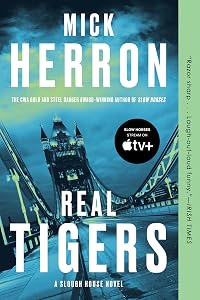
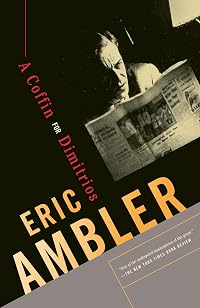
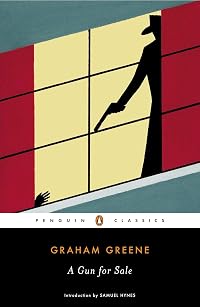
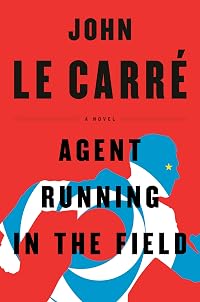


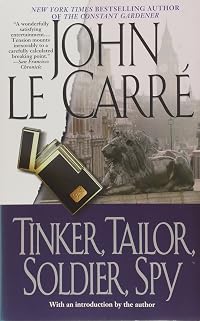
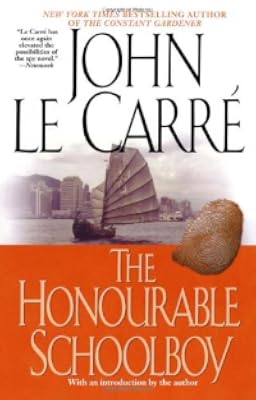




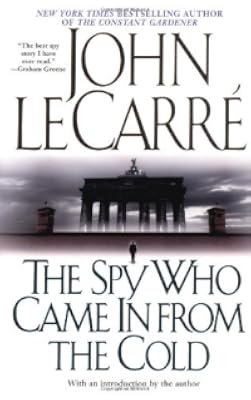
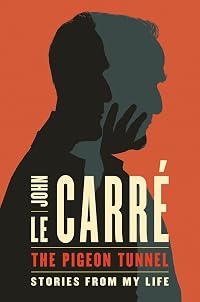
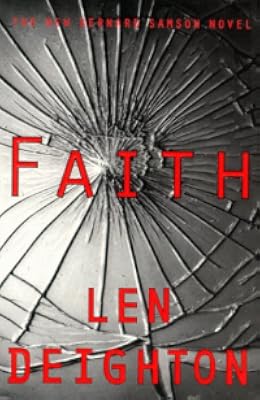

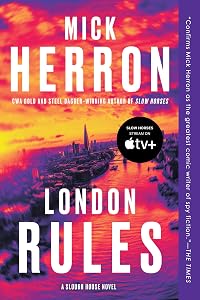






Member Recommendations
otori Key character Hans-Dieter Mundt first appearance.
30
Member Reviews
This was Le Carré's first book; remarkably good for a first effort. The writing is crisp and pointed, with the occasional gnomic utterance.
The character of Smiley is presented in outline in a brief history of his life and further developed in the novel. A don manqué; it is obliquely suggested that he walked away from a fellowship at All Souls, one of the great plums of British academe, to become a spy. A failed marriage that has left deep scarring. Member of an odd club, but not really clubbable. A fascination with eighteenth-century German literature.
Smiley starts in the dark, caught up short. He gradually sorts things out, following tenuous clues and hints, getting it wrong and finally getting it right. A painful (sometimes show more literally) process of piecing together fragments. This is a spy novel that reflects reality a lot more than James Bond. show less
The character of Smiley is presented in outline in a brief history of his life and further developed in the novel. A don manqué; it is obliquely suggested that he walked away from a fellowship at All Souls, one of the great plums of British academe, to become a spy. A failed marriage that has left deep scarring. Member of an odd club, but not really clubbable. A fascination with eighteenth-century German literature.
Smiley starts in the dark, caught up short. He gradually sorts things out, following tenuous clues and hints, getting it wrong and finally getting it right. A painful (sometimes show more literally) process of piecing together fragments. This is a spy novel that reflects reality a lot more than James Bond. show less
'Call For The Dead', published in 1961, was John le Carré's debut novel. He wrote it while posted to the British Embassy in Berlin, working for the British Secret Service.
This a short novel (167 pages) but it does a very effective job of introducing you to the nuanced world of George Smiley, British spy, while solving a mystery around the apparent suicide of a Foreign Office colleague.
George Smiley is a spy who couldn't be further from the James Bond 007 image. Smiley is short, fat, expensively but badly dressed, bespectacled and in late middle age. Recruited out of University, he created and ran spy networks in Germany before and during the Second World War. When we meet him, he's desk-bound and seen as too old for field work. Le show more Carré does a good job of suggesting, without ever stating, that Smilely is seen as being too old-fashioned for post-war spy work, where political savvy is valued more highly than operational effectiveness. We soon see that Smilely has a disturbing habit of digging for answers long after his masters have found the answer they were looking for.
Even in this first book, John le Carré's writing is captivating. His storytelling is intelligent, articulate and accessible. He builds Smiley's character with deft strokes that display Smiley's trade craft, his class and most of all, his dogged determination to make sense of what he's seeing even when it goes against his own best interest.
As with the spies in Le Carré's later works, Smiley is not a blindly-loyal patriot, convinced that the British are always right. He sees the compromises and the evasions of the politicians and recognises that he has more in common with his opponents that he does with his masters. The content of the story, which involves spies from the GDR, would have been mildly controversial in 1961, when Britain didn't recognise the GDR, the Berlin wall was being built and Britain still had troops on the ground.
There a simple but satisfying mystery at the centre of the novel although I think its main purpose was to introduce us to how George Smilely thinks.
There were a couple of things that marked this out as a debut novel for me. I found the start of the novel a little florid, perhaps trying too hard for a high-flown style but that settled down after a couple of chapters. I thought the inclusion of Smiley's report towards the end of novel as a way of explaining what had been going on was a little clumsy. Despite those things, this was an engaging and memorable read.
I recommend the audiobook version of 'Call For The Dead'. Michael Jayston's narration captures the tone of the text perfectly. show less
This a short novel (167 pages) but it does a very effective job of introducing you to the nuanced world of George Smiley, British spy, while solving a mystery around the apparent suicide of a Foreign Office colleague.
George Smiley is a spy who couldn't be further from the James Bond 007 image. Smiley is short, fat, expensively but badly dressed, bespectacled and in late middle age. Recruited out of University, he created and ran spy networks in Germany before and during the Second World War. When we meet him, he's desk-bound and seen as too old for field work. Le show more Carré does a good job of suggesting, without ever stating, that Smilely is seen as being too old-fashioned for post-war spy work, where political savvy is valued more highly than operational effectiveness. We soon see that Smilely has a disturbing habit of digging for answers long after his masters have found the answer they were looking for.
Even in this first book, John le Carré's writing is captivating. His storytelling is intelligent, articulate and accessible. He builds Smiley's character with deft strokes that display Smiley's trade craft, his class and most of all, his dogged determination to make sense of what he's seeing even when it goes against his own best interest.
As with the spies in Le Carré's later works, Smiley is not a blindly-loyal patriot, convinced that the British are always right. He sees the compromises and the evasions of the politicians and recognises that he has more in common with his opponents that he does with his masters. The content of the story, which involves spies from the GDR, would have been mildly controversial in 1961, when Britain didn't recognise the GDR, the Berlin wall was being built and Britain still had troops on the ground.
There a simple but satisfying mystery at the centre of the novel although I think its main purpose was to introduce us to how George Smilely thinks.
There were a couple of things that marked this out as a debut novel for me. I found the start of the novel a little florid, perhaps trying too hard for a high-flown style but that settled down after a couple of chapters. I thought the inclusion of Smiley's report towards the end of novel as a way of explaining what had been going on was a little clumsy. Despite those things, this was an engaging and memorable read.
I recommend the audiobook version of 'Call For The Dead'. Michael Jayston's narration captures the tone of the text perfectly. show less
The first (short) novel starring his most famous character, the "hunched, frog-like" natural spymaster George Smiley, seen here after his divorce but before he becomes a significant figure in British Intelligence. Smiley's routine interview of an agent denounced as a suspected Marxist triggers that agent's unexpected suicide, leading to the discovery of a deeper conspiracy. What I like about later Le Carré is already visible this early on: his dark, perceptive descriptions of human nature and the moral confusion of the intelligence services. It's also interesting to read a cold war spy story written in the middle of the cold war, by someone who was still working for MI5 when he wrote it.
This is the birth of Smiley as we know him in his later book. Short, fat with a moustache and nearing retirement, Smiley finds himself embroiled in the death of a man, Fennan, that he had just interviewed as a vetting procedure after a complaint.
Maston his chief, 'who wants a K', doesn't want the truth but for Smiley to just clear things up and move on. He can't however and goes to speak to Fennan's widow where stories and timelines start to unravel. The book is more novella than novel length and I did guess what had happened before the ending but was engaged enough not to worry about that.
I loved the first chapter A Brief History of George Smiley as it set out exactly what the title says and whilst you might be thinking why do we have show more this, it is a necessary part of the plot. I can't think of another book where I have been told upfront about the history of the protaganist quite so straightforwardly and I enjoyed it for the context whilst realising its intended relevance as you move through the story. We are also introduced to his rather tricky marriage to Lady Ann who at this point has run off with a Cuban race car driver. By the end of the book he is off to Switzerland to bring her back.
Le Carré's books have always had a focus on class and the morality of the characters and these are reflected in this book as well. Smiley is shown not to come from Eton and so on through his desire to have things done a particular way with the right wine and cutlery in the correct placements. Always a give away of someone who has been shown these things rather than grown up with them and who is quite relaxed about them. Lady Ann does not come across well, with a fair bit of repetition around the fact that no one could believe she was with Smiley, so eleagant and urbane and so unlike Smiley.
Enjoyable but not earth shattering. show less
Maston his chief, 'who wants a K', doesn't want the truth but for Smiley to just clear things up and move on. He can't however and goes to speak to Fennan's widow where stories and timelines start to unravel. The book is more novella than novel length and I did guess what had happened before the ending but was engaged enough not to worry about that.
I loved the first chapter A Brief History of George Smiley as it set out exactly what the title says and whilst you might be thinking why do we have show more this, it is a necessary part of the plot. I can't think of another book where I have been told upfront about the history of the protaganist quite so straightforwardly and I enjoyed it for the context whilst realising its intended relevance as you move through the story. We are also introduced to his rather tricky marriage to Lady Ann who at this point has run off with a Cuban race car driver. By the end of the book he is off to Switzerland to bring her back.
Le Carré's books have always had a focus on class and the morality of the characters and these are reflected in this book as well. Smiley is shown not to come from Eton and so on through his desire to have things done a particular way with the right wine and cutlery in the correct placements. Always a give away of someone who has been shown these things rather than grown up with them and who is quite relaxed about them. Lady Ann does not come across well, with a fair bit of repetition around the fact that no one could believe she was with Smiley, so eleagant and urbane and so unlike Smiley.
Enjoyable but not earth shattering. show less
This book introduces us to the writing of le Carré and to George Smiley, who is SO not James Bond. He is dumpy, humble, mild-mannered, wears glasses....in other words, forgettable. And yet something about George Smiley speaks to me - I like him. His job at MI6 has just taken a strange turn - yesterday he performed a routine security investigation on Samuel Fennan. The interview ended with Smiley assuring Fennan that he had nothing to worry about. So why has Fennan hanged himself? The more that Smiley looks into the matter, the more convinced he becomes that Fennan was murdered.
Although this is not le Carré's best work, it is still fine writing that sets the stage for his very successful series of books featuring George Smiley, the spy show more who is very much a product of both WWII and the Cold War.
"He felt safe in the taxi. Safe and warm. The warmth was contraband, smuggled from his bed and hoarded against the wet January night. Safe because unreal: it was his ghost that ranged the London streets and took note of their unhappy pleasure-seekers, scuttling under commissionaires' umbrellas; and of the tarts, gift-wrapped in polythene. It was his ghost, he decided, which had climbed from the well of sleep and stopped the telephone shrieking on the bedside table...Oxford Street... why was London the only capital in the world that lost its personality at night? Smiley, as he pulled his coat more closely about him, could think of nowhere, from Los Angelos to Berne, which so readily gave up its daily struggle for identity." show less
Although this is not le Carré's best work, it is still fine writing that sets the stage for his very successful series of books featuring George Smiley, the spy show more who is very much a product of both WWII and the Cold War.
"He felt safe in the taxi. Safe and warm. The warmth was contraband, smuggled from his bed and hoarded against the wet January night. Safe because unreal: it was his ghost that ranged the London streets and took note of their unhappy pleasure-seekers, scuttling under commissionaires' umbrellas; and of the tarts, gift-wrapped in polythene. It was his ghost, he decided, which had climbed from the well of sleep and stopped the telephone shrieking on the bedside table...Oxford Street... why was London the only capital in the world that lost its personality at night? Smiley, as he pulled his coat more closely about him, could think of nowhere, from Los Angelos to Berne, which so readily gave up its daily struggle for identity." show less
My first Le Carré and the first in the George Smiley series. This is more murder than spy novel, but still a minor introduction to The Circus that will loom even longer in subsequent Smiley novels.
I came to this book because I love the 1979 BBC TV series "Tinker Tailor Soldier Spy" and also the later 1982 "Smiley's People". Both on YT now and I've watched both multiple times. I selected this as it is the first of the George Smiley books. I was keen to learn more about him from his inception. He is a most intriguing character: smart, moral, indefatigable, wizened, wearied, unattractive, and--in the most interpersonal ways--inept.
It's his relationship with his philandering wife Lady Ann that puzzles him most, and is his possible show more Achilles heel. Indeed, he is described as a "a bullfrog in a sou'wester'" by one of Ann's astonished friends and when they walk down the isle, Smiley himself imagines her kiss will transform him into a prince. Alec Guinness plays Smiley in the series and once you see his perfect interpretation, it is Guinness that you envision always.
I don't feel bad that I didn't figure the mystery all out. In traditional murder mystery fashion, the last chapter is a letter from Smiley to the other involved investigators where he recaps the ultimate correct interpretation of all that transpired. Whew.
Me, I sit back and enjoy the character of Smiley, and let all the twists and turns of the mystery play out, without too much strenuous armchair deducing. In the TV series, the Cold War spying is more challenging, but the casting of all the primary characters is superb so that it is its own joy to behold.
I listened to the audio version, read by Michael Jayston, who played Peter Guillam in the first TV series. It was nice to have that familiar voice connecting back to the experience of watching, being riveted to the series when it aired in the U.S. on PBS. Nostalgic for me, but for any listener, wonderfully done. show less
I came to this book because I love the 1979 BBC TV series "Tinker Tailor Soldier Spy" and also the later 1982 "Smiley's People". Both on YT now and I've watched both multiple times. I selected this as it is the first of the George Smiley books. I was keen to learn more about him from his inception. He is a most intriguing character: smart, moral, indefatigable, wizened, wearied, unattractive, and--in the most interpersonal ways--inept.
It's his relationship with his philandering wife Lady Ann that puzzles him most, and is his possible show more Achilles heel. Indeed, he is described as a "a bullfrog in a sou'wester'" by one of Ann's astonished friends and when they walk down the isle, Smiley himself imagines her kiss will transform him into a prince. Alec Guinness plays Smiley in the series and once you see his perfect interpretation, it is Guinness that you envision always.
I don't feel bad that I didn't figure the mystery all out. In traditional murder mystery fashion, the last chapter is a letter from Smiley to the other involved investigators where he recaps the ultimate correct interpretation of all that transpired. Whew.
Me, I sit back and enjoy the character of Smiley, and let all the twists and turns of the mystery play out, without too much strenuous armchair deducing. In the TV series, the Cold War spying is more challenging, but the casting of all the primary characters is superb so that it is its own joy to behold.
I listened to the audio version, read by Michael Jayston, who played Peter Guillam in the first TV series. It was nice to have that familiar voice connecting back to the experience of watching, being riveted to the series when it aired in the U.S. on PBS. Nostalgic for me, but for any listener, wonderfully done. show less
[a:John le Carré|1411964|John le Carré|https://images.gr-assets.com/authors/1234571122p2/1411964.jpg]’s first Smiley novel, [b:Call for the Dead|46460|Call for the Dead|John le Carré|https://images.gr-assets.com/books/1347597241s/46460.jpg|1176737], is an old-fashioned, but well-written, cold war novel, with a spy with a heart at its core. George Smiley is not dashing or cosmopolitan, he is solid and intelligent and feeling; he sees both sides of the picture, but he never wonders which side he is on. He is the man you would wish to have in control of your government, but of course, he is not in control, he is just a factor, one man who tries to do things right and often has to fight the bureaucracy.
We know nothing of one another, show more nothing, Smiley mused. However closely we live together, at whatever time of day or night we sound the deepest thoughts in one another, we know nothing.
In so many ways this is true of all of us, and in so many ways it is a necessity for the men who do the kind of work Smiley undertakes. How could you live in the shadows, keep the secrets, and still be open to anyone? And yet, we feel we do know Smiley, because we recognize his loneliness and his decency, and we see him struggle to understand even his adversaries.
I loved Smiley when I first read these stories, what seems like a million years ago. I did not remember any of the content of the story, but found I did remember him, perfectly. I shall love him again, of this I am sure, because he represents what is the finest in the men who put their lives on the line and do abominable jobs to keep the rest of us safe and free.
I have made a start, and I am looking forward to spending a year with Mr. Smiley, the old dear, again. show less
We know nothing of one another, show more nothing, Smiley mused. However closely we live together, at whatever time of day or night we sound the deepest thoughts in one another, we know nothing.
In so many ways this is true of all of us, and in so many ways it is a necessity for the men who do the kind of work Smiley undertakes. How could you live in the shadows, keep the secrets, and still be open to anyone? And yet, we feel we do know Smiley, because we recognize his loneliness and his decency, and we see him struggle to understand even his adversaries.
I loved Smiley when I first read these stories, what seems like a million years ago. I did not remember any of the content of the story, but found I did remember him, perfectly. I shall love him again, of this I am sure, because he represents what is the finest in the men who put their lives on the line and do abominable jobs to keep the rest of us safe and free.
I have made a start, and I am looking forward to spending a year with Mr. Smiley, the old dear, again. show less
Members
- Recently Added By
Published Reviews
His Zimmer frame in overdrive, Smiley sprinted after Dieter and cornered him by the Thames. "So?" Smiley said. "So?" Dieter replied, before allowing the much older, much weaker man push him into the river.
Smiley sat down, exhausted and overwhelmed by a need to recap in case some readers still hadn't quite gathered what was going on. And this time he would make it even easier for them by show more writing them in bullet points. 1. It was Elsa who was the spy. 2. Sam had become suspicious and was going to denounce her. 3. Dieter...
"Well I'm glad that's all cleared up without the Press being involved," cried Maston cheerily. "I take it we can tear up your resignation letter?"
On balance Smiley thought he could. It was true there had been a number of rough edges. Some of the plotting had rather stretched credulity and the characterisation had been thinner than he hoped. But it was a more than decent start and his career as Alec Guinness was under way. show less
Smiley sat down, exhausted and overwhelmed by a need to recap in case some readers still hadn't quite gathered what was going on. And this time he would make it even easier for them by show more writing them in bullet points. 1. It was Elsa who was the spy. 2. Sam had become suspicious and was going to denounce her. 3. Dieter...
"Well I'm glad that's all cleared up without the Press being involved," cried Maston cheerily. "I take it we can tear up your resignation letter?"
On balance Smiley thought he could. It was true there had been a number of rough edges. Some of the plotting had rather stretched credulity and the characterisation had been thinner than he hoped. But it was a more than decent start and his career as Alec Guinness was under way. show less
added by John_Vaughan
Lists

Top Five Books of 2013
1,562 works; 715 members

Books mentioned in Julian Symons’ Bloody Murder
438 works; 6 members

Top Five Books of 2014
1,064 works; 398 members

Books Read in 2016
4,666 works; 199 members

First Novels
373 works; 17 members

Books Read in 2017
4,249 works; 130 members

Books Read in 2018
4,360 works; 110 members

Books Read in 2020
4,379 works; 124 members
1960s, Best books published therein
254 works; 22 members

Reading LIst
648 works; 1 member

Books - Le Carre, John: George Smiley
10 works; 1 member
Author Information

204+ Works 98,873 Members
David John Moore Cornwell was born in Poole, Dorsetshire, England in 1931. He attended Bern University in Switzerland from 1948-49 and later completed a B.A. at Lincoln College, Oxford. He taught at Eton from 1956-58 and was a member of the British Foreign Service from 1959 to 1964. He writes espionage thrillers under the pseudonym John le Carré. show more The pseudonym was necessary when he began writing, in the early 1960s because, at that time, he held a diplomatic position with the British Foreign Office and was not allowed to publish under his own name. When his third book, The Spy Who Came in from the Cold, became a worldwide bestseller in 1964, he left the foreign service to write full time. His other works include Call for the Dead; A Murder of Quality; Tinker, Tailor, Soldier, Spy; The Honourable Schoolboy; and Smiley's People. He has received numerous awards for his writing, including the Grand Master Award from the Mystery Writers of America in 1986 and the Diamond Dagger from the Crime Writers Association in 1988. In 2011 he accepted the Goethe Medal. And in 2020, he accepted the Olof Palme Prize. Ten of his books have been adapted for television and motion pictures including The Spy Who Came in from the Cold, The Russia House, The Constant Gardener, A Most Wanted Man, and Our Kind of Traitor. Le Carré's memoir, The Pigeon Tunnel: Stories from my Life, became a New York Times bestseller in 2016. In 2019, he published a spy thriller, Agent Running in the Field. John Le Carré died on December 12, 2020 from pneumonia at the age of 89. (Bowker Author Biography) John le Carre was born in 1931. After attending the univesities of Berne and Oxford, he spent five years in the British Foreign Service. He's the author of eighteen novels, translated into twenty-five languages. He lives in England. (Publisher Provided) show less
Some Editions
Awards and Honors
Awards
Series

Belongs to Publisher Series
Work Relationships
Is contained in
Call for the Dead + A Murder of Quality + The Spy who came in from the Cold + The Looking-Glass War + A Small Town in Germany by John le Carré
Has the adaptation
Common Knowledge
- Canonical title*
- L'appel du mort
- Original title
- Call for the Dead
- Alternate titles
- The Deadly Affair
- Original publication date
- 1961-06-01
- People/Characters
- George Smiley; Elsa Fennan; Inspector Mendel; Peter Guillam; Dieter Frey; Hans-Dieter Mundt (show all 7); Oliver Mendel
- Important places
- London, England, UK
- Related movies
- The Deadly Affair (1966 | IMDb)
- First words
- When Lady Ann Sercomb married George Smiley towards the end of the war she described him to her astonished Mayfair friends as breathtakingly ordinary.
Introduction, 2012 edition: With the possible exception of the person interviewed, there is nobody more predictable than an interviewer, and in my experience they come in two sorts, you might almost say two ages. - Last words
- (Click to show. Warning: May contain spoilers.)He found it rather disgusting.
(Click to show. Warning: May contain spoilers.)Ai suoi compagni di viaggio, Smiley appariva come uno strano personaggio - un uomo piccolo, grasso, piuttosto lugubre, che improvvisamente sorrideva e ordinava una bibita. L'uomo giovane, dai capelli biondi, che sedeva accanto a lui, lo esaminava da vicino con la coda dell'occhio. Conosceva bene il tipo del funzionario stanco, che va a divertirsi un po'. Lo trovò alquanto ripugnante. - Original language*
- Anglais (Royaume-Uni) (Royaume-Uni)
- Disambiguation notice
- Call for the Dead was reissued in 1966 under the title The Deadly Affair to coincide with the release of the Sidney Lumet film with this title.
*Some information comes from Common Knowledge in other languages. Click "Edit" for more information.
Classifications
Statistics
- Members
- 3,823
- Popularity
- 4,132
- Reviews
- 121
- Rating
- (3.70)
- Languages
- 17 — Catalan, Danish, Dutch, English, Finnish, French, German, Hungarian, Italian, Korean, Norwegian (Bokmål), Norwegian, Portuguese, Russian, Spanish, Swedish, Turkish
- Media
- Paper, Audiobook, Ebook
- ISBNs
- 130
- ASINs
- 69