On This Page
Description
British agent George Smiley hunts for a mole in the Secret Service and begins his epic game of international chess with his Soviet counterpart, an agent named Karla.Tags
Recommendations
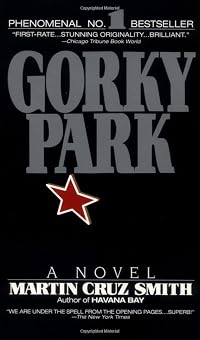

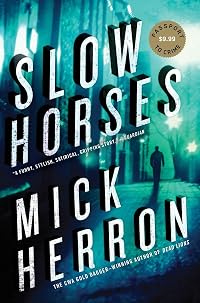

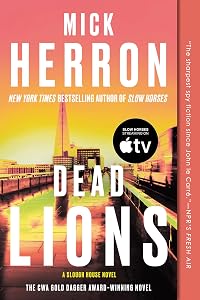
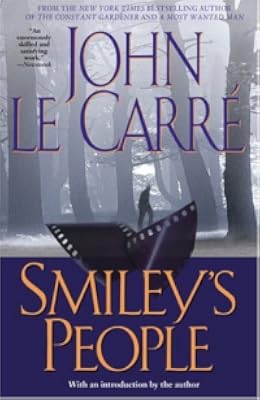


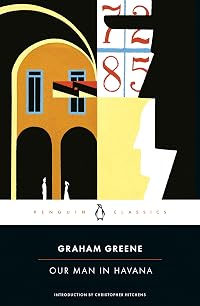
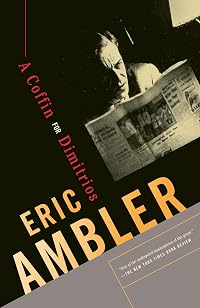
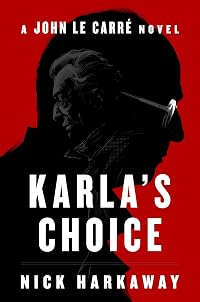
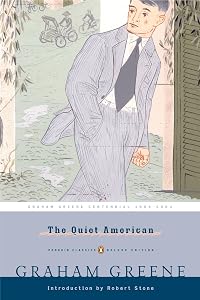
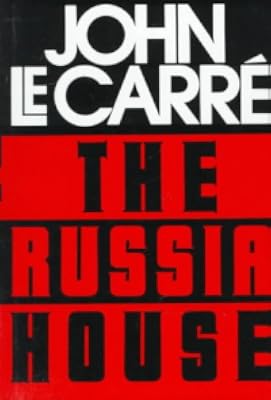



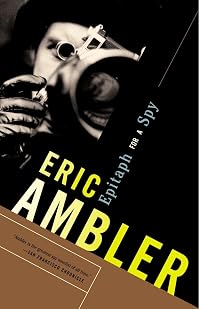
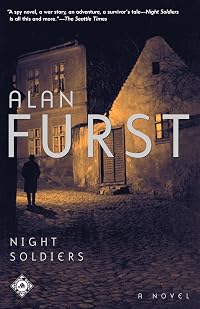

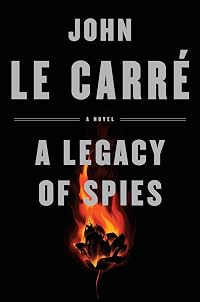


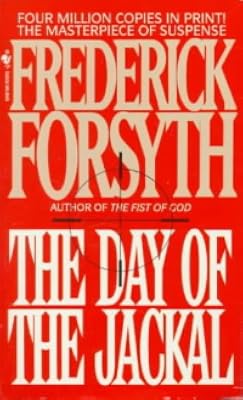
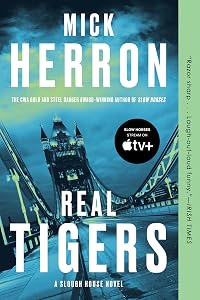

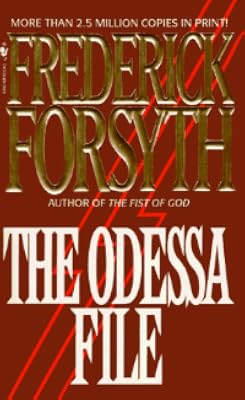
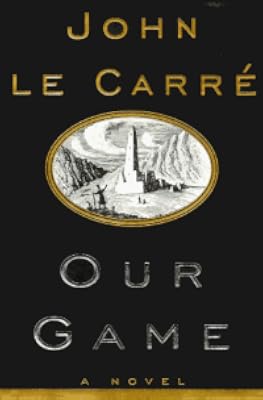




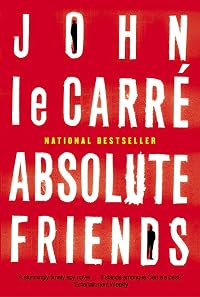
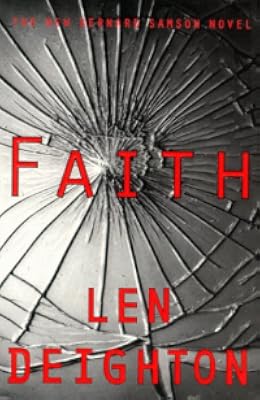
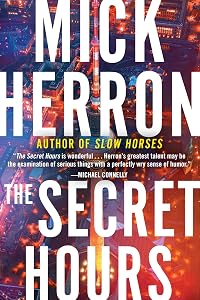

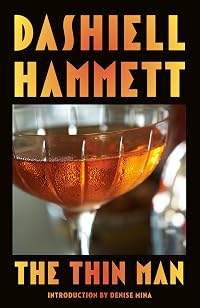
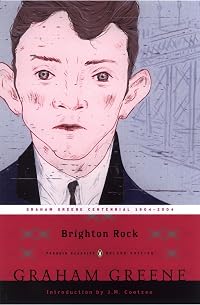
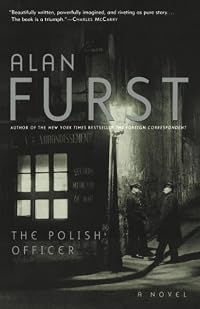
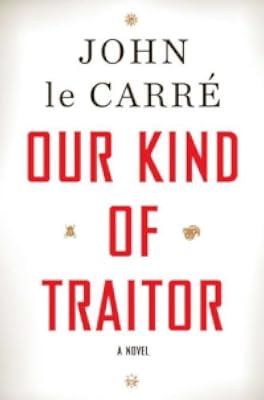
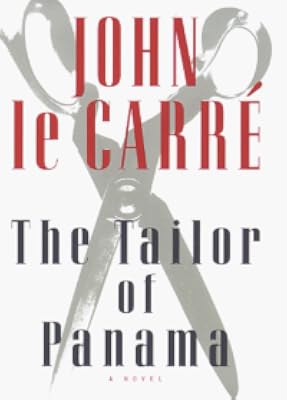
Member Recommendations

John_Vaughan Another great trilogy.

Hedgepeth Red Rabbit is any early case in Jack Ryans career that is not as action driven as some of the other novels. It moves a little faster than Tinker, Tailor but should still appeal to those who appreciate a more methodical pace.
27

tandah A different era, but similar pacing and sense of foreboding.
Member Reviews
This is an absolute masterwork. It's also a spy novel, which means that I can't really discuss it much without introducing subtle little spoilers. Who knows, maybe it's so damn good that spoilers don't matter and it would probably be even better on a second reading, but just in case, stop reading this review and go and pick it up.
The prose is lucid, the plot compelling, the characters brilliant, the ideas engaging and the moral journey richly rewarding. See, I've done it already. I told you to stop reading. What does "moral journey" mean? As you read this book you'll be so desperate for clues that every review you've ever read will rattle around inside your brain and possibly distract you. Best to just take my word for it and go and show more pick it up. If you're worried that this is not really your genre, don't. I have read two spy novels in my life and although this is undoubtedly genre fiction, it transcends its genre entirely. If you only read one spy novel in your life, make it this one. show less
The prose is lucid, the plot compelling, the characters brilliant, the ideas engaging and the moral journey richly rewarding. See, I've done it already. I told you to stop reading. What does "moral journey" mean? As you read this book you'll be so desperate for clues that every review you've ever read will rattle around inside your brain and possibly distract you. Best to just take my word for it and go and show more pick it up. If you're worried that this is not really your genre, don't. I have read two spy novels in my life and although this is undoubtedly genre fiction, it transcends its genre entirely. If you only read one spy novel in your life, make it this one. show less
Tinker Tailor Soldier Spy was my next stop in my (mostly) chronological tour of the works of John Le Carré; and it is interesting to note that he followed what very many consider his worst novel with what most consider one of his best (although that distinction usually goes not so much to this novel in and of itself as to the “Karla Triloy” of which it is the first volume).
This novel is structured like a jigsaw puzzle. While it is a well-worn simile to compare a mystery novel to a puzzle, it rarely was so literally true as in the case of Le Carré’s novel Tinker Tailor Soldier Spy - the narrative here does not so much develop as a linear plot, but rather consists of bits and pieces of similar size but various shapes that at first show more sight seem to have no connection to each other and not to make much sense on their own, but when placed together in the right pattern by an expert hand suddenly cohere and form a bigger picture. That expert hand (and it is very expert hand) is not that of the reader, however – Tinker Tailor Soldier Spy does not just shake out the unsorted pieces in front of the reader and leaves it for them to sort them out (which would have resulted in a formally much more radical novel – one like George Perec’s La Vie – Mode d’Emploi, for example) but has them all put in place by the narrator – reading Le Carré’s novel, then, is not so much like piecing together a jigsaw puzzle, but like watching someone else do it.
Which does sound rather boring, and probably would have been in the hands of a lesser writer than Le Carré, but he pulls it off masterfully. There is not really any forward momentum to this novel, there is nothing really happening except people sitting around, drinking tea, or taking the occasional walk, while reminiscing or having talks over the current state of the Secret Service, but it still manages to grab the reader and to not let go until the end. The story is told in isolated pieces that at first do not seem to connect at all – another fitting image beside a jigsaw puzzle might be those complicated patterns from domino stones that are set up in a long and painstaking process, to be then set in motion by the tipping over of a single stone. Maybe this simile explains better while in spite of everything Tinker Tailor Sailor Spy is a compulsive page-turner, even if one has (like me) watched the BBC TV serial a long time back and still remembers who the mole is. The real tension and excitement in this novel comes not so much from the Whodunnit-like mystery, but from watching Le Carré build his extremely complex and incredibly fragile-seeming structure, from holding one’s breath for fear of disturbing it and half expecting it to come tumbling down any paragraph. It’s not unlike watching a juggler, watching his hands, watching oranges circle through the air, involuntarily sucking in one’s breath when one seems to slip his grasp, then exhaling with a relieved sigh when it doesn’t and he catches it at the last possible moment.
As impressive as Le Carré’s techinal accomplishment here is, Tinker Tailor Soldier Spy is not artistry for its own sake – as always with Le Carré’s novels, this one, too, is driven by a strong moral and political impetus. The world that Le Carré describes here, the world of Circus and Centre, of espionage and counter-intelligence, of scalphunters, lamplighters and moles, might border on the one we inhabit, but it also is detached from it, and the two exist parallel to each other without really touching. But while the shady world of international espionage might at first appear like some exotic fantasy world, the farther the novel progresses, the more pieces Le Carré adds to the jigsaw puzzle, the clearer it becomes that the resulting picture bears an uncanny resemblance to our own world – here is class structure, and here is the exclusion of outsiders, here is the ruthlessness of the poeple in power and the powerlessness of the people at the bottom of the pecking order, here is the pretense to be in the moral right while employing decidedly unethical means to reach one’s ends. In the end, it adds up to an only slightly distorted replica of our familiar world of economy and politics, and when the final piece is in place, the reader is left looking at a picture that is all too familiar. show less
This novel is structured like a jigsaw puzzle. While it is a well-worn simile to compare a mystery novel to a puzzle, it rarely was so literally true as in the case of Le Carré’s novel Tinker Tailor Soldier Spy - the narrative here does not so much develop as a linear plot, but rather consists of bits and pieces of similar size but various shapes that at first show more sight seem to have no connection to each other and not to make much sense on their own, but when placed together in the right pattern by an expert hand suddenly cohere and form a bigger picture. That expert hand (and it is very expert hand) is not that of the reader, however – Tinker Tailor Soldier Spy does not just shake out the unsorted pieces in front of the reader and leaves it for them to sort them out (which would have resulted in a formally much more radical novel – one like George Perec’s La Vie – Mode d’Emploi, for example) but has them all put in place by the narrator – reading Le Carré’s novel, then, is not so much like piecing together a jigsaw puzzle, but like watching someone else do it.
Which does sound rather boring, and probably would have been in the hands of a lesser writer than Le Carré, but he pulls it off masterfully. There is not really any forward momentum to this novel, there is nothing really happening except people sitting around, drinking tea, or taking the occasional walk, while reminiscing or having talks over the current state of the Secret Service, but it still manages to grab the reader and to not let go until the end. The story is told in isolated pieces that at first do not seem to connect at all – another fitting image beside a jigsaw puzzle might be those complicated patterns from domino stones that are set up in a long and painstaking process, to be then set in motion by the tipping over of a single stone. Maybe this simile explains better while in spite of everything Tinker Tailor Sailor Spy is a compulsive page-turner, even if one has (like me) watched the BBC TV serial a long time back and still remembers who the mole is. The real tension and excitement in this novel comes not so much from the Whodunnit-like mystery, but from watching Le Carré build his extremely complex and incredibly fragile-seeming structure, from holding one’s breath for fear of disturbing it and half expecting it to come tumbling down any paragraph. It’s not unlike watching a juggler, watching his hands, watching oranges circle through the air, involuntarily sucking in one’s breath when one seems to slip his grasp, then exhaling with a relieved sigh when it doesn’t and he catches it at the last possible moment.
As impressive as Le Carré’s techinal accomplishment here is, Tinker Tailor Soldier Spy is not artistry for its own sake – as always with Le Carré’s novels, this one, too, is driven by a strong moral and political impetus. The world that Le Carré describes here, the world of Circus and Centre, of espionage and counter-intelligence, of scalphunters, lamplighters and moles, might border on the one we inhabit, but it also is detached from it, and the two exist parallel to each other without really touching. But while the shady world of international espionage might at first appear like some exotic fantasy world, the farther the novel progresses, the more pieces Le Carré adds to the jigsaw puzzle, the clearer it becomes that the resulting picture bears an uncanny resemblance to our own world – here is class structure, and here is the exclusion of outsiders, here is the ruthlessness of the poeple in power and the powerlessness of the people at the bottom of the pecking order, here is the pretense to be in the moral right while employing decidedly unethical means to reach one’s ends. In the end, it adds up to an only slightly distorted replica of our familiar world of economy and politics, and when the final piece is in place, the reader is left looking at a picture that is all too familiar. show less
TTSS is a masterclass of what you can do within genre literature (or perhaps an argument that some genre books should be considered as simply "Literature" end stop): a work where the way it's written and the accumulation of details is crucial to the overall themes and end of the book. Smiley's perception throughout the book is detail-laced, almost to the point of being buried by them, and the stories he reads and hears wind their way forward and backward through time. It's about as close as you can get to a gordian knot of a tale, and Smiley has to eventually return to past grievances to fully understand it all.
It's the 1970s, and potential soviet spies are everywhere. Nothing is clear at all, and the most obvious facts may turn out to show more be your undoing. This is the set that le Carre plays with, and by the end, you're as paranoid as Smiley. Yet le Carre doesn't fill the book with double-crossings and surprise twists. Instead, there's more a gradual shudder as the mystery sheds off its layers like old snakeskins. You read (and over-read) every action because you know that any one of it could be the clue, yet harbor a despair that even if all the information was in front of you, the chances of you reaching their conclusion (or rather, a conclusion) is startlingly slim.
I imagine this book would pair well with Errol Morris' Believing is Seeing, a book that shares le Carre's conviction that there is a base truth to the world, but it may be so inaccessible that we'll forever be in error, and it is in trying to suss it out that we find the greater meanings of what has occurred.. show less
It's the 1970s, and potential soviet spies are everywhere. Nothing is clear at all, and the most obvious facts may turn out to show more be your undoing. This is the set that le Carre plays with, and by the end, you're as paranoid as Smiley. Yet le Carre doesn't fill the book with double-crossings and surprise twists. Instead, there's more a gradual shudder as the mystery sheds off its layers like old snakeskins. You read (and over-read) every action because you know that any one of it could be the clue, yet harbor a despair that even if all the information was in front of you, the chances of you reaching their conclusion (or rather, a conclusion) is startlingly slim.
I imagine this book would pair well with Errol Morris' Believing is Seeing, a book that shares le Carre's conviction that there is a base truth to the world, but it may be so inaccessible that we'll forever be in error, and it is in trying to suss it out that we find the greater meanings of what has occurred.. show less
Intrigued by slightly leaden but otherwise excellent movie adaptation, I decided to step outside my usual genre preferences and try on this British Cold War spy thriller. As with certain Raymond Chandler novels, the plot is essentially beside the point, being an unintelligible tangle of impenetrable nonsense; the real action is in the characterization and the atmospherics. In this respect, the novel is excellent; if George Smiley seems like a somewhat opaque antihero, put it down to prototypical English reticence rather than lack of psychogical insight. The violence in the book is the more chilling for its relative lack of explicitness.
Veteran spy George Smiley has been retired from 'The Circus' which has been taken over by a group of agents who are perhaps more interested in their personal agendas than the good of the country. Struggling with his personal life and the abrupt change in his circumstances, Smiley is out of sorts until approached by a former colleague who has some suspicions about the activities of the Circus. Asked to take a look Smiley discovers that some time ago, perhaps decades ago, the Russians managed to insert a traitor, a mole, into the organisation and that the mole now occupies a high position where he has the capacity to greatly damage British interests in the Cold War. Smiley and a small group of trusted associates set out to unpick a show more tangled trail of evidence to identify and destroy the mole and ensure the safety of the country's secrets.
This is a complicated and cerebral novel and I suspect I have missed some of the nuances because I devoured it within a couple of days. It was interesting to read it shortly after A Call for the Dead as it gave me a chance to experience Smiley as a young and relatively inexperienced officer and an older, infinitely wiser and more complex character. Rich writing presents the working of Smiley's mind as he gathers information on agents of his own side, observes and pieces together the truth. This is a chess game involving people as the pieces and Smiley and the Russian spymaster, Karla, as the players I believe that his is the first novel in the Karla trilogy in which Smiley battles with Karla. If the others are as good as these, I can't wait to read them. Smiley succeeds as a character because (like Bernie Gunther) he isn't particularly likeable (small, podgy and undemonstrative) and has a rich backstory. He is a character you can invest yourself in and admire his methods, and combined with a fascinatingly convoluted plot, Tinker is a great novel to read. show less
This is a complicated and cerebral novel and I suspect I have missed some of the nuances because I devoured it within a couple of days. It was interesting to read it shortly after A Call for the Dead as it gave me a chance to experience Smiley as a young and relatively inexperienced officer and an older, infinitely wiser and more complex character. Rich writing presents the working of Smiley's mind as he gathers information on agents of his own side, observes and pieces together the truth. This is a chess game involving people as the pieces and Smiley and the Russian spymaster, Karla, as the players I believe that his is the first novel in the Karla trilogy in which Smiley battles with Karla. If the others are as good as these, I can't wait to read them. Smiley succeeds as a character because (like Bernie Gunther) he isn't particularly likeable (small, podgy and undemonstrative) and has a rich backstory. He is a character you can invest yourself in and admire his methods, and combined with a fascinatingly convoluted plot, Tinker is a great novel to read. show less
Tinker Tailor Solider Spy is a spy novel depicting the discovery and unmasking of a double agent, or mole, in the British secret service. Le Carre is a master of characterisation and ‘Tinker Tailor’ abounds with captivating characters and their stories: George Smiley, Jim Prideaux, Peter Guillam, Ricki Tarr, Connie Sachs, Bill Hayden, Toby Esterhase, and Jerry Westerby - to name a few. Le Carre has the knack of telling us much about each, through the careful selection of details. His narrative is rich with sensory information that enables us to live the events along with his characters, without being obtrusive.
George Smiley is a remarkable creation, the antithesis of the traditional spy hero. He is dull, rather than dashing; more show more chameleon than charismatic; not fit, but flabby; the jilted husband, not the gigolo lover. Smiley has been so deeply drawn by Le Carre that he becomes real and, like real people, too complex to analyse with certainty. As a woman, I can understand how his wife, the delicious Ann, could love him profoundly in theory, but not in practice. He is certainly a character I love and return to for comfort. show less
George Smiley is a remarkable creation, the antithesis of the traditional spy hero. He is dull, rather than dashing; more show more chameleon than charismatic; not fit, but flabby; the jilted husband, not the gigolo lover. Smiley has been so deeply drawn by Le Carre that he becomes real and, like real people, too complex to analyse with certainty. As a woman, I can understand how his wife, the delicious Ann, could love him profoundly in theory, but not in practice. He is certainly a character I love and return to for comfort. show less
A very, very fine novel, probably all too often underrated simply for being a "genre" book. I think at bottom I fundamentally disagree with what Le Carré is saying here, but that doesn't diminish his accomplishment here, nor the enjoyment I got from the book. The implied narrative voice is very jaundiced and cynical, farther so than I'd be willing to follow him, but the through line of the plot is very strong, the characters are good, the story is well-paced and pays off nicely.
Le Carré is widely regarded as the best (by far) of all the espionage novelists - I'm not quite willing to sign on to that on the strength of this one book alone, but I am at least willing to entertain the proposition as a reasonable one.
Le Carré is widely regarded as the best (by far) of all the espionage novelists - I'm not quite willing to sign on to that on the strength of this one book alone, but I am at least willing to entertain the proposition as a reasonable one.
Members
- Recently Added By
Published Reviews
ThingScore 100
10 of the Greatest Cold War Spy Novels
“Like Fleming, Le Carré (real name: David John Moore Cornwall) worked for British intelligence. But where Fleming used his WW 2 experiences as a springboard for fantasy, Le Carre turned his Cold War service into grimly realistic novels. The Spy Who Came in From the Cold (1963) trumped Deighton as a response to James Bond’s glamourous world of show more espionage, and he continues to turn out fine work to this day. Tinker charts the search for a Soviet mole in the upper echelons of British intelligence, providing Le Carré’s signature character – the low-key professional George Smiley – with a late-in-the-game chance to reclaim his standing in the Circus (MI6), made bittersweet by betrayal. A fine BBC serialization in 1974 was followed by an equally well-received feature-film version in 2011.” show less
“Like Fleming, Le Carré (real name: David John Moore Cornwall) worked for British intelligence. But where Fleming used his WW 2 experiences as a springboard for fantasy, Le Carre turned his Cold War service into grimly realistic novels. The Spy Who Came in From the Cold (1963) trumped Deighton as a response to James Bond’s glamourous world of show more espionage, and he continues to turn out fine work to this day. Tinker charts the search for a Soviet mole in the upper echelons of British intelligence, providing Le Carré’s signature character – the low-key professional George Smiley – with a late-in-the-game chance to reclaim his standing in the Circus (MI6), made bittersweet by betrayal. A fine BBC serialization in 1974 was followed by an equally well-received feature-film version in 2011.” show less
added by feeling.is.first
Karla is finally lured across a Berlin bridge and into the West. But, again, what figure is cut by the evil mastermind when he appears? “He wore a grimy shirt and a black tie: he looked like a poor man going to the funeral of a friend.” Le Carré has never written a better sentence, one so impatient of ideology and so attentive to what he, following W. H. Auden, describes plainly as “the show more human situation.” The television series of “Tinker Tailor Soldier Spy” has lost none of its grip, and the new film will recruit new friends to the cause; but if we seek George Smiley and his people, with their full complement of terrors, illusions, and shames, we should follow the example of the ever-retiring Smiley, and go back to our books. That’s the truth show less
added by John_Vaughan
The power of the novel is that le Carré transfigured espionage – its techniques, failures and deceptions – into a rich metaphor combining national decay, the disintegration of certainties with advancing age, the impossibility of knowing another human being's mind, the fragility of all trust and loyalty.
added by thorold
Lists

Best Books Set in Boarding Schools
160 works; 57 members

Books Read in 2023
5,547 works; 145 members

Books Read in 2020
4,379 works; 123 members

Finished in 2021
18 works; 1 member

A's favorite novels
100 works; 3 members

Books Read in 2021
5,361 works; 113 members

1970s
657 works; 23 members

Five star books
1,757 works; 108 members

Books set in Prague
40 works; 1 member

Favourite Books
1,819 works; 316 members

Big Jubilee List
70 works; 3 members

Best Spy Fiction
153 works; 102 members

Publisher's Weekly Bestsellers - Part II - 1940 - 1979
355 works; 5 members
Top 100 Mystery Novels of All Time
98 works; 9 members

Liked the Movie Better
12 works; 5 members

Books With the Most Memorable Titles
478 works; 158 members

Books We'd Want on a Desert Island
203 works; 131 members

Books for Birute
39 works; 1 member

Leídos en 2024 por primera vez: Magistrales (R. D.)
22 works; 1 member

Do I wanna see once upon a time
25 works; 1 member
Books We Couldn't Put Down
443 works; 197 members

Reading LIst
648 works; 1 member

Books for Dustin
19 works; 1 member

Take Four Books
130 works; 1 member

Fiction: Thriller
78 works; 1 member

Best books made into television
66 works; 4 members

Top Five Books of 2018
802 works; 264 members
Best Espionage (Fiction)
55 works; 19 members

Books With Nursery Rhyme Titles
37 works; 8 members

Watched the Movie, Probably Won't Read the Book
185 works; 34 members
Folio Society
831 works; 51 members
Best of British Literature
226 works; 41 members

Recommend the 20 best books you've read in the last five years
2,168 works; 601 members
1001 Books You Must Read Before You Die
1,448 works; 1,134 members

20th Century Literature
1,161 works; 54 members
The Guardian's 1000 Novels Everyone Must Read
1,005 works; 550 members

Top Five Books of 2013
1,562 works; 715 members

NPRs your picks: top 100 Killer Thrillers
100 works; 17 members

Swinging Seventies
255 works; 18 members

all aboard for malory towers (grownups)
28 works; 5 members

100 Best Thrillers of All Time
100 works; 6 members

The Telegraph's 110 Best Books: The Perfect Library
101 works; 18 members

stories at work
43 works; 7 members

BBC Radio 4 Bookclub
340 works; 13 members
Crime and Mysteries to Read
746 works; 31 members

Best LGBT Fiction
144 works; 25 members
Love Triangles in Literature
108 works; 15 members

Read the book and saw the movie
1,170 works; 195 members

The Top 100 Crime Novels of All Time
100 works; 15 members

The Guardian's 100 greatest novels of all time
100 works; 16 members

Movie Adaptations
111 works; 4 members

Books Read in 2018
4,360 works; 110 members

Books - Le Carre, John: George Smiley
10 works; 1 member
Talk Discussions
Past Discussions
Tinker Tailor Soldier Spy LE??! in Folio Society Devotees (October 2023)
Author Information

215+ Works 99,003 Members
David John Moore Cornwell was born in Poole, Dorsetshire, England in 1931. He attended Bern University in Switzerland from 1948-49 and later completed a B.A. at Lincoln College, Oxford. He taught at Eton from 1956-58 and was a member of the British Foreign Service from 1959 to 1964. He writes espionage thrillers under the pseudonym John le Carré. show more The pseudonym was necessary when he began writing, in the early 1960s because, at that time, he held a diplomatic position with the British Foreign Office and was not allowed to publish under his own name. When his third book, The Spy Who Came in from the Cold, became a worldwide bestseller in 1964, he left the foreign service to write full time. His other works include Call for the Dead; A Murder of Quality; Tinker, Tailor, Soldier, Spy; The Honourable Schoolboy; and Smiley's People. He has received numerous awards for his writing, including the Grand Master Award from the Mystery Writers of America in 1986 and the Diamond Dagger from the Crime Writers Association in 1988. In 2011 he accepted the Goethe Medal. And in 2020, he accepted the Olof Palme Prize. Ten of his books have been adapted for television and motion pictures including The Spy Who Came in from the Cold, The Russia House, The Constant Gardener, A Most Wanted Man, and Our Kind of Traitor. Le Carré's memoir, The Pigeon Tunnel: Stories from my Life, became a New York Times bestseller in 2016. In 2019, he published a spy thriller, Agent Running in the Field. John Le Carré died on December 12, 2020 from pneumonia at the age of 89. (Bowker Author Biography) John le Carre was born in 1931. After attending the univesities of Berne and Oxford, he spent five years in the British Foreign Service. He's the author of eighteen novels, translated into twenty-five languages. He lives in England. (Publisher Provided) show less
Some Editions
Awards and Honors
Series


Belongs to Publisher Series
Work Relationships
Common Knowledge
- Canonical title*
- Edelman, bedelman, schutter, spion
- Original title
- Tinker, Tailor, Soldier, Spy
- Alternate titles*
- Tinker, Tailor, Soldier, Spy
- Original publication date
- 1974-06-01
- People/Characters
- George Smiley ('Beggar Man'); Peter Guillam; Oliver Lacon; Toby Esterhase ('Poor Man'); Bill Haydon ('Gerald', 'Tailor'); Jim Prideaux (show all 16); Connie Sachs; Karla; Roy Bland ('Soldier'); Percy Alleline ('Tinker'); Ricki Tarr; Sam Collins; Inspector Mendel; Bill Roach ('Jumbo'); Oliver Mendel; Jerry Westerby
- Important places
- London, England, UK; Prague, Czech Republic
- Important events
- Cold War
- Related movies
- Tinker, Tailor, Soldier, Spy (1979 | IMDb); Tinker, Tailor, Soldier, Spy (2011 | IMDb)
- Epigraph
- Tinker,
Tailor,
Soldier,
Sailor,
Rich Man,
Poor Man,
Beggarman,
Thief.
Small children's fortune-telling rhyme used when counting cherry stones, waistcoat buttons, daisy petals, or the seeds of the ... (show all)Timothy grass.
– from the Oxford Dictionary of Nursery Rhymes - Dedication
- For James Bennett and Dusty Rhodes in memory.
- First words
- The truth is, if old Major Dover hadn't dropped dead at Taunton races Jim would never have come to Thursgood's at all.
- Last words
- (Click to show. Warning: May contain spoilers.)The gun, Bill Roach had finally convinced himself, was after all a dream.
- Blurbers
- Broyard, Anatole
- Original language
- English
*Some information comes from Common Knowledge in other languages. Click "Edit" for more information.
Classifications
Statistics
- Members
- 9,686
- Popularity
- 1,055
- Reviews
- 250
- Rating
- (4.05)
- Languages
- 25 — Catalan, Chinese, Czech, Danish, Dutch, English, Estonian, Finnish, French, German, Greek, Hebrew, Hungarian, Italian, Japanese, Korean, Norwegian (Bokmål), Norwegian, Polish, Portuguese, Romanian, Russian, Spanish, Swedish, Turkish
- Media
- Paper, Audiobook, Ebook
- ISBNs
- 201
- UPCs
- 1
- ASINs
- 96