On This Page
Description
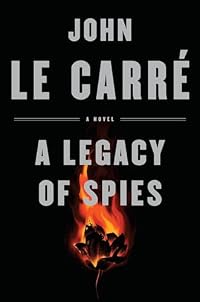
#1 NEW YORK TIMES BESTSELLERThe undisputed master returns with his first Smiley novel in more than twenty-five years—a #1 New York Times bestseller and ideal holiday gift.
Peter Guillam, staunch colleague and disciple of George Smiley of the British Secret Service, otherwise known as the Circus, is living out his old age on the family farmstead on the south coast of Brittany when a letter from his old Service summons him to London. The reason? His Cold War past has come back to claim show more him. Intelligence operations that were once the toast of secret London, and involved such characters as Alec Leamas, Jim Prideaux, George Smiley and Peter Guillam himself, are to be scrutinized by a generation with no memory of the Cold War and no patience with its justifications.
Interweaving past with present so that each may tell its own intense story, John le Carré has spun a single plot as ingenious and thrilling as the two predecessors on which it looks back: The Spy Who Came in from the Cold and Tinker Tailor Soldier Spy. In a story resonating with tension, humor and moral ambivalence, le Carré and his narrator Peter Guillam present the reader with a legacy of unforgettable characters old and new. show less
Tags
Recommendations
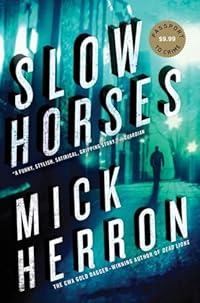
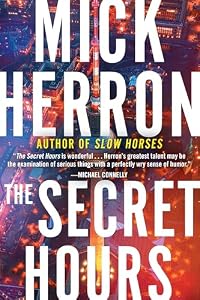
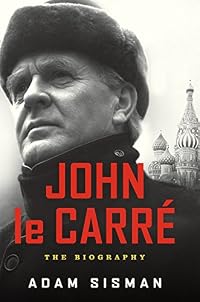











Member Recommendations
Member Reviews
If you haven't read The Spy Who Came in From the Cold, this novel would probably make no sense at all. TSWCIFTC was set in 1960's Berlin, whilst A Legacy jumps forward 50 years to examine the events that happened ahead of the action in the earlier novel. Peter Guillam, now retired from the secret service, is a former colleague of George Smiley. Living quietly in Brittany he is abruptly recalled to London to answer some difficult questions about Operation Windfall, a shady operation run by Smiley, which has now brought down the threat of legal action by survivors of agents who were killed in action.
What a blessed relief this was after Above the Ether. I gobbled this up in one day (a rainy Sunday) and was gripped from the start. A show more beautifully crafted tale deploying the same cast of characters from Tinker, Tailor, Soldier Spy and The Spy Who Came in From the Cold. It is told through a mixture of first person action set in the late 2010s, recollections from the 60s and intelligence reports from the same period. Very readable and clever. Recommended. show less
What a blessed relief this was after Above the Ether. I gobbled this up in one day (a rainy Sunday) and was gripped from the start. A show more beautifully crafted tale deploying the same cast of characters from Tinker, Tailor, Soldier Spy and The Spy Who Came in From the Cold. It is told through a mixture of first person action set in the late 2010s, recollections from the 60s and intelligence reports from the same period. Very readable and clever. Recommended. show less
In a series of eight previous books, John le Carré created a world of spies who fought the Cold War with grit, determination, an occasional lapse of morals, and a genuine regret for those lapses. He also created a wonderful cast of characters, most especially George Smiley, but quite a few others who populate Britain’s “Circus,” the Directorate of Military Intelligence or MI6, analogous to the U.S. CIA. Le Carré's ninth book in the series, A Legacy of Spies, is no disappointment.
Le Carré’s reputation was made with The Spy Who Came in from the Cold in 1963. This latest book is something of a retelling of the earlier work, but from the point of view of Peter Guillam, Smiley’s faithful assistant. In fact, the second book is show more set several decades later than The Spy. The British government is being sued by the descendants of the agents who were sent to their deaths in the earlier book. Guillam is a reluctant witness to the events that are the basis of the lawsuit. Le Carré cleverly lets Guillam tell the reader what he says to attorneys for the plaintiffs and for the government, but he often does not tell the truth.
George Smiley appears only briefly, but his reputation and aura linger in the background throughout the story. Perhaps Smiley should not play too important a role because if the author were entirely consistent with his earlier works Smiley would be about 113 years old!
Evaluation: Le Carré is a master of English prose, and even though this is a spy novel, it is also excellent literature.
(JAB) show less
Le Carré’s reputation was made with The Spy Who Came in from the Cold in 1963. This latest book is something of a retelling of the earlier work, but from the point of view of Peter Guillam, Smiley’s faithful assistant. In fact, the second book is show more set several decades later than The Spy. The British government is being sued by the descendants of the agents who were sent to their deaths in the earlier book. Guillam is a reluctant witness to the events that are the basis of the lawsuit. Le Carré cleverly lets Guillam tell the reader what he says to attorneys for the plaintiffs and for the government, but he often does not tell the truth.
George Smiley appears only briefly, but his reputation and aura linger in the background throughout the story. Perhaps Smiley should not play too important a role because if the author were entirely consistent with his earlier works Smiley would be about 113 years old!
Evaluation: Le Carré is a master of English prose, and even though this is a spy novel, it is also excellent literature.
(JAB) show less
A Legacy Of Spies" is John Le Carré's most recent novel and the first of his that I've read. Up to now, I'd been put off by the rather dreary and mournful versions of George Smiley that I'd seen on TV. I picked up the latest book after listening to a Fresh Air interview with Le Carré that covered contemporary themes around ideology and patriotism that intrigued me. You can listen to the podcast here
What surprised me most about the book was how beautiful the language is. Le Carré writes with clarity and precision, capturing nuances of speech, thought and culture with deft touches that are evocative without being obtrusive. He moves skillfully from past to present, from lie to truth, from regret to rage, in a way that fully engaged my show more mind and my emotions.
The premise of the book is a present day investigation into British security operations during the Cold War. It is told through contemporary interrogations by a rather loathsome lawyer, extracts from official, secret but not necessarily truthful records and intensely intimate memories of the retired spy from whose point of view the story is told.
This is a strong spy story, full of intrigue and deception and betrayal but those are really just the vehicle for the true heart of the novel, which seems to me to be an exploration of the nature of patriotism and the inability and unwillingness of the current generation to understand the context of the actions of the previous generation.
Peter, the retired spy under investigation, is no longer the zealous young man who faced danger, put others at risk and sometimes acted against his conscience in the service of his country. He is a man who controls his emotions, edits not just his speech but his thoughts and has a deeply embedded habit of secrecy and distrust. Yet he is and was an honourable man. Far more honourable than the men currently interrogating him who are acting not to protect their country from foreign aggression but to protect the Service from embarrassing litigation.
As I shared Peter's memories and experiences, his secrets and his regrets, I was reminded of a time when Russia was our overt enemy, holding half of Europe in its totalitarian fist and threatening the other half with conquest or extinction. Patriotism then was a matter of survival not nostalgic flag waving.
Of course, Russia is still our enemy and still seeks to weaken or destroy us but Europe is now strong and united and free from direct oppression. The message of the book seems to be that we have lost sight of our enemy's true nature, have forgotten the struggle that brought us hard-won freedom, have become smug and complacent and have allowed our own selfish nationalism to be used by Russia as a weapon against the rest of Europe. Le Carré is never quite so direct as this but beneath the calm, apparently dispassionate text, I can feel his rage. It is a rage that I share.
"A Legacy Of Spies" is not a polemic disguised as a novel, It is fundamentally a very human story of love and sacrifice and deception and regret and most of all, of endurance.
Tom Hollander does a wonderful job of capturing every shade of meaning in the text. You can hear an extract of his performance by ciicking on the SoundCloud link below.
[soundcloud url="https://api.soundcloud.com/tracks/341291279" params="color=#ff5500&auto_play=false&hide_related=false&show_comments=true&show_user=true&show_reposts=false&visual=true" width="100%" height="300" iframe="true" /] show less
What surprised me most about the book was how beautiful the language is. Le Carré writes with clarity and precision, capturing nuances of speech, thought and culture with deft touches that are evocative without being obtrusive. He moves skillfully from past to present, from lie to truth, from regret to rage, in a way that fully engaged my show more mind and my emotions.
The premise of the book is a present day investigation into British security operations during the Cold War. It is told through contemporary interrogations by a rather loathsome lawyer, extracts from official, secret but not necessarily truthful records and intensely intimate memories of the retired spy from whose point of view the story is told.
This is a strong spy story, full of intrigue and deception and betrayal but those are really just the vehicle for the true heart of the novel, which seems to me to be an exploration of the nature of patriotism and the inability and unwillingness of the current generation to understand the context of the actions of the previous generation.
Peter, the retired spy under investigation, is no longer the zealous young man who faced danger, put others at risk and sometimes acted against his conscience in the service of his country. He is a man who controls his emotions, edits not just his speech but his thoughts and has a deeply embedded habit of secrecy and distrust. Yet he is and was an honourable man. Far more honourable than the men currently interrogating him who are acting not to protect their country from foreign aggression but to protect the Service from embarrassing litigation.
As I shared Peter's memories and experiences, his secrets and his regrets, I was reminded of a time when Russia was our overt enemy, holding half of Europe in its totalitarian fist and threatening the other half with conquest or extinction. Patriotism then was a matter of survival not nostalgic flag waving.
Of course, Russia is still our enemy and still seeks to weaken or destroy us but Europe is now strong and united and free from direct oppression. The message of the book seems to be that we have lost sight of our enemy's true nature, have forgotten the struggle that brought us hard-won freedom, have become smug and complacent and have allowed our own selfish nationalism to be used by Russia as a weapon against the rest of Europe. Le Carré is never quite so direct as this but beneath the calm, apparently dispassionate text, I can feel his rage. It is a rage that I share.
"A Legacy Of Spies" is not a polemic disguised as a novel, It is fundamentally a very human story of love and sacrifice and deception and regret and most of all, of endurance.
Tom Hollander does a wonderful job of capturing every shade of meaning in the text. You can hear an extract of his performance by ciicking on the SoundCloud link below.
[soundcloud url="https://api.soundcloud.com/tracks/341291279" params="color=#ff5500&auto_play=false&hide_related=false&show_comments=true&show_user=true&show_reposts=false&visual=true" width="100%" height="300" iframe="true" /] show less
Read this in one sitting. A brilliant return to the Cold War era, seen in hindsight by Peter Guillam. A scathing attack on compensation culture. And a sly dig at Brexit at the end - what's not to love?
I like reading Le Carré. Partially it's the relationships: intimate but simultaneously full of secrets and deceptions. Some lies are there to protect the other. The truth is dangerous and unsettling.
And there's a technology to deception. Professionals learn how to deceive as their job, not for their own gain like a con man, but for a greater good, though sometimes the greater good is also a lie--a self deception that allows life to go on while unspeakable horrors are everywhere. Even the records kept are cover stories. What actually happened cannot be trusted to files. And there are second order lies. Lies meant to be seen through so as to distract from the more important lies. And backup lies to be used when the first layer of show more deception fails. And those used when the second level fails, and so on.
You never know when the enemy is really your friend, doing bad stuff to ingratiate themselves with the opposition so that they can later bring them down. But at the same time, the reader can always tell the good guys from the bad guys because their goodness transcends which side they're on. You see it in how they go out of their way to help others, often by lying to them. In the end, who could doubt that Smiley would save Peter? show less
And there's a technology to deception. Professionals learn how to deceive as their job, not for their own gain like a con man, but for a greater good, though sometimes the greater good is also a lie--a self deception that allows life to go on while unspeakable horrors are everywhere. Even the records kept are cover stories. What actually happened cannot be trusted to files. And there are second order lies. Lies meant to be seen through so as to distract from the more important lies. And backup lies to be used when the first layer of show more deception fails. And those used when the second level fails, and so on.
You never know when the enemy is really your friend, doing bad stuff to ingratiate themselves with the opposition so that they can later bring them down. But at the same time, the reader can always tell the good guys from the bad guys because their goodness transcends which side they're on. You see it in how they go out of their way to help others, often by lying to them. In the end, who could doubt that Smiley would save Peter? show less
Update: When I finished reading this the first time around, I was seized with a desire to go back in time and revisit all the George Smiley novels. I am happy to say that is exactly what I have done. I started with A Call for the Dead, the first instance of George in print, and have made my way through to this marvelous (so far) final appearance.
It was even more satisfying this go around, and a feeling enhanced by having read with a tremendous group of women who appreciate John le Carre much as I do. He wrote this book at the age of 85 and it is proof positive that he has not lost a step mentally. He is able to recall his characters with clarity and weave a plot that is as intricate and pleasing as his first efforts. What a writer, and show more how very grateful I feel to him.
Final food for thought:
how much of our human feeling can we dispense with in the name of freedom, would you say, before we cease to feel either human or free? Or were we simply suffering from the incurable English disease of needing to play the world's game when we weren't world players any more?
*************
My original review:
I discovered the best spy thriller writer of all time (and yes, I include Ian Fleming in that group) in the mid 1960s when I stumbled across a copy of The Spy Who Came in From the Cold. I have since read many, but sadly not all, of John le Carre’s novels, but certainly ALL of his Smiley books. Imagine my joy to find George Smiley, Alec Leamas, and Peter Guillam could reappear and that John le Carre had one more bit of behind the iron curtain story to tell us.
Le Carre does what few can do...he picks up the past, plops it into the present, and makes it work. I loved this old spy, called to account for a past that can barely be explained to the little snot-noses who now run the Circus, as much as I loved his younger version. And, to think that these characters could be revived 25 years later and still have the same effect is amazing. Proof, as if any was needed, that John le Carre is the BEST.
Did I enjoy it? You bet. The effect it had on me was to make me want to sit right down and read all my Smiley books over again. I had truly forgotten how much fun it could be to read such an intelligent and twisty story. Who knew we would someday miss the Cold War? Who knew George Smiley wasn’t dead to us after all, just sitting in seclusion waiting for us to need him again?
I was planning to give this 4-stars. It isn’t profound in the way that a classic is or life-altering the way some books are. However, I think it gets an extra point for just the sheer joy it brought me...and hey, these stars are mine to give...so a big, fat 5-stars to you sir, and hopes that this will not be the last wonder that falls from your mind onto paper. show less
It was even more satisfying this go around, and a feeling enhanced by having read with a tremendous group of women who appreciate John le Carre much as I do. He wrote this book at the age of 85 and it is proof positive that he has not lost a step mentally. He is able to recall his characters with clarity and weave a plot that is as intricate and pleasing as his first efforts. What a writer, and show more how very grateful I feel to him.
Final food for thought:
how much of our human feeling can we dispense with in the name of freedom, would you say, before we cease to feel either human or free? Or were we simply suffering from the incurable English disease of needing to play the world's game when we weren't world players any more?
*************
My original review:
I discovered the best spy thriller writer of all time (and yes, I include Ian Fleming in that group) in the mid 1960s when I stumbled across a copy of The Spy Who Came in From the Cold. I have since read many, but sadly not all, of John le Carre’s novels, but certainly ALL of his Smiley books. Imagine my joy to find George Smiley, Alec Leamas, and Peter Guillam could reappear and that John le Carre had one more bit of behind the iron curtain story to tell us.
Le Carre does what few can do...he picks up the past, plops it into the present, and makes it work. I loved this old spy, called to account for a past that can barely be explained to the little snot-noses who now run the Circus, as much as I loved his younger version. And, to think that these characters could be revived 25 years later and still have the same effect is amazing. Proof, as if any was needed, that John le Carre is the BEST.
Did I enjoy it? You bet. The effect it had on me was to make me want to sit right down and read all my Smiley books over again. I had truly forgotten how much fun it could be to read such an intelligent and twisty story. Who knew we would someday miss the Cold War? Who knew George Smiley wasn’t dead to us after all, just sitting in seclusion waiting for us to need him again?
I was planning to give this 4-stars. It isn’t profound in the way that a classic is or life-altering the way some books are. However, I think it gets an extra point for just the sheer joy it brought me...and hey, these stars are mine to give...so a big, fat 5-stars to you sir, and hopes that this will not be the last wonder that falls from your mind onto paper. show less
This most recent volume in le Carré's George Smiley series ties together many of the events that occurred in his earlier novels. The ghosts of long past operations return to haunt British intelligence in the form of a lawsuit brought by the son of a murdered defector, and the service seems happy to hang Peter Guilliam, a colleague of George Smiley, out to dry.
Smiley himself has become something of a recluse and only finally appears in the last chapter, but his presence is felt throughout the novel. It's a complex story filled with meticulous detail and gut-wrenching tragedy. Complex, definitely, but it's le Carré's at his best, in peak form and asking, through his characters, some hard questions about the world. Why, Smiley asks, did show more they do these things? Why did he do them? "For world peace, whatever that is? Yes, yes, of course. There will be no war, but in the struggle for peace not a stone will be left standing, as our Russian friends used to say."
I suppose we'll see what happens next, but this novel feels like the end of the George Smiley saga. If it turns out to be, it's a most satisfying conclusion. show less
Smiley himself has become something of a recluse and only finally appears in the last chapter, but his presence is felt throughout the novel. It's a complex story filled with meticulous detail and gut-wrenching tragedy. Complex, definitely, but it's le Carré's at his best, in peak form and asking, through his characters, some hard questions about the world. Why, Smiley asks, did show more they do these things? Why did he do them? "For world peace, whatever that is? Yes, yes, of course. There will be no war, but in the struggle for peace not a stone will be left standing, as our Russian friends used to say."
I suppose we'll see what happens next, but this novel feels like the end of the George Smiley saga. If it turns out to be, it's a most satisfying conclusion. show less
Members
- Recently Added By
Lists

Best Spy Fiction
156 works; 103 members

Books Read in 2018
4,360 works; 110 members

Finished in 2019
15 works; 1 member

Bibliography of How the Old World Ended by Jonathan Scott
308 works; 1 member

Books - Le Carre, John: George Smiley
10 works; 1 member
Author Information

209+ Works 99,105 Members
David John Moore Cornwell was born in Poole, Dorsetshire, England in 1931. He attended Bern University in Switzerland from 1948-49 and later completed a B.A. at Lincoln College, Oxford. He taught at Eton from 1956-58 and was a member of the British Foreign Service from 1959 to 1964. He writes espionage thrillers under the pseudonym John le Carré. show more The pseudonym was necessary when he began writing, in the early 1960s because, at that time, he held a diplomatic position with the British Foreign Office and was not allowed to publish under his own name. When his third book, The Spy Who Came in from the Cold, became a worldwide bestseller in 1964, he left the foreign service to write full time. His other works include Call for the Dead; A Murder of Quality; Tinker, Tailor, Soldier, Spy; The Honourable Schoolboy; and Smiley's People. He has received numerous awards for his writing, including the Grand Master Award from the Mystery Writers of America in 1986 and the Diamond Dagger from the Crime Writers Association in 1988. In 2011 he accepted the Goethe Medal. And in 2020, he accepted the Olof Palme Prize. Ten of his books have been adapted for television and motion pictures including The Spy Who Came in from the Cold, The Russia House, The Constant Gardener, A Most Wanted Man, and Our Kind of Traitor. Le Carré's memoir, The Pigeon Tunnel: Stories from my Life, became a New York Times bestseller in 2016. In 2019, he published a spy thriller, Agent Running in the Field. John Le Carré died on December 12, 2020 from pneumonia at the age of 89. (Bowker Author Biography) John le Carre was born in 1931. After attending the univesities of Berne and Oxford, he spent five years in the British Foreign Service. He's the author of eighteen novels, translated into twenty-five languages. He lives in England. (Publisher Provided) show less
Some Editions
Awards and Honors
Awards
Distinctions
Series

Common Knowledge
- Canonical title
- A Legacy of Spies
- Original title
- A Legacy of Spies
- Original publication date
- 2017-09-05
- People/Characters
- George Smiley; Peter Guillam; Alec Leamas; Jim Prideaux; Bill Haydon; Control (show all 21); Bernie Lavendar; Christoph Leamas; Karl Riemeck; Doris Gamp; Sally Ormond; Elizabeth Gold; Oliver Mendel; Hans-Dieter Mundt; Millie McCraig; Gustav Quinz; Connie Sachs; Jim Pridea; Josef Fiedler; Laura "History"; Bunny "Lawyer"
- Epigraph
- Every man is born as many men and dies as a single one. Attributed to Heidegger
- First words
- What follows is a truthful account, as best I am able to provide it, of my role in the British deception operation, codenamed Windfall, that was mounted against the East German Intelligence Service (Stasi) in the late ninetee... (show all)n fifties and early sixties, and resulted in the death of the best British secret agent I ever worked with, and of the innocent woman for whom he gave his life.
- Quotations*
- … sarò una specie di studente fuori corso costretto a prepararsi per un esame che avrebbe dovuto dare già da un pezzo. Di tanto in tanto l'allievo dal talento inespresso sarà trascinato fuori dall'aula per essere interro... (show all)gato da esaminatori che, nonostante abbiano conoscenze inspiegabilmente inferiori alle sue, passeranno il tempo a torchiarlo. Di tanto in tanto sarà così scioccato dalle sciocchezze che ha commesso in passato da essere tentato di negarle, ma le prove che lo condannano usciranno dalla sua stessa bocca.
La scrivania a cui sono seduto non è affatto una scrivania, ma un tavolo con i cavalletti sistemato nel bel mezzo della biblioteca, come la forca per un condannato a morte in piazza. Le librerie alle pareti sono sparite; res... (show all)tano, sulla carta da parati in rilievo, alcune tracce della loro presenza, come ombre delle sbarre di una cella.
Quando la verità vi raggiunge, non fate gli eroi: scappate.
Visto alla luce della lampada a olio, il suo viso scavato appare contorto per l'età e la sofferenza. La sua schiena sbilenca si appoggia alla modesta tappezzeria. I torturati sono una classe di persone a sé stante. Si posso... (show all)no fare ipotesi su dove sono stati, ma mai su quello che hanno riportato indietro. - Last words
- (Click to show. Warning: May contain spoilers.)Perhaps he will have a letter from England
- Original language
- English
*Some information comes from Common Knowledge in other languages. Click "Edit" for more information.
Classifications
Statistics
- Members
- 2,438
- Popularity
- 8,031
- Reviews
- 95
- Rating
- (3.86)
- Languages
- 14 — Danish, Dutch, English, Estonian, Finnish, French, German, Greek, Italian, Polish, Portuguese, Russian, Spanish, Swedish
- Media
- Paper, Audiobook, Ebook
- ISBNs
- 70
- ASINs
- 14