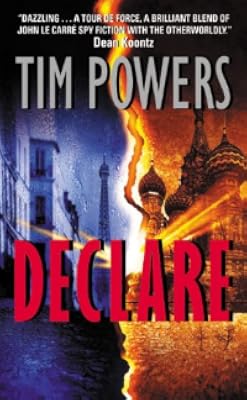
Declare
by Tim Powers
On This Page
Description
As a young double agent infiltrating the Soviet spy network in Nazi-occupied Paris, Andrew Hale finds himself caught up in a secret, even more ruthless war. Two decades later, in 1963, he will be forced to confront again the nightmare that has haunted his adult life: a lethal unfinished operation code-named Declare. From the corridors of Whitehall to the Arabian desert, from post-war Berlin to the streets of Cold War Moscow, Hale's desperate quest draws him into international politics and show more gritty espionage tradecraft -- and inexorably drives Hale, the fiery and beautiful Communist agent Elena Teresa Ceniza-Bendiga, and Kim Philby, mysterious traitor to the British cause, to a deadly confrontation on the high glaciers of Mount Ararat, in the very shadow of the fabulous and perilous Ark. show lessTags
Recommendations








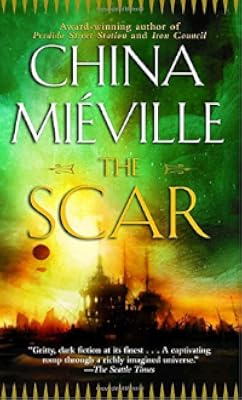
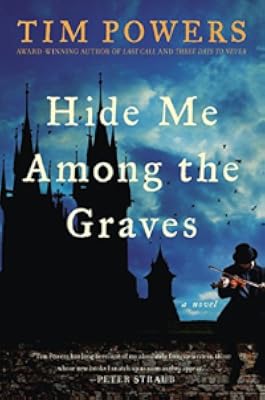
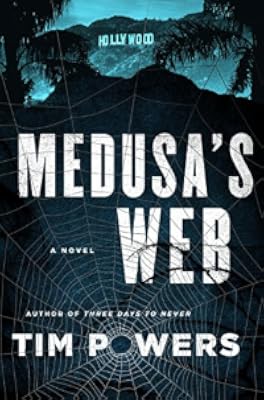
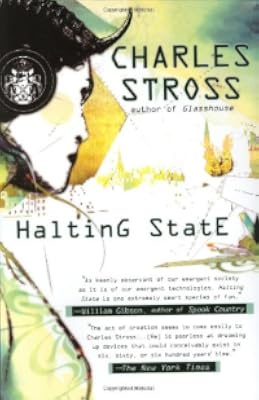
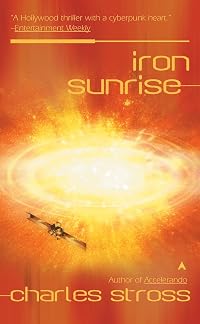
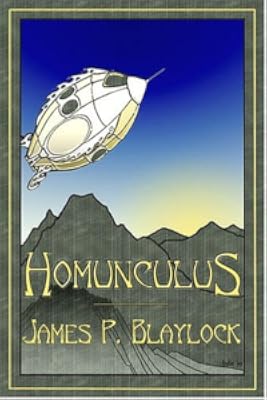
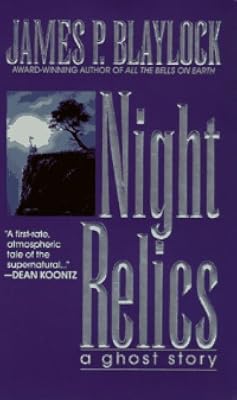
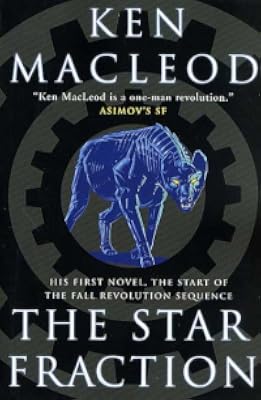
Member Recommendations
AlanPoulter There is a shared delight in mixing Cold War paranoia and the mystical/fantastic in these two novels.
30
paradoxosalpha Both are bulky, character-oriented novels rooted in the socio-political frames of particular periods; both are self-consciously English; both have emotional depth; both mix in some real historical persons as characters; both introduce their central supernatural elements in a gradual manner; and in both cases those elements are anchored in archaic intelligences and their complex relations with humanity. I would even compare the narrative role that Powers assigns to T.E. Lawrence ("of Arabia") to that occupied by the Raven King in Clarke's book. And both Powers and Clarke are performing a certain level of transcendent pastiche: adding magic to the LeCarre spy thriller on the one hand and to the Austen saga of realist satire on the other. Powers gets more points for fidelity to history, Clarke for verisimilitude of magic.
24
Member Reviews
I think this might actually be Tim Powers' best book. It's got secret history, secret agencies, strange magic, strange tech, all fitted neatly and carefully around real history and real people, it's also got gallons of Catholcism sloshing around, and as someone raised Catholic it's actually great to see it being used in the context of an epic slam bang supernatural spy adventure instead of just making guilty and miserable people feel even more guilty and miserable.
My reactions to reading this novel in 2002.
A very accomplished novel and now, of the Powers' I've read, my favorite.
Powers combines the most impressive amount of research and diversity of elements of any of his novels: the minutiae of Cold War espionage (mostly the British and Russian intelligence services but some, also, with the American and French services; I would be curious if the various recognition signals people employ are taken from actual histories), his Roman Catholic faith, the lives of John Philby and his notorious son Kim, Arabian myths involving djinn and A Thousand Nights and One Night, the Dead Sea Scrolls, Lawrence of Arabia, legends of the Ark on Mount Ararat, biblical allusions to the real story of Solomon show more threatening to split the disputed child in half with a sword and also to the mysterious Nephiliim of Genesis, other members of the Cambridge spy network, and the literally, in this secret history, ghoulish nature of Communism.
There are some typical Powers techniques and themes.
Body swapping of a sort shows up in the confused identities protagonist Andrew Hale experiences when he meets his half-brother, Kim Philby, after the latter has escaped to Moscow. This notion also shows up with the notion of split identities and doubles throughout the book: Kim Philby's ability to be in two places at once until Andrew is born when Kim is ten; John Philby being confused, as an infant, with another child (as usual, when Powers includes real people in his novels, the given details of their lives are drawn from actual histories and biographies -- here, in the unusual step of having an afterword, he explicitly states where many of the details about Philby's life came from), the suppression of identity often felt when in the presence of the djinn, particularly when Hale and Elena Teresa Ceniza-Bendiga (her last name translates into English as Ashbless so another installment is added to Powers' and James Blaylock's joint myth of the Ashbless family) are psychically merged with the djinn during the 1948 expedition to Ararat. Guy Burgess is also said to have killed a double of his.
Powers once again relies on analogies of electricity and general physics to rationalize his magic. The djinn of Mount Ararat are said, because of the presence of anchor stones, to be in a "grounded state". Some djinn inhabit the Heaviside Layer so important in bouncing radio signals around. The importance of a direction of rotation is also here as in Power's Expiration Date.
I liked the notion that the djinn expressed thought as a marcoscopic kinetic animation of surrounding matter -- and the symmetrical idea of imposing thought and experience on them with matter associated with their fellow djinn. I wouldn't classify anything by Powers since his Dinner at the Deviant's Palace as sf -- and neither would he, but he tries very hard to suspend disbelief in his magical worlds by using concepts like symmetry from physics as well as external trappings like the language of electricity. If his magic is not rationalized into sf, associations with the language of rational science is certainly used.
Once again, the chapter epigraphs, here mainly drawn from Gilgamesh and, especially, Rudyard Kipling's Kim (the source of Kim Philby's first name) are very appropriate. When the young Andrew Hale first hears the ritualistic phrases of the secret spy network that exists in the British Special Operations Executive (particularly the wonderful phrase, drawn from Arab myth, "O fish, are you constant to the covenant?", we immediately sense something very important even if Hale doesn't. It reminded me of Scott Crane's first card game on Lake Mead in Last Call when he is reminded that his hand has been assumed. Andrew Hale being raised for great purposes and manipulated and threatened by outside forces reminded me of Kootie in Expiration Date.
Declare also involves family matters, specifically the revelation (not really a surprise to me) that Philby and Hale are half-brothers. (I liked the split of a unified personality into, respectively, an obsession with family and, in Hale, a concern for duty and loyalty). However, in Declare it is the relationship between Hale and Elena and questions of faith, not the exorcism of spirits, that is addressed in the epilogue after the djinn of Mount Ararat have been killed:
In the unusual structure of this novel, which bounces from the 1930s to the 1960s and points between, is the story of the strange relationship between Elena and Hale. Normally, I don't like the stories where men and women are thrown accidentally together and, under stress, become lovers, but I didn't mind this one which is especially surprising because Powers not only doesn't describe their two nights of sex but doesn't really describe how they come to love each other. It just happens as they work as spies in Nazi-occupied Paris.
The novel has four or five passages of beautiful prose, and one is when Hale, listening to the tapping of cryptic signals on the radio wonders if his old lover Elena is at the keys. Another is when he thinks it would just be better if he never saw Elena again.
A key part of the novel is the question of faith and why anyone would deny, if not the existence, the authority and company of God. Elena's early faith in Communism, including a statement that she would willingly obey a command to return to Moscow to be executed because she has faith that such a fate would help bring about a better, Communist world, is clearly stems from the betrayed Catholic faith of her childhood (her parents were killed by Catholic loyalists during the Spanish Civil War). She looses her faith in Communism when she is exposed to the cryptic, secret order that exists in Soviet Intelligence to preserve and extend a deal Russia has made with the flesh and blood devouring Mistress of Misfortune, Russia's protective djinn. (Powers, in a chapter epigraph, literalizes Karl Marx's famous line about the specter of communism). Elena surprisingly recovers her old Catholic faith. Hale drifts out of his Catholic faith but discovers it again confronting the djinn of the Arabian wastes and the dangers during his 1963 Ararat expedition. Hale is tempted by the power and immortality the djinn offer, that his brother Kim Philby seeks. And he despairs, at times, of winning. However, he eventually realizes he must press on with hope if not always with faith. His faith is rewarded when he finds Elena at St. Basil's on her fortieth birthday, a promise she made many years ago to the Virgin Mary if she survived Lubyanka Prison.
think it is significant that the novel simply ends Hale's and Elena's story with them embarking on a walk out of the Soviet Union. We have no idea if they make it or not. I think Powers' point is that it's not important whether they make it. It's that they are loyal to each other and try to make it out together. As Hale notes, you have to play the hand dealt by life. Both reject the notion of immortality.
The ideas why Philby and others reject such a faith strike me as powerfully believable. Hale meets a descendant of the Nephiliim in the desert. His top half is like that of an immortal man, his bottom half a stone rooting him in place. Yet he is glad of his situation because he means he will not die and be called to judgement. This same fear and resentment of final judgment motivates Philby against Catholicism. Elena, on the other hand, realizes that it is partially pride that has kept her away from her childhood faith. She hates the idea she must approach God as soiled as any other sinner.
It is also the same sort of pride, a sort of , Hale notes, aristocratic pride, that keeps Philby away from worshiping God. (I also liked the wonderful legends of fallen angels hanging on or being pulled behind Noah's Ark and thus avoiding destruction.) Ultimately, Philby goes for the option of being a sort of king to the Gray People of Moscow, pathetic traitors and Western ex-patriates deprived of their passports and inhabiting, as Powers wonderfully describes it, the same sort of joyless existence as the hell of Babylonian myth. (In fact, in the epilogue's scene in Moscow, Powers does a very good job conveying the sad, pathetic, horrible nature of Soviet Communism. Though Powers doesn't do it, but Milton might as well be invoked in his line about better to rule in Hell than serve in Heaven.
I liked the Catholic influence on this novel. I also liked the phrase about sinning sensuously is sinning like a beast, sinning by deceit is sinning like a man, and sinning by pride is sinning like an angel (and pride is the grandest and most common sin of this novel).
Powers has described this book as "tradecraft meets Lovecraft". It's more tradecraft than Lovecraft, but Powers love of that author shows up at the beginning when members of the 1948 Ararat expedition have, in best Lovecraftian tradition, gone mad. The djinn being drawn to certain mathematical shapes reminded me of Lovecraft's "The Dreams in the Witch-House". The passages where Hale feels like something old and powerful has been drawn down from the stars is like Lovecraft. The descriptions of whirling heavens also reminded me of Lovecraft though, according to the afterword, they are probably more inspired by a dream of John Philby's. Some of the language describing the sensation of being on Ararat's glacier in 1963 reminded me of Lovecraft's "At the Mountains of Madness".
Thematically and by depth of research and skill of characterization, the best Powers' secret history I've read. show less
A very accomplished novel and now, of the Powers' I've read, my favorite.
There are some typical Powers techniques and themes.
Body swapping of a sort shows up in the confused identities protagonist Andrew Hale experiences when he meets his half-brother, Kim Philby, after the latter has escaped to Moscow. This notion also shows up with the notion of split identities and doubles throughout the book: Kim Philby's ability to be in two places at once until Andrew is born when Kim is ten; John Philby being confused, as an infant, with another child (as usual, when Powers includes real people in his novels, the given details of their lives are drawn from actual histories and biographies -- here, in the unusual step of having an afterword, he explicitly states where many of the details about Philby's life came from), the suppression of identity often felt when in the presence of the djinn, particularly when Hale and Elena Teresa Ceniza-Bendiga (her last name translates into English as Ashbless so another installment is added to Powers' and James Blaylock's joint myth of the Ashbless family) are psychically merged with the djinn during the 1948 expedition to Ararat. Guy Burgess is also said to have killed a double of his.
Powers once again relies on analogies of electricity and general physics to rationalize his magic. The djinn of Mount Ararat are said, because of the presence of anchor stones, to be in a "grounded state". Some djinn inhabit the Heaviside Layer so important in bouncing radio signals around. The importance of a direction of rotation is also here as in Power's Expiration Date.
I liked the notion that the djinn expressed thought as a marcoscopic kinetic animation of surrounding matter -- and the symmetrical idea of imposing thought and experience on them with matter associated with their fellow djinn. I wouldn't classify anything by Powers since his Dinner at the Deviant's Palace as sf -- and neither would he, but he tries very hard to suspend disbelief in his magical worlds by using concepts like symmetry from physics as well as external trappings like the language of electricity. If his magic is not rationalized into sf, associations with the language of rational science is certainly used.
Once again, the chapter epigraphs, here mainly drawn from Gilgamesh and, especially, Rudyard Kipling's Kim (the source of Kim Philby's first name) are very appropriate. When the young Andrew Hale first hears the ritualistic phrases of the secret spy network that exists in the British Special Operations Executive (particularly the wonderful phrase, drawn from Arab myth, "O fish, are you constant to the covenant?", we immediately sense something very important even if Hale doesn't. It reminded me of Scott Crane's first card game on Lake Mead in Last Call when he is reminded that his hand has been assumed. Andrew Hale being raised for great purposes and manipulated and threatened by outside forces reminded me of Kootie in Expiration Date.
Declare also involves family matters, specifically the revelation (not really a surprise to me) that Philby and Hale are half-brothers. (I liked the split of a unified personality into, respectively, an obsession with family and, in Hale, a concern for duty and loyalty). However, in Declare it is the relationship between Hale and Elena and questions of faith, not the exorcism of spirits, that is addressed in the epilogue after the djinn of Mount Ararat have been killed:
In the unusual structure of this novel, which bounces from the 1930s to the 1960s and points between, is the story of the strange relationship between Elena and Hale. Normally, I don't like the stories where men and women are thrown accidentally together and, under stress, become lovers, but I didn't mind this one which is especially surprising because Powers not only doesn't describe their two nights of sex but doesn't really describe how they come to love each other. It just happens as they work as spies in Nazi-occupied Paris.
The novel has four or five passages of beautiful prose, and one is when Hale, listening to the tapping of cryptic signals on the radio wonders if his old lover Elena is at the keys. Another is when he thinks it would just be better if he never saw Elena again.
A key part of the novel is the question of faith and why anyone would deny, if not the existence, the authority and company of God. Elena's early faith in Communism, including a statement that she would willingly obey a command to return to Moscow to be executed because she has faith that such a fate would help bring about a better, Communist world, is clearly stems from the betrayed Catholic faith of her childhood (her parents were killed by Catholic loyalists during the Spanish Civil War). She looses her faith in Communism when she is exposed to the cryptic, secret order that exists in Soviet Intelligence to preserve and extend a deal Russia has made with the flesh and blood devouring Mistress of Misfortune, Russia's protective djinn. (Powers, in a chapter epigraph, literalizes Karl Marx's famous line about the specter of communism). Elena surprisingly recovers her old Catholic faith. Hale drifts out of his Catholic faith but discovers it again confronting the djinn of the Arabian wastes and the dangers during his 1963 Ararat expedition. Hale is tempted by the power and immortality the djinn offer, that his brother Kim Philby seeks. And he despairs, at times, of winning. However, he eventually realizes he must press on with hope if not always with faith. His faith is rewarded when he finds Elena at St. Basil's on her fortieth birthday, a promise she made many years ago to the Virgin Mary if she survived Lubyanka Prison.
think it is significant that the novel simply ends Hale's and Elena's story with them embarking on a walk out of the Soviet Union. We have no idea if they make it or not. I think Powers' point is that it's not important whether they make it. It's that they are loyal to each other and try to make it out together. As Hale notes, you have to play the hand dealt by life. Both reject the notion of immortality.
The ideas why Philby and others reject such a faith strike me as powerfully believable. Hale meets a descendant of the Nephiliim in the desert. His top half is like that of an immortal man, his bottom half a stone rooting him in place. Yet he is glad of his situation because he means he will not die and be called to judgement. This same fear and resentment of final judgment motivates Philby against Catholicism. Elena, on the other hand, realizes that it is partially pride that has kept her away from her childhood faith. She hates the idea she must approach God as soiled as any other sinner.
It is also the same sort of pride, a sort of , Hale notes, aristocratic pride, that keeps Philby away from worshiping God. (I also liked the wonderful legends of fallen angels hanging on or being pulled behind Noah's Ark and thus avoiding destruction.) Ultimately, Philby goes for the option of being a sort of king to the Gray People of Moscow, pathetic traitors and Western ex-patriates deprived of their passports and inhabiting, as Powers wonderfully describes it, the same sort of joyless existence as the hell of Babylonian myth. (In fact, in the epilogue's scene in Moscow, Powers does a very good job conveying the sad, pathetic, horrible nature of Soviet Communism. Though Powers doesn't do it, but Milton might as well be invoked in his line about better to rule in Hell than serve in Heaven.
I liked the Catholic influence on this novel. I also liked the phrase about sinning sensuously is sinning like a beast, sinning by deceit is sinning like a man, and sinning by pride is sinning like an angel (and pride is the grandest and most common sin of this novel).
Powers has described this book as "tradecraft meets Lovecraft". It's more tradecraft than Lovecraft, but Powers love of that author shows up at the beginning when members of the 1948 Ararat expedition have, in best Lovecraftian tradition, gone mad. The djinn being drawn to certain mathematical shapes reminded me of Lovecraft's "The Dreams in the Witch-House". The passages where Hale feels like something old and powerful has been drawn down from the stars is like Lovecraft. The descriptions of whirling heavens also reminded me of Lovecraft though, according to the afterword, they are probably more inspired by a dream of John Philby's. Some of the language describing the sensation of being on Ararat's glacier in 1963 reminded me of Lovecraft's "At the Mountains of Madness".
Thematically and by depth of research and skill of characterization, the best Powers' secret history I've read. show less
Dean Koontz is quoted on the cover of this paperback edition as naming this book a ‘tour de force’. That is just about right.
The book is a mix of Le Carre (‘The Perfect Spy’ springs to mind as well as his earlier Cold War spy thrillers) with quasi-Lovecraftian cosmic horror and it even offers homage to Alistair Maclean towards the end.
But it is also very distinctively Tim Powers. Themes of conspiracy, secrecy, ruthlessness and betrayal are all there as we might expect. It gives nothing away to say that Kim Philby plays a major role in the story.
One has to wonder whether Powers has a paranoid streak in his private life, or has suffered some form of betrayal of trust that drives his work – or is simply a very imaginative miner show more of a rich literary vein.
Nearly every chapter is preceded by a quotation from Rudyard Kipling’s ‘Kim’ so we are in ‘Great Game’ territory, the central conceit being a struggle between empires through agencies that are beyond secret and exceptionally ruthless in their greater cause. This is classic Powers’ territory.
In this sense, it is rather old-fashioned and is all the better for it. British imperial gentry and public schoolboys as well as tormented Catholics (shades of Graham Greene who also wrote early thrillers are here) are the heroes, with the Americans and the French tagging along for the ride.
On the other side, Stalin’s Soviet Union (and that of his decaying successors) are mere overlay to an earlier Mother Russia whose guardian ‘angel’ is at the centre of the plot (again, no spoilers).
So, it is a politically and culturally conservative book, filled with the nostalgia of all British Atlanticists (of which I am not one) who continue with the pretence that Britain matters and has not degenerated into a rather wealthier Yugoslavia of small nations on the edge of a greater empire.
The book is thus massively entertaining nonsense, by a master of genre fiction, both on grounds of content and ideology but it should equally be lapped up by anyone who lives vicariously through the adventure novel or who seeks the fantastic.
It is certainly rare to see two genres as radically opposed as cosmic horror and the spy thriller merged with such effect but Powers succeeds beyond all expectations.
His earlier ‘Three Days to Never’ frustrated us by being a compulsive read that then degenerated into incomprehensibility. Do not fail to read his appendix about how he came to his conceit but only after reading the book to the end.
This book reverses that 'failing'. It starts with an incomprehensibility that expands into a finely crafted tale of geo-politics and horror (no spoilers here) in which everything is ultimately explained.
Perhaps the only significant criticism is that Powers appears to be so entranced with his own in-depth research that some incidents, especially those set in Paris in wartime, might be regarded as over-lengthy at a time so much of the story cannot yet be understood.
Perhaps he wants you to keep the book for reading a second time and I suspect you might keep it in your library (like his still remarkable ‘The Anubis Gates’) for just that reason. The research that he has put into getting each scene ‘right’ is quite remarkable.
In other words, do not be put off by his determination to be precise and accurate about ambience – whether of Paris, wartime London, post-war Berlin or Cold War Kuwait – because you will lose out on a rollicking adventure story that might even send a chill down the spine. show less
The book is a mix of Le Carre (‘The Perfect Spy’ springs to mind as well as his earlier Cold War spy thrillers) with quasi-Lovecraftian cosmic horror and it even offers homage to Alistair Maclean towards the end.
But it is also very distinctively Tim Powers. Themes of conspiracy, secrecy, ruthlessness and betrayal are all there as we might expect. It gives nothing away to say that Kim Philby plays a major role in the story.
One has to wonder whether Powers has a paranoid streak in his private life, or has suffered some form of betrayal of trust that drives his work – or is simply a very imaginative miner show more of a rich literary vein.
Nearly every chapter is preceded by a quotation from Rudyard Kipling’s ‘Kim’ so we are in ‘Great Game’ territory, the central conceit being a struggle between empires through agencies that are beyond secret and exceptionally ruthless in their greater cause. This is classic Powers’ territory.
In this sense, it is rather old-fashioned and is all the better for it. British imperial gentry and public schoolboys as well as tormented Catholics (shades of Graham Greene who also wrote early thrillers are here) are the heroes, with the Americans and the French tagging along for the ride.
On the other side, Stalin’s Soviet Union (and that of his decaying successors) are mere overlay to an earlier Mother Russia whose guardian ‘angel’ is at the centre of the plot (again, no spoilers).
So, it is a politically and culturally conservative book, filled with the nostalgia of all British Atlanticists (of which I am not one) who continue with the pretence that Britain matters and has not degenerated into a rather wealthier Yugoslavia of small nations on the edge of a greater empire.
The book is thus massively entertaining nonsense, by a master of genre fiction, both on grounds of content and ideology but it should equally be lapped up by anyone who lives vicariously through the adventure novel or who seeks the fantastic.
It is certainly rare to see two genres as radically opposed as cosmic horror and the spy thriller merged with such effect but Powers succeeds beyond all expectations.
His earlier ‘Three Days to Never’ frustrated us by being a compulsive read that then degenerated into incomprehensibility. Do not fail to read his appendix about how he came to his conceit but only after reading the book to the end.
This book reverses that 'failing'. It starts with an incomprehensibility that expands into a finely crafted tale of geo-politics and horror (no spoilers here) in which everything is ultimately explained.
Perhaps the only significant criticism is that Powers appears to be so entranced with his own in-depth research that some incidents, especially those set in Paris in wartime, might be regarded as over-lengthy at a time so much of the story cannot yet be understood.
Perhaps he wants you to keep the book for reading a second time and I suspect you might keep it in your library (like his still remarkable ‘The Anubis Gates’) for just that reason. The research that he has put into getting each scene ‘right’ is quite remarkable.
In other words, do not be put off by his determination to be precise and accurate about ambience – whether of Paris, wartime London, post-war Berlin or Cold War Kuwait – because you will lose out on a rollicking adventure story that might even send a chill down the spine. show less
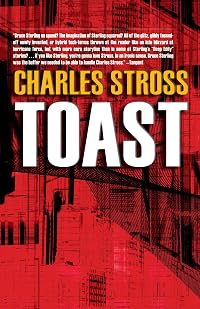
I came to Tim Powers' Declare on the strength of a friend's recommendation, and also Charles Stross' comparison to his own work in The Atrocity Archives. Although the subject matter of espionage plus supernatural elements was certainly similar to Stross' "Laundry" novels, I was surprised to find myself comparing Declare to a very different, and altogether more popular book: Jonathan Strange & Mr Norrell by Susanna Clarke. Both are bulky, character-oriented novels rooted in the socio-political frames of particular periods; both are self-consciously English; both have emotional depth; both mix in some real historical persons as characters; both introduce their central supernatural elements in a gradual manner; and in both cases those show more elements are anchored in archaic intelligences and their complex relations with humanity. I would even compare the narrative role that Powers assigns to T.E. Lawrence ("of Arabia") to that occupied by the Raven King in Clarke's book. And both Powers and Clarke are performing a comparable sort of transcendent pastiche: adding magic to the LeCarre spy thriller on the one hand and to the Austen saga of realist satire on the other. Powers gets more points for fidelity to history, Clarke for verisimilitude of magic.
Comparisons aside, I did very much enjoy Declare. It was not a flawless book. There was a certain attribution of supernatural efficacy to Christian piety and sacraments that was never properly justified, and I occasionally found a sentence in laughable need of easy repair. (An example of both from p. 486: "He opened his mouth to speak the first words of the Our Father, but realized that he had forgotten them.") But there is a healthy and profitable use of dramatic irony -- attentive readers can stay a half-step ahead of the central characters -- and Powers manages to instill a real numinosity into the higher orders of espionage that he invents for World War II and the Cold War. The psychology of double-agency is a long-standing interest of mine, and Powers makes it central to his novel in a way that I appreciated. The recruitment and induction of spies ("agent-runners") is presented through an explicitly initiatory framework that should be accessible and engaging to those who share those interests with me as well. show less
Comparisons aside, I did very much enjoy Declare. It was not a flawless book. There was a certain attribution of supernatural efficacy to Christian piety and sacraments that was never properly justified, and I occasionally found a sentence in laughable need of easy repair. (An example of both from p. 486: "He opened his mouth to speak the first words of the Our Father, but realized that he had forgotten them.") But there is a healthy and profitable use of dramatic irony -- attentive readers can stay a half-step ahead of the central characters -- and Powers manages to instill a real numinosity into the higher orders of espionage that he invents for World War II and the Cold War. The psychology of double-agency is a long-standing interest of mine, and Powers makes it central to his novel in a way that I appreciated. The recruitment and induction of spies ("agent-runners") is presented through an explicitly initiatory framework that should be accessible and engaging to those who share those interests with me as well. show less
This is one of those book where the less you know about it, the better it is, so I recommend reading it without reading reviews first.
But if you really want to know what I thought.. I thoroughly enjoyed this book. It starts as a very convincing WWII/Cold War spy novel, and for the first quarter of the book it could easily be a Le Carre novel. However, some things are a little bit out of place, and Andrew Hale, the main character, slowly comes to realize that he is dealing with ancient magic.
I often don't like magical realism, because few authors can gracefully let magic intrude into the real world. However, in this book, it is totally convincing. The world of Cold War espionage is so secretive, so self-important, that magic fits in show more perfectly. I was even more delighted to get to the author's afterward and realize that many of the characters in this book are actual historical figures whose biographies have some unexplained episodes in them, and magic is a wonderful solution to the questions left by the historical record.
I listened to the audiobook, and Simon Prebble is the perfect narrator for this book. show less
But if you really want to know what I thought.. I thoroughly enjoyed this book. It starts as a very convincing WWII/Cold War spy novel, and for the first quarter of the book it could easily be a Le Carre novel. However, some things are a little bit out of place, and Andrew Hale, the main character, slowly comes to realize that he is dealing with ancient magic.
I often don't like magical realism, because few authors can gracefully let magic intrude into the real world. However, in this book, it is totally convincing. The world of Cold War espionage is so secretive, so self-important, that magic fits in show more perfectly. I was even more delighted to get to the author's afterward and realize that many of the characters in this book are actual historical figures whose biographies have some unexplained episodes in them, and magic is a wonderful solution to the questions left by the historical record.
I listened to the audiobook, and Simon Prebble is the perfect narrator for this book. show less
My standard tag line for this is that it's a cross between John Le Carré and Charles Williams.
Many supernatural secret histories these days use a Lovecraftian model for their esoteric side: this one uses the jinni of the Arabian Nights and the tales of Suleiman bin Daoud (much as Williams had used Suleiman as the background for Many Dimensions). Powers plays the eminently fair (but constraining) game of providing an exoteric narrative which is that of received history: this forces his narrative into a slightly broken-backed, episodic, shape -- episodes have to jump from the twenties through World War II to the Cold War and finally to the late Cold War -- but it's well-crafted and engaging, with fine characterization.
The best Powers show more I've read: if not quite at a masterpiece level, then head and shoulders above most genre works. show less
Many supernatural secret histories these days use a Lovecraftian model for their esoteric side: this one uses the jinni of the Arabian Nights and the tales of Suleiman bin Daoud (much as Williams had used Suleiman as the background for Many Dimensions). Powers plays the eminently fair (but constraining) game of providing an exoteric narrative which is that of received history: this forces his narrative into a slightly broken-backed, episodic, shape -- episodes have to jump from the twenties through World War II to the Cold War and finally to the late Cold War -- but it's well-crafted and engaging, with fine characterization.
The best Powers show more I've read: if not quite at a masterpiece level, then head and shoulders above most genre works. show less
Stunning novel from one of today's most intriguing fantacists. The tagline for this one read "Spycraft meets Lovecraft", and that's a fair catch phrase. It's a surprisingly successful cross between John LeCarre and H.P. Lovecraft.
You really can't talk too much about this one in a review without giving away too many telling details. Suffice it to say, the phenomenal amount of real-world details that Powers layers into this plot really makes it feel like it is rooted in reality. The WWII-era settings of the the formative sections of the book seemed dead on to me.
It's not giving away too much, since we've already hinted at the Lovecraftian elements, to say that there's a big chunk of supernatural happenings scattered throughout the book, show more too. And, for me, even though I enjoyed the espionage elements, I thought Powers' representation of the big, otherworldly elements was the most impressive.
I believe Powers can definitely be an acquired taste, but it is a taste that I've definitely acquired, so I heartily recommend Declare. It's also nice to know that it is a stand-alone novel, so you're not stuck looking forward to additional entries in a series.
EXPANDED REVIEW: What do you get when you cross John LeCarre and Len Deighton with H.P. Lovecraft and Auguest Derleth? Well, that would be Tim Powers' magnificent fantasy/horror/espionage novel, Declare. This impressive novel focuses on the intelligence community, and a 1960s attempt to fix a mission that went horribly awry on Mount Ararat during WWII. The espionage elements of Declare truly feel like reading the best of LeCarre, Deighton, Follett or any of the other "spy" thriller writers. A review of this book is hard to write without giving too much of the intricate and complicated plot away...however, Powers manages to insert the supernatural into this spy story very effectively. His descriptions of ordinary soldiers and intelligence offices' encounters with otherworldly beings is truly terrifying. Powers' research into the real-world people he includes in this book is detailed, and Declare is very dense with seemingly minor historical details...which may put off some readers. However, I recommend you stick with it -- this one is a tremendous read!
This expanded review was originally done for my local library's website: http://www.lincolnlibraries.org/depts/bookguide/srec/staffrec10-03.htm show less
You really can't talk too much about this one in a review without giving away too many telling details. Suffice it to say, the phenomenal amount of real-world details that Powers layers into this plot really makes it feel like it is rooted in reality. The WWII-era settings of the the formative sections of the book seemed dead on to me.
It's not giving away too much, since we've already hinted at the Lovecraftian elements, to say that there's a big chunk of supernatural happenings scattered throughout the book, show more too. And, for me, even though I enjoyed the espionage elements, I thought Powers' representation of the big, otherworldly elements was the most impressive.
I believe Powers can definitely be an acquired taste, but it is a taste that I've definitely acquired, so I heartily recommend Declare. It's also nice to know that it is a stand-alone novel, so you're not stuck looking forward to additional entries in a series.
EXPANDED REVIEW: What do you get when you cross John LeCarre and Len Deighton with H.P. Lovecraft and Auguest Derleth? Well, that would be Tim Powers' magnificent fantasy/horror/espionage novel, Declare. This impressive novel focuses on the intelligence community, and a 1960s attempt to fix a mission that went horribly awry on Mount Ararat during WWII. The espionage elements of Declare truly feel like reading the best of LeCarre, Deighton, Follett or any of the other "spy" thriller writers. A review of this book is hard to write without giving too much of the intricate and complicated plot away...however, Powers manages to insert the supernatural into this spy story very effectively. His descriptions of ordinary soldiers and intelligence offices' encounters with otherworldly beings is truly terrifying. Powers' research into the real-world people he includes in this book is detailed, and Declare is very dense with seemingly minor historical details...which may put off some readers. However, I recommend you stick with it -- this one is a tremendous read!
This expanded review was originally done for my local library's website: http://www.lincolnlibraries.org/depts/bookguide/srec/staffrec10-03.htm show less
Members
- Recently Added By
Lists

Recommend the 20 best books you've read in the last five years
2,168 works; 601 members

Top 100 to Read before you Die
109 works; 7 members

Read These Too
458 works; 9 members

Books Read in 2014
2,343 works; 86 members

Arthur C. Clarke Award Winners and Shortlisted Books
219 works; 14 members

Best Spy Fiction
153 works; 102 members
Author Information

76+ Works 21,004 Members
Some Editions
Awards and Honors
Awards
Distinctions
Work Relationships
Contains
Common Knowledge
- Original title
- Declare
- Original publication date
- 2000
- People/Characters
- Andrew Hale; Kim Philby; Claude Cassagnac; Elena Teresa Ceniza-Bendiga; Harold Macmillan; Jimmie Theodora
- Important places
- Mount Ararat; England, UK; Paris, France; Brandenburg Gate, Berlin, Germany; Rub' al Khali (the Empty Quarter)
- Important events
- World War II (1939 | 1945); World War II, German Occupation of France (1940 | 1944); Cold War
- Epigraph
- Birthdays? yes, in a general way:
For the most if not for the best of men:
You were born -- I suppose -- on a certain day:
So was I: or perhaps in the night: what then?
Only this: or at least, if more,
You ... (show all)must know, not think it, and learn, not speak:
There is truth to be found on the unknown shore,
And many will find what few would seek.
- J. K. Stephen, inaccurately quoted in a letter from St. John Philby to his son, Kim Philby, March 15, 1932
Where wast thou when I laid the foundations of the earth?
Declare, if thou hast understanding.
- Job 38:4 - First words
- The young captain's hands were sticky with blood on the steering wheel as he cautiously backed the jeep in a tight turn off the rutted mud track onto a patch of level snow that shone in the intermittent moonlight on the edge ... (show all)of the gorge, and then his left hand seemed to freeze onto the gear-shift knob after he reached down to clank the lever up into first gear. (prologue)
From the telephone a man's accentless voice said, "Here's a list: Chaucer...Malory..." - Last words
- (Click to show. Warning: May contain spoilers.)They were a peculiar-looking couple - the man in the clownish overcoat, who had fired the shot that would one day topple the Union of Soviet Socialist Republics, and the woman dressed in black like a Spanish duena, who would at long last become his wife - but they attracted no attention at all as they strolled away hand-in-hand past the southernmost corner of the Kremlin Wall and on to the embankments of the Moskva River.
(Click to show. Warning: May contain spoilers.)The Union of Soviet Socialist Republics collapsed three and a half years later, in December of 1991; Mikhail Gorbachev resigned as Soviet President on Christmas Day. (afterword) - Blurbers
- Koontz, Dean; Gibson, William; Mieville, China
- Original language
- English
Classifications
Statistics
- Members
- 1,623
- Popularity
- 13,938
- Reviews
- 47
- Rating
- (4.07)
- Languages
- 5 — Dutch, English, French, German, Spanish
- Media
- Paper, Audiobook, Ebook
- ISBNs
- 21
- ASINs
- 6