On This Page
Description
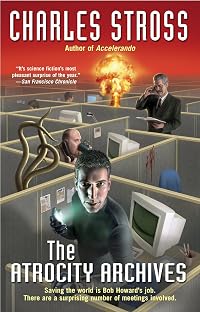
In The Atrocity Archives, a lowly computer geek working for a secret British intelligence agency gets promoted to field service after accidentally saving lives in a disaster. Now he's faced with saving the universe using only his smarts and a disembodied hand that renders him invisible. Stross' award-winning novella, The Concrete Jungle, is also included.Tags
Recommendations


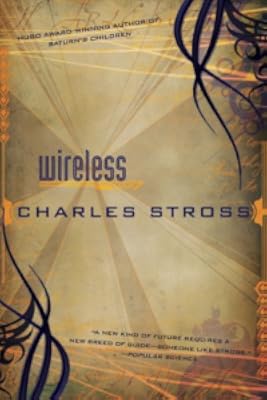
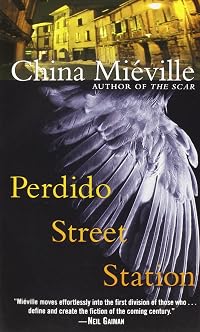
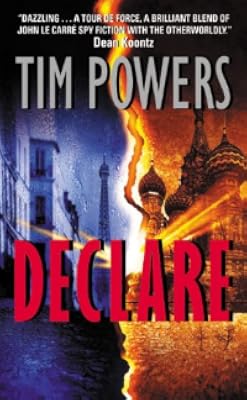
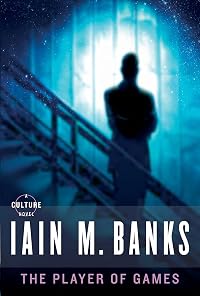

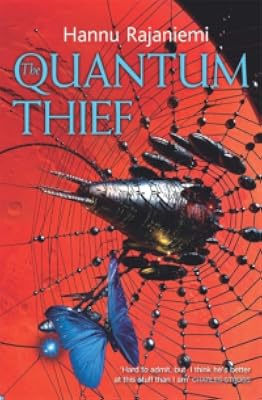
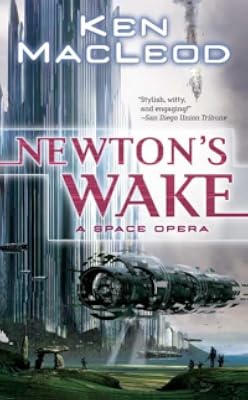
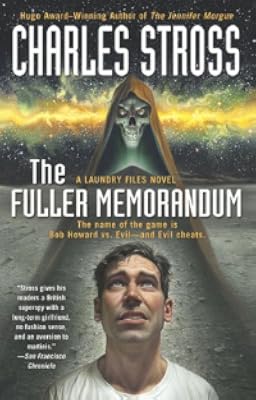
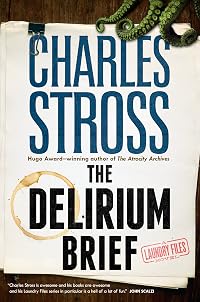
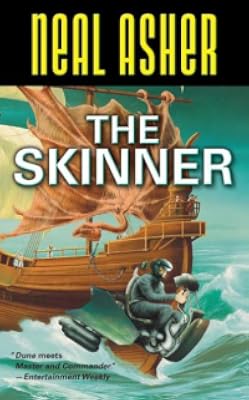
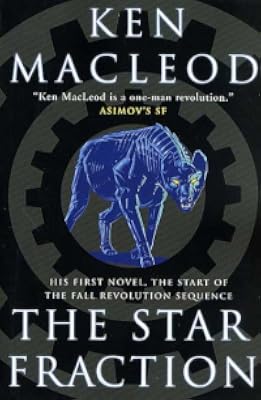
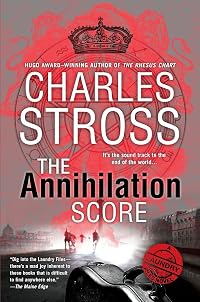

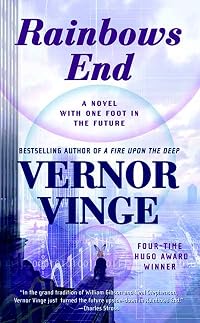
Member Recommendations
lorax Okay, so the cosmology of the evil creatures from another world is Catholic rather than Lovecraftian, so you have demons instead of Cthulhu, but it's the same schtick of a secret group protecting civilization from unknown horrors via both supernatural and technological means, and the same humorous-thriller style.
74
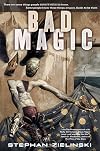
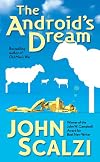
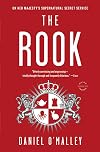
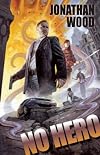
by bj
wvlibrarydude Humor and horror visit with a little suspense.
11
loremistress Ordinary guy dragged into weirdness, whilst still having to deal with layers of government bureaucracy
Member Reviews
In The Atrocity Archives, Charles Stross perfectly blends Lovecraftian horror into a spy thriller. But don't think James Bond, though they have their own special gadgets, think bureaucrats mired in office politics and meetings who must battle bean counters as often as monsters.
Stross' protagonist, Bob Howard, is a Gen X hacker who gets drafted into the Laundry, the code name for the UK government agency which protects England from nasty beasties from beyond. It turns out all that complex math that fried my brain in college (like second order, linear, non-homogeneous differential equations) can be used to open portals to other dimensions where cerebellum sucking slugs are just itching for an invitation to our world. Bob starts out in show more tech support but his skills earn him his first field assignment. While it's clear he's not suited for dealing either with the harpies from accounting or the things that should not be, Stross has fun playing the anti-hero card with Bob, letting his wit and resourcefulness survive the cards he's dealt.
The book contains the short novel, The Atrocity Archives, and the Hugo Award winning novella, The Concrete Jungle. The former serves as an introduction to this twisted universe Stross has hatched. Bob is forced to deal with rival spies, terrorists and the twisted remnants of the Nazi occult fetish. In the latter, office politics come to a head while someone figures out how to weaponize a gorgon's stare. You remember gorgons, right? Medusa is the most well known of this crowd. The Concrete Jungle may have won the Hugo, but I liked The Atrocity Archives a lot more. I felt that it flowed better and the drama was more intense.
I really enjoyed this book and look forward to reading the others in this series. show less
Stross' protagonist, Bob Howard, is a Gen X hacker who gets drafted into the Laundry, the code name for the UK government agency which protects England from nasty beasties from beyond. It turns out all that complex math that fried my brain in college (like second order, linear, non-homogeneous differential equations) can be used to open portals to other dimensions where cerebellum sucking slugs are just itching for an invitation to our world. Bob starts out in show more tech support but his skills earn him his first field assignment. While it's clear he's not suited for dealing either with the harpies from accounting or the things that should not be, Stross has fun playing the anti-hero card with Bob, letting his wit and resourcefulness survive the cards he's dealt.
The book contains the short novel, The Atrocity Archives, and the Hugo Award winning novella, The Concrete Jungle. The former serves as an introduction to this twisted universe Stross has hatched. Bob is forced to deal with rival spies, terrorists and the twisted remnants of the Nazi occult fetish. In the latter, office politics come to a head while someone figures out how to weaponize a gorgon's stare. You remember gorgons, right? Medusa is the most well known of this crowd. The Concrete Jungle may have won the Hugo, but I liked The Atrocity Archives a lot more. I felt that it flowed better and the drama was more intense.
I really enjoyed this book and look forward to reading the others in this series. show less
I came to this book because I really enjoyed Stross's Saturn's Children series ([b:Saturn's Children|2278387|Saturn's Children|Charles Stross|https://d.gr-assets.com/books/1348429796s/2278387.jpg|2284499] and [b:Neptune's Brood|15985402|Neptune's Brood (Freyaverse #2)|Charles Stross|https://d.gr-assets.com/books/1358215802s/15985402.jpg|21562011]), and I didn't really know what I was getting into. But I've been pleasantly surprised by the Laundry Files series so far.
The field of "stories about secret government agencies that deal with the supernatural" is a densely packed one, so you usually have to work pretty hard to sell me on it. In this case, there are a few extra features (Lovecraftian horror, ridiculous office politics, geek show more culture, film noir sensibilities, and deeply thought out pseudoscientific explanations of horror fantasy tropes) that help make the setting a unique one. And for once, there actually seems to be a good reason why the government has to keep all this knowledge secret. (When just writing down a mathematical proof is sometimes enough to let an eldritch horror into our world, "information wants to be free" seems like a pretty weak argument.)
[a:Gideon Emery|2929860|Gideon Emery|https://s.gr-assets.com/assets/nophoto/user/u_50x66-d9f6a4a5badfda0f69e70cc94d962125.png] narrates the audiobook like it's a classic noir detective story, and that fits with the style of narration very well, even when the content is super-technical or filled with geek-culture references. Even before the story really gets into anything remotely supernatural, I found the mix of spy-novel serious and office-bureaucracy silly entertaining. But when I got to the "Lovecraft-Turing Theorem", I was completely sold. If upon reading that phrase, you're already itching to go read the book, then you're the intended audience, and you'll almost certainly get the same kick out of it that I did.
Stross gives a lot more attention to the "scientific" underpinnings of the supernatural happenings than is strictly necessary to advance the story, and I enjoyed it immensely. But I can imagine that such details might be tedious to a different reader (say one who isn't already familiar with things like the Platonic World, Hilbert's problems, Bletchley Park, the double slit experiment, and the Bastard Operator From Hell). The technical explanations aren't really needed for the story (any relevant conclusions are always spelled out explicitly), so I guess you could just treat them like the songs in [b:The Lord of the Rings|33|The Lord of the Rings (The Lord of the Rings, #1-3)|J.R.R. Tolkien|https://d.gr-assets.com/books/1405130818s/33.jpg|3462456]: fun if you're into that sort of thing, but otherwise skippable.
It's not a terribly deep story and there's not a whole lot of character development. The only non-antagonistic female character in this installation of the series is the love interest (although there are more in the sequels, including the [b:The Concrete Jungle|8488439|The Concrete Jungle (Laundry Files, #1.5)|Charles Stross|https://d.gr-assets.com/books/1328336183s/8488439.jpg|13353809] which is usually packaged in the same volume as The Atrocity Archives). But if you're the target audience, it's worth checking out. show less
The field of "stories about secret government agencies that deal with the supernatural" is a densely packed one, so you usually have to work pretty hard to sell me on it. In this case, there are a few extra features (Lovecraftian horror, ridiculous office politics, geek show more culture, film noir sensibilities, and deeply thought out pseudoscientific explanations of horror fantasy tropes) that help make the setting a unique one. And for once, there actually seems to be a good reason why the government has to keep all this knowledge secret. (When just writing down a mathematical proof is sometimes enough to let an eldritch horror into our world, "information wants to be free" seems like a pretty weak argument.)
[a:Gideon Emery|2929860|Gideon Emery|https://s.gr-assets.com/assets/nophoto/user/u_50x66-d9f6a4a5badfda0f69e70cc94d962125.png] narrates the audiobook like it's a classic noir detective story, and that fits with the style of narration very well, even when the content is super-technical or filled with geek-culture references. Even before the story really gets into anything remotely supernatural, I found the mix of spy-novel serious and office-bureaucracy silly entertaining. But when I got to the "Lovecraft-Turing Theorem", I was completely sold. If upon reading that phrase, you're already itching to go read the book, then you're the intended audience, and you'll almost certainly get the same kick out of it that I did.
Stross gives a lot more attention to the "scientific" underpinnings of the supernatural happenings than is strictly necessary to advance the story, and I enjoyed it immensely. But I can imagine that such details might be tedious to a different reader (say one who isn't already familiar with things like the Platonic World, Hilbert's problems, Bletchley Park, the double slit experiment, and the Bastard Operator From Hell). The technical explanations aren't really needed for the story (any relevant conclusions are always spelled out explicitly), so I guess you could just treat them like the songs in [b:The Lord of the Rings|33|The Lord of the Rings (The Lord of the Rings, #1-3)|J.R.R. Tolkien|https://d.gr-assets.com/books/1405130818s/33.jpg|3462456]: fun if you're into that sort of thing, but otherwise skippable.
It's not a terribly deep story and there's not a whole lot of character development. The only non-antagonistic female character in this installation of the series is the love interest (although there are more in the sequels, including the [b:The Concrete Jungle|8488439|The Concrete Jungle (Laundry Files, #1.5)|Charles Stross|https://d.gr-assets.com/books/1328336183s/8488439.jpg|13353809] which is usually packaged in the same volume as The Atrocity Archives). But if you're the target audience, it's worth checking out. show less
Imagine that mathematics and magic are the same thing. Also imagine that all those people in madhouses in [a:Lovecraft, H.P.|7025658|Lovecraft, H.P.|http://www.goodreads.com/assets/nophoto/nophoto-U-50x66-251a730d696018971ef4a443cdeaae05.jpg] stories are right and there are other universes where ancient malevolent entities are just waiting for an invitation to visit for a quick massacre of humanity before breakfast...
...plainly all nations would have a secret agency dedicated to protecting the public and keeping them blithely unaware of the outrageously dangerous world they really live in.
Enter Bob Howard, junior occult spook in the Laundry, Britain's most secret and most magical intelligence agency, armed with a palm pilot and a show more pigeon's foot, ready (OK, not very ready) to protect us from whatever sinister forces are abroad, whether they be terrorists, possessed people or Nazis from another dimension.
Great fun if all this nonsense sounds fun to you, probably really bad if it doesn't. show less
...plainly all nations would have a secret agency dedicated to protecting the public and keeping them blithely unaware of the outrageously dangerous world they really live in.
Enter Bob Howard, junior occult spook in the Laundry, Britain's most secret and most magical intelligence agency, armed with a palm pilot and a show more pigeon's foot, ready (OK, not very ready) to protect us from whatever sinister forces are abroad, whether they be terrorists, possessed people or Nazis from another dimension.
Great fun if all this nonsense sounds fun to you, probably really bad if it doesn't. show less
Pratchett states that if the world contains things that even the dark is afraid of, then you can bet that there'll be a secret government agency covering them up for our own good. Such is the premise behind "The Atrocity Archives." The Laundry is the British organization tasked with keeping their country safe from paranormal phenomenon and extra terrestrial uglies.
The Laundry is a rogue intelligence agency battling to prevent infestations of extradimensional horrors. Bob Howard is our hero, a computer geek working in the IT department who is drafted into field duty. However, while Bob is out saving the world from who knows what horrors, his boss in the IT department is constantly on his case for everything from missing meetings to not show more filling out his time sheet. This struck me as humorous and all to real when considering a government institution. The Laundry brings to mind the spy world of "Get Smart" as the facility itself is accessed through a toilet stall.
"The Atrocity Archives" is the most unusual spy novel I believe I have ever read, and the Laundry the most unusual organization. Guardians of the dark secrets that threaten to drown us in nightmare, the lips of the Laundry employees are sealed as tight as their archives. To get even the vaguest outline of their activities takes a privileged hacker like Bob, nosy enough to worm his way in where he isn't supposed to and smart enough to explain his way out of trouble.
Bob Howard is about as far away from the James Bond stereotype as he can get. He is, at heart, a geek. He is not suave, debonair, or particularly charismatic. He is not a ladies man, and in fact is trying to get rid of his psycho ex-girlfriend. But Bob does have his strengths, most notably his intellect, and is able to handle himself ably enough in the field. If the ultimate grade of a spy is results, then Bob Howard represents his craft well. show less
The Laundry is a rogue intelligence agency battling to prevent infestations of extradimensional horrors. Bob Howard is our hero, a computer geek working in the IT department who is drafted into field duty. However, while Bob is out saving the world from who knows what horrors, his boss in the IT department is constantly on his case for everything from missing meetings to not show more filling out his time sheet. This struck me as humorous and all to real when considering a government institution. The Laundry brings to mind the spy world of "Get Smart" as the facility itself is accessed through a toilet stall.
"The Atrocity Archives" is the most unusual spy novel I believe I have ever read, and the Laundry the most unusual organization. Guardians of the dark secrets that threaten to drown us in nightmare, the lips of the Laundry employees are sealed as tight as their archives. To get even the vaguest outline of their activities takes a privileged hacker like Bob, nosy enough to worm his way in where he isn't supposed to and smart enough to explain his way out of trouble.
Bob Howard is about as far away from the James Bond stereotype as he can get. He is, at heart, a geek. He is not suave, debonair, or particularly charismatic. He is not a ladies man, and in fact is trying to get rid of his psycho ex-girlfriend. But Bob does have his strengths, most notably his intellect, and is able to handle himself ably enough in the field. If the ultimate grade of a spy is results, then Bob Howard represents his craft well. show less
A very strange and beautifully done story. The (British) government agency in charge of weird things (and preventing said weird things from taking over/destroying the world); the computer geek within that agency who finds that he has an affinity for field work; and his almost accidental falling into one of those saving-the-world scenarios. I loved the scene where he lays out why detonation is a Really Bad Idea, discovers that it's almost unstoppable - and immediately begins MacGyvering his (everyone's) way out of this impossible situation. Not horror, despite the shadowy beings from beyond the borders of the universe, entirely because no one ever really feels helpless. Disaster means they need to think even faster... There's actually show more two stories in the book; Atrocity Archives, and then The Concrete Jungle. Where bureaucratic decisions (for what they claim are good and sufficient reasons and no you don't have need to know) are about to unleash utter destruction on Milton Keynes and London. And then it turns out to be bureaucracy all the way down - which wouldn't have limited the destruction in any way, if Our Hero hadn't MacGyvered his (everyone's) way out of it. Next, please! show less
So much fun! H.P. Lovecraft meets Len Deighton meets Castle Wolfenstein meets UK bureaucracy meets hax0rs. I don't think there's a better way to describe this book, and if that doesn't intrigue you...
So, while I fall just short of having an unspeakable-horrors-from-beyond-space-and-time fetish, I have to say that my previous experiences with "hard" sci-fi have left me only semi-flaccid - but notice I said my "previous experiences". You may have also noticed the 5 star rating, and this should be a clue that the Atrocity Archives, which could definitely be labeled hard sci-fi, has me standing at full attention.
Maybe it's the insertion of humor into the story that made it work for me, along with the aforementioned unspeakable horrors? These two elements joined together somehow made the lists of TCIP protocols, mathematical/metaphysical axioms, and descriptions of chemical processes much more sexy than those types of descriptions in a show more book like Larry Niven's Ringworld, for example. So while I do find that reading hard sci-fi almost always leaves me in awe of the mental capacity of the author, I find myself much more inclined to snuggle up with Mr. Stross than Mr. Niven for a bedtime story - and it has nothing to do with the fact that Mr. Stross is much younger, and presumably more virile, than Mr. Niven.
In short, if the idea of using mathematical formulas to summon demons or using occult blood rituals to provide internet security gives you a nerd chub, you NEED to read this book. show less
Maybe it's the insertion of humor into the story that made it work for me, along with the aforementioned unspeakable horrors? These two elements joined together somehow made the lists of TCIP protocols, mathematical/metaphysical axioms, and descriptions of chemical processes much more sexy than those types of descriptions in a show more book like Larry Niven's Ringworld, for example. So while I do find that reading hard sci-fi almost always leaves me in awe of the mental capacity of the author, I find myself much more inclined to snuggle up with Mr. Stross than Mr. Niven for a bedtime story - and it has nothing to do with the fact that Mr. Stross is much younger, and presumably more virile, than Mr. Niven.
In short, if the idea of using mathematical formulas to summon demons or using occult blood rituals to provide internet security gives you a nerd chub, you NEED to read this book. show less
Members
- Recently Added By
Lists

Essential Reading for Continuing Professional Development
11 works; 5 members

NPR Reader Poll: 100 Best Horror Novels and Stories
100 works; 20 members

Civil Service Spec Fic
36 works; 4 members

Best Horror Mega-List
342 works; 6 members

Hugo Award 2019 Reading List
126 works; 4 members

Best Fantasy Novels
821 works; 361 members

Books Read in 2018
4,360 works; 110 members

Books Read in 2021
5,361 works; 114 members

Best Spy Fiction
153 works; 102 members

Books We Discovered On LibraryThing
530 works; 130 members

Books Read in 2026
2,127 works; 70 members

Reading Queue
15 works; 1 member
Talk Discussions
Past Discussions
Tried "The Atrocity Archives"? in Weird Fiction (July 2011)
Author Information

120+ Works 45,553 Members
Born in Leeds, England, Charles Stross knew he wanted to be a science fiction writer from the age of six. Despite this, he went to university in London and qualified as a Pharmacist. He made his first writing sale to Interzone in 1986, and sold about a dozen stories elsewhere throughout the late 1980s and early 1990s. He now writes fiction show more full-time, has sold about 16 novels, has won one Hugo award and been nominated nearly a dozen times, and has been translated into about a dozen languages. He is the author of the Merchant Princes series. His latest book, The Revolution Business, is the fifth in this series. He lives in Edinburgh, Scotland, with his wife Feorag. (Bowker Author Biography) show less
Some Editions
Awards and Honors
Awards
Distinctions
Series

Belongs to Publisher Series
Golden Gryphon (33)
Work Relationships
Is contained in
Common Knowledge
- Canonical title
- The Atrocity Archives
- Original title
- The Atrocity Archives
- Original publication date
- 2004-05 (Concrete Jungle) (Concrete Jungle); 2006-01-03 (combined paperback) (combined paperback); 2001-11 (Atrocity Archives, magazine serial) (Atrocity Archives, magazine serial)
- People/Characters
- Robert 'Bob' Oliver Francis Howard; Dominique 'Mo' O'Brien; James Jesus Angleton; Andy Newstrom; Alan Barnes (Captain); "Pinky" (show all 34); "Brains"; Boris "the Mole"; Bridget Brody; Harriet; Fred Ironsides; Dr Vohlman; Harry "the Horse"; Nick "the Beard"; Derek "the Accountant"; Martin Pike (Sergeant); Roland Blevins (Lance-Corporal); Mary Hutter; Jimmy Donaldson; Greg Chaitin; Smith; Hammer; Mike Howe (Sergeant); Morris; "Scary" Spice; Eric; Josephine Sullivan (Detective Inspector); Mark "Mike" McLuhan; Kevin; Jane; Phil; Robin; Constable Routledge; Martin/John Voss (Dr.)
- Important places
- Miskatonic University, Arkham, Massachusetts, USA (fictional); Santa Cruz, California, USA; Davenport, California, USA; Amsterdam, North Holland, Netherlands; Milton Keynes, Buckinghamshire, England, UK; Mornington Crescent, London, England, UK (show all 12); Dunwich, Suffolk, England, UK; Memetix (UK | fictional); Putney, London, England, UK; Rijksmuseum, Amsterdam, Netherlands; Rotterdam, South Holland, Netherlands; Capital Laundry Services, Camden Town, London, England, UK (fictional)
- Dedication
- For my Parents,
David and Cecilie Stross - First words
- Green sky at night; hacker's delight.
- Last words
- (Click to show. Warning: May contain spoilers.)"As I believe the youth of today say, don't have a cow..."
- Blurbers
- Di Filippo, Paul; Gevers, Nick; Wolfe, Gary K.; Brookmyre, Christopher
- Original language
- English
- Disambiguation notice
- This work, The Atrocity Archives contains both The Atrocity Archive and The Concrete Jungle. Please do not combine it with either individual work.
Classifications
Statistics
- Members
- 3,876
- Popularity
- 4,090
- Reviews
- 155
- Rating
- (3.82)
- Languages
- 5 — English, French, German, Italian, Spanish
- Media
- Paper, Audiobook, Ebook
- ISBNs
- 21
- ASINs
- 17