On This Page
Description
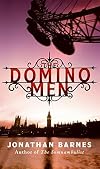
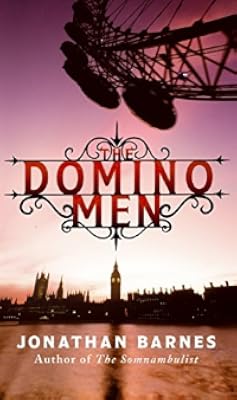
In an earlier century, Queen Victoria made a Faustian bargain, signing London and all its souls away to a nefarious, inhuman entity. Now, generations later, the bill has finally come due.Tags
Recommendations

















Member Recommendations

Member Reviews
The high concept is familiar: A bland everyman learns that he has inherited a crucial role in an age-old war between Good and Evil. In The Domino Men, everyman is Henry Lamb, as meek and ineffectual as his name, once a child actor by virtue of nepotism rather than talent, now a government file clerk timidly attracted to the pretty girl from whom he rents his flat. Good takes the form of the "Directorate", an organization about which he can learn nothing. (Google has blacked it out.) Evil emanates from Britain's royal family, party to a conspiracy beyond the wildest fantasies of Lyndon LaRouche.
The story moves forward with great verve, peopled by vividly drawn characters like the bewildered Prince of Wales (a late initiate into the show more conspiracy), the Directorate's aquatic leader, who maintains his HQ inside the London Eye, and the glib, cross-talking "domino men" of the title, a pair of vicious supernatural adolescents.
As is often the case with books of this sort, a little common sense and cooperation on the part of the heroes would forestall the villains by about page 40, and the resolution of the plot is rather arbitrary and capricious. Also, the purpose of Evil's scheme, once revealed, sounds like it was salvaged from Douglas Adams' wastebasket, quite out of keeping with the tone of the rest of the book. Facetious though the Domino Men are, this is occult horror, not slapstick comedy.
In the end, the author ties matters up deftly, though leaving room for, and all but promising, sequels.
While not a classic of its kind, The Domino Men is inventive, well-paced and witty, satisfying fare for a long weekend. show less
The story moves forward with great verve, peopled by vividly drawn characters like the bewildered Prince of Wales (a late initiate into the show more conspiracy), the Directorate's aquatic leader, who maintains his HQ inside the London Eye, and the glib, cross-talking "domino men" of the title, a pair of vicious supernatural adolescents.
As is often the case with books of this sort, a little common sense and cooperation on the part of the heroes would forestall the villains by about page 40, and the resolution of the plot is rather arbitrary and capricious. Also, the purpose of Evil's scheme, once revealed, sounds like it was salvaged from Douglas Adams' wastebasket, quite out of keeping with the tone of the rest of the book. Facetious though the Domino Men are, this is occult horror, not slapstick comedy.
In the end, the author ties matters up deftly, though leaving room for, and all but promising, sequels.
While not a classic of its kind, The Domino Men is inventive, well-paced and witty, satisfying fare for a long weekend. show less
London is engaged in a secret civil war. It's been raging for more than a century between the people of London and their rulers, the Windsor family. Okay, it's not really "the people," it's a shady group called "the Directorate" fighting on their behalf. And, yeah, the royals don't really rule anyone today, but you get my point. The Windsor's have sold the city's soul to an inhuman entity called Leviathan, and we are warned: He is coming.
Conscripted into this secret war is our protagonist, the aptly named Henry Lamb. Henry is a file clerk at the Civil Service Archive Unit. Shortly after his grandfather falls into a sudden coma, strange things begin to happen in Henry's life--such as his work transfer to the Directorate and his new (and show more very welcome) relationship with his landlady. Slowly at first, but eventually with greater and greater understanding, Henry comes to realize that everything he knows about the world and even about himself is now called into doubt. It is all much stranger and scarier than he previously believed.
Henry is writing his story for posterity from some point in the future. Right from the opening, Henry tells us that "time is now very short for me." About 100 pages in, suddenly the text becomes italicized, and a new narrator is telling a concurrent story. That is the story of the heir to the British throne, Prince Arthur Windsor. Arthur has his faults and weaknesses, and is being preyed upon by the mysterious Mr.Streater--a character with dialog so distinctive that I could literally hear his voice in my head. Arthur and Henry's stories fight for prominence through the rest of the novel, the struggle itself supposedly an indicator of Henry's eventual fate.
The Domino Men is rife with foreshadowing, but Jonathan Barnes has done a masterful job with the novel's construction. As I read, realizations would come to me--I am sure--exactly when Barnes intended for each epiphany to happen. Suddenly the light-bulb would snap on and I'd understand something important. And time and time again I'd flip back in the book to see all the exactingly placed clues. They were all there. Sometimes when I finally "got it" everything would be so right and so obvious, but all revelations came in their own time. Aside from the well-timed epiphanies, there were more than a few twists that managed to take me completely by surprise. By the end, I was extremely satisfied with all the major questions having been wrapped up, while still leaving a bit of room for a sequel--though I really don't believe that one is necessary.
On the subject of sequels, I had absolutely no clue The Domino Men was a sequel to The Somnambulist. I remembered being interested in reading The Somnambulist when it was first released, but I never got around to it. (I definitely will now.) The Domino Men was so deftly plotted however, that if I missed anything important by not reading the first book (set more than a century prior), it's not at all obvious to me.
The book is well-written, in a distinctly British style. The vocabulary alone is a joy to read, and though some turn their noses down at genre fiction, the use of language here is quite wonderful. Many times I paused to linger over a turn of phrase or sentence. There is a lot of humor that buoys the story as well. My biggest criticism, and the reason for the loss of one star, is that I believe that the novel could have been shorter. It dragged a bit in the middle and through the end. I'd find myself very caught up in what certainly felt like a dénouement, and I'd find myself thinking, "There's another 150 pages? No, not possible!" The book was never boring, but I do think it could have been slightly condensed.
I'm extremely grateful to have discovered this young author at this time. I am very much looking forward to now reading the first part of this tale, and will likewise be very interested in seeing where Mr. Barnes goes next. This novel is highly recommended for fans of Neil Gaiman and other writers of contemporary fantasy. show less
Conscripted into this secret war is our protagonist, the aptly named Henry Lamb. Henry is a file clerk at the Civil Service Archive Unit. Shortly after his grandfather falls into a sudden coma, strange things begin to happen in Henry's life--such as his work transfer to the Directorate and his new (and show more very welcome) relationship with his landlady. Slowly at first, but eventually with greater and greater understanding, Henry comes to realize that everything he knows about the world and even about himself is now called into doubt. It is all much stranger and scarier than he previously believed.
Henry is writing his story for posterity from some point in the future. Right from the opening, Henry tells us that "time is now very short for me." About 100 pages in, suddenly the text becomes italicized, and a new narrator is telling a concurrent story. That is the story of the heir to the British throne, Prince Arthur Windsor. Arthur has his faults and weaknesses, and is being preyed upon by the mysterious Mr.Streater--a character with dialog so distinctive that I could literally hear his voice in my head. Arthur and Henry's stories fight for prominence through the rest of the novel, the struggle itself supposedly an indicator of Henry's eventual fate.
The Domino Men is rife with foreshadowing, but Jonathan Barnes has done a masterful job with the novel's construction. As I read, realizations would come to me--I am sure--exactly when Barnes intended for each epiphany to happen. Suddenly the light-bulb would snap on and I'd understand something important. And time and time again I'd flip back in the book to see all the exactingly placed clues. They were all there. Sometimes when I finally "got it" everything would be so right and so obvious, but all revelations came in their own time. Aside from the well-timed epiphanies, there were more than a few twists that managed to take me completely by surprise. By the end, I was extremely satisfied with all the major questions having been wrapped up, while still leaving a bit of room for a sequel--though I really don't believe that one is necessary.
On the subject of sequels, I had absolutely no clue The Domino Men was a sequel to The Somnambulist. I remembered being interested in reading The Somnambulist when it was first released, but I never got around to it. (I definitely will now.) The Domino Men was so deftly plotted however, that if I missed anything important by not reading the first book (set more than a century prior), it's not at all obvious to me.
The book is well-written, in a distinctly British style. The vocabulary alone is a joy to read, and though some turn their noses down at genre fiction, the use of language here is quite wonderful. Many times I paused to linger over a turn of phrase or sentence. There is a lot of humor that buoys the story as well. My biggest criticism, and the reason for the loss of one star, is that I believe that the novel could have been shorter. It dragged a bit in the middle and through the end. I'd find myself very caught up in what certainly felt like a dénouement, and I'd find myself thinking, "There's another 150 pages? No, not possible!" The book was never boring, but I do think it could have been slightly condensed.
I'm extremely grateful to have discovered this young author at this time. I am very much looking forward to now reading the first part of this tale, and will likewise be very interested in seeing where Mr. Barnes goes next. This novel is highly recommended for fans of Neil Gaiman and other writers of contemporary fantasy. show less
Whether burned or bloody, Jonathan Barnes does love to see London in complete chaos. It happened in his last novel The Somnambulist, and has now continued in The Domino Men. Few things crossover between the two, save the intriguingly bizarre characters constituting his uber-secret and not-so-normal civil service division called The Directorate. Oh, and The Prefects, can't forget them.
The story centers around Henry Lamb, a completely ordinary though perhaps even dull, clerk who through a series of extraordinary though familial events is drawn into a hunt, a race to prevent London's descent into utter ruin. By all accounts he has no business within the Directorate or even approaching The Domino Men, the only ones who can either help or show more even destroy the chances for success.
Barnes excellently scripts his mystery around the fog that continually encompasses London, though he also lowers a fog over the reader's mind as well, keeping us in the dark about the major players of the novel. He offers breadcrumbs about the Directorate and the Domino Men, the comatose grandfather of Henry, and the ever over-confident mastermind Director Dedlock , though his description is never enough to quash the ever-lingering questions the reader may conjure. A frustrating yet gripping method. We know of a battle waged for centuries and that the Prefects are dangerous to say the least, but Barnes, hopefully in anticipation of another novel, tells us only what were allowed to know of the process. All that is requested is that we must "trust the process". And in the end, the distinction of who the villain was is not at all clear.
In several ways the Domino Men surpasses The Somnambulist; the ending is much more captivating though at times the pacing can be a bit slower. His inclusion and description of the aristocracy (Prince Arthur in particular) is quite interesting, for it is neither kind nor overtly cruel. The Prefects, however, were a bit under-described as they were in the former. Their playfully comic nastiness, hinted to atmospheric levels, falls just short of their behaviour, though admittedly ruthless and reckless as the story hits its crescendo. Their actions are more a vehicle of the story than the framework. Overall, its another fascinating story about London, manipulated by all creatures forceful and ubiquitously normal. Fun yet creepy, one can only wonder how many times and what twisted ways London has fallen and yet continues to rebuild itself in the mind of Barnes. show less
The story centers around Henry Lamb, a completely ordinary though perhaps even dull, clerk who through a series of extraordinary though familial events is drawn into a hunt, a race to prevent London's descent into utter ruin. By all accounts he has no business within the Directorate or even approaching The Domino Men, the only ones who can either help or show more even destroy the chances for success.
Barnes excellently scripts his mystery around the fog that continually encompasses London, though he also lowers a fog over the reader's mind as well, keeping us in the dark about the major players of the novel. He offers breadcrumbs about the Directorate and the Domino Men, the comatose grandfather of Henry, and the ever over-confident mastermind Director Dedlock , though his description is never enough to quash the ever-lingering questions the reader may conjure. A frustrating yet gripping method. We know of a battle waged for centuries and that the Prefects are dangerous to say the least, but Barnes, hopefully in anticipation of another novel, tells us only what were allowed to know of the process. All that is requested is that we must "trust the process". And in the end, the distinction of who the villain was is not at all clear.
In several ways the Domino Men surpasses The Somnambulist; the ending is much more captivating though at times the pacing can be a bit slower. His inclusion and description of the aristocracy (Prince Arthur in particular) is quite interesting, for it is neither kind nor overtly cruel. The Prefects, however, were a bit under-described as they were in the former. Their playfully comic nastiness, hinted to atmospheric levels, falls just short of their behaviour, though admittedly ruthless and reckless as the story hits its crescendo. Their actions are more a vehicle of the story than the framework. Overall, its another fascinating story about London, manipulated by all creatures forceful and ubiquitously normal. Fun yet creepy, one can only wonder how many times and what twisted ways London has fallen and yet continues to rebuild itself in the mind of Barnes. show less
Jonathan Barnes' engaging follow-up to his debut novel, The Somnambulist, doesn't fall prey to the usual failings of second novels, but it's not without its own problems. His determination to keep upping the ante ends up strangely fatiguing, and the helter skelter plot doesn't leave time for the atomospherics that made The Somnambulist so delightful.
Henry Lamb's tedious life is about to be turned upside down. The hospitalisation of his grandfather propels him into a parallel world to the London we all know. In this world, a war is being waged between a top-secret government department and the insane royal family. The fate? Nothing less than London itself.
Readers of The Somnambulist will recognise Barnes' competent prose and macabre show more ideas. His vivid imagination is well-executed on the page and the book hums along at a decent pace. Domino Men has a Lovecraftian bent that comes and goes and I found myself hungering for more - especially in light of the slim characterisation.
Indeed, this becomes somewhat of a problem with the book - I'm not sure Barnes knows what he wanted it to be. On the one hand, you have a kind of action-fantasy romp, on the other we see a more leisurely atmospheric conjuring designed to be read on cold nights. Sadly, the former aspect gains ascendency as the book goes on, and I don't feel it's the strongest part of the novel.
It becomes especially problematic in the second half, where the book is essentially reduced to 200 pages of narrative climax. This un-ending fever pitch of tension actually becomes monotonous after a time, and you end up really hungering for some light and shade - a contrast Barnes is more than capable of based on his debut novel.
Instead, we end up with a cinematic-style climax and denouement - both of which serve to reduce the potency of what's come before. It's a little bit disappointing, and that's why I've rated this three, but ended with a decidedly mixed review. The book taunted me with what it could have been instead of what it could be. show less
Henry Lamb's tedious life is about to be turned upside down. The hospitalisation of his grandfather propels him into a parallel world to the London we all know. In this world, a war is being waged between a top-secret government department and the insane royal family. The fate? Nothing less than London itself.
Readers of The Somnambulist will recognise Barnes' competent prose and macabre show more ideas. His vivid imagination is well-executed on the page and the book hums along at a decent pace. Domino Men has a Lovecraftian bent that comes and goes and I found myself hungering for more - especially in light of the slim characterisation.
Indeed, this becomes somewhat of a problem with the book - I'm not sure Barnes knows what he wanted it to be. On the one hand, you have a kind of action-fantasy romp, on the other we see a more leisurely atmospheric conjuring designed to be read on cold nights. Sadly, the former aspect gains ascendency as the book goes on, and I don't feel it's the strongest part of the novel.
It becomes especially problematic in the second half, where the book is essentially reduced to 200 pages of narrative climax. This un-ending fever pitch of tension actually becomes monotonous after a time, and you end up really hungering for some light and shade - a contrast Barnes is more than capable of based on his debut novel.
Instead, we end up with a cinematic-style climax and denouement - both of which serve to reduce the potency of what's come before. It's a little bit disappointing, and that's why I've rated this three, but ended with a decidedly mixed review. The book taunted me with what it could have been instead of what it could be. show less
This is one of those books with a fascinating premise, but in the end it doesn't quite reach its full potential. Henry Lamb, fading child star and erstwhile file clerk, is surprised to discover that he's an important player in a longstanding war between the Directorate and the House of Windsor, a war which must be won before Leviathan appears and engulfs the city of London.
Mildly ridiculous throughout, with an unrelenting second half of nonstop action and then a totally bizarre ending. Even if you enjoyed Barnes' previous book, The Somnambulist, this one may be a skipper.
Mildly ridiculous throughout, with an unrelenting second half of nonstop action and then a totally bizarre ending. Even if you enjoyed Barnes' previous book, The Somnambulist, this one may be a skipper.
This contemporary fantasy novel is about a file clerk suddenly thrust into the middle of a life-or-death battle over the future of Great Britain.
Henry Lamb is the sort of average person who exemplifies the term "civil servant." One day, he is taken to the giant ferris wheel called the London Eye, where he meets a humanoid being named Dedlock living in a tank of amniotic fluid. Henry is forcefully recruited into The Directorate, one of those super-secret organizations that doesn’t officially exist.
For the past century and a half, The Directorate has been fighting an all-out war against the British Monarchy. Queen Victoria agreed to a "deal with the devil"; she signed over London and all its inhabitants to a multi-limbed being called show more Leviathan. Dedlock, who was one of the Queen’s advisors, vowed to use any means at his disposal to stop it. Now the bill is coming due.
Henry was recruited because his grandfather, now hospitalized in a deep coma, was a former high-ranking member of The Directorate. All Henry has to do is to find a woman named Estrella, who is the key to everything, in time to keep Leviathan from rising out of the Thames, and destroying London.
In a cellar of 10 Downing Street, in an ultra-secure prison cell, are the Domino Men, the most feared serial killers in British history. They are two young men, who dress like British schoolboys, and who think nothing of killing large numbers of people, giggling the whole time. They seem to instantly know a person’s deepest fears and insecurities, and enjoy exploiting the heck out of them. The Domino Men say that they know where Estrella is, and are taken out under very heavy police guard. They don’t stay in custody for very long. Can Henry find Estrella and stop Leviathan before it turns London into a giant insane asylum?
Here is a wonderful piece of writing. It’s nice and strange without being too strange, it does very well as a thriller and it will certainly keep the reader’s interest. show less
Henry Lamb is the sort of average person who exemplifies the term "civil servant." One day, he is taken to the giant ferris wheel called the London Eye, where he meets a humanoid being named Dedlock living in a tank of amniotic fluid. Henry is forcefully recruited into The Directorate, one of those super-secret organizations that doesn’t officially exist.
For the past century and a half, The Directorate has been fighting an all-out war against the British Monarchy. Queen Victoria agreed to a "deal with the devil"; she signed over London and all its inhabitants to a multi-limbed being called show more Leviathan. Dedlock, who was one of the Queen’s advisors, vowed to use any means at his disposal to stop it. Now the bill is coming due.
Henry was recruited because his grandfather, now hospitalized in a deep coma, was a former high-ranking member of The Directorate. All Henry has to do is to find a woman named Estrella, who is the key to everything, in time to keep Leviathan from rising out of the Thames, and destroying London.
In a cellar of 10 Downing Street, in an ultra-secure prison cell, are the Domino Men, the most feared serial killers in British history. They are two young men, who dress like British schoolboys, and who think nothing of killing large numbers of people, giggling the whole time. They seem to instantly know a person’s deepest fears and insecurities, and enjoy exploiting the heck out of them. The Domino Men say that they know where Estrella is, and are taken out under very heavy police guard. They don’t stay in custody for very long. Can Henry find Estrella and stop Leviathan before it turns London into a giant insane asylum?
Here is a wonderful piece of writing. It’s nice and strange without being too strange, it does very well as a thriller and it will certainly keep the reader’s interest. show less
I thoroughly enjoyed this book. I think at some point I may have heard of Barnes’ first novel, The Somnambulist, but I can’t swear to that. This is book #2 in a series – a fact that irks me no end when I find out after I finished the book. But, I think they can be read as single novels with no detriment to the reader.
This was classified as a horror/fantasy novel. I really got no sense of horror at all. To me this novel is fantasy through and through. Darn good fantasy too. There is definitely darkness to it but nothing that at all that verges into the horror genre.
Henry Lamb is a civil servant. He is also a child star with an annoying catch phrase that follows him through life. His father died when he was young, his mother is a show more little daft with a series of boyfriends in tow. His grandfather, Henry’s mentor, is in a coma in the hospital.
Out of the blue, Henry is promoted to a top secret assignment in the civil service. An area known only as “The Directorate” and which is housed in a mirage inside one the cars of the London Eye. A top secret prison/holding facility is located deep within the bowels of 10 Downing Street and in this facility are The Domino Men. They are a creepy set of twins, dressed as schoolboys and they have a very sadistic side to them.
The Directorate is made up of all manner of interesting and eccentric characters who have been carefully recruited. Henry’s grandfather is one of these. And now, so is Henry. Their mission? To control and/or destroy a deal that Queen Victoria made during her reign signing away all of the souls of London to an inhuman entity.
The House of Windsor is now in a position to carry out their end of the bargain and at the same time that The Directorate is trying to foil the plot, the House of Windsor is being infiltrated by the baddies to move the plot forward.
This is a very English book with very English humor. I noted the disparity in opinions about the book and I know that English humor is not for everyone. The ending is a very dry, very black and extremely witty ending and I loved it. But that’s not say it will hit all readers the same way.
While I am not constrained by genre, I am the first to admit that fantasy is probably one of my weaker categories in that I have not read as widely in this area. But I loved this book and I am going back to find the first novel. It took me a bit to get into the story but once I locked in, I found it hard to put down.
I had to hurry up and get this review done! The book is already being snatched out of my pile to be read by someone else. And that speaks volumes about how good it is! show less
This was classified as a horror/fantasy novel. I really got no sense of horror at all. To me this novel is fantasy through and through. Darn good fantasy too. There is definitely darkness to it but nothing that at all that verges into the horror genre.
Henry Lamb is a civil servant. He is also a child star with an annoying catch phrase that follows him through life. His father died when he was young, his mother is a show more little daft with a series of boyfriends in tow. His grandfather, Henry’s mentor, is in a coma in the hospital.
Out of the blue, Henry is promoted to a top secret assignment in the civil service. An area known only as “The Directorate” and which is housed in a mirage inside one the cars of the London Eye. A top secret prison/holding facility is located deep within the bowels of 10 Downing Street and in this facility are The Domino Men. They are a creepy set of twins, dressed as schoolboys and they have a very sadistic side to them.
The Directorate is made up of all manner of interesting and eccentric characters who have been carefully recruited. Henry’s grandfather is one of these. And now, so is Henry. Their mission? To control and/or destroy a deal that Queen Victoria made during her reign signing away all of the souls of London to an inhuman entity.
The House of Windsor is now in a position to carry out their end of the bargain and at the same time that The Directorate is trying to foil the plot, the House of Windsor is being infiltrated by the baddies to move the plot forward.
This is a very English book with very English humor. I noted the disparity in opinions about the book and I know that English humor is not for everyone. The ending is a very dry, very black and extremely witty ending and I loved it. But that’s not say it will hit all readers the same way.
While I am not constrained by genre, I am the first to admit that fantasy is probably one of my weaker categories in that I have not read as widely in this area. But I loved this book and I am going back to find the first novel. It took me a bit to get into the story but once I locked in, I found it hard to put down.
I had to hurry up and get this review done! The book is already being snatched out of my pile to be read by someone else. And that speaks volumes about how good it is! show less
Members
- Recently Added By
Author Information

41+ Works 1,940 Members
Jonathan Barnes has a BSc in Biological Sciences from the University of Sussex. He has been writing since the age of 21 and under a pseudonym has published four novels. He cam across the Bates method in 1983 and, as a wearer of glasses himself, decided to investigate it from a biologist's viewpoint. He found it logical and consistent, and since show more practising it has been able to improve his eyesight and discard his glasses. (Bowker Author Biography) show less
Some Editions
Series

Belongs to Publisher Series
Piper (6750)
Common Knowledge
- Original title
- The Domino Men
- Original publication date
- 2008
- People/Characters
- Henry Lamb; Dedlock; His Royal Highness, Crown Prince Arthur Aelfric Vortigern Windsor
- Dedication
- For Amelia
- First words
- I'm horribly aware, as I sit at the desk in this room that you've lent me, that time is now very short for me indeed.
- Last words
- (Click to show. Warning: May contain spoilers.)The wilderness is waiting.
- Blurbers
- Christopher Bram; Michael Marshall
Classifications
Statistics
- Members
- 370
- Popularity
- 85,206
- Reviews
- 24
- Rating
- (3.48)
- Languages
- English, German, Turkish
- Media
- Paper, Audiobook, Ebook
- ISBNs
- 12
- ASINs
- 4