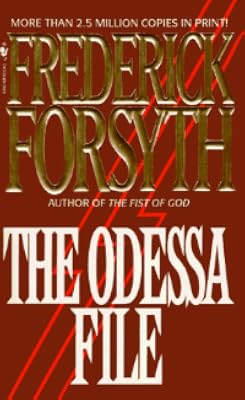
The Odessa File
by Frederick Forsyth
On This Page
Description
The suicide of an elderly German Jew explodes into revelation after revelation: of a Mafia-like organization called "Odessa" ...of a real-life fugitive known as the " Butcher of Riga" ..of a young German journalist tumed obsessed avenger.......and, ultimately, of brilliant, ruthless plot to reestablish the worldwide power of SS mass murderers and to carry out Hitler's chilling " Final Solution."Tags
Recommendations

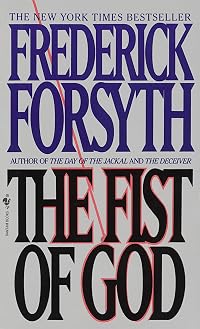
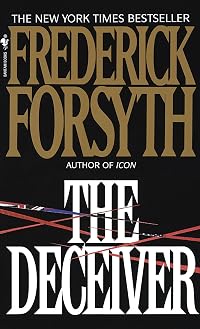
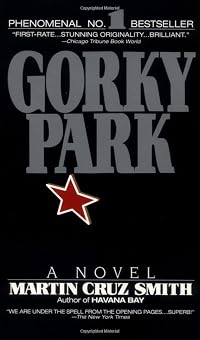


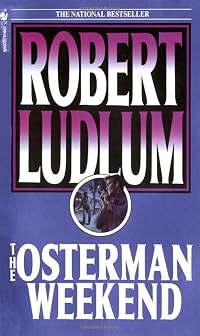








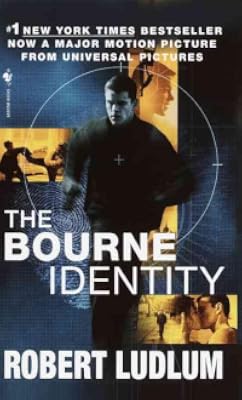
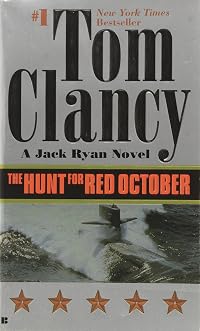
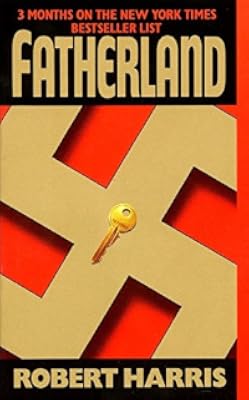
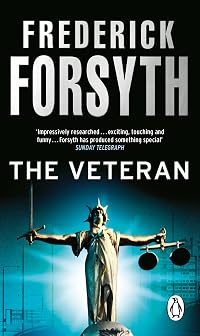
Member Recommendations

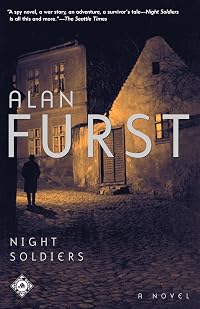
John_Vaughan More perfect atmosphere.
Member Reviews
An early work from the father of the modern espionage thriller, and it contains my biggest pet peeve: a protagonist doing something incredibly stupid. And it’s okay. Peter Miller is a reporter, not a trained undercover agent. Through the convergence of bad luck, laziness, entitlement and not truly believing all the precautions taught to him were necessary, he blows his cover almost immediately. The story never really hinged on this anyway. It’s about how the diary of a Holocaust survivor who killed himself leads to the investigation The ODESSA, a real-life Nazi organization that used stolen wealth to further their twisted philosophies. To varying degrees Forsyth always used fiction to expose reality. He is always entertaining while show more doing so. show less
Peter Miller is a young German journalist in 1963 who stumbles upon the diary of a Holocaust survivor Salomon Tauber who has just committed suicide in despair due to the fact that surviving Nazis have escaped justice for so long and that there seem to be no serious efforts by West German authorities to unearth them. Miller determines to find the Nazi commandant in Riga, Eduardo Roschmann (a real historical figure) and bring him to justice. This involves penetrating the organisation ODESSA, a supposed shadowy organisation set up near the end of the war to provide an escape route for former SS members fleeing justice. He is quickly exposed but manages to escape and after getting out of further scrapes eventually finds and confronts show more Roschmann - but there is a twist in the tale in Miller's motives for exposing the SS man. All this takes place against the backdrop of an incredibly sinister plot by Roschmann and other surviving SS members to give nuclear technology to Nasser's Egypt to use in its fight against Israel and thus perpetrate a second, and even more total Holocaust. This plot is foiled by Miller's actions, but he is casually unaware of this. Throughout Miller's motives seemed a little unclear and the twist in his story provides some explanation for this, but nevertheless I found him a slightly less than convincing character. At a more philosophical level, the novel, being written in the early 70s and set a decade earlier, explores via Miller the angst of the post-war generation of Germans, and their frustration and anger against their parents who "let Nazism happen" - these events were still so much raw and recent then, of course. Another guilt-related theme in the narrative is the now discredited idea that the atrocities were all down to the SS, and that the Wehrmacht basically behaved honourably, which has now been shown not to be the case. A very good thriller, though not as tight as Day of the Jackal. show less
It never gets old listening to or reading a Frederick Forsyth book. Although written in 1972, The Odessa File is just as new and thrilling as the day it was released. This book examines post WWII Germany and Israel. Have you ever wondered what really happened to the ex-Nazi's after Hitler killed himself and the war ended? We all know that a lot escaped to Venezuela, and some have been found and put on trial at The Hague since then, but not nearly enough. Many are still alive or their descendants are, and, just maybe, hatching more Nazi plots. This book examines the post-Reich era in Germany itself. The SS and other Nazi men made a life for themselves with new identities and legitimate jobs, but were still plotting, plotting, plotting. show more The book moves along at a furious pace as we we track a young German journalist who has assigned himself the task of tracing down the man known as The Butcher of Riga. This man's numerous crimes and mass killings has been brought to the attention of a young journalist called Peter Miller after he was handed a book written by a Jewish prisoner who had been held in Riga for most of the war. With Forsyth's unburnished prose, and based on his actual knowledge of this time (early 60's Germany) which he had experienced first as a journalist covering the area, this story of mass destruction comes alive in his hands. He uses real-life characters mixed with his fictional ones, and it seems that we're reading this story from a newspaper expose. My journey with re-visiting Forsyth's backlist has been just as thrilling s my original readings of his works was. show less
Taut historical thriller set in 1963 West Germany with a crack German investigative reporter hunting a Nazi war criminal, the Butcher of Riga. Set before all the Nazis had fled to Argentina, the plot supposes the former SS organization was highly organized and purposeful about rehabilitating these butchers back into the warp and weft of the new German Republic.
Is this what really happened? Probably not. Might it have happened this way? Why not! And that is all that matters, as we are off and running on a gripping page-turner.
Not for the faint of heart, as the descriptions of the Nazi death camps are very graphic. Otherwise highly recommended for any lover of the modern thriller genre who needs a change of pace with a plot firmly set in show more the context of 20th century history. show less
Is this what really happened? Probably not. Might it have happened this way? Why not! And that is all that matters, as we are off and running on a gripping page-turner.
Not for the faint of heart, as the descriptions of the Nazi death camps are very graphic. Otherwise highly recommended for any lover of the modern thriller genre who needs a change of pace with a plot firmly set in show more the context of 20th century history. show less
On the day that President Kennedy is assassinated an elderly Jew commits suicide and freelance reporter Peter Miller stumbles across his story. Miller comes into possession of the dead man's diary and learns of his terrible experiences in the Nazi death camps in Eastern Europe. Evidence suggests that the Butcher of Riga is at large in Germany and Miller decides to track him down. In the process he discovers ODESSA the secret organisation set up by the SS in the dying days of WW2 in order to evacuate war criminals and harvest stolen gold. As Miller digs deeper he comes up against an SS plot to use weapons of mass destruction against the Jewish state.
Well, I do like my Nazis don't I? This is a really good thriller which sets the action show more against real historical events, intermingled with what is known about the shadowy organisations which spirited war criminals out of Germany at the end of WW2. It is cleverly put together with a series of near misses and cliffhangers for the journalist and an unpredictable conclusion. The writing is strong, though the opening third was a little bit challenging to get into. I had read Le Carre's Little Drummer Girl just beforehand and both novels involve agents of the Mossad and this made a nice pairing.
Drummer Girl was quite tough going but left me totally immersed in the offensive defence that Israel uses to keep itself safe, and this was a good follow on. A good read. show less
Well, I do like my Nazis don't I? This is a really good thriller which sets the action show more against real historical events, intermingled with what is known about the shadowy organisations which spirited war criminals out of Germany at the end of WW2. It is cleverly put together with a series of near misses and cliffhangers for the journalist and an unpredictable conclusion. The writing is strong, though the opening third was a little bit challenging to get into. I had read Le Carre's Little Drummer Girl just beforehand and both novels involve agents of the Mossad and this made a nice pairing.
Drummer Girl was quite tough going but left me totally immersed in the offensive defence that Israel uses to keep itself safe, and this was a good follow on. A good read. show less
I am not going to go into detail of the synopsis; a reader can get that straight from the jacket. The story follows Peter Miller, a young journalist (29 and fictional), who is given the diary of Soloman Tauber, an old Jewish man who had recently committed suicide. The diary deals with Tauber’s incarceration at the Riga Concentration Camp. Peter Miller begins to investigate the alleged sighting of a former S.S. Officer…not just any S.S. Officer, but the real-life Eduard Roschmann, “The Butcher of Riga". Roschmann was the Commander of the Riga Concentration Camp during World War II.
Fredrick Forsyth paints an incredible picture by mixing fiction into a non-fiction event. It has been almost 50 years since its first publication and show more this novel does not miss a beat or have that aged feel. As a historical thriller, this one holds up well, with plenty of action.
The first half of the book is basically the reading of Soloman Tauber’s diary, which is painfully and incredibly detailed regarding the treatment of prisoners at Riga under the hands of the cruel and sadistic Roschmann.
The second half is Peter Miller’s attempt to discover the location of the former S.S. Concentration Camp Commander. Toward the end of the war, Roschmann was able to flee persecution with the aid of ODESSA. ODESSA (Organization Der Ehemaligen SS-Angehörigen) is loosely translated to The Organization of Former SS Members. ODESSA was formed in 1944 for the purpose of facilitating the escape of Nazi war criminals from Europe and escaping justice.
If I say much more, I feel I will start to give spoilers. I will say this, if you are interested in Nazi Germany, the Holocaust, and the resulting search for Nazi war criminals, this book is most likely for you. If you enjoy unanticipated turns of events, this book is for you. If you enjoy fiction that is based on true events, this book is for you.
“When one can understand the people, their gullibility and their fear, their greed and their lust for power, their ignorance and their docility to the man who shouts the loudest, one can forgive.”
― Frederick Forsyth, The Odessa File show less
Fredrick Forsyth paints an incredible picture by mixing fiction into a non-fiction event. It has been almost 50 years since its first publication and show more this novel does not miss a beat or have that aged feel. As a historical thriller, this one holds up well, with plenty of action.
The first half of the book is basically the reading of Soloman Tauber’s diary, which is painfully and incredibly detailed regarding the treatment of prisoners at Riga under the hands of the cruel and sadistic Roschmann.
The second half is Peter Miller’s attempt to discover the location of the former S.S. Concentration Camp Commander. Toward the end of the war, Roschmann was able to flee persecution with the aid of ODESSA. ODESSA (Organization Der Ehemaligen SS-Angehörigen) is loosely translated to The Organization of Former SS Members. ODESSA was formed in 1944 for the purpose of facilitating the escape of Nazi war criminals from Europe and escaping justice.
If I say much more, I feel I will start to give spoilers. I will say this, if you are interested in Nazi Germany, the Holocaust, and the resulting search for Nazi war criminals, this book is most likely for you. If you enjoy unanticipated turns of events, this book is for you. If you enjoy fiction that is based on true events, this book is for you.
“When one can understand the people, their gullibility and their fear, their greed and their lust for power, their ignorance and their docility to the man who shouts the loudest, one can forgive.”
― Frederick Forsyth, The Odessa File show less
Two main reasons exist to read The Odessa File. First, despite its story of former Nazis working to launch Egyptian missiles at Israel, it's a Cold War thriller. And its publication in 1972 came at a time not only of a climax in Arab-Israeli affairs (the Yom Kippur War would occur just a year later, in 1973) but also at a time when the United States and Soviet Union were positioning themselves for their final showdown in the Middle East. This confrontation would be resolved in favor of the US, with the Egyptian-Israeli peace accord following the expulsion of the Soviets from Egypt in 1972, just as it would be in Europe with the final collapse of the Soviets and Eastern Bloc in 1989. This is the context in which to understand Forsyth's show more novel. The Odessa File may have been set in the winter of 1963-64, but it reflected the newly building political realities of the early 1970s.
The second reason to look at the book is as a work of Holocaust literature. And this is where Forsyth gets himself in trouble with some critics. As Richard Brickner wrote in his 1972 New York Times review: '“The Odessa File” leaves one feeling that Forsyth has borrowed painful, live history in order to spring a few quick thrills.' And so it is argued: Forsyth, while writing a sympathetic (some would say "blindly sympathetic") work towards Israel, nevertheless used the Holocaust as a mere theme for a pulp fiction thriller--and the making of a lot of money. This charge has carried down through the decades, despite the involvement of Simon Wiesenthal in Forsyth's effort. That is the literary context and the most serious argument in criticizing the book.
So, the novel has an important political and literary pedigree. What of the merits of the novel itself? That is where The Odessa File is such a let down. The dialog is leaden; it's often painful to read through. So are the endless and unnecessary sidebars on history. As for the characters? As Brickner, above, wrote, they're duds. All seem faceless and not worth our attention. But one, that is. The fictional diary of Salomon Tauber is the best part of the book. He is the only fully fleshed out character among the bunch. About him, you care; you just wish there was more to be told. show less
The second reason to look at the book is as a work of Holocaust literature. And this is where Forsyth gets himself in trouble with some critics. As Richard Brickner wrote in his 1972 New York Times review: '“The Odessa File” leaves one feeling that Forsyth has borrowed painful, live history in order to spring a few quick thrills.' And so it is argued: Forsyth, while writing a sympathetic (some would say "blindly sympathetic") work towards Israel, nevertheless used the Holocaust as a mere theme for a pulp fiction thriller--and the making of a lot of money. This charge has carried down through the decades, despite the involvement of Simon Wiesenthal in Forsyth's effort. That is the literary context and the most serious argument in criticizing the book.
So, the novel has an important political and literary pedigree. What of the merits of the novel itself? That is where The Odessa File is such a let down. The dialog is leaden; it's often painful to read through. So are the endless and unnecessary sidebars on history. As for the characters? As Brickner, above, wrote, they're duds. All seem faceless and not worth our attention. But one, that is. The fictional diary of Salomon Tauber is the best part of the book. He is the only fully fleshed out character among the bunch. About him, you care; you just wish there was more to be told. show less
Members
- Recently Added By
Lists

Read the book and saw the movie
1,170 works; 195 members

Best Spy Fiction
153 works; 102 members

Global Reads: Books Set in Western Europe
186 works; 10 members

Books With Place Names in the Title
267 works; 11 members

Swinging Seventies
255 works; 18 members

1970s
657 works; 23 members

Stories set in Western Europe
36 works; 1 member

Books Read in 2017
4,249 works; 129 members

Publisher's Weekly Bestsellers - Part II - 1940 - 1979
355 works; 6 members

Tozai Mystery Best 100 | The Top 100 Mystery Novels
111 works; 3 members
Author Information

114+ Works 34,859 Members
Frederick Forsyth was born in Ashford, England on August 25, 1938. At age seventeen, he decided he was ready to start experiencing life for himself, so he left school and traveled to Spain. While there he briefly attended the University of Granada before returning to England and joining the Royal Air Force. He served with the RAF from 1956 to show more 1958, earning his wings when he was just nineteen years old. He left the RAF to become a reporter for the Eastern Daily Press, Reuters News Agency, and the British Broadcasting Corporation (BBC). While with the BBC, he was sent to Nigeria to cover an uprising in the Biafra region. As he learned more about the conflict, he became sympathetic to the rebel cause. He was pulled from Nigeria and reassigned to London when he reported this viewpoint. Furious, he resigned and returned to Nigeria as a freelance reporter, eventually writing The Biafra Story and later, Emeka, a biography of the rebel leader Chukwuemeka Odumegwu-Ojukwu. Upon his return to England in 1970, Forsyth began writing fiction. His first novel, The Day of the Jackal, won an Edgar Allan Poe award from the Mystery Writers of America. His other works include The Odessa File, The Dogs of War, The Fourth Protocol, Devil's Alternative, The Negotiator, The Deceiver, The Fist of God, Icon, The Veteran, Avenger, The Afghan, The Cobra and The Fox. (Bowker Author Biography) show less
Some Editions
Awards and Honors
Distinctions
Series
Belongs to Publisher Series
Work Relationships
Is contained in
Has the adaptation
Is abridged in
Sadie Shapiro's breiboek; Geheim Dossier: Odessa; Duizend zomers; Kapitein Bligh en Fletcher Christaan by Reader's Digest
Readers Digest Condensed Books: The Odessa File • The Waltz Kings • Rendezvous South Atlantic • The Unexpected Mrs Pollifax by Reader's Digest
Reader's Digest Condensed Books 1973 v01: The Stepford Wives / The Odessa File / A Day No Pigs Would Die / Stanfield Harvest / P.S. Your Not Listening by Reader's Digest
Common Knowledge
- Canonical title
- The Odessa File
- Original title
- The Odessa File
- Original publication date
- 1975
- People/Characters
- Eduard Roschmann; Simon Wiesenthal; Salomon Tauber; Peter Miller
- Important places
- Israel; Bavaria, Germany; Bayreuth, Bavaria, Germany; Baden-Württemberg, Germany; Stuttgart, Baden-Württemberg, Germany; Hamburg, Germany
- Related movies
- The Odessa File (1974 | IMDb)
- Dedication
- To all press reporters
- First words
- There was a thin robin's-egg-blue dawn coming up over Tel Aviv when the intelligence analyst finished typing his report.
- Last words
- (Click to show. Warning: May contain spoilers.)It was one of those tanks that General Israel Tal hurled into the battle for the Mitla Pass two days later, and at noon on Saturday, June 10, caked with dust and oil, scored by bullets, its tracks worn to wafers by the rocks of Sinai, the old Patton rolled to a stop on the eastern bank of the Suez Canal.
- Original language
- English
Classifications
- Genres
- Suspense & Thriller, Fiction and Literature, Historical Fiction
- DDC/MDS
- 823.914 — Literature & rhetoric English & Old English literatures English fiction 1900- 1901-1999 1945-1999
- LCC
- PZ4 .F7349 .O — Language and Literature Fiction and juvenile belles lettres Fiction and juvenile belles lettres Fiction in English
- BISAC
Statistics
- Members
- 3,306
- Popularity
- 5,174
- Reviews
- 58
- Rating
- (3.84)
- Languages
- 20 — Czech, Danish, Dutch, English, Estonian, Finnish, French, German, Hungarian, Italian, Japanese, Norwegian (Bokmål), Norwegian, Polish, Portuguese, Russian, Slovenian, Spanish, Swedish, Turkish
- Media
- Paper, Audiobook, Ebook
- ISBNs
- 119
- UPCs
- 1
- ASINs
- 68