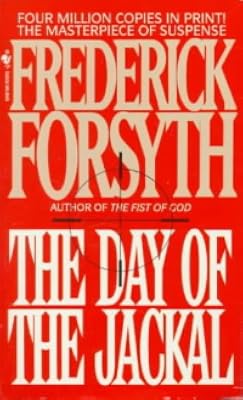
The Day of the Jackal
by Frederick Forsyth
On This Page
Description
France, infuriated by Charles de Gaulle's withdrawal from Algeria, had failed in six known attempts to assassinate the General. This book postulates that the seventh, mostly deadly attempt involved a professional killer-for-hire who would be unknown to the French Police. His code name: Jackal. His price: half a million dollars. His demand: total secrecy, even from his employers. Step by painstaking step, we follow the Jackal in his meticulous planning, from the fashioning of a specially made show more rifle to the devising of his approach to the time and the place where the General is to meet the Jackal's bullet. The only obstacle in his path is a small, diffident, rumpled policeman, who happens to be considered by his boss the best detective in France: Deputy Commissaire Claude Lebel. show lessTags
Recommendations
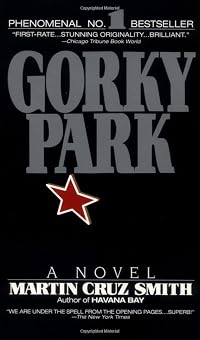
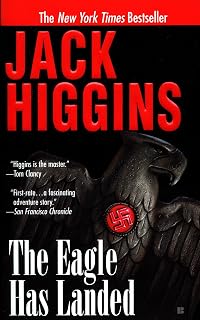
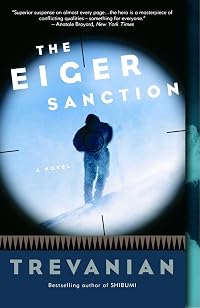
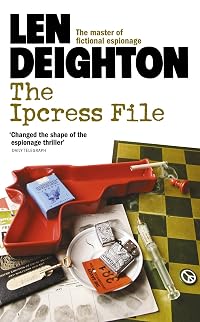

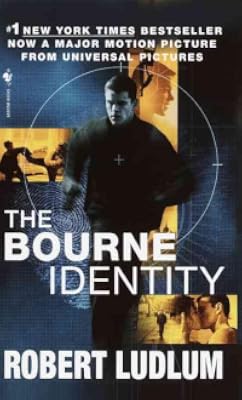


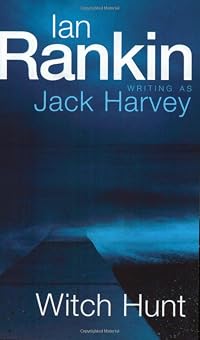
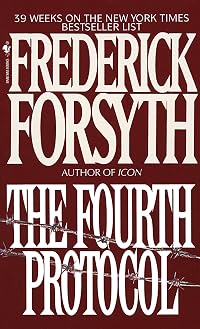
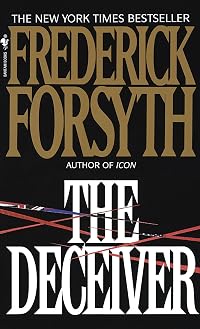

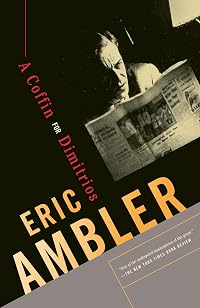
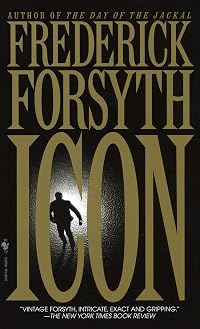
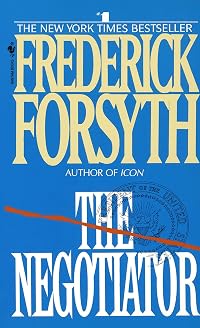
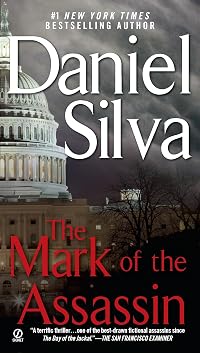
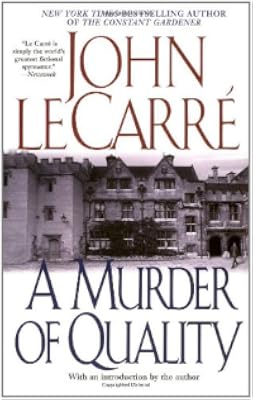
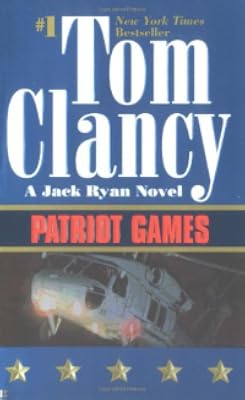


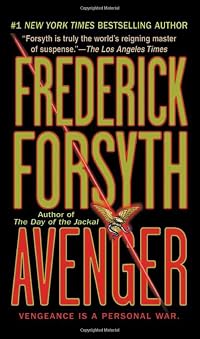
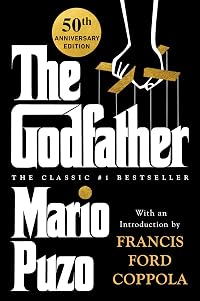

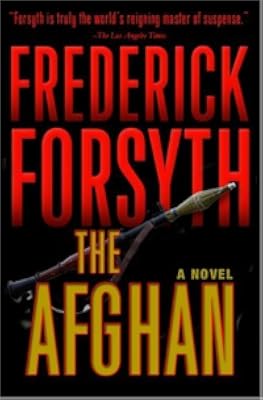

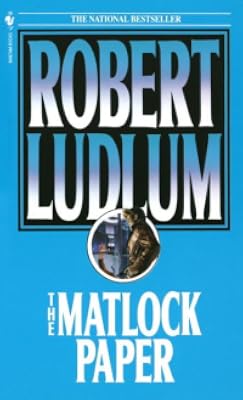
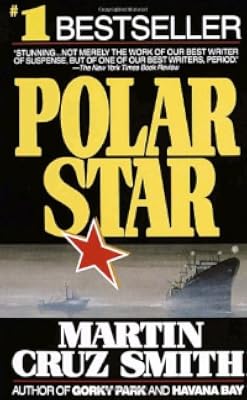
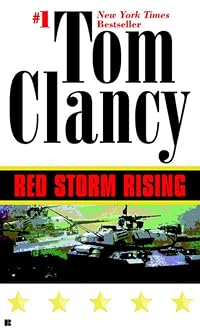


Member Recommendations
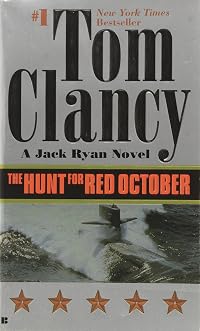
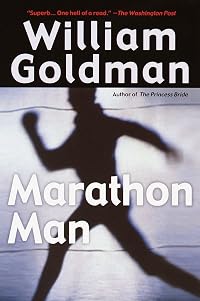
ivan.frade About a man plenty of resources to dodge a powerful organization that tries to track him down.


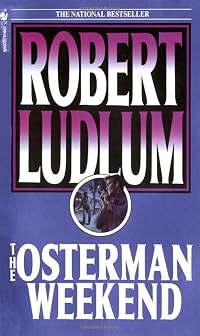
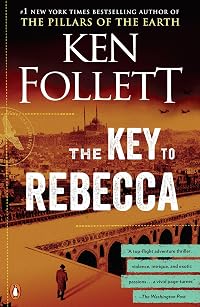
JohnWCuluris Similar plot--perhaps originally inspired by Jackal--with more detail and texture.
Member Reviews
This is a brilliantly written thriller based on a fictional assassination attempt against French President Charles de Gaulle in 1963. While we know from history that he won't succeed, the novel focuses on the Jackal's thought processes, how he devises his plans, develops a weapon and constructs several false identities. It follows the manhunt and how the efforts of the various French agencies to track him down are frustrated by a combination of the killer's resourcefulness, bad luck and a mole in the authorities' midst. Even when he is cornered in Paris he almost succeeds in carrying his audacious plan. This is deservedly a classic of the genre, focusing on detail in almost an instructional sense, but still managing to be a gripping show more narrative which never flags. show less
This book was a re-read for me. I read it about 40 years ago, and it set me onto the path of reading and enjoying thrillers. This book was the start of thrillers as we know them today. Forsythe’s skill as an author is awe-inspiring! There is never a dropped storyline or even an extraneous clue. Every word is a building block of this remarkable story and every word jacks up the tension. Nothing that happens is expected or really even guessed at. I wish I was more like Charles Lebel, the dogged, intelligent investigator who will do anything to get his man and he never gives up. The technology in the book is a bit dated since the story is set in the summer of 1963. This was before computers, cell phones, sophisticated listening equipment show more and the internet. Everything had to be done the old-fashioned way, which, it turns out, if spearheaded by the right commanding officer, can be pretty effective. As before, I was rooting for the Jackal all the way through. He was cool-headed and had a brilliant mind. He was a man without a soul or a conscience. Also, he was a man with dogged determination, and a man who would go to any lengths to achieve his goal. The book is perfect in every way, and I am glad I decided to read it again. I appreciated it more the second time around. Re-reading old classics is never a waste of time. show less
A lot of good action and suspense, but at this point pretty dated. The racism, sexism, homophobia, and transphobia come across very differently now. Always interesting to read action/crime/spy stuff written in a different technological age -- how would an anonymous assassin operate now?
WARNING: This review contains spoilers.
****
Frederick Forsyth's The Day of the Jackal is as excellent as I was led to believe it would be. The story concerns an assassin known only as The Jackal, who is contracted by the right-wing OAS to assassinate Charles de Gaulle. The OAS actually existed -- it was an organization designed to prevent Algeria from becoming independent of French rule, and in the book its heads consider de Gaulle a traitor for letting Algeria be independent. The book begins with an account of the execution of Jean-Marie Bastien-Thiry, an actual person involved in the OAS. However, the book's events after this point are fictional.
The book is divided into three parts: Anatomy of a plot, Anatomy of a manhunt, and Anatomy show more of a kill. The first part shows the OAS searching for an assassin to do the deed, and their eventual finding of the Jackal. We also follow the Jackal in his preparations for the assassination. It is frightening how intelligent he is, and how he is able to prepare for every possible contingency. Meanwhile, we see the French security forces and cannot help but despair. In contrast with the mechanical and almost inhuman Jackal, they look rather amateurish and helpless.
Fortunately, there is one person who can match the Jackal, and that is Commissaire Lebel. He knows he will get the Jackal only through sheer doggedness, so he works non-stop to get the slightest clue about the assassin's whereabouts. Throughout the story, the perspective alternates between the two men and gives the reader much agony, as the Jackal always seems to be one step ahead. Will he succeed, or won't he?
Well, you'll have to read on to find out, or know something about history, but don't let history get in the way of a brilliant read such as this. Forsyth does atmosphere well -- he's a journalist, so he describes the scenes vividly, but without veering into purple prose. This trait is particularly welcome when it comes to the sex scenes. Yes, there are a few in the book, but they are not trashy and do not go on for very long; Forsyth knows when to leave the scene and move on.
The book also does contain some sly humour. I laughed out loud at one point during the French security forces' meeting where Lebel was telling all the heads that he suspected a leak from somebody in that room. One of the officers was indignant that "the little bourgeois policeman" was daring to accuse HIM and his other high-rank comrades of spilling confidential information, but then he went and blabbed to his mistress while she performed sexual favours for him! Idiot.
So to sum up, excellent, excellent book. If you've read Fleming and le Carré and enjoy a tense, compelling thriller, pick up a copy of this book. You'll be in for a treat. show less
****
Frederick Forsyth's The Day of the Jackal is as excellent as I was led to believe it would be. The story concerns an assassin known only as The Jackal, who is contracted by the right-wing OAS to assassinate Charles de Gaulle. The OAS actually existed -- it was an organization designed to prevent Algeria from becoming independent of French rule, and in the book its heads consider de Gaulle a traitor for letting Algeria be independent. The book begins with an account of the execution of Jean-Marie Bastien-Thiry, an actual person involved in the OAS. However, the book's events after this point are fictional.
The book is divided into three parts: Anatomy of a plot, Anatomy of a manhunt, and Anatomy show more of a kill. The first part shows the OAS searching for an assassin to do the deed, and their eventual finding of the Jackal. We also follow the Jackal in his preparations for the assassination. It is frightening how intelligent he is, and how he is able to prepare for every possible contingency. Meanwhile, we see the French security forces and cannot help but despair. In contrast with the mechanical and almost inhuman Jackal, they look rather amateurish and helpless.
Fortunately, there is one person who can match the Jackal, and that is Commissaire Lebel. He knows he will get the Jackal only through sheer doggedness, so he works non-stop to get the slightest clue about the assassin's whereabouts. Throughout the story, the perspective alternates between the two men and gives the reader much agony, as the Jackal always seems to be one step ahead. Will he succeed, or won't he?
Well, you'll have to read on to find out, or know something about history, but don't let history get in the way of a brilliant read such as this. Forsyth does atmosphere well -- he's a journalist, so he describes the scenes vividly, but without veering into purple prose. This trait is particularly welcome when it comes to the sex scenes. Yes, there are a few in the book, but they are not trashy and do not go on for very long; Forsyth knows when to leave the scene and move on.
The book also does contain some sly humour. I laughed out loud at one point during the French security forces' meeting where Lebel was telling all the heads that he suspected a leak from somebody in that room. One of the officers was indignant that "the little bourgeois policeman" was daring to accuse HIM and his other high-rank comrades of spilling confidential information, but then he went and blabbed to his mistress while she performed sexual favours for him! Idiot.
So to sum up, excellent, excellent book. If you've read Fleming and le Carré and enjoy a tense, compelling thriller, pick up a copy of this book. You'll be in for a treat. show less
This was a great thriller back when I first read it in the 1970's, a great movie shortly thereafter, and on rereading it 50 or so years later, it holds up well and is an immensely satisfying and entertaining read.
It's the story of an assassin hired to kill Charles de Gaulle, the heavily guarded president of France, and the attempts by authorities to prevent the assassination. It's a cat and mouse trip all the way, as the Jackal stays ahead of all the law enforcement personnel on his heels, just one short step behind. And though we, of course, know that Charles de Gaulle is not in the end assassinated, we breathlessly follow the Jackal, unable to anticipate his next move, constantly amazed by his cleverness, and constantly wondering how show more the police will ever stop him.
Forsyth definitely deserves the title one Amazon reviewer endowed him with: a "master of suspense." The characters are well-portrayed, the plotting is linear and logical. There was nothing to pull me out of this story of moves and countermoves.
4 stars show less
It's the story of an assassin hired to kill Charles de Gaulle, the heavily guarded president of France, and the attempts by authorities to prevent the assassination. It's a cat and mouse trip all the way, as the Jackal stays ahead of all the law enforcement personnel on his heels, just one short step behind. And though we, of course, know that Charles de Gaulle is not in the end assassinated, we breathlessly follow the Jackal, unable to anticipate his next move, constantly amazed by his cleverness, and constantly wondering how show more the police will ever stop him.
Forsyth definitely deserves the title one Amazon reviewer endowed him with: a "master of suspense." The characters are well-portrayed, the plotting is linear and logical. There was nothing to pull me out of this story of moves and countermoves.
4 stars show less
Re-reading The Day of the Jackal, Frederick Forsyth's 1972 Edgar winner for Best Novel, was perhaps even more satisfying than reading it for the first time (can it really have been 36 years ago?) I would never quibble with the committee's choice on this one.
As most people probably know, the book deals with a plot to assassinate Charles de Gaulle, President of France, by a group opposed to his policies on Algeria. Not only does the reasonably well-informed reader know that, historically, de Gaulle was not assassinated, but Forsyth actually makes a point of telling us this early in the book. So, in a most important sense, we know from the outset how the book ends. And yet, it is one of the best examples I've read of page-turning, show more heart-stopping, breath-holding suspense writing.
Using the third-person omniscient form, Forsyth takes us into the minds and actions of the plotters, the police, and the Jackal himself. As the Jackal's preparations are being made, the French policeman, Lebel, is making his own preparations to foil the hired assassin. The police (including a number of quasi-police agencies with few qualms about methods) are well aware of the plot to assassinate de Gaulle -- several unsuccessful attempts have been made -- and they quickly surmise that the plotters have a hired killer. But finding the Jackal is not so easy, and he always seems to be one step ahead of them until the last shattering moment.
One thing that struck me in this reading of The Day of the Jackal was that, while one part of my brain was firmly on the side of Lebel and his need to stop the assassin, another part of me was admiring the Jackal's ingenuity and cool head, and almost wanted him to "win." And all this with no attempts made by the author to excuse or rationalize the Jackal's career choice -- in fact we are told very little about the Jackal's past beyond one brief reference to his having grown up poor. Forsyth puts the reader in the very unusual position of watching two consummate professionals doing their jobs in opposition to each other; even though we know which is the "good" or "right" side, our inwards groans at a setback for the Jackal are as heartfelt as those for Lebel, at least until the last few chapters.
If you are too young to have read this book when it first came out, or even if you did read it then, do yourself a favor and read or re-read it. show less
As most people probably know, the book deals with a plot to assassinate Charles de Gaulle, President of France, by a group opposed to his policies on Algeria. Not only does the reasonably well-informed reader know that, historically, de Gaulle was not assassinated, but Forsyth actually makes a point of telling us this early in the book. So, in a most important sense, we know from the outset how the book ends. And yet, it is one of the best examples I've read of page-turning, show more heart-stopping, breath-holding suspense writing.
Using the third-person omniscient form, Forsyth takes us into the minds and actions of the plotters, the police, and the Jackal himself. As the Jackal's preparations are being made, the French policeman, Lebel, is making his own preparations to foil the hired assassin. The police (including a number of quasi-police agencies with few qualms about methods) are well aware of the plot to assassinate de Gaulle -- several unsuccessful attempts have been made -- and they quickly surmise that the plotters have a hired killer. But finding the Jackal is not so easy, and he always seems to be one step ahead of them until the last shattering moment.
One thing that struck me in this reading of The Day of the Jackal was that, while one part of my brain was firmly on the side of Lebel and his need to stop the assassin, another part of me was admiring the Jackal's ingenuity and cool head, and almost wanted him to "win." And all this with no attempts made by the author to excuse or rationalize the Jackal's career choice -- in fact we are told very little about the Jackal's past beyond one brief reference to his having grown up poor. Forsyth puts the reader in the very unusual position of watching two consummate professionals doing their jobs in opposition to each other; even though we know which is the "good" or "right" side, our inwards groans at a setback for the Jackal are as heartfelt as those for Lebel, at least until the last few chapters.
If you are too young to have read this book when it first came out, or even if you did read it then, do yourself a favor and read or re-read it. show less
Is it because my wife recently unearthed this old book of mine in the garret of my mother-in-law’s chalet, while I had no idea it could be there? Is it because its front page bears the manuscript mention “Alice Springs, N.T.//24/05/78”, which reminds me of a happy and lonely knock about across Australia in my young time? Is it because I kept such a vivid recollection of the story? Or because of what I read in other LT reviews? I never re-read a book, but I made an exception for this one. And the fact is that I was not deceived. This is perhaps due to the general French atmosphere which is pretty well rendered, and which takes me back to my own boyhood. When Forsyth describes road blocks, I so well remember the spectacle offered by show more policemen and soldiers in the very front of my house when I was 10: the presence of steel road blocks drawn across the Route Nationale, with men armed with sub-machine guns was, for my brother and me, a source of intense enjoyment when we looked at them during long hours over the garden wall.
Forsyth gathered a huge documentation on the OAS (Organisation de l’Armée Secrète) and on the political atmosphere in France at the beginning of the sixties. The counterpart is that all this is regurgitated a bit too densely in the first chapter. But the other 20 chapters read at such a growing pace up to the very last page that—although I am not a devotee of espionage or crime stories and may not be properly qualified to say that—this book is a real masterpiece. I cannot remember of any other book which is so tense up to the end.
However, I noticed many aberrations and mistakes in Forsyth’s description of France. The first and most intriguing blunder is found at the very beginning when he explains why Bastien-Thiry failed in his attempt to kill De Gaulle at Petit-Clamart in 1962: ‘Investigating the timetable of his assassination he had consulted a calendar to discover that dusk fell on 22nd August at 8.35, seemingly plenty late enough even if De Gaulle was late on his usual schedule, as indeed he was. But the calendar the Air Force colonel had consulted related to 1961. On 22nd August, 1962, dusk fell at 8.10. Those twenty-five minutes were to change the history of France’ (pp. 16-17). If indeed the sun, at a given date, sets at slightly different times year after year, drift is very small (around 25 seconds per year, not 25 minutes), and practically cancels every leap year. I could not trace where Forsyth took this information from, but the blunder is such that it was remarked by a Nasa publication in 1973 (The Observatory, vol. 93, p. 244) where these lines are reproduced at full length, charitably without any comment at all.
Other minor errors dot the text, which is very strange given the general quality of the documentation. Some are geographical, for instance when Castellane (p. 279) is said to be in Savoy (actually in the French Provencal Alps, an area which was never part of the Savoy duchy, which lies 100 km to the north); or (p. 303) when La Bourdoule (instead of La Bourboule) is described as a water spa in Auvergne. Two others are curiously related to French military music. The Marseillaise is said to include the line ‘Marchons marchons, à la Victoire …’, which I never heard (the right line is ‘Marchons, marchons, qu’un sang impur …’). Two pages after that (was Mr Forsyth tired when writing the end of his book?), La Marjolaine is said to be a military anthem played when De Gaulle decorates WW2 veterans. As far as I could investigate, there is no such anthem, la marjolaine being a plant or the name of some obscure choral societies… Forsyth probably mistook it for La Marche lorraine, known by any French. But how could he commit such an error?
I believe Forsyth is a forger of the same type as one of his characters in the book, who is said to have forged nearly perfect French banknotes, but forgot to engrave the ‘U’ of ‘Banque de France’ and is jailed for that: he tells us a very good story, but forgets tiny details, perhaps to make us understand that all this is fake.
But I am not going to put him in jail for that. Je vous tire ma révérence, Monsieur Forsyth ! show less
Forsyth gathered a huge documentation on the OAS (Organisation de l’Armée Secrète) and on the political atmosphere in France at the beginning of the sixties. The counterpart is that all this is regurgitated a bit too densely in the first chapter. But the other 20 chapters read at such a growing pace up to the very last page that—although I am not a devotee of espionage or crime stories and may not be properly qualified to say that—this book is a real masterpiece. I cannot remember of any other book which is so tense up to the end.
However, I noticed many aberrations and mistakes in Forsyth’s description of France. The first and most intriguing blunder is found at the very beginning when he explains why Bastien-Thiry failed in his attempt to kill De Gaulle at Petit-Clamart in 1962: ‘Investigating the timetable of his assassination he had consulted a calendar to discover that dusk fell on 22nd August at 8.35, seemingly plenty late enough even if De Gaulle was late on his usual schedule, as indeed he was. But the calendar the Air Force colonel had consulted related to 1961. On 22nd August, 1962, dusk fell at 8.10. Those twenty-five minutes were to change the history of France’ (pp. 16-17). If indeed the sun, at a given date, sets at slightly different times year after year, drift is very small (around 25 seconds per year, not 25 minutes), and practically cancels every leap year. I could not trace where Forsyth took this information from, but the blunder is such that it was remarked by a Nasa publication in 1973 (The Observatory, vol. 93, p. 244) where these lines are reproduced at full length, charitably without any comment at all.
Other minor errors dot the text, which is very strange given the general quality of the documentation. Some are geographical, for instance when Castellane (p. 279) is said to be in Savoy (actually in the French Provencal Alps, an area which was never part of the Savoy duchy, which lies 100 km to the north); or (p. 303) when La Bourdoule (instead of La Bourboule) is described as a water spa in Auvergne. Two others are curiously related to French military music. The Marseillaise is said to include the line ‘Marchons marchons, à la Victoire …’, which I never heard (the right line is ‘Marchons, marchons, qu’un sang impur …’). Two pages after that (was Mr Forsyth tired when writing the end of his book?), La Marjolaine is said to be a military anthem played when De Gaulle decorates WW2 veterans. As far as I could investigate, there is no such anthem, la marjolaine being a plant or the name of some obscure choral societies… Forsyth probably mistook it for La Marche lorraine, known by any French. But how could he commit such an error?
I believe Forsyth is a forger of the same type as one of his characters in the book, who is said to have forged nearly perfect French banknotes, but forgot to engrave the ‘U’ of ‘Banque de France’ and is jailed for that: he tells us a very good story, but forgets tiny details, perhaps to make us understand that all this is fake.
But I am not going to put him in jail for that. Je vous tire ma révérence, Monsieur Forsyth ! show less
Members
- Recently Added By
Lists

The Guardian's 1000 Novels Everyone Must Read
1,005 works; 547 members

Best Historical Fiction
620 works; 257 members

Read the book and saw the movie
1,170 works; 192 members

Best Spy Fiction
153 works; 102 members

BBC Big Read
191 works; 46 members

French Books
102 works; 15 members

100 Mysteries and Thrillers to Read in a Lifetime
99 works; 22 members

NPRs your picks: top 100 Killer Thrillers
100 works; 17 members

The Top 100 Crime Novels of All Time
100 works; 15 members

Top 100 Mystery Novels of All Time
98 works; 9 members
TML 200 Best Books 1950-1999
202 works; 10 members
Page Turners
185 works; 11 members

Huxley's reading log 2017
45 works; 1 member

The 100 Best Crime Novels and Thrillers since 1945
100 works; 6 members
Tozai Mystery Best 100 | The Top 100 Mystery Novels
111 works; 3 members

Fiction: Thriller
78 works; 1 member

Books recommended in the history category on FiveBooks.com
329 works; 4 members

Publisher's Weekly Bestsellers - Part II - 1940 - 1979
355 works; 5 members

.
396 works; 1 member

The Modern Library (The Two Hundred Best Novels....
202 works; 1 member

BBC World Book Club
265 works; 5 members

1970s Thrillers
10 works; 2 members

Mustich's 1000 Books to Read Before You Die: A Life Changing List
1,001 works; 19 members

Books Read in 2017
4,249 works; 129 members

Stories set in Western Europe
36 works; 1 member

1970s
657 works; 23 members

Edgar Award
418 works; 15 members
Animals in the Title
498 works; 11 members

Books Featured on Readers' Review of the Diane Rehm Show
161 works; 8 members

Swinging Seventies
255 works; 18 members

World Book Club (BBC World Service)
112 works; 1 member
Talk Discussions
Past Discussions
Folio Archives 361: The Day of the Jackal by Frederick Forsyth 2014 in Folio Society Devotees (February 2024)
Author Information

110+ Works 34,752 Members
Frederick Forsyth was born in Ashford, England on August 25, 1938. At age seventeen, he decided he was ready to start experiencing life for himself, so he left school and traveled to Spain. While there he briefly attended the University of Granada before returning to England and joining the Royal Air Force. He served with the RAF from 1956 to show more 1958, earning his wings when he was just nineteen years old. He left the RAF to become a reporter for the Eastern Daily Press, Reuters News Agency, and the British Broadcasting Corporation (BBC). While with the BBC, he was sent to Nigeria to cover an uprising in the Biafra region. As he learned more about the conflict, he became sympathetic to the rebel cause. He was pulled from Nigeria and reassigned to London when he reported this viewpoint. Furious, he resigned and returned to Nigeria as a freelance reporter, eventually writing The Biafra Story and later, Emeka, a biography of the rebel leader Chukwuemeka Odumegwu-Ojukwu. Upon his return to England in 1970, Forsyth began writing fiction. His first novel, The Day of the Jackal, won an Edgar Allan Poe award from the Mystery Writers of America. His other works include The Odessa File, The Dogs of War, The Fourth Protocol, Devil's Alternative, The Negotiator, The Deceiver, The Fist of God, Icon, The Veteran, Avenger, The Afghan, The Cobra and The Fox. (Bowker Author Biography) show less
Some Editions
Awards and Honors
Series
Belongs to Publisher Series
Libros Reno (450)
Work Relationships
Is contained in
Has the adaptation
Is abridged in
Reader's Digest Condensed Books 1972 v02: Wild Goose, Brother Goose / Event 1000 / Bring Me a Unicorn / Hearts / The Day of the Jackal by John Beaudouin
Reader's Digest Best Sellers 1973: Wild Goose, Brother Goose | The Day of the Jackal | A Day No Pigs Would Die by John T. Beaudouin
Het Beste Boek: Sarang / De dag van de jakhals / Een valk voor 'n koningin / Kapitein van de "Queens" by Reader's Digest
Reader's Digest Condensed Books: The Day of the Jackal • The Dogs of War • The Devil's Alternative • The Odessa File by Reader's Digest
Reader's Digest Auswahlbücher 77: Eins für Frost und Zwei für Feuer / Meine Nachbarn die Affen / Der Schakal / Das Licht im Innern by Reader's Digest
MAR DE HIERBA. CHACAL. MUJER SOLITARIA. LOS DURRELL EN CORFU (Biblioteca De Selecciones)1972 by Reader's Digest
Common Knowledge
- Canonical title*
- De dag van de Jakhals
- Original title
- The Day of the Jackal
- Original publication date
- 1971-06-07
- People/Characters
- Inspector Claude Lebel; Charles Harold Calthrop; Charles de Gaulle; The Jackal; Colonel Marc Rodin; Viktor Kowalski (show all 9); Colonel Saint-Clair de Villaubon; Superintendent Bryn Thomas; Valmy
- Important places
- Paris, France; Rome, Italy; London, England, UK; Brussels, Belgium
- Related movies
- The Day of the Jackal (1973 | IMDb); The Jackal (1997 | IMDb); The Day of the Jackal (2024 | IMDb)
- Dedication
- To my Mother and Father
- First words
- It is cold at 6:40 in the morning of a March day in Paris, and it seems even colder when a man is about to be executed by firing squad.
- Last words
- (Click to show. Warning: May contain spoilers.)The day of the Jackal was over.
- Blurbers
- Child, Lee
- Original language
- English
- Canonical DDC/MDS
- 823.914
- Disambiguation notice
- ISBN 0854565655 is the Reader's Digest condensed (abridged) version of the book.
*Some information comes from Common Knowledge in other languages. Click "Edit" for more information.
Classifications
Statistics
- Members
- 6,015
- Popularity
- 2,116
- Reviews
- 108
- Rating
- (4.04)
- Languages
- 21 — Czech, Danish, Dutch, English, Estonian, Finnish, French, German, Hungarian, Indonesian, Italian, Lithuanian, Norwegian (Bokmål), Norwegian, Polish, Portuguese, Russian, Croatian, Spanish, Swedish, Turkish
- Media
- Paper, Audiobook, Ebook
- ISBNs
- 190
- ASINs
- 102