
The Reluctant Fundamentalist
by Mohsin Hamid
On This Page
Description
A NEW YORK TIMES BESTSELLERSHORT-LISTED FOR THE MAN BOOKER PRIZE
OVER ONE MILLION COPIES SOLD WORLDWIDE
The elegant and compelling novel about a Pakistani man's abandonment of his high-flying life in New York—an extraordinary portrait of a divided and yet ultimately indivisible world in America post-9/11.
At a café table in Lahore, a bearded Pakistani man converses with an uneasy American stranger. He begins to tell the story of a man named Changez, who is living an immigrant's dream of show more America. At the top of his class at Princeton, he is snapped up by an elite valuation firm. He thrives on the energy of New York, and his budding romance with elegant, beautiful Erica promises entry into Manhattan society at the same exalted level once occupied by his own family back in Lahore. But in the wake of September 11, Changez finds his position in his adopted city suddenly overturned, and his relationship with Erica shifting. And Changez's own identity is in seismic shift as well, unearthing allegiances more fundamental than money, power, and maybe even love.
. show less
Tags
Recommendations

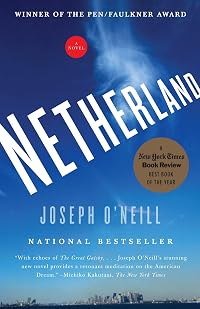
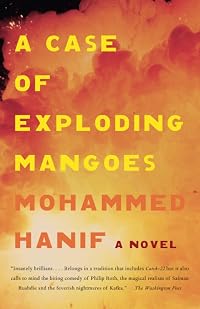

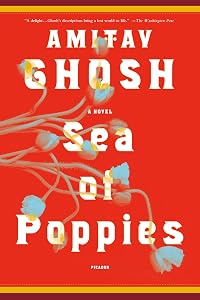
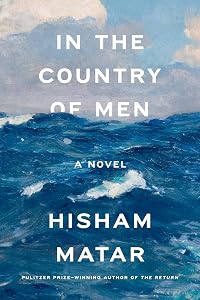





Member Recommendations
baystateRA A first-person narration over a single long conversation with loads of backstory skillfully woven in.
calvert-oak Slowly and ruthlessly breaks down the relationship of the empire to its former subjects.

JuliaMaria Politisches Erwachen in der Fremde, bei Hamid in New York, bei Othman in Deutschland.
Member Reviews
o an extraordinary degree, this beautifully written short novel brought me into the mind and heart of someone I would not have expected to be interested in, let alone empathize with. The central character, of course, is young Pakistani who's had a superb American education, and has landed a superb American job. Everything (including a superb American girlfriend) seems to be going splendidly, until 9/11. That shatters his sense of identity, from the inside first -- he smiles when he hears the news, shocking himself profoundly, and begins to wonder who he really is. The continued unravelling (or crisis of faith, if secular careerism can be deemed a faith) is reinforced by changing American attitudes towards Muslims and the Muslim world. show more Eventually -- well, if you haven't read a plot summary yet, read the book to find out what happens.
Read the book anyway, even if you know what happens. The way in which the book is narrated, a long monologue delivered by the Pakistani to a mysterious American in an unsettling Lahore cafe, brought me into an Arabian Nights world of storytelling, judicious pauses, and evocative language. The combination of this form with the very modern subject matter crystallizes the division between the narrator's Pakistani past and his one-time American future, a future now foregone. The language is crisp and exact, and the author's ability to pin-point (pin prick?) much about the U.S. response to 9/11 is uncanny, and uncomfortable. Some of his political comparisons -- for example, the way the civilians killed on 9/11 became victims never to be forgotten, while the civilians killed by American drones became collateral damage -- are now burned into my perceptions of my country's foreign policy. Why do they hate us? Because we push them around.
If this book were non-fiction, there would be things in it that I would criticize, including a tendency to blame everything on the U.S. (Why do we push them around? Because, sometimes, they are harming our interests, and other times they are threatening our "friends". ) But it isn't non-fiction, it's a novel, and a novel is allowed to present one view of the world without making allowances for conflicting points of view. Moreover, the central character's sympathy with them rather than us isn't really all that inexplicable. Human beings are tribal, Americans as well as Pakistanis. Years ago, when IRA bombings were terrorizing London, an Irish-American banker friend of mine was in London on business. When he heard that another bomb had gone off, with injuries and possibly deaths, he didn't smile. He did, however, think "One for our side". When he told me about this, I was amazed, as I think was he when it happened. Our pre-civilized emotions rear their ugly heads, even in the financial services industry. show less
Read the book anyway, even if you know what happens. The way in which the book is narrated, a long monologue delivered by the Pakistani to a mysterious American in an unsettling Lahore cafe, brought me into an Arabian Nights world of storytelling, judicious pauses, and evocative language. The combination of this form with the very modern subject matter crystallizes the division between the narrator's Pakistani past and his one-time American future, a future now foregone. The language is crisp and exact, and the author's ability to pin-point (pin prick?) much about the U.S. response to 9/11 is uncanny, and uncomfortable. Some of his political comparisons -- for example, the way the civilians killed on 9/11 became victims never to be forgotten, while the civilians killed by American drones became collateral damage -- are now burned into my perceptions of my country's foreign policy. Why do they hate us? Because we push them around.
If this book were non-fiction, there would be things in it that I would criticize, including a tendency to blame everything on the U.S. (Why do we push them around? Because, sometimes, they are harming our interests, and other times they are threatening our "friends". ) But it isn't non-fiction, it's a novel, and a novel is allowed to present one view of the world without making allowances for conflicting points of view. Moreover, the central character's sympathy with them rather than us isn't really all that inexplicable. Human beings are tribal, Americans as well as Pakistanis. Years ago, when IRA bombings were terrorizing London, an Irish-American banker friend of mine was in London on business. When he heard that another bomb had gone off, with injuries and possibly deaths, he didn't smile. He did, however, think "One for our side". When he told me about this, I was amazed, as I think was he when it happened. Our pre-civilized emotions rear their ugly heads, even in the financial services industry. show less
This book slaps.
Propelled entirely by a present-day speech by one of the most unreliable narrators in the history of literature - the narrative is urged forward by an inescapable, ever-swelling sense of foreboding and dread.
You've gotta know your enemy. Our narrator and protagonist, Changez, is the humanisation of that ever-present spectre "THE TERRORIST". Somehow, through an enduring show of authorial brilliance, I was left despising, sympathising, and respecting this dude all at once. His character arc is less transformation, more primordial regression - but not exactly either of these.
This book reintroduces the humanity to a sweeping class of people that have been cast to us by governments and war-time media as our inhuman, show more incomprehensible enemy. An other whose motivations are as irrational as they are evil. But that is, of course, bullshit. And it's important for everyone in The West to understand and remember, that even if their methodology and actions are reprehensible, that the driving motivation behind these is the same as that which drives any of us.
The addressed of Changez's monologue is never named, and never diagetically speaks, yet I sided with him instinctively. This is done in a masterfully subtle way, and highlights the internal bias to distrust and project onto the other our own preconceptions.
In its conclusion I was left to wonder whether what I believed to be the fate of the nameless character was really based on. Was my heavily biased gut-reaction to the kind of person Changez has become, and the place in which this interlocution took place, somehow right despite its fallacious footing? Which parts of the Changez's speech were reliable? Ultimately it can't be known whether the threat is real or imagined, as all we've been given to base a conclusion on is fundamentally biased. Without a counterpoint, without more information from different sources with different agendas to balance this interpretation of the truth against, it is impossible to know for certain what it is we're being told. I think that might be the point. show less
Propelled entirely by a present-day speech by one of the most unreliable narrators in the history of literature - the narrative is urged forward by an inescapable, ever-swelling sense of foreboding and dread.
You've gotta know your enemy. Our narrator and protagonist, Changez, is the humanisation of that ever-present spectre "THE TERRORIST". Somehow, through an enduring show of authorial brilliance, I was left despising, sympathising, and respecting this dude all at once. His character arc is less transformation, more primordial regression - but not exactly either of these.
This book reintroduces the humanity to a sweeping class of people that have been cast to us by governments and war-time media as our inhuman, show more incomprehensible enemy. An other whose motivations are as irrational as they are evil. But that is, of course, bullshit. And it's important for everyone in The West to understand and remember, that even if their methodology and actions are reprehensible, that the driving motivation behind these is the same as that which drives any of us.
The addressed of Changez's monologue is never named, and never diagetically speaks, yet I sided with him instinctively. This is done in a masterfully subtle way, and highlights the internal bias to distrust and project onto the other our own preconceptions.
In its conclusion I was left to wonder whether what I believed to be the fate of the nameless character was really based on. Was my heavily biased gut-reaction to the kind of person Changez has become, and the place in which this interlocution took place, somehow right despite its fallacious footing? Which parts of the Changez's speech were reliable? Ultimately it can't be known whether the threat is real or imagined, as all we've been given to base a conclusion on is fundamentally biased. Without a counterpoint, without more information from different sources with different agendas to balance this interpretation of the truth against, it is impossible to know for certain what it is we're being told. I think that might be the point. show less
Changez, a young Pakistani, graduates at the top of his class at Princeton. He is hired by a prestigious corporate valuation firm based in New York City. From there he travels to his engagements, which could be anywhere in the world. Most of these assignments will result in the sale of the client’s company and downsizing of its employees. Changez feels compassion for the people who will lose their jobs due to his valuations, but he is encouraged by Jim, his mentor at the firm, to just “focus on the fundamentals,” the data, and the analysis, basically ignoring the human consequences of his work.
I enjoyed the various definitions implied in the word “fundamentalist” – it is used by Jim as a focus for is job, and of course, we show more are familiar with fundamentalist religious beliefs. I thought it might be about a person becoming a religious fundamentalist, but it is more about a man experiencing inner turmoil by compromising his values in the pursuit of monetary compensation. Changez does not want to lose his sense of compassion, hence he is “reluctant.” This moral quandary will eventually lead to a life-altering decision. In the meantime, he gets involved in a relationship with a woman whose fiancé has died, leaving her bereft and emotionally unstable.
The story is told by Changez to an unnamed American over the course of a meal in Lahore, a few years after 9/11. Changez’s reactions to the terrorist attacks and changes in the way he is treated in the aftermath are part of the thematic content. It is cleverly written. By supplying only one side of the conversation, the reader can easily take the role of the unnamed dinner companion. It tackles some uncomfortable topics, and I found it riveting. It would make a great choice for a book club. I am sure there would be multiple interpretations of the ending.
4.5 show less
I enjoyed the various definitions implied in the word “fundamentalist” – it is used by Jim as a focus for is job, and of course, we show more are familiar with fundamentalist religious beliefs. I thought it might be about a person becoming a religious fundamentalist, but it is more about a man experiencing inner turmoil by compromising his values in the pursuit of monetary compensation. Changez does not want to lose his sense of compassion, hence he is “reluctant.” This moral quandary will eventually lead to a life-altering decision. In the meantime, he gets involved in a relationship with a woman whose fiancé has died, leaving her bereft and emotionally unstable.
The story is told by Changez to an unnamed American over the course of a meal in Lahore, a few years after 9/11. Changez’s reactions to the terrorist attacks and changes in the way he is treated in the aftermath are part of the thematic content. It is cleverly written. By supplying only one side of the conversation, the reader can easily take the role of the unnamed dinner companion. It tackles some uncomfortable topics, and I found it riveting. It would make a great choice for a book club. I am sure there would be multiple interpretations of the ending.
4.5 show less
The Reluctant Fundamentalist is a fascinating piece of creative writing. Structured as a monologue, it begins as a bearded Pakistani approaches an American seated at a cafe table in Lahore. He introduces himself as Changez, a significant name for a man whose changing identity and allegiances are the philosophical underpinnings of the novel.
Changez spends the evening dining with the American and telling him his life story: the decline of his Pakistani family's wealth and status, his decision to leave and seek an education in the US, and the Americanization he undergoes in college and as a rising star at a prestigious valuation firm. Changez seems to have achieved the American dream of success, wealth, and the love of a beautiful and show more well-connected woman. But success comes at the price of internalizing the mantra of his firm, to stick to fundamentals, and by assigning value to things without emotional attachment. This becomes impossible for Changez after the terrorist attacks of 9/11. His emotional world is now the focus of his energies, and as he begins to value things in his life differently, his outer world changes as well.
Intermittently throughout Changez's recital, the author brings us back to the present where Changez is dining with the unknown American. Clues divulged during the course of the dinner, such as that the American is packing a gun in an underarm holster, build tension. who is the American? Why is Changez telling him his story? And what will happen when Changez's story is told and dinner is over. Like Scheherazade, we wonder how the tale will be received and answered.
I found The Reluctant Fundamentalist to be a fast and well-written book, and one whose ambiguities in interpretation lends itself will to discussion, such as in a book club, and to further thought. As an American, I was particularly struck by how 9/11 was perceived by a character who appeared to be completely assimilated. At dinner with the owner of a company that Changez is valuing for a potential takeover, the owner says:
"Have you heard of the janissaries?" "No, " I said. "They were Christian boys," he explained, "captured by the Ottomans and trained to be soldiers in the Muslim army, at that time the greatest army in the world. They were ferocious and utterly loyal: they had fought to erase their own civilizations, so they had nothing else to turn to.
He tipped the ash of his cigarette onto a plate. "How old were you when you went to America?" he asked. "I went for college, " I said. "I was eighteen." "Ah, much older," he said. "The janissaries were always taken in childhood. It would have been far more difficult to devote themselves to their adopted empire, you see, if they had memories they could not forget." He smiled and speculated no further on the subject.
The comparison of America to the avaricious Ottoman Empire was one that caused pause. To what extent are policies to bring the world's best and brightest here to study and work a tactic to spread our belief system through assimilation and indoctrination? Hamid poses many interesting questions in his novel, and I am still pondering answers. show less
Changez spends the evening dining with the American and telling him his life story: the decline of his Pakistani family's wealth and status, his decision to leave and seek an education in the US, and the Americanization he undergoes in college and as a rising star at a prestigious valuation firm. Changez seems to have achieved the American dream of success, wealth, and the love of a beautiful and show more well-connected woman. But success comes at the price of internalizing the mantra of his firm, to stick to fundamentals, and by assigning value to things without emotional attachment. This becomes impossible for Changez after the terrorist attacks of 9/11. His emotional world is now the focus of his energies, and as he begins to value things in his life differently, his outer world changes as well.
Intermittently throughout Changez's recital, the author brings us back to the present where Changez is dining with the unknown American. Clues divulged during the course of the dinner, such as that the American is packing a gun in an underarm holster, build tension. who is the American? Why is Changez telling him his story? And what will happen when Changez's story is told and dinner is over. Like Scheherazade, we wonder how the tale will be received and answered.
I found The Reluctant Fundamentalist to be a fast and well-written book, and one whose ambiguities in interpretation lends itself will to discussion, such as in a book club, and to further thought. As an American, I was particularly struck by how 9/11 was perceived by a character who appeared to be completely assimilated. At dinner with the owner of a company that Changez is valuing for a potential takeover, the owner says:
"Have you heard of the janissaries?" "No, " I said. "They were Christian boys," he explained, "captured by the Ottomans and trained to be soldiers in the Muslim army, at that time the greatest army in the world. They were ferocious and utterly loyal: they had fought to erase their own civilizations, so they had nothing else to turn to.
He tipped the ash of his cigarette onto a plate. "How old were you when you went to America?" he asked. "I went for college, " I said. "I was eighteen." "Ah, much older," he said. "The janissaries were always taken in childhood. It would have been far more difficult to devote themselves to their adopted empire, you see, if they had memories they could not forget." He smiled and speculated no further on the subject.
The comparison of America to the avaricious Ottoman Empire was one that caused pause. To what extent are policies to bring the world's best and brightest here to study and work a tactic to spread our belief system through assimilation and indoctrination? Hamid poses many interesting questions in his novel, and I am still pondering answers. show less
A very intense and powerful book, with a perfect ending. This slim novel is told in a very unusual manner as a one-sided conversation, which increases the feelings of tension within the reader. The writing is masterful and very evocative. The protagonist, Changez (an excellent name for him since he changes a great deal throughout the story – such as being a chameleon at Princeton and at work, all the while feeling like an outsider), speaks with both disdain and wonder of the U. S. I dare not say any more about the plot because so little would give away so much in this book. I loved the cover art which shows Changez behind the flags of both Pakistan and the U.S. But is he hiding behind them or is he peeking out?? There are many show more wonderful passages in this book, but here are a few I loved:
“I thought about this. As I have already told you, I did not grow up in poverty. But I did grow up with a poor boy’s sense of longing, in my case not for what my family had never had, but for what we had had and lost. Some of my relatives held on to imagined memories the way homeless people hold onto lottery tickets. Nostalgiawas their crack cocaine, if you will, and my childhood was littered with the consequences of their addiction: unserviceable debts, squabbles over inheritances, the odd alcoholic or suicide.”
“American was gripped by a growing and self-righteous rage in those weeks of September and October as I cavorted about with Erica; the mighty host I had expected of your country was duly raised and dispatched—but homeward, towards my family in Pakistan. When I spoke to them on the telephone, my mother was frightened, my brother was angry, and my father was stoical—this would all pass he said. I found reassurance in my father’s views, and I dressed myself in them as though they were my own.”
“I thought of Erica. It occurred to me that my attempts to communicate with her might have failed in part because I did not know where I stood on so many issues of consequence; I lacked a stable core. I was not certain where I belonged—in New York, in Lahore, in both, in neither—and for this reason, when she reached out to me for help, I had nothing of substance to give her.” show less
“I thought about this. As I have already told you, I did not grow up in poverty. But I did grow up with a poor boy’s sense of longing, in my case not for what my family had never had, but for what we had had and lost. Some of my relatives held on to imagined memories the way homeless people hold onto lottery tickets. Nostalgiawas their crack cocaine, if you will, and my childhood was littered with the consequences of their addiction: unserviceable debts, squabbles over inheritances, the odd alcoholic or suicide.”
“American was gripped by a growing and self-righteous rage in those weeks of September and October as I cavorted about with Erica; the mighty host I had expected of your country was duly raised and dispatched—but homeward, towards my family in Pakistan. When I spoke to them on the telephone, my mother was frightened, my brother was angry, and my father was stoical—this would all pass he said. I found reassurance in my father’s views, and I dressed myself in them as though they were my own.”
“I thought of Erica. It occurred to me that my attempts to communicate with her might have failed in part because I did not know where I stood on so many issues of consequence; I lacked a stable core. I was not certain where I belonged—in New York, in Lahore, in both, in neither—and for this reason, when she reached out to me for help, I had nothing of substance to give her.” show less
A compelling monologue - well written, quickly paced, with just enough suspense and uncertainty to keep me reading (listening) to the end. I knew where it was heading - or perhaps not; the ambiguous ending left me wondering. Enough dangling plot details to keep me thinking about it for a while. It is a story that pricks at my conscience enough to be uncomfortable, challenging my self-concept of a person who does not discriminate on the basis of religion, nationality, or skin color.
Mohsin Hamid’s novella takes the form of a single monologue, delivered by a Pakistani man named Changez, to an American stranger in a café in Lahore. At first, it is a seemingly straight forward narrative of Changez’s success in realizing the American dream – attending Princeton, landing a lucrative job at a prestigious financial firm in New York, and falling in love with a beautiful American woman. As the narrative progresses, and the tension builds, we learn of Changez’s inner turmoil after 9/11, how his life and perspective are changed and challenged.
Nostalgia emerges as a theme early on and is carried throughout the novella. The grip of memory, of what once had been, is a destructive force here, as Hamid seems to be show more commenting on the danger of looking too much backward. The truth of what is, and what was, is not always universal. This is most clear in Changez’s relationship with Erica, a classmate with whom he falls in love, but who remains out of his reach, devoted to the memory of her first love who has died.
The monologue is interspersed with Changez’s reassurances to the American who exhibits some wariness, suspicion and discomfort at various times during their evening together. It is in these brief asides that I found the central tension – that two people, sitting in the same place at the same time, can view the same action or observe the same situation but see it completely differently. Experience colors everything and contributes to misunderstanding and distrust. The abrupt ending only reinforces this idea, as the way in which the reader will fill in the blank depends very much on personal perspective and bias.
When I first finished this book, my initial reaction was apathetic – interesting story, well-done narrative, but I don’t like it as much as I am “supposed” to. In thinking on it more, however, I’ve come to appreciate what Hamid was attempting and how he succeeded. The story made me uncomfortable and frustrated me, but it made me think and gave me insight to a perspective much different from my own. show less
Nostalgia emerges as a theme early on and is carried throughout the novella. The grip of memory, of what once had been, is a destructive force here, as Hamid seems to be show more commenting on the danger of looking too much backward. The truth of what is, and what was, is not always universal. This is most clear in Changez’s relationship with Erica, a classmate with whom he falls in love, but who remains out of his reach, devoted to the memory of her first love who has died.
The monologue is interspersed with Changez’s reassurances to the American who exhibits some wariness, suspicion and discomfort at various times during their evening together. It is in these brief asides that I found the central tension – that two people, sitting in the same place at the same time, can view the same action or observe the same situation but see it completely differently. Experience colors everything and contributes to misunderstanding and distrust. The abrupt ending only reinforces this idea, as the way in which the reader will fill in the blank depends very much on personal perspective and bias.
When I first finished this book, my initial reaction was apathetic – interesting story, well-done narrative, but I don’t like it as much as I am “supposed” to. In thinking on it more, however, I’ve come to appreciate what Hamid was attempting and how he succeeded. The story made me uncomfortable and frustrated me, but it made me think and gave me insight to a perspective much different from my own. show less
Members
- Recently Added By
Published Reviews
ThingScore 63
It seems that Hamid would have us understand the novel's title ironically. We are prodded to question whether every critic of America in a Muslim country should be labeled a fundamentalist, or whether the term more accurately describes the capitalists of the American upper class. Yet these queries seem blunter and less interesting than the novel itself, in which the fundamentalist, and show more potential assassin, may be sitting on either side of the table. show less
added by jlelliott
There's undoubtedly a great novel waiting to be written out of the anguished material of these kinds of east/west encounters. This book may not be it, but its author (who won a Betty Trask award for his first novel, Moth Smoke) certainly has the potential to write it.
added by mikeg2
Lists

1001 Books You Must Read Before You Die
1,448 works; 1,133 members

Best Contemporary Literary Fiction (Around the Last 30 Years)
388 works; 122 members

Best of World Literature
435 works; 52 members

Best 21st Century Books (So Far)
670 works; 86 members
Favourite Booker Prize contenders
73 works; 21 members

Recommend the 20 best books you've read in the last five years
2,168 works; 606 members

BBC's 100 Novels That Shaped Our World
100 works; 22 members
Booker Prize
491 works; 62 members
Booker Prize Shortlist: Titles Read
103 works; 10 members

Unreliable Narrators
170 works; 43 members
International IMPAC Dublin Literary Award
179 works; 6 members

Literature by People of Color
81 works; 9 members

My E-Book Collection - Opinions Welcome
92 works; 10 members
The American Experience
173 works; 18 members

Short and Sweet
246 works; 24 members

BBC Radio 4 Bookclub
341 works; 13 members

Best Books Read for TIOLI
49 works; 14 members

Man Booker Prize Longlist 2007
13 works; 2 members

Top 50 Favourite Books
50 works; 2 members

Books Read in 2016
4,666 works; 197 members

Books Read in 2018
4,360 works; 110 members

End of Your Life Book Club
134 works; 4 members

Books Read in 2019
4,052 works; 110 members

Allie's Wishlist
217 works; 2 members

Books Read in 2021
5,361 works; 114 members

Islam & the Middle East
127 works; 1 member

BBC World Book Club
265 works; 5 members

Books Read in 2025
4,128 works; 98 members

World Book Club (BBC World Service)
212 works; 1 member
Author Information

13+ Works 13,127 Members
Mohsin Hamid grew up in Lahore, attended Princeton University and Harvard Law School and worked for several years as a management consultant in New York. His first novel, Moth Smoke, was published in ten languages, won a Betty Trask Award, and was a finalist for the PEN/Hemingway Award. His essays and journalism have appeared in Time, the New York show more Times and the Guardian, among others. His latest novel is The Reluctant Fundamentalist (2007) published by Penguin. He will be featured at the Ubud Writers and Readers Festival 2015 program. He is the author of Exit West, which in 2018, won the inaugural Aspen Words Literary Prize. (Bowker Author Biography) show less
All Editions
Some Editions
Awards and Honors
Awards
Distinctions
Notable Lists
Series
Belongs to Publisher Series
Blackbirds (2014)
Work Relationships
Has as a student's study guide
Common Knowledge
- Canonical title*
- Der Fundamentalist, der keiner sein wollte
- Original title
- The Reluctant Fundamentalist
- Original publication date
- 2007
- People/Characters
- Changez; Erica; Jim; Chris
- Important places
- New York, New York, USA; Lahore, Punjab, Pakistan; The Philippines; Valparaiso, Chile
- Important events
- September 11 Attacks
- Related movies
- The Reluctant Fundamentalist (2013 | IMDb)
- First words
- "Excuse me, sir, but may I be of assistance? Ah, I see I have alarmed you. Do not be frightened by my beard. I am a lover of America."
- Quotations
- "For despite my mother's request, and my knowledge of the difficulties it could well present me at immigration, I had not shaved my two-week-old beard. It was, perhaps, a form of protest on my part, a symbol of my identity, o... (show all)r perhaps I sought to remind myself of the reality I had just left behind; I do not know recall my precise motivations. I know only that I did not wish to blend in with the army of clean-shaven youngsters who were my coworkers, and that inside me, for multiple reasons, I was deeply angry." (p.148-9)
"...one of my coworkers asked me a question, and when I turned to answer him, something rather strange took place. I looked at him - at his fair hair and light eyes and, most of all, his oblivious immersion in the minutiae of... (show all) our work - and thought, you are so foreign. I felt in that moment much closer to the Filipino driver than to him; I felt I was play-acting when in reality I ought to be making my way home, like the people on the street outside."
(p.77)
"Have you heard of the janissaries?" "No," I said. "They were Christian boys, he explained, "captured by the Ottomans and trained to be soldiers in a Muslim army, at that time the greatest army in the world. They were ferocio... (show all)us and utterly loyal: they had fought to erase their own civilizations, so they had nothing else to turn to... How old were you when you went to America?"
(p.171-2)
"There really could be no doubt: I was a modern-day janissary, a servant of the American empire at a time when it was invading a country with kinship to mine and was perhaps colluding to ensure that my own country faced the t... (show all)hreat of war. Of course I was struggling! Of course I felt torn!"
(p.173)
"But at that moment, my thoughts were not with the victims of the attack - death on television moves me most when it is fictitious and happens to characters with whom I have built up relationships over multiple episodes - no,... (show all) I was caught up in the symbolism of it all, the fact that someone had so visibly brought America to her knees." (p.83) - Last words
- (Click to show. Warning: May contain spoilers.)"But why are you reaching into your jacket, sir? I detect a glint of metal. Given that you and I are now bound by a certain shared intimacy, I trust it is from the holder of your business cards."
- Publisher's editor
- Saletan, Becky
- Blurbers
- Pullman, Philip; Cooke, Rachel; Desai, Kiran
- Original language
- English
*Some information comes from Common Knowledge in other languages. Click "Edit" for more information.
Classifications
Statistics
- Members
- 5,686
- Popularity
- 2,319
- Reviews
- 264
- Rating
- (3.69)
- Languages
- 16 — Catalan, Chinese, Danish, Dutch, English, Finnish, French, German, Hindi, Italian, Norwegian (Bokmål), Portuguese, Slovenian, Spanish, Swedish, Turkish
- Media
- Paper, Audiobook, Ebook
- ISBNs
- 81
- ASINs
- 35