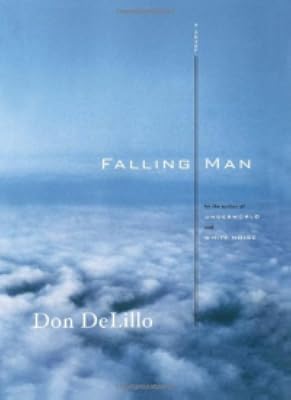
Falling Man: A Novel
by Don DeLillo
On This Page
Description
Escaping from the World Trade Center during the September 11 attacks, Keith Neudecker makes his way to the uptown apartment where his ex-wife and young son are living and considers how the day's events have irrevocably changed his perception of the world.Tags
Recommendations




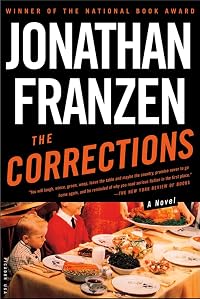
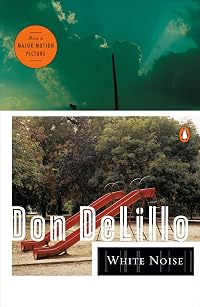
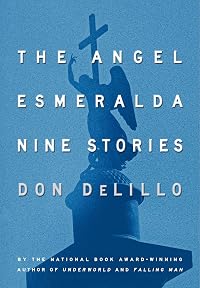
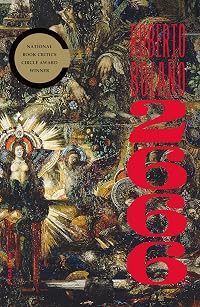




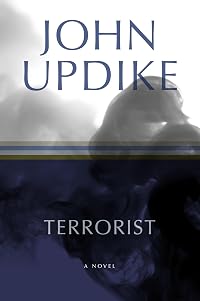
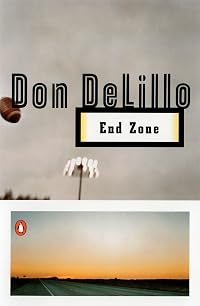

Member Recommendations

Member Reviews
Where were you when 9-11 happened? What if you were in New York City, near the Twin Towers? In the moment the the planes hit, or the towers fell, did you know what was happening, or why, or by or to whom? Probably it was chaos—and that’s exactly the feeling you get when you read Falling Man. Delillo is considered a master writer and has the credentials to back that up (National Book Award, Pen/Faulkner Award, Underworld was named one of the three best novels of the last 25 years by NYTBR). The reason you may not keep track of who the characters are or what they’re doing is that DeLillo doesn’t really want you to. The Falling Man of the novel is a performance artist in New York who dangles, suspended in the air. Yet he could be show more anyone, including Keith—who walks away from the Twin Towers after they fall, his estranged wife Lianne, who struggles to understand the new version of Keith who walks back into her life, or their young son Justin, who with his friends continuously scan the skies waiting for more planes to arrive. DeLillo’s skill as a writer keeps you off balance, unsure, and struggling to find reason. You might come away with more questions than answers, but ultimately you know something of profound importance has just occurred. show less
Delillo's method of writing in Falling Man is deliberately fragmented, in time and in place. It is worried, confused and unreal - despite its premise lying in a harsh reality outside of fiction - and Delillo's prose conjures up a detached experience of events. He forms vignettes of narrative and character thought, heavier than I found in White Noise - which takes some effort by the reader - but the overall effect, once past the intense climax, makes it more than worthwhile. The horrifying image of the falling man is the ghost that haunts this novel.
"These are the days after. Everything now is measured by after."
'Falling Man' opens with its 'hero' stumbling away from ground zero through the wreckage, the smoke and ash of the burning twin towers of 9/11. The novel looks to trace the aftermath of that day, a day that irrevocably altered the perceptions of not just one city but a whole country if not the world. “This was the world now.”
'Falling Man' is relatively plotless and is arranged somewhat conceptual in how it was written. The novel is divided into three parts between which are placed interchapters.
There is no paranoid tracing of the reasons behind the attack but instead focuses instead on one fractured family that lived through it. The husband, Keith, survived the attacks show more despite actually having been in the World Trade Centre at the time; he walks from ground zero all the way to the home of his estranged wife Lianne. This brings them back together in a fashion. DeLillo also dwells on Lianne’s relationship with her art-historian mother; she has had a long affair with a European art dealer who may—or may not—have been involved in terrorism in Germany during the 1970s. At intervals, we hear about a mysterious performance artist called the Falling Man, who perilously re-enacts in public spaces the plunge of those who leapt from the burning Towers.
While there are a few arguments about the nature of Islam and America, DeLillo deliberately avoids any discussion of politics, there is no mention of Bush, Cheney, Bin Laden or geopolitical strategy. In the last section of the novel, set years after the attacks, Lianne and Justin do attend an anti-war protest, but they are soon bored by the demonstration and go into a bookstore instead. DeLillo’s point, seems to be to somehow characterize religious fundamentalism as little more than a performance art played out on a global stage; the titular Falling Man as good as kills himself through devotion to his dangerous art.
"God would consume her. God would de-create her and she was too small and tame to resist. That was why she was resisting now. Because think about it. Because once you believe such a thing, God is, then how can you escape, how survive the power of it, is and was and ever shall be."
I had a few serious issues with this novel. The supposed hero, Keith, is a blank and a bore whilst his mistress, Florence, has even less existence. She seems to be just a plot device to evoke a sympathy and pathos for their co-workers who died in the attack. Only the sections that feature Lianne, her family and her encounters with the Falling Man felt really alive.
'Falling Man' would be better if shorter and I'm not totally convinced that it needed to be about a literal 9/11 survivor. This is an interesting read but not an unqualified success IMHO. show less
'Falling Man' opens with its 'hero' stumbling away from ground zero through the wreckage, the smoke and ash of the burning twin towers of 9/11. The novel looks to trace the aftermath of that day, a day that irrevocably altered the perceptions of not just one city but a whole country if not the world. “This was the world now.”
'Falling Man' is relatively plotless and is arranged somewhat conceptual in how it was written. The novel is divided into three parts between which are placed interchapters.
There is no paranoid tracing of the reasons behind the attack but instead focuses instead on one fractured family that lived through it. The husband, Keith, survived the attacks show more despite actually having been in the World Trade Centre at the time; he walks from ground zero all the way to the home of his estranged wife Lianne. This brings them back together in a fashion. DeLillo also dwells on Lianne’s relationship with her art-historian mother; she has had a long affair with a European art dealer who may—or may not—have been involved in terrorism in Germany during the 1970s. At intervals, we hear about a mysterious performance artist called the Falling Man, who perilously re-enacts in public spaces the plunge of those who leapt from the burning Towers.
While there are a few arguments about the nature of Islam and America, DeLillo deliberately avoids any discussion of politics, there is no mention of Bush, Cheney, Bin Laden or geopolitical strategy. In the last section of the novel, set years after the attacks, Lianne and Justin do attend an anti-war protest, but they are soon bored by the demonstration and go into a bookstore instead. DeLillo’s point, seems to be to somehow characterize religious fundamentalism as little more than a performance art played out on a global stage; the titular Falling Man as good as kills himself through devotion to his dangerous art.
"God would consume her. God would de-create her and she was too small and tame to resist. That was why she was resisting now. Because think about it. Because once you believe such a thing, God is, then how can you escape, how survive the power of it, is and was and ever shall be."
I had a few serious issues with this novel. The supposed hero, Keith, is a blank and a bore whilst his mistress, Florence, has even less existence. She seems to be just a plot device to evoke a sympathy and pathos for their co-workers who died in the attack. Only the sections that feature Lianne, her family and her encounters with the Falling Man felt really alive.
'Falling Man' would be better if shorter and I'm not totally convinced that it needed to be about a literal 9/11 survivor. This is an interesting read but not an unqualified success IMHO. show less
One of the most fascinating comments on 9/11 that I've come across is Laurie Anderson’s album Live In New York. It’s recorded in September 2001, just over a week after the event, and she’s on stage performing a set of songs – written years or even decades earlier – dealing with paranoia, dogmatism, survival. And of course the centrepiece is an unusually emotional and cathartic version of her 1981 single "O Superman":
This is the hand, the hand that takes.
Here come the planes.
They're American planes. Made in America.
Smoking or non-smoking?
And the voice said: Neither snow nor rain nor gloom
of night shall stay these couriers from the swift
completion of their appointed rounds.
'Cause when love is gone, there's always justice.
And show more when justice is gone, there's always force.
9/11 is obviously a huge trauma which needs to be addressed in fiction, but so far just about every one of my favourite authors who has tried to tackle it has ended up writing around it; Auster’s Brooklyn Follies, Rushdie’s Shalimar The Clown, Gibson’s Spook Country, McEwan’s Saturday, Pynchon’s Against The Day... surely it can’t be too big a subject? Surely the absence of two towers can’t only be tackled by leaving them out of the story? While some writers have done great work in a post-9/11 world, I think the only completely successful and meaningful novel I’ve read about the event itself and its fallout has been youngster Jonathan Safran Foer’s Extremely Loud And Incredibly Close.
DeLillo should be the ideal writer to deal with it. As someone put it, he’s been writing 9/11 novels for decades; Mao II, Underworld, White Noise... if anyone can take a huge event and the underlying tendencies in society surrounding it and turn it into a novel, it should be him. Yet I’m not completely sure he manages as well as I had hoped - and all of this review should be read with the knowledge that I consider Underworld and White Noise to be absolute masterpieces and I expect nothing less.
Falling Man gets off to a great start, a dazed, shell-shocked account of the minutes and days immediately following the attack itself, focused on estranged spouses Keith and Lianne as they both try to piece their life back together (and their life together back together). The disjointed scenes, the out-of-focus dialogue, the sketchy and quickly-abandoned scenes from ground zero all serve to highlight the way the attack not only destroyed lives and buildings, but shocked people to their very core – nicely tied in to Lianne’s work with Alzheimer’s patients trying to hold on to a Self that’s being eroded away.
But at some point, it feels like the shell shock wears out its welcome and we’re going to have to get to know the characters – and to me, at least, that’s where the novel stumbles. There are bits that have me fearing that someone’s going to try to film this with Sandra Bullock and Matt Dillon as Lianne and Keith. He, especially, largely remains a mystery, and not even a very interesting one. While his development later in the novel makes sense from a symbolic perspective (the illusion of being in control of your fate; “Call or raise, call or fold, the little binary pulse located behind the eyes, the choice that reminds you who you are. It belonged to him, this yes or no, not to a horse running in the mud somewhere in New Jersey”) I don't think it does from a narrative point of view. The rather abrupt skip forward in time, the plot lines that show up here and there but never really have time to develop... it feels a bit like a fragment of a longer novel rather than a complete work in its own right, and as chillingly poignant as he can be at times, the novel remains curiously (for DeLillo) locked inside itself, if you catch my drift; it rarely makes those huge vertical leaps (sorry, sorry) through the layers of society, from religion to politics to popular music etc, that he usually does so well. (Remember the Elvis=Hitler discussion in White Noise?) The details are often great, there’s tons of great observations – the aforementioned paranoia that has people Lianne hitting a woman for playing Arabic music and little kids looking for this Bill Lawton character, for instance – but I’m not sure it quite ties together into a whole. It’s as if the terrorist’s quote
They felt things together, he and his brothers. They felt the claim of danger and isolation. They felt the magnetic effect of plot. Plot drew them together more tightly than ever. Plot closed the world to the slenderest line of sight, where everything converges to a point. There was the claim of fate, that they were born to do this.
is somehow a theme for the whole novel; everyone is tied together in a plot, but we don’t need to see the whole plot in linear fashion, we don’t get a fixed script telling us how to live and die - in a world of wars and dogmatism, thinking we've seen through it all and that we’re the heroes of the whole piece is the last thing we need. And while that’s an admirable point, using it as a literary technique doesn't work entirely in this case.
Which sort of brings us to the (slightly underused) falling man himself, the performance artist turning up here and there to hang in the air like a never answered question mark, always arrested but never explaining his motivations, just suspended somewhere between take-off and landing, available for whatever interpretations you want to hang on him... like a gravity’s angel, if you will. (Yes, I’m all about the obscure Laurie Anderson references today.) Lianne refers to him as a fallen angel – here’s a bit of religious symbolism turned upside-down, methinks: it’s all very easy to shoot the messenger, blame the fallen angel/Satan/The Great Satan, yet the world is made of people and we’re the ones actually doing anything. Again; Falling Man is great at symbolism, great at metaphor, perhaps not so great at actually drawing characters and telling their story. As if DeLillo got just a little too caught up in Saying Something about his big subject (which can also lead to rather hokey lines such as the one about children not needing white crayons since they have white paper).
The ending is stunning, though, even more so than the beginning. He takes the B plot that’s been popping up here and there and fuses it with the main one in one of the most incredible scene shifts I’ve read – I went back and read the last few pages at least three times. Let X = X. He almost – almost – brings it all together, the symbolism of the attack and the reality of the people affected by it.
'Cause when love is gone, there's always justice.
And when justice is gone, there's always force.
And when force is gone, there’s always... Mom. Hi, Mom! show less
This is the hand, the hand that takes.
Here come the planes.
They're American planes. Made in America.
Smoking or non-smoking?
And the voice said: Neither snow nor rain nor gloom
of night shall stay these couriers from the swift
completion of their appointed rounds.
'Cause when love is gone, there's always justice.
And show more when justice is gone, there's always force.
9/11 is obviously a huge trauma which needs to be addressed in fiction, but so far just about every one of my favourite authors who has tried to tackle it has ended up writing around it; Auster’s Brooklyn Follies, Rushdie’s Shalimar The Clown, Gibson’s Spook Country, McEwan’s Saturday, Pynchon’s Against The Day... surely it can’t be too big a subject? Surely the absence of two towers can’t only be tackled by leaving them out of the story? While some writers have done great work in a post-9/11 world, I think the only completely successful and meaningful novel I’ve read about the event itself and its fallout has been youngster Jonathan Safran Foer’s Extremely Loud And Incredibly Close.
DeLillo should be the ideal writer to deal with it. As someone put it, he’s been writing 9/11 novels for decades; Mao II, Underworld, White Noise... if anyone can take a huge event and the underlying tendencies in society surrounding it and turn it into a novel, it should be him. Yet I’m not completely sure he manages as well as I had hoped - and all of this review should be read with the knowledge that I consider Underworld and White Noise to be absolute masterpieces and I expect nothing less.
Falling Man gets off to a great start, a dazed, shell-shocked account of the minutes and days immediately following the attack itself, focused on estranged spouses Keith and Lianne as they both try to piece their life back together (and their life together back together). The disjointed scenes, the out-of-focus dialogue, the sketchy and quickly-abandoned scenes from ground zero all serve to highlight the way the attack not only destroyed lives and buildings, but shocked people to their very core – nicely tied in to Lianne’s work with Alzheimer’s patients trying to hold on to a Self that’s being eroded away.
But at some point, it feels like the shell shock wears out its welcome and we’re going to have to get to know the characters – and to me, at least, that’s where the novel stumbles. There are bits that have me fearing that someone’s going to try to film this with Sandra Bullock and Matt Dillon as Lianne and Keith. He, especially, largely remains a mystery, and not even a very interesting one. While his development later in the novel makes sense from a symbolic perspective (the illusion of being in control of your fate; “Call or raise, call or fold, the little binary pulse located behind the eyes, the choice that reminds you who you are. It belonged to him, this yes or no, not to a horse running in the mud somewhere in New Jersey”) I don't think it does from a narrative point of view. The rather abrupt skip forward in time, the plot lines that show up here and there but never really have time to develop... it feels a bit like a fragment of a longer novel rather than a complete work in its own right, and as chillingly poignant as he can be at times, the novel remains curiously (for DeLillo) locked inside itself, if you catch my drift; it rarely makes those huge vertical leaps (sorry, sorry) through the layers of society, from religion to politics to popular music etc, that he usually does so well. (Remember the Elvis=Hitler discussion in White Noise?) The details are often great, there’s tons of great observations – the aforementioned paranoia that has people Lianne hitting a woman for playing Arabic music and little kids looking for this Bill Lawton character, for instance – but I’m not sure it quite ties together into a whole. It’s as if the terrorist’s quote
They felt things together, he and his brothers. They felt the claim of danger and isolation. They felt the magnetic effect of plot. Plot drew them together more tightly than ever. Plot closed the world to the slenderest line of sight, where everything converges to a point. There was the claim of fate, that they were born to do this.
is somehow a theme for the whole novel; everyone is tied together in a plot, but we don’t need to see the whole plot in linear fashion, we don’t get a fixed script telling us how to live and die - in a world of wars and dogmatism, thinking we've seen through it all and that we’re the heroes of the whole piece is the last thing we need. And while that’s an admirable point, using it as a literary technique doesn't work entirely in this case.
Which sort of brings us to the (slightly underused) falling man himself, the performance artist turning up here and there to hang in the air like a never answered question mark, always arrested but never explaining his motivations, just suspended somewhere between take-off and landing, available for whatever interpretations you want to hang on him... like a gravity’s angel, if you will. (Yes, I’m all about the obscure Laurie Anderson references today.) Lianne refers to him as a fallen angel – here’s a bit of religious symbolism turned upside-down, methinks: it’s all very easy to shoot the messenger, blame the fallen angel/Satan/The Great Satan, yet the world is made of people and we’re the ones actually doing anything. Again; Falling Man is great at symbolism, great at metaphor, perhaps not so great at actually drawing characters and telling their story. As if DeLillo got just a little too caught up in Saying Something about his big subject (which can also lead to rather hokey lines such as the one about children not needing white crayons since they have white paper).
The ending is stunning, though, even more so than the beginning. He takes the B plot that’s been popping up here and there and fuses it with the main one in one of the most incredible scene shifts I’ve read – I went back and read the last few pages at least three times. Let X = X. He almost – almost – brings it all together, the symbolism of the attack and the reality of the people affected by it.
'Cause when love is gone, there's always justice.
And when justice is gone, there's always force.
And when force is gone, there’s always... Mom. Hi, Mom! show less
This was never going to be an easy book to read - much less to review. There is always going to be something discomforting involved in the creative act when is focus is that terrible day in September 2001. There is no room for fluff, lightness, sweetness here. As Picasso indelibly reminded us with his Guernica , war is so not conveyed in comfortable aethetics. Jonathan Safran Foer had the same issue as he wrote his 9/11 tribute, Extremely Loud and Incredibly Close. A pastoral eulogy just isn't going to work, here.
So DeLillo (and to be fair I have not previoulsy read him) sets out for fragmentation and alienation. This is "The Wasteland", not "In Memoriam". There is here no neat and tidy closure, not even a carefully delineated timeline. show more Shit, when it happens to be writ large, leaves no such aesthetic. It leaves broken, bewildered, dysfunctional lives, unanswered questions, an anti-aesthetic. DeLillo captures all of that.
Which makes for one of those anti-delight experiences. There is somewhere a cutting snarl by a literary critic about 'a novel I couldn't wait to put down'. Falling Man is that. This is no Georgette Heyer historical romance or P.G. Wodehouse escapism. This is a novel about events that are still sandpapering the DNA of a nation and a generation. For most of us 9/11 is now our JFK moment, so that we know exactly where we were when first we encountered 'the horror'. But this novel is not about those of us who stood glued despondently to our TV sets. This is about those who clawed their way from the ash cloud, out into a world whose rules and parameters had irrevocably changed. Sure, I couldn't wait to put this novel down, but equally surely I knew that if I put it down just because I couldn't face the tortured fragmentation, the Picasso-esque alienation, then I, not DeLillo, was the poorer for it.
This is a brutally discomforting novel - in the end victim and perpetrator merge in an inseparable blur. There are no tidy narratives, no clear characterizations, no sweet conversations, no comfortable endings. That is because great writing captures realities, and in the merd-saturated realities of 9/11 and its on-going legacy there is only putrid dust and tumult reverberating around the globe and its human societies. show less
So DeLillo (and to be fair I have not previoulsy read him) sets out for fragmentation and alienation. This is "The Wasteland", not "In Memoriam". There is here no neat and tidy closure, not even a carefully delineated timeline. show more Shit, when it happens to be writ large, leaves no such aesthetic. It leaves broken, bewildered, dysfunctional lives, unanswered questions, an anti-aesthetic. DeLillo captures all of that.
Which makes for one of those anti-delight experiences. There is somewhere a cutting snarl by a literary critic about 'a novel I couldn't wait to put down'. Falling Man is that. This is no Georgette Heyer historical romance or P.G. Wodehouse escapism. This is a novel about events that are still sandpapering the DNA of a nation and a generation. For most of us 9/11 is now our JFK moment, so that we know exactly where we were when first we encountered 'the horror'. But this novel is not about those of us who stood glued despondently to our TV sets. This is about those who clawed their way from the ash cloud, out into a world whose rules and parameters had irrevocably changed. Sure, I couldn't wait to put this novel down, but equally surely I knew that if I put it down just because I couldn't face the tortured fragmentation, the Picasso-esque alienation, then I, not DeLillo, was the poorer for it.
This is a brutally discomforting novel - in the end victim and perpetrator merge in an inseparable blur. There are no tidy narratives, no clear characterizations, no sweet conversations, no comfortable endings. That is because great writing captures realities, and in the merd-saturated realities of 9/11 and its on-going legacy there is only putrid dust and tumult reverberating around the globe and its human societies. show less
I'm giving this 3 stars because I'm not really sure what I think of it yet.
Almost 14 years on, & this is the first work of art exploring September 11 that I've been able to approach. And maybe my ambivalence about this book means that it's still too soon.
(Scratch that - this is technically the 2nd, the first being The Garden of Last Days. But that is set in FLA the weekend before the event, & highly fictionalized. This takes place in the thick of things, using Mohammed Atta's real name, & referring to the Falling Man photo.)
I think DeLillo captures the state of living for most New Yorkers after the event: the prolonged shock, the bewilderment, the cautious patience as one settled into life afterwards, whatever that meant for your show more particular circumstances. And I think his checking in with the main characters 3 years on, to see that, emotionally, things are much the same as they were in the days & weeks afterwards, is authentic, particularly for those directly impacted. As always, DeLillo's prose is artful & revealing. So what holds me back from rating this higher?
I think it's the detachment itself. The main characters, Lianne & Keith, put their failing marriage back together when Keith shows up after evacuating from the WTC. But there is so much left undone & unsaid between them. When Keith shows up home, Lianne sees he's covered in blood. She realizes it isn't his - he isn't hurt that bad to account for that much blood. In the last few pages, we find out whose blood it is. And it's pretty clear that he's never told anyone whose blood it is. And it's unbearable to think that 3 years on, he hasn't unburdened himself. He makes a life playing poker, & she spends her time with Alzheimer's patients fighting off the early stages. Why aren't they talking?
The chasm between the survivors and the rest of the world feels as deep as the crater left by the fall of the towers. Perhaps this is the source of my discomfort reading this: I can see Keith, I know he's not okay, I want to connect to him, to hold out a hand. But I can't reach him. All the other stuff DeLillo fills the rest of the story with is just noise. Nothing else really matters, just what happened that day, in those moments. Yet no one is really prepared to deal with it, & we the observers, no matter how well-intentioned, can't touch it.
I'm sure I'll live with this story for some time, & work through different emotions with it. It may just be too much to take in at once. show less
Almost 14 years on, & this is the first work of art exploring September 11 that I've been able to approach. And maybe my ambivalence about this book means that it's still too soon.
(Scratch that - this is technically the 2nd, the first being The Garden of Last Days. But that is set in FLA the weekend before the event, & highly fictionalized. This takes place in the thick of things, using Mohammed Atta's real name, & referring to the Falling Man photo.)
I think DeLillo captures the state of living for most New Yorkers after the event: the prolonged shock, the bewilderment, the cautious patience as one settled into life afterwards, whatever that meant for your show more particular circumstances. And I think his checking in with the main characters 3 years on, to see that, emotionally, things are much the same as they were in the days & weeks afterwards, is authentic, particularly for those directly impacted. As always, DeLillo's prose is artful & revealing. So what holds me back from rating this higher?
I think it's the detachment itself. The main characters, Lianne & Keith, put their failing marriage back together when Keith shows up after evacuating from the WTC. But there is so much left undone & unsaid between them. When Keith shows up home, Lianne sees he's covered in blood. She realizes it isn't his - he isn't hurt that bad to account for that much blood. In the last few pages, we find out whose blood it is. And it's pretty clear that he's never told anyone whose blood it is. And it's unbearable to think that 3 years on, he hasn't unburdened himself. He makes a life playing poker, & she spends her time with Alzheimer's patients fighting off the early stages. Why aren't they talking?
The chasm between the survivors and the rest of the world feels as deep as the crater left by the fall of the towers. Perhaps this is the source of my discomfort reading this: I can see Keith, I know he's not okay, I want to connect to him, to hold out a hand. But I can't reach him. All the other stuff DeLillo fills the rest of the story with is just noise. Nothing else really matters, just what happened that day, in those moments. Yet no one is really prepared to deal with it, & we the observers, no matter how well-intentioned, can't touch it.
I'm sure I'll live with this story for some time, & work through different emotions with it. It may just be too much to take in at once. show less
Difficult, difficult, difficult. Reads oblique and milky and opaque, studded with some hard islands of fierce, sharp-eyed prose. Delillo dodges the obvious drama and easy, available sentiment (rage, sorrow, indignation, LITERATURE), and conjures up page after page of shock, numb, silly, ringing, and infinite. Some people (Michiko! Andrew!) did not like this! They did not like the stilted, disengaged, coldly analytical prose (admittedly, sometimes a little jarring and frustrating); and they did not like the lack of killer instinct. Falling Man in no ways tries to home in on the pulpy, beating heart of 9/11, and instead seems to skirt the edges. Also Things They Didn’t Love: the lack of any real skeleton. Again, Falling Man feels loose, show more anecdotes of Small Shit bobbing around around in the aftermath of a typhoon.
However! I think the lack of any truly solid, coherent narrative (jesus, THIS IS NOT A BACKHANDED COMPLIMENT. It just, uh, sounds like one.) is sort of deliberate! And also infinitely more honest and complex. We tell stories to make sense of things (hay Didion), but who can honestly make sense of 9/11 in all its dimensions? A few of the characters try, but their sparring arguments seem so sparse and brittle and obviously lacking. Also! The command immediately afterwards (hay, Bush) was to resume normality: to go shopping of all things. Delillo knows that, remembers that despite the heroic myth we’ve erected around the event, so much more of what happened that morning was this utterly lost, alienated fumbling.
And Falling Man is that, that feeling of limbo after disaster: that moment of dust rising, debris settling. It’s not the 9/11 novel we want - there’s so little heroism, so much pettiness, so much self-absorption - but it’s the one we’re going to get.
PS: Not without fault though; some of Delillo’s old tricks verge on parody here which, uh, NO GOOD. The usual sharpness of his parody and humor gets blunted by the sheer magnitude of the event he tries to describe. show less
However! I think the lack of any truly solid, coherent narrative (jesus, THIS IS NOT A BACKHANDED COMPLIMENT. It just, uh, sounds like one.) is sort of deliberate! And also infinitely more honest and complex. We tell stories to make sense of things (hay Didion), but who can honestly make sense of 9/11 in all its dimensions? A few of the characters try, but their sparring arguments seem so sparse and brittle and obviously lacking. Also! The command immediately afterwards (hay, Bush) was to resume normality: to go shopping of all things. Delillo knows that, remembers that despite the heroic myth we’ve erected around the event, so much more of what happened that morning was this utterly lost, alienated fumbling.
And Falling Man is that, that feeling of limbo after disaster: that moment of dust rising, debris settling. It’s not the 9/11 novel we want - there’s so little heroism, so much pettiness, so much self-absorption - but it’s the one we’re going to get.
PS: Not without fault though; some of Delillo’s old tricks verge on parody here which, uh, NO GOOD. The usual sharpness of his parody and humor gets blunted by the sheer magnitude of the event he tries to describe. show less
Members
- Recently Added By
Published Reviews
"L'homme qui tombe" donne le vertige. La lecture n'est pas toujours facile d'accès. DeLillo déstructure son écriture, symbolise la chute et n'apporte aucune réponse à cette confusion. Il aime juste jouer avec notre centre de gravité.
added by LaLibraire
Lists

1001 Books You Must Read Before You Die
1,448 works; 1,137 members

September 11, 2001
19 works; 4 members

Don DeLillo books
19 works; 1 member

Great American Novels
158 works; 42 members
Author Information

54+ Works 49,121 Members
Don DeLillo was born in the Bronx, New York on November 20, 1936. He received a bachelor's degree in communication arts from Fordham University in 1958. After graduation, he was a copywriter for an advertising company and wrote short stories on the side. His first story, The River Jordan, was published two years later in Epoch, the literary show more magazine of Cornell University. His first novel, Americana, was published in 1971. His other works include Ratner's Star, The Names, Libra, Underworld, The Body Artist, Cosmopolis, Falling Man, Point Omega, and The Angel Esmeralda, a collection of short stories. He won several awards including the National Book Award for fiction in 1985 for White Noise, the PEN/Faulkner Award in 1992 for Mao II, the PEN/Saul Bellow Award for Achievement in American Fiction in 2010, and the inaugural Library of Congress Prize for American Fiction in 2013. (Bowker Author Biography) show less
Some Editions
Awards and Honors
Awards
Distinctions
Series
Belongs to Publisher Series
Common Knowledge
- Canonical title*
- L'Homme qui tombe
- Original title
- Falling Man
- Original publication date
- 2007
- People/Characters
- Michael Majeski; Keith Neudecker; Livia Majeski; Lianne Glenn; Delfina Treadwell; Justin Neudecker (show all 10); Teddy Hodell; Nina Bartos; Martin Ridnour [a.k.a. Ernest Hechinger]; Forence Givens
- Important places
- New York, New York, USA
- Important events
- September 11 Attacks
- Dedication
- To Frank Lentricchia
- First words
- It was not a street anymore but a world, a time and space of falling ash and near night. He was walking through rubble and mud and there were people running past holding towels to their faces or jackets over their heads. They... (show all) had handkerchiefs pressed to their mouths. They had shoes in their hands, a woman with a shoe in each hand, running past him. They ran and fell, some of them. confused and ungainly, with debris coming down around then, and there were people taking shelter under cars. -Chapter 1
- Quotations
- There was one final thing, too self-evident to need saying. She wanted to be safe in the world and he did not.
She was pale and thin, her mother, following knee-replacement surgery. She was finally and resolutely old. This is what she wanted, it seemed, to be old and tired, to embrace old age, take up old age, surround herself with it... (show all). There were the canes, there were the medications, there were the afternoon naps, the dietary restrictions, the doctors' appointments.
She knew there was no conflict between science and God. Take one with the other. But she didn't want to. There were the scholars and philosophers she'd studied in school, books she'd read as thrilling dispatches, personal, ma... (show all)king her shake at times, and there was the sacred art she'd always loved. Doubters created this work, and ardent believers, and those who'd doubted and then believed, and she was free to think and doubt and believe simultaneously. But she didn't want to. God would crowd her, make her weaker. God would be a presence that remained unimaginable. She wanted this only, to snuff out the pulse of the shaky faith she'd held for much of her life.
“But that's why you built the towers, isn't it? Weren't the towers built as fantasies of wealth and power that would one day become fantasies of destruction? You build a thing like that so you can see it come down. The prov... (show all)ocation is obvious. What other reason would there be to go so high and then to double it, do it twice? It's a fantasy, so why not do it twice? You are saying, Here it is, bring it down.” Then he opened the door and was gone.
The afternoon was fading away, over coffee. Then Martin said, “We're all sick of America and Americans. The subject nauseates us.” ... “For all the careless power of this country, let me say this, for all the danger it ... (show all)makes in the world, America is going to become irrelevant. Do you believe this?” ... We are all beginning to have this thought, of American irrelevance. It's a little like telepathy. Soon the day is coming when nobody has to think about America except for the danger it brings. It is losing the center. It becomes the center of its own shit. This is the only center it occupies.”
“If we occupy the center, it's because you put us there. This is your true dilemma,” he said. “Despite everything, we're still America, you're still Europe. You go to our movies, read our books, listen to our music, spe... (show all)ak our language. How can you stop thinking about us? You see us and hear us all the time. Ask yourself. What comes after America?” Martin spoke quietly, almost idly, to himself. “I don't know this America anymore. I don't recognize it,” he said. “There's an empty space where America used to be.”
She had normal morphology. She loved that word. But what's inside the form and structure? This mind and soul, hers and everyone's, keep dreaming toward something unreachable. Does this mean there's something there, at the lim... (show all)its of matter and energy, a force responsible in some way for the very nature, the vibrancy of our lives from the mind out, the mind in little pigeon blinks that extend the plane of being, out beyond logic and intuition. She wanted to disbelieve. She was an infidel in current geopolitical parlance. She remembered how her father, how Jack's face went bright and hot, appearing to buzz with electric current after a - Last words
- (Click to show. Warning: May contain spoilers.)He walked and saw it fall, arms waving like nothing in this life.
- Publisher's editor*
- Vacher, Marie-Catherine (Directeur de série)
- Original language
- English
- Canonical DDC/MDS
- 813.54
- Canonical LCC
- PS3554.E4425
*Some information comes from Common Knowledge in other languages. Click "Edit" for more information.
Classifications
Statistics
- Members
- 3,108
- Popularity
- 5,697
- Reviews
- 98
- Rating
- (3.23)
- Languages
- 14 — Catalan, Czech, Danish, Dutch, English, Finnish, French, German, Italian, Norwegian (Bokmål), Portuguese, Serbian, Spanish, Swedish
- Media
- Paper, Audiobook, Ebook
- ISBNs
- 63
- ASINs
- 11