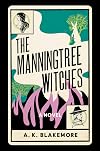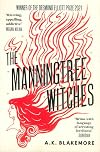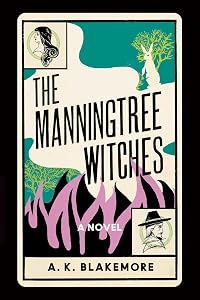
The Manningtree Witches
by A. K. Blakemore
On This Page
Description
England, 1643. Puritanical fervor has gripped the nation. And in Manningtree, a town depleted of men since the wars began, the hot terror of damnation burns in the hearts of women left to their own devices. Rebecca West, fatherless and husbandless, chafes against the drudgery of her days, livened only occasionally by her infatuation with the handsome young clerk John Edes. But then a newcomer, who identifies himself as the Witchfinder General, arrives. A mysterious, pious figure dressed from show more head to toe in black, Matthew Hopkins takes over the Thorn Inn and begins to ask questions about what the women on the margins of this diminished community are up to. Dangerous rumors of covens, pacts, and bodily wants have begun to hang over women like Rebecca-and the future is as frightening as it is thrilling. Brimming with contemporary energy and resonance, The Manningtree Witches plunges its listeners into the fever and menace of the English witch trials, where suspicion, mistrust, and betrayal run amok as a nation's arrogant male institutions start to realize that the very people they've suppressed for so long may be about to rise up and claim their freedom. show lessTags
Recommendations














Member Recommendations
by anonymous user
Member Reviews
How do you take a real live nutbag from English history - Matthew Hopkins, 'Witchfinder General' - and write a story about the equally non-fictional women he killed for being 'evil' while somehow sucking all the emotion and empathy out of the characters? A K Blakemore would suggest that you throw ye olde thesaurus at the project, using ten flowery words where one will suffice, alternate between pseudo-period dialogue - 'Sirrah!' is a good word, even if you're not sure when to use the term - and modern phrases ('shits and giggles'?), and then strip your main character and narrator of any agency. Three hundred pages and my will to live later, I survived the experiment.
I really do want to learn more about Matthew Hopkins and the 'Witch show more Craze' of the Civil War era - I've also downloaded Ronald Bassett's classic novel - but this version didn't help in any way. When I could actually keep awake, I just didn't care about Rebecca or any of the other characters - apart from maybe the poor cat (stop using animal abuse for dramatic shorthand!) What does Rebecca do, when she is accused of being a witch, along with her mother and all the other impoverished women of Manningtree? Nothing. A chance to sleep with the tutor she fancies? Great! Sell her mother down river and move in with Hopkins? Why not! She comes across as sly and smug rather than intelligent and independent and I wanted her to hang with the rest of them by the end of the novel.
Far too sluggish and erratic to hold my attention, but the subject has definitely piqued my interest - onto better books (hopefully)! show less
I really do want to learn more about Matthew Hopkins and the 'Witch show more Craze' of the Civil War era - I've also downloaded Ronald Bassett's classic novel - but this version didn't help in any way. When I could actually keep awake, I just didn't care about Rebecca or any of the other characters - apart from maybe the poor cat (stop using animal abuse for dramatic shorthand!) What does Rebecca do, when she is accused of being a witch, along with her mother and all the other impoverished women of Manningtree? Nothing. A chance to sleep with the tutor she fancies? Great! Sell her mother down river and move in with Hopkins? Why not! She comes across as sly and smug rather than intelligent and independent and I wanted her to hang with the rest of them by the end of the novel.
Far too sluggish and erratic to hold my attention, but the subject has definitely piqued my interest - onto better books (hopefully)! show less
As the country is riven by Civil War, the people of Mannintree get on with their lives. Many women are widowed and those who are married are fearful of them, to the extent that witchcraft is a common accusation. Into this comes Matthew Hopkins, an austere Puritan, who becomes a self-styled Witchfinder and takes up several women in the village. Rebecca West is one of them, attractive and intelligent but the daughter of an outspoken widow who does not help her cause.
I loved this book! It is a more feminist slant on the witchcraft purge in East Anglia in the mid-1640s with a feisty protagonist and a focus on the unbelievable (to our modern eyes) accusations. The sexual tension is realistic and the horrors of incarceration and hanging are show more described with both detail and also a light touch. show less
I loved this book! It is a more feminist slant on the witchcraft purge in East Anglia in the mid-1640s with a feisty protagonist and a focus on the unbelievable (to our modern eyes) accusations. The sexual tension is realistic and the horrors of incarceration and hanging are show more described with both detail and also a light touch. show less
Set in the 1640, during England's Civil War, A.K. Blakemore's The Manningtree Witches is, without a doubt, the most perceptive, most beautifully written novel exploring witch trials that I've read. While not a huge genre, there definitely is a core body of witch trial novels and Blakemore's novel rises above all of them.
Why?
• It's historically informed, drawing on trial transcripts, legal documents, and other writing from that period. The characters based on historical figures appear to be true to their lives as documented in the historical record.
• The language it's written in is historically appropriate and downright beautiful, without heavy-handed pretensions.
• While modern readers can identify with Rebecca, the central show more character, she hasn't been turned into a present-day everywoman. Blakemore creates her as a woman of her time.
• It isn't a clear cut, good guys/bad guys novel. Some characters are more sympathetic than others, but none of them are the sort of self-assured caricatures that often populate with trial fiction. Even the characters we hate because of their certainty have occasional doubts.
• The novel allows readers to reflect on their own time, but never lets them forget that their time and the time of the novel are substantially different.
I received a free electronic review copy of this title from the publisher; the opinions are my own. show less
Why?
• It's historically informed, drawing on trial transcripts, legal documents, and other writing from that period. The characters based on historical figures appear to be true to their lives as documented in the historical record.
• The language it's written in is historically appropriate and downright beautiful, without heavy-handed pretensions.
• While modern readers can identify with Rebecca, the central show more character, she hasn't been turned into a present-day everywoman. Blakemore creates her as a woman of her time.
• It isn't a clear cut, good guys/bad guys novel. Some characters are more sympathetic than others, but none of them are the sort of self-assured caricatures that often populate with trial fiction. Even the characters we hate because of their certainty have occasional doubts.
• The novel allows readers to reflect on their own time, but never lets them forget that their time and the time of the novel are substantially different.
I received a free electronic review copy of this title from the publisher; the opinions are my own. show less
It is 1643 and Britain is ravaged by the Civil War. In the Suffolk town of Manningtree most of the men have been called away to fight for the Parliamentarian forces. Rebecca West lives in the town in squalid conditions with her widowed mother, the hot-tempered and saucy Beldam West. Rebecca and her mother scape a living, as do other households of women, caring for the sick, acting as midwives and indulging in harmless gossip. Then, into town comes Hopkins, the self-styled Witchfinder and the innocent activities of the women become viewed with suspicion and the religious fervour of the Puritans leads to disaster.
I really liked this book and the only reason that I haven't given in 5 stars is that one of the strong points (the rich show more language and use of 17th century idiom), was sometimes too overpowering. There were big sections where I had to go back and read again in order to catch the real significance of what was being said. Other than that, this was a fine book. Blakemore is primarily a poet and this came through very strongly in the novel, as her descriptions of the scenes were so richly phrased that I was fully drawn in to the action. The story was dark, but there were moments of surprising humour and the plot did not follow the expected path. A good read. show less
I really liked this book and the only reason that I haven't given in 5 stars is that one of the strong points (the rich show more language and use of 17th century idiom), was sometimes too overpowering. There were big sections where I had to go back and read again in order to catch the real significance of what was being said. Other than that, this was a fine book. Blakemore is primarily a poet and this came through very strongly in the novel, as her descriptions of the scenes were so richly phrased that I was fully drawn in to the action. The story was dark, but there were moments of surprising humour and the plot did not follow the expected path. A good read. show less
This was a book I have been wanting to read since my friends in the Mookse group tipped it for some of last year's prize lists - it also won the Desmond Elliott Prize for first novels. It is not Blakemore's first book, because she was already a published poet.
The book tells the story of the witch trials during the English Civil War through the story of a group of women in Manningtree. Most of the stranger elements are taken from historical records, but Blakemore makes it more personal by making its narrator a young woman Rebecca West, also a real person, whose mother was one of the victims and who was also suspected of witchcraft, but whose ultimate fate was not recorded. Apart from the victims, the other main character is the notorious show more Matthew Hopkins, self-styled Witchfinder General, who lived in the village.
Blakemore's command of the historical elements is impressive, and her story is engaging and well written. A fine debut. show less
The book tells the story of the witch trials during the English Civil War through the story of a group of women in Manningtree. Most of the stranger elements are taken from historical records, but Blakemore makes it more personal by making its narrator a young woman Rebecca West, also a real person, whose mother was one of the victims and who was also suspected of witchcraft, but whose ultimate fate was not recorded. Apart from the victims, the other main character is the notorious show more Matthew Hopkins, self-styled Witchfinder General, who lived in the village.
Blakemore's command of the historical elements is impressive, and her story is engaging and well written. A fine debut. show less
Wishlist | Blog | Facebook | Twitter | Instagram | Ko-fi
I had the amazing opportunity to participate in another instagram readalong – this time reading the Manningtree Witches by A.K. Blakemore with some amazing bookstagrammers. We even had a wonderful Q&A chat with the author once we finished the book. Huge thank you to the team at Tandem as well as the publisher, Granta Books, for sending me a copy of the book to read and review!
Synopsis:
England, 1643. Parliament is battling the King; the war between the Roundheads and the Cavaliers rages. Puritanical fervour has gripped the nation, and the hot terror of damnation burns black in every shadow.
In Manningtree, depleted of men since the wars began, the women are left to their own show more devices. At the margins of this diminished community are those who are barely tolerated by the affluent villagers – the old, the poor, the unmarried, the sharp-tongued. Rebecca West, daughter of the formidable Beldam West, fatherless and husbandless, chafes against the drudgery of her days, livened only by her infatuation with the clerk John Edes. But then newcomer Matthew Hopkins, a mysterious, pious figure dressed from head to toe in black, takes over The Thorn Inn and begins to ask questions about the women of the margins. When a child falls ill with a fever and starts to rave about covens and pacts, the questions take on a bladed edge.
My Thoughts:
As soon as I laid eyes on the cover and the synopsis, I knew I had to read it. And it didn’t disappoint at all. I just had to shift my expectations a little bit.
The Manningtree Witches is a book set in England in 1643, where witch hunters were quite popular and many women were killed after being accused of witchcraft. This book is actually inspired by true events that happened in history. The focus was more on the historical aspect and bringing life to the characters, rather than the supernatural elements.
We never get a full clarification whether Beldam West, her daughter Rebecca and the other women were actually witches, and we get a glimpse of their lives and their imprisonment. We get a front row seat of their feelings, and how this impacts them as well as the community. It was so interesting to also get a point of view from the perspective of the witch hunter. As the villain that he is, I loved getting to know his opinion on the situation and his reasoning.
“But if a witch can be in two places at once, as you say, then I cannot prove my innocence by those same means. Nor, it seems to me, by any other. I can say again and again, a thousand times, sir, that I am not a witch, and have no traffic with the Devil nor his spirits, and it will account for nothing. But if I say once that I am, then it will account for everything.”
The writing is very lyrical and also captures the old-style English. I had to refer to my dictionary a few times, which has now become a rare occasion. And I really enjoyed learning some new words. I’m looking at you – lucre, extemporise, gaol, interlocutor and bray! You can immediately notice the love the author has for poetry. It took me a while to get into it, but after 80 pages I started loving it.
There were times when I was confused about whose point of view I am currently reading about. This slightly interrupted my concentration, but the story was wonderful in terms of timeline and storytelling.
The only reason of my rating is because my expectations were different going into the book. My need for paranormal elements and a bit of witchcraft weren’t satisfied. However, putting my expectations aside, this book beautifully represents the reality of witch hunting and the struggles so many women had to endure during these times.
If you want to read a book about the witch hunting in history, The Manningtree Witches is a wonderful lyrical take on the events that happened in Manningtree. However, if you want a book that has more “witchy” elements – I would suggest you skip this one. show less
I had the amazing opportunity to participate in another instagram readalong – this time reading the Manningtree Witches by A.K. Blakemore with some amazing bookstagrammers. We even had a wonderful Q&A chat with the author once we finished the book. Huge thank you to the team at Tandem as well as the publisher, Granta Books, for sending me a copy of the book to read and review!
Synopsis:
England, 1643. Parliament is battling the King; the war between the Roundheads and the Cavaliers rages. Puritanical fervour has gripped the nation, and the hot terror of damnation burns black in every shadow.
In Manningtree, depleted of men since the wars began, the women are left to their own show more devices. At the margins of this diminished community are those who are barely tolerated by the affluent villagers – the old, the poor, the unmarried, the sharp-tongued. Rebecca West, daughter of the formidable Beldam West, fatherless and husbandless, chafes against the drudgery of her days, livened only by her infatuation with the clerk John Edes. But then newcomer Matthew Hopkins, a mysterious, pious figure dressed from head to toe in black, takes over The Thorn Inn and begins to ask questions about the women of the margins. When a child falls ill with a fever and starts to rave about covens and pacts, the questions take on a bladed edge.
My Thoughts:
As soon as I laid eyes on the cover and the synopsis, I knew I had to read it. And it didn’t disappoint at all. I just had to shift my expectations a little bit.
The Manningtree Witches is a book set in England in 1643, where witch hunters were quite popular and many women were killed after being accused of witchcraft. This book is actually inspired by true events that happened in history. The focus was more on the historical aspect and bringing life to the characters, rather than the supernatural elements.
We never get a full clarification whether Beldam West, her daughter Rebecca and the other women were actually witches, and we get a glimpse of their lives and their imprisonment. We get a front row seat of their feelings, and how this impacts them as well as the community. It was so interesting to also get a point of view from the perspective of the witch hunter. As the villain that he is, I loved getting to know his opinion on the situation and his reasoning.
“But if a witch can be in two places at once, as you say, then I cannot prove my innocence by those same means. Nor, it seems to me, by any other. I can say again and again, a thousand times, sir, that I am not a witch, and have no traffic with the Devil nor his spirits, and it will account for nothing. But if I say once that I am, then it will account for everything.”
The writing is very lyrical and also captures the old-style English. I had to refer to my dictionary a few times, which has now become a rare occasion. And I really enjoyed learning some new words. I’m looking at you – lucre, extemporise, gaol, interlocutor and bray! You can immediately notice the love the author has for poetry. It took me a while to get into it, but after 80 pages I started loving it.
There were times when I was confused about whose point of view I am currently reading about. This slightly interrupted my concentration, but the story was wonderful in terms of timeline and storytelling.
The only reason of my rating is because my expectations were different going into the book. My need for paranormal elements and a bit of witchcraft weren’t satisfied. However, putting my expectations aside, this book beautifully represents the reality of witch hunting and the struggles so many women had to endure during these times.
If you want to read a book about the witch hunting in history, The Manningtree Witches is a wonderful lyrical take on the events that happened in Manningtree. However, if you want a book that has more “witchy” elements – I would suggest you skip this one. show less
Sadly, I could not get into this novel about witchfiinder Matthew Hopkins and his investigation of witches in Manningtree during the English Civil War. It was doubtless quite beautifully written, but most of that beauty was expended on place and visuals, rather than on trying to understand the characters. It felt emotionally detached and a little boring. Unfortunately I think I have recently responded this way to several novels by contemporary poets. It is probably a "me problem" not a "them problem," but I have found that several poets approach novel writing in ways that just don't gel with me as a reader.
Members
- Recently Added By
Published Reviews
ThingScore 100
Blakemore is an award-winning poet, and she is as precise in evoking the liminal landscape of the Stour estuary as the inside of a jail cell.
added by Nevov
Lists

Feminism
167 works; 4 members

Books Read in 2021
5,361 works; 114 members

Witchy Fiction
253 works; 126 members
Author Information
6+ Works 972 Members
Some Editions
Awards and Honors
Awards
Distinctions
Common Knowledge
- People/Characters
- Matthew Hopkins; Rebecca West
- Important places
- Manningtree, Essex, England, UK
- Important events
- witch hunts
Classifications
Statistics
- Members
- 657
- Popularity
- 43,939
- Reviews
- 12
- Rating
- (3.68)
- Languages
- English, Italian, Polish
- Media
- Paper, Audiobook, Ebook
- ISBNs
- 14
- ASINs
- 5