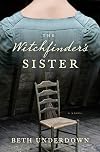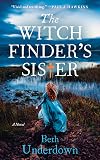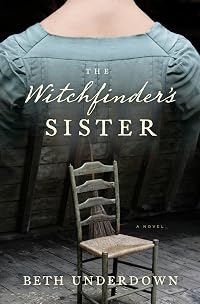
The Witchfinder's Sister
by Beth Underdown
On This Page
Description
"A debut literary historical thriller based on the witch hunts in 1640's England--the most intense in English history--in which Matthew Hopkins, the Witchfinder General, convicted more than a hundred women of witchcraft. In 1645, Alice Hopkins returns to her brother's house in disgrace, husbandless and pregnant. The brother she remembers is now a grown man and he's hunting witches: women who live on the margins of society--often childless widows, or women with deformities or feeble minds who show more are rejected by their communities. Viewed through the eyes of Alice, this is a woman's story of fear, friendship, love, betrayal, and redemption. What--or who--is Matthew really hunting? And to what dark place will his obsession lead them all?"-- show lessTags
Recommendations





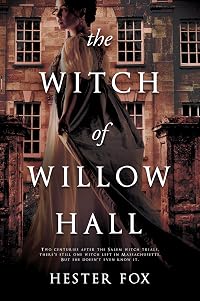

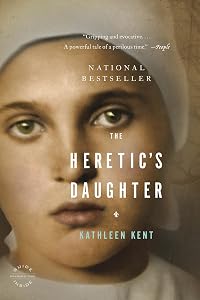

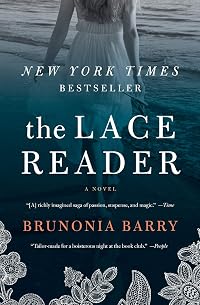
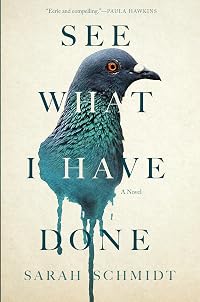





Member Recommendations

by anonymous user
Member Reviews
Beth Underdown is a writer to watch, an author who has definite talent, even though The Witchfinder's Sister doesn't quite fulfill those expectations.
The story itself is based on real events, with Underdown drawing from the historical figure of Matthew Hopkins, a "witchfinder" who was responsible for the death of more than one hundred women in the 1640s.
The story itself is told from the perspective of Hopkins's sister Alice, invented here by Underdown, who relates what has happened from her attic prison. From the beginning, the writing is taut and controlled, with Underdown demonstrating real skill in the construction of her prose.
A secretly pregnant Alice returns to Manningtree from London after the death of her husband, Joseph, who show more died while testing one of the guns he was learning to make. She is increasingly drawn not only into Matthew's intrigues, but also her mysterious family history: her mother's madness (hatred of sex with her husband drives her to lie with a random stranger, who is probably Matthew's real father); inconsistencies over who inflicted the scars on Matthew when he was a baby (it seems that they were inflicted by his mother, not the wet-nurse, as it was claimed); and the missing pages from Alice's father's journal (which strongly suggest, once found, that Joseph, Alice's husband, was her half-brother, the offspring of her father and the servant Bridget). Underdown demonstrates a fine sense of humor at certain points - the novel concludes, for instance, with Alice, hoping to escape from the chaos of the recent witch trials, to Salem, MA!
There are two major problems with this novel, as far I was concerned. First, the narrative drags on far too long for the amount of story that Underdown has to work with. A judicious editor should have cut this story down to two hundred pages. Second, Underdown fails to capitalize on the ambiguities and uncertainties of using a first-person narrator, especially in these controversial circumstances. Alice is far too unbelievably "naive" for most of the story, and I couldn't help but thinking repeatedly of the collaborators in the Nazi death camps whose self-proclaimed "innocence" is open to deep suspicion. I had lost all sympathy with her by the end of the novel.
The Witchfinder's Sister aspires to follow in the fine tradition of British historical fiction exemplified by Iain Pears or Michel Faber. As a debut novel, it shows great promise, especially in terms of prose style, and I would definitely take a chance on Underdown's next novel. That said, I hope her work matures in the areas of plot and character development, the areas where this book was the weakest. show less
The story itself is based on real events, with Underdown drawing from the historical figure of Matthew Hopkins, a "witchfinder" who was responsible for the death of more than one hundred women in the 1640s.
The story itself is told from the perspective of Hopkins's sister Alice, invented here by Underdown, who relates what has happened from her attic prison. From the beginning, the writing is taut and controlled, with Underdown demonstrating real skill in the construction of her prose.
A secretly pregnant Alice returns to Manningtree from London after the death of her husband, Joseph, who show more died while testing one of the guns he was learning to make. She is increasingly drawn not only into Matthew's intrigues, but also her mysterious family history: her mother's madness (hatred of sex with her husband drives her to lie with a random stranger, who is probably Matthew's real father); inconsistencies over who inflicted the scars on Matthew when he was a baby (it seems that they were inflicted by his mother, not the wet-nurse, as it was claimed); and the missing pages from Alice's father's journal (which strongly suggest, once found, that Joseph, Alice's husband, was her half-brother, the offspring of her father and the servant Bridget). Underdown demonstrates a fine sense of humor at certain points - the novel concludes, for instance, with Alice, hoping to escape from the chaos of the recent witch trials, to Salem, MA!
There are two major problems with this novel, as far I was concerned. First, the narrative drags on far too long for the amount of story that Underdown has to work with. A judicious editor should have cut this story down to two hundred pages. Second, Underdown fails to capitalize on the ambiguities and uncertainties of using a first-person narrator, especially in these controversial circumstances. Alice is far too unbelievably "naive" for most of the story, and I couldn't help but thinking repeatedly of the collaborators in the Nazi death camps whose self-proclaimed "innocence" is open to deep suspicion. I had lost all sympathy with her by the end of the novel.
The Witchfinder's Sister aspires to follow in the fine tradition of British historical fiction exemplified by Iain Pears or Michel Faber. As a debut novel, it shows great promise, especially in terms of prose style, and I would definitely take a chance on Underdown's next novel. That said, I hope her work matures in the areas of plot and character development, the areas where this book was the weakest. show less
Perhaps it is a coincidence simply due to my reading choices lately or a heightened awareness of the topic in general, but there is an abundance of books lately discussing women’s roles past and present, how intelligent and independent women were viewed and in some regards continue to be viewed by general society. Whatever it is, I am thoroughly enjoying the chance to learn more and adding fuel to my renewed feminism. While The Witchfinder’s Sister does not have such a woman as the main character, it does detail how the real-life Witchfinder went about terrorizing women for a few years in the mid-seventeenth century. Even though no one is hunting down modern “witches” to torture them into confessing their sins, the hatred show more towards women exhibited by the men in the novel is something to which all women today can relate.
Ms. Underdown admits in her Author’s Note that there was a lot of license she had to take with the details because there is not much known about Matthew Hopkins. This could be problematic for the story, but she does a tremendous job of incorporating painstaking research into her novel and credibly blending fact with fiction. She also recognizes those areas she added in her notes so that readers understand exactly what she added and her reasons for doing so. When fact is stranger than fiction like in this scenario, knowing such delineations is useful and interesting.
While Matthew Hopkins’ reasons for hunting and killing witches are only a supposition, Ms. Underdown provides a great example of how hatred and disgust at the female body, as well as fear, cowardice, and a lust for power, contributed to witch hunts. In fact, it takes no great stretch of the imagination to view Matthew as a symbol for all of the hunters throughout history. His disgust with the female reproductive system and female lust is every man’s discomfort at menstruation and sexually forward women. His lust for power is the glass ceiling and ongoing misogyny that continue to view women as inferior and limit them in their roles. The witch hunts of today may not involving watching and swimming, but they provide similar results in making women’s health a taboo subject and making it virtually impossible for a woman to become president under today’s conditions.
The Witchfinder’s Sister is an interesting story but not without its demerits. Alice is a surprisingly weak character, not in development but in personality. She is meek whereas the women who most influenced her life were strong. She is hesitant to offend and spends much of her time lamenting her inability to influence her brother for the better. There is no concern of her being mistaken for a witch because she spends a majority of her time hiding in her room rather than taking action. It is her frustrating lack of inaction and propensity for wishful thinking that strikes the reader as out of place in this novel where the hunting of strong, active women plays such a strong role.
In spite of its negatives, The Witchfinder’s Sister is enjoyable with its glimpse into a little-known part of history. The timing of the story’s release, as women face ever increasing concerns about reproductive health care access as well as an ongoing dialogue about feminism and women’s roles in society, may be a coincidence or else it is brilliant marketing by the publisher. Either way, readers can relate to Alice and to Matthew’s victims in a way they may not have done a year ago, and it is easy to recognize in Matthew the sanctimony of today’s current American administration. It may be dismaying to realize that women have been persecuted for the same reasons for hundreds of years, but there is comfort in the fact that we continue to survive and thrive in spite of such persecution. We might have a long way to go to stamp out such witch hunts, but being aware of the various forms they take, past and present, is one weapon in our arsenal to continue to battle against them. show less
Ms. Underdown admits in her Author’s Note that there was a lot of license she had to take with the details because there is not much known about Matthew Hopkins. This could be problematic for the story, but she does a tremendous job of incorporating painstaking research into her novel and credibly blending fact with fiction. She also recognizes those areas she added in her notes so that readers understand exactly what she added and her reasons for doing so. When fact is stranger than fiction like in this scenario, knowing such delineations is useful and interesting.
While Matthew Hopkins’ reasons for hunting and killing witches are only a supposition, Ms. Underdown provides a great example of how hatred and disgust at the female body, as well as fear, cowardice, and a lust for power, contributed to witch hunts. In fact, it takes no great stretch of the imagination to view Matthew as a symbol for all of the hunters throughout history. His disgust with the female reproductive system and female lust is every man’s discomfort at menstruation and sexually forward women. His lust for power is the glass ceiling and ongoing misogyny that continue to view women as inferior and limit them in their roles. The witch hunts of today may not involving watching and swimming, but they provide similar results in making women’s health a taboo subject and making it virtually impossible for a woman to become president under today’s conditions.
The Witchfinder’s Sister is an interesting story but not without its demerits. Alice is a surprisingly weak character, not in development but in personality. She is meek whereas the women who most influenced her life were strong. She is hesitant to offend and spends much of her time lamenting her inability to influence her brother for the better. There is no concern of her being mistaken for a witch because she spends a majority of her time hiding in her room rather than taking action. It is her frustrating lack of inaction and propensity for wishful thinking that strikes the reader as out of place in this novel where the hunting of strong, active women plays such a strong role.
In spite of its negatives, The Witchfinder’s Sister is enjoyable with its glimpse into a little-known part of history. The timing of the story’s release, as women face ever increasing concerns about reproductive health care access as well as an ongoing dialogue about feminism and women’s roles in society, may be a coincidence or else it is brilliant marketing by the publisher. Either way, readers can relate to Alice and to Matthew’s victims in a way they may not have done a year ago, and it is easy to recognize in Matthew the sanctimony of today’s current American administration. It may be dismaying to realize that women have been persecuted for the same reasons for hundreds of years, but there is comfort in the fact that we continue to survive and thrive in spite of such persecution. We might have a long way to go to stamp out such witch hunts, but being aware of the various forms they take, past and present, is one weapon in our arsenal to continue to battle against them. show less
This is a difficult read, but it's also a powerful and incredibly written piece of historical fiction that achieves a great deal.
The difficulty comes from the subject matter, addressing the witch trials that took place in England in the mid-seventeenth century, and from the fact that Underdown does such an incredible justice to the horror and injustices tied up in the history and characters at the heart of such a topic. By taking a side-view of Matthew Hopkins, a documents self-styled witchfinder, and creating a sister for him to serve as the point-of-view for this novel--and he may or may not have had a sister, as discussed in the book's Author's note--Underdown has managed to bring this story to life in a way that is heartbreaking show more even without the added weight of reality.
And, I'll be truthful here--whenever I let myself remember that the events in this book were for the most part based on real events/persons, I had to step away from the book. Not just for a few hours, but for at least a few days. In truth, this book even made me reconsider The Crucible, which I not only read but acted in, and feel a whole new horror in relation to that work's portrayals and content.
So, back to the Witchfinder's Sister... This is a striking book. It is worth reading. It is beautifully, expertly crafted. It is also as horrifying as it is breathtaking. There's no doubt in my mind that many readers will begin this book and put it back down again, as the stresses and the horrors of the book are only compounded by the fact that they come from a woman who is, simply due to her position, helpless to stop her own brother from enacting what, from a contemporary perspective, we can only call monstrous.
So, yes, I'd recommend this book. I also, however, would not fault anyone for veering away from it, or reading to the halfway point or thereabouts and realizing that they cannot put themselves through the rest of it. show less
The difficulty comes from the subject matter, addressing the witch trials that took place in England in the mid-seventeenth century, and from the fact that Underdown does such an incredible justice to the horror and injustices tied up in the history and characters at the heart of such a topic. By taking a side-view of Matthew Hopkins, a documents self-styled witchfinder, and creating a sister for him to serve as the point-of-view for this novel--and he may or may not have had a sister, as discussed in the book's Author's note--Underdown has managed to bring this story to life in a way that is heartbreaking show more even without the added weight of reality.
And, I'll be truthful here--whenever I let myself remember that the events in this book were for the most part based on real events/persons, I had to step away from the book. Not just for a few hours, but for at least a few days. In truth, this book even made me reconsider The Crucible, which I not only read but acted in, and feel a whole new horror in relation to that work's portrayals and content.
So, back to the Witchfinder's Sister... This is a striking book. It is worth reading. It is beautifully, expertly crafted. It is also as horrifying as it is breathtaking. There's no doubt in my mind that many readers will begin this book and put it back down again, as the stresses and the horrors of the book are only compounded by the fact that they come from a woman who is, simply due to her position, helpless to stop her own brother from enacting what, from a contemporary perspective, we can only call monstrous.
So, yes, I'd recommend this book. I also, however, would not fault anyone for veering away from it, or reading to the halfway point or thereabouts and realizing that they cannot put themselves through the rest of it. show less
"For they say what happened, but not what it was like. They say what happened, but they do not say why.”
Witch hunting is one of the most embarrassing pieces of human history. ‘The Witchfinder’s Sister’ is a fictional tale where the author conceives a plausible viewpoint of Matthew Stafford’s sister. This isn’t based on a true story since, while these characters were real, so little is known about them. We do know that during the Essex witch trials between the years of 1645 and 1647, that hundreds of women were investigated for witchcraft and many were murdered as a result of it.
Beth Underdown is spot on for the dreary and run-down writing tone fitting the bleak storyline for her debut novel. Beautifully written, haunting, show more moving, the prose fits the plot perfectly and uplifts it to another level. Written poorly, this story wouldn’t have worked nearly as well since the atmosphere was such a key part of the experience, and that can only be achieved with lyrical writing that suits it.
The story follows the sister Alice who must return home humiliated and penniless after her husband died. Her brother accepts her with open arms, kind of, but she soon finds out that the twisted relative has somehow managed to sway the town under his spell. It’s not just his lust for power or terror of women, but she finds out another secret that may explain the psychology of why he became so demented in the first place.
Alice is a worthy enough character on her own, although at times I wanted to shake her. I know she was stuck because of the people she was trying to protect and because of the lack of choices women had back then though, but she found her backbone anyway and lived to carry on.
The side characters that helped strengthen her amped the story up well – Bridget, the run-down housekeeper with a strong moral balance but little defenses was especially effective. The author doesn’t give her an unrealistic personality to suit modern politics as some historical pieces with women characters dare to do, and that makes the story feel even more genuine and moving.
I dig that the author introduced the actual possibility of real magic into the storyline too, making even Alice doubt that supernatural forces may be at play. It makes sense that even if they thought Matthew was wrong, small doubts would start infecting even her, so I liked this realism on human fault.
The author did an admirable job of capturing the oppressive and struggling atmosphere the women must have experienced, and she doesn’t shy away from the details of the tests, trials, imprisonments, betrayals, and twisted facts of the case. Even the small details are covered to loan authenticity.
It’s a slower paced book at times, but the bulk of it is needed to fit the storyline’s emphasis on the demented fanaticism that ruined so many lives so cruelly, so senselessly.
Recommended for fans of drama, whether they favor historical time pieces or modern ones – it’s a moving account of a horrific time in human history that we shouldn’t ever forget.
An honest review has been provided after receiving this one from Netgalley as an ARC – much thanks to the publisher and author. show less
Witch hunting is one of the most embarrassing pieces of human history. ‘The Witchfinder’s Sister’ is a fictional tale where the author conceives a plausible viewpoint of Matthew Stafford’s sister. This isn’t based on a true story since, while these characters were real, so little is known about them. We do know that during the Essex witch trials between the years of 1645 and 1647, that hundreds of women were investigated for witchcraft and many were murdered as a result of it.
Beth Underdown is spot on for the dreary and run-down writing tone fitting the bleak storyline for her debut novel. Beautifully written, haunting, show more moving, the prose fits the plot perfectly and uplifts it to another level. Written poorly, this story wouldn’t have worked nearly as well since the atmosphere was such a key part of the experience, and that can only be achieved with lyrical writing that suits it.
The story follows the sister Alice who must return home humiliated and penniless after her husband died. Her brother accepts her with open arms, kind of, but she soon finds out that the twisted relative has somehow managed to sway the town under his spell. It’s not just his lust for power or terror of women, but she finds out another secret that may explain the psychology of why he became so demented in the first place.
Alice is a worthy enough character on her own, although at times I wanted to shake her. I know she was stuck because of the people she was trying to protect and because of the lack of choices women had back then though, but she found her backbone anyway and lived to carry on.
The side characters that helped strengthen her amped the story up well – Bridget, the run-down housekeeper with a strong moral balance but little defenses was especially effective. The author doesn’t give her an unrealistic personality to suit modern politics as some historical pieces with women characters dare to do, and that makes the story feel even more genuine and moving.
I dig that the author introduced the actual possibility of real magic into the storyline too, making even Alice doubt that supernatural forces may be at play. It makes sense that even if they thought Matthew was wrong, small doubts would start infecting even her, so I liked this realism on human fault.
The author did an admirable job of capturing the oppressive and struggling atmosphere the women must have experienced, and she doesn’t shy away from the details of the tests, trials, imprisonments, betrayals, and twisted facts of the case. Even the small details are covered to loan authenticity.
It’s a slower paced book at times, but the bulk of it is needed to fit the storyline’s emphasis on the demented fanaticism that ruined so many lives so cruelly, so senselessly.
Recommended for fans of drama, whether they favor historical time pieces or modern ones – it’s a moving account of a horrific time in human history that we shouldn’t ever forget.
An honest review has been provided after receiving this one from Netgalley as an ARC – much thanks to the publisher and author. show less
The Witchfinder’s Sister is a skilful mix of horror, history and social commentary that’s great fun to read. I had an uneasy sense of ‘I have no idea where there is going, but wherever it is it isn’t going there very quickly’ for the first third, got into it a bit more for the middle third and loved it after that.
The concept is a good one (Witchfinder Matthew Hopkins had a sister who was trying to stop him), there’s some solid threads of mystery running throughout it, and it manages to make the reader think about how male society treats women without seeming preachy about it. The story is well told and there are some really nice touches, especially towards the end. Now someone just needs to make a time machine, save Michael show more Reeves from his untimely death, and hire him to make a movie of it as a companion to his Witchfinder General. show less
The concept is a good one (Witchfinder Matthew Hopkins had a sister who was trying to stop him), there’s some solid threads of mystery running throughout it, and it manages to make the reader think about how male society treats women without seeming preachy about it. The story is well told and there are some really nice touches, especially towards the end. Now someone just needs to make a time machine, save Michael show more Reeves from his untimely death, and hire him to make a movie of it as a companion to his Witchfinder General. show less
The horror which man can visit on his fellow man, or woman, on anyone slightly different or strange, is explored in this richly-written debut novel. ‘The Witchfinder’s Siste’r by Beth Underdown is a fictional telling of a real seventeenth century witchfinder, Matthew Hopkins, and his invented sister Alice. It is a novel steeped in historical fact, with excerpts of documents including real people and trials.
It is 1645 and the Civil War in England is into its fourth year. There is a sense of brooding danger from the very beginning, and not just because of war. It is a time of religious fervour. A short prologue contains a list of women named as witches, their descriptions and accused crimes. Then in chapter one we meet Alice who is show more confined to one room. This novel is the account of her life.
When Alice’s husband dies in London in a work accident, she returns home, newly pregnant, to the Essex village where she grew up. Upon entering the home of her younger half-brother Matthew, she discovers he has become obsessed with punishing women for witchery. As her worry about his activities turns into fear, she is unable to escape his influence and is pulled into complicity with his acts. Despite attempts to break free, she too is under his power.
It is a fascinating historical read, the sort of book where you feel assured the author’s research is authentic. Told completely from Alice’s point of view, the other female characters are deeply drawn. The servants in her brother’s house, the creepy Mary Phillips and young Grace; Bridget, her step-mother’s former servant; and Rebecca West, accused of witchery. Some of it is difficult reading, particularly the Watching and Searching of suspects, who are subjected to difficult and demeaning conditions. The power of a few men over so many is frightening. With relevance to today’s society are the big issues of man’s inhumanity to man, intolerance and that ability to inflict cruelty which seems always to lurk just beneath the surface of civilised society.
A book that will stay with me for a long time, and which will be re-read.
Read more of my book reviews at http://www.sandradanby.com/book-reviews-a-z/ show less
It is 1645 and the Civil War in England is into its fourth year. There is a sense of brooding danger from the very beginning, and not just because of war. It is a time of religious fervour. A short prologue contains a list of women named as witches, their descriptions and accused crimes. Then in chapter one we meet Alice who is show more confined to one room. This novel is the account of her life.
When Alice’s husband dies in London in a work accident, she returns home, newly pregnant, to the Essex village where she grew up. Upon entering the home of her younger half-brother Matthew, she discovers he has become obsessed with punishing women for witchery. As her worry about his activities turns into fear, she is unable to escape his influence and is pulled into complicity with his acts. Despite attempts to break free, she too is under his power.
It is a fascinating historical read, the sort of book where you feel assured the author’s research is authentic. Told completely from Alice’s point of view, the other female characters are deeply drawn. The servants in her brother’s house, the creepy Mary Phillips and young Grace; Bridget, her step-mother’s former servant; and Rebecca West, accused of witchery. Some of it is difficult reading, particularly the Watching and Searching of suspects, who are subjected to difficult and demeaning conditions. The power of a few men over so many is frightening. With relevance to today’s society are the big issues of man’s inhumanity to man, intolerance and that ability to inflict cruelty which seems always to lurk just beneath the surface of civilised society.
A book that will stay with me for a long time, and which will be re-read.
Read more of my book reviews at http://www.sandradanby.com/book-reviews-a-z/ show less
“For it is a choice, I think, to close the heart, just as it is a choice to open it. It is a choice to look at what distresses you, and a choice to shut your eyes. It is a choice to hold tight, your pain, or else to let it slip your grass, said it free or make it’s Mark upon the world.”
I’ve been fascinated by witch trials since I was a young girl, no doubt because I was burned in a previous life 🔥
“The Witchfinder’s Sister” is the story of a disgusting human being known as Matthew Hopkins, who was responsible for a prolific witch hunt in England around 1645 that resulted in the hanging of over 100 women.
Matthew’s story is told by his sister, Alice, who is not really known to have existed. It’s yet another horrific show more story of a man compensating for his weakness and ineptitude by killing elderly and mentally ill women, or any woman who dared to challenge him in some direct or imaginary way.
This book reminded me of two things:
1) Men weren’t the only ones guilty in the witch hunts; insecure and weak women were culpable as well. It was truly devastating what was done by the most deplorable of both genders behind the shield of Christianity.
2) Not all church leaders were supportive of the witch hunts.
The story is heavily fictionalized and, in my opinion, the author took that a bit too far at the very end. It’s highly unlikely that it actually ended in the way she described. But, I learned a lot and am better for having read this heartbreaking story. show less
I’ve been fascinated by witch trials since I was a young girl, no doubt because I was burned in a previous life 🔥
“The Witchfinder’s Sister” is the story of a disgusting human being known as Matthew Hopkins, who was responsible for a prolific witch hunt in England around 1645 that resulted in the hanging of over 100 women.
Matthew’s story is told by his sister, Alice, who is not really known to have existed. It’s yet another horrific show more story of a man compensating for his weakness and ineptitude by killing elderly and mentally ill women, or any woman who dared to challenge him in some direct or imaginary way.
This book reminded me of two things:
1) Men weren’t the only ones guilty in the witch hunts; insecure and weak women were culpable as well. It was truly devastating what was done by the most deplorable of both genders behind the shield of Christianity.
2) Not all church leaders were supportive of the witch hunts.
The story is heavily fictionalized and, in my opinion, the author took that a bit too far at the very end. It’s highly unlikely that it actually ended in the way she described. But, I learned a lot and am better for having read this heartbreaking story. show less
Members
- Recently Added By
Lists

Best Historical Fiction
620 works; 261 members

Books Set in Great Britain
191 works; 13 members

Female Protagonist
1,056 works; 57 members

Novels featuring siblings
133 works; 8 members

Vine Reads
60 works; 1 member

Netgalley Reads
460 works; 3 members

Books Read in 2020
4,379 works; 123 members

Feminism
167 works; 4 members

Historical Figures in Fiction
51 works; 5 members

Books With Family Relationships in the Title
44 works; 4 members

Books Read in 2019
4,052 works; 110 members

Witchy Fiction
253 works; 126 members

Historical fiction set in Britain
13 works; 1 member
Author Information
3 Works 492 Members
Some Editions
Awards and Honors
Common Knowledge
- Canonical title
- The Witchfinder's Sister
- Original publication date
- 2017
- People/Characters
- Matthew Hopkins; Alice Hopkins; Rebecca West
- Important places
- Manningtree, Essex, England, UK
- Important events
- witch hunts
- Epigraph
- Thou shalt not suffer a witch to live.
EXODUS 22:18
And a man's foe shall be they of his own household.
MATTHEW 10:36 - Dedication
- FOR KATH BOARDMAN
- First words
- 1645, and the Civil War in England has begun its fourth year.
The fifth day of Christmas,
this year of our Lord 1645
Once, I scarcely believed in the devil. - Last words
- (Click to show. Warning: May contain spoilers.)But they have named it Salem, which as you know, means peace.
(Click to show. Warning: May contain spoilers.)And although many of these things may seem very strange, and hardly to be believed, yet this is the very truth: and that he was the son of a godly minister, and therefore without doubt within the covenant. - Publisher's editor
- Katy Loftus (UK); Kate Miciak (US); Hazel Orme (copyeditor)
- Blurbers
- Hawkins, Paula; Brackston, Paula; Benjamin, Melanie; McGuire, Ian; Sharratt, Mary; Pulley, Natasha (show all 7); Gale, Patrick
Classifications
Statistics
- Members
- 402
- Popularity
- 77,196
- Reviews
- 37
- Rating
- (3.61)
- Languages
- English, Polish
- Media
- Paper, Audiobook, Ebook
- ISBNs
- 18
- ASINs
- 4