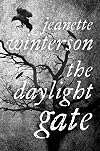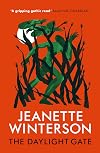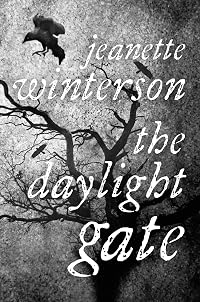
The Daylight Gate
by Jeanette Winterson
On This Page
Description
Alice Nutter fights for justice when a group of Pendle women are accused of witchcraft during the reign of England's James I, when being Catholic is considered an act of treason and the Latin High Mass is comparable to the satanic Black Mass.Tags
Recommendations


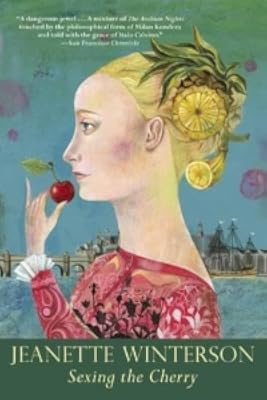
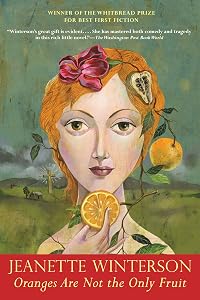




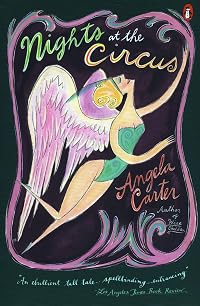

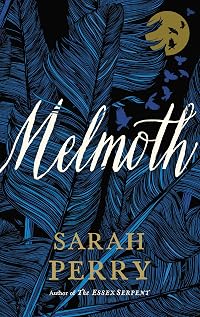

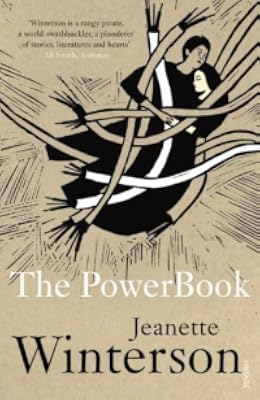
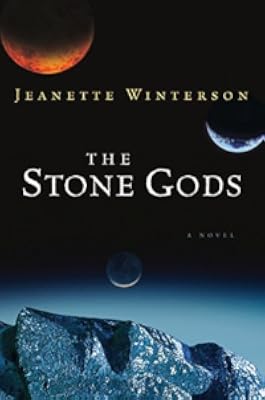
Member Recommendations
by Ciruelo
Member Reviews
Why people are giving this low rating for not being historically accurate I don't comprehend. It's got magic and ghosts and alchemy and the gentleman and all sorts of stuff that clearly ISN'T REAL.
I found this a wonderfully written book, richly detailed and very emotive.
WARNING:It also contains the most disturbingly erotic torture and castration scene I've ever had the misfortune to read. I expect this will stay with me and haunt me forever.
I found this a wonderfully written book, richly detailed and very emotive.
WARNING:
The Pendle Hill witches, redux
The Daylight Gate by Jeanette Winterson (Grove Press, $24)
Not that long ago, I was fortunate to be able to review an amazing production of Caryl Churchill’s play, Vinegar Tom. Like Jeanette Winterson’s most recent novel, The Daylight Gate, it’s about—sort of—the Pendle Hill witches.
Winterson comes to many of the same conclusions that Churchill does: The accusations of witchcraft are as much about the fear of the powerless and the subjugation of women as any supernatural events. But Winterson, with her sharp blows of narrative, allows us to feel in a quick loss of breath just a shadow of the terror, rage and frustration that the accused must have endured.
She also manages to historicize the story show more even further, with ties to the Gunpowder Plot and anti-Catholic sentiment—and an appearance by the Bard of Avon himself.
By abandoning the barely-known details of history, Winterson creates an Alice Nutter who is privileged, but that’s not enough on its own to protect the ones she loves. She must rely on whatever tools are available—and witchcraft is only one—to accomplish what she will.
Winterson has not retold history, but reinvented it in a novel that is deep, literary, and stuffed with romance and horrors all too real.
(Published on Lit/Rant on 2/22/14: http://litrant.tumblr.com/post/77472840346/the-pendle-hill-witches-redux-the-day... show less
The Daylight Gate by Jeanette Winterson (Grove Press, $24)
Not that long ago, I was fortunate to be able to review an amazing production of Caryl Churchill’s play, Vinegar Tom. Like Jeanette Winterson’s most recent novel, The Daylight Gate, it’s about—sort of—the Pendle Hill witches.
Winterson comes to many of the same conclusions that Churchill does: The accusations of witchcraft are as much about the fear of the powerless and the subjugation of women as any supernatural events. But Winterson, with her sharp blows of narrative, allows us to feel in a quick loss of breath just a shadow of the terror, rage and frustration that the accused must have endured.
She also manages to historicize the story show more even further, with ties to the Gunpowder Plot and anti-Catholic sentiment—and an appearance by the Bard of Avon himself.
By abandoning the barely-known details of history, Winterson creates an Alice Nutter who is privileged, but that’s not enough on its own to protect the ones she loves. She must rely on whatever tools are available—and witchcraft is only one—to accomplish what she will.
Winterson has not retold history, but reinvented it in a novel that is deep, literary, and stuffed with romance and horrors all too real.
(Published on Lit/Rant on 2/22/14: http://litrant.tumblr.com/post/77472840346/the-pendle-hill-witches-redux-the-day... show less
As I've mentioned before, the phrase "strong stuff" always comes to mind when I read Jeanette Winterson's books. Powerful, and generally not for the faint of heart. Bourbon, not white wine.
In many respects this is a remarkable book, one that I could not put down even though from reading the actual circumstances of this case I knew the outcome. Of course, it IS historical fiction and Winterson invented an elaborate backstory for the central character, Agnes Nutter, with no basis in actual fact. But somehow I didn't think, as I read, that she would change the ending.
The book abounds with alchemy and witchery and religious conflict. The early 17th century was a particularly grim time for anyone in England to espouse the Catholic faith, and show more James I of England (aka James VI of Scotland) chose to direct the energies of his reign against demons - and witches, almost always women.
Generally, these were poor and helpless women, and Winterson's vivid descriptions of their plight is challenging reading, being accurately and acutely wrought. The visits to the Jacobean torture chambers are equally sad and harrowing.
Fortunately these grim realities are balanced with brilliant storytelling, especially as Agnes relays her history to a lover. I was swept up with the richness of the imagery as she described people and places and events in her past.
In Agnes, Winterson has created for us a woman of whom we can be in awe. One who has made a life for herself using her clear-headed intelligence, her love and her compassion.
“You are stubborn,’ said Roger Nowell. ‘I am not tame,’ said Alice Nutter.”
“He scarred her arm...but she did not care because she loved him and she knew that love leaves a wound that leaves a scar.”
“Are you like all other men after all? The poor should have no justice, just as they have no food, no decent shelter, no regular livelihood? Is that how your saviour Jesus treated the poor?”
The novella length of this book is ideal. Another author might have attempted to stretch out the story to a full length novel, but that would have done the story a disservice. Winterson has created something that can fit in a shotglass, not delicate stemware. show less
In many respects this is a remarkable book, one that I could not put down even though from reading the actual circumstances of this case I knew the outcome. Of course, it IS historical fiction and Winterson invented an elaborate backstory for the central character, Agnes Nutter, with no basis in actual fact. But somehow I didn't think, as I read, that she would change the ending.
The book abounds with alchemy and witchery and religious conflict. The early 17th century was a particularly grim time for anyone in England to espouse the Catholic faith, and show more James I of England (aka James VI of Scotland) chose to direct the energies of his reign against demons - and witches, almost always women.
Generally, these were poor and helpless women, and Winterson's vivid descriptions of their plight is challenging reading, being accurately and acutely wrought. The visits to the Jacobean torture chambers are equally sad and harrowing.
Fortunately these grim realities are balanced with brilliant storytelling, especially as Agnes relays her history to a lover. I was swept up with the richness of the imagery as she described people and places and events in her past.
In Agnes, Winterson has created for us a woman of whom we can be in awe. One who has made a life for herself using her clear-headed intelligence, her love and her compassion.
“You are stubborn,’ said Roger Nowell. ‘I am not tame,’ said Alice Nutter.”
“He scarred her arm...but she did not care because she loved him and she knew that love leaves a wound that leaves a scar.”
“Are you like all other men after all? The poor should have no justice, just as they have no food, no decent shelter, no regular livelihood? Is that how your saviour Jesus treated the poor?”
The novella length of this book is ideal. Another author might have attempted to stretch out the story to a full length novel, but that would have done the story a disservice. Winterson has created something that can fit in a shotglass, not delicate stemware. show less
GREAT scary read about English witchcraft, anti-Catholicism and sexism. I know, I totally just made you want to buy this NOW. But it's so good. I love Jeanette Winterson's books so much. She just never disappoints me and this one is more plot-driven than some of her other books which tend to be more about style and mood. Loved! http://www.bostonbibliophile.com/2014/01/review-daylight-gate-by-jeanette.html
Jeanette Winterson's prose is fierce and fearless, and her particular gift as a novelist is to render the strange and wildly unfamiliar (in this case the maelstrom of machinations surrounding the Lancashire Witch Trials of 1612) accessible without diminishing its power to shock and amaze. This can be an unsettling experience for a reader, but also wonderfully
stretching. Taken as a whole, Winterson's brilliantly diverse body of work seems meant to illustrate the assertion made in this novel by Alice Nutter (a woman of spirit and independence denounced as a witch) to John Dee (an alchemist and astrologer to Queen Elizabeth I): "I think we are worlds compressed into human form."
stretching. Taken as a whole, Winterson's brilliantly diverse body of work seems meant to illustrate the assertion made in this novel by Alice Nutter (a woman of spirit and independence denounced as a witch) to John Dee (an alchemist and astrologer to Queen Elizabeth I): "I think we are worlds compressed into human form."
The Daylight Gate is a spellbinding book that brings to light the dark days leading up to The Trial of the Lancashire Witches of 1612. It should be noted, that while many of the characters and locations and events are based in historical fact, there are aspects that the author has put her own spin on and taken certain liberties with.
This book was haunting, beautiful, vicious, and tragic. It is the perfect combination of history and fiction. I'll keep this review spoiler free, but will touch on some of the broader aspects.
"This was Lancashire. This was Pendle. This was witch country."
Trigger Warning: This is a graphic, gruesome, dark and violent book at times. It touches on topics such as Rape, incest, pedophilia, satanism/witchcraft, show more and torture. It is not for the faint of heart. However, that being said, as difficult as these topics are to read, they are critical to this story. In the days of 1612 England, these were all very real aspects of life. It adds to the authenticity of the story, fully immersing the reader in all the sights, sounds, hysteria, and cruelty of the time.
I was pleasantly surprised by this dark little book. It clocks in at only 224 pages, and is such a fascinating, intense read. The characters are vividly drawn. From beautiful, mysterious Alice Nutter, frightening and haggard Old Demdike, to tragic and heartwrenching Christopher Southworth. For such a short book, you get a very real sense of who these people are. Winterson does an incredible job of painting them all so clearly, in all their flaws and beauty, and in their despair. I genuinly felt for these characters. There were moments that were sweet, light and delicate, and moments that were dark, brutal and ugly. I would never have guessed, that a book about Witchcraft, would evoke such a wide array of emotions within me. I felt happiness, excitment, terror and shock. I also found myself feeling sadness, pity, disgust and empathy. It was quite mesmerizing to feel so many emotions, so intensely.
I love the historical background.. and the locations that are key to the story. This is a book, in where the environment itself.... has a vibe all its own.
"Those who are born here are branded by Pendle. They share a common mark. There is still a tradition, or a superstition, that a girl-child born in Pendle Forest should be twice baptised; once in church and once in a black pool at the foot of the hill. The hill will know her then. She will be its trophy and its sacrifice. She must make peace with her birthright, whatever that means."
Pendle forest, Read Hall, the Rough Lee, Malkin Tower, and Whalley Abbey, all contribute to the atmosphere of the period. They help to bring forth the fear, the mystery, and the intrigue of this very dark time in history.
This is not simply a story about witches and religion. It is so much deeper than that. It is also a story about the human spirit, about life and death, pride, and fear of what we don't understand. All of these aspects coming into play, evoked all manner of emotions within me.. emotions I had no intention of feeling from such a dark, harsh book.
The majority of the writing is beautiful in its simplicity. Everything feels genuine, never forced. And there are so many wonderful examples of the most intricate descriptions, that feel incredibly profound....
"He scarred her arm where she had no glove but she did not care because she loved him, and she knew that love leaves a wound that leaves a scar."
"Love is as strong as death."
"Red against the white. If there is another life he will find her there."
Simple, yet, hauntingly beautiful at times.
Overall, this book was an enthralling, quick read that hits on all the aspects that I adore. Dark themes, romance, history, and the human spirit. Read this book, take the leap... and find yourself immersed... in The Daylight Gate.
"And if thou callest him, like unto an angel of the north wearing a dark costume, he will hear thee and come to thee.
Yet meet him where he may be met -------- at The Daylight Gate." show less
This book was haunting, beautiful, vicious, and tragic. It is the perfect combination of history and fiction. I'll keep this review spoiler free, but will touch on some of the broader aspects.
"This was Lancashire. This was Pendle. This was witch country."
Trigger Warning: This is a graphic, gruesome, dark and violent book at times. It touches on topics such as Rape, incest, pedophilia, satanism/witchcraft, show more and torture. It is not for the faint of heart. However, that being said, as difficult as these topics are to read, they are critical to this story. In the days of 1612 England, these were all very real aspects of life. It adds to the authenticity of the story, fully immersing the reader in all the sights, sounds, hysteria, and cruelty of the time.
I was pleasantly surprised by this dark little book. It clocks in at only 224 pages, and is such a fascinating, intense read. The characters are vividly drawn. From beautiful, mysterious Alice Nutter, frightening and haggard Old Demdike, to tragic and heartwrenching Christopher Southworth. For such a short book, you get a very real sense of who these people are. Winterson does an incredible job of painting them all so clearly, in all their flaws and beauty, and in their despair. I genuinly felt for these characters. There were moments that were sweet, light and delicate, and moments that were dark, brutal and ugly. I would never have guessed, that a book about Witchcraft, would evoke such a wide array of emotions within me. I felt happiness, excitment, terror and shock. I also found myself feeling sadness, pity, disgust and empathy. It was quite mesmerizing to feel so many emotions, so intensely.
I love the historical background.. and the locations that are key to the story. This is a book, in where the environment itself.... has a vibe all its own.
"Those who are born here are branded by Pendle. They share a common mark. There is still a tradition, or a superstition, that a girl-child born in Pendle Forest should be twice baptised; once in church and once in a black pool at the foot of the hill. The hill will know her then. She will be its trophy and its sacrifice. She must make peace with her birthright, whatever that means."
Pendle forest, Read Hall, the Rough Lee, Malkin Tower, and Whalley Abbey, all contribute to the atmosphere of the period. They help to bring forth the fear, the mystery, and the intrigue of this very dark time in history.
This is not simply a story about witches and religion. It is so much deeper than that. It is also a story about the human spirit, about life and death, pride, and fear of what we don't understand. All of these aspects coming into play, evoked all manner of emotions within me.. emotions I had no intention of feeling from such a dark, harsh book.
The majority of the writing is beautiful in its simplicity. Everything feels genuine, never forced. And there are so many wonderful examples of the most intricate descriptions, that feel incredibly profound....
"He scarred her arm where she had no glove but she did not care because she loved him, and she knew that love leaves a wound that leaves a scar."
"Love is as strong as death."
"Red against the white. If there is another life he will find her there."
Simple, yet, hauntingly beautiful at times.
Overall, this book was an enthralling, quick read that hits on all the aspects that I adore. Dark themes, romance, history, and the human spirit. Read this book, take the leap... and find yourself immersed... in The Daylight Gate.
"And if thou callest him, like unto an angel of the north wearing a dark costume, he will hear thee and come to thee.
Yet meet him where he may be met -------- at The Daylight Gate." show less
Review from Sarah Hall http://www.guardian.co.uk/books/2012/aug/16/daylight-gate-jeanette-winterson-rev...
An Pendle: a place synonymous with witches and Britain's most notorious diabolism trials. The candle-passing parlour game says, if it dies in your hand, you've a forfeit to give. If you're going to write a book about famous witches, it had better fly.
Winterson's novella is set in 1612, during the feverishly paranoid reign of James I. It describes the plight of a group of paupers, mostly women, accused of evil practices and tried at the August assizes. In the previous decade, the gunpowder plot almost did away with the king. Heresy is his obsession. Author of the instructive Daemonologie, he is, as Pendle's local magistrate puts it, show more "a meddler". In this fraught climate disfigured elderly ladies aren't safe, alchemists can be arrested for creating mechanical beetles, and Catholics are thumb-screwed. "It suits the times to degrade the hoc est corpus of the Catholic mass into satanic hocus pocus," notes William Shakespeare, who features briefly, and not preposterously, in Winterson's book.
Outlawed beliefs have been dangerously elided. "Popery witchery, witchery popery," Thomas Potts, recording clerk for the prosecution and the crown, is fond of chanting. Potts arrives in Lancashire, one of the wildest corners of the country, desperate to preside over a trial as sensational as North Berwick, where the sorcerers responsible for the king's shipwreck were prosecuted. He stakes out Pendle Hill, a landscape of moors and mists, mossy baptismal pools and forests, ready to accost beldames on their broomsticks.
So it comes to pass. A coven of aggrieved relatives meets in a remote tower on Good Friday for a mutton supper and to orchestrate the escape from Lancaster prison of their grand-dam, Old Demdike, who is suspected of sinister crimes. They conduct blood rituals. Into the fray rides Alice Nutter, astride rather than sidesaddle. A noble widow who owns Malkin Tower, she's implicated in the proceedings after the group is confronted by the authorities. Alice is a different kettle of fish from the rabble. Having made her fortune with a magenta dye and a royal warrant from the previous monarch, she's fiercely independent, and prone to charitable acts and harbouring fugitives. She's also mysterious, a realm-crosser. Strangely youthful though old, crackling with erotic appeal and a lover to both sexes, Alice is the kind of woman who makes Potts "feel less important than he knew himself to be".
That the story is predetermined does little to dry up the narrative suspense. Winterson's version has all the grisly freshness of a newly exhumed graveyard corpse. Hangings and burnings are coming, but along the way there are revelations, plot twists, celebrities and trysts – all very bold inventions.
The narrative voice is irrefutable; this is old-fashioned storytelling, with a sermonic tone that commands and terrifies. It's also like courtroom reportage, sworn witness testimony. The sentences are short, truthful – and dreadful. "Tom Peeper raped Sarah Device. He was quick. He was in practice." Absolutism is Winterson's forte, and it's the perfect mode to verify supernatural events when they occur. You're not asked to believe in magic. Magic exists. A severed head talks. A man is transmogrified into a hare. The story is stretched as tight as a rack, so the reader's disbelief is ruptured rather than suspended. And if doubt remains, the text's sensuality persuades. Teeth raining from the sky into Alice's lap click and patter like pebbles. A mouth painted on to a door feels soft as a lip, because it is a lip, momentarily. There's a forensic quality to the paranormal manifestations – smells, lesions, blood – that convinces, horribly. Occasionally, the daylight gate as a descriptive phrase becomes repetitious. By virtue of titular importance it's the most potent incantation, and could perhaps have been used more sparingly.
The usual witchy tropes are present – warts, cauldrons, familiars – but they are upgraded, made suitable and sensible. If a toadstool features it's because Old Demdike knows which ones growing in prison are edible. Enchanted mirrors are by-products of mercury experimentation in laboratories. To avoid clichéd associations would be coy. Winterson would rather take these motifs on, activate and invigorate them.
And she knows where true horror lies. Not in fantastical dimensions, but in the terrestrial world. Most grotesque and curdling are the visceral depictions of early 17th-century Britain – the squalor, inequality and religious eugenics. The subjugation of women and prostituting of children. The degloving and castration of Catholics. Poverty. Sickness. Desperation.
As well as being a gripping gothic read, the book provides historical social commentary on the phenomenon of witchcraft and witchcraft persecution. Fear is a relative thing; its effects are relative to power. If you are king and have nearly drowned in a conjured storm, why not expunge the old practices from your sovereignty? If an ugly woman's pet has mauled your leg, duck her in the river to reveal her true identity. If you are destitute, starving, with nothing to lose but your soul, a deal with the Dark Gentleman may be a very attractive prospect. If you believe in such things. show less
An Pendle: a place synonymous with witches and Britain's most notorious diabolism trials. The candle-passing parlour game says, if it dies in your hand, you've a forfeit to give. If you're going to write a book about famous witches, it had better fly.
Winterson's novella is set in 1612, during the feverishly paranoid reign of James I. It describes the plight of a group of paupers, mostly women, accused of evil practices and tried at the August assizes. In the previous decade, the gunpowder plot almost did away with the king. Heresy is his obsession. Author of the instructive Daemonologie, he is, as Pendle's local magistrate puts it, show more "a meddler". In this fraught climate disfigured elderly ladies aren't safe, alchemists can be arrested for creating mechanical beetles, and Catholics are thumb-screwed. "It suits the times to degrade the hoc est corpus of the Catholic mass into satanic hocus pocus," notes William Shakespeare, who features briefly, and not preposterously, in Winterson's book.
Outlawed beliefs have been dangerously elided. "Popery witchery, witchery popery," Thomas Potts, recording clerk for the prosecution and the crown, is fond of chanting. Potts arrives in Lancashire, one of the wildest corners of the country, desperate to preside over a trial as sensational as North Berwick, where the sorcerers responsible for the king's shipwreck were prosecuted. He stakes out Pendle Hill, a landscape of moors and mists, mossy baptismal pools and forests, ready to accost beldames on their broomsticks.
So it comes to pass. A coven of aggrieved relatives meets in a remote tower on Good Friday for a mutton supper and to orchestrate the escape from Lancaster prison of their grand-dam, Old Demdike, who is suspected of sinister crimes. They conduct blood rituals. Into the fray rides Alice Nutter, astride rather than sidesaddle. A noble widow who owns Malkin Tower, she's implicated in the proceedings after the group is confronted by the authorities. Alice is a different kettle of fish from the rabble. Having made her fortune with a magenta dye and a royal warrant from the previous monarch, she's fiercely independent, and prone to charitable acts and harbouring fugitives. She's also mysterious, a realm-crosser. Strangely youthful though old, crackling with erotic appeal and a lover to both sexes, Alice is the kind of woman who makes Potts "feel less important than he knew himself to be".
That the story is predetermined does little to dry up the narrative suspense. Winterson's version has all the grisly freshness of a newly exhumed graveyard corpse. Hangings and burnings are coming, but along the way there are revelations, plot twists, celebrities and trysts – all very bold inventions.
The narrative voice is irrefutable; this is old-fashioned storytelling, with a sermonic tone that commands and terrifies. It's also like courtroom reportage, sworn witness testimony. The sentences are short, truthful – and dreadful. "Tom Peeper raped Sarah Device. He was quick. He was in practice." Absolutism is Winterson's forte, and it's the perfect mode to verify supernatural events when they occur. You're not asked to believe in magic. Magic exists. A severed head talks. A man is transmogrified into a hare. The story is stretched as tight as a rack, so the reader's disbelief is ruptured rather than suspended. And if doubt remains, the text's sensuality persuades. Teeth raining from the sky into Alice's lap click and patter like pebbles. A mouth painted on to a door feels soft as a lip, because it is a lip, momentarily. There's a forensic quality to the paranormal manifestations – smells, lesions, blood – that convinces, horribly. Occasionally, the daylight gate as a descriptive phrase becomes repetitious. By virtue of titular importance it's the most potent incantation, and could perhaps have been used more sparingly.
The usual witchy tropes are present – warts, cauldrons, familiars – but they are upgraded, made suitable and sensible. If a toadstool features it's because Old Demdike knows which ones growing in prison are edible. Enchanted mirrors are by-products of mercury experimentation in laboratories. To avoid clichéd associations would be coy. Winterson would rather take these motifs on, activate and invigorate them.
And she knows where true horror lies. Not in fantastical dimensions, but in the terrestrial world. Most grotesque and curdling are the visceral depictions of early 17th-century Britain – the squalor, inequality and religious eugenics. The subjugation of women and prostituting of children. The degloving and castration of Catholics. Poverty. Sickness. Desperation.
As well as being a gripping gothic read, the book provides historical social commentary on the phenomenon of witchcraft and witchcraft persecution. Fear is a relative thing; its effects are relative to power. If you are king and have nearly drowned in a conjured storm, why not expunge the old practices from your sovereignty? If an ugly woman's pet has mauled your leg, duck her in the river to reveal her true identity. If you are destitute, starving, with nothing to lose but your soul, a deal with the Dark Gentleman may be a very attractive prospect. If you believe in such things. show less
Members
- Recently Added By
Lists

Scary ghost stories - no zombies, vampires or werewolves, please
53 works; 20 members
LGBTQIA Horror
172 works; 7 members

Llibres que he llegit el 2017
49 works; 1 member

100 Hemskaste
81 works; 1 member

Kirkus Reviews Best Fiction of 2013
99 works; 6 members
Recommended Horror and Dark Fiction by Women
81 works; 13 members

ALA The Reading List
490 works; 28 members
Author Information

55+ Works 37,158 Members
Jeanette Winterson was born in Manchester, England in 1959 and graduated from St. Catherine's College, Oxford. Her book, Oranges Are Not the Only Fruit, is a semi-autobiographical account of her life as a child preacher (she wrote and gave sermons by the time she was eight years old). The book was the winner of the Whitbread Prize for best first show more fiction and was made into an award-winning TV movie. The Passion won the John Llewelyn Rhys Memorial Prize for best writer under thirty-five, and Sexing the Cherry won the American Academy of Arts and Letters' E. M. Forster Award. (Bowker Author Biography) Jeanette Winterson lives in London & the Cotswolds. (Publisher Provided) show less
Awards and Honors
Common Knowledge
- Canonical title*
- Il cancello del crepuscolo
- Original title
- The Daylight Gate
- Original publication date
- 2012
- People/Characters
- Alice Nutter; Roger Nowell; Elizabeth "Old Demdike" Southern; Alizon Device; Sarah Device; John Law (show all 24); Constable Henry Hargreaves; Tom Peeper; Thomas Potts; Anne "Chattox" Whittle; Christopher Southworth; Jane Southworth; Jennet Device; Elizabeth Device; William Shakespeare; Margaret Pearson; John Bulcock; Jane Bulcock; James "Jem" Device; Nance Redfern; John Dee; Edward Kelley; Katherine "Mouldheels" Hewitt of Colne; Robert Preston
- Important places
- Pendle Hill, Lancashire, England, UK; Malkin Tower, Forest of Pendle, Lancashire, England, UK; Hoghton Tower, Lancashire, England, UK; Read Hall, Lancashire, England, UK
- Important events
- Pendle-Craven Witch Persecution (1612); Lancaster Assizes (1612); Witchcraft Statute of 1604
- Dedication
- To Henri-Llewlyn Davies
1954-2011.
Her own witch and mine. - First words
- The North is the dark place.
- Last words
- (Click to show. Warning: May contain spoilers.)Red against white. If there is another life he will find her there.
- Original language
- English (UK) (UK)
- Canonical DDC/MDS
- 823.92
- Canonical LCC
- PR6073.I558
*Some information comes from Common Knowledge in other languages. Click "Edit" for more information.
Classifications
Statistics
- Members
- 769
- Popularity
- 36,490
- Reviews
- 48
- Rating
- (3.53)
- Languages
- 6 — Dutch, English, Italian, Spanish, Swedish, Turkish
- Media
- Paper, Audiobook, Ebook
- ISBNs
- 21
- ASINs
- 7