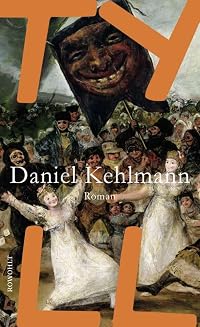
Tyll
by Daniel Kehlmann
On This Page
Description
From the internationally best-selling author of You Should Have Left, Measuring the World, and F, a transfixing retelling of the German myth of Tyll Ulenspiegel: a story about the devastation of war and a beguiling artist's decision never to dieDaniel Kehlmann masterfully weaves the fates of many historical figures into this enchanting work of magical realism and adventure. This account of the seventeenth-century vagabond performer and trickster Tyll Ulenspiegel begins when he's a scrawny show more boy growing up in a quiet village. When his father, a miller with a secret interest in alchemy and magic, is found out by the church, Tyll is forced to flee with the baker's daughter, Nele. They find safety and companionship with a traveling performer, who teaches Tyll his trade. And so begins a journey of discovery and performance for Tyll, as he travels through a continent devastated by the Thirty Years' War and encounters along the way a hangman, a fraudulent Jesuit scholar, and the exiled King Frederick and Queen Elizabeth of Bohemia.
Tyll displays Kehlmann's remarkable narrative gifts and confirms the power of art in the face of the senseless brutality of history.
Translated from the German by Ross Benjamin. show less
Tags
Recommendations
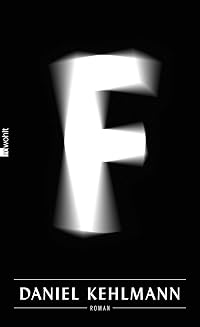





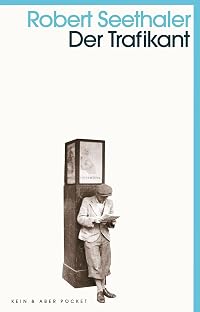

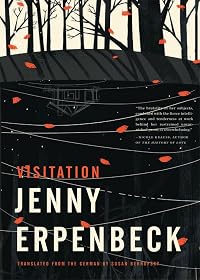
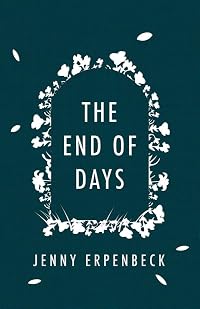
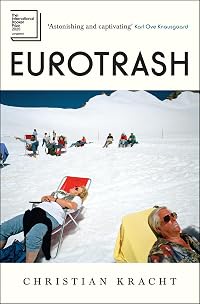


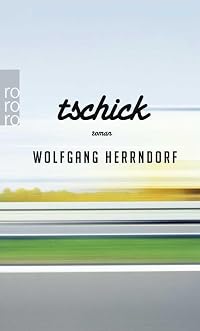
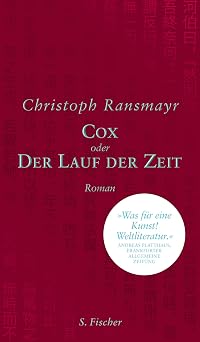

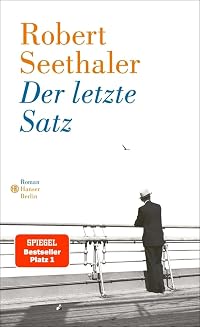
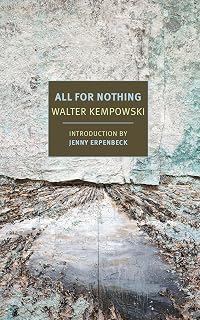

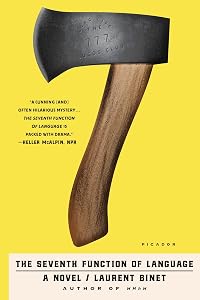


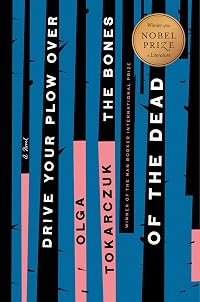
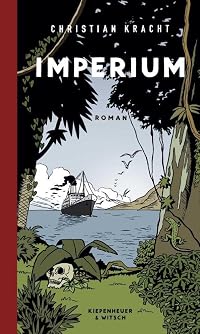
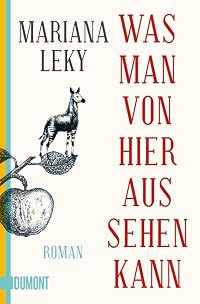
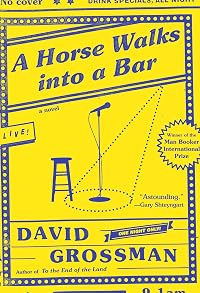

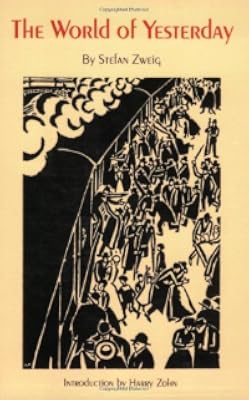
Member Recommendations

M_Clark This is a comedy set in the period before the thirty years war.

Member Reviews
A strange one, this, but brilliant. I still haven't quite fathomed it out. The story of a jester, his childhood and fragments of his life duting the Thirty Years War, but told in fragmentary fashion, and often through the eyes of others, with Tyll only appearing briefly. An excellent novel, it sticks in the mind in all sorts of troubling ways.
Brilliantly inventive. Clever. Reviewers have--accurately in my judgment--called it "a rip-roaring yarn" (The Guardian) and "a rollicking historical picaresque" (Publisher's Weekly). Kehlmann has a gift for description and some of his set pieces are extraordinary works of description and terribly moving. And that's the problem: this is all that...but no more. In the end the book left me feeling that it was less than the sum of its parts. The book is a tale of Tyll’s life (he moves the historical Till Eulenspiegel from the 14th century up to the early 17th century and the Thirty Years War). He tells the tale, or the life, in episodes and the episodes never added up to a full life. Not even close, sadly. Tyll is wonderfully alive in the show more beginning but as the new episodes add more brilliant stories, he becomes almost a stick figure, the same aspects of his character shown, the same bits told over and over, as if Kehlmann had spent so much time on creating his contexts that he ran out of imagination when it came to placing his protagonist in them. Make no mistake: he is a great writer (and Ross Benjamin’s translation is terrific)…but ultimately I found myself disappointed despite the inventiveness, the cleverness, and the ingenious and even inspired situations. show less
The tale of the itinerant prankster Tyll Eulenspiegel (spelled in a million different ways...) has a similar sort of standing in German folklore to that of Robin Hood in England - written versions of the story go back at least to the earliest printed chapbooks, and places all over Germany claim associations with him, but no-one has ever found any convincing evidence that he really existed. The story is usually set in the first half of the 14th century, but Kehlmann has chosen to update it to the Thirty Years War (1618-48), a high-risk strategy because it means he's setting himself up to be compared to some of the most distinguished works in the German canon. Everyone who's anybody, from Grimmelshausen to Brecht, has used this particular show more conflict to illustrate the random, all-embracing horror of war, so it would be a challenge for any writer to try to find something new and worthwhile to say about it...
Kehlmann, of course, is extremely good at what he does, and he's produced a fluent, engaging and intelligent historical novel, a real page-turner that I raced through in a couple of days (and it's not a short book!). He brings Tyll together with real historical figures of the period, in particular Elizabeth Stuart, the "Winter Queen" (you've got to have something for the English readers...) and Jesuit scholar Athanasius Kircher, the last of the great pre-Cartesian polymaths, the man who amongst many, many other things "solved" Egyptian hieroglyphs incorrectly, just missed discovering the cause of the plague, and almost invented the magic lantern. Gustavus Adolphus gets a memorable walk-on appearance. Never named, but a powerful presence just offstage, is Shakespeare, and we also get quite a few references to the Gunpowder Plot, so there's plenty to keep you amused even if your memories of Lützen, Wallenstein and the Peace of Westphalia are a bit vague.
What this book seems to be about is theatrical performance and the way it briefly gives the performer power - for good or ill - over the audience. Tyll, in Kehlmann's version, is a victim of his times who finds that performing and getting people to do things they didn't want to is the only way that he can assert his human identity and stay alive, despite all the logic that says he should have been squashed long ago by the forces of cruelty, war and intolerance. Elizabeth is addicted to performance, seemingly never understanding that she isn't merely an actor on a stage, and that her disastrous (Shakespeare-inspired) ambition to enter politics and play the role of a queen has plunged Europe into three decades of total war. And Kircher is also a performer, a laughable nonentity who has trapped himself into playing the role of a great scientist and does it so convincingly that everyone believes him, even when he comes out with leaps of logic that only Terry Pratchett could get away with. (Dragons are known to be invisible. Holstein is the one place in Germany where no-one has ever reported seeing a dragon, therefore there must be a dragon in Holstein...)
Fun and quite rewarding, but perhaps promises a bit more than it actually delivers. show less
Kehlmann, of course, is extremely good at what he does, and he's produced a fluent, engaging and intelligent historical novel, a real page-turner that I raced through in a couple of days (and it's not a short book!). He brings Tyll together with real historical figures of the period, in particular Elizabeth Stuart, the "Winter Queen" (you've got to have something for the English readers...) and Jesuit scholar Athanasius Kircher, the last of the great pre-Cartesian polymaths, the man who amongst many, many other things "solved" Egyptian hieroglyphs incorrectly, just missed discovering the cause of the plague, and almost invented the magic lantern. Gustavus Adolphus gets a memorable walk-on appearance. Never named, but a powerful presence just offstage, is Shakespeare, and we also get quite a few references to the Gunpowder Plot, so there's plenty to keep you amused even if your memories of Lützen, Wallenstein and the Peace of Westphalia are a bit vague.
What this book seems to be about is theatrical performance and the way it briefly gives the performer power - for good or ill - over the audience. Tyll, in Kehlmann's version, is a victim of his times who finds that performing and getting people to do things they didn't want to is the only way that he can assert his human identity and stay alive, despite all the logic that says he should have been squashed long ago by the forces of cruelty, war and intolerance. Elizabeth is addicted to performance, seemingly never understanding that she isn't merely an actor on a stage, and that her disastrous (Shakespeare-inspired) ambition to enter politics and play the role of a queen has plunged Europe into three decades of total war. And Kircher is also a performer, a laughable nonentity who has trapped himself into playing the role of a great scientist and does it so convincingly that everyone believes him, even when he comes out with leaps of logic that only Terry Pratchett could get away with. (Dragons are known to be invisible. Holstein is the one place in Germany where no-one has ever reported seeing a dragon, therefore there must be a dragon in Holstein...)
Fun and quite rewarding, but perhaps promises a bit more than it actually delivers. show less
This is a masterful novel. I’m not completely sure I have the words to describe why, except to say that Kehlmann clearly understands tricksters and has worked hard to turn this book into a true trickster story. I don’t think there’ll ever be a novel quite like it and I want to figure out how he did it except I don’t want to spoil the magic.
Tyll is the trickster’s trickster—an impertinent showman who holds a mirror to the world—but so is Kehlmann. He’s somehow written a book that’s seriously dark and very funny, that whirls you around with comedy and adventure and the spirit of the words and then suddenly there’s a knife in your gut and it’s a beautiful pain. Reading this felt a lot like watching Tyll perform—it show more looks like entertainment but you don’t know what you’re in for.
So here’s some of what to expect: It’s a portrait of Tyll, who is, in our reality, a folkloric trickster, and in the book, a man who’s risen to great heights from nowhere and cannot be trusted. It questions truth and the nature of memory, examines hubris and justice and the lengths one goes to survive. It draws from fairy tales and alchemy, contains Jesuits and emperors and wicked millers and dragons. It’s funny and sad and sharp and tender, meandering and complicated.
And it’s both an easy read—once I found the rhythm of the text, I was pretty much hooked and turning pages—and a difficult one, because each section has a different point of view, from a different era, the themes aren’t so much laid out as skirted around, and you’re not being guided through any of it. (Tyll’s not the type to hold your hand, after all.) This is absolutely a novel you need to dig into to fully enjoy but man, is the effort worth it. I’m not sure I’ve ever felt that sort of catharsis and, in some ways, so attacked. Also it’s not easy because it’s set during the Thirty Years’ War and that … wasn’t a great time.
And like I said, I don’t know how Kehlmann did it. Everything’s balanced perfectly and plays into everything else. It’s raw and funny and addictive and terrifying, and this is, mind you, a translation. I’m sure I’m missing stuff by not being German or by not reading it in German. (I’m very glad I read a book about the Holy Roman Empire last year so I had at least some context.) There’s certainly enough in it to merit a reread or two. Am I describing this well? Absolutely not. Like I said, there aren't really the words.
Strongly recommended, but mostly to people who like immersive historical fiction and mulling over books when they’re not reading them. Sense of humour is required.
To bear in mind: Contains child abuse, war and deaths by war, plague, and hard truths about humanity.
9.5/10 show less
Tyll is the trickster’s trickster—an impertinent showman who holds a mirror to the world—but so is Kehlmann. He’s somehow written a book that’s seriously dark and very funny, that whirls you around with comedy and adventure and the spirit of the words and then suddenly there’s a knife in your gut and it’s a beautiful pain. Reading this felt a lot like watching Tyll perform—it show more looks like entertainment but you don’t know what you’re in for.
So here’s some of what to expect: It’s a portrait of Tyll, who is, in our reality, a folkloric trickster, and in the book, a man who’s risen to great heights from nowhere and cannot be trusted. It questions truth and the nature of memory, examines hubris and justice and the lengths one goes to survive. It draws from fairy tales and alchemy, contains Jesuits and emperors and wicked millers and dragons. It’s funny and sad and sharp and tender, meandering and complicated.
And it’s both an easy read—once I found the rhythm of the text, I was pretty much hooked and turning pages—and a difficult one, because each section has a different point of view, from a different era, the themes aren’t so much laid out as skirted around, and you’re not being guided through any of it. (Tyll’s not the type to hold your hand, after all.) This is absolutely a novel you need to dig into to fully enjoy but man, is the effort worth it. I’m not sure I’ve ever felt that sort of catharsis and, in some ways, so attacked. Also it’s not easy because it’s set during the Thirty Years’ War and that … wasn’t a great time.
And like I said, I don’t know how Kehlmann did it. Everything’s balanced perfectly and plays into everything else. It’s raw and funny and addictive and terrifying, and this is, mind you, a translation. I’m sure I’m missing stuff by not being German or by not reading it in German. (I’m very glad I read a book about the Holy Roman Empire last year so I had at least some context.) There’s certainly enough in it to merit a reread or two. Am I describing this well? Absolutely not. Like I said, there aren't really the words.
Strongly recommended, but mostly to people who like immersive historical fiction and mulling over books when they’re not reading them. Sense of humour is required.
To bear in mind: Contains child abuse, war and deaths by war, plague, and hard truths about humanity.
9.5/10 show less
Daniel Kehlmann's F was one of my favorite books the year it was released, so I've had an eye out for Tyll. This novel is every bit as engaging as F with an even richer narrative and set of characters.
Tyll is—a trouble-making, work-shirking boy; the son of a father who may or may not be a necromancer; an adventurer; a juggler and tightrope walker; a fool who speaks truth to power as only fools can; and instigator of violence and a firm and loving friend. His story is set during the Thirty Years' War, during which an entire generation of Europeans grew up fearing the sound of soldiers' boots. The reader can simultaneously like, mistrust, and, occasionally, fear him.
The novel Tyll explores life on the margins—the lives of traveling show more performers, who are free to wander, but have no rights, and can be accused of almost any crime, and the lives of deposed royalty, who experience a different sort of margin, constantly juggling impecunity and dignity. The novel is simultaneously magical and somber, creating a world the reader wants to enter, but that proves risky.
If you like historical fiction, if you like magical realism, if you like stories built around journeys, if you like the unexpected—you will find Tyll a deeply satisfying read.
I received a free electronic review copy of this book from the publisher via NetGalley. The Opinions are my own. show less
Tyll is—a trouble-making, work-shirking boy; the son of a father who may or may not be a necromancer; an adventurer; a juggler and tightrope walker; a fool who speaks truth to power as only fools can; and instigator of violence and a firm and loving friend. His story is set during the Thirty Years' War, during which an entire generation of Europeans grew up fearing the sound of soldiers' boots. The reader can simultaneously like, mistrust, and, occasionally, fear him.
The novel Tyll explores life on the margins—the lives of traveling show more performers, who are free to wander, but have no rights, and can be accused of almost any crime, and the lives of deposed royalty, who experience a different sort of margin, constantly juggling impecunity and dignity. The novel is simultaneously magical and somber, creating a world the reader wants to enter, but that proves risky.
If you like historical fiction, if you like magical realism, if you like stories built around journeys, if you like the unexpected—you will find Tyll a deeply satisfying read.
I received a free electronic review copy of this book from the publisher via NetGalley. The Opinions are my own. show less
[bc:Tyll|45990558|Tyll|Daniel Kehlmann|https://i.gr-assets.com/images/S/compressed.photo.goodreads.com/books/1577257716l/45990558._SY75_.jpg|57727239] I’ve been putting off writing my thoughts about this wonderful book because I came in blind to the folklore that inspired it, and with only a passing knowledge of the 30 Years War when it takes place. I'd be a fool not to acknowledge my historical ignorance here...
That having been said, I loved this book. I cannot compare it to the original chapbooks that preceded it, as I haven’t read them other than glossing over a Wikipedia page. But here, in this book, Kehlmann uses the folkloric character Tyll Ulenspeigal to dramatic effect, popping in and out of the lives of a number of historic show more figures relevant to the history of the war.
Tyll's presence in this book is often ethereal—literally. Because Kehlmann expertly weaves the story in a way to make us wonder. Is the character real or is he a ghost? Kehlmann plays with that idea often, giving us moments when we feel for Tyll because of the hardships that have shaped him, then letting us see glimpses of him from the point of view of others, where he is seemingly an inconsequential player in the backgrounds of their lives. Until he's not. Until the folly of their existence begins to unravel and we can’t help but wonder if it’s Tyll who pulled that string.
I enjoyed it for these reasons. Even if I am woefully ignorant of the history surrounding it. I highly recommend this book. Now I need to go back and brush up on my European history. show less
That having been said, I loved this book. I cannot compare it to the original chapbooks that preceded it, as I haven’t read them other than glossing over a Wikipedia page. But here, in this book, Kehlmann uses the folkloric character Tyll Ulenspeigal to dramatic effect, popping in and out of the lives of a number of historic show more figures relevant to the history of the war.
Tyll's presence in this book is often ethereal—literally. Because Kehlmann expertly weaves the story in a way to make us wonder. Is the character real or is he a ghost? Kehlmann plays with that idea often, giving us moments when we feel for Tyll because of the hardships that have shaped him, then letting us see glimpses of him from the point of view of others, where he is seemingly an inconsequential player in the backgrounds of their lives. Until he's not. Until the folly of their existence begins to unravel and we can’t help but wonder if it’s Tyll who pulled that string.
I enjoyed it for these reasons. Even if I am woefully ignorant of the history surrounding it. I highly recommend this book. Now I need to go back and brush up on my European history. show less
This book was quite challenging to put a rating to. It was very different to anything I have read before. It is well written and I am glad to have read it, but am not sure overall if I enjoyed it or not. In much the same way as the central character does to those around him, the book as a whole kept me a little off balance, scrabbling to find the thread of the story.
I read this as part of Book Riot's 2024 reading challenge: Read a book in translation from a country you have not visited.
I read this as part of Book Riot's 2024 reading challenge: Read a book in translation from a country you have not visited.
Members
- Recently Added By
Published Reviews
ThingScore 94
[I]n zekere zin is Tijl een vrijwel foutloos boek. Gloedvol geschreven, met vaart en kleurrijke details over een onbekende periode, en dan komen er terloops ook nog eens wezenlijke thema’s aan bod – wat valt er nog meer van een (historische) roman te verwachten? Welbeschouwd niets, en toch merkte ik dat het me zowaar enige moeite kostte de eindstreep van Tijl te halen, dat ik me op den show more duur zelfs wat begon te ergeren. Wellicht door de afstand die zo inherent is aan het hoofdpersonage en de hele verhaalopzet. Of door al Kehlmanns technische vernuft: soms leest de roman bijna alsof die het resultaat is van een masterclass schrijven. show less
added by Jozefus
Tijl is niet een afgerond verhaal, maar dat moet liggen aan de aard van de hoofdpersoon. Want voordat de ene episode goed en wel is verteld, net wanneer je de jonge Tijl hebt leren kennen, of net wanneer Elisabeth Stuart een vrouw van vlees en bloed is geworden, trekt Tijl verder en overbrugt Kehlmann jaren en windstreken met een witregel. Dat maakt het boek een tikje pesterig, wat ruimschoots show more wordt gecompenseerd door de taal van Kehlmann. Met Tijl levert hij de streek van de nar. show less
added by Jozefus
Welkom in de koude, duistere wereld die Kehlmann oproept. Een wereld van kindersterfte en bijgeloof. Van spookwouden en behekste bomen. Van pest en Inquisitie. Van hertogen en huurlingen. [...] De Duitse landstreken waren in 1648 bedekt met as. Zo’n verbrande wereld oproepen is het werk van een groots verteller. En alleen de lach van de nar schalt na.
added by Jozefus
Lists

German Literature
518 works; 55 members

Top Five Books of 2020
982 works; 350 members

EU Fiction: 1950-2022
223 works; 70 members

Top Five Books of 2018
802 works; 265 members
The Guardian Books of the Year 2020
126 works; 8 members

Books Read in 2020
4,379 works; 124 members

Ulenspiegel
16 works; 1 member

Books Read in 2018
4,360 works; 110 members

Top Five Books of 2024
795 works; 264 members

Books Read in 2025
4,091 works; 97 members
Talk Discussions
Past Discussions
Group Read, January 2022: Tyll in 1001 Books to read before you die (January 2022)
Author Information

Daniel Kehlmann was born on January 13, 1975 in Munich. He is a German language author. His work Die Vermessung der Welt (translated into English by Carol Brown Janeway as Measuring the World, 2006) is the best selling novel in the German language since Patrick Süskind's Perfume was released in 1985. In 1997 Kehlmann completed his first novel, show more Beerholms Vorstellung, while still a student. He also wrote numerous reviews and essays while at university. In 2001, Kehlmann held the guest lectureship of poetics at the Johannes Gutenberg University of Mainz. In the winter term of 2005/6 Kehlmann held the lectureship of poetics at the FH Wiesbaden, and in 2006/7 he held the lectureship for poetics at the university of Göttingen. Daniel Kehlmann is a member of the Mainzer Akademie der Wissenschaften und der Literatur. In 2015 he made the Independent Foreign Fiction Prize shortlist with his title, F. (Bowker Author Biography) show less
Some Editions
Awards and Honors
Awards
Distinctions
The Guardian Book of the Day (2020-02-18)
The Guardian Book of the Day (2020-02-01)
Notable Lists
Series
Belongs to Publisher Series
Work Relationships
Was inspired by
Common Knowledge
- Canonical title*
- Tyll
- Original title
- Tyll
- Alternate titles*
- Tijl : roman
- Original publication date
- 2017-10
- People/Characters
- Till Eulenspiegel; Elizabeth Stuart (Queen of Bohemia)
- Important places
- Holy Roman Empire
- Important events*
- Dreißigjähriger Krieg (1618-1648)
- Blurbers
- Rushdie, Salman; McEwan, Ian
- Original language
- German
*Some information comes from Common Knowledge in other languages. Click "Edit" for more information.
Classifications
- Genres
- Fiction and Literature, General Fiction, Historical Fiction
- DDC/MDS
- 833.914 — Literature & rhetoric German & related literatures German fiction 1900- 1900-1990 1945-1990
- LCC
- PT2671 .E32 .T9513 — Language and Literature German, Dutch and Scandinavian literatures German literature Individual authors or works 1961-2000
- BISAC
Statistics
- Members
- 1,053
- Popularity
- 24,456
- Reviews
- 37
- Rating
- (3.94)
- Languages
- 15 — Czech, Danish, Dutch, English, Estonian, French, German, Greek, Hungarian, Italian, Polish, Portuguese, Romanian, Spanish, Swedish
- Media
- Paper, Audiobook, Ebook
- ISBNs
- 44
- ASINs
- 12