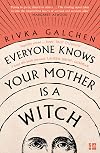
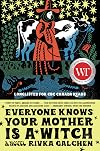
Everyone Knows Your Mother Is a Witch: A Novel
by Rivka Galchen
On This Page
Description
"It's both transfixing and destabilizing. It's the best thing I listened to all winter." — Alexis Gunderson, PASTE MagazineThe startling, witty, highly anticipated second novel from Rivka Galchen, the critically acclaimed author of Atmospheric Disturbances.
The story begins in 1618, in the German duchy of Württemberg. Plague is spreading. The Thirty Years' War has begun, and fear and suspicion are in the air throughout the Holy Roman Empire. In the small town of Leonberg, Katharina show more Kepler is accused of being a witch.
Katharina is an illiterate widow, known by her neighbors for her herbal remedies and the success of her children, including her eldest, Johannes, who is the Imperial Mathematician and renowned author of the laws of planetary motion. It's enough to make anyone jealous, and Katharina has done herself no favors by being out and about and in everyone's business.
So when the deranged and insipid Ursula Reinbold (or as Katharina calls her, the Werewolf) accuses Katharina of offering her a bitter, witchy drink that has made her ill, Katharina is in trouble. Her scientist son must turn his attention from the music of the spheres to the job of defending his mother. Facing the threat of financial ruin, torture, and even execution, Katharina tells her side of the story to her friend and next-door neighbor Simon, a reclusive widower imperiled by his own secrets.
Drawing on real historical documents but infused with the intensity of imagination, sly humor, and intellectual fire for which Rivka Galchen is known, Everyone Knows Your Mother Is a Witch will both provoke and entertain. The story of how a community becomes implicated in collective aggression and hysterical fear is a tale for our time. Galchen's bold new novel touchingly illuminates a society and a family undone by superstition, the state, and the mortal convulsions of history.
A Macmillan Audio production from Farrar, Straus and Giroux
. show less
Tags
Recommendations


























Member Reviews
Life feels fragile in the German Duchy of Württemberg, for it’s 1618, and not only does plague stalk the land, the Thirty Years War brings the passage of armies and their attendant depredations. But in the village of Leonberg, these afflictions only lap around the edges. What really matters is that Katharina Kepler is accused of witchcraft.
Katharina is an old woman, a grandmother who puts more faith in her beloved cow, Chamomile, than in people, young children excepted. Known for herbal remedies and her strange way of talking — she seldom answers a question directly, and asks in turn those that nobody else would dream of — she’s a busybody. She thinks nothing of bursting into someone’s house, whether to bring a gift or tell show more them how they should be living. The Yiddish word “nudnik” comes to mind.
She’s the sort who has an opinion about everything, and if you’re really lucky, you’ll get to hear it. She has a way of summing people up in insulting terms: “The crowd of them looked like a pack of dull troubadours who, come morning, have made off with all the butter.” Finally, her son, Johannes, is Imperial Mathematician, and Katharina’s neighbors are always asking her if he’ll cast their horoscopes. Apparently, he knows things about the heavens and writes books. These are suspicious activities, especially if the desired horoscope isn’t forthcoming.
From this eccentric yet harmless profile emerges the most incredible folklore. The good citizens of Leonberg believe, or come to believe, that Katharina has the power to poison, make people lame, pass through locked doors, cause livestock to sicken and die, and consort with the devil. How they arrive at these fancies — and why — makes a brilliant narrative, at once chilling and hilarious, absurd, yet with the ring of absolute truth.
In a novel like this, especially in the first-person narratives Galchen deploys, voice matters greatly, and you might suppose, as I did at first, that she owes a debt to Kafka. Not quite. In Kafka’s bureaucratic nightmares, the hand that wields power remains obscure, sometimes invisible. Here, you see the workings, or many of them; more importantly, you see their paranoid, angry underpinnings. Kafka is said to have read his work out loud to friends, causing general laughter. I’ve never laughed at Kafka — maybe that says something about me — but I did at Galchen. Until, that is, the accusations gather steam.
Everyone Knows is a feminist statement, for we have a free-thinking woman blamed for heresies, mostly by other women, interestingly. It’s as though they resent her for doing what they’ve never let themselves even think of. But though misogyny, including the self-inflicted variety, has historically fed attempts to suppress witchcraft, there’s much more here. Galchen has delved into the paranoia that produces conspiracy theories, and her reconstruction of their origins is spot on. Life has disappointed them, hasn’t granted what the conspiracy theorist assumes he or she deserves and, by God, someone will pay. If that’s not a diagnosis of a sickness that threatens this country’s social, cultural, and political fabric, I don’t know what is.
Some readers will find that this novel ends abruptly, and maybe it does. But that doesn’t trouble me. Galchen’s less concerned with what happens than its origins and legacy; she’s not so focused on the plot, and I accept that. More bothersome is the language, entirely brilliant, yet with occasional lapses in diction. Images like troubadours stealing butter or an otter in a doublet strike my ear perfectly, so I’m not prepared for modern idioms like okay, open up (meaning reveal), be fine with, or share your story. If Galchen, a careful writer, is trying to suggest that these seventeenth-century Germans are just like us, she’s proven that in other, deeper ways. show less
Katharina is an old woman, a grandmother who puts more faith in her beloved cow, Chamomile, than in people, young children excepted. Known for herbal remedies and her strange way of talking — she seldom answers a question directly, and asks in turn those that nobody else would dream of — she’s a busybody. She thinks nothing of bursting into someone’s house, whether to bring a gift or tell show more them how they should be living. The Yiddish word “nudnik” comes to mind.
She’s the sort who has an opinion about everything, and if you’re really lucky, you’ll get to hear it. She has a way of summing people up in insulting terms: “The crowd of them looked like a pack of dull troubadours who, come morning, have made off with all the butter.” Finally, her son, Johannes, is Imperial Mathematician, and Katharina’s neighbors are always asking her if he’ll cast their horoscopes. Apparently, he knows things about the heavens and writes books. These are suspicious activities, especially if the desired horoscope isn’t forthcoming.
From this eccentric yet harmless profile emerges the most incredible folklore. The good citizens of Leonberg believe, or come to believe, that Katharina has the power to poison, make people lame, pass through locked doors, cause livestock to sicken and die, and consort with the devil. How they arrive at these fancies — and why — makes a brilliant narrative, at once chilling and hilarious, absurd, yet with the ring of absolute truth.
In a novel like this, especially in the first-person narratives Galchen deploys, voice matters greatly, and you might suppose, as I did at first, that she owes a debt to Kafka. Not quite. In Kafka’s bureaucratic nightmares, the hand that wields power remains obscure, sometimes invisible. Here, you see the workings, or many of them; more importantly, you see their paranoid, angry underpinnings. Kafka is said to have read his work out loud to friends, causing general laughter. I’ve never laughed at Kafka — maybe that says something about me — but I did at Galchen. Until, that is, the accusations gather steam.
Everyone Knows is a feminist statement, for we have a free-thinking woman blamed for heresies, mostly by other women, interestingly. It’s as though they resent her for doing what they’ve never let themselves even think of. But though misogyny, including the self-inflicted variety, has historically fed attempts to suppress witchcraft, there’s much more here. Galchen has delved into the paranoia that produces conspiracy theories, and her reconstruction of their origins is spot on. Life has disappointed them, hasn’t granted what the conspiracy theorist assumes he or she deserves and, by God, someone will pay. If that’s not a diagnosis of a sickness that threatens this country’s social, cultural, and political fabric, I don’t know what is.
Some readers will find that this novel ends abruptly, and maybe it does. But that doesn’t trouble me. Galchen’s less concerned with what happens than its origins and legacy; she’s not so focused on the plot, and I accept that. More bothersome is the language, entirely brilliant, yet with occasional lapses in diction. Images like troubadours stealing butter or an otter in a doublet strike my ear perfectly, so I’m not prepared for modern idioms like okay, open up (meaning reveal), be fine with, or share your story. If Galchen, a careful writer, is trying to suggest that these seventeenth-century Germans are just like us, she’s proven that in other, deeper ways. show less
"She was a frighteningly intelligent woman--also a fool."
Simon Satler, friend of Katharina Kepler
I love this book! But I am disheartened. It has, in GR standards, a lowly rating of 3.39. That's unfathomable to me. So I am here to try to convince you to read this one in spite of its rating.
Especially if you are an old broad like me who enjoys reading about old kickass broads.
Author Rivka Galchen created a living, breathing woman reconstituted from the dry pages of 17c European history, seventy-something year old Katharina, the real mother of early astronomer Johannes Kepler (his work was crucial to Sir Isaac Newton's own). Once when Johannes was six years old, Katharina brought him to an elevated point in order to view the major comet show more in 1577.
Already you gotta love her, right?
Between the years of 1615-1621 she was on trial for her life, after being accused of being a witch by a woman whose name has gone down in history as the disingenuous perpetrator of lies that could result in Katharina being burned or beheaded. A deception that caught like wildfire, playing into the deep superstitions of villagers whose lives are epitomized by the expression "nasty, brutish and short." Their hearsay evidence, recounted fictionally (but realistically), was an eye-opener of the incredible variety of transparent and terrible reasons a person might convince themselves they knew Katharina (or any woman or man) to be a witch.
Katharina's real crime? She was old. She also was a widow. She possessed some modest property. That is, she was society's vulnerable. She sold herbal packets to help fever, skin ailments, stomach troubles--herbs being mankind's early medicines, sometimes helpful, sometimes not, always fodder for witch accusations. Worse, she could be seen out and about during daylight not acting demure, not invisible enough to suit some.
I loved her for that independence, her lack of kowtowing, not out of pride but out of just getting on with life. You know that saying, "Dance as if no one was watching?" That's the way Katharina lived her life, perhaps foolishly as her sons and her friend Simon thought. I don't mean she lived in exuberance--far from it, she could be quite dour and cynical--but that she lived her life going about her business, helping others, showing compassion, having an opinion, speaking up, as if no one was watching. But they were.
She was a woman of her time and had her own silly superstitions as well--she didn't approve of strawberries because they grew too close to the earth's foul vapors. She had secret nicknames for people she disliked--werewolf, fake unicorn, and my favorite of the nicknames, cabbage.
She loved Martin Luther. She loved her children, her grandchildren, and her cow, Chamomile who she said had the eyes of her father and the soul of a favorite young granddaughter who died of an unidentified and sudden disease, a death she bore but grieved for a long time.
She also loved her friend and socially reclusive/awkward neighbor, Simon. The first words of the novel are Katharina's, written down by Simon for her, as her "truest testimony" she calls it. From the get-go we know we are meeting a person worth meeting. In the end, the friendship is strained by the trial, by Simon's own woes, and the burden their friendship had on him. Later, she says to him, so wisely, so compassionately, "You've been a friend to me. In the ways that were available to you."
Back to even that first written testimony, she knows herself and her predicament, how alone she truly is in a way that old crones do:
"There are two things a woman must do alone; she does her own believing and her own dying."
I love this book! show less
Simon Satler, friend of Katharina Kepler
I love this book! But I am disheartened. It has, in GR standards, a lowly rating of 3.39. That's unfathomable to me. So I am here to try to convince you to read this one in spite of its rating.
Especially if you are an old broad like me who enjoys reading about old kickass broads.
Author Rivka Galchen created a living, breathing woman reconstituted from the dry pages of 17c European history, seventy-something year old Katharina, the real mother of early astronomer Johannes Kepler (his work was crucial to Sir Isaac Newton's own). Once when Johannes was six years old, Katharina brought him to an elevated point in order to view the major comet show more in 1577.
Already you gotta love her, right?
Between the years of 1615-1621 she was on trial for her life, after being accused of being a witch by a woman whose name has gone down in history as the disingenuous perpetrator of lies that could result in Katharina being burned or beheaded. A deception that caught like wildfire, playing into the deep superstitions of villagers whose lives are epitomized by the expression "nasty, brutish and short." Their hearsay evidence, recounted fictionally (but realistically), was an eye-opener of the incredible variety of transparent and terrible reasons a person might convince themselves they knew Katharina (or any woman or man) to be a witch.
Katharina's real crime? She was old. She also was a widow. She possessed some modest property. That is, she was society's vulnerable. She sold herbal packets to help fever, skin ailments, stomach troubles--herbs being mankind's early medicines, sometimes helpful, sometimes not, always fodder for witch accusations. Worse, she could be seen out and about during daylight not acting demure, not invisible enough to suit some.
I loved her for that independence, her lack of kowtowing, not out of pride but out of just getting on with life. You know that saying, "Dance as if no one was watching?" That's the way Katharina lived her life, perhaps foolishly as her sons and her friend Simon thought. I don't mean she lived in exuberance--far from it, she could be quite dour and cynical--but that she lived her life going about her business, helping others, showing compassion, having an opinion, speaking up, as if no one was watching. But they were.
She was a woman of her time and had her own silly superstitions as well--she didn't approve of strawberries because they grew too close to the earth's foul vapors. She had secret nicknames for people she disliked--werewolf, fake unicorn, and my favorite of the nicknames, cabbage.
She loved Martin Luther. She loved her children, her grandchildren, and her cow, Chamomile who she said had the eyes of her father and the soul of a favorite young granddaughter who died of an unidentified and sudden disease, a death she bore but grieved for a long time.
She also loved her friend and socially reclusive/awkward neighbor, Simon. The first words of the novel are Katharina's, written down by Simon for her, as her "truest testimony" she calls it. From the get-go we know we are meeting a person worth meeting. In the end, the friendship is strained by the trial, by Simon's own woes, and the burden their friendship had on him. Later, she says to him, so wisely, so compassionately, "You've been a friend to me. In the ways that were available to you."
Back to even that first written testimony, she knows herself and her predicament, how alone she truly is in a way that old crones do:
"There are two things a woman must do alone; she does her own believing and her own dying."
I love this book! show less
Katharina Kepler finds herself in hot water when Ursula Reinbold accuses her of witchcraft, namely, of giving her poisoned wine that makes her sick. Frau Kepler then turns around and accuses Ursula of slander - but instead of her charge being taken seriously, more and more neighbors come out of the woodwork to say that the old woman has harmed them or their children or their animals in some way.
Told primarily as Katharina's telling her literate neighbor and court guardian, Simon, her side of the story, interspersed with Simon's comments and transcripts of trial testimony, this historical fiction tale imagines what the full story behind Johannes Kepler's mother might have been. Galchen seamlessly blends real and imagined figures to tell show more a compelling tale of an opinionated old woman and the misunderstandings, friendships, jealousies and more that arise in her small community in Wurttemberg. Compelling and maddening reading. show less
Told primarily as Katharina's telling her literate neighbor and court guardian, Simon, her side of the story, interspersed with Simon's comments and transcripts of trial testimony, this historical fiction tale imagines what the full story behind Johannes Kepler's mother might have been. Galchen seamlessly blends real and imagined figures to tell show more a compelling tale of an opinionated old woman and the misunderstandings, friendships, jealousies and more that arise in her small community in Wurttemberg. Compelling and maddening reading. show less
What a curious, yet delightful novel. Katharina Kepler is an elderly widow. She is the mother of the noted astronomer, Johannes Kepler. She is kind to neighbours and to cows. Yet her kindness is rewarded with envy, aggression, and calumny. She is accused of witchcraft. The charge, of course, is a nonsense spurred on by a grasping desire to make a profit off her pain. Despite the absurdity of the charge, Katharina, her children, her neighbour, Simon, and others must fight the charge for nearly all the remaining years of her life.
Katharina is a wonderful character, gentle and wise, despite her lack of schooling. But she lives in a world that is fallen. Wars, both secular and religious, sweep across the land. Plague regularly breaks out. show more The plague of ignorance is even more virulent. What is most surprising, perhaps, then is that Katharina remains the kind, gentle person she has always been.
Rivka Galchen found something in the historical record that inspired her fictional account of Katharina’s troubles. But it is her genius that paints this picture with humour and grace and a willingness to be generous to the disappointment that some people bring into the world. It’s a most unusual subject for a novel, yet it totally works.
Gently recommended. show less
Katharina is a wonderful character, gentle and wise, despite her lack of schooling. But she lives in a world that is fallen. Wars, both secular and religious, sweep across the land. Plague regularly breaks out. show more The plague of ignorance is even more virulent. What is most surprising, perhaps, then is that Katharina remains the kind, gentle person she has always been.
Rivka Galchen found something in the historical record that inspired her fictional account of Katharina’s troubles. But it is her genius that paints this picture with humour and grace and a willingness to be generous to the disappointment that some people bring into the world. It’s a most unusual subject for a novel, yet it totally works.
Gently recommended. show less
Katherina Kepler was a eccentric, stubborn old widow when the complaints started; mysterious illnesses, strange happenings, and death seem to stalk her neighbors, and somehow everything seemed connected to her. Although illiterate, Katherina was not without resources to fight back against the ugly rumors that started small but grew to surround her. Her three adult children, including famed astronomer Johannes Kepler, do their best to protect her, as does her next door neighbor and legal guardian Simon (who couldn’t be more obviously a fictional character). Even so, suspense builds. Will Katherina be turned over to the authorities for torture and ultimately death? And what will become of her beloved cow?
Author Rivka Galchen evokes life show more in a 17th century German village with aplomb, even if the narrative is slow in places. Recommended. show less
Author Rivka Galchen evokes life show more in a 17th century German village with aplomb, even if the narrative is slow in places. Recommended. show less
Rivka Galchen's Everyone Knows Your Mother Is a Witch is a work of fiction based on the real world witchcraft trial of Katharina Kepler, mother of the ground-breaking astronomer Johannes Kepler. Two rather well-known works of nonfiction documenting this event have been published: James A. Connor's Kepler's Witch (2004) and Ulinka Rublack's The Astronomer and the Witch (2015). Galchen credits the second of those titles as the inspiration for her novel. Galchen worked with a broad body of historical works in writing her novel, but makes it very clear that she is writing fiction that uses a real-world event as a jumping off point. Her novel is not narrativized history.
Everyone Knows Your Mother Is a Witch offers a simultaneously absurd, show more disturbing, and thought-provoking reading experience. The absurdity comes from Galchen's depiction of Katherina, who she pictures as an opinionated, cantankerous, but warm-hearted, women. Much of the book is written in Katherina's voice, and Katherina's description of a daughter in law and of her astronomer son give a taste of this.
Of the daughter in law, married to another of Katherina's sons, and who has a taste for the kind of scandalous pamphlets that were that day's equivalent of the scandal-sheets we see at grocery check-out lines: "Gertie loved to hear about the miser whose heart was found in a chest with his jewels after he died. About the holy nun who married the Moor who kidnapped her. She'll read any pamphlet she can get. It makes me not mind that I can't read myself."
Of Johannes: "he's made his way in the world the easy way, through his studies."
Katharina loves her children, but she seems to love her cow Chamomile every bit as much.
The lengthy sections in Katharina's voice are accompanied by a narrative in the voice of a mild-mannered, controversy-averse neighbor who plays the role of Katharina's legal guardian, as women were not allowed to represent themselves in legal proceedings. (There was a neighbor who had this role in real-life, but Galchen makes it clear that her version of the neighbor is completely fictive.) Like Katharina, Simon, the neighbor, has a wry way of putting things. Describing himself listening to the drunken ramblings of Katherina's son Christoph, Simon notes "I said nothing. If there were a guild of non-sayers, that would be my guild. That's also the guild of standing by."
As one reads and as the accusations against Katharina grow in number and unlikelihood, the narrative becomes disturbing. Clearly some of those accusing Katharina have ulterior motives: they hope to be awarded parts of her land or a financial payout if Katharina is convicted. Others seem absolutely genuine in their accusations, which are often memories of past events they didn't note at the time. In this world, correlation equals causation, even if the things being correlated are only dimly remembered. What can Katharina do to defend herself when anyone can suddenly recall seeing her just before a horse went lame, their children became sick, or they broke out in a rash?
This leads me to what I found to be a particularly thought-provoking aspect of Everyone Knows Your Mother Is a Witch. What is it like to live in a world where witchcraft is seen as a more likely cause of suffering than ill luck? To what extent do accusers sincerely believe they are protecting their community? To what extent are they actually clamoring for a role in the public spectacle a witchcraft trial becomes?
Everyone Knows Your Mother Is a Witch offers a compelling read that rewards in multiple ways. Any lover of well-crafted plot- and character-driven driven fiction should appreciate it. And it may lead some readers to Connor and Rublack's books to explore the history behind Galchen's tale.
I received a free electronic review copy of this title from the publisher via NetGalley; the opinions are my own. show less
Everyone Knows Your Mother Is a Witch offers a simultaneously absurd, show more disturbing, and thought-provoking reading experience. The absurdity comes from Galchen's depiction of Katherina, who she pictures as an opinionated, cantankerous, but warm-hearted, women. Much of the book is written in Katherina's voice, and Katherina's description of a daughter in law and of her astronomer son give a taste of this.
Of the daughter in law, married to another of Katherina's sons, and who has a taste for the kind of scandalous pamphlets that were that day's equivalent of the scandal-sheets we see at grocery check-out lines: "Gertie loved to hear about the miser whose heart was found in a chest with his jewels after he died. About the holy nun who married the Moor who kidnapped her. She'll read any pamphlet she can get. It makes me not mind that I can't read myself."
Of Johannes: "he's made his way in the world the easy way, through his studies."
Katharina loves her children, but she seems to love her cow Chamomile every bit as much.
The lengthy sections in Katharina's voice are accompanied by a narrative in the voice of a mild-mannered, controversy-averse neighbor who plays the role of Katharina's legal guardian, as women were not allowed to represent themselves in legal proceedings. (There was a neighbor who had this role in real-life, but Galchen makes it clear that her version of the neighbor is completely fictive.) Like Katharina, Simon, the neighbor, has a wry way of putting things. Describing himself listening to the drunken ramblings of Katherina's son Christoph, Simon notes "I said nothing. If there were a guild of non-sayers, that would be my guild. That's also the guild of standing by."
As one reads and as the accusations against Katharina grow in number and unlikelihood, the narrative becomes disturbing. Clearly some of those accusing Katharina have ulterior motives: they hope to be awarded parts of her land or a financial payout if Katharina is convicted. Others seem absolutely genuine in their accusations, which are often memories of past events they didn't note at the time. In this world, correlation equals causation, even if the things being correlated are only dimly remembered. What can Katharina do to defend herself when anyone can suddenly recall seeing her just before a horse went lame, their children became sick, or they broke out in a rash?
This leads me to what I found to be a particularly thought-provoking aspect of Everyone Knows Your Mother Is a Witch. What is it like to live in a world where witchcraft is seen as a more likely cause of suffering than ill luck? To what extent do accusers sincerely believe they are protecting their community? To what extent are they actually clamoring for a role in the public spectacle a witchcraft trial becomes?
Everyone Knows Your Mother Is a Witch offers a compelling read that rewards in multiple ways. Any lover of well-crafted plot- and character-driven driven fiction should appreciate it. And it may lead some readers to Connor and Rublack's books to explore the history behind Galchen's tale.
I received a free electronic review copy of this title from the publisher via NetGalley; the opinions are my own. show less
I really admired Katharina's strength, forthrightness, and independence. But what a sharp tongue! Much of the story is told in the first person, mostly Katharina or her neighbor Simon, almost as if they are giving witness to the events that lead to Katharina's imprisonment. I was amazed at how well Galchen captured the [presumable] speech patterns of the 1600's, and then I read the Acknowledgements at the end and saw that the tale was based on a real even, and how much research was involved in presenting this story.
Kudos to Galchen.
People who want an easy, light-hearted read might not be happy with this book, but I highly recommend it to any thinking person. As I read, I was very aware of how rumors in our current society breed hatred show more and divisiveness, just as was happening in the early 1600's. Haven't we made any progress? show less
Kudos to Galchen.
People who want an easy, light-hearted read might not be happy with this book, but I highly recommend it to any thinking person. As I read, I was very aware of how rumors in our current society breed hatred show more and divisiveness, just as was happening in the early 1600's. Haven't we made any progress? show less
Members
- Recently Added By
Lists

Books Read in 2022
5,168 works; 114 members

Feminism
167 works; 4 members

Books With the Most Memorable Titles
478 works; 158 members

Evergreen Award™ Winners and Nominees 2005–2024
200 works; 3 members
Author Information

14+ Works 2,229 Members
Some Editions
Awards and Honors
Awards
Common Knowledge
- Original publication date
- 2021-06-08
- People/Characters
- Simon Satler; Lutherus Einhorn; Chamomile; Ursula Reinbold; Duchess Sybille; Christoph Kepler (show all 32); Gertrauta Kepler; Katharina Guldenmann Kepler; Jerg Hundersinger; Heinrich Kepler; Sebald Sebelen; Martin Vollmair; Margaretha Binder; Endres Leutbrand; Severin Stahlen; Hans Benedict Beitelspacher; Maruschl; Susanna Kepler; Lorenz Nehmer; Wallpurga Haller; Dorothea Klebl; Daniel Schmidt; Ella Schmidt; Michael Stahl; Regina Short; Margretta Meyer; Barbara Meyer; Topher Frick; Donatus Gultlinger; Rosina Zoft; Lorenz Bausch; Helena Frisch
- Important places
- Leonberg, Baden-Württemberg, Germany; Güglingen, Heilbronn, Baden-Württemberg, Germany
- Important events
- Constitutio Criminalis Carolina (1532)
- Dedication
- for my family
- First words
- Herein I begin my account, with the help of my neighbor Simon Satler, since I am unable to read or write.
- Last words
- (Click to show. Warning: May contain spoilers.)It is rumored to be a happy match.
- Blurbers
- Russell, Karen; Goldman, Francisco; Kitamura, Katie; Aira, Cesar
- Canonical DDC/MDS
- 813.6
- Canonical LCC
- PS3607.A4116
Classifications
Statistics
- Members
- 822
- Popularity
- 33,553
- Reviews
- 34
- Rating
- (3.65)
- Languages
- 5 — Catalan, English, French, German, Spanish
- Media
- Paper, Audiobook, Ebook
- ISBNs
- 21
- ASINs
- 5