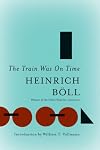
The Train Was on Time
by Heinrich Böll
On This Page
Description
Heinrich Böll's taut and haunting first novel tells the story of twenty-four-year-old Private Andreas as he journeys on a troop train across the German countryside to the Eastern front. Trapped, he knows that Hitler has already lost the war ... yet he is suddenly galvanized by the thought that he is on the way to his death. nbsp; As the train hurtles on, he riffs through prayers and memories, talks with other soldiers about what they've been through, and gazes desperately out the window at show more his country racing away. With mounting suspense, Andreas is gripped by one thought over all: Is there a way to defy his fate? show lessTags
Recommendations


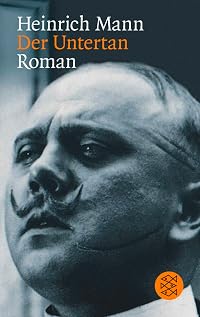
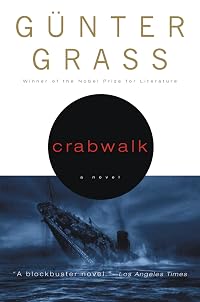
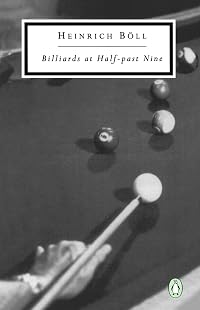





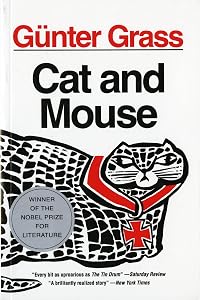

























Member Recommendations

Member Reviews
As with The Lost Honour of Katharina Blum (1974), which I reviewed here, Böll uses irony extensively. Anna Funder in her Introduction refers to Böll's preoccupation with subservience to authority as the root of totalitarianism, but makes no mention of Andreas's numerous references to praying for the Jews. The Train Was on Time was first published in 1949 as Germany was trying to come to terms with the Holocaust, when people all over the world were reeling in horror at the knowledge that trains transported millions of Jews to their deaths. Those trains were 'on time' too, and the irony of this nightmare journey is that whereas the soldier Andreas knows he is destined for death on the battlefield, the Jews being deported from all over show more Europe did not know their fate. Significantly — considering the pervasive postwar denials about what was known at the time — this character Andreas knows about the fate of the Jews and that he should pray for them. Other than Böll being a Catholic himself, I am not sure if there is any significance in Andreas being Catholic rather than Protestant. Perhaps someone else can enlighten me.
On the first page of The Train Was On Time, Böll alerts the reader to the importance of language, in what seems to be a rather strange paragraph:
For Andreas, it's as he boards the train that the word 'soon' enters him like a bullet and almost imperceptibly penetrating flesh, tissues, cells, nerves, until at some point it caught, like a barbed hook... His fate dawns on him as he tries to calculate where and when his ultimate destination might be and he is suddenly overwhelmed by the shock of fear. He realises he will never again see that station, his friend, or even a man he'd abused.
Reminiscent of the way Jews were packed into trains so tightly that some of them were crushed to death en route, Andreas and his fellow soldiers are squeezed into the carriage for their journey. Andreas sits down on his pack because there's nowhere else to put it, and...
In another irony, they jam the door shut with their bodies so that others may not enter, an allusion to the way that the Jews were locked and bolted into the carriages from the outside so that they could not get out.
To read the rest of my review please visit https://anzlitlovers.com/2023/12/23/the-train-was-on-time-1949-by-heinrich-boll-... show less
On the first page of The Train Was On Time, Böll alerts the reader to the importance of language, in what seems to be a rather strange paragraph:
Now and again what appears to be a casually spoken word will suddenly acquire a cabalistic significance. It becomes charged and strangely swift, races ahead of the speaker, is destined to throw open a chamber in the uncertain confines of the future and to return to him with the deadly accuracy of a boomerang. Out of the small talk of unreflecting speech, usually from among those halting, colourless goodbyes exchanged beside trains on their way to death, it falls back on the speaker like a leaden wave, and he becomes aware of the force, both frightening and intoxicating, of the workings of fate. To lovers and soldiers, to men marked for death and to those filled with the cosmic force of life, this power is sometimes given, without warning; a sudden revelation is conferred on them, a bounty and a burden... and the word sinks down inside them. (p1-2)
For Andreas, it's as he boards the train that the word 'soon' enters him like a bullet and almost imperceptibly penetrating flesh, tissues, cells, nerves, until at some point it caught, like a barbed hook... His fate dawns on him as he tries to calculate where and when his ultimate destination might be and he is suddenly overwhelmed by the shock of fear. He realises he will never again see that station, his friend, or even a man he'd abused.
Reminiscent of the way Jews were packed into trains so tightly that some of them were crushed to death en route, Andreas and his fellow soldiers are squeezed into the carriage for their journey. Andreas sits down on his pack because there's nowhere else to put it, and...
... tried to arrange his legs as comfortably as possible: he stretched the left one carefully past the face of one sleeping soldier, and placed the other one across a piece of luggage that was shielding the back of another.
In another irony, they jam the door shut with their bodies so that others may not enter, an allusion to the way that the Jews were locked and bolted into the carriages from the outside so that they could not get out.
To read the rest of my review please visit https://anzlitlovers.com/2023/12/23/the-train-was-on-time-1949-by-heinrich-boll-... show less
Having now read all of the Booker longlisted books I can get my hands on, I am back to reading some that have been patiently sitting on the to read shelf for a few months. Böll has been a writer I felt I should have read for a while, and this early novella was my first experience.
The whole book is a test of the premise "what if I knew exactly when I was going to die". The book is mostly set on a German troop train in 1943, which is travelling from the Rheinland towards the front in eastern Poland over a few days. The narrator Andreas has a premonition, which he believes unshakably, that he will die somewhere between two Polish villages, at a time no more than four days away, and the book follows his thoughts and actions over those four show more days. He spends most of the journey in the company of two other soldiers, one of whom is determined to throw his money away after his wife has left him, mostly on food, alcohol and women.
The journey involves two changes of train in Poland, allowing the last night to be spent in the Galician capital Lvov, where his last night is spent with a former aspiring musician who is working as a prostitute, and where, on the last page, the premonition appears to be realised. .
The whole vision is a rather impressive but bleak one, and I will definitely consider reading more. show less
The whole book is a test of the premise "what if I knew exactly when I was going to die". The book is mostly set on a German troop train in 1943, which is travelling from the Rheinland towards the front in eastern Poland over a few days. The narrator Andreas has a premonition, which he believes unshakably, that he will die somewhere between two Polish villages, at a time no more than four days away, and the book follows his thoughts and actions over those four show more days. He spends most of the journey in the company of two other soldiers, one of whom is determined to throw his money away after his wife has left him, mostly on food, alcohol and women.
The journey involves two changes of train in Poland, allowing the last night to be spent in the Galician capital Lvov,
The whole vision is a rather impressive but bleak one, and I will definitely consider reading more. show less
It's all about fear of death going to war and calculating when it might happen. Absorbing and frightening.
I chose this one on a whim and I'm glad I did. It's short, so a quick read, but the situation and emotions are intense. The novel provides an interesting look at the lives of a few German soldiers during WWII and contributed something new to my overall understanding of the era.
An accomplished debut novel published in 1949. A young German soldier has a premonition that he will shortly die, somewhere soon. Somewhere during the next few days of his journey. We observe his thinking, his reminiscing and his activities as the train moves along the tracks.
8423311805
Members
- Recently Added By
Lists

German Literature
518 works; 55 members

First Novels
373 works; 16 members

Novels Set on Trains
11 works; 3 members
Author Information

355+ Works 17,537 Members
Heinrich Böll was born in Cologne, Germany on December 21, 1917. He studied German at the University of Cologne. He was drafted into military service in 1938 shortly after he finished his schooling and served several years in the infantry before his demobilization in 1945. His first novel, Der Zug war pünktlich (The Train Was on Time), was show more published in 1949. His other works include Billiards at Half-Past Nine, The Clown, Absent without Leave, Enter and Exit, and The Lost Honor of Katharina Blum. He received numerous awards including the Georg Büchner Prize in 1967 and the Nobel Prize for Literature in 1972. He died on July 16, 1985 at the age of 67. (Bowker Author Biography) show less
Some Editions
Series
Belongs to Publisher Series
Work Relationships
Is contained in
Has as a student's study guide
Common Knowledge
- Canonical title
- The Train Was on Time
- Original title
- Der Zug war pünktlich; Der Zug war pünklich
- Original publication date
- 1970 (English translation) (English translation); 1949
- Important events*
- Zweiter Weltkrieg
- Epigraph
- I have known many adventures in my time: the creation of postal routes, Sahara rebellions, South America...but war is not really an adventure at all, it is only a substitute for adventure...War is a disease. Like typhus.
<... (show all)br>Antoine de Saint-Exupéry, ‘Pilot de Guerre’ - First words*
- Als sie unten durch die dunkle Unterführung schritten, hörten sie den Zug oben auf den Bahnsteig rollen, und die sonore Stimme im Lautsprecher sagte ganz sanft: "Fronturlauberzug von Paris nach Przemysl über..."
- Last words*
- (Click to show. Warning: May contain spoilers.)Nein, es tropft auf seine Wangen, und in diesem fahlen Dämmer, der noch ohne die gelbe Milde der Sonne ist, sieht er nun, dass Olinas Hand über seinem Kopf von einem Bruchstück des Wagens herunterhängt und dass Blut von ihren Händen auf sein Gesicht tropft, und er weiss nicht mehr, dass er selbst nun wirklich zu weinen beginnt...
- Original language
- German
*Some information comes from Common Knowledge in other languages. Click "Edit" for more information.
Classifications
- Genres
- General Fiction, Fiction and Literature
- DDC/MDS
- 833.914 — Literature & rhetoric German & related literatures German fiction 1900- 1900-1990 1945-1990
- LCC
- PT2603 .O394 .Z4513 — Language and Literature German, Dutch and Scandinavian literatures German literature Individual authors or works 1860/70-1960
- BISAC
Statistics
- Members
- 666
- Popularity
- 43,058
- Reviews
- 10
- Rating
- (3.96)
- Languages
- 12 — Bosnian, Danish, Dutch, English, French, German, Italian, Norwegian (Bokmål), Farsi/Persian, Spanish, Swedish, Turkish
- Media
- Paper, Ebook
- ISBNs
- 31
- ASINs
- 20