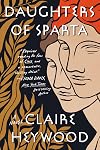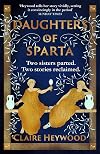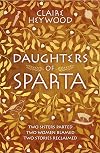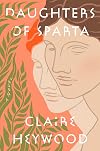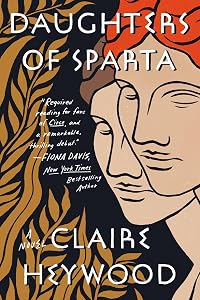
Daughters of Sparta
by Claire Heywood
On This Page
Description
"For millennia, men have told the legend of the woman whose face launched a thousand ships-but now it's time to hear her side of the story. Daughters of Sparta is a tale of secrets, love, and tragedy from the women behind mythology's most devastating war, the infamous Helen and her sister Klytemnestra"--Tags
Recommendations





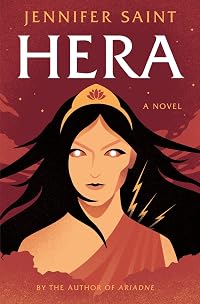
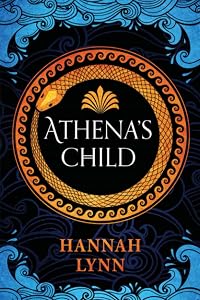
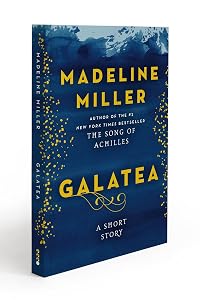
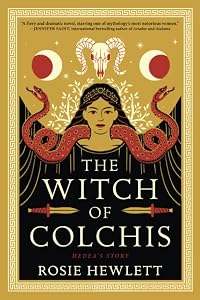








Member Reviews
Wonderful and frustrating - this well told story of two sisters separated by marriage will infuriate and entertain readers. It's a man's world and Helen and Klytemnestra are just pawns in lives that are out of their control. They could have it worse, but they are both princesses (soon to be queens) rather than slaves or servants so they have more freedom than any other women. Unfortunately, there is still a high cost they have no control over the actions that their powerful, and often times uncaring, husbands take. Claire Heywood does a masterful story spinning the "true" version of Helen of Troy's legend and brings to life her often overlooked sister. A fantastic retelling of the classic Greek myth.
I loved this book! This book follows the lives of Helen and Klytemnestra, two sisters destined to be at the center of Greek history. Well written and hard to put down, it's a brilliant look at the emptiness of the lives of women in classical society. I would love to see more books like this one that look at things from the point of view of women and other marginalized people.
I love Greek mythology, but I did not love Daughters of Sparta by Claire Heywood. Presented as a reimaging or rather a behind-the-scenes glimpse of the story of Clytemnestra and Helen of Troy, it loses all the feel of the original myth. Clytemnestra is fangless, lacking the anger her story normally holds. She’s too concerned with being a good girl/wife/daughter/queen/woman, which is not her if you are familiar with her story. As for Helen, she is a complete bore. There is no complexity to her character, nor does she have any common sense. She is as shallow as the myths hint. By Part III, I had no interest in continuing this tedious story, so I didn’t.
I'm a sucker for any fiction about Greek mythology, especially the Iliad. Those who enjoyed Circe and Song of Achilles will enjoy this behind-the-scenes look at sisters Klytemnestra and Helen, the former the wife of Agamemnon and the latter the wife of Menelaus, brothers of Mycenae. Both will play critical roles in the Trojan War and its aftermath. The women tell their stories in alternating chapters, and there are many surprises in store, inventions by the author as no one even knows if these women ever existed. Klytemnestra allows the sacrifice of their daughter Iphigenia in exchange for fair winds and vows vengeance against her husband, but there is a shocking reveal about the role of Calchas the seer in the sacrifice. Another twist show more is the lineage of Aegisthus, who becomes her lover before Agamemnon returns from battle. Rejected by her mother Leda (who for good reason resents Zeus fathering her in the form of a swan), Helen's reluctance to bear children after the difficult birth of her own daughter causes a rift with Menelaus, and she succumbs when the weak and vain Paris lures her to Troy (and steals from Menelaus' treasure trove). This is an entertaining addition to the genre. show less
My daughter's immersion in Classical Studies has rekindled my own love of those stories, and, lucky for me, Mythological Fiction is having a moment. Every time you turn around, there is a new reimagining. This one centres on Helen of Troy (originally of Sparta) and her sister Klytemnestra. Helen's story is well-known of course (the face that launched 1,000 ships etc.) but Klytemnestra, while not so prominent, carries her own infamy. This novel follows both women, and tells the famous and less-famous tales from their perspectives. Klytemnestra grows up in the shadow of her beautiful younger sister, known for her dutiful nature and even temper. Married to Agamemnon (whose brother Menelaos her sister Helen will eventually wed) and exiled show more to Mycenae, Klytemnestra bears her duty admirably until the unconscionable act that her husband carries out as he prepares to embark upon the war in Troy. After that, she must bide her time until that act may be avenged. Carefree Helen becomes the queen of Sparta, as Menelaos takes over as king, but despite the competition that Menelaos had to win to secure her, she is not happy, especially after she nearly dies bearing his daughter. Eventually Paris, prince of Troy, arrives in her kingdom, and bestows upon her all the love and admiration she has never had from her husband. She decides to leave with him for Troy and of course, the rest is history. Or historical fiction. The war is not kind to Helen, as she is exiled from her own country and people, and is reviled, never accepted, by her adopted ones. Klytemnestra finds partnership and happiness in her own husband's absence, but fear and vengeance colours every moment of her life. This story gives power to women who never really have it, and illustrates how very strong they can be. show less
I am thoroughly enjoying these novels about mythological figures. So many myths are rather dry and read like a textbook. Historical fiction allows the author to imagine exactly how that character felt or what in her story led to her committing whatever acts she committed (like killing your 1st husband to stay with the 2nd one). I found myself enveloped in Helen's and Clytemnestra's lives and suffered right along with them. I wish these novels had been available when I was teaching THE ILIAD to my honors freshmen; they would have benefited from having the background but also in caring for the individuals in the story (except Agamemnon; he's horrific no matter what story or myth he is in). Heywood's writing style is personal and keeps you show more close to these two female heroines, who were only seen as prizes in their day but with this modern retelling are their own forces wielding their own powers as best they can in the patriarchal hellhole they live in. show less
I honestly don't know how to rate this, so I'm rounding up to 4 stars.
Did I like it? 3 stars.
Is it well written? 4 stars.
I've read too many retellings of Greek myths this year. They've all had a feminist angle and while I've loved reading the stories from the POV of the women in them, I'm reminded the entire time how horrible all the men are. And when you're already familiar with a story, reading again and again about the terrible things these "heroes" did is like eating something gross over and over.
I still don't like mushrooms, dammit.
I read this on audio through my library and the narration was well done.
Did I like it? 3 stars.
Is it well written? 4 stars.
I've read too many retellings of Greek myths this year. They've all had a feminist angle and while I've loved reading the stories from the POV of the women in them, I'm reminded the entire time how horrible all the men are. And when you're already familiar with a story, reading again and again about the terrible things these "heroes" did is like eating something gross over and over.
I still don't like mushrooms, dammit.
I read this on audio through my library and the narration was well done.
Members
- Recently Added By
Lists

ALA Reading List: Historical Fiction 2021-2026
30 works; 4 members

Netgalley Reads
468 works; 3 members
Author Information

4 Works 1,013 Members
Awards and Honors
Awards
Distinctions
Common Knowledge
- Canonical title
- Daughters of Sparta
- Original publication date
- 2021-06-22
- People/Characters
- Helen of Troy; Klytemnestra
- Important places
- Sparta
- Blurbers
- Davis, Fiona; Joshi, Alka
Classifications
Statistics
- Members
- 651
- Popularity
- 44,717
- Reviews
- 9
- Rating
- (3.68)
- Languages
- 7 — Dutch, English, French, German, Italian, Portuguese, Spanish
- Media
- Paper, Audiobook, Ebook
- ISBNs
- 21
- ASINs
- 7