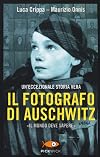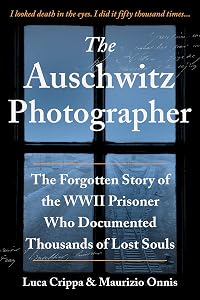
The Auschwitz Photographer: The Forgotten Story of the WWII Prisoner Who Documented Thousands of Lost Souls
by Luca Crippa (Author), Maurizio Onnis (Author)
On This Page
Description
The Nazis asked him to swear allegiance to Hitler, betraying his country, his friends, and everything he believed in.He refused.
Poland, 1939. Professional photographer Wilhelm Brasse is deported to Auschwitz-Birkenau and finds himself in a deadly race to survive, assigned to work as the camp's intake photographer and take "identity pictures" of prisoners as they arrive by the trainload. Brasse soon discovers his photography skills are in demand from Nazi guards as well, who ask him to take show more personal portraits for them to send to their families and girlfriends. Behind the camera, Brasse is safe from the terrible fate that so many of his fellow prisoners meet. But over the course of five years, the horrifying scenes his lens capture, including inhumane medical "experiments" led by Josef Mengele, change Brasse forever.
Based on the true story of Wilhelm Brasse, The Auschwitz Photographer is a stark black-and-white reminder of the horrors of the Holocaust. This gripping work of World War II narrative nonfiction takes readers behind the barbed wire fences of the world's most feared concentration camp, bringing Brasse's story to life as he clicks the shutter button thousands of times before ultimately joining the Resistance, defying the Nazis, and defiantly setting down his camera for good.
. show less
Tags
Recommendations








Member Reviews
In 1939, William Brasse, a young Pole, refuses to swear loyalty to hitler. In March 1940 he is captured and sent to Sanok, Tarnow and then to Auschwitz. Used as slave labor to demolish homes to make room for roadways, move corpses to crematorium, and kitchen work. In 1941, the political department assigns him to the identification photo studio.
Brasse worked here taking portrait photographs of political prisoners, Jewish prisoners, and captured resistance fighters virtually all to be tortured, starved, over-worked and killed within months. Brasse is determined to do whatever it takes to survive as long as he can. Because he learned photography as a teen from his uncle, excelled at it, and avoided being outside the studio more than show more absolutely necessary, he survives until January 1945 when he is marched to Ebensee Concentration Camp. Months later, in May, Ebensee is liberated by American soldiers.
He tried making his subjects as comfortable as possible under the circumstances. He was witness to some of the most egregious evil man could inflict on man. Ordered by Mengele and other doctors to photograph starved Jewish girls, girls on whom ‘medical’ experiments were done, usually twins as well as those with eyes of different colors, prisoners who developed open facial wounds exposing muscle and bone, young women who were sedated and had their uteruses removed, corpses who had organs removed, etc.
Brasse’s photography was perhaps too good. Nazi officers often asked him to take their portraits to send home to their families. At first Brasse couldn’t understand why the nazis would document their heinous crimes. Over time he realized many of them had been brainwashed into believing they were doing good work, ridding the world of ‘inferior races.'
During the last year of working in Auschwitz Brasse’s commitment to survive is overtaken by his need to bear witness. He carefully makes contact with resistance prisoners, providing photos and other documentation of what goes on in Auschwitz. He doesn’t want to die, of course, but if caught, he will know he’s done his best to let the outside world see the truth. And in an even more ambitious effort to preserve most of the 40,000 – 50,000 photographs he has taken, he aborts the order by his direct boss, Walter to burn all the photos. And blockades the studio so no one else can burn or destroy the photographs. He never sees or enters that photo studio again!
Book is very clear and well-written.
But… to me, a Jewess, I felt the authors kept the magnitude of the horror of Auschwitz to the margins of the story. Yes, we do ‘see’ Brasse experience terror and anxiety at what he had to photograph. And learn about what he sees outside his window; kapos beating prisoners to death, corpses piled up and being moved to the crematorium.
I still felt that the actual nightmare experience of Auschwitz (and all the concentration camps), from crowding civilians onto trains without food, water or sanitation, the torture, medical experiments, the mass murder of Jews, political prisoners, the Romani, homosexuals, the handicapped and mentally ill, the old, weak and sick, and anyone the nazis didn’t like was choreographed into the background so that Brasse and his life would be front and center.
And the reader doesn’t know for sure how Basse felt about Jews. He was horrified by the condition of the 4 emaciated Jewish twin girls, and some of the other Jewish subjects of medical experiments. But I don’t think he tried helping Jewish prisoners in any major way. show less
Brasse worked here taking portrait photographs of political prisoners, Jewish prisoners, and captured resistance fighters virtually all to be tortured, starved, over-worked and killed within months. Brasse is determined to do whatever it takes to survive as long as he can. Because he learned photography as a teen from his uncle, excelled at it, and avoided being outside the studio more than show more absolutely necessary, he survives until January 1945 when he is marched to Ebensee Concentration Camp. Months later, in May, Ebensee is liberated by American soldiers.
He tried making his subjects as comfortable as possible under the circumstances. He was witness to some of the most egregious evil man could inflict on man. Ordered by Mengele and other doctors to photograph starved Jewish girls, girls on whom ‘medical’ experiments were done, usually twins as well as those with eyes of different colors, prisoners who developed open facial wounds exposing muscle and bone, young women who were sedated and had their uteruses removed, corpses who had organs removed, etc.
Brasse’s photography was perhaps too good. Nazi officers often asked him to take their portraits to send home to their families. At first Brasse couldn’t understand why the nazis would document their heinous crimes. Over time he realized many of them had been brainwashed into believing they were doing good work, ridding the world of ‘inferior races.'
During the last year of working in Auschwitz Brasse’s commitment to survive is overtaken by his need to bear witness. He carefully makes contact with resistance prisoners, providing photos and other documentation of what goes on in Auschwitz. He doesn’t want to die, of course, but if caught, he will know he’s done his best to let the outside world see the truth. And in an even more ambitious effort to preserve most of the 40,000 – 50,000 photographs he has taken, he aborts the order by his direct boss, Walter to burn all the photos. And blockades the studio so no one else can burn or destroy the photographs. He never sees or enters that photo studio again!
Book is very clear and well-written.
But… to me, a Jewess, I felt the authors kept the magnitude of the horror of Auschwitz to the margins of the story. Yes, we do ‘see’ Brasse experience terror and anxiety at what he had to photograph. And learn about what he sees outside his window; kapos beating prisoners to death, corpses piled up and being moved to the crematorium.
I still felt that the actual nightmare experience of Auschwitz (and all the concentration camps), from crowding civilians onto trains without food, water or sanitation, the torture, medical experiments, the mass murder of Jews, political prisoners, the Romani, homosexuals, the handicapped and mentally ill, the old, weak and sick, and anyone the nazis didn’t like was choreographed into the background so that Brasse and his life would be front and center.
And the reader doesn’t know for sure how Basse felt about Jews. He was horrified by the condition of the 4 emaciated Jewish twin girls, and some of the other Jewish subjects of medical experiments. But I don’t think he tried helping Jewish prisoners in any major way. show less
The story of Wilhelm Brasse, a Polish political prisoner in Auschwitz. Staying true to his Polish background, Brasse refuses to cross over to the nazi-side, even though he has Aryan blood running through his veines. With his photographic background and his knowledge of German, he is chosen to become the head photographer of the Erkennungsdienst. First taking pictures of every arrival, but slowly the SS makes him take pictures of the medical experiments of Mengele and other doctors. The SS also trust him with personal pictures, that he needs to develop and hide. Brasse realises his weapon is his photography. He gets involved with the resistance groups in the camp by telling them about the pictures and handing over pamflettes he had to show more make for the SS. He knows he has to save the photos, that this will be important evidence once the war is over. With the help of his colleagues they rescue most pictures. Their work, their ressistance makes that there still is a lot of visual evidence of the cruel actions of the nazi-regime and the life in Auschwitz.
The book is so well written and it makes you feel like YOU are Brasse. Making decisions, seeing the victims through the lense, saving their memory with a little click of the camera, of your finger. For everyone interested in WWII this is a must read. Brasse played a big role in what we know today of the life in Auschwitz between 1941 and 1945. He gave a face to the many victims and the cruelty of the war. show less
The book is so well written and it makes you feel like YOU are Brasse. Making decisions, seeing the victims through the lense, saving their memory with a little click of the camera, of your finger. For everyone interested in WWII this is a must read. Brasse played a big role in what we know today of the life in Auschwitz between 1941 and 1945. He gave a face to the many victims and the cruelty of the war. show less
translated, nonfiction, WW2, biography, survival, Jews, prisoners-of-war, real-horror, never-again, bravery, historical-places-events, historical-research, history, survivor's guilt*****
Photographing the deeds of evil as a means of staying alive.
This one man with notable photographical skills was German and Polish and made to photograph the murdered before they were gassed. The narrative is presented in prose as if it was fiction. But it is not. It is a documentation of real horror, just as the photos documented who was murdered at Auschwitz and when. There was even an officer with a fondness for pictures of tattoos who ordered photos of them. One particularly beautiful was on a man's back and the photographer was shown the skin tacked show more out for tanning as the officer was having it made into a book cover. Well, that's just one example of the horrors, and that doesn't include the things done to political prisoners and others. There are a few pictures and the documentation at the end.
Translated from the Italian by Jennifer Higgins.
I requested and received a free temporary ebook from Sourcebooks via NetGalley. Thank you.
Never again. show less
Photographing the deeds of evil as a means of staying alive.
This one man with notable photographical skills was German and Polish and made to photograph the murdered before they were gassed. The narrative is presented in prose as if it was fiction. But it is not. It is a documentation of real horror, just as the photos documented who was murdered at Auschwitz and when. There was even an officer with a fondness for pictures of tattoos who ordered photos of them. One particularly beautiful was on a man's back and the photographer was shown the skin tacked show more out for tanning as the officer was having it made into a book cover. Well, that's just one example of the horrors, and that doesn't include the things done to political prisoners and others. There are a few pictures and the documentation at the end.
Translated from the Italian by Jennifer Higgins.
I requested and received a free temporary ebook from Sourcebooks via NetGalley. Thank you.
Never again. show less
As with all books about the Holocaust this is a harrowing read. Brasse was a Pole with an Austrian father and grandfather who refused to serve in the German army - he was expected to assimilate because of his 'Aryan' blood - and was sent to Auschwitz as a political prisoner. At first, his chances of survival didn't look good, but he managed a transfer to the kitchens and then was co-opted into a unit to produce photographs - identity ones of the prisoners and photos for the Germans to send home to their families. After a while, he was ordered to take photos for the 'doctors' such as Mengele, to document their horrible experiments.
He gradually made contact with the resistance within the camp and helped in various ways, sometimes just to show more ensure that people who needed it got food but at other times to produce false papers for people. Always he had misgivings and qualms about his enforced collaboration, though he resisted the pressure from his captors to be classified as a German and go to fight for Germany.
I do note that certain people mentioned in the book as being part of the resistance were not part of Primo Levi's first person account of his survival in another of the subcamps of Auschwitz. The present book doesn't really explain that the camp was huge, like a city, and there were lots of enclaves and areas where the prisoners were working for particular German firms, for example. So a particular individual who somehow manages to be married in the camp but later comes to grief was not universally known there for his heroism: things seem to have been more 'local' than comes across in this book.
I do have an issue regarding the information provided which shows the book was not based on interviews with Brasse himself, but on talking to his children and also taking information from a BBC documentary. So the assumptions about his feelings are actually second-hand. The other problem is that it mentions that some events have been switched around to fit the narrative. That means it's not possible to rely on this as a totally factual account, because as a reader I don't know what liberties have been taken with the timeline and why. For these reasons, I can only give this three stars. show less
He gradually made contact with the resistance within the camp and helped in various ways, sometimes just to show more ensure that people who needed it got food but at other times to produce false papers for people. Always he had misgivings and qualms about his enforced collaboration, though he resisted the pressure from his captors to be classified as a German and go to fight for Germany.
I do note that certain people mentioned in the book as being part of the resistance were not part of Primo Levi's first person account of his survival in another of the subcamps of Auschwitz. The present book doesn't really explain that the camp was huge, like a city, and there were lots of enclaves and areas where the prisoners were working for particular German firms, for example. So a particular individual who somehow manages to be married in the camp but later comes to grief was not universally known there for his heroism: things seem to have been more 'local' than comes across in this book.
I do have an issue regarding the information provided which shows the book was not based on interviews with Brasse himself, but on talking to his children and also taking information from a BBC documentary. So the assumptions about his feelings are actually second-hand. The other problem is that it mentions that some events have been switched around to fit the narrative. That means it's not possible to rely on this as a totally factual account, because as a reader I don't know what liberties have been taken with the timeline and why. For these reasons, I can only give this three stars. show less
Wilhelm Brasse spent five years in Auschwitz and during those years he photographed over 50,000 prisoners. He was originally arrested and sent to the concentration camp for refusing to join the German army. While there he is put to work in the Identification Office where he takes photographs of all incoming prisoners for Nazi records. In time, as word of his talent travels the camp, he is required to take photos for camp officers. He is eventually summoned to take photos for camp doctors, including Dr. Joseph Mengle, and sees the atrocities his experiments actually were. Brasse saves thousands of photos when Auschwitz is liberated.
I had never heard of Wilhelm Brasse and was unaware that prisoners at Auschwitz were given positions such show more as photographers. I found the book interesting although there were some scenes that I felt were a little out of the norm for historical fiction. There were several descriptions of Mengle's "experiments" that I physically recoiled from. I do understand that these were events that happened but I felt they could have been handled differently. I also did not understand the abrupt ending to the story and do not understand why the authors would choose to end Wilhelm Brasse's story in such an odd way. show less
I had never heard of Wilhelm Brasse and was unaware that prisoners at Auschwitz were given positions such show more as photographers. I found the book interesting although there were some scenes that I felt were a little out of the norm for historical fiction. There were several descriptions of Mengle's "experiments" that I physically recoiled from. I do understand that these were events that happened but I felt they could have been handled differently. I also did not understand the abrupt ending to the story and do not understand why the authors would choose to end Wilhelm Brasse's story in such an odd way. show less
This was a very tough read, but a very important book. It was heartbreaking to look into the eyes of the people that were photographed. I am so happy that Wilhelm Brasse survived, and was able to get his story told to the World. We will remember them.
Timely Take-Aways for Life-Long Learning
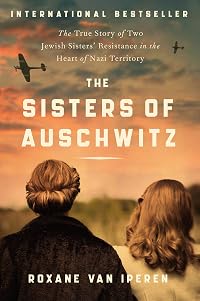
The Sisters of Auschwitz: The True Story of Two Jewish Sisters’ Resistance in the Heart of Nazi Territory
Roxane van Iperen, August 2021, HarperCollins
Themes: history, Jewish, World War II, Holocaust
The Auschwitz Photographer: The Forgotten Story of the WWII Prisoner Who Documented Thousands of Lost Souls
Luca Crippa, Maurizio Onnis, Jennifer Higgins (translated by)
September 2021, Sourcebooks
Themes: history, biography, survival, World War II, Holocaust
The Dressmakers of Auschwitz: The True Story of the Women Who Sewed to Survive
Lucy Adlington, September 2021, HarperCollins
Themes: history, Jewish, World War II, Holocaust
Since the end of World War II, many nonfiction works have shared the horrific show more atrocities of Auschwitz. However, three recent titles explore the Holocaust from unusual perspectives including a photographer, dressmakers, and sisters. These powerful stories chronicle the variety of ways prisoners were able to survive.
THE SISTERS OF AUSCHWITZ shares the story of two sisters who joined the Dutch Resistance. From publishing an underground newspaper to hiding refugees, they were working at a resistance center when betrayed and sent to Auschwitz.
THE DRESSMAKERS OF AUSCHWITZ examines the experiences of seamstresses who survived the gas chambers by creating high fashion dresses for elite Nazi women. At the same time, these brave women played a role in camp resistance.
THE AUSCHWITZ PHOTOGRAPHER tells the true story of Wilhelm Brasse who recorded the horrors of the deadliest concentration camp in WWII. He was first assigned to the photographic identification unit and later to Josef Mengele’s horrific laboratory. He survived by taking 50,000+ photographs over a five year period.
Let’s explore seven timely take-aways for life-long learners:
1) Jewish sisters Janny and Lien Brilleslijper were active in the Dutch resistance. They were with Anne Frank and her family on the train to Auschwitz.
2) The High Nest is an example of a secret refuge near Amsterdam that served as an important safe house during World War II.
3) The Upper Tailoring Studio was a fashion workshop housed at Auschwitz and created to cater to the wives of SS officers and Berlin’s wealthy Nazis.
4) Two dozen women prisoners sewed elegant gowns from fabrics and clothing plundered from across Europe.
5) Wilhelm Brasse was able to save thousands of photographs that provided evidence of Nazi atrocities including human experiments.
6) Upon entering Auschwitz, identity portrait photographs were taken of each prisoner including from the front and each side.
7) From nurses and dressmakers to photographers, those who were selected to work at Auschwitz were more likely to survive than other prisoners.
Timely Take-Aways for Life-Long Learning
Whether helping educators keep up-to-date in their subject-areas, promoting student reading in the content-areas, or simply encouraging nonfiction leisure reading, teacher librarians need to be aware of the best new titles across the curriculum and how to activate life-long learning. - Annette Lamb, Teacher Librarian: The Journal for School Library Professionals show less
The Sisters of Auschwitz: The True Story of Two Jewish Sisters’ Resistance in the Heart of Nazi Territory
Roxane van Iperen, August 2021, HarperCollins
Themes: history, Jewish, World War II, Holocaust
The Auschwitz Photographer: The Forgotten Story of the WWII Prisoner Who Documented Thousands of Lost Souls
Luca Crippa, Maurizio Onnis, Jennifer Higgins (translated by)
September 2021, Sourcebooks
Themes: history, biography, survival, World War II, Holocaust
The Dressmakers of Auschwitz: The True Story of the Women Who Sewed to Survive
Lucy Adlington, September 2021, HarperCollins
Themes: history, Jewish, World War II, Holocaust
Since the end of World War II, many nonfiction works have shared the horrific show more atrocities of Auschwitz. However, three recent titles explore the Holocaust from unusual perspectives including a photographer, dressmakers, and sisters. These powerful stories chronicle the variety of ways prisoners were able to survive.
THE SISTERS OF AUSCHWITZ shares the story of two sisters who joined the Dutch Resistance. From publishing an underground newspaper to hiding refugees, they were working at a resistance center when betrayed and sent to Auschwitz.
THE DRESSMAKERS OF AUSCHWITZ examines the experiences of seamstresses who survived the gas chambers by creating high fashion dresses for elite Nazi women. At the same time, these brave women played a role in camp resistance.
THE AUSCHWITZ PHOTOGRAPHER tells the true story of Wilhelm Brasse who recorded the horrors of the deadliest concentration camp in WWII. He was first assigned to the photographic identification unit and later to Josef Mengele’s horrific laboratory. He survived by taking 50,000+ photographs over a five year period.
Let’s explore seven timely take-aways for life-long learners:
1) Jewish sisters Janny and Lien Brilleslijper were active in the Dutch resistance. They were with Anne Frank and her family on the train to Auschwitz.
2) The High Nest is an example of a secret refuge near Amsterdam that served as an important safe house during World War II.
3) The Upper Tailoring Studio was a fashion workshop housed at Auschwitz and created to cater to the wives of SS officers and Berlin’s wealthy Nazis.
4) Two dozen women prisoners sewed elegant gowns from fabrics and clothing plundered from across Europe.
5) Wilhelm Brasse was able to save thousands of photographs that provided evidence of Nazi atrocities including human experiments.
6) Upon entering Auschwitz, identity portrait photographs were taken of each prisoner including from the front and each side.
7) From nurses and dressmakers to photographers, those who were selected to work at Auschwitz were more likely to survive than other prisoners.
Timely Take-Aways for Life-Long Learning
Whether helping educators keep up-to-date in their subject-areas, promoting student reading in the content-areas, or simply encouraging nonfiction leisure reading, teacher librarians need to be aware of the best new titles across the curriculum and how to activate life-long learning. - Annette Lamb, Teacher Librarian: The Journal for School Library Professionals show less
Members
- Recently Added By
Lists

History: Holocaust
106 works; 1 member
Author Information
All Editions
Some Editions
Common Knowledge
- Original title
- Il fotografo di Auschwitz
- Original publication date
- 2013
- People/Characters
- Wilhelm Brasse
- Important places
- Auschwitz-Birkenau Concentration Camp, Poland; Auschwitz concentration camp, Oświęcim, Lesser Poland, Poland
- Important events
- World War II; Holocaust
- Related movies
- Portrecista (2006 | IMDb)
- Dedication
- A Hedy Epstein,
lei sa perché.
Alle migliaia di giovani
che in questi anni
ci hanno ascoltato raccontare questa storia.
To Hedy Epstein,
she knows why.
To the thousands of young people
w... (show all)ho, over the last few years,
have heard us tell this story. - First words
- Keep still! Good... Don't lift your chin too high.
Wilhelm Brasse switched on the enlarger and a bright beam of white light fell on to the sheet of photographic paper. (Prologue) - Last words
- (Click to show. Warning: May contain spoilers.)Later, walking quickly alone through the beautiful town that was coming back to life, Brasse remembered a saying that his uncle Lech had taught him: 'Always remember that neither the good Lord nor a photographer can ever make a woman completely happy.'
- Blurbers
- Keane, Fergal; Holden, Wendy
- Original language
- Italian
Classifications
Statistics
- Members
- 249
- Popularity
- 130,746
- Reviews
- 10
- Rating
- (4.21)
- Languages
- 7 — Czech, Dutch, English, French, German, Italian, Spanish
- Media
- Paper, Audiobook, Ebook
- ISBNs
- 23
- ASINs
- 7