Stealing Home
by J. Torres
On This Page
Description
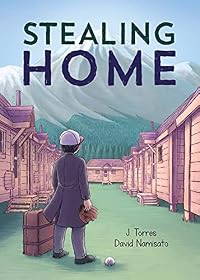
"Sandy Saito looks back to his childhood in 1940s Vancouver, when he was eight years old. He's a happy kid: he goes to school, reads comic books and is obsessed with baseball -- especially the Asahi baseball team, the pride of the Japanese-Canadian community. Then the Japanese bomb Pearl Harbor -- and everything changes. The kids Sandy used to play with every day now call him names and chase him from the playground. He and his family are no longer permitted to go outside at night or visit show more certain areas of the city. Japanese-Canadians are stripped of their rights, their jobs and their homes, and soon the government begins to round up Japanese families, sending them to internment camps. It isn't long before Sandy's family is among them. The reader accompanies Sandy on his journey to the camp and the seasons that follow in this historically accurate portrayal of a grave chapter in both Canadian and American history. David Namisato's detailed art depicts the 1940s setting with cultural and historical precision, following Sandy and his family as they are forced to leave their home and relocate to a prison camp comprised of crowded, makeshift barracks in a remote site without electricity or running water. The theme of baseball, Sandy's favorite sport, runs through the story as a message of hope and renewal."-- show lessTags
Recommendations







Member Recommendations
Member Reviews
Sandy's family lives in Vancouver, BC, where he enjoys watching the Japanese baseball team, Asahi, with his dad, and playing catch. But after Japan bombs Pearl Harbor, everything changes. In particular, his father who is a doctor, is away from home more often, treating Japanese patients who have been relocated. He tells the family that he is going where he is "most needed" and that the increasingly tenuous situation facing them "is only temporary." But all Sandy wants is to be able to play catch with his father again. When the family is relocated to a prison camp with other Japanese Canadians, it is baseball that makes things bearable. An affecting and poignant portrayal of the unjust internment of Japanese Canadians; a strong addition show more to classic and contemporary works about this period in history. Backmatter includes historical notes on the internment in Canada and Japanese baseball in North America. show less
andy and his family, Japanese Canadians, experience hatred and incarceration during World War II.
Sandy Saito loves baseball, and the Vancouver Asahi ballplayers are his heroes. But when they lose in the 1941 semifinals, Sandy’s dad calls it a bad omen. Sure enough, in December 1941, Japan bombs Pearl Harbor in the U.S. The Canadian government begins to ban Japanese people from certain areas, moving them to “dormitories” and setting a curfew. Sandy wants to spend time with his father, but as a doctor, his dad is busy, often sneaking out past curfew to work. One night Papa is taken to “where he [is] needed most,” and the family is forced into an internment camp. Life at the camp isn’t easy, and even with some of the Asahi show more players playing ball there, it just isn’t the same. Trying to understand and find joy again, Sandy struggles with his new reality and relationship with his father. Based on the true experiences of Japanese Canadians and the Vancouver Asahi team, this graphic novel is a glimpse of how their lives were affected by WWII. The end is a bit abrupt, but it’s still an inspiring and sweet look at how baseball helped them through hardship. The illustrations are all in a sepia tone, giving it an antique look and conveying the emotions and struggles. None of the illustrations of their experiences are overly graphic, making it a good introduction to this upsetting topic for middle-grade readers.
An emotional, much-needed historical graphic novel. (afterword, further resources) (Graphic historical fiction. 9-12)
-Kirkus Review show less
Sandy Saito loves baseball, and the Vancouver Asahi ballplayers are his heroes. But when they lose in the 1941 semifinals, Sandy’s dad calls it a bad omen. Sure enough, in December 1941, Japan bombs Pearl Harbor in the U.S. The Canadian government begins to ban Japanese people from certain areas, moving them to “dormitories” and setting a curfew. Sandy wants to spend time with his father, but as a doctor, his dad is busy, often sneaking out past curfew to work. One night Papa is taken to “where he [is] needed most,” and the family is forced into an internment camp. Life at the camp isn’t easy, and even with some of the Asahi show more players playing ball there, it just isn’t the same. Trying to understand and find joy again, Sandy struggles with his new reality and relationship with his father. Based on the true experiences of Japanese Canadians and the Vancouver Asahi team, this graphic novel is a glimpse of how their lives were affected by WWII. The end is a bit abrupt, but it’s still an inspiring and sweet look at how baseball helped them through hardship. The illustrations are all in a sepia tone, giving it an antique look and conveying the emotions and struggles. None of the illustrations of their experiences are overly graphic, making it a good introduction to this upsetting topic for middle-grade readers.
An emotional, much-needed historical graphic novel. (afterword, further resources) (Graphic historical fiction. 9-12)
-Kirkus Review show less
A gentle look at the internment of Canadian citizens of Japanese descent during World War II through the eyes of a young boy. I am very familiar with how it occurred in the United States, so it was interesting to get a glimpse at how it played out in mostly the same manner to the north.
It's a good introduction to the subject for children, but it might have dwelled a bit more on the negative consequences and the aftermath. Instead it kind of stops in the middle of the period of incarceration with a happy ending of sorts by zeroing on the boy's relationship with his father instead of the bigger picture.
It's a good introduction to the subject for children, but it might have dwelled a bit more on the negative consequences and the aftermath. Instead it kind of stops in the middle of the period of incarceration with a happy ending of sorts by zeroing on the boy's relationship with his father instead of the bigger picture.
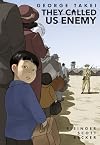
If you’ve read George Takei’s memoir “They Called Us Enemy”, you know how unfair life was to the Japanese-Americans after the Pearl Harbor attacks. “Stealing Home” gives us a similar glimpse but with a couple of minor yet significant changes. It tells us the story of the reshuffling of Japanese-Canadians after the attacks, and it is aimed at middle-graders instead of at adults. These two changes make the grim topic appear hopeful.
We meet Sandy, a huge baseball fan, who stays with his parents and younger brother in Vancouver. After the bombing of the Pearl Harbor, life turns upside down for them. Having to leave almost everything behind after they are made to shift to transit camps in remote areas, Sandy still tries to make show more the best of the situation. But what he misses the most is baseball, and what finally makes him feel better is baseball’s re-entry in his life. The book also touches upon his complicated relationship with his doctor-father.
The graphics in this book are quite simplistic and sepia-toned. This helps create a nostalgic flavour to the story.
As an essential part of Canadian history, this book serves very well to enlighten modern youngsters about the travesties of the past. Thought the topic is dark, the author does his best to keep the content child-friendly. The only thing I felt could have been better was the end. While I get the point about baseball being the be-all and end-all for Sandy, I sure would have liked to know what happened next in the internment camp. The ending felt incomplete. In spite of this, I will recommend the book wholeheartedly. It is only by learning about our past that we can avoid similar mistakes in the future.
Thank you, NetGalley and Kids Can Press, for the ARC of the book in exchange for an honest review.
***********************
Join me on the Facebook group, Readers Forever!, for more reviews, book-related discussions and fun.
Follow me on Instagram: RoshReviews show less
We meet Sandy, a huge baseball fan, who stays with his parents and younger brother in Vancouver. After the bombing of the Pearl Harbor, life turns upside down for them. Having to leave almost everything behind after they are made to shift to transit camps in remote areas, Sandy still tries to make show more the best of the situation. But what he misses the most is baseball, and what finally makes him feel better is baseball’s re-entry in his life. The book also touches upon his complicated relationship with his doctor-father.
The graphics in this book are quite simplistic and sepia-toned. This helps create a nostalgic flavour to the story.
As an essential part of Canadian history, this book serves very well to enlighten modern youngsters about the travesties of the past. Thought the topic is dark, the author does his best to keep the content child-friendly. The only thing I felt could have been better was the end. While I get the point about baseball being the be-all and end-all for Sandy, I sure would have liked to know what happened next in the internment camp. The ending felt incomplete. In spite of this, I will recommend the book wholeheartedly. It is only by learning about our past that we can avoid similar mistakes in the future.
Thank you, NetGalley and Kids Can Press, for the ARC of the book in exchange for an honest review.
***********************
Join me on the Facebook group, Readers Forever!, for more reviews, book-related discussions and fun.
Follow me on Instagram: RoshReviews show less
children's graphic historical fiction (Japanese-Canadian family from Vancouver is sent to a prison camp after the attack on Pearl Harbor, but reclaim some of what they lost through baseball).
*reviewed from uncorrected e-galley via netgalley*
Very readable and relatable history lesson for kids, should have no problem finding an audience. I've read other children's graphic fiction books on this topic before but this is the first one that takes place in British Columbia (a lesser-known history).
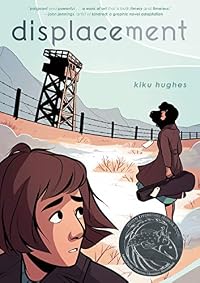
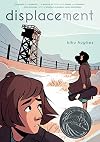
Also recommended: Kiku Hughes' Displacement, and George Takei's They Called Us Enemy.
*reviewed from uncorrected e-galley via netgalley*
Very readable and relatable history lesson for kids, should have no problem finding an audience. I've read other children's graphic fiction books on this topic before but this is the first one that takes place in British Columbia (a lesser-known history).
Also recommended: Kiku Hughes' Displacement, and George Takei's They Called Us Enemy.
Ratings
Members
- Recently Added By
Author Information

169+ Works 1,739 Members
Awards and Honors
Awards
Distinctions
Common Knowledge
- Original publication date
- 2021
- People/Characters
- Sandy Saito; Ty Saito (brother of Sandy Saito); James Saito (doctor, father of Sandy Saito); Mariko Saito (mother of Sandy Saito)
- Important places
- Vancouver, British Columbia, Canada
- Dedication
- To those who didn't know, but now do, and vow never to forget - J.T.
To Mom, Dad, ruth and Mark. Thanks for all the love, and support. - D.N. - First words
- Vancouver, British Columbia, Summer, 1941
The Asahi baseball team had fans all over Vancouver. But for us, they were the "home team." - Last words
- (Click to show. Warning: May contain spoilers.)Baseball did not discriminate against us. It did not impose any limits on us. It helped us forget everything that was wrong in the world, even if just for one moment in time.
- Original language
- English
Classifications
- Genres
- Tween, Kids, Graphic Novels & Comics
- DDC/MDS
- 741.5 — Arts & recreation Drawing & decorative arts Drawing Comic books, graphic novels, fotonovelas, cartoons, caricatures, comic strips
- LCC
- PZ7.7 .T67 .S — Language and Literature Fiction and juvenile belles lettres Fiction and juvenile belles lettres Juvenile belles lettres
- BISAC
Statistics
- Members
- 82
- Popularity
- 386,737
- Reviews
- 5
- Rating
- (3.95)
- Languages
- English
- Media
- Paper, Ebook
- ISBNs
- 3