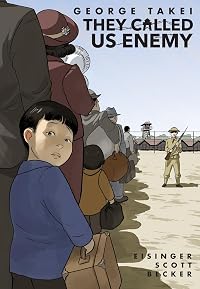
They Called Us Enemy
by George Takei, Harmony Becker (Illustrator), Justin Eisinger (Author), Steven Scott (Author)
On This Page
Description
"A stunning graphic memoir recounting actor/author/activist George Takei's childhood imprisoned within American concentration camps during World War II. Experience the forces that shaped an American icon -- and America itself -- in this gripping tale of courage, country, loyalty, and love. George Takei has captured hearts and minds worldwide with his captivating stage presence and outspoken commitment to equal rights. But long before he braved new frontiers in Star Trek, he woke up as a show more four-year-old boy to find his own birth country at war with his father's -- and their entire family forced from their home into an uncertain future. In 1942, at the order of President Franklin D. Roosevelt, every person of Japanese descent on the west coast was rounded up and shipped to one of ten 'relocation centers', hundreds or thousands of miles from home, where they would be held for years under armed guard. They Called Us Enemy is Takei's firsthand account of those years behind barbed wire, the joys and terrors of growing up under legalized racism, his mother's hard choices, his father's faith in democracy, and the way those experiences planted the seeds for his astonishing future. What is American? Who gets to decide? When the world is against you, what can one person do?"-- show lessTags
Recommendations



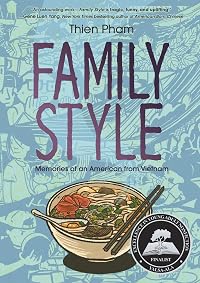
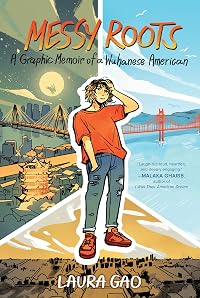
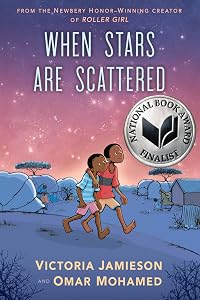
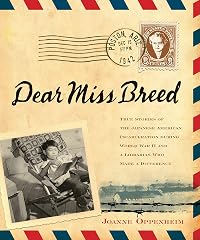






Member Recommendations
Member Reviews
In this graphic nonfiction volume, we have the story of how George Takei (of Star Trek fame) and his family were imprisoned in the internment camps for Japanese-Americans during World War II, when he was a child. As I read, I alternated between outrage at the overtly racist nature of the internment -- all that garbage that claimed the Japanese were "inscrutable" and as a race couldn't be trusted -- and my admiration for the Takei family.
How could this happen in America?
I found the telling just a little bit disjointed as it moved between what happened in the 1940's and Takei later recounting the events. But I think those changes of perspective were necessary so that the adult Takei could reflect on what he experienced as a child. One show more thing that was really touching was how George Takei discussed how his perspective as a child when they were taken prisoner affected how he perceived, reacted to, and later remembered events during their time in the camps.
This book should be required reading for every high school student in the U.S. Seriously! show less
How could this happen in America?
I found the telling just a little bit disjointed as it moved between what happened in the 1940's and Takei later recounting the events. But I think those changes of perspective were necessary so that the adult Takei could reflect on what he experienced as a child. One show more thing that was really touching was how George Takei discussed how his perspective as a child when they were taken prisoner affected how he perceived, reacted to, and later remembered events during their time in the camps.
This book should be required reading for every high school student in the U.S. Seriously! show less
George Takei is a man of many talents: activist, actor, meme creator, and now, at age 82, graphic novel writer. Who would have known in 1968 that Mr. Sulu would have had such legs?
Mr. Takei’s life, of course, began before Star Trek, and continued after it. They Called Us Enemy is about his experience in a Japanese internment camp during WWII. In case you are not familiar with this episode in American history, you can read about it here. Internment was not acknowledged as a violation of human rights or even discussed much in the decades from the end of WWII to the 1980s, when, as detailed in the book, President Reagan issued a formal apology from the United States Government to the survivors. I only learned about it in a PBS show more documentary from the late 1970s. As a teen, it blew me away. It was the second time I realized the unjust and grave mistakes the United States Government made in the past. (The first was slavery.)
Takei and his two co-authors are given a strong boost by the subtle, gentle artwork of Harmony Becker. Which was a good choice, as it is the Takei family’s story, not just George’s, who was 5 at the time. It affected all of them. In all the illustrations they are always doing something together, and George shares the stage with his brother Henry, dad Takekuma, and mom Fumiko. Even little sister Nancy Reiko, though a baby when the story starts, plays a part: we see her growing up and learning to walk. She too is present and reminds us she will also be affected by this experience.
Though the illustrations were at times sparse I want to commend the artist for doing her research into the vehicles and uniforms of the time. The soldiers in the camps, for example, wear old WWI style uniforms that had been mothballed, rather than the newer get ups used by soldiers in the Pacific and European arenas. And there was subtle, delicate individuality between the characters to show they were not faceless masses.
As befitting the topic, the artwork also had a gentle, old-fashioned manga feel.
The story also went into details I did not know about internment: that was FDR who signed the bill (implied in the novel to have been pressured by several hot-blooded and anti-Asian senators) and that there was an amendment later to allow the entry of Nisei soldiers to fight as American soldiers in WWII which was problematic for its disrespectful language and attitude. (You’ll have to read the book.) Also, that many of those imprisoned Japanese Americans lost everything: houses, farms, their businesses and means of making a living. When they came out of the camps they had to start completely over. In my state of Washington local history tells us these tales.
In all, five stars, and much recommended. show less
Mr. Takei’s life, of course, began before Star Trek, and continued after it. They Called Us Enemy is about his experience in a Japanese internment camp during WWII. In case you are not familiar with this episode in American history, you can read about it here. Internment was not acknowledged as a violation of human rights or even discussed much in the decades from the end of WWII to the 1980s, when, as detailed in the book, President Reagan issued a formal apology from the United States Government to the survivors. I only learned about it in a PBS show more documentary from the late 1970s. As a teen, it blew me away. It was the second time I realized the unjust and grave mistakes the United States Government made in the past. (The first was slavery.)
Takei and his two co-authors are given a strong boost by the subtle, gentle artwork of Harmony Becker. Which was a good choice, as it is the Takei family’s story, not just George’s, who was 5 at the time. It affected all of them. In all the illustrations they are always doing something together, and George shares the stage with his brother Henry, dad Takekuma, and mom Fumiko. Even little sister Nancy Reiko, though a baby when the story starts, plays a part: we see her growing up and learning to walk. She too is present and reminds us she will also be affected by this experience.
Though the illustrations were at times sparse I want to commend the artist for doing her research into the vehicles and uniforms of the time. The soldiers in the camps, for example, wear old WWI style uniforms that had been mothballed, rather than the newer get ups used by soldiers in the Pacific and European arenas. And there was subtle, delicate individuality between the characters to show they were not faceless masses.
As befitting the topic, the artwork also had a gentle, old-fashioned manga feel.
The story also went into details I did not know about internment: that was FDR who signed the bill (implied in the novel to have been pressured by several hot-blooded and anti-Asian senators) and that there was an amendment later to allow the entry of Nisei soldiers to fight as American soldiers in WWII which was problematic for its disrespectful language and attitude. (You’ll have to read the book.) Also, that many of those imprisoned Japanese Americans lost everything: houses, farms, their businesses and means of making a living. When they came out of the camps they had to start completely over. In my state of Washington local history tells us these tales.
In all, five stars, and much recommended. show less
The Publisher Says: A stunning graphic memoir recounting actor/author/activist George Takei's childhood imprisoned within American concentration camps during World War II. Experience the forces that shaped an American icon -- and America itself -- in this gripping tale of courage, country, loyalty, and love.
George Takei has captured hearts and minds worldwide with his captivating stage presence and outspoken commitment to equal rights. But long before he braved new frontiers in Star Trek, he woke up as a four-year-old boy to find his own birth country at war with his father's -- and their entire family forced from their home into an uncertain future.
In 1942, at the order of President Franklin D. Roosevelt, every person of Japanese show more descent on the west coast was rounded up and shipped to one of ten "relocation centers," hundreds or thousands of miles from home, where they would be held for years under armed guard.
They Called Us Enemy is Takei's firsthand account of those years behind barbed wire, the joys and terrors of growing up under legalized racism, his mother's hard choices, his father's faith in democracy, and the way those experiences planted the seeds for his astonishing future.
What is American? Who gets to decide? When the world is against you, what can one person do? To answer these questions, George Takei joins co-writers Justin Eisinger & Steven Scott and artist Harmony Becker for the journey of a lifetime.
THIS WAS AN INTER–LIBRARY LOAN FROM MY LOCAL LIBRARY. THANKS, Y'ALL!
My Review: A graphic memoir? Me? And give it five stars?!? Never. Will not happen.
Yet here we are:
The horror of interning United States citizens based solely on the color of their skins!
Oh wait...we do that now..."interning" being synonymous with "incarcerating"...well, anyway, it's appalling and abominable. The Takei family is rousted out of their Los Angeles home by Executive Order 9066. They're shipped as far away from the Pacific Ocean as they can get: The Great State of Arkansas! *shudder* A swampy bit, as well...the Takeis weren't familiar with the climate, hot and humid summers with cold and snowy winters; the worst of all possible worlds for Mediterranean-climate natives!
George, brother Henry, and sister Nancy are lucky, however, as their father is a take-charge kind of a guy with a glad-handing streak as well as organizational capabilities, patience in abundance, and a generous heart. Mama Takei is sure her family will be okay despite everything because she is going to by-god *make* things okay. Her efforts to clothe and entertain her family, her strenuous work ethic keeping the children clean and as healthy as she can, mean that they're better off than many...so the Takeis help them. Because of course...those with nothing find a way to share with those who have even less.
There were good times as well as bad. Takei senior, as a helpful and useful inmate, got the family occasional privileges, like the use of a Jeep for a day out:
Not everyone in Arkansas thought the Japanese belonged in the camps. Not everyone in the US agreed with this vile act, this blot on the national escutcheon.
But tell that to the men who were young and patriotic enough to want to serve their country in the global war against fascism.
Their mistreatment at the hands of the democratic institutions designed to defend a citizen's life, liberty, and ability to pursue an existence that will make them happy radicalized them, leading to protests and horrors of oppression still worse than internment at Federal penitentiaries.
The tale ends, as we all know, when the war is over...but the country's wounds aren't healed so much as papered over. Now the returning African Americans, veterans and war workers, would need to gain civil rights...and there were injustices against the Japanese Americans unaddressed...and so on and so forth, to this good day, with others now in the victim role. Takei specifically draws parallels with the Muslim refugee crisis and the Hispanic emigration atrocities. He lived it. His voice carries authority: What we-the-people are allowing, even (I am nauseated to say) enjoying, to occur to Hispanic families is unconscionable, inexcusable, and proof that the lessons of history are lost on far too many of us.
Takei's journey took him into our living rooms on Star Trek: The Original Series, and its many sequels. He's spent his many years since riding that amazing introduction back into our lives advocating for positive social changes and fairer, more equal access to the USA's immense and unprecedented benefits for all. His life has been very well-lived and spent generously working to bring the American Dream into reality, only for *all* Americans.
Be like George, as the meme says.
(Only I like this one better.) show less
The book opens on four-year-old George and his younger brother waking up suddenly when their father comes and tells them to pack their things. Soldiers have arrived to detain them for the crime of being Japanese. George, now in his 80's, does his best to bring the audience on his trip down memory lane, recalling fond memories (such as the time Santa Claus came to the camp on Christmas Eve) and moments of crippling fear (when a riot broke out in the camps, finding young George in the center of a violent mob). This stunning graphic memoir confronts a very difficult topic through the eyes of a child and helps the reader to experience the trying time that shaped George into the man, and icon, that he is today.
This compelling, heartfelt show more book is a very quick read that manages to cover a lot of profound topics, including racism, courage, loyalty, and love. It's a great first-hand account of a point in American history that isn't written about much, especially for teen audiences. Through a series of flash-forwards, the author does a great job of showing how the events of the 1940's mirror what happened to certain communities during the "Muslim ban" of recent years. This story does a great job of demonstrating why what happened can never be allowed to happen again show less
This compelling, heartfelt show more book is a very quick read that manages to cover a lot of profound topics, including racism, courage, loyalty, and love. It's a great first-hand account of a point in American history that isn't written about much, especially for teen audiences. Through a series of flash-forwards, the author does a great job of showing how the events of the 1940's mirror what happened to certain communities during the "Muslim ban" of recent years. This story does a great job of demonstrating why what happened can never be allowed to happen again show less
I doubt a book about immigrants and children of immigrants being snatched from their homes and placed in camps with awful conditions could possibly be more timely than it is right now. George Takei was one of those children. His father was born in Japan and his mother was a US citizen born in CA, but that did not matter. After Pearl Harbor no one of Japanese heritage was safe.
At first I questioned the logic of telling this story via a graphic novel, but I was not far into it when I realized what I brilliant idea it was. It's a perfect medium to capture both the innocence and horror of a child facing such an awful time. He was so young that he and his little brother thought it was a great adventure until they were hungry and cold, or show more stuck in a swampy camp down South.
George and his family were incarcerated for four long years. They lost their family cleaning business and their home and had to start from scratch when they were finally released. They were forced to live on the street for a while, as were thousands of others. I would have thought this was incomprehensible behavior by the federal government, but now I know better.
Highly recommended if you can handle it. show less
At first I questioned the logic of telling this story via a graphic novel, but I was not far into it when I realized what I brilliant idea it was. It's a perfect medium to capture both the innocence and horror of a child facing such an awful time. He was so young that he and his little brother thought it was a great adventure until they were hungry and cold, or show more stuck in a swampy camp down South.
George and his family were incarcerated for four long years. They lost their family cleaning business and their home and had to start from scratch when they were finally released. They were forced to live on the street for a while, as were thousands of others. I would have thought this was incomprehensible behavior by the federal government, but now I know better.
Highly recommended if you can handle it. show less
It's almost unfathomable that a history that involved over 120,000 people could've at one point been so hidden or glossed over in a country's history. Almost.
The legalised racism, the forcible removable of families from their homes, the long-term imprisonment in remote areas (concentration camps, for short) - it surely cannot happen here? Or now that it had, surely it won't happen again?
The legalised racism, the forcible removable of families from their homes, the long-term imprisonment in remote areas (concentration camps, for short) - it surely cannot happen here? Or now that it had, surely it won't happen again?
He aquí las memorias de George Takei (más conocido por su papel en la popular serie Star trek) en formato novela gráfica. Con una característica particular: no se enfocan en su vida como estrella de la pantalla, sino en su años como "internado" (según la denominación de la época) en dos campos de concentración para japoneses en Estados Unidos.
Me resulta sumamente grato que esta parte nefasta de la historia se vaya dando a conocer. No son muchos los que han oído acerca de este episodio fuera de los Estados Unidos de América, incluso varios de sus más acérrimos detractores lo ignoran. Añade a mi beneplácito el hecho de venir de una figura pública bastante apreciada en ese país (y, hay que decirlo, parte de una de sus show more franquicias más exitosas).
Al depender de alguien que sufrió tal humillación de primera mano, se corre el riesgo de caer en la victimización excesiva. Pero no es el caso; se trata de una obra muy bien lograda, sumamente realista, en la que se pasa de los juegos de niños de Takei y sus hermanos a las (terribles) decisiones políticas del gobierno estadounidense y sus repercusiones en la vida cotidiana de los nisei en un par de paneles. Las vicisitudes, el desprecio y malos tratos que deben soportar (a pesar de ser la mayoría ciudadanos de los EE.UU.) y los pequeños logros y progresos, todo tiene su lugar en esta novela gráfica.
Sobre el final hay cierta bajada de línea que, si bien coincide con el carácter activista de Takei, no me parece del todo congruente con el resto de la narración. Sin embargo, no alcanza a mancillarla en absoluto. No puedo dejar de recomendarlo. show less
Members
- Recently Added By
Lists

Club Read's Graphic Stories Recommendations
127 works; 2 members

2020 Hugo Eligible Related works
13 works; 3 members

Books Read in 2020
4,379 works; 124 members

Top Five Books of 2020
982 works; 350 members

High School Novels about Immigration
40 works; 1 member

Books Read in 2022
5,168 works; 114 members
Best Graphic Novel Nonfiction
199 works; 101 members

Required Reading Summer Reading 23
16 works; 2 members

Books recommended by Calgary Public Library staff
1,588 works; 4 members

Torchlight Level 4
38 works; 1 member

Youth: DEI
296 works; 2 members

Japanese Internment after Pearl Harbor
14 works; 1 member
Author Information

14+ Works 3,956 Members
George Hosato Takei was born on April 20, 1937. He is an American actor and author, best known for his role as Hikaru Sulu, helmsman of the USS Enterprise in the television series Star Trek. Takei is also a proponent of gay rights and active in state and local politics apart from his continued acting career. He has won several awards and show more recognition in his work on human rights and Japanese-American relations, including his work with the Japanese American National Museum. Takei enrolled in the University of California, Berkeley, where he studied architecture. Later he attended the University of California, Los Angeles, where he received both a Bachelor of Arts and a Master of Arts in theater. He attended the Shakespeare Institute at Stratford-upon-Avon in England, and Sophia University in Tokyo, Japan. In Hollywood, he studied acting at the Desilu Workshop. In 2004, the government of Japan named Asteroid 7307 "Takei" after him. In June 2012, the American Humanist Association gave Takei the LGBT Humanist Award. His book, Oh Myyy! (There Goes The Internet) was released on December 21, 2013 and became a New York Times bestseller in 2014. (Bowker Author Biography) show less
Awards and Honors
Awards
Distinctions
Notable Lists
Common Knowledge
- Original publication date
- 2019-07-16
- People/Characters
- George Takei; Takekuma Norman Takei; Hikaru Sulu; Fumiko Emily Nakamura; Henry Takei; Nancy Reiko Takei (show all 45); Eleanor Roosevelt; Franklin Delano Roosevelt; Earl Warren; Fletcher Bowron; John L. DeWitt (general); Kermit Roosevelt III; Ford Nakayama; Chevy Nakayama; Santa Claus; Tom Stewart; Harry S. Truman; Bill Clinton; Daniel K. Inouye; Herbert Nicholson; Francis Biddle; Wallace H. White; Richard B. Russell; Wayne Collins; Theodore "Ted" Tamba; Mrs. Rugen; Nichelle Nichols; Martin Luther King, Jr.; Adlai Stevenson II; Arthur Takemori; Desi Arnaz; Lucille Ball; Ricky Ricardo; Lucy Ricardo; Gene Roddenberry; Fred Ishimoto; Lea Salonga; Florence Kubota; Brad Altman; Ronald Reagan; Scott Simon; Barack Obama; Fred Korematsu; Hugo Black; Sonia Sotomayor
- Important places
- Kyoto, Japan; Los Angeles, California, USA; Hyde Park, New York, USA; Santa Anita Park, Arcadia, California, USA; Rohwer Relocation Center, Arkansas, USA; Camp Shelby, Missississippi, USA (show all 11); France; United States Penitentiary, Leavenworth, Kansas, USA; Tule Lake War Relocation Center, California, USA; Washington, D.C., USA; Hiroshima, Japan
- Important events
- World War II; Japanese-American Internment
- Dedication
- In memory of Daddy and Mama, for their undying love and life guidance.
- First words
- George! Henry! Get up at once.
- Quotations
- ...it was important to exercise our right to assemble. Send a message that we were united as a group and opposed to their actions. (George’s father)
Some people saw injustice for what it was and slight to do something about it.
You can no more resign citizenship in time of war than you can resign from the human race. (San Francisco lawyer Wayne Collins)
Our legal defense was led by Mr. Collins and the San Francisco branch of the American Civil Liberties Union.
After four long years, our days behind barbed wire had come to an end.
As I studied civics and government in school, I came to see the internment as an assault not only upon an entire group of Americans...but on the Constitution itself. How it’s guarantees of due process and equal protection h... (show all)ad been decimated by forces of fear and prejudice...unleashed by unscrupulous politicians.
But despite all that we’ve experienced, our democracy is still the best in the world. (George’s father)
Justice grows out of recognition of ourselves in each other...that my liberty depends on you being free, too...that history can’t be a sword to justify injustice or a shield against progress...but must be a manual for how t... (show all)o avoid repeating the mistakes of the past. (Barack Obama) - Last words
- (Click to show. Warning: May contain spoilers.)Thank you, Daddy.
(Click to show. Warning: May contain spoilers.)"Justice grows out of recognition of ourselves in each other...
"...that my liberty depends on you being free, too...
"...that history can't be a sword to justify injustice or a shield against progress...
"...but must be a manual for how to avoid repeating the mistakes of the past." - President Barack Obama
(Click to show. Warning: May contain spoilers.)We are not there yet, but together, with your help, someday, we will be.
(Click to show. Warning: May contain spoilers.)Perhaps there are still more comic-book adventures ahead of us... - Blurbers
- Korematsu, Karen
- Original language
- English
Classifications
Statistics
- Members
- 2,486
- Popularity
- 7,766
- Reviews
- 125
- Rating
- (4.42)
- Languages
- 6 — English, French, German, Japanese, Spanish, Portuguese (Portugal)
- Media
- Paper, Ebook
- ISBNs
- 18
- ASINs
- 6
