On This Page
Description
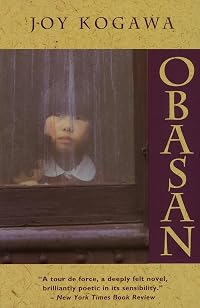
Naomi Nakane, a child of Japanese immigrant parents, is interned by the Canadians at the beginning of World War II when she is five years old.Tags
Recommendations






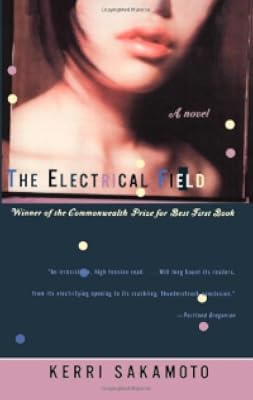
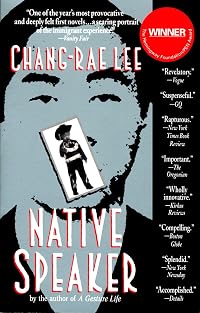
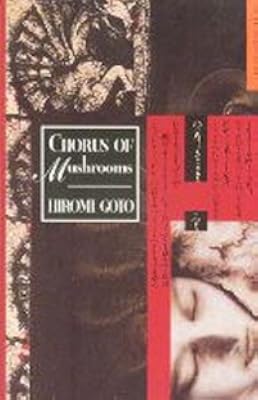
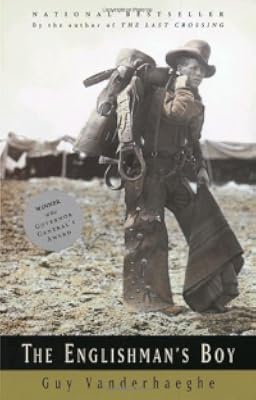


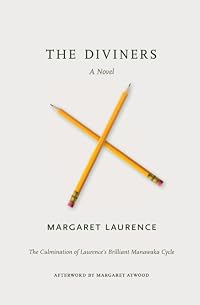
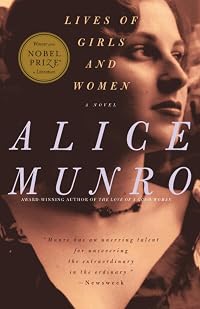
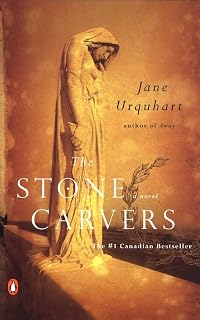
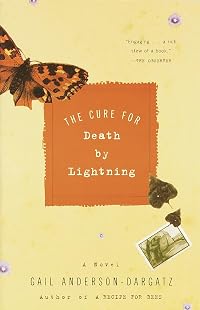


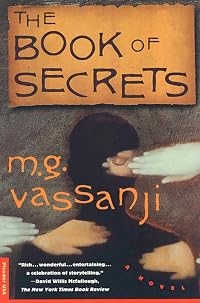
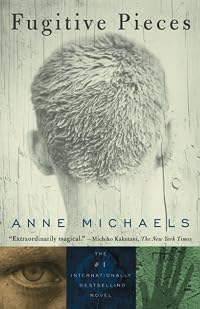
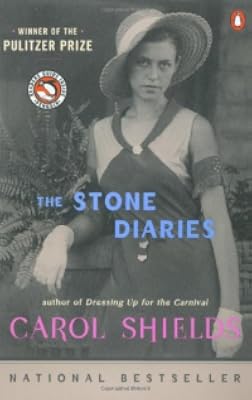
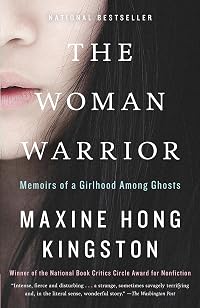
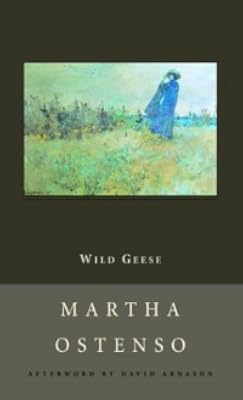
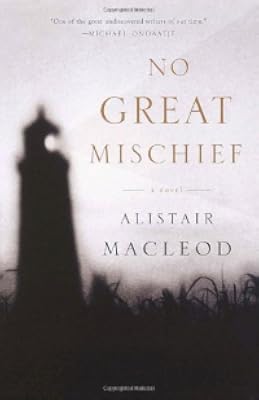
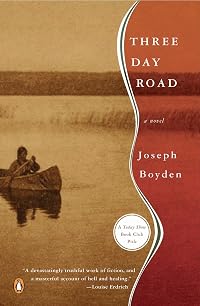
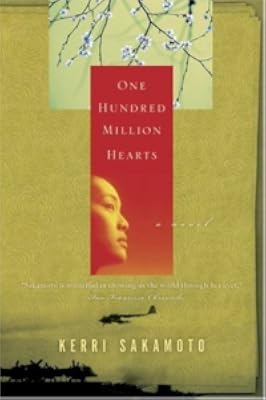

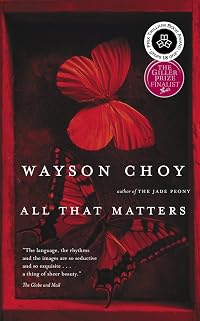
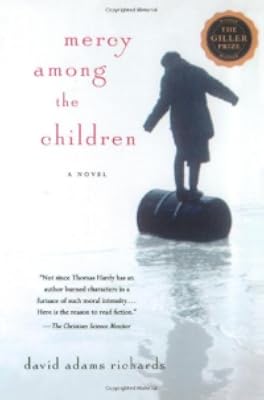
Member Recommendations

SylviaC These books are both about young children of Japanese descent, living in Canadian internment camps. A Child in Prison Camp is a memoir, beautifully illustrated by Takashima. Obasan is a novel based on Kogawa's childhood memories.
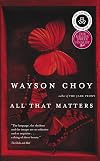
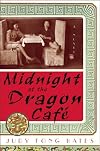
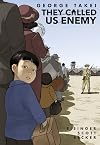
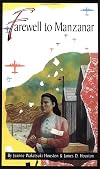
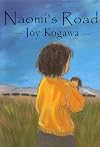
Cecrow "Naomi's Road" is the children's version retelling of "Obasan".
Member Reviews
A heartbreaker, but beautifully written, and such an eye-opener about how Canada treated its citizens of Japanese ancestry. Really horrifying—I knew about the U.S. and the internment camps, but this was a bit of a surprise, though I suppose it shouldn't have been, with second- and third-generation Japanese-Canadians forced to give up all their possessions and their homes, and relocate to shantytowns to perform forced labor. Kogawa was originally a poet, and it shows. Recommended.
Joy Kogawa's novel, OBASAN, first published nearly forty years ago, has become a minor Canadian classic. Its narrator, Naomi Nakane, a school teacher, looks back thirty years at her childhood spent in a desolate Japanese-Canadian internment camp near the tiny "ghost town" of Slocan during WWII, remembering the racism and discrimination and the quiet stoicism of her grandmother and uncle, who raised her and her older brother, Stephen. The family comes together again when her uncle dies, and the dark secrets of what happened to her parents in those years are revealed. But perhaps the most startling part of Kogawa's story for me is how the Canadian government continued to discriminate against its Japanese-Canadian citizens AFTER the war, show more denying them the opportunity to return to their homes in the west, instead pressing them to either move east or "repatriate" back to Japan. Naomi's family lived in a shed on a sugar beet farm in Alberta and worked like slaves for years.
Of course, the U.S. has its own shameful history of its treatment of Japanese-Americans during the war. I remember reading FAREWELL TO MANZANAR many years ago - another book that has attained that status of minor classic.
OBASAN is a sad, disturbing, and beautifully written little book. Very highly recommended.
- Tim Bazzett, author of the memoir, BOOKLOVER show less
Of course, the U.S. has its own shameful history of its treatment of Japanese-Americans during the war. I remember reading FAREWELL TO MANZANAR many years ago - another book that has attained that status of minor classic.
OBASAN is a sad, disturbing, and beautifully written little book. Very highly recommended.
- Tim Bazzett, author of the memoir, BOOKLOVER show less
Naomi is navigating her singledom in 1970s small-town Alberta when a family tragedy brings her closer to a past she's tried to forget. This leads her to reflecting back on her childhood experiences leading up to and inside of an internment camp for Japanese Canadians during World War II. As a child she could not know of the nuance or understand everything that was happening. She saw the tragedy on a different level: the rapid and eventually complete unravelling of safety, security and family. Some readers don't like the child's perspective in this novel, but in that alternative version we would be told how it was the children who would suffer most. This is the story of one suffering child. Now that she is revisiting her memories through show more adult eyes, with all the relevant documentation before her, new interpretations spring to light and the full story of forced internments and migrations emerges with its impacts on both the young and the old who were made its victims.
The writing style was sometimes an irritant for me, but the content is strong and the message is important. Surrendering to racist fear cost our country valuable unison in wartime, and the wrongs that were inflicted on this segment of our population weakened the moral ground from which our country fought World War II. There was clearly a hypocricy to fighting in freedom's name while we were stealing it away in our own backyard. It does not cancel out the heroism of our veterans or make wrong what we did right, but this story reminds how Canada's leaders and its people - how any people - can be fallible and wrong-headed when they let fear guide them. show less
The writing style was sometimes an irritant for me, but the content is strong and the message is important. Surrendering to racist fear cost our country valuable unison in wartime, and the wrongs that were inflicted on this segment of our population weakened the moral ground from which our country fought World War II. There was clearly a hypocricy to fighting in freedom's name while we were stealing it away in our own backyard. It does not cancel out the heroism of our veterans or make wrong what we did right, but this story reminds how Canada's leaders and its people - how any people - can be fallible and wrong-headed when they let fear guide them. show less
The Government makes paper airplanes out of our lives and flies us out the windows. Some people return home. Some do not. War they all say, is war, and some people survive.Out of all the countries in the world, Canada is the one I have most seriously considered for emigration purposes. The stereotypes Americans have for that northern border are notorious; kind, peaceful, oh so funny with their maple syrup and their Mounties, Mounties being a nickname for the Royal Canadian Mounted Police, shortened to RCMP and used with devastating effect within the pages of this book. As the popularly Socrates attributed quote exclaims, one that in actuality is not found within the realms of Plato's character craft of his esteemed teacher: I know that show more I know nothing.
The internment and systematic persecution of the Japanese people in both the United States and Canada is not a popular topic in literature. For every mountain of WWII, there is a granule such as this, yet another book that I wished had replaced one of the multiple Shakespeare's, Dickens', and all those other 'classics' stretching their claws out of their high and mighty grave. Leave me to discover those old and venerated folks on my own when I have the benefit of longer years and heavier thoughts; I'd rather I was led to works more of my own time, so that I may gain a better picture of the world currently around me before foraging in the dry and dusty tombs of my chosen calling.
I will not compare this crime against humanity to others, for that only paves the way to misunderstanding and rampant disrespect. I will lay it out as how it was told to me within this book; how the Japanese were exiled from their homes, how they had the choice of shoddy internment camps or the long voyage back to Japan, how their belongings were sold and their families torn to pieces and Canada methodically gouged out its heart and sloppily stitched it up, with boats and beets and hydrogen bombs. It is a story all too common in the ranks of nations no matter how democratically labeled, and the question is not of comparison to others, but that the tales, all of the tales, be told at all.
This tale is a deft and devious weaving of culture and of chaos, the memories of the young both convoluted and capricious when it comes to a parent's disappearance, a brother's avoidance, racism and abuse and ever the unexplained reasons for the change, the toil, the pain. Kodomo no tame; for the sake of the children, born to a peaceful melding of their family and their country, only to be wrested away on the backs of ostracization where white is supreme and board games decry the 'yellow peril'. Proof of loyalty of the people is changed to proof of betrayal by the government, where every step forward is two notches tightening of the noose and the facts are formulated into forms so brisk, so official, you would not believe the horror lying just beneath the printed surface. Ever the banality of evil, the crux of many a bureaucracy.
Where do any of us come from in this cold country? Oh, Canada, whether it is admitted or not, we come from you we come from you. From the same soil, the slugs and slime and bogs and twigs and roots. We come from the country that plucks its people out like weeds and flings them into the roadside. We grow in ditches and sloughs, untended and spindly. We erupt in the valleys and mountainsides, in small towns and back alleys, sprouting upside down on the prairies, our hair wild as spiders' legs, our feet rooted nowhere. We grow where we are not seen, we flourish where we are not heard, the thick undergrowth of an unlikely planting. Where do we come from, Obasan? We come from cemeteries full of skeletons with wild roses in their grinning teeth. We come from our untold tales that wait for their telling. We come from Canada, this land that is like every land, filled with the wise, the fearful, the compassionate, the corrupt.Let the new flowers grow; our humanity lies in remembering the fruit that rotted and fell for the flowering. show less
I enjoyed this book a lot. I thought it did a wonderful job recounting a terribly shameful period of Canada's history (the absurdly racist internment of thousands of Japanese Canadians during/after WWII) without being overly sentimental or theatrical. Kogawa mixed storytelling methods (relating much of the story through old letters, diary entries, and childhood flashbacks/recollections) to deliver a book that is poignant and readable. Because this is a period of time largely glossed over in US/Canadian history classes, I would encourage folks to give this a read.
The writing is fabulous, poetic, beautiful. The history of the subject is horrific and a disgrace to Canadians. I live in Vancouver and my family has lived here since the 1800's. I feel a great disgrace that my people were present here during this horrible period in our country's history. Searching my heart I seek an answer as to why the citizens of this place did not speak out and demand that this unforgivable injustice not be pursued. There are no excuses, there are only wrong-doing and shame left. My non-Japanese fellow countrymen stooped to the depths of naziism in that time. The worst is that this is recent history and only a few years before I was born did it begin. While I was still in diapers the Japanese citizens, who were no show more different than myself in place and rights of birth, were being persecuted like animals while I enjoyed the safe family life of my house in Vancouver. My heart is heavy with sorrow for all the people that suffered so unjustly, I am disgusted. There is nothing else to say. I will make sure my children understand this portion of history and hope that they learn from it so that in the future, events of this kind must be fought against with all ones heart. I thank Joy Kogawa for writing this book. Everyone should read this. show less
There is something about spare, poetic expression that captures affect more profoundly than straightforward narrative prose can do. And when this book is poetic, which it often is, it is truly moving. The plot around the poetic reflections did not seem altogether necessary to me.
Members
- Recently Added By
Published Reviews
Obasan's power comes from the beauty of the writing, the stark imagery and vivid symbolism, and from the calm recitation of events that destroyed families, a culture, and a way of life.
added by GYKM
Lists

The Best of Canadian Literature
235 works; 33 members
CBC Books - Canada's 100 (+ bonus 10): Which have you read?
110 works; 23 members

500 Great Books by Women
507 works; 60 members

Books about World War II
241 works; 22 members

CBC's Great Canadian Reading List
149 works; 5 members

CBC's 100 Young Adult Books
100 works; 4 members

Asian American Literature
46 works; 6 members

Allie's List of Books I Want To Read
93 works; 1 member

AP Lit
363 works; 6 members

Canadian Historical Fiction 🇨🇦
157 works; 8 members

THE WAR ROOM
813 works; 24 members
Author Information

16+ Works 2,001 Members
Joy Kogawa was born in Vancouver, British Columbia in 1935 and graduated from high school in Coaldale, Alberta where her family was sent after WWII. Kogawa was made a Member of the Order of Canada. From 1983 to 1985, she worked with the National Association of Japanese Canadians to help those Japanese who had lost their land and possesions under show more the War Measures Act in 1942. Kogawa went on to study education at the University of Alberta and taught elementary school in Coaldale for a year. She then studied music at the University of Toronto followed by studies at the Anglican Women's Training College and the University of Saskatchewan. Kogawa has won awards for her book Obasan, including the Books in Canada, First Novel Award, the Canadian Authors Association, Book of the Year Award, the Periodical Distributors of Canada, Best Paperback Fiction Award, the Before Columbus Foundation, and The American Book Award (Bowker Author Biography) show less
Awards and Honors
Awards
Distinctions
Notable Lists
Series

Belongs to Publisher Series
Work Relationships
Has as a student's study guide
Common Knowledge
- Original publication date
- 1981
- Important places
- Canada; British Columbia, Canada; Vancouver, British Columbia, Canada
- Important events
- Japanese Canadian Internment
- Epigraph
- To him that overcometh
will I give to eat
of the hidden manna
and will give him
a white stone
and in the stone
a new name written.
THE BIBLE
There is a silence that cannot speak.
There is a silence that will not speak.
Beneath the grass the speaking dreams and beneath the dreams in a sensate sea. The speech that frees comes forth from that amniot... (show all)ic deep. To attend its voice, I can hear it say, is to embrace its absence. But I fail the task. The word is stone.
I admit it.
I hate the stillness. I hate the stone. I hate the sealed vault with its cold icon. I hate the staring into the night. The questions thinning into space. The sky swallowing the echoes.
Unless the stone bursts with telling, unless the seed flowers with speech, there is in my life no living word. The sound I hear is only sound. White sound. Words, when they fall, are pockmarks on the earth. The are hailstones seeking an underground stream.
If I could follow the stream down and down to the hidden voice, would I come at last to the freeing word? I ask the night sky but the silence is steadfast. There is no reply. - Dedication
- This book is dedicated to my mother and father and to those amazing people, the Issei - the few who are still with us and those who have gone.
- First words
- The coulee is so still right now that if a match were to be lit, the flame would not waver.
- Quotations
- She takes half a piece of leftover toast and puts it away in a square plastic container. The refrigerator is packed with boxes of food bits, slices of celery, a square of spinach, half a hard-boiled egg. She orchestrates each... (show all) remainder of a previous dinner into a dinner to come, making every meal like every meal, an unfinished symphony. Our Lady of the Leftovers.
- Last words
- (Click to show. Warning: May contain spoilers.)If I hold my head a certain way, I can smell them from where I am.
Classifications
- Genres
- Fiction and Literature, General Fiction, Historical Fiction
- DDC/MDS
- 813.54 — Literature & rhetoric American literature in English American fiction in English 1900-1999 1945-1999
- LCC
- PR9199.3 .K63 .O2 — Language and Literature English English Literature English literature: Provincial, local, etc.
- BISAC
Statistics
- Members
- 1,571
- Popularity
- 14,526
- Reviews
- 31
- Rating
- (3.78)
- Languages
- Dutch, English, French, German
- Media
- Paper, Audiobook, Ebook
- ISBNs
- 24
- ASINs
- 11