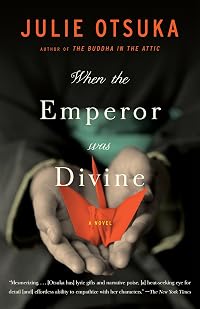
When the Emperor Was Divine
by Julie Otsuka
On This Page
Description
Fiction. Literature. HTML:Julie Otsuka’s commanding debut novel paints a portrait of the Japanese internment camps unlike any we have ever seen. With crystalline intensity and precision, Otsuka uses a single family to evoke the deracination—both physical and emotional—of a generation of Japanese Americans. In five chapters, each flawlessly executed from a different point of view—the mother receiving the order to evacuate; the daughter on the long train ride to the camp; the son in show more the desert encampment; the family’s return to their home; and the bitter release of the father after more than four years in captivity—she has created a small tour de force, a novel of unrelenting economy and suppressed emotion. Spare, intimate, arrestingly understated, When the Emperor Was Divine is a haunting evocation of a family in wartime and an unmistakably resonant lesson for our times. It heralds the arrival of a singularly gifted new novelist. show lessTags
Recommendations






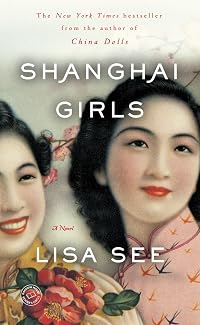
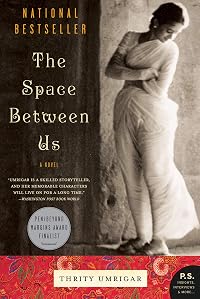
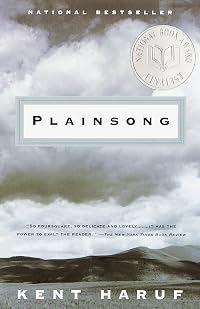
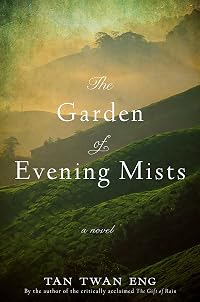


Member Recommendations
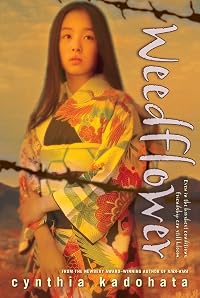
Obasan by Joy Kogawa
kiwidoc Explores Japanese internment in Canada


Member Reviews
When the Emperor was Divine by Julie Otsuka tells the story of the internment of a Japanese-American family during World War II. The author based her story on her own family history and has created a small gem of a story, with her careful yet precise prose which highlights the unjust treatment of a people whose only crime was to look different.
When the book opens, the father of the family has already been arrested and sent to a camp in New Mexico. Now it has been decided to round up all Japanese-Americans and we follow the mother, her daughter and son as they are sent to the Topaz Camp in Utah. The author captures the confusion and lack of understanding that the characters experienced. One day they were American citizens, accepted show more members of the community, but overnight they become aliens that are untrustworthy and dangerous. For almost three years they live in a camp in the desert never knowing when or even if they would ever return to their home in California.
While the topic of When the Emperor was Divine is emotional and heartbreaking, the author chooses to tell the story simply without embellishment resulting in a haunting evocation and, without pointing any fingers, this book becomes a lesson for us all. This subtle, lyrical story shines a light on a difficult period in history and although short packs quite the punch. show less
When the book opens, the father of the family has already been arrested and sent to a camp in New Mexico. Now it has been decided to round up all Japanese-Americans and we follow the mother, her daughter and son as they are sent to the Topaz Camp in Utah. The author captures the confusion and lack of understanding that the characters experienced. One day they were American citizens, accepted show more members of the community, but overnight they become aliens that are untrustworthy and dangerous. For almost three years they live in a camp in the desert never knowing when or even if they would ever return to their home in California.
While the topic of When the Emperor was Divine is emotional and heartbreaking, the author chooses to tell the story simply without embellishment resulting in a haunting evocation and, without pointing any fingers, this book becomes a lesson for us all. This subtle, lyrical story shines a light on a difficult period in history and although short packs quite the punch. show less
This was my introduction to Julie Otsuka and it was amazing. As your average reader, I can’t figure out how Otsuka was able to tell such an evocative story in such a slim novel, using such (deceptively) simple language. I usually fall hard for novels that are maximalist to the hilt—crammed full of characters, sights, sounds, tangential stories, postmodern tricks and winks. The more flowery and complex the sentences are, the more likely I’ll love it. When the Emperor was Divine is a far cry from that kind of book.
It’s a quiet story that nonetheless packs an emotional punch. I didn’t realize that I was holding my breath (figuratively speaking) until the last chapter, when we heard from the father. In a NYTimes review, Michiko show more Kakutani said that this last chapter marred what was an excellent novel, but I totally disagree. All the throughout the book, but most poignantly after they return to their house, the protagonists have to walk on eggshells, keep their heads lowered, don’t cause trouble, don’t make eye contact. That last chapter is the opposite of the preceding chapters—it’s not quiet at all. Yet this change wasn’t jarring; it actually provided a cathartic release.
I didn’t even actively seek out this book even though I was aware that Otsuka was well-respected. It was on sale for a ridiculous price at the bookstore, so I just picked it up on a whim and then let it sit on my shelf. The story of that disturbing period in American history when Japanese Americans were held in internment camps didn’t hold any allure for me. I ended up reading it because I needed a quick read as a palate cleanser to a huge chunkster that I’d just finished. I’m so glad I did, because finding five-star reads is so hard for this picky reader. show less
It’s a quiet story that nonetheless packs an emotional punch. I didn’t realize that I was holding my breath (figuratively speaking) until the last chapter, when we heard from the father. In a NYTimes review, Michiko show more Kakutani said that this last chapter marred what was an excellent novel, but I totally disagree. All the throughout the book, but most poignantly after they return to their house, the protagonists have to walk on eggshells, keep their heads lowered, don’t cause trouble, don’t make eye contact. That last chapter is the opposite of the preceding chapters—it’s not quiet at all. Yet this change wasn’t jarring; it actually provided a cathartic release.
I didn’t even actively seek out this book even though I was aware that Otsuka was well-respected. It was on sale for a ridiculous price at the bookstore, so I just picked it up on a whim and then let it sit on my shelf. The story of that disturbing period in American history when Japanese Americans were held in internment camps didn’t hold any allure for me. I ended up reading it because I needed a quick read as a palate cleanser to a huge chunkster that I’d just finished. I’m so glad I did, because finding five-star reads is so hard for this picky reader. show less
California, 1942 - a woman and her son and daughter are evacuated from their home and brought to an internment camp. Their experiences, in a series of descriptive impressions and memories, follow them through the war years and returning home afterward.
This short novel packs a powerful punch. Otsuka is deliberate in every detail of her craft, from the images she evokes to what she leaves out or only mentions in passing, to the shifts in points of view. The lack of characters' names distances them, yet at the same time, presents an almost universal example of what the experience was like for a family. And that example is so heartbreaking, cringe-inducing, all the more powerful for the spare writing style. It makes for a very uncomfortable show more reading experience - which is, of course, precisely what it's meant to be. I can't fault Otsuka for flawlessly executing the story she set out to write. I admire it, but I don't like it. show less
This short novel packs a powerful punch. Otsuka is deliberate in every detail of her craft, from the images she evokes to what she leaves out or only mentions in passing, to the shifts in points of view. The lack of characters' names distances them, yet at the same time, presents an almost universal example of what the experience was like for a family. And that example is so heartbreaking, cringe-inducing, all the more powerful for the spare writing style. It makes for a very uncomfortable show more reading experience - which is, of course, precisely what it's meant to be. I can't fault Otsuka for flawlessly executing the story she set out to write. I admire it, but I don't like it. show less
WHEN THE EMPEROR WAS DIVINE, by Julie Otsuka, is a starkly evocative look at the way Japanese-American citizens were treated - or, perhaps more accurately, MIStreated - during the Second World War. Camp Topaz, in the Utah Desert, was just one of many internment, or 'relocation,' centers where whole families were kept locked up behind barbed wire fences with armed watchtowers surrounding them. Such internment camps have often been compared to concentration camps, but I'm not sure that's a fair comparison. Nevertheless, a whole group of Americans were rounded up, dispossessed and imprisoned for 3-4 years simply because of their ethnic heritage.
Otsuka's novel is perhaps even more effective because her protagonists - four members of one show more family - are never named. They are simply, the mother, the father, the boy and the girl. The unnamed family members could be any Japanese-American family of that time. The father is spirited away in the night; the rest of the family is given only a few days to pack their suitcases and leave their homes, transported first to processing centers - in stables - and then to a desolate desert camp in Utah. The psychological, physical and emotional effects of this callous uprooting are devastating. Otsuka's eye for detail and ear for dialogue are simply superb. Her novel is a microcosmic look at what happened to tens of thousands of families across the western U.S.
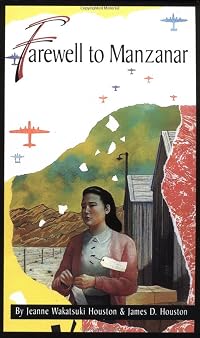
I was immediately reminded of the excellent YA classic, FAREWELL TO MANZANAR, which I read many years ago, one of many books about the relocation camps. But Otsuka's WHEN THE EMPEROR WAS DIVINE is especially stunning and unique in its multiple and anonymous points of view. This is an outstanding fictional look at a shameful episode in our country's history. Highly recommended. show less
Otsuka's novel is perhaps even more effective because her protagonists - four members of one show more family - are never named. They are simply, the mother, the father, the boy and the girl. The unnamed family members could be any Japanese-American family of that time. The father is spirited away in the night; the rest of the family is given only a few days to pack their suitcases and leave their homes, transported first to processing centers - in stables - and then to a desolate desert camp in Utah. The psychological, physical and emotional effects of this callous uprooting are devastating. Otsuka's eye for detail and ear for dialogue are simply superb. Her novel is a microcosmic look at what happened to tens of thousands of families across the western U.S.
I was immediately reminded of the excellent YA classic, FAREWELL TO MANZANAR, which I read many years ago, one of many books about the relocation camps. But Otsuka's WHEN THE EMPEROR WAS DIVINE is especially stunning and unique in its multiple and anonymous points of view. This is an outstanding fictional look at a shameful episode in our country's history. Highly recommended. show less
A short, beautifully written novella about one Japanese-American family's experience during World War II and the internment camps. The narrative switches between the two children and their mother, and the final segment is in the father's voice. He has been a mostly absent figure in the story, as he was removed from their home right after Pearl Harbor and treated as an enemy alien. His short "confession" at the end is incredibly powerful.
The lovely, spare prose stands in stark contrast to the disgraceful story it tells. Nicely narrated by Elaina Erika Davis.
The lovely, spare prose stands in stark contrast to the disgraceful story it tells. Nicely narrated by Elaina Erika Davis.
This is a beautiful book. It’s tender and full of grace. However, deep down, it’s also very painful. This is the story of an American family – mom, dad, daughter, and son. It takes place during World War II, and, unfortunately for this family, their life changes when the father is taken away hatless and in slippers without notice and, later, the mother and her two children are sent to a hot, dusty camp to dwell with others families during the rest of the war years. You see, this American family from Berkeley, California, is labeled the enemy because it, along other families thus displaced, are of Japanese heritage.
What is so utterly disturbing about a book such as this is the truth it tells and the horrors it cushions in its soft show more language. We must ask ourselves the question whenever we confront the “enemy” as to exactly what we mean by this word. Julie Otsuka brings this question to the forefront as she describes one family’s situation through the narrative voices of the mother, daughter, son, and, in the end, the father. show less
What is so utterly disturbing about a book such as this is the truth it tells and the horrors it cushions in its soft show more language. We must ask ourselves the question whenever we confront the “enemy” as to exactly what we mean by this word. Julie Otsuka brings this question to the forefront as she describes one family’s situation through the narrative voices of the mother, daughter, son, and, in the end, the father. show less
When the Emperor Was Divine follows an American family of Japanese descent from their home in Berkeley, California, to the Topaz internment camp near Delta, Utah, and back again three-and-a-half years later after World War II has ended. Otsuka tells this story from the perspectives of each family member and a first person plural perspective much like the one she used in her later book [b:The Buddha in the Attic|10464963|The Buddha in the Attic|Julie Otsuka|http://photo.goodreads.com/books/1327878988s/10464963.jpg|15369956]. It is a poignant, powerful read told in simple language and haunting imagery.
In 2008, I moved from the San Francisco Bay Area to Salt Lake City, Utah. The circumstances were dramatically different, of course, but I show more can very much relate to the characters' shock at the change in climate and landscape from northern California to the high desert of Utah. Otsuka captures the "sun but no shade" quality well.
While we lived in Salt Lake City, my family attended services at the Salt Lake Buddhist Temple, which serves as a Japanese cultural center in the area. The welcome we received was warm even though we stood out as some of the few Caucasians there. My daughter dressed as a shrimp for the ebi-kani dance her Dharma School class did for Hanamatsuri (Buddha's birthday). We chanted in Japanese with the rest of the congregation during the Dharma Service. Even though I was curious, especially knowing about Topaz and how close it was to Salt Lake City, I never asked what happened to the temple and its members during World War II. It seemed too personal to ask. At any rate we moved away before I felt close enough to anyone to ask such a question
Otsuka's book made me wonder all over again what it must have been like to be Japanese during those war years. It made me wonder how long it took for the people who spent years in internment camps to feel like they once again belonged in their home country. Did they ever feel at home again? Or did they spend the rest of their lives afraid of a knock on the door or startled by a shout on the street?
And where exactly do I put the knowledge that the country of my birth has been home to such prejudice and breaking up of families? Where do I put the knowledge that this isn't remotely an isolated incident? show less
In 2008, I moved from the San Francisco Bay Area to Salt Lake City, Utah. The circumstances were dramatically different, of course, but I show more can very much relate to the characters' shock at the change in climate and landscape from northern California to the high desert of Utah. Otsuka captures the "sun but no shade" quality well.
While we lived in Salt Lake City, my family attended services at the Salt Lake Buddhist Temple, which serves as a Japanese cultural center in the area. The welcome we received was warm even though we stood out as some of the few Caucasians there. My daughter dressed as a shrimp for the ebi-kani dance her Dharma School class did for Hanamatsuri (Buddha's birthday). We chanted in Japanese with the rest of the congregation during the Dharma Service. Even though I was curious, especially knowing about Topaz and how close it was to Salt Lake City, I never asked what happened to the temple and its members during World War II. It seemed too personal to ask. At any rate we moved away before I felt close enough to anyone to ask such a question
Otsuka's book made me wonder all over again what it must have been like to be Japanese during those war years. It made me wonder how long it took for the people who spent years in internment camps to feel like they once again belonged in their home country. Did they ever feel at home again? Or did they spend the rest of their lives afraid of a knock on the door or startled by a shout on the street?
And where exactly do I put the knowledge that the country of my birth has been home to such prejudice and breaking up of families? Where do I put the knowledge that this isn't remotely an isolated incident? show less
Members
- Recently Added By
Lists

Historical Fiction
889 works; 89 members

Best books read in 2011
200 works; 50 members

Books Read in 2023
5,547 works; 145 members

Adult Books for YA Readers
194 works; 6 members

Phi Beta Kappa reading list
260 works; 8 members

Books Read in 2016
4,666 works; 197 members

Books Read in 2021
5,361 works; 113 members

AP Lit
363 works; 6 members

Borrowed Books 2023 (Books We Have Read BUT do NOT Own)
41 works; 1 member

The Complete Rory Gilmore Reading List
506 works; 5 members

Ry's Uncover Challenge Window Shopping
14 works; 1 member
Author Information

8+ Works 6,428 Members
Awards and Honors
Awards
Distinctions
Series
Belongs to Publisher Series
Gallimard, Folio (7255)
Work Relationships
Has as a student's study guide
Common Knowledge
- Canonical title*
- Quand l'empereur était un dieu
- Original title
- When the emperor was divine
- Original publication date
- 2002
- Important places
- Berkeley, California, USA; Utah, USA
- Important events
- World War II (1939 | 1945); World War II, Pacific Theater (1941-12-07 | 1945-09-02); Japanese-American Internment (1942 | 1945)
- Dedication
- This book is for my parents
and in memory of Toyoko H. Nozaka - First words
- The sign had appeared overnight.
- Last words
- (Click to show. Warning: May contain spoilers.)There. That's it. I've said it. Now can I go?
- Blurbers
- Reynolds, Susan Salter; Englander, Nathan; Whitehead, Colson
*Some information comes from Common Knowledge in other languages. Click "Edit" for more information.
Classifications
Statistics
- Members
- 2,610
- Popularity
- 7,227
- Reviews
- 121
- Rating
- (3.79)
- Languages
- 8 — Dutch, English, French, German, Italian, Portuguese, Spanish, Swedish
- Media
- Paper, Audiobook, Ebook
- ISBNs
- 36
- ASINs
- 17