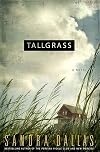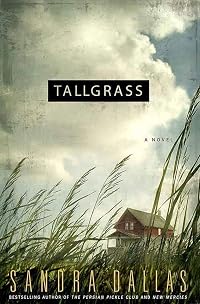
Tallgrass
by Sandra Dallas
On This Page
Description
During World War II, a family finds life turned upside-down when the government opens a Japanese internment camp in their small Colorado town. After a young girl is murdered, all eyes turn on the newcomers. Rennie has just turned thirteen and until this time, life has pretty much been predictable and fair. But the winds of change are coming, and with them, a shift in her perspective and a discovery of secrets that can destroy even the most sacred things. Part thriller, part historical novel, show more Tallgrass by Sandra Dallas is a riveting exploration of the darkest-and best-parts of the human heart.. show less
Tags
Recommendations
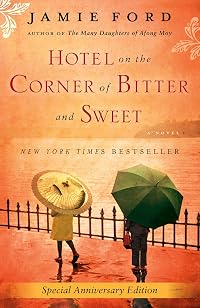

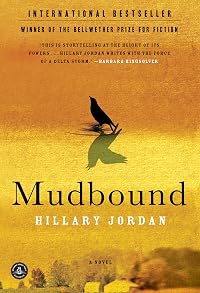
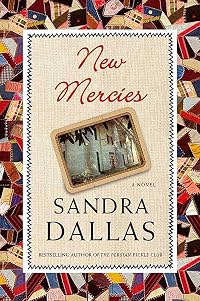
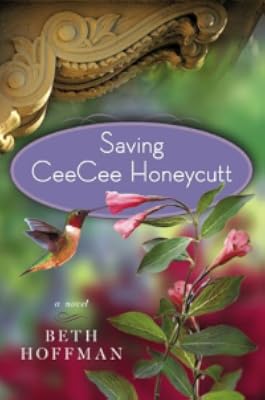
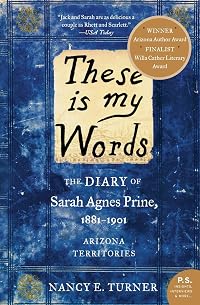

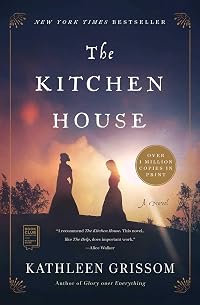
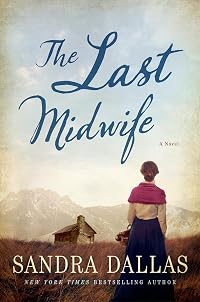
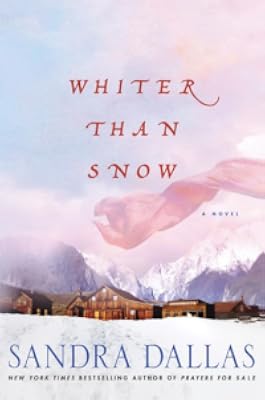
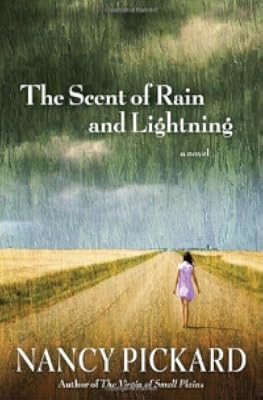
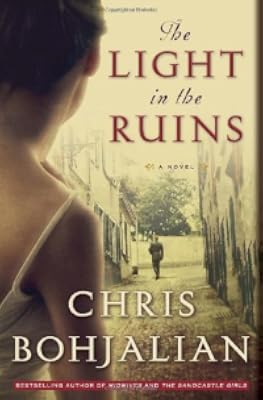
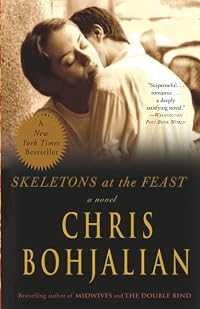
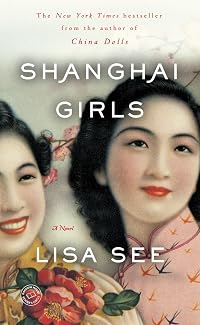


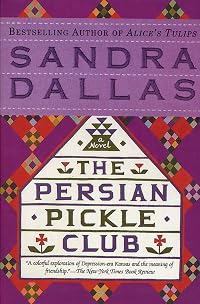
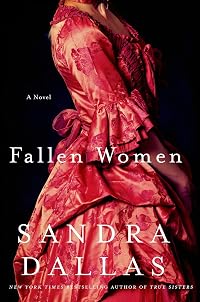
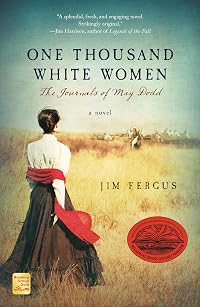

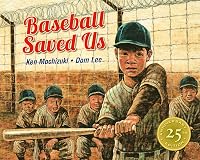


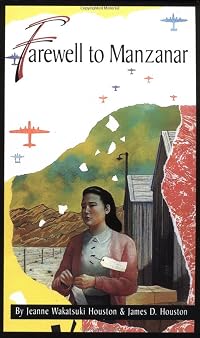





Member Recommendations
Member Reviews
3.75 stars
This is set in a small town in Colorado during World War II. A Japanese internment camp opens up close to the town and some of the townsfolk are not happy. Some people are a little more open-minded, including the main character's father. The story is told from 13-year old Rennie's point of view. Rennie's dad is a sugar beet farmer, who gives the Japanese people a chance by hiring some boys to help him farm. When a girl close to Rennie's age turns up raped and murdered, a lot of people in town automatically point towards the Japanese.
I really liked this. In addition to the story, I enjoyed the descriptions of farm and rural life in Colorado. I was close to giving the book a full 4 stars until the very end, where I thought a few show more too many loose ends got tied up all at once. It was just a little too neat and tidy, but I still really enjoyed it, and will read more books by Sandra Dallas. show less
This is set in a small town in Colorado during World War II. A Japanese internment camp opens up close to the town and some of the townsfolk are not happy. Some people are a little more open-minded, including the main character's father. The story is told from 13-year old Rennie's point of view. Rennie's dad is a sugar beet farmer, who gives the Japanese people a chance by hiring some boys to help him farm. When a girl close to Rennie's age turns up raped and murdered, a lot of people in town automatically point towards the Japanese.
I really liked this. In addition to the story, I enjoyed the descriptions of farm and rural life in Colorado. I was close to giving the book a full 4 stars until the very end, where I thought a few show more too many loose ends got tied up all at once. It was just a little too neat and tidy, but I still really enjoyed it, and will read more books by Sandra Dallas. show less
The Japanese internment camps have always been a puzzle to me and a bit of a black spot in American history. Why just the American citizens who were Japanese, and not the Americans of German heritage? Was it because they were more visible, more "different"? Were there more economic gains to be had in terms of the land and business they had to abandon? The government seemed to not see the oddities in taking their possessions, and bundling them behind barbed wire in internment camps, yet expecting their young men to enlist in the US Military to combat the Germans. This book explored a bit of that, from the perspective of a thirteen year old farm girl in Colorado, who lived in the town near a camp called Tallgrass. Seeing it through her show more eyes was interesting. The book covers human nature, plus a bit of a mystery, as another young girl is murdered in the town, and tensions rise.
One aspect of the book, particularly, fascinated me: the community and fellowship women build in the art of sewing. I see it still today, in various women's groups formed over knitting, quilting, crafting, etc. Art is good, but art in fellowship seems to work extra magic. show less
One aspect of the book, particularly, fascinated me: the community and fellowship women build in the art of sewing. I see it still today, in various women's groups formed over knitting, quilting, crafting, etc. Art is good, but art in fellowship seems to work extra magic. show less
During the dark days of World War II, President Roosevelt signed an act that required Japanese Americans to be relocated to interment camps for the duration of the war with Japan. A absolute act of racism, these people “looked” foreign and so were treated as such. In Tallgrass we read of one such camp in Colorado. Told from the point of view of a young girl who lives next to the camp, the story revolves around a horrific murder and the suspicions that arise because of it.
The small town of Ellis, Colorado and it’s inhabitants aren’t bad people, but fear and prejudice, plus strong patriotic feelings after Pearl Harbor, allow many to turn away from the few that persist in taunting and tormenting the Japanese. Life, as seen through show more the eyes of thirteen year old Rennie is changing and change can be at times confusing and scary.
This is my second book by Sandra Dallas and she is rapidly becoming one of my favorite authors. Her characters come alive on the pages and I know I will be thinking of them for some time to come. Her storytelling is rich and rewarding, and the addition of the mystery to this poignant story made for an engrossing read. show less
The small town of Ellis, Colorado and it’s inhabitants aren’t bad people, but fear and prejudice, plus strong patriotic feelings after Pearl Harbor, allow many to turn away from the few that persist in taunting and tormenting the Japanese. Life, as seen through show more the eyes of thirteen year old Rennie is changing and change can be at times confusing and scary.
This is my second book by Sandra Dallas and she is rapidly becoming one of my favorite authors. Her characters come alive on the pages and I know I will be thinking of them for some time to come. Her storytelling is rich and rewarding, and the addition of the mystery to this poignant story made for an engrossing read. show less
I like everything about this novel. The characters are extremely well-drawn individuals, aided in great part by Dallas's good ear for dialogue. Rennie's point of view is depicted realistically, as that of a thirteen-year-old. Dallas chose a setting that doesn't get enough attention -- a rural Colorado town where a Japanese internment camp is installed and dramatizes racial and political tensions among the interred and the townspeople. Above all, I appreciate Dallas's treatment of how the townspeople allowed their preconceptions to influence their conclusions about who was the perpetrator of a serious crime.
Prior to reading Tallgrass by Sandra Dallas, I had never really reflected on the plight of Japanese Americans who were placed in internment camps during World War 2. I found myself drawn into this story initially by the strong voice of the narrator, Rennie Stroud. Several reviews I read compared Rennie with the famous character Scout from, "To Kill A Mockingbird." I felt that this comparison was merited as I was frequently reminded of Scout while reading this novel.
Tallgrass is really the story of Rennie beginning to question the world around her. She comes to a better understanding of her parents and their limitations. Rennie finds herself having to question the beliefs and actions of those whom she has always admired, including the show more Jolly Stitchers, the local group of quilters who include Rennie's mother in their ranks. Dallas created some memorable characters in the Stroud family, all of whom were individuals I would love to meet in real life. She also did an excellent job of illustrating the fear and paranoia that some members of the white population of a small and isolated town would feel in such a situation. I enjoyed this book thoroughly, although I did feel that the primary antagonists of the novel, the Stroud family, were in some ways too much the stereotypical cartoon villains.
This book was especially thought provoking to me as I reflected on the state of our nation since 911, and the new found fear with which we seem to approach those of Middle-Eastern descent. show less
Tallgrass is really the story of Rennie beginning to question the world around her. She comes to a better understanding of her parents and their limitations. Rennie finds herself having to question the beliefs and actions of those whom she has always admired, including the show more Jolly Stitchers, the local group of quilters who include Rennie's mother in their ranks. Dallas created some memorable characters in the Stroud family, all of whom were individuals I would love to meet in real life. She also did an excellent job of illustrating the fear and paranoia that some members of the white population of a small and isolated town would feel in such a situation. I enjoyed this book thoroughly, although I did feel that the primary antagonists of the novel, the Stroud family, were in some ways too much the stereotypical cartoon villains.
This book was especially thought provoking to me as I reflected on the state of our nation since 911, and the new found fear with which we seem to approach those of Middle-Eastern descent. show less
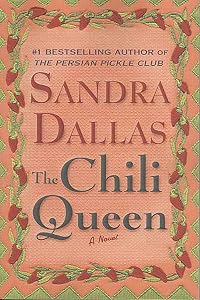
An ugly murder is central to this compelling historical, but the focus is on one appealing family, the Strouds, in the backwater town of Ellis, Colo. Soon after Pearl Harbor, the U.S. government rounded up all the Japanese residents of the West Coast and shipped them off to "internment camps" for the duration of the war. One of the camps is Tallgrass, based on an actual Colorado camp, as Dallas (The Chili Queen) explains in her acknowledgments. The major discomforts and petty indignities these (mostly) American citizens had to endure are viewed through the clear eyes of a young girl who lives on a nearby farm, Rennie Stroud. Rennie's obvious love of family slowly extends itself to the Japanese house and field helpers the Strouds receive show more permission to hire. The final surprise is the who and why of the murder itself. Dallas's terrific characters, unerring ear for regional dialects and ability to evoke the sights and sounds of the 1940s make this a special treat. show less
One of the dark moments in America's history occurred when Japanese Americans were evacuated to camps during World War II. In this work, Dallas fictionalizes Colorado's Amache camp and calls it Tallgrass. Although her story was imagined, it is pretty typical of some of the real accounts of distrust that some Americans harbored for anyone who looked Japanese even if they were American citizens. This story is told through the eyes of the daughter of a sugar beet farmer who lived near the camp. Her father was the first farmer to hire the Japanese Americans to work in his fields during their time at the camp. Many farmers followed suit, finding them to be trustworthy. Others refused to abandon their prejudices. The death of a young girl show more shortly after the arrival of the evacuees fueled some of the mistrust. Many realized that the Japanese Americans were being blamed although there was no evidence to support the claim that they had anything to do with the deed. It's a beautiful story for an adult audience although many high school students would probably enjoy the story as well. The book would provide great discussion for units dealing with this period of history or with ethnic prejudice.A beautifully told story! show less
Members
- Recently Added By
Lists

Historical Fiction
889 works; 90 members

Books Read in 2012
816 works; 31 members

Novels That Take Place In Colorado or Wyoming
20 works; 3 members
Author Information

36+ Works 8,711 Members
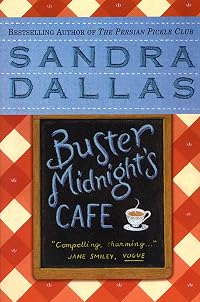
Sandra Dallas graduated from the University of Denver with a degree in journalism and began her writing career as a reporter with Business Week. While a reporter, she began writing nonfiction which include Sacred Paint, which won the National Cowboy Hall of Fame Western Heritage Wrangler Award, and The Quilt That Walked to Golden, recipient of the show more Independent Publishers Association Benjamin Franklin Award. Turning to fiction in 1990, Sandra has published a number of novels including Buster Midnight's Cafe, Alice's Tulips, and Prayers For Sale. She is the recipient of the Women Writing the West Willa Award for New Mercies, and two-time winner of the Western Writers of America Spur Award, for The Chili Queen and Tallgrass. In addition, she was a finalist for the Colorado Book Award, the Mountain and Plains Booksellers Association Award, and a four-time finalist for the Women Writing the West Willa Award. (Bowker Author Biography) show less
Some Editions
Awards and Honors
Awards
Distinctions
Notable Lists
Work Relationships
Common Knowledge
- Original publication date
- 2007
- People/Characters
- Hazel Dunn; Mattie McCauley Spencer; Rennie Stroud; Marthalice Stroud; Loyal Stroud; Betty Joyce Snow (show all 19); Beaner Jack; Danny Spano; Daisy; Harry Hirano; Carl; Bird Smith; Bud Stroud; Mary Stroud; Gus Snow; Susan Reddick; Edna Elliot; Beatrice Ord; Gus Snow
- Important places
- Ellis, Colorado, USA; Mingo, Colorado, USA; Denver, Colorado, USA
- Important events
- World War II (1939 | 1945); World War II, Pacific Theater (1941-12-07 | 1945-09-02); Japanese-American Internment (1942 | 1945)
- Dedication
- For Lloyd Athearn and
In memory of Forrest Dallas (1903-1973)
Two awful good men - First words
- The summer I was thirteen, the Japanese came to Ellis.
- Last words
- (Click to show. Warning: May contain spoilers.)An awful good woman.
- Blurbers
- Chiaverini, Jennifer; Coel, Margaret; Hosokawa, Bill; Tsukiyama, Gail; Lawrence, Iain; Hunt, Angela (show all 7); Raleigh, Michael
- Disambiguation notice
- ISBN 0805039414 is for In the Tall, Tall Grass by Denise Fleming
Classifications
- Genres
- Fiction and Literature, General Fiction, Historical Fiction, Teen
- DDC/MDS
- 813.54 — Literature & rhetoric American literature in English American fiction in English 1900-1999 1945-1999
- LCC
- PS3554 .A434 .T35 — Language and Literature American literature American literature Individual authors 1961-
- BISAC
Statistics
- Members
- 983
- Popularity
- 26,667
- Reviews
- 64
- Rating
- (3.84)
- Languages
- English
- Media
- Paper, Audiobook, Ebook
- ISBNs
- 10
- ASINs
- 6