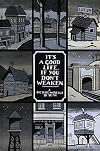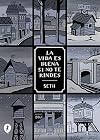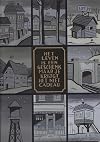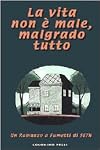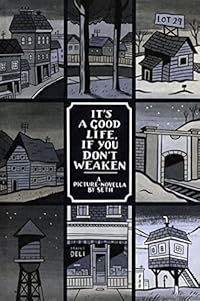
It's a Good Life, If You Don't Weaken
by Seth
On This Page
Description
While trying to understand his dissatisfaction with the present, Seth discovers the life and work of Kalo, a forgotten New Yorker cartoonist from the 1940s. But his obsession blinds him to the needs of his lover and the quiet desperation of his family.Tags
Recommendations






Member Recommendations

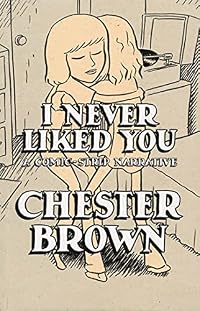
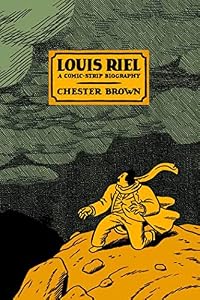
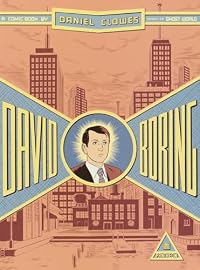
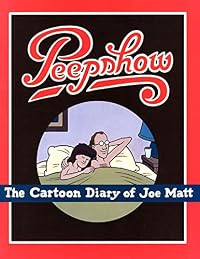
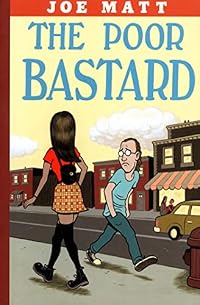
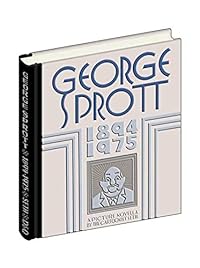
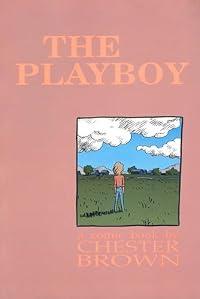
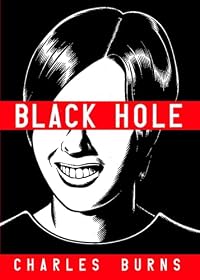
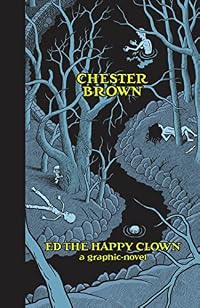
raulvilar Seth y Chester Brown son amigos íntimos y aparecen los dos como personajes bastante importantes en ambas obras, que son en cierto modo autobiografías en las que el autor se analiza o se descubre personalmente.
Member Reviews
From Palookaville, this story chronicles the search for more information about a little known cartoonist of the 40s and 50s. It's full of introspection, melancholy, love, and dedication. A casual encounter with a single comic strip becomes a mission to learn more. It's a beautifully slow-paced book where each panel brings depth. I'm not sure how he does it, but landscape and architecture become characters that frame and move the story along.
I continue to really enjoy this novella - not so much for the story itself, but because of the setting and feel. I know the places the story takes place in very well - Toronto and rural Ontario in the late 80s (and remembering back to the 70s) - which makes it much easier to be right there with the characters. I can see the scenes not just as drawn but as they exist in my head. And, even as I sometimes get a little irked with Seth for being too bound in the past, in reading this I feel a sense of melancholia in experiencing a place and time that, for me now, doesn't really exist anymore.
I feel slightly weird giving this book such a low rating when the artwork was really lovely, and parts of the story (much of the ending/revelation of the Kalo plot) were really clever and cool, but literally every single thing the author/protagonist did or said made me hate him more and more.* I genuinely can't tell if the author was self-aware of his own foibles and mocking them in this book, because it seems impossible that a person could actually be like that. At one point, he makes a derisive reference to Holden Caulfield as whiny and self-absorbed (and contemplates the possibility that he is Holden-ish), and I laughed out loud because Holden Caulfield is, for a variety of reasons, about a thousand times more sympathetic and show more interesting than the author/protag.
Anyway, don't read this book, go read a comic by a woman and call your mom or something.
*Spoiler: there is a single exception, which is the note he left for Annie, which I thought was quite sweet. show less
Anyway, don't read this book, go read a comic by a woman and call your mom or something.
*Spoiler: there is a single exception, which is the note he left for Annie, which I thought was quite sweet. show less
Quite enjoy and share Seth’s affection for the accoutrements of past times. I can identify with his love of old buildings, things, clothes, images from the past, especially if they possess no value in the world of the present. I like his fondness for the desolate and that orphaned from relevance. Having never read Proust I can’t say whether there is anything “Proustian” about his comix and book compendiums, but I’d wager there is something akin in elusiveness and desolate loneliness beloved. This particular novel/series is a fairly autobiographical account of his search for a fellow cartoonist from the past. He only possesses a few examples of this artist’s work and seeks out, only to eventually stumble upon, people who can show more describe a full, if incomplete picture of who the artist was, what was like. Before embarking Seth senses,without being certain, the artist has relevance and significance. So it is, he almost sets out, to create a portrait of someone who does not exist yet will confirm and complete meaning in his own life. I believe Seth takes refuge in a selective version of the world of the past and of his parents. This stands in contrast to the usual escapism of comicry; the lonely child, teenager or adult nerd’s longing for fantastic worlds and realities. Its an interesting take on the medium of comic books and strips. The appendix looks looks like it might be potentially useful in my own quest to find out more about the history of this art form, nestled, as it is, in my own childhood and past. show less
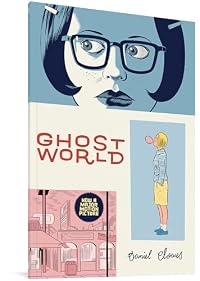
I was browsing Drawn & Quarterly's site during the holidays to see what they are planning on publishing and saw that a new issue of Palookaville is scheduled for mid-2023 (the first in 6 years). I've always enjoyed Seth's work so decided to go back in time and reread his work up to this point. And this is probably one of the good entry points for his work - his first longer work which brought him two Ignatz Awards in the inaugural year of the now well-known awards: Outstanding Graphic Novel or Collection and Outstanding Artist (he lost Outstanding Story to Alan Moore and Eddie Campbell's "From Hell", a category where the rest of the nominees were Dylan Horrocks's Hicksville, Daniel Clowes's Ghost World and Joe Chiappetta's A Death in show more the Family (in Silly Daddy)).
A Canadian cartoonist gets obsessed with an obscure cartoonist from the past and tries to find the man and to understand why such a talented man remained obscure. That is the premise of this graphic novel (Seth calls it a picture novella partially to highlight its connection to the past) and on the surface, that's pretty much what you get. Except that the text and the art are full of references to the actual history of the artistic form. If you are unfamiliar with most of it, this edition also contains a picture dictionary -- which may send you back rereading some parts when you realize what part of the story was actually true - while Seth (the narrator here and a namesake of the author), his circle and the cartoonist he gets obsessed with are mostly fictional, a lot of the other people and the rest of the art mentioned are not. And in addition to that, you get the Canadian landscapes, especially the ones showing small and big cities landscapes that are not that common in almost any type of books.
The picture novella is a love letter to the gag cartoonists of the 40s and 50s (think The New Yorker style cartoons). Seth's style is heavily influenced by their style and even if the tale is not biographical, it is based on the real author - the Seth of the novella may not be the real-life Seth but a lot of his actions may have been and the two of them view a lot of things the same way. The art is black and blue on cream pages - Seth rarely (if ever) uses color and this book is not an exception. And if you wonder just how realistic the story looks like - Seth even includes the "discovered" cartoons of his mystery cartoonist.
It was written at the time when the graphic memoirs were starting to get popular in the mainstream and Seth uses the format to its advantage (despite the story being fictional). Since the days this story was published, the format had become more and more mainstream and noone bats an eye anymore when a memoir comes out in graphic format but at the time this one was published, it was not as expected or accepted.
I've read this one before and I probably will read it again - there is always something else to notice, another line to pull on. It does not have the complexity of some other stories but it is still highly readable, especially if you like Seth's art style. show less
A Canadian cartoonist gets obsessed with an obscure cartoonist from the past and tries to find the man and to understand why such a talented man remained obscure. That is the premise of this graphic novel (Seth calls it a picture novella partially to highlight its connection to the past) and on the surface, that's pretty much what you get. Except that the text and the art are full of references to the actual history of the artistic form. If you are unfamiliar with most of it, this edition also contains a picture dictionary -- which may send you back rereading some parts when you realize what part of the story was actually true - while Seth (the narrator here and a namesake of the author), his circle and the cartoonist he gets obsessed with are mostly fictional, a lot of the other people and the rest of the art mentioned are not. And in addition to that, you get the Canadian landscapes, especially the ones showing small and big cities landscapes that are not that common in almost any type of books.
The picture novella is a love letter to the gag cartoonists of the 40s and 50s (think The New Yorker style cartoons). Seth's style is heavily influenced by their style and even if the tale is not biographical, it is based on the real author - the Seth of the novella may not be the real-life Seth but a lot of his actions may have been and the two of them view a lot of things the same way. The art is black and blue on cream pages - Seth rarely (if ever) uses color and this book is not an exception. And if you wonder just how realistic the story looks like - Seth even includes the "discovered" cartoons of his mystery cartoonist.
It was written at the time when the graphic memoirs were starting to get popular in the mainstream and Seth uses the format to its advantage (despite the story being fictional). Since the days this story was published, the format had become more and more mainstream and noone bats an eye anymore when a memoir comes out in graphic format but at the time this one was published, it was not as expected or accepted.
I've read this one before and I probably will read it again - there is always something else to notice, another line to pull on. It does not have the complexity of some other stories but it is still highly readable, especially if you like Seth's art style. show less
This is a book that can easily be seen as a self-absorbed spiral that's one-step shy of a badly kept diary, but we're lucky that Seth has actual talent.
This is that rare look into a life where the reader is all too aware of what Seth should know he has, while Seth is actually smart enough at times to know what he has, but at the same time he allows himself an obsession that will just keep him from really getting to the bottom of things.
In It's a Good Life, this obsession is Kalo. Kalo is presented as a gag comic writer of small note from the 40s and 50s with a mildly amusing New Yorker cartoon. Finding out more information about Kalo becomes Seth's overriding passion to the detriment of his personal relationships - not that Seth sees show more much of this during the hunt. Then again, when one is trying to make a paragraph of a footnote there's plenty of time to stop asking yourself questions in the name of your quest. show less
This is that rare look into a life where the reader is all too aware of what Seth should know he has, while Seth is actually smart enough at times to know what he has, but at the same time he allows himself an obsession that will just keep him from really getting to the bottom of things.
In It's a Good Life, this obsession is Kalo. Kalo is presented as a gag comic writer of small note from the 40s and 50s with a mildly amusing New Yorker cartoon. Finding out more information about Kalo becomes Seth's overriding passion to the detriment of his personal relationships - not that Seth sees show more much of this during the hunt. Then again, when one is trying to make a paragraph of a footnote there's plenty of time to stop asking yourself questions in the name of your quest. show less
One thing that all readers should know about me is that though I love graphic novels, I am extremely picky. However, this graphic novel was perfection! It tells the story of Seth who is depressed and feels lost in the world until he discovers an obscure cartoonist named Kalo. Though there is little information on this man, Seth decides to devote years of his life to discovering the man's true identity. He even goes as far as to find Kalo's house in a small town and visits the man's family. As he does so, he also returns home to his mother and brother and find himself traveling to his childhood house. Though this is far from being a "coming of age tale" (I hate that phrase), Seth certainly does develop throughout the story. His search show more does not change his identity, but it does help him understand himself better.
Though the book is set in Canada, I felt that the scenes were familiar and could be found in any country. The pictures are drawn in shade of blue and black that help illustrate the dark and depressed mood of Seth. There are also numerous drawings of houses, landscapes, and cityscapes. I found these to be incredibly interesting. In many graphic novels, I feel as if the artist uses landscapes as filler pictures for when the action is stopped. However, in this book, I felt as if drawings of these scenes were photographs of the setting. Many were bleak or lonely which, of course, reitterated Seth's view of the world.
In many graphic novels, the art will override the text. However, this book was superb in the exquisite blending of the two. Seth's observations were philosophical and I felt that they pertained to all people at any point in life. His conversations with his friend Chet, were also enlightening to his character as well to how people interact in a friendship. Though Seth was not a completely likeable character, I did find myself enjoying his company, philosophies, and observations.
If you do decide to read this book, it is extremely important that you read the ENTIRE book. At the end of the book, there are cartoons that Kalo supposedly created as well as a picture of him. Lastly, there is an "about the author" with a photograph of Seth. In order to get the entire flavor of the book, you must read until you hit the back cover!
The reason for this is because Seth makes the reader believe that there really is a cartoonist named Kalo who drew these cartoons and is shown in the photograph at the end. However, this is not true! There is no cartoonist named Kalo. Though the story of him as a man, is probably true for other cartoonists, he is a completely fictional character. Still, Seth's mother and brother are true to life. In this way, the graphic novel is semi-autobiographical and the reader must discover what is true about the author and what is not.
Clearly, you can understand why I had trouble putting this book down and would read it into the early morning hours. The story is exquiste, the pictures are divine, and the relationship between truth and lies is always an interesting debate to struggle with in a tale. I recommend that everyone go out and request this book from your library. For those of you unsure of graphic novels, this is an easy read that will not confuse you. In fact, it reads a lot more like a novella than a graphic novel. For those of you who love graphic novels (like myself), you will be blown away by the text as well as the pictures. It really is the complete package! show less
Though the book is set in Canada, I felt that the scenes were familiar and could be found in any country. The pictures are drawn in shade of blue and black that help illustrate the dark and depressed mood of Seth. There are also numerous drawings of houses, landscapes, and cityscapes. I found these to be incredibly interesting. In many graphic novels, I feel as if the artist uses landscapes as filler pictures for when the action is stopped. However, in this book, I felt as if drawings of these scenes were photographs of the setting. Many were bleak or lonely which, of course, reitterated Seth's view of the world.
In many graphic novels, the art will override the text. However, this book was superb in the exquisite blending of the two. Seth's observations were philosophical and I felt that they pertained to all people at any point in life. His conversations with his friend Chet, were also enlightening to his character as well to how people interact in a friendship. Though Seth was not a completely likeable character, I did find myself enjoying his company, philosophies, and observations.
If you do decide to read this book, it is extremely important that you read the ENTIRE book. At the end of the book, there are cartoons that Kalo supposedly created as well as a picture of him. Lastly, there is an "about the author" with a photograph of Seth. In order to get the entire flavor of the book, you must read until you hit the back cover!
The reason for this is because Seth makes the reader believe that there really is a cartoonist named Kalo who drew these cartoons and is shown in the photograph at the end. However, this is not true! There is no cartoonist named Kalo. Though the story of him as a man, is probably true for other cartoonists, he is a completely fictional character. Still, Seth's mother and brother are true to life. In this way, the graphic novel is semi-autobiographical and the reader must discover what is true about the author and what is not.
Clearly, you can understand why I had trouble putting this book down and would read it into the early morning hours. The story is exquiste, the pictures are divine, and the relationship between truth and lies is always an interesting debate to struggle with in a tale. I recommend that everyone go out and request this book from your library. For those of you unsure of graphic novels, this is an easy read that will not confuse you. In fact, it reads a lot more like a novella than a graphic novel. For those of you who love graphic novels (like myself), you will be blown away by the text as well as the pictures. It really is the complete package! show less
Members
- Recently Added By
Lists

Club Read's Graphic Stories Recommendations
127 works; 2 members
Author Information

Awards and Honors
Series
Belongs to Publisher Series
Colecção Novela Gráfica (série VI) (12)
Common Knowledge
- Canonical title*
- La vida es buena si no te rindes
- Original title
- It's a good life, if you don't weaken
- Original publication date
- 1996
- People/Characters
- Seth: Gregory Gallant; Chester Brown; Jack "Kalo" Kalloway
- Important places*
- Ontario, Canada
- Dedication*
- Dedicado a mi madre, Violet, a quien oí a menudo decir el título de este libro.
- First words*
- Las historietas siempre han sido una parte crucial de mi vida.
- Last words*
- (Click to show. Warning: May contain spoilers.)No conocía esta faceta suya
*Some information comes from Common Knowledge in other languages. Click "Edit" for more information.
Classifications
Statistics
- Members
- 758
- Popularity
- 36,773
- Reviews
- 25
- Rating
- (3.65)
- Languages
- 9 — Danish, Dutch, English, French, German, Italian, Norwegian (Bokmål), Portuguese, Spanish
- Media
- Paper, Ebook
- ISBNs
- 21
- ASINs
- 2