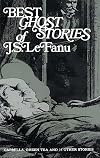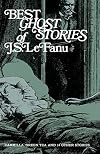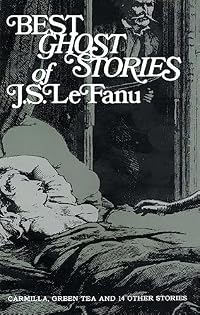
Best Ghost Stories of J. S. LeFanu
by J. Sheridan LeFanu
On This Page
Description
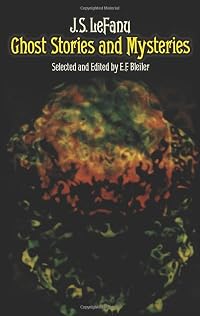
Here are 16 classic ghost stories: "Carmilla," (perhaps the classic vampire thriller), "Green Tea," "The Familiar," "The Haunted Baronet," "Madam Crowl's Ghost," "The Dead Sexton," "An Authentic Narrative of a Haunted House," plus nine others. Half these stories never published before in U.S.Tags
Recommendations
















Member Reviews
This is a creepy, interesting collection of Victorian ghost stories. Actually, some of them I would call horror more than ghost stories. LeFanu did some interesting things with elements now familiar to readers. I guess in his time, he was quite revolutionary. He created quite a chilling atmosphere in his stories.
It appears that he liked to connect his stories, and even re-use elements. Several are set in the same village; several are case histories from a particular doctor who delves into the supernatural; and the better part of one chapter of the novella The Haunted Baronet uses a significant portion of an earlier short story, with little change in plot -- though the names are changed (to protect the innocent?). Two of the stories seem show more to show the same haunting from two different points of view (one, a horror story mostly about how the haunting got started; another, the experiences of later residents of the haunted house.)
It didn't keep me on the edge of my seat, or cause me to lose sleep (more than I normally miss, anyway), but it was a nice, creepy read for Halloween season. show less
It appears that he liked to connect his stories, and even re-use elements. Several are set in the same village; several are case histories from a particular doctor who delves into the supernatural; and the better part of one chapter of the novella The Haunted Baronet uses a significant portion of an earlier short story, with little change in plot -- though the names are changed (to protect the innocent?). Two of the stories seem show more to show the same haunting from two different points of view (one, a horror story mostly about how the haunting got started; another, the experiences of later residents of the haunted house.)
It didn't keep me on the edge of my seat, or cause me to lose sleep (more than I normally miss, anyway), but it was a nice, creepy read for Halloween season. show less
Editor Bleiler gives us ghost stories and only ghost stories, no gothic mysteries or natural explanations here, by the first great master of the English ghost story. Mostly good, some great, there is one "essay" and an excerpted chapter from The House by the Churchyard. Culled from The Purcell Papers, In a Glass Darkly, and Madame Crowl's Ghost, the bizarre and aimless Haunted Baronet novella is also included.
Despite its purported health benefits, one should moderate the consumption of Green Tea.
Despite its purported health benefits, one should moderate the consumption of Green Tea.
Ratings
Members
- Recently Added By
Author Information

264+ Works 12,251 Members
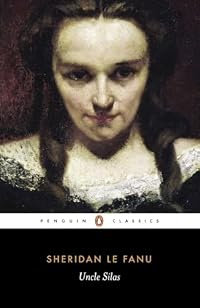
The greatest author of supernatural fiction during the nineteenth century was undoubtedly J. Sheridan Le Fanu. Le Fanu was born in Dublin and, as with so many other English popular fiction authors of his time, entered the genre of fiction by way of journalism, working on such publications as the Evening Mail and the Dublin University Magazine. Le show more Fanu came from a middle-class background; his family was of Huguenot descent. He graduated from Trinity College and married in 1844. After his wife died in 1858, until his own death, Le Fanu was known as a recluse, creating his ghost fiction late at night in bed. Probably he began writing ghost fiction in 1838; his earliest supernatural story is often cited as being either "The Ghost and the Bone-Setter" or the "Fortunes of Sir Robert Ardagh," both of which were later collected in the anthology entitled The Purcell Papers (1880). Writing most effectively in the short story form, Le Fanu's tales such as "Carmilla" (a vampire story that is thought possibly to have influenced Bram Stoker's Dracula) and the problematic "Green Tea" are considered by many literary scholars to be classics of the supernatural genre. His lengthy Gothic novels, such as Uncle Silas (1864), though less highly regarded than his shorter fiction, are nonetheless wonderfully atmospheric. Le Fanu's particular brand of literary horror tends toward the refined, subtle fright rather than the graphic sensationalism of Matthew Gregory Lewis. His work influenced other prominent horror fiction authors, including M. R. James. (Bowker Author Biography) show less
Work Relationships
Common Knowledge
- Canonical title
- Best Ghost Stories of J. S. LeFanu
- Original publication date
- 1832 - 1872
- People/Characters
- Dr. Martin Hesselius
- Important events
- Victorian Era
- First words
- Many persons accustomed to travel the old York and London road, in the days of stage coaches, will remember passing, in the afternoon, say, of an autumn day, in their journey to the capital, about three miles south of the tow... (show all)n of Applebury, and a mile and a half before you reach the Old Angel Inn, a large black-and-white house, as those old-fashioned cage-work habitations are termed, dilapidated and weather-stained, with broad lattice windows glimmering all over in the evening sun with little diamond panes, and thrown into relief by a dense background of ancient elms.
- Last words
- (Click to show. Warning: May contain spoilers.)I thought the tale worth preserving, and have no more to say.
Classifications
Statistics
- Members
- 454
- Popularity
- 67,182
- Reviews
- 2
- Rating
- (4.04)
- Languages
- English
- Media
- Paper, Ebook
- ISBNs
- 4
- UPCs
- 1
- ASINs
- 5