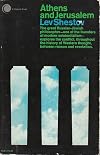
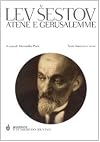
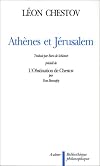
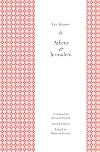
Athens and Jerusalem
by Lev Shestov
119 Members (4.14)
On This Page
Description
"For more than two thousand years, philosophers and theologians have wrestled with the irreconcilable opposition between Greek rationality (Athens) and biblical revelation (Jerusalem). In Athens and Jersusalem, Lev Shestov -- an inspiration for the French existentialists and the foremost interlocutor of Edmund Husserl, Martin Heidegger, and Martin Buber during the interwar years -- makes the gripping confrontation between these symbolic poles of ancient wisdom his philosophical testament, an show more argumentative and stylistic tour de force. Although the Russian-born Shestov is little known in the Anglophone world today, his writings influenced many twentieth-century European thinkers, such as Albert Camus, D. H. Lawrence, Thomas Mann, Czesaw Miosz, and Joseph Brodsky. Athens and Jerusalem is Shestov's final, groundbreaking work on the philosophy of religion from an existential perspective. This new, annotated edition of Bernard Martin's classic translation adds references to the cited works as well as glosses of passages from the original Greek, Latin, German, and French. Athens and Jerusalem is Shestov at his most profound and most eloquent and is the clearest expression of his thought that shaped the evolution of continental philosophy and European literature in the twentieth century. "-- show lessTags
Recommendations













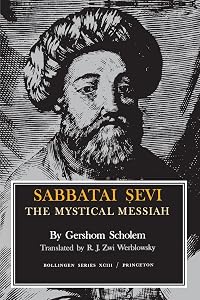
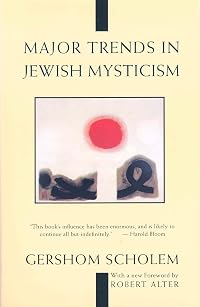
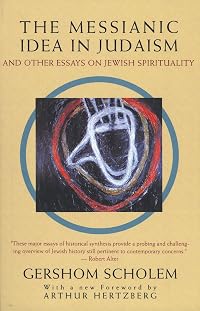

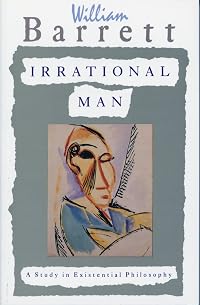






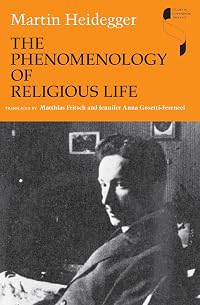

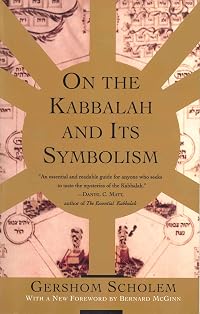




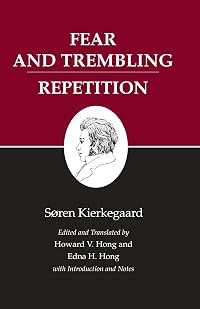
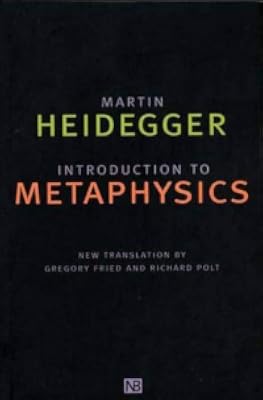



Member Recommendations

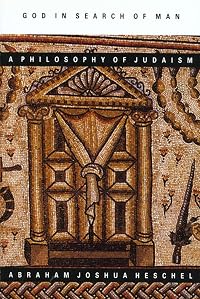
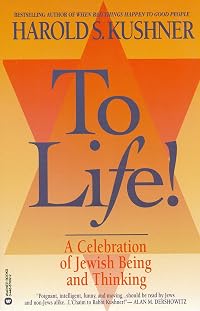
galacticus Both religious Russian existentialist works.
Member Reviews
Members
- Recently Added By
Author Information

58 Works 501 Members
Lev Shestov belongs in the stream of the religious existentialists and was deeply interested in the work of Friedrich Nietzsche (see also Vol. 2) and Soren Kierkegaard; he knew and was close to Nikolai Berdyaev and in touch with Edmund Husserl, Martin Heidegger (see also Vol. 5), and Martin Buber. In his own strong voice, however, deeply reliant show more not on the God of the conventional churches but on the Old Testament as he interpreted it, he denounced conventional metaphysics and the domination of a rigidly structured worldview in which we are governed by necessity. He believed that we have fettered ourselves with crutches and limits and made ourselves puny; we must seek a new God---with God "all things are possible." His most important early "existential" work, an attack on traditional metaphysics, was The Apotheosis of Groundlessness (1905, entitled in English translation All Things Are Possible), to which D. H. Lawrence (see Vol. 1) provided the introduction. The novelist wrote:""Everything is possible,' this is his really central cry. It is not nihilism. It is only a shaking free of the human psyche from old bonds. The positive central idea is that the human psyche, or soul, really believes in it-self. . . . No ideal on earth is anything more than an obstruction, in the end, to the creative issue of the spontaneous soul." In a brilliant introduction to Athens and Jerusalem (1938), Bernard Martin says, "Shestov suggests . . . that modern man can perhaps reach the God of the Bible only by first passing through the experience of his own nothingness, and by coming to feel, as Nietzsche did, that God is not. . . . "Sometimes [says Shestov] this is the sign of the end and of death. Sometimes of the beginning and of life. As soon as man feels that God is not, he suddenly comprehends the frightful horror and the wild folly of human temporal existence . . . [and] awakens. . . . Was it not so with Nietzsche, Spinoza, Pascal, Luther, Augustine, even with St. Paul?"' The son of Jewish parents, Shestov studied at Kiev and the University of Moscow. He received the title candidate of laws from the University of Kiev, but was denied the doctor of law title because his dissertation on the Russian working class was judged "revolutionary" by the Committee of Censors in Moscow. Working for awhile in his father's textile firm, he began writing for avant-garde periodicals in Kiev. In 1898 his first book appeared: Shakespeare and His Critic Brandes, in which he attacked the positivism and skeptical rationalism of the famous Danish critic and essayist in the name of a vague moral idealism. Shestov spent a number of years abroad---in Switzerland or Germany---before World War I. In 1918--19 he taught Greek philosophy at the People's University of Kiev, but, dissatisfied with the Bolshevik regime, he settled in Paris in 1920, where he taught at the Sorbonne and moved in a circle of Russian emigres, including Berdyaev. He became increasingly interested in religion and the work of the great religious philosophers. Shestov was deeply concerned philosophically with Russian literature---particularly Fyodor Dostoevsky (see Vol. 2) and Anton Chekhov (see Vol. 2)---and wrote many essays on the subject. (Bowker Author Biography) show less
Some Editions
Common Knowledge
- Original publication date
- 1966 (collection) (collection)
- Epigraph
- "The greatest good of man is to discourse daily about virtue." Plato, Apology, 38A
"Whatsoever is not of faith is sin." St. Paul, Romans, 14:23.
"Necessity does not allow itself to be persuaded." Aristotle, Metaphysics, 1015a, 32.
"The beginning of philosophy is the recognition f its own powerlessness and of the impossibility of fighting against necessity." Epictetus, Dissertation, II, ii.
"Happiness is not the reward of virtue but virtue itself." Spinoza, Ethics, V, 42.
"Ye shall be as God, knowing good and evil." Genesis, III, 5. (show all 10)
"If you wish to subject everything to yourself, subject yourself to reason." Seneca.
"...all these things i will give thee, if you wilt fall down and worship me...Get the hence, Satan: for it is written, Thou shalt worship the Lord thy God, and him only shalt thou serve." Matthew, IV, 9-10.
"The ancient and blessed wise men who were better than we and lived nearer to the gods." Plato, Philebus.
"A great and final struggle awaits souls." Plotinus, Enneads, I, 6,7. - Dedication
- To Nancy, Rachel and Joseph Martin
- First words
- We live surrounded by an endless multitude of mysteries.
- Last words
- (Click to show. Warning: May contain spoilers.)The kingdom of God, as it is written is attained through violence.
- Blurbers
- Mirsky, D. S.; Camus, Albert; Lawrence, D. H.
Classifications
- Genres
- Philosophy, Religion & Spirituality, Nonfiction
- DDC/MDS
- 210 — Religion Philosophy & theory of religion Philosophy and theory of religion
- LCC
- BL51 .S52273 — Philosophy, Psychology and Religion Religions. Mythology. Rationalism Religions. Mythology. Rationalism Philosophy of religion. Psychology of religion. Religion
- BISAC
Statistics
- Members
- 119
- Popularity
- 274,507
- Rating
- (4.14)
- Languages
- 8 — English, Estonian, French, German, Greek, Italian, Polish, Spanish
- Media
- Paper, Ebook
- ISBNs
- 11
- ASINs
- 4