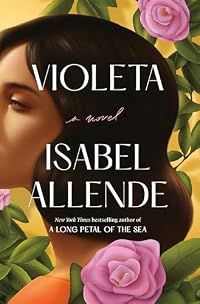
Violeta
by Isabel Allende
On This Page
Description
NEW YORK TIMES BESTSELLER • This sweeping novel from the author of A Long Petal of the Sea tells the epic story of Violeta Del Valle, a woman whose life spans one hundred years and bears witness to the greatest upheavals of the twentieth century.“An immersive saga about a passion-filled life.”—People
ONE OF THE BEST BOOKS OF THE YEAR: PopSugar, Real Simple, Reader’s Digest
Violeta comes into the world on a stormy day in 1920, the first girl in a family with five boisterous sons. show more From the start, her life is marked by extraordinary events, for the ripples of the Great War are still being felt, even as the Spanish flu arrives on the shores of her South American homeland almost at the moment of her birth.
Through her father’s prescience, the family will come through that crisis unscathed, only to face a new one as the Great Depression transforms the genteel city life she has known. Her family loses everything and is forced to retreat to a wild and beautiful but remote part of the country. There, she will come of age, and her first suitor will come calling.
She tells her story in the form of a letter to someone she loves above all others, recounting times of devastating heartbreak and passionate affairs, poverty and wealth, terrible loss and immense joy. Her life is shaped by some of the most important events of history: the fight for women’s rights, the rise and fall of tyrants, and ultimately not one, but two pandemics.
Through the eyes of a woman whose unforgettable passion, determination, and sense of humor carry her through a lifetime of upheaval, Isabel Allende once more brings us an epic that is both fiercely inspiring and deeply emotional. show less
Tags
Recommendations






Member Reviews
NOTE: I received early access to this book through netgalley.com in exchange for writing an impartial review. Thank you Ballantine Books. Scheduled Publication: January 25, 2022.
I should acknowledge up front that author Isabel Allende is a favorite of mine and I have loved nearly all of her books. This one is no exception.
I find some books tend to be more plot driven, others propelled by character evolution, and a few full of rich, lyrical language that can read like poetry. In this historical novel, Allende manages to blend all three. As she so often does. Her descriptions of seemingly small moments include such touching detail that they often made me feel I was sitting in the room as a witness. This book is not just a well-crafted show more novel. It's literature.
VIOLETA is a first person narrative, a woman writing down the story of her life as she approaches death. It's written to a specific person -- but you will need to discover who that is on your own. The book is also a story that closely follows the history of a century.
Born during the Spanish Flu Epidemic (1920), Violeta begins her life in a large extended family with great wealth, largely because her father believes economic success grows naturally out of a willingness to take great risk. Not surprisingly, the 1930s Depression hits the family hard. A dramatic change in circumstance propels Violeta into a much wider, and far less protected world.
As years pass, she experiences poverty, violence, marriage, passion, children, love affairs, tragedy, and successes and failures. All against the unfolding history of a South American country enduring repeated political repression and revolution. World War II, gangsters, drugs and hippies, addiction, abuse, and more reach into Violeta's orbit. Her priorities shift multiple times as she comes in contact with a wider variety of perspectives (Spanish-speaking elite, indigenous people, and ex-pats) and understands more about other realities surrounding her. Violeta's story is as challenging as the profound historical events impacting her loved ones, but also as dramatic and universal as the day-to-day experiences impacting EVERY woman's life (i.e. love, friendship, family).
VIOLETA is a beautiful novel from the very first page, full of three-dimensional characters exhibiting all the foibles we recognize as simply part of human nature. Don't miss VIOLETA. show less
I should acknowledge up front that author Isabel Allende is a favorite of mine and I have loved nearly all of her books. This one is no exception.
I find some books tend to be more plot driven, others propelled by character evolution, and a few full of rich, lyrical language that can read like poetry. In this historical novel, Allende manages to blend all three. As she so often does. Her descriptions of seemingly small moments include such touching detail that they often made me feel I was sitting in the room as a witness. This book is not just a well-crafted show more novel. It's literature.
VIOLETA is a first person narrative, a woman writing down the story of her life as she approaches death. It's written to a specific person -- but you will need to discover who that is on your own. The book is also a story that closely follows the history of a century.
Born during the Spanish Flu Epidemic (1920), Violeta begins her life in a large extended family with great wealth, largely because her father believes economic success grows naturally out of a willingness to take great risk. Not surprisingly, the 1930s Depression hits the family hard. A dramatic change in circumstance propels Violeta into a much wider, and far less protected world.
As years pass, she experiences poverty, violence, marriage, passion, children, love affairs, tragedy, and successes and failures. All against the unfolding history of a South American country enduring repeated political repression and revolution. World War II, gangsters, drugs and hippies, addiction, abuse, and more reach into Violeta's orbit. Her priorities shift multiple times as she comes in contact with a wider variety of perspectives (Spanish-speaking elite, indigenous people, and ex-pats) and understands more about other realities surrounding her. Violeta's story is as challenging as the profound historical events impacting her loved ones, but also as dramatic and universal as the day-to-day experiences impacting EVERY woman's life (i.e. love, friendship, family).
VIOLETA is a beautiful novel from the very first page, full of three-dimensional characters exhibiting all the foibles we recognize as simply part of human nature. Don't miss VIOLETA. show less
Violeta, Isabel Allende, author; Yareli Arizmendi, narrator
For 100 years, between 1920 and 2020, the world underwent monumental changes. The character Violeta del Valle, lived through that time, and this is the tale of all she became cognizant of during her life. It is written in the form of a lengthy letter to someone she loved deeply. The men in her life ranged from meek and timid, to excessively strong and willful, from criminal to virtuous. The women also ran the gamut from obedient housewives to independent feminists. Governments changed, and the people endured the growing pains of their different leaders, their rules and their politics. Inspired by the events in her own life, Allende has written a multigenerational novel exposing show more all of the warts of the world. America is not painted in a very positive light as Violeta walks the reader through her memories, in Chile, as those she loved and loved her, eventually spanned the continents, and all of their lives went off in many different directions.
Chile was infested with protesters that were unhappy with the status quo, with instigators of revolt and discontent. One group or another searched for more and more power and provided less and less independence for the citizens, as they gained more and more control over the population. Often, in what seemed the quest for more freedom, more limitations, instead, were placed upon the people. Violence and death, fear and deprivation, were the result of revolutions meant to improve lives. Dissenters simply disappeared as they were taken away without charges and silenced with abandon. Lives were lost and so was the country that had once been loved as a shining example to the world. Only the select few could thrive. Did this happen only in Chile? No, the century was certainly one of turbulence for many.
All the experiences of humanity occurred in Violeta’s time. From what some would consider her own wanton behavior to the chaste life of her grandson Camilo, life in all of its incantations played out on the pages of this novel. Violeta experienced life with several men, some whom she adored and some whom she came to dislike. With her first husband, she had no children. With her lover she had two, Nieves and Juan Martin. With her second husband she experienced true happiness. Those in her life ranged from the meek to the powerful, the intellectual to the visceral, from the emotional to the dispassionate, and all that lies in between. As readers, we witness a world in flux through the letter Violeta is writing to someone she cares deeply about. We also witness the history of her world as it is affected by life and death in all of its fury and grandeur. During her time on earth, many historic and memorable moments occurred. Some, like war and disease were tragic, and some like women’s suffrage and incredible technology were constructive, but all of the events were momentous. Allende has told the story from one pandemic to another. She has told the story of a world that grew in positive ways and retracted in negative ways, in a constant pattern of a revolving door.
Through all the years of disease, war, and other turmoil, Violeta was always able to fall back on her optimism and eventually became engaged in fighting for women’s rights and a more democratic society. Even as much was taken away during her lifetime, much more was achieved. As she witnessed a world of deprivation for those who were not privileged, she realized that much of her life was spent in ignorance of the plight of others. She became an activist for civil rights and a philanthropist for those in need. The book touches on every human behavior and every major event during her century of life, from WWI to the threat of WWIII, from the Spanish Flu to Covid 19, from economic prosperity to the Depression, from religious freedom to anti-Semitism, from the birth of the feminist movement to women’s suffrage, from the Cuban and Russian Revolutions to Woodstock, from villains to heroes, and all that occurred in between.
During her life she met heroes of sorts and villains of another sort, from her father who fell from grace to her brother’s alternate politics, to Julian Bravo, a hero in the RAF who was a scoundrel as well, to Roy Cooper, a man for hire, who had a soft, hidden heart, from the German Fabian Schmidt, a cold Veterinarian to the Norwegian Harald Fiske, a caring birdwatcher, personalities of every stripe are featured. From Josephine to Etelvino, both caretakers, from Yaima the healer, to Dr. Levy the therapist, from the slow-witted Torito to the heights of Edmund Hillary who climbed Mt Everest successfully, to charity and sacrifice to the depths of human depravity, from Latin America to America to Europe, all types of human beings are displayed in their glory and their shame.
No character in the book was one-dimensional, instead there were many facets to his or her own nature and personality. Nothing and no one was all pure or all evil. The book, a whirlwind of facts and emotion, was read by a calm narrator with a soothing voice that led the reader through the wealth of information within Violeta’s turbulent existence. show less
For 100 years, between 1920 and 2020, the world underwent monumental changes. The character Violeta del Valle, lived through that time, and this is the tale of all she became cognizant of during her life. It is written in the form of a lengthy letter to someone she loved deeply. The men in her life ranged from meek and timid, to excessively strong and willful, from criminal to virtuous. The women also ran the gamut from obedient housewives to independent feminists. Governments changed, and the people endured the growing pains of their different leaders, their rules and their politics. Inspired by the events in her own life, Allende has written a multigenerational novel exposing show more all of the warts of the world. America is not painted in a very positive light as Violeta walks the reader through her memories, in Chile, as those she loved and loved her, eventually spanned the continents, and all of their lives went off in many different directions.
Chile was infested with protesters that were unhappy with the status quo, with instigators of revolt and discontent. One group or another searched for more and more power and provided less and less independence for the citizens, as they gained more and more control over the population. Often, in what seemed the quest for more freedom, more limitations, instead, were placed upon the people. Violence and death, fear and deprivation, were the result of revolutions meant to improve lives. Dissenters simply disappeared as they were taken away without charges and silenced with abandon. Lives were lost and so was the country that had once been loved as a shining example to the world. Only the select few could thrive. Did this happen only in Chile? No, the century was certainly one of turbulence for many.
All the experiences of humanity occurred in Violeta’s time. From what some would consider her own wanton behavior to the chaste life of her grandson Camilo, life in all of its incantations played out on the pages of this novel. Violeta experienced life with several men, some whom she adored and some whom she came to dislike. With her first husband, she had no children. With her lover she had two, Nieves and Juan Martin. With her second husband she experienced true happiness. Those in her life ranged from the meek to the powerful, the intellectual to the visceral, from the emotional to the dispassionate, and all that lies in between. As readers, we witness a world in flux through the letter Violeta is writing to someone she cares deeply about. We also witness the history of her world as it is affected by life and death in all of its fury and grandeur. During her time on earth, many historic and memorable moments occurred. Some, like war and disease were tragic, and some like women’s suffrage and incredible technology were constructive, but all of the events were momentous. Allende has told the story from one pandemic to another. She has told the story of a world that grew in positive ways and retracted in negative ways, in a constant pattern of a revolving door.
Through all the years of disease, war, and other turmoil, Violeta was always able to fall back on her optimism and eventually became engaged in fighting for women’s rights and a more democratic society. Even as much was taken away during her lifetime, much more was achieved. As she witnessed a world of deprivation for those who were not privileged, she realized that much of her life was spent in ignorance of the plight of others. She became an activist for civil rights and a philanthropist for those in need. The book touches on every human behavior and every major event during her century of life, from WWI to the threat of WWIII, from the Spanish Flu to Covid 19, from economic prosperity to the Depression, from religious freedom to anti-Semitism, from the birth of the feminist movement to women’s suffrage, from the Cuban and Russian Revolutions to Woodstock, from villains to heroes, and all that occurred in between.
During her life she met heroes of sorts and villains of another sort, from her father who fell from grace to her brother’s alternate politics, to Julian Bravo, a hero in the RAF who was a scoundrel as well, to Roy Cooper, a man for hire, who had a soft, hidden heart, from the German Fabian Schmidt, a cold Veterinarian to the Norwegian Harald Fiske, a caring birdwatcher, personalities of every stripe are featured. From Josephine to Etelvino, both caretakers, from Yaima the healer, to Dr. Levy the therapist, from the slow-witted Torito to the heights of Edmund Hillary who climbed Mt Everest successfully, to charity and sacrifice to the depths of human depravity, from Latin America to America to Europe, all types of human beings are displayed in their glory and their shame.
No character in the book was one-dimensional, instead there were many facets to his or her own nature and personality. Nothing and no one was all pure or all evil. The book, a whirlwind of facts and emotion, was read by a calm narrator with a soothing voice that led the reader through the wealth of information within Violeta’s turbulent existence. show less
Written as an autobiographical "letter" from a 100-year-old woman recounting the many events of her life, this should be an epic spanning the years 1920 to 2020.
Allende's character is born into a wealthy family, they lose their fortune and retreat to the country where she ultimately enters into a loveless marriage, walks away from it, and bears two children to her abusive lover. She raises a grandchild, lives through political upheaval, takes numerous lovers, makes a lot of money, and eventually ends her days as a philanthropist funding women's rights organizations. But the tone of the novel is uniformly bland and the reader is held so firmly at arm's length that it's impossible to develop any emotional investment in the characters or show more the events described. show less
Allende's character is born into a wealthy family, they lose their fortune and retreat to the country where she ultimately enters into a loveless marriage, walks away from it, and bears two children to her abusive lover. She raises a grandchild, lives through political upheaval, takes numerous lovers, makes a lot of money, and eventually ends her days as a philanthropist funding women's rights organizations. But the tone of the novel is uniformly bland and the reader is held so firmly at arm's length that it's impossible to develop any emotional investment in the characters or show more the events described. show less
Reading Isabel Allende's latest two novels, Violeta and A Long Petal of the Sea, has me wanting to go back and reread her earlier work, particularly House of the Spirits. These two latest titles both strike me as telling-not-showing, which anyone who has taken a creative writing class has been told is Not. To. Be. Done. With A Long Petal of the Sea, I found that telling frustrating as it kept me outside events. I'm wondering now if House of the Spirits would strike me similarly.
In Violeta, the telling is done by the title character, who has a specific audience—the grandson Camilo she raised from infancy. Violeta is one hundred years old, ready to move on, and is recounting her life story to fill in events Camilo isn't aware of. show more Violeta's life begins with one pandemic—influenza. It ends with another—COVID. In between we have a century's worth of Latinx American history, mostly set in Chile, but also Argentina and the U.S. (which counts as Latinx America).
Violeta traces her gradual awakening from spoiled daughter to passionate woman to socially engaged activist. This narrative isn't presented didactically. It's a simple acknowledgement of the ways focus and values can change across the years. Violeta is a political naif at the start, surrounded by those of the middle and upper class who see Allende's election as a tragedy and embrace the military coup that puts Pinochet into power. As her son and others she loves fight against the dictatorship, she comes to question her earlier assumptions, but her more radical views are accompanied by deep concerns for the fates of those speaking out.
The fact that Violeta is the narrator of this story, rather than the third person narration in A Long Petal of the Sea, makes Violeta a far more successful, engaging book. We have a heart to enter, eyes through which to view the world. Knowing one person's interior life allows readers to expand their understanding not just to include that life, but to see beyond it.
I received a free electronic review copy of this title from the publisher via NetGalley; the opinions are my own. show less
In Violeta, the telling is done by the title character, who has a specific audience—the grandson Camilo she raised from infancy. Violeta is one hundred years old, ready to move on, and is recounting her life story to fill in events Camilo isn't aware of. show more Violeta's life begins with one pandemic—influenza. It ends with another—COVID. In between we have a century's worth of Latinx American history, mostly set in Chile, but also Argentina and the U.S. (which counts as Latinx America).
Violeta traces her gradual awakening from spoiled daughter to passionate woman to socially engaged activist. This narrative isn't presented didactically. It's a simple acknowledgement of the ways focus and values can change across the years. Violeta is a political naif at the start, surrounded by those of the middle and upper class who see Allende's election as a tragedy and embrace the military coup that puts Pinochet into power. As her son and others she loves fight against the dictatorship, she comes to question her earlier assumptions, but her more radical views are accompanied by deep concerns for the fates of those speaking out.
The fact that Violeta is the narrator of this story, rather than the third person narration in A Long Petal of the Sea, makes Violeta a far more successful, engaging book. We have a heart to enter, eyes through which to view the world. Knowing one person's interior life allows readers to expand their understanding not just to include that life, but to see beyond it.
I received a free electronic review copy of this title from the publisher via NetGalley; the opinions are my own. show less
NOTE: I received early access to this book through netgalley.com in exchange for writing an impartial review. Thank you Ballantine Books. Scheduled Publication: January 25, 2022.
I should acknowledge up front that author Isabel Allende is a favorite of mine and I have loved nearly all of her books. This one is no exception.
I find some books tend to be more plot driven, others propelled by character evolution, and a few full of rich, lyrical language that can read like poetry. In this historical novel, Allende manages to blend all three. As she so often does. Her descriptions of seemingly small moments include such touching detail that they often made me feel I was sitting in the room as a witness. This book is not just a well-crafted show more novel. It's literature.
VIOLETA is a first person narrative, a woman writing down the story of her life as she approaches death. It's written to a specific person -- but you will need to discover who that is on your own. The book is also a story that closely follows the history of a century.
Born during the Spanish Flu Epidemic (1920), Violeta begins her life in a large extended family with great wealth, largely because her father believes economic success grows naturally out of a willingness to take great risk. Not surprisingly, the 1930s Depression hits the family hard. A dramatic change in circumstance propels Violeta into a much wider, and far less protected world.
As years pass, she experiences poverty, violence, marriage, passion, children, love affairs, tragedy, and successes and failures. All against the unfolding history of a South American country enduring repeated political repression and revolution. World War II, gangsters, drugs and hippies, addiction, abuse, and more reach into Violeta's orbit. Her priorities shift multiple times as she comes in contact with a wider variety of perspectives (Spanish-speaking elite, indigenous people, and ex-pats) and understands more about other realities surrounding her. Violeta's story is as challenging as the profound historical events impacting her loved ones, but also as dramatic and universal as the day-to-day experiences impacting EVERY woman's life (i.e. love, friendship, family).
VIOLETA is a beautiful novel from the very first page, full of three-dimensional characters exhibiting all the foibles we recognize as simply part of human nature. Don't miss VIOLETA. show less
I should acknowledge up front that author Isabel Allende is a favorite of mine and I have loved nearly all of her books. This one is no exception.
I find some books tend to be more plot driven, others propelled by character evolution, and a few full of rich, lyrical language that can read like poetry. In this historical novel, Allende manages to blend all three. As she so often does. Her descriptions of seemingly small moments include such touching detail that they often made me feel I was sitting in the room as a witness. This book is not just a well-crafted show more novel. It's literature.
VIOLETA is a first person narrative, a woman writing down the story of her life as she approaches death. It's written to a specific person -- but you will need to discover who that is on your own. The book is also a story that closely follows the history of a century.
Born during the Spanish Flu Epidemic (1920), Violeta begins her life in a large extended family with great wealth, largely because her father believes economic success grows naturally out of a willingness to take great risk. Not surprisingly, the 1930s Depression hits the family hard. A dramatic change in circumstance propels Violeta into a much wider, and far less protected world.
As years pass, she experiences poverty, violence, marriage, passion, children, love affairs, tragedy, and successes and failures. All against the unfolding history of a South American country enduring repeated political repression and revolution. World War II, gangsters, drugs and hippies, addiction, abuse, and more reach into Violeta's orbit. Her priorities shift multiple times as she comes in contact with a wider variety of perspectives (Spanish-speaking elite, indigenous people, and ex-pats) and understands more about other realities surrounding her. Violeta's story is as challenging as the profound historical events impacting her loved ones, but also as dramatic and universal as the day-to-day experiences impacting EVERY woman's life (i.e. love, friendship, family).
VIOLETA is a beautiful novel from the very first page, full of three-dimensional characters exhibiting all the foibles we recognize as simply part of human nature. Don't miss VIOLETA. show less
Just a draft for now. This was an incredibly rich book. A life story narration that spans a hundred years and contains so many lissues and themes: politics, love stories, social issues, family issues and the list goes on. The plot never flags. She is a consummate storyteller and all the time while you are turning the pages to find out what happens next she inserts her very keen observations on life and experience. I want to read this book again and underline it despite my aversion to writing in books. But this was such a powerful book, maybe it is time to change my reluctance to 'deface' a book as a way of having a more solid communication between myself and the writer. Kudos Isabel Allende, a very powerful story.
Violeta del Valle knows it’s time to tell her story. She pens a lengthy letter to her grandson, Camilo, documenting and detailing her life, spanning a century, from 1920 to 2020. Violeta is her story, in her own words. I have often thought about writing my life story and what better way than to write it as you would write a loved one. It added such a personal touch, deepening the connection between reader and character.
One unique aspect about Violeta’s story is that she was born during a pandemic, the Spanish flu outbreak, and now she is dying during another pandemic, the COVID-19 pandemic, which is remarkable, and oddly thought-provoking.
Violeta went through quite a bit in her century on this earth, but while I was reading I was so show more captivated by her narrative that it felt like mere moments. I was so absorbed that I seriously felt like this was a true account of a woman’s life, the writing felt that real. I even had to verify that it was in fact fiction and that I didn’t misread the synapsis, which is something I don’t think I’ve ever done before. Violeta’s story stuck with me long after I read her last words, my heart not wanting to let go.
There really wasn’t anything distinguishable about this story, but there is a magnetism that grabs hold of you and doesn’t let go. Violeta lives a life with experiences that are unique in some aspects, but others as old as time. Sex plays a major role in Violeta’s story, especially when she meets her second husband (a story I don’t think I will ever forget!), but the intimate details are not too descriptive, while still giving enough details, which is something I appreciated.
I was captivated by this vivacious woman, who lived life on her terms, even if it was frowned upon by others. Her tenacity was inspiring, being an empowered woman, and helping to empower other women. I loved the author’s writing style, the ebb and flow of the narrative was so natural, it felt like I was listening to a story from my own grandmother, and I felt my heart break a little when her story was over, wishing she would have lived longer, to tell another tale.
This is the first book that I’ve read by Isabell Allende, but I can guarantee it will not be my last. I fell in love with her writing style and storytelling talent, so unique, and powerful. I am grateful and thankful I had the opportunity to read this novel, and cannot recommend enough.
*I have voluntarily reviewed a copy of this book which I received from Random House-Ballentine through NetGalley. All views and opinions expressed are completely honest, and my own. show less
One unique aspect about Violeta’s story is that she was born during a pandemic, the Spanish flu outbreak, and now she is dying during another pandemic, the COVID-19 pandemic, which is remarkable, and oddly thought-provoking.
Violeta went through quite a bit in her century on this earth, but while I was reading I was so show more captivated by her narrative that it felt like mere moments. I was so absorbed that I seriously felt like this was a true account of a woman’s life, the writing felt that real. I even had to verify that it was in fact fiction and that I didn’t misread the synapsis, which is something I don’t think I’ve ever done before. Violeta’s story stuck with me long after I read her last words, my heart not wanting to let go.
There really wasn’t anything distinguishable about this story, but there is a magnetism that grabs hold of you and doesn’t let go. Violeta lives a life with experiences that are unique in some aspects, but others as old as time. Sex plays a major role in Violeta’s story, especially when she meets her second husband (a story I don’t think I will ever forget!), but the intimate details are not too descriptive, while still giving enough details, which is something I appreciated.
I was captivated by this vivacious woman, who lived life on her terms, even if it was frowned upon by others. Her tenacity was inspiring, being an empowered woman, and helping to empower other women. I loved the author’s writing style, the ebb and flow of the narrative was so natural, it felt like I was listening to a story from my own grandmother, and I felt my heart break a little when her story was over, wishing she would have lived longer, to tell another tale.
This is the first book that I’ve read by Isabell Allende, but I can guarantee it will not be my last. I fell in love with her writing style and storytelling talent, so unique, and powerful. I am grateful and thankful I had the opportunity to read this novel, and cannot recommend enough.
*I have voluntarily reviewed a copy of this book which I received from Random House-Ballentine through NetGalley. All views and opinions expressed are completely honest, and my own. show less
Members
- Recently Added By
Lists

Books published and read in 2022
82 works; 5 members

Books Read in 2022
5,164 works; 113 members
Author Information

85+ Works 84,625 Members
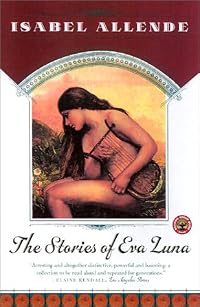
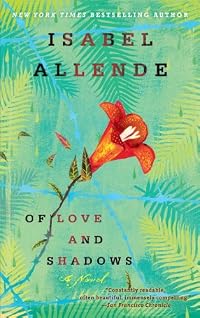
Isabel Allende was born in 1942 in Lima, Peru, the daughter of a Chilean diplomat. When her parents separated, young Isabel moved with her mother to Chile, where she spent the rest of her childhood. She married at the age of 19 and had two children, Paula and Nicolas. Her uncle was Salvador Allende, the president of Chile. When he was overthrown show more in the coup of 1973, she fled Chile, moving to Caracas, Venezuela. While living in Venezuela, Allende began writing her novels, many of them exploring the close family bonds between women. Her first novel, The House of the Spirits, has been translated into 27 languages, and was later made into a film. She then wrote Of Love and Shadows, Eva Luna, and The Stories of Eva Luna, all set in Latin America. The Infinite Plan was her first novel to take place in the United States. She explores the issues of human rights and the plight of immigrants and refugees in her novel, In The Midst of Winter. In Paula, Allende wrote her memoirs in connection with her daughter's illness and death. She delved into the erotic connections between food and love in Aphrodite: A Memoir of the Senses. In addition to writing books, Allende has worked as a TV interviewer, magazine writer, school administrator, and a secretary at a U.N. office in Chile. She received the 1996 Harold Washington Literacy Award. She lives in California. Her title Maya's Notebook made The New York Times Best Seller List in 2013. (Bowker Author Biography) show less
Some Editions
Awards and Honors
Common Knowledge
- Canonical title
- Violeta
- Original title
- Violeta
- Original publication date
- 2022-01-25
- People/Characters
- Violeta Del Valle; María Gracia Del Valle; Arsenio Del Valle; Marko Kusanovic; José Antonio Del Valle; Apolonio Toro (show all 33); Josephine Taylor; Teresa Rivas; Aunt Pilar; Aunt Pía; Abel Rivas; Lucinda Rivas; Bruno Rivas; Facunda; Yaima; Camilo Del Valle; Fabian Schmidt-Engler; Julián Bravo; Juan Martín Bravo Del Valle; Nieves Bravo Del Valle; Fulgencio Batista; Zoraida Abreu; Joe Santoro; Roy Cooper; Dr. Levy; Rita Linares; Etelvina Muñoz; Harald Fiske; Anton Kusanovic; Vania Halperin; Ulla Del Valle; Mailén Kusanovic; Albert Benoit
- Important places
- Chile; Nahuel; Santa Clara; Sacramento; Cuba; Miami, Florida, USA (show all 11); Las Vegas, Nevada, USA; Los Angeles, California, USA; Utah, USA; Buenos Aires, Argentina; Oslo, Norway
- Important events
- Spanish Flu; COVID-19 pandemic; Chilean Coup; Pandemic; Great Depression; Cuban Revolution (1959) (show all 7); Argentina's Dirty War
- Dedication*
- 'Voor Nicolás en Lori, steunpilaren van mijn oude dag'
- First words*
- Lieve Camilo,
De bedoeling van deze bladzijden is jou een getuigenis na te laten, omdat ik denk dat in een verre toekomst, wanneer je oud bent en aan mij denkt, je geheugen je in de steek zal laten, want je bent nogal vers... (show all)trooid en die tekortkoming verergert met het ouder worden. - Quotations*
- 'Tell me, what is it you plan to do
With your one wild and precious life?
Zeg me, wat ben je van plan te doen
met je enige, wilde, kostbare leven?
MARY OLIVER
The Summer Day' - Last words*
- (Click to show. Warning: May contain spoilers.)Vaarwel, Camilo, Nives is gekomen om me te halen. De hemel is prachtig…
- Publisher's editor*
- Penguin Random House Grupo Editorial, Barcelona
- Blurbers
- Hosseini, Khaled; McCann, Colum
- Original language
- Spanish
- Canonical DDC/MDS
- Deze digitale editie is gemaakt naar de eerste druk, 2022, met ISBN 978 90 284 5193 3
*Some information comes from Common Knowledge in other languages. Click "Edit" for more information.
Classifications
- Genres
- Historical Fiction, General Fiction, Fiction and Literature
- DDC/MDS
- 863.64 — Literature & rhetoric Spanish, Portuguese, Galician literatures Spanish fiction 20th Century 1945-2000
- LCC
- PQ8098.1 .L54 .V5613 — Language and Literature French, Italian, Spanish and Portuguese literatures Spanish literature Provincial, local, colonial, etc. Spanish America
- BISAC
Statistics
- Members
- 1,577
- Popularity
- 14,360
- Reviews
- 54
- Rating
- (3.90)
- Languages
- 12 — Danish, Dutch, English, German, Italian, Polish, Romanian, Russian, Spanish, Swedish, Turkish, Portuguese (Portugal)
- Media
- Paper, Audiobook, Ebook
- ISBNs
- 53
- ASINs
- 10