On This Page
Description
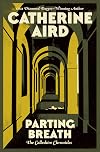
In this thrilling crime novel by CWA Diamond Dagger winner Catherine Aird, a student's last words are all that Detective C. D. Sloan has to go on in his latest case There are rumblings throughout the campus of the University of Calleshire, talk of a sit-in, of revolt, of H? Chí Minh, of discontent. Malcolm Humbert has been expelled, and the students are livid. Meanwhile, the faculty is equally out of sorts-Hilda Linaker just wants to finish her treatise on Jane Austen, Bernard Watkinson is show more tired of dealing with the female students' vehement-and possibly dangerous-opinions, and Simon Mautby can't find a lab tech to help with his ecology experiments. When someone breaks into a dorm room, leaving behind little evidence but a single kernel of corn, it's time to call in the police. But no one-not the professors, the students, or even the great detective C. D. Sloan-could have predicted murder. A young woman finds a second-year student slumped against a cloister's column, covered in blood. Before he dies, he manages to breathe the words "twenty-six minutes." The brilliant and acerbic inspector C. D. Sloan, recently reunited with his assistant, Detective Constable Crosby, must connect a seemingly unrelated burglary to a senseless murder-with nothing more to go on than those eerie last words. show lessTags
Recommendations
























Member Reviews
This is my fifth Catherine Aird book and the least impressive so far but it still had its moments.
Part of the appeal for me is that this book, published in 1977, is set in a university where the students stage a sit-in in the University's admin building. I was at University in 1977 and we had a sit-in in our university's admin building so this brought back a lot of memories.
I was surprised to find, that even though I lived through this period, 'Parting Breath' read like a period piece. I think this is partly because, by 1977 the long-haired, radical, you-can't-the-children-of-the-revolution days had already been pushed aside by pogoing punks for whom anarchy was about the creative use of safety pins and the see-how-shocking-I-can-be show more use of expletives, and partly because it is written from the point of view of a generation for whom the war was a childhood memory.
I liked the beginning of the book, which poked a little fun at academic life in a redbrick university where the gap between the student body and the faculty was becoming a chasm but before the universities had prioritised return on capital on real estate investments over academic respectability and turned the faculty into disposable accessories.
As usual, I enjoyed Inspector Sloane's dry humour and the way he handles his less-than-competent DC and his on-another-planet boss.
But that wasn't enough to make the book work as well as its predecessors. The main problem here was the plot. Some elements of it were too transparent - I knew very early on how the killer was dressed on what weapon they'd used - and some parts were just too far-fetched to be satisfying. Perhaps because the plot was so weak, its exposition seemed clumsy and mechanical and soon became divorced from the academic setting that had initially made it interesting.
Oh well, in a series of twenty-five books you're bound to get a few that are like this - not so bad that I set it aside but not so good that I'll remember it in a couple of months' time.
This time, even Robin Bailey's excellent narration couldn't make the book fly but it still made it more interesting. show less
Part of the appeal for me is that this book, published in 1977, is set in a university where the students stage a sit-in in the University's admin building. I was at University in 1977 and we had a sit-in in our university's admin building so this brought back a lot of memories.
I was surprised to find, that even though I lived through this period, 'Parting Breath' read like a period piece. I think this is partly because, by 1977 the long-haired, radical, you-can't-the-children-of-the-revolution days had already been pushed aside by pogoing punks for whom anarchy was about the creative use of safety pins and the see-how-shocking-I-can-be show more use of expletives, and partly because it is written from the point of view of a generation for whom the war was a childhood memory.
I liked the beginning of the book, which poked a little fun at academic life in a redbrick university where the gap between the student body and the faculty was becoming a chasm but before the universities had prioritised return on capital on real estate investments over academic respectability and turned the faculty into disposable accessories.
As usual, I enjoyed Inspector Sloane's dry humour and the way he handles his less-than-competent DC and his on-another-planet boss.
But that wasn't enough to make the book work as well as its predecessors. The main problem here was the plot. Some elements of it were too transparent - I knew very early on how the killer was dressed on what weapon they'd used - and some parts were just too far-fetched to be satisfying. Perhaps because the plot was so weak, its exposition seemed clumsy and mechanical and soon became divorced from the academic setting that had initially made it interesting.
Oh well, in a series of twenty-five books you're bound to get a few that are like this - not so bad that I set it aside but not so good that I'll remember it in a couple of months' time.
This time, even Robin Bailey's excellent narration couldn't make the book fly but it still made it more interesting. show less
I really enjoyed this one. A truly ingenious plot twist had me guessing right up to the very end. A student is murdered and his last words provide a mystifying clue that the police must solve to catch a truly evil criminal.
CMB
CMB
During a student-run sit in at a local university, a young student is found dying in the quad. His final words were heard by another student, but no one could figure out what he meant. Sloan is on hand to investigate, but it's an uphill battle with too many suspects and no apparent motive. Plus he's got his mind on the new baby expected at his home.
This one didn't end as abruptly as the others, which was good. Recommended for those who like police procedurals & British series mysteries.
This one didn't end as abruptly as the others, which was good. Recommended for those who like police procedurals & British series mysteries.
death of a university student relates to international espionage. Insp. Sloan and Crosby.
Ratings
Members
- Recently Added By
Lists

The Calleshire Chronicles (Sloan and Crosby Canon) by Catherine Aird
25 works; 1 member

Books Read in 2014
2,344 works; 89 members

Books Read in 2016
4,666 works; 199 members

Books Read in 2022
5,226 works; 115 members
Author Information

50+ Works 5,473 Members
Catherine Aird is the author of more than twenty crime novels and story collections, most of which feature Detective Chief Inspector C. D. Sloan. She holds an honorary M.A. from the University of Kent and was made an M.B.E. She lives in England
Some Editions
Series

Belongs to Publisher Series
Work Relationships
Is contained in
Common Knowledge
- Canonical title
- Parting Breath
- Original title
- Parting Breath
- Original publication date
- 1978-06
- People/Characters
- Neil Carruthers (Reader in Moral Philosophy); Michael Challoner; William Edward Crosby (Detective Constable); Hector Smithson Dabbe (Doctor); Colin Ellison (ecologist); John Hardiman (Bursar) (show all 25); Harry Harpe (Detective Inspector, Happy Harry); Roger Franklyn Hedden (lecturer in sociology); Malcolm Humbert; Superintendent Leeyes; Hilda Linaker (Professor of English Literature); Kenneth Lorimer (Master of Tarsus); Polly Mantle; Simon Mautby (Chair of Ecological Studies); Henry Moleyns (ecologist); Barry Naismyth (politics); Alfred Palfreyman; C. A. T. Pollock (University Chaplain); Peter Pringle (librarian); Martin Robinson; Christopher Dennis Sloan (Detective Inspector, C. D., Seedy); Tommy Talbot; Timothy Teed (Professor of Social Anthropology); Bernard Watkinson (Professor of Modern History); Herbert Wheatley (Dean of Almstone)
- Important places
- Calleshire, England, UK; Berebury, Calleshire, England, UK; University of Calleshire, Calleshire, England, UK
- Epigraph
- O what is death but parting breath?
Macpherson's Farewell
by Robert Burns - Dedication
- For Caroline Susan Muire McIntosh
--with love - First words
- "The trouble with universities," pronounced Professor Tomlin, "is the undergraduates."
- Quotations
- He did his best to explain this to Inspector Sloan afterwards. 'A funny feeling, sir.' 'Yes?' Funny feelings were not encouraged at Berebury Police Station.
- Last words
- (Click to show. Warning: May contain spoilers.)"Because, if so, our legal people say there's an Act of 1661 which says you shouldn't do it..."
Classifications
Statistics
- Members
- 246
- Popularity
- 132,553
- Reviews
- 4
- Rating
- (3.64)
- Languages
- Dutch, English
- Media
- Paper, Audiobook, Ebook
- ISBNs
- 20
- ASINs
- 5