On This Page
Description
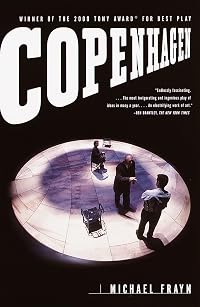
How different would the world have looked had the Nazis been the first to build an atomic bomb? Werner Heisenberg, one of Hitler's lead nuclear scientists, famously and mysteriously met in Copenhagen with his colleague and mentor, Niels Bohr, one of the founders of the Manhattan Project. Michael Frayn's Tony Award-winning drama imagines their reunion. Joined by Niels' wife, Margrethe, these three brilliant minds converge for an encounter of atomic proportions.An L.A. Theatre Works full-cast show more performance featuring:Alfred Molina as Niels BohrShannon Cochran as Margrethe BohrDavid Krumholtz as Werner HeisenbergDirected by Martin Jarvis. Recorded before a live audience at the James Bridges Theater at UCLA School of Theater, Film and Television in November, 2011.Copenhagen is part of L.A. Theatre Works' Relativity Series featuring science-themed plays. Major funding for the Relativity Series is provided by the Alfred P. Sloan Foundation to enhance public understanding of science and technology in the modern world. show lessTags
Recommendations











Member Recommendations
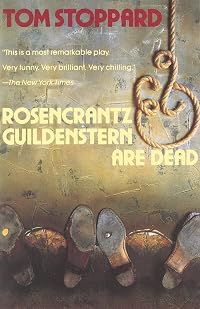
Jannes Science, the exploration of the unknown in the universe, explaining life through mathematical concepts, and the uncertainty of the past. These two plays have a lot in common, and are both equally brilliant.
Member Reviews
No one from the liberal arts side particularly cared about the “The Two Cultures” until the discovery and application of nuclear fission. It hadn’t started that way; Leonardo Da Vinci and Christopher Wren (just for example) were equally at home on both sides. But sometime around the middle of the 19th century it became increasingly unfashionable for “intellectuals” to take an interest in science or engineering. (There might have been some class consciousness here – many of the leading lights of science and technology – Faraday, Edison, Curie, Einstein – came from middle or lower class backgrounds). With Hiroshima that all changed. Physics and science in general were suddenly very important indeed, and there was a second show more paradigm shift with the start of the space race. Scientists and engineers weren’t invited to cocktail parties, of course – nobody wanted to go that far – but at least people talked about these things.
There were sour grapes on both sides. C. P. Snow’s watershed essay provoked an incredibly hostile reaction when he suggested that the question “Do you know the laws of thermodynamics?” was the equivalent of “Have you read a work by Shakespeare?” Isaac Asimov complained that it was OK to portray Jupiter as a bearded man on a throne who molested little boys, but not as a planet with a hurricane bigger than the Earth and enough core pressure to convert hydrogen to a metal.
There just might be some meeting of the minds here and there. More popular media is portraying scientists as something other than clueless geeks or inhuman fanatics. Little of this has been particularly successful, but at least there’s some attempt to understand why a mathematical proof or a bridge design can be as creative as a painting or symphony.
Which brings us to Copenhagen, the 2000 Tony award winner. It is, alas, not really about quantum physics or the uncertainty principle – although it’s still a very good play indeed.
In 1941 Werner Heisenberg visited his old mentor, Niels Bohr, one evening in occupied Copenhagen. After the war, they had different memories about what they talked about. Heisenberg may or may not have pumped Bohr for any information he might have about the Allied nuclear weapon program. If he did, he might have been doing this to determine if he should press ahead with the German effort or if he should deliberately stall. Maybe he did deliberately stall, by intentionally miscalculating the amount of U235 it would take for a chain reaction. Or maybe he just made a mistake. The whole thing was, and still is – uncertain. That’s the catch, of course – the first culture is too willing to jump on “The Uncertainty Principle” and turn it into an analogy for the human condition. Heisenberg and Bohr don’t actually talk about physics in the play (although it is probably the only work of literature where someone mentions numbers in scientific notation). They talk about morals and ethics and what to do when you are not sure what to do or where your loyalties are. Those, of course, are pretty timeless questions, whether they concern Heisenberg or Hamlet. Thus, well worth reading. show less
There were sour grapes on both sides. C. P. Snow’s watershed essay provoked an incredibly hostile reaction when he suggested that the question “Do you know the laws of thermodynamics?” was the equivalent of “Have you read a work by Shakespeare?” Isaac Asimov complained that it was OK to portray Jupiter as a bearded man on a throne who molested little boys, but not as a planet with a hurricane bigger than the Earth and enough core pressure to convert hydrogen to a metal.
There just might be some meeting of the minds here and there. More popular media is portraying scientists as something other than clueless geeks or inhuman fanatics. Little of this has been particularly successful, but at least there’s some attempt to understand why a mathematical proof or a bridge design can be as creative as a painting or symphony.
Which brings us to Copenhagen, the 2000 Tony award winner. It is, alas, not really about quantum physics or the uncertainty principle – although it’s still a very good play indeed.
In 1941 Werner Heisenberg visited his old mentor, Niels Bohr, one evening in occupied Copenhagen. After the war, they had different memories about what they talked about. Heisenberg may or may not have pumped Bohr for any information he might have about the Allied nuclear weapon program. If he did, he might have been doing this to determine if he should press ahead with the German effort or if he should deliberately stall. Maybe he did deliberately stall, by intentionally miscalculating the amount of U235 it would take for a chain reaction. Or maybe he just made a mistake. The whole thing was, and still is – uncertain. That’s the catch, of course – the first culture is too willing to jump on “The Uncertainty Principle” and turn it into an analogy for the human condition. Heisenberg and Bohr don’t actually talk about physics in the play (although it is probably the only work of literature where someone mentions numbers in scientific notation). They talk about morals and ethics and what to do when you are not sure what to do or where your loyalties are. Those, of course, are pretty timeless questions, whether they concern Heisenberg or Hamlet. Thus, well worth reading. show less
In the afterlife, Werner Heisenberg meets again with his former mentor Niels Bohr and Bohr's wife Margrethe to discuss why the two physicists met in Copenhagen during World War II when they were on opposite sides of the war -- and each contributing to the building of an atomic bomb for their side.
This play is obviously fictional but rooted in history and science. There is plenty that is factual within it, but then it moves on from there to suggest feelings and motivations, particularly Heisenberg's during his infamous Copenhagen meeting with Bohr -- one of history's great mysteries as no one knows what happened then or what the two discussed.
As it's so heavily steeped in science, this book can be a bit dense at times (especially the show more author's afterword that goes greater into detail about the factual elements) but I think it flows well and is fairly accessible even for the non-scientific (e.g., me). The human drama is what ultimately matters in this work. Overall, I found it a very compelling read and recommend it for those who enjoy messy feelings, muddy motivations, and/or historical drama. show less
This play is obviously fictional but rooted in history and science. There is plenty that is factual within it, but then it moves on from there to suggest feelings and motivations, particularly Heisenberg's during his infamous Copenhagen meeting with Bohr -- one of history's great mysteries as no one knows what happened then or what the two discussed.
As it's so heavily steeped in science, this book can be a bit dense at times (especially the show more author's afterword that goes greater into detail about the factual elements) but I think it flows well and is fairly accessible even for the non-scientific (e.g., me). The human drama is what ultimately matters in this work. Overall, I found it a very compelling read and recommend it for those who enjoy messy feelings, muddy motivations, and/or historical drama. show less
I love this play. I love the visiting and revisiting of why we do what we do, turning things over and over from different people's point of view. I love the power of the background of the birth of quantum physics and the war in Europe. I love the interplay of the personal, the political and the scientific. There are heart-breaking moments, Heisenberg crouched in a hole in the ruins of Europe still clutching his reactor, and joy filled moments, the grandeur of Bohr's tour of Europe, walking and talking and discovering the fundamental structure of the universe. (It's better watched than read though, I think)
This play is a surrealistic exploration of a real event. In 1941 German physicist Werner Heisenberg traveled to Copenhagen to meet with his close friend and colleague, Danish physicist Niels Bohr, even though the war had made them enemies who were both working on an atomic bomb. To this day, no one really knows what they talked about or why Heisenberg went. In the play, Heisenberg, Bohr, and Bohr's wife, Margrethe, meet in the afterlife and try to remember what happened that night and why. Like the subatomic particles that they studied, their lives moved too fast for them to be able to pinpoint exactly what happened.
This was a reread for me. I'm not a scientist by any stretch of the imagination, but I loved this play because of the way show more Frayn meshed scientific theory with human behavior. I really liked how Frayn compared Heisenberg's Uncertainty Principle with the uncertainty of war and human memory. And even though I didn't understand all of the scientific details, it didn't detract from my enjoyment of the play. I also appreciate the unanswered questions about the morality of scientists creating a weapon that could kill that many people at once. I think this is one play that is better read than seen because you can take you time with the dialogue and go back and reread lines if you want to. show less
This was a reread for me. I'm not a scientist by any stretch of the imagination, but I loved this play because of the way show more Frayn meshed scientific theory with human behavior. I really liked how Frayn compared Heisenberg's Uncertainty Principle with the uncertainty of war and human memory. And even though I didn't understand all of the scientific details, it didn't detract from my enjoyment of the play. I also appreciate the unanswered questions about the morality of scientists creating a weapon that could kill that many people at once. I think this is one play that is better read than seen because you can take you time with the dialogue and go back and reread lines if you want to. show less
Sometimes I give books "theme songs": their themes, dialogue or storyline may remind me of a song I know (and usually like). In the case of Copenhagen, it's the Blue Rodeo tune "5 A.M. (A Love Song)", from which I quote in this review (in italics). It's about figuring out the motivations behind a relationship and sorting out how one personally feels about it.
Funny how I'm always here with you
I never meant to change your world
Or change your point of view
Werner Heisenberg paid a visit to his old friend and mentor, Niels Bohr, in Copenhagen during the Second World War: 1941, to be precise. They were on opposite sides: Bohr a citizen of an occupied country, Heisenberg part of the German science program. Why did Heisenberg visit at all? show more What did he say that made their friendship go so terribly wrong? Nobody knows for sure, but the visit did actually happen. In this play, Frayn imagines Heisenberg, Bohr and Bohr's wife, Margrethe, as spirits in the afterlife discussing the meeting and trying to figure out Heisenberg's motivations.
And as we sort out the 'Who said? You said', "Who said? I said",
I only wish I came a little better prepared
This is very much a thinking/talking play. Not much actually happens, but there is a lot of discussion. In one way it is a very good introduction to the theories and achievements of the two physicists; they use analogies involving skiing or cards to describe the concepts of uncertainty and complementarity, for example. There is also an element of repetition that reinforces some of the concepts being discussed. The characters themselves have an odd, formal way of interacting, but then that could be how people talk in the afterlife when English is not their first language! It does read fairly quickly, being all dialogue, but it is also something to stop and ponder for a while.
I'll say that you're right
If you just say that I'm right
Let's hit the hay and call this case closed
Frayn also provides an excellent postscript where he describes the historical events surrounding this meeting and provides some insights into the writing process. Also interesting is his discussion of Heisenberg's paper, the one that described what we know today as the uncertainty principle. Because Heisenberg originally wrote in German, there is something lost in the translation. The word he uses in his memoirs and the final version of the paper is "Unbestimmtheit," which doesn't have an exact equivalent but could be derived from "bestimmen", which means "to determine/to ascertain". So a more precise but less familiar translation might be "indeterminacy". The first draft of the paper used the word "Ungenauigheit", meaning "inexactness." Meanwhile, Bohr tended to use the word "Unsicherheit", meaning "unsureness", which is closer to the connotations that "uncertainty" has in English. It's a very interesting conundrum that the words used to describe the uncertainty principle are themselves uncertain when rendered in another language!
As a reading experience, this was a three-star, meaning that I liked it and it met my expectations. Extra half-star for the thought provoking that led me to make the connection with the song. I suspect I will be thinking about this book for a while. If you like science and plays that make you think, this might be the ticket for you. show less
Funny how I'm always here with you
I never meant to change your world
Or change your point of view
Werner Heisenberg paid a visit to his old friend and mentor, Niels Bohr, in Copenhagen during the Second World War: 1941, to be precise. They were on opposite sides: Bohr a citizen of an occupied country, Heisenberg part of the German science program. Why did Heisenberg visit at all? show more What did he say that made their friendship go so terribly wrong? Nobody knows for sure, but the visit did actually happen. In this play, Frayn imagines Heisenberg, Bohr and Bohr's wife, Margrethe, as spirits in the afterlife discussing the meeting and trying to figure out Heisenberg's motivations.
And as we sort out the 'Who said? You said', "Who said? I said",
I only wish I came a little better prepared
This is very much a thinking/talking play. Not much actually happens, but there is a lot of discussion. In one way it is a very good introduction to the theories and achievements of the two physicists; they use analogies involving skiing or cards to describe the concepts of uncertainty and complementarity, for example. There is also an element of repetition that reinforces some of the concepts being discussed. The characters themselves have an odd, formal way of interacting, but then that could be how people talk in the afterlife when English is not their first language! It does read fairly quickly, being all dialogue, but it is also something to stop and ponder for a while.
I'll say that you're right
If you just say that I'm right
Let's hit the hay and call this case closed
Frayn also provides an excellent postscript where he describes the historical events surrounding this meeting and provides some insights into the writing process. Also interesting is his discussion of Heisenberg's paper, the one that described what we know today as the uncertainty principle. Because Heisenberg originally wrote in German, there is something lost in the translation. The word he uses in his memoirs and the final version of the paper is "Unbestimmtheit," which doesn't have an exact equivalent but could be derived from "bestimmen", which means "to determine/to ascertain". So a more precise but less familiar translation might be "indeterminacy". The first draft of the paper used the word "Ungenauigheit", meaning "inexactness." Meanwhile, Bohr tended to use the word "Unsicherheit", meaning "unsureness", which is closer to the connotations that "uncertainty" has in English. It's a very interesting conundrum that the words used to describe the uncertainty principle are themselves uncertain when rendered in another language!
As a reading experience, this was a three-star, meaning that I liked it and it met my expectations. Extra half-star for the thought provoking that led me to make the connection with the song. I suspect I will be thinking about this book for a while. If you like science and plays that make you think, this might be the ticket for you. show less
A play about Werner Heisenberg's 1941 visit to Niels Bohr in occupied Denmark and what they discussed then. Frayn uses the relevant physics about uncertainty, complementarity, and fission as conceits in the play to remarkable effect. Ultimately not really about the development of atomic weapons at all but about friendship, memory, and personal paradox. Frayn's postscript about the history and science he used in the play is a lovely overview of the subject as well. Recommended.
Speculative fiction exploring possibilities of what occurred in the meeting between Niels Bohr and Werner Heisenberg in 1941 Copenhagen. The author presents two scenarios, one of which explores the possibility of Heisenberg not being able to create the nuclear bomb Hitler wanted, the other with Heisenberg deliberately stalling the process to prevent the production of the bomb. Discussions of physics and relationships, war and atrocities, ethics and responsibilities drive this work. It is minimalist, but has a great deal of depth. In the end, though, it still makes the mistake of putting the entire responsibility for nuclear weapons on the heads of science, merely touching on the other realities that were operating in the world, and the show more pressures felt by the scientists. This is better than most, as it does at least acknowledge the world surrounding the scientists, but the chief question of the day is still a simplification of the complex world in which the bomb was born. show less
Members
- Recently Added By
Lists

Plays I Like
230 works; 31 members

Unreliable Narrators
170 works; 43 members

Plays about science and scientists
33 works; 2 members

Top Five Books of 2013
1,562 works; 715 members

real people in fiction circumstances
74 works; 10 members

Fiction for Readers Who Love Science and Math
57 works; 15 members

BingoDOG - Scientists in Fiction
111 works; 17 members

Dead narrators
50 works; 4 members

Sonlight Books
1,487 works; 25 members

Every Non-Musical Play Nominated for a Tony Award
64 works; 3 members

AP Lit
363 works; 6 members
My Play Collection
769 works; 3 members

Next Plays / 2025
352 works; 1 member
Author Information

86+ Works 9,683 Members
Michael Frayn is the author of the award-winning "Copenhagen" & twelve other plays, including "Noises Off". The most recent of his nine novels is "Headlong", a New York Times Editor's Choice & Booker Prize finalist. He lives in London. (Bowker Author Biography)
Awards and Honors
Awards
Series

Belongs to Publisher Series
Samuel French (Frayn)
Methuen Drama (Frayn)
Work Relationships
Is contained in
Has the adaptation
Was inspired by
Inspired
Has as a supplement
Has as a student's study guide
Common Knowledge
- Canonical title
- Copenhagen
- Original publication date
- 1998
- People/Characters
- Margrethe Bohr; Niels Bohr; Werner Heisenberg
- Important places
- Copenhagen, Denmark
- Important events
- Copenhagen meeting of Heisenberg and Bohr (1941); World War II (1939 | 1945); World War II, German nuclear weapon project (1939 | 1945)
- Related movies
- Copenhagen (2002 | IMDb)
- First words
- Margrethe: But why?
- Quotations
- But I was there, and when I remember what it was like I'm there still, and I look around me and what I see isn't a story! It's confusion and rage and jealousy and tears and no one knowing what things mean or which way they're... (show all) going to go.
- Last words
- (Click to show. Warning: May contain spoilers.)Heisenberg: But in the meanwhile, in this most precious meanwhile, there it is. The trees in Faelled Park. Gammertingen and Biberach and Mindelheim. Our children and our children's children. Preserved, just possibly, by that one short moment in Copenhagen. By some event that will never quite be located or defined. By that final core of uncertainty at the heart of things.
- Blurbers*
- Lahr, John
- Original language
- English
- Disambiguation notice
- This work is the original script.
Please do not combine it with sound or video recordings, study guides, commentaries or programmes.
0307433064 | 9780307433060 2000 eBook Anchor
0385720793 | 9780385720793 2000 pa... (show all)perback Vintage
0413724905 | 9780413724908 2001 eBook Bloomsbury Methuen Drama
0573627525 | 9780573627521 2000 Samuel French Acting Edition
0739409166 | 9780739409169 1998 hardcover Methuen Drama
1350646040 | 9781350646049 2026 paperback Methuen Drama
private library, Cover from Amazon for ISBN: 0385720793,
Book ID 16015776, Samuel French (2002), Paperback, jextdo.
Book ID 68638443, Samuel French (2002), Paperback, Terrybatslast.
Book ID 160556325, ASIN B01K0SL4JW, Methuen Drama (no date), SSUTheatre.
Book ID 157768318, afprovlibrary.
Book ID 23768069, 2003, Sironi, ISBN 9788851800161 / 8851800162 ASIN 8851800162, delfini.
Book ID 297035173, Clyde_LT,
Book ID 6862301, Pic ID 5181387, justifiedsinner,
Private li... (show all)brary.
*Some information comes from Common Knowledge in other languages. Click "Edit" for more information.
Classifications
Statistics
- Members
- 1,143
- Popularity
- 22,165
- Reviews
- 26
- Rating
- (4.05)
- Languages
- 6 — English, French, German, Italian, Spanish, Ukrainian
- Media
- Paper, Audiobook, Ebook
- ISBNs
- 25
- ASINs
- 9