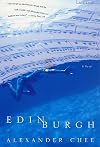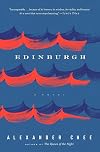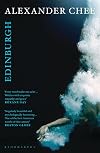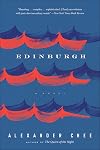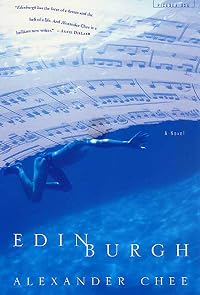
Edinburgh
by Alexander Chee
On This Page
Description
Twelve-year-old Fee is a shy Korean American boy and a newly named section leader of the first sopranos in his local boys' choir. But when Fee learns how the director treats his section leaders, he is so ashamed he says nothing of the abuse, not even when Peter, his best friend, is in line to be next. When Peter takes his own life, Fee blames only himself. In the years that follow he slowly builds a new life and is forced to confront the past he believed was gone.Tags
Recommendations










Member Reviews
This remarkable novel lines up with Ocean Vuong's later On Earth We Are Briefly Gorgeous as a most empathetic book about growing up as a gay male adolescent, and the author is also of Asian descent. It's like a many-chambered seashell, with the early chapters a painful look at pedophilia, which is not generally considered as directly connected to same sex love. It's also a tribute to friendship and to risk-taking, and to the positive influence of loving parents and grandparents and the awful results when those same relatives cause irreparable damage. The language and structure are deeply executed and memorable.
Alexander Chee's novel Edinburgh deals with some difficult issues, as the book's main character, Fee, struggles to deal first with the sexual abuse meted out by his choir master, Big Eric, and then, as he grows up, with his own identity as a homosexual man. Such problems, as one might imagine, run deep, and there is a repeated desire on Fee's part to destroy himself, just as so many others in his life have done.
As I was reading Edinburgh, I wanted to be moved by these themes. After all, if these issues were being told to me directly, by a friend, then I would certainly be touched. But the more I read, the more I wondered about Chee's choices as a novelist. The so-called "dirty realism" of the 1980s - think Charles Bukowski and Raymond show more Carver - is a clear influence on Chee's style in this novel, which remains detached and economical, as if to counterbalance the melodrama of the story's content. The subject matter also occupies the familiar territory of dirty realism: sex, drugs, perversion, all the emotional fabric of everyday life filtered through the lens of the novelist.
There is always a twin danger when treading along the borders of transgression. The first danger, which Chee successfully avoids for the most part, is becoming too emotional, either through hysteria or sentimentality. The second, however, he does not, and that is the feeling that the reader is being blackmailed into an attachment with the story at hand. This feeling of emotional blackmail tells me that I ought to care about Fee because of his struggles simply because they are so weighty, that I somehow "owe" him something as a reader for this pain. But the truth is, I don't. He's a fictional character, and his difficulties are, in the end, made up. I would bestow my compassion on a real-life friend in Fee's situation because their pain is real, stemming as it does from the weight of experience. In the case of a novel, however, the burden lies with the author to make me care by drawing me into the story. That requires a certain level of narrative skill and seduction that Chee, presuming on my pity, does not enact.
The reality is that, in fiction, the heaviest misery comes cheaply. Writers can destroy cities, unleash plagues, wipe out worlds in the blink of an eye, all with a few strokes of the pen. Suffering - that is, imaginary suffering - is cheap because, without the sparkle of narrative interest, any reader can see that it's counterfeit, fake, made-up. The fact is that Alexander Chee is a product of the great MFA sausage factory of empty fiction writing. The writing thus sparkles with meaningless, "poetic" phrases that sound pretty when you read them but reveal absolutely nothing. Take these sentences, for instance:
"Blue. Blue because it's the color people turn in the dark. Because it's the color of the sky, of the center of the flame, of a diamond hit by an X ray. Blue is the knife edge of lightning. Blue is the color, a rose grower tells you, that a rose never quite reaches. Because when you feel threatened by a demon you are supposed to imagine around you a circle of blue light. You do this because the demon cannot cross blue light." (pp.191-2)
What on earth does that mean? Passages like these are fool's gold: they promise some kind of profundity, but the more closely you examine them the more you realize that they are nothing but decorative nonsense.
The greatest weakness in the novel, though, is the flatness of its narrative voice. There is nothing but surface in Edinburgh, no playful sense that our first-person narrator may be lying or mistaken or biased (he is too transparent, too insipid for that), no desire to explore alternative viewpoints or other voices. There was a moment - the advent, in the middle of the book, of another narrator - when I thought we were going to see inside the mind of Fee's abuser, but instead it turns out to be Warden, the abuser's son, who, in keeping with the novel's Narcissus references, is as dully monological in his admiration of Fee as the rest of the narrative.
So let's just say that Chee's attempt at blackmail didn't work on me. It's not that I'm heartless - but in the realm of fiction, where pain comes cheaply, you have to demonstrate some deeper reason to make me care. show less
As I was reading Edinburgh, I wanted to be moved by these themes. After all, if these issues were being told to me directly, by a friend, then I would certainly be touched. But the more I read, the more I wondered about Chee's choices as a novelist. The so-called "dirty realism" of the 1980s - think Charles Bukowski and Raymond show more Carver - is a clear influence on Chee's style in this novel, which remains detached and economical, as if to counterbalance the melodrama of the story's content. The subject matter also occupies the familiar territory of dirty realism: sex, drugs, perversion, all the emotional fabric of everyday life filtered through the lens of the novelist.
There is always a twin danger when treading along the borders of transgression. The first danger, which Chee successfully avoids for the most part, is becoming too emotional, either through hysteria or sentimentality. The second, however, he does not, and that is the feeling that the reader is being blackmailed into an attachment with the story at hand. This feeling of emotional blackmail tells me that I ought to care about Fee because of his struggles simply because they are so weighty, that I somehow "owe" him something as a reader for this pain. But the truth is, I don't. He's a fictional character, and his difficulties are, in the end, made up. I would bestow my compassion on a real-life friend in Fee's situation because their pain is real, stemming as it does from the weight of experience. In the case of a novel, however, the burden lies with the author to make me care by drawing me into the story. That requires a certain level of narrative skill and seduction that Chee, presuming on my pity, does not enact.
The reality is that, in fiction, the heaviest misery comes cheaply. Writers can destroy cities, unleash plagues, wipe out worlds in the blink of an eye, all with a few strokes of the pen. Suffering - that is, imaginary suffering - is cheap because, without the sparkle of narrative interest, any reader can see that it's counterfeit, fake, made-up. The fact is that Alexander Chee is a product of the great MFA sausage factory of empty fiction writing. The writing thus sparkles with meaningless, "poetic" phrases that sound pretty when you read them but reveal absolutely nothing. Take these sentences, for instance:
"Blue. Blue because it's the color people turn in the dark. Because it's the color of the sky, of the center of the flame, of a diamond hit by an X ray. Blue is the knife edge of lightning. Blue is the color, a rose grower tells you, that a rose never quite reaches. Because when you feel threatened by a demon you are supposed to imagine around you a circle of blue light. You do this because the demon cannot cross blue light." (pp.191-2)
What on earth does that mean? Passages like these are fool's gold: they promise some kind of profundity, but the more closely you examine them the more you realize that they are nothing but decorative nonsense.
The greatest weakness in the novel, though, is the flatness of its narrative voice. There is nothing but surface in Edinburgh, no playful sense that our first-person narrator may be lying or mistaken or biased (he is too transparent, too insipid for that), no desire to explore alternative viewpoints or other voices. There was a moment - the advent, in the middle of the book, of another narrator - when I thought we were going to see inside the mind of Fee's abuser, but instead it turns out to be Warden, the abuser's son, who, in keeping with the novel's Narcissus references, is as dully monological in his admiration of Fee as the rest of the narrative.
So let's just say that Chee's attempt at blackmail didn't work on me. It's not that I'm heartless - but in the realm of fiction, where pain comes cheaply, you have to demonstrate some deeper reason to make me care. show less
This review is not going to do justice to this book. This book needs a proper, more insightful one than these notes I’m writing. Because it’s the kind of book that makes you go, wow, this is a writer who can write. This is a writer whose words can move mountains, make tea go cold without noticing, tears fall from unsuspecting eyes. This is a writer whom, I imagine, writers look up to, but also are perhaps afraid, wondering, can I write like this too?
For Alexander Chee has taken a subject that is ugly and perverse and has sculpted it into something moving and somehow, beautiful.
(Autocorrect keeps changing my “moving” into “loving” but really, loving is an equally suitable word for this book.)
A young boy joins a boys’ choir. show more Aphias or Fee is 12 and Korean-Scottish. He may look a bit different from the other boys but like them, he is sexually abused by the choir director.
Edinburgh is the story of how he overcomes this childhood trauma and the loss of those he loves.
It is no easy read but it is haunting and spectacular, even more so when I realized this was his debut novel. It may seem like a weird juxtaposition but this book was both beautiful and brutal. show less
For Alexander Chee has taken a subject that is ugly and perverse and has sculpted it into something moving and somehow, beautiful.
(Autocorrect keeps changing my “moving” into “loving” but really, loving is an equally suitable word for this book.)
A young boy joins a boys’ choir. show more Aphias or Fee is 12 and Korean-Scottish. He may look a bit different from the other boys but like them, he is sexually abused by the choir director.
Edinburgh is the story of how he overcomes this childhood trauma and the loss of those he loves.
It is no easy read but it is haunting and spectacular, even more so when I realized this was his debut novel. It may seem like a weird juxtaposition but this book was both beautiful and brutal. show less
‘This is a fox story. Of how a fox can be a boy. And so it is also the story of a fire.’
First published in 2001 in the US, we now have a UK edition released in 2018. This was Alexander Chee’s first novel and – wow, it is stunning. Very nearly 5 stars, and very nearly the best book I have read this year (why have I not come across this book before??). Very nearly, but not quite – for reasons below.
But first – this is not a cheery read, nor is it an easy read. Chee takes Korean and classical myths and blends them with ideas of burying and being underground (metaphors, I think, for the abuse victims and how they can or cannot cope with memories of the past). The subject matter is tough: child abuse and the struggle to cope, to show more live with the trauma. There are at least 2 suicides, and the central character Aphias Zhe (known as ‘Fee’) also has to deal with his own thoughts and attempts. The first part of the novel deals with the choirmaster and the boys who suffer the abuse, while the following parts move on and we see Fee grow older and struggle with his own life being a gay man living not only with the abuse he suffered, but also with guilt. Guilt for not speaking out, and guilt for the death of his one true love Peter. There is a nice switch in the narrative as we see the same events from the point of view of two different characters, Fee and Warden, as the book drives towards a terrible and violent climax.
The one quibble I have with the book, and the reason it doesn’t quite hit 5 stars for me, is the too-neat coincidence that Fee ends up teaching at the same school as the son of the man who abused him, and that fact that the boy (Warden) is a spitting image of Peter who had been Fee’s best friend and object of his unrequited love. I understand how and why Chee did this for reasons of plotting – and maybe, as this feels in part like a semi-autobiographical novel as many first novels seem to be, there is an element of fact in this – but it just felt a little too contrived for me to be totally accepting of this development.
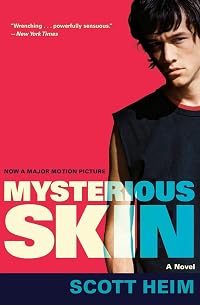
However, I can live with that minor distraction. This is the kind of book that I had to read in stages, taking a break at the end of each section to walk away. Partly because of the subject matter, but mainly because Chee’s prose is extraordinary. He writes sentences that suck the breath out of you, leaving you stunned in awe at the image, the feeling, the sheer heartbreaking emotion in the words. The book reminded me of a blend of Scott Heim’s ‘Mysterious Skin’ and the very best of Alan Hollinghurst, and like Hollinghurst Chee’s lyricism is simply dazzling. The last few pages, which draw together all the strands of myths and leave the main characters changed forever, just left me a wreck! There are no easy solutions, no neat tying-up of the past, no escaping the past. There is, perhaps, hope.
Yes, this book may not be for some people, and I totally get that. But this is a work of lyrical power and emotional force that will stay with me for some time. I cannot recommend it enough. show less
First published in 2001 in the US, we now have a UK edition released in 2018. This was Alexander Chee’s first novel and – wow, it is stunning. Very nearly 5 stars, and very nearly the best book I have read this year (why have I not come across this book before??). Very nearly, but not quite – for reasons below.
But first – this is not a cheery read, nor is it an easy read. Chee takes Korean and classical myths and blends them with ideas of burying and being underground (metaphors, I think, for the abuse victims and how they can or cannot cope with memories of the past). The subject matter is tough: child abuse and the struggle to cope, to show more live with the trauma. There are at least 2 suicides, and the central character Aphias Zhe (known as ‘Fee’) also has to deal with his own thoughts and attempts. The first part of the novel deals with the choirmaster and the boys who suffer the abuse, while the following parts move on and we see Fee grow older and struggle with his own life being a gay man living not only with the abuse he suffered, but also with guilt. Guilt for not speaking out, and guilt for the death of his one true love Peter. There is a nice switch in the narrative as we see the same events from the point of view of two different characters, Fee and Warden, as the book drives towards a terrible and violent climax.
The one quibble I have with the book, and the reason it doesn’t quite hit 5 stars for me, is the too-neat coincidence that Fee ends up teaching at the same school as the son of the man who abused him, and that fact that the boy (Warden) is a spitting image of Peter who had been Fee’s best friend and object of his unrequited love. I understand how and why Chee did this for reasons of plotting – and maybe, as this feels in part like a semi-autobiographical novel as many first novels seem to be, there is an element of fact in this – but it just felt a little too contrived for me to be totally accepting of this development.
However, I can live with that minor distraction. This is the kind of book that I had to read in stages, taking a break at the end of each section to walk away. Partly because of the subject matter, but mainly because Chee’s prose is extraordinary. He writes sentences that suck the breath out of you, leaving you stunned in awe at the image, the feeling, the sheer heartbreaking emotion in the words. The book reminded me of a blend of Scott Heim’s ‘Mysterious Skin’ and the very best of Alan Hollinghurst, and like Hollinghurst Chee’s lyricism is simply dazzling. The last few pages, which draw together all the strands of myths and leave the main characters changed forever, just left me a wreck! There are no easy solutions, no neat tying-up of the past, no escaping the past. There is, perhaps, hope.
Yes, this book may not be for some people, and I totally get that. But this is a work of lyrical power and emotional force that will stay with me for some time. I cannot recommend it enough. show less
I had previously read and very much enjoyed Chee’s The Queen of the Night, so I thought I would try another. Though beautifully written, the subject matter in this book is too dark and disturbing for me, including child abuse and suicide. It is filled with misery and the occurrence of one horrible thing after the next. It portrays the lingering effects of trauma. The ending offers a ray of hope, but it is just too bleak for me. This book will not keep me from reading another of Chee’s works, but I will be careful to investigate the content beforehand.
Coming-of-age of a Korean boy in Maine who deals with a pedophile choral teacher. Homosexuality, music and art and difficult subjects and scenes written with detailed prose and sensitivity. Pervasive themes of light, music, fire, give luminescence to the story and prose.
Wow.... a book and story with writing that made me feel as if I were a voyeur who was sung to. I was taken by the beautiful language...poetic, emotion-stoked, pleading and lifting. Just finished the last word and now I pause in awe and in joy of its power and song.
Members
- Recently Added By
Lists

Top Five Books of 2017
757 works; 231 members
Author Information

7+ Works 2,547 Members
Awards and Honors
Common Knowledge
- Canonical title
- Edinburgh
- Original publication date
- 2001
- Canonical DDC/MDS
- 813.6
- Canonical LCC
- PS3603.H44
Classifications
Statistics
- Members
- 491
- Popularity
- 61,879
- Reviews
- 15
- Rating
- (4.08)
- Languages
- English, German
- Media
- Paper, Audiobook, Ebook
- ISBNs
- 17
- ASINs
- 3