On This Page
Description
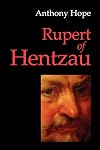
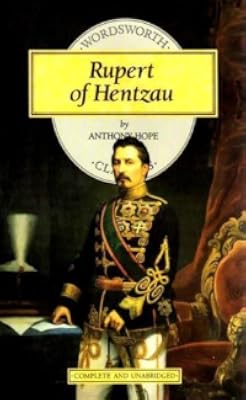
Action, excitement, loyalty, honor, and feats of strength and bravery--this sequel to Anthony Hope's The Prisoner of Zenda has something to appeal to every reader. A swashbuckling adventure set in the fictional country of Ruritania, this novel more than lives up to the high standards of its predecessor.Tags
Recommendations



























Member Reviews
The love of a beautiful and virtuous woman has turned Rudolf Rassendyl from a debonair English layabout to a debonair English knight, devoted to a singular goal. This love, and the little tokens thereof, are what start the plot rolling again. The tokens are preposterous, but if they didn't exist Rupert of Hentzau's machinations would have had to be made more complex. Something was going to give, with Rupert scheming and knowing too much, the king so unstable, ill, and jealous. The plot is full of ill-informed characters dashing rapidly from one of the familiar locations to another, occasionally arriving in the nick of time, but often as not too late. Very little works out as planned.
Rudolf is as heroic as heroic can possibly be. Just show more occasionally, in moments of conversation between Rudolf and Sapt, the characteristic Rudolf of "The Prisoner of Zenda", practical and even a bit caustic, reappears. Rupert's scheming has diminished him just a bit, he is no longer the blithe agent of chaos from the previous book, but seems a little seedy.
The story is told by Fritz von Tarlenheim many years after the events. Everything is resolved with the utmost pathos, but resolved it definitely is. If Fritz felt any dissatisfaction with Rudolf then he has forgotten it now, there is nothing but adoration in his recollections.
James, Rudolf's imperturbable and unexplained valet, is clearly an agent of the English secret service. show less
Rudolf is as heroic as heroic can possibly be. Just show more occasionally, in moments of conversation between Rudolf and Sapt, the characteristic Rudolf of "The Prisoner of Zenda", practical and even a bit caustic, reappears. Rupert's scheming has diminished him just a bit, he is no longer the blithe agent of chaos from the previous book, but seems a little seedy.
The story is told by Fritz von Tarlenheim many years after the events. Everything is resolved with the utmost pathos, but resolved it definitely is. If Fritz felt any dissatisfaction with Rudolf then he has forgotten it now, there is nothing but adoration in his recollections.
James, Rudolf's imperturbable and unexplained valet, is clearly an agent of the English secret service. show less
I really enjoyed this book's predecessor, The Prisoner of Zenda, and this book was almost as good. It kept my interest to the end. Lots of plot twists, swash buckling, etc. I could do without some of the cloying melodrama, but a bit of that is pretty much an inevitable feature of books written around the turn of the 20th century.
[I was doing some maintenance and decided to add some of my older reviews. I had to guess at a rating for this, since I read this during a period when I wasn't even privately rating books.]
One of the reasons why I didn't like The Prisoner of Zenda was because I didn't believe that Rassendyll had much reason to go to the lengths he did to save the King and Ruritania. In terms of motivation, I thought Rupert of Hentzau was a much better book. I could believe that Rassendyll would do all that he did to prevent Flavia's jealous husband from reading the love letter she wrote.
I don't know how this book was received at the time it was written. It wouldn't surprise me if it wasn't as popular as the first book, simply because it didn't start off show more with The Prisoner of Zenda's outrageous setup (an Englishman who looks just like the King of Ruritania is enlisted to pretend to be the King) and because of its tragic ending.
This book isn't completely without outrageousness. Rassendyll still gets to impersonate the King, and this time he needs to do his best to ensure that the King doesn't find out. At one point, Sapt and James, Rassendyll's servant, have to figure out what to do about a horrible mess Rupert leaves behind – their final decision was both fascinating to read and a little horrifying. Although I didn't always like what the characters did in order to help Flavia and Rassendyll, I do think the events in this book were more interesting to read about than the events in The Prisoner of Zenda.
I found the tragic ending to be something of a cop out. Flavia was more a real person in this book than she was in the previous one (in fact, I think Hope did an overall better job of depicting women in this book – or maybe Fritz von Tarlenheim just has a better opinion of women than Rassendyll?), but I still didn't like Rassendyll all that much. Because of that, I didn't really mind that things didn't turn out well for them (although I felt a little bad for Flavia). What I did mind was the feeling that Hope took the easy way out, by never revealing what Rassendyll's final decision was. The tragic ending felt like Hope's way of avoiding having to make a tough choice. As a reader, I found that very annoying.
It took me a bit of time to get used to this book's change in perspective – the first book was from Rassendyll's perspective, while this one was from Fritz von Tarlenheim's perspective. I suppose that should have told me something about how this book was going to end, especially since I think Hope would have had an easier time writing it from Rassendyll's perspective. There were several parts where Hope had to do a bit of stretching, to explain how Fritz could possibly have known the details about what happened, even though he wasn't there.
The perspective change may have been part of the reason why I liked some characters more this time around. Like I said, Flavia came across as more of a person...although I wasn't a fan of her repeated hysterical visions of Rassendyll's death. Had this book been my only exposure to Rassendyll, I might have liked him better, too, since, in Fritz's eyes, Rassendyll was practically perfect and certainly kingly. It wasn't that long ago I read The Prisoner of Zenda, though, and I could still remember my impression of Rassendyll as driftless and overly happy to charge headlong into fights. In this book, Fritz mentions that “Sapt would tell [the King] bluntly that Rudolf did this or that, set this precedent or that, laid down this or the other policy, and that the king could do no better than follow in Rudolf's steps,” but Sapt's memories of Rassendyll don't really gel with mine. I can't remember Rassendyll doing anything other than battling people and falling in love with Flavia.
I was a little annoyed that so many characters judged the King so harshly in comparison to Rassendyll, and I really didn't like the way things turned out for the King. Although I hadn't liked the King much either in the previous book, I felt sorry for him in this one. He was emotionally scarred by the events of the previous book, and Sapt, Fritz, and others recognized that, but that still didn't stop them from finding him to be less than kingly compared to Rassendyll. Is it any wonder that the King was overcome by paranoia at the mere thought of Rassendyll? The Queen sent love letters to Rassendyll behind her husband's back, and the King's supposed right-hand men aided her in this deception. Then the King's very identity was erased and replaced by the end of the book. I may not have liked him much, but I didn't think he deserved all that, and I could understand why he acted the way he did throughout the book.
Although there were some aspects of the book I didn't like, I do think this book was more enjoyable than the previous one, and I would be more likely to recommend it than The Prisoner of Zenda. I still don't consider Anthony Hope one of my better Project Gutenberg finds, though.
(Original review, with read-alikes and watch-alikes, posted on A Library Girl's Familiar Diversions.) show less
One of the reasons why I didn't like The Prisoner of Zenda was because I didn't believe that Rassendyll had much reason to go to the lengths he did to save the King and Ruritania. In terms of motivation, I thought Rupert of Hentzau was a much better book. I could believe that Rassendyll would do all that he did to prevent Flavia's jealous husband from reading the love letter she wrote.
I don't know how this book was received at the time it was written. It wouldn't surprise me if it wasn't as popular as the first book, simply because it didn't start off show more with The Prisoner of Zenda's outrageous setup (an Englishman who looks just like the King of Ruritania is enlisted to pretend to be the King) and because of its tragic ending.
This book isn't completely without outrageousness. Rassendyll still gets to impersonate the King, and this time he needs to do his best to ensure that the King doesn't find out. At one point, Sapt and James, Rassendyll's servant, have to figure out what to do about a horrible mess Rupert leaves behind – their final decision was both fascinating to read and a little horrifying. Although I didn't always like what the characters did in order to help Flavia and Rassendyll, I do think the events in this book were more interesting to read about than the events in The Prisoner of Zenda.
I found the tragic ending to be something of a cop out. Flavia was more a real person in this book than she was in the previous one (in fact, I think Hope did an overall better job of depicting women in this book – or maybe Fritz von Tarlenheim just has a better opinion of women than Rassendyll?), but I still didn't like Rassendyll all that much. Because of that, I didn't really mind that things didn't turn out well for them (although I felt a little bad for Flavia). What I did mind was the feeling that Hope took the easy way out, by never revealing what Rassendyll's final decision was. The tragic ending felt like Hope's way of avoiding having to make a tough choice. As a reader, I found that very annoying.
It took me a bit of time to get used to this book's change in perspective – the first book was from Rassendyll's perspective, while this one was from Fritz von Tarlenheim's perspective. I suppose that should have told me something about how this book was going to end, especially since I think Hope would have had an easier time writing it from Rassendyll's perspective. There were several parts where Hope had to do a bit of stretching, to explain how Fritz could possibly have known the details about what happened, even though he wasn't there.
The perspective change may have been part of the reason why I liked some characters more this time around. Like I said, Flavia came across as more of a person...although I wasn't a fan of her repeated hysterical visions of Rassendyll's death. Had this book been my only exposure to Rassendyll, I might have liked him better, too, since, in Fritz's eyes, Rassendyll was practically perfect and certainly kingly. It wasn't that long ago I read The Prisoner of Zenda, though, and I could still remember my impression of Rassendyll as driftless and overly happy to charge headlong into fights. In this book, Fritz mentions that “Sapt would tell [the King] bluntly that Rudolf did this or that, set this precedent or that, laid down this or the other policy, and that the king could do no better than follow in Rudolf's steps,” but Sapt's memories of Rassendyll don't really gel with mine. I can't remember Rassendyll doing anything other than battling people and falling in love with Flavia.
I was a little annoyed that so many characters judged the King so harshly in comparison to Rassendyll, and I really didn't like the way things turned out for the King. Although I hadn't liked the King much either in the previous book, I felt sorry for him in this one. He was emotionally scarred by the events of the previous book, and Sapt, Fritz, and others recognized that, but that still didn't stop them from finding him to be less than kingly compared to Rassendyll. Is it any wonder that the King was overcome by paranoia at the mere thought of Rassendyll? The Queen sent love letters to Rassendyll behind her husband's back, and the King's supposed right-hand men aided her in this deception. Then the King's very identity was erased and replaced by the end of the book. I may not have liked him much, but I didn't think he deserved all that, and I could understand why he acted the way he did throughout the book.
Although there were some aspects of the book I didn't like, I do think this book was more enjoyable than the previous one, and I would be more likely to recommend it than The Prisoner of Zenda. I still don't consider Anthony Hope one of my better Project Gutenberg finds, though.
(Original review, with read-alikes and watch-alikes, posted on A Library Girl's Familiar Diversions.) show less
This might deserve 3.5 stars, and yet I also feel like giving it 5 because of my ridiculous, guilty love of [b:The Prisoner of Zenda|2636473|The Prisoner of Zenda|Anthony Hope|https://d202m5krfqbpi5.cloudfront.net/books/1348049620s/2636473.jpg|2661176] and the fact that it was such a nice retreat from the otherwise rather heavy stuff I'd been reading while travelling (see: homosexual sociopaths and thesis readings. Though now I mention it pretty much all of my thesis readings involve homosexual sociopaths, so). The adventure in this one is not quite as brisk as in The Prisoner of Zenda, but the too-brilliant, too-charming hero and villain of the novel remain irresistible and you really can't help being fond of these fellows. My further show more bias towards the book includes having bought it at Shakespeare & Company in Paris, so it's got a lovely stamp inside and very warm, pleasant memories attached. show less
The conclusion of the Ruritainia story. This book really does fully complete the story began in The Prisoner of Zenda. Many have complained about the ending but I enjoyed it. It may not be the happiest ending but was probably all the best for the situation. I found this book to be much more emotionally charged than the prisoner of Zenda as there are reunions, deaths, and tough decisions. On the other hand this book lacks much of the humor, action, and daring of Zenda. This book is written from the eyes of a side character, so much of the action is told second hand which was an odd choice. It was interesting seeing Rudolf from another’s eyes after being inside his head for the first book. I do definitely miss his humor and attitude as show more a narrator though. There is less action in this but the climactic confrontation between Rudolf and Rupert is epic and makes it worth reading for anyone who enjoyed their meetings in Zenda. Overall a solid classic adventure story and is worth reading for anyone who has read The Prisoner of Zenda show less
Three years after the events of The Prisoner of Zenda, the Englishman Rudolf Rassendyll is drawn back into the affairs of the state of Ruritania. His beloved Flavia, who sacrificed her personal happiness in order to marry the king, is unable to bear Rassendyll's absence any longer and pours out her heart in a deeply compromising letter. Unfortunately this same letter falls into the hands of the charming but thoroughly dastardly Rupert of Hentzau, who sees it as his opportunity to discredit the queen and regain his place in the king's favour. Rassendyll and his old friends Sapt and Fritz von Tarlenheim are once more drawn into a desperate race against time to save the queen's reputation and to confront Rupert of Hentzau once and for all. show more
This is a gloriously old-fashioned adventure, full of stiff upper lips, nobility and convoluted plots, and it reads like a comfy Sunday-afternoon matinee. If you've read The Prisoner of Zenda you'll know exactly what to expect, and if you have read Zenda then you must read this: it's effectively the second half of the story rather than a sequel for sequel's sake. If you haven't read The Prisoner of Zenda, you must read that first otherwise none of this will make any sense.
My one criticism, and it is an important technical point, is that the narration in this book isn't handled as well as in Zenda. Fritz von Tarlenheim is much less engaging than Rudolf and, since he's invalided out of the action at an early point, Hope is forced to use an unconvincing first-person omniscient approach which can feel clunky. Fortunately the book is so fun - and moves with such momentum - that I was far too busy ducking pistol shots and dodging swords to worry overmuch about the technicalities.
For a longer review, please see my blog:
http://theidlewoman.blogspot.co.uk/2014/01/rupert-of-hentzau-anthony-hope.html show less
This is a gloriously old-fashioned adventure, full of stiff upper lips, nobility and convoluted plots, and it reads like a comfy Sunday-afternoon matinee. If you've read The Prisoner of Zenda you'll know exactly what to expect, and if you have read Zenda then you must read this: it's effectively the second half of the story rather than a sequel for sequel's sake. If you haven't read The Prisoner of Zenda, you must read that first otherwise none of this will make any sense.
My one criticism, and it is an important technical point, is that the narration in this book isn't handled as well as in Zenda. Fritz von Tarlenheim is much less engaging than Rudolf and, since he's invalided out of the action at an early point, Hope is forced to use an unconvincing first-person omniscient approach which can feel clunky. Fortunately the book is so fun - and moves with such momentum - that I was far too busy ducking pistol shots and dodging swords to worry overmuch about the technicalities.
For a longer review, please see my blog:
http://theidlewoman.blogspot.co.uk/2014/01/rupert-of-hentzau-anthony-hope.html show less
This is the sequel to Prisoner of Zenda, where Rudolf Rasendyll returns to Ruritania to save the queen's honour and finds himself even more closely involved in the country's politics than three years before. I actually preferred this to Zenda, it seemed less comedic and was really gripping in parts, especially towards the end.
Members
- Recently Added By
Lists

Welcome to Ruritania!
22 works; 5 members

Books Read in 2016
4,666 works; 197 members

Fictional European countries
58 works; 2 members
Author Information

68+ Works 4,481 Members
Novelist Anthony Hope-Hawkins was born in London, England on February 9, 1863. After attending Marlborough College and Balliol College, he became a lawyer and wrote short stories. The Prisoner of Zenda, his best-known work, was published in 1894. Due to the book's success, he became a full-time writer. During World War I, he worked for the show more Ministry of Information to counteract German propaganda. He was knighted for his efforts in 1918. He died of throat cancer in Surrey, England on July 8, 1933. (Bowker Author Biography) show less
Some Editions
Awards and Honors
Series

Belongs to Publisher Series
Work Relationships
Is contained in
Common Knowledge
- Original title
- Rupert Of Hentzau
- Original publication date
- 1898
- People/Characters
- Rudolf Rassendyll; Princess Flavia Elphberg (Queen); Rudolf Elphberg (King); Sapt (Colonel); Rupert Hentzau (Count); Fritz von Tarlenheim (show all 7); Helga von Tarlenheim
- Important places
- Strelsau, Ruritania; Zenda, Ruritania; Europe (fictional); Ruritania
- First words
- A man who has lived in the world, marking how every act, although in itself perhaps light and insignificant, may become the source of consequences that spread far and wide, and flow for years or centuries, could scarcely feel... (show all) secure in reckoning that with the death of the Duke of Strelsau and the restoration of King Rudolf to liberty and this throne, there would end, for good and all, the troubles born of Black Michael's daring conspiracy.
- Last words
- (Click to show. Warning: May contain spoilers.)'God save the Queen, father,' said he.
Classifications
Statistics
- Members
- 495
- Popularity
- 60,915
- Reviews
- 13
- Rating
- (3.50)
- Languages
- 5 — English, German, Hebrew, Hungarian, Spanish
- Media
- Paper, Audiobook, Ebook
- ISBNs
- 84
- ASINs
- 28