On This Page
Description
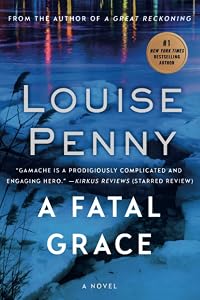
Welcome to winter in Three Pines, a picturesque village in Quebec, where the villagers are preparing for a traditional country Christmas, and someone is preparing for murder. No one liked CC de Poitiers. Not her quiet husband, not her spineless lover, not her pathetic daughter--and certainly none of the residents of Three Pines. CC de Poitiers managed to alienate everyone, right up until the moment of her death. When Chief Inspector Armand Gamache, of the Sûreté du Quebec, is called to show more investigate, he quickly realizes he's dealing with someone quite extraordinary. CC de Poitiers was electrocuted in the middle of a frozen lake, in front of the entire village, as she watched the annual curling tournament. And yet no one saw anything. Who could have been insane enough to try such a macabre method of murder--or brilliant enough to succeed? With his trademark compassion and courage, Gamache digs beneath the idyllic surface of village life to find the dangerous secrets long buried there. For a Quebec winter is not only staggeringly beautiful but deadly, and the people of Three Pines know better than to reveal too much of themselves. But other dangers are becoming clear to Gamache. As a bitter wind blows into the village, something even more chilling is coming for Gamache himself. show lessTags
Recommendations









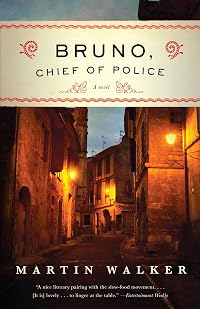
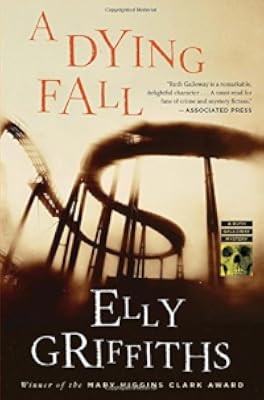
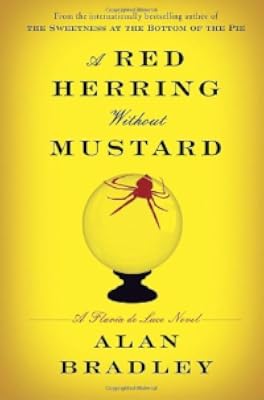
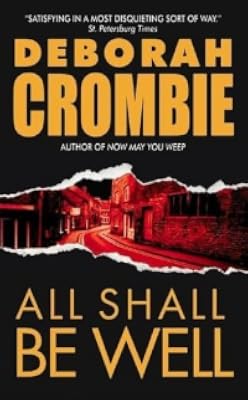








Member Recommendations
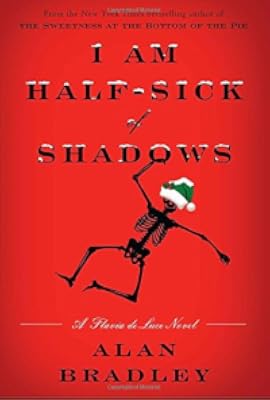
BookshelfMonstrosity I Am Half-Sick of Shadows and A Fatal Grace are cozy mysteries set in small towns. In each, the victim is disliked by many; thus, many have motives to kill. It is up to the ingenious protagonists to solve the crime.
Littlemissbashful Both books feature cerebral detectives in snowbound and idyllic village settings during the Christmas season - The stories take place within close knit communities with hidden secrets and unsympathetic victims. Both have a full supporting cast of characters including various 'eccentrics', feisty old ladies, flaky artists, gay hoteliers, suspect clergy and village scapegoats etc.
Member Reviews
"Dead Cold" (published in the US under the less pleasingly ambiguous and less accurate title of "A Fatal Grace") surprised me by being qualitatively very different from "Still Life", the first book in the series.
"Still Life" was a comforting, almost wistful, book in which a wise detective gently unravels the deceptions hiding a murder and, in the process, falls in love with the village of Three Pines and its inhabitants.
"Dead Cold" takes us back to Three Pines and the villagers who brought the last book to life. It captures their reactions to CeeCee, a new arrival so cold and cruel, that when she dies a dreadful death the village almost celebrates, as if a house had just landed on the Wicked Witch of the West. Once again, Chief show more Inspector Gamache is called to Three Pines to discover the murderer.
Despite having the same setting and characters as "Still Life" and a similarly complex plot, rolled out with at a similarly leisurely pace with regular pauses for food and philosophical reflection, "Dead Cold" sets off in a new direction. It sets this direction in a beautiful and compelling way, but I found the direction itself hard to accept.
As Chief Inspector Gamache says more than once, this case is about our beliefs and how they shape our actions and define our lives. In this book, the characters hunt not only for a murderer but for the numinous. Psalm 46 is quoted repeatedly
"Be still and know that I am God"
Gamache and a number of the other characters in the book actively seek the presence of God to provide them with direction or purpose. The God is not necessarily a Christian God. There is a nod towards other religions, including a translation of the traditional Indian greeting, Namaste, as "The God in me greets the God in you." Leonard Cohen is also enlisted in the search for the numinous, with a quote from the lyrics of Anthem:
"Forget your perfect offering
There is a crack in everything
That's how the light gets in."
Light becomes central to the discussion of the divine and the language used in the book is often truly luminous, glowing with beauty and joy. The passage in which Clara's painting of "The Three Grace's" is described is wonderful as are some of the physical descriptions of Three Pines.
Despite the beauty of the language and the skill of the exposition, I struggled with the strong influence of the divine in this book. At times, I felt as if I had wandered into a modern allegory, exploring a seeker's path through the tribulations a long life, rather than a murder mystery.
The struggle arose partly from my expectation that I WAS reading a murder mystery and not a parable and partly because I am so deeply unconvinced by the possibility of the personal experience of God in my Louise Penny led.
I resolved the struggle by accepting that I WASN'T reading a murder mystery but rather a novel that seeks to illustrate the possibility of belief as a source of good or evil that has a real impact on who we become. I allowed that the characters described here sincerely believe in the existence of the God they seek and the Three Pines is more than a place, it is an aspiration for what a community should be.
Taken on these terms, "Dead Cold" became a delightful read with a murder mystery and a little internal Police political intrigue added as seasoning.
I ended the book feeling glad that I'd heard Louise Penny's unique voice and wondering what intent is driving this series.
Adam Sims did a great job narrating "Dead Cold". Click on the SoundCloud link below to hear a sample.
[soundcloud url="https://api.soundcloud.com/tracks/138..." params="color=#ff5500&auto_play=false&hide_related=false&show_comments=true&show_user=true&show_reposts=false&show_teaser=true&visual=true" width="100%" height="300" iframe="true" /] show less
"Still Life" was a comforting, almost wistful, book in which a wise detective gently unravels the deceptions hiding a murder and, in the process, falls in love with the village of Three Pines and its inhabitants.
"Dead Cold" takes us back to Three Pines and the villagers who brought the last book to life. It captures their reactions to CeeCee, a new arrival so cold and cruel, that when she dies a dreadful death the village almost celebrates, as if a house had just landed on the Wicked Witch of the West. Once again, Chief show more Inspector Gamache is called to Three Pines to discover the murderer.
Despite having the same setting and characters as "Still Life" and a similarly complex plot, rolled out with at a similarly leisurely pace with regular pauses for food and philosophical reflection, "Dead Cold" sets off in a new direction. It sets this direction in a beautiful and compelling way, but I found the direction itself hard to accept.
As Chief Inspector Gamache says more than once, this case is about our beliefs and how they shape our actions and define our lives. In this book, the characters hunt not only for a murderer but for the numinous. Psalm 46 is quoted repeatedly
"Be still and know that I am God"
Gamache and a number of the other characters in the book actively seek the presence of God to provide them with direction or purpose. The God is not necessarily a Christian God. There is a nod towards other religions, including a translation of the traditional Indian greeting, Namaste, as "The God in me greets the God in you." Leonard Cohen is also enlisted in the search for the numinous, with a quote from the lyrics of Anthem:
"Forget your perfect offering
There is a crack in everything
That's how the light gets in."
Light becomes central to the discussion of the divine and the language used in the book is often truly luminous, glowing with beauty and joy. The passage in which Clara's painting of "The Three Grace's" is described is wonderful as are some of the physical descriptions of Three Pines.
Despite the beauty of the language and the skill of the exposition, I struggled with the strong influence of the divine in this book. At times, I felt as if I had wandered into a modern allegory, exploring a seeker's path through the tribulations a long life, rather than a murder mystery.
The struggle arose partly from my expectation that I WAS reading a murder mystery and not a parable and partly because I am so deeply unconvinced by the possibility of the personal experience of God in my Louise Penny led.
I resolved the struggle by accepting that I WASN'T reading a murder mystery but rather a novel that seeks to illustrate the possibility of belief as a source of good or evil that has a real impact on who we become. I allowed that the characters described here sincerely believe in the existence of the God they seek and the Three Pines is more than a place, it is an aspiration for what a community should be.
Taken on these terms, "Dead Cold" became a delightful read with a murder mystery and a little internal Police political intrigue added as seasoning.
I ended the book feeling glad that I'd heard Louise Penny's unique voice and wondering what intent is driving this series.
Adam Sims did a great job narrating "Dead Cold". Click on the SoundCloud link below to hear a sample.
[soundcloud url="https://api.soundcloud.com/tracks/138..." params="color=#ff5500&auto_play=false&hide_related=false&show_comments=true&show_user=true&show_reposts=false&show_teaser=true&visual=true" width="100%" height="300" iframe="true" /] show less
Chief Inspector Armand Gamache is on the case again in Book 2 of the Three Pines mystery series by Louise Penny. For a small town in rural Quebec, there are an awful lot of murders. And once again Gamache brings his quiet, thoughtful, cerebral detective skills to the forefront in helping to solve the crime in this police procedural. And also once again the residents provide all the charm needed to make you wish you lived in their midst.
It’s Christmas and the residents are clinging to their holiday traditions which include a big community breakfast followed by a curling match. As the match reaches a pivotal point, CC dePointiers is suddenly lying on the ground, dead. Finding out who murdered her, how and why, is much more difficult show more than anticipated. After all, CC was an outsider who had purchased the old Hadley place, where Gamache had experienced a frightening episode when he was in Three Pines for the last murder investigation. She was not well-liked by those in the community who knew her, which made the suspect list very lengthy. Her haughty attitude and mean-spiritedness made it difficult to find anyone who thought highly of her. Her spouse, a likely suspect in any murder, is not looking very likely to the good chief inspector. Like in the first book, different possibilities are explored, you think you’ve got it figured out and then, bang, it goes off in another direction.
Along the way you get to enjoy the poetry and caustic wit of Ruth Zardo, the elderly Fire Chief and purveyor of all things cynical. I loved this part on page 180:
“I wonder who her parents were? said Gabri. She was in her forties, right? So they’d probably be in their seventies at least. Like you.” Gabri turned to Ruth who waited a moment then spoke.
‘Long dead and buried in another town,
My mother hasn’t finished with me yet.’
“From a poem?” Gamache asked when Ruth had finished. It sounded familiar.
“You think?” said Ruth with a snarl.
‘When my death us do part
Then shall forgiven and forgiving meet again,
Or will it be, as always was, too late?’
“Oh thank God. I thought we’d be without your poetry for one night,” said Gabri. “Please continue. I don’t feel quite suicidal enough.”
Funny, sad, tender, wonderful.
I started this series in January and I’m trying to stretch it out because it’s so enjoyable. I had stopped reading mysteries many years ago because most were very predictable and only a total moron couldn’t guess whodunit. But this cozy little series is exceptionally well done. The characters are so well-drawn and complex and there just aren’t that many books where I want to actually live with the characters in their comfy, cozy little town. I want to move to Three Pines! show less
It’s Christmas and the residents are clinging to their holiday traditions which include a big community breakfast followed by a curling match. As the match reaches a pivotal point, CC dePointiers is suddenly lying on the ground, dead. Finding out who murdered her, how and why, is much more difficult show more than anticipated. After all, CC was an outsider who had purchased the old Hadley place, where Gamache had experienced a frightening episode when he was in Three Pines for the last murder investigation. She was not well-liked by those in the community who knew her, which made the suspect list very lengthy. Her haughty attitude and mean-spiritedness made it difficult to find anyone who thought highly of her. Her spouse, a likely suspect in any murder, is not looking very likely to the good chief inspector. Like in the first book, different possibilities are explored, you think you’ve got it figured out and then, bang, it goes off in another direction.
Along the way you get to enjoy the poetry and caustic wit of Ruth Zardo, the elderly Fire Chief and purveyor of all things cynical. I loved this part on page 180:
“I wonder who her parents were? said Gabri. She was in her forties, right? So they’d probably be in their seventies at least. Like you.” Gabri turned to Ruth who waited a moment then spoke.
‘Long dead and buried in another town,
My mother hasn’t finished with me yet.’
“From a poem?” Gamache asked when Ruth had finished. It sounded familiar.
“You think?” said Ruth with a snarl.
‘When my death us do part
Then shall forgiven and forgiving meet again,
Or will it be, as always was, too late?’
“Oh thank God. I thought we’d be without your poetry for one night,” said Gabri. “Please continue. I don’t feel quite suicidal enough.”
Funny, sad, tender, wonderful.
I started this series in January and I’m trying to stretch it out because it’s so enjoyable. I had stopped reading mysteries many years ago because most were very predictable and only a total moron couldn’t guess whodunit. But this cozy little series is exceptionally well done. The characters are so well-drawn and complex and there just aren’t that many books where I want to actually live with the characters in their comfy, cozy little town. I want to move to Three Pines! show less
Book 2 in the the Inspector Gamache series. Even though I guessed the murderer at the outset, I was led through complicated twists and doubts until the very end. So well written I just want to move to this location and become one of the locals! So full of humorous repartees and characters asking us, the reader, to figure it out that I didn't want the story to end. There is nothing simple about the village and its inhabitants. There's a lot of biblical, historical, and literary allusions all throughout the book. It's an intelligent, complicated, yet enjoyable read.
I love Canadian author Louise Penny's Three Pines mysteries. I like the setting, the quirky characters, and the plot twists. I enjoy her literary allusions and her wry sense of humor. I like the way the reader never quite knows all that's going on -- sometimes even at the end of the last page. That "unsettled" quality that Penny leaves at the end of the book is so much like real life. Some folks characterize these books as "cozies," but I find them much more complex and literary than is typical of the conventional cozy mystery.
As is the case with several of Penny's novels, there is some title confusion. This book, issued as "Dead Cold" in Canada, was titled "A Fatal Grace" for it's American release. I assume that other minor show more Americanizations have taken place. As a sports fan, it did seem a bit ridiculous that even the name of the Montreal Canadiens hockey team was Americanized to "Canadians."
In this second installment of the series, the most hated woman in town dies a most unusual death -- electrocuted on a frozen pond watching a curling match. C.C. Potiers was a woman as cold as the Quebec winter, and thus the supply of possible suspects is plentiful. It's up to Inspector Armand Gamache to sort out the mystery. At the same time, he is looking into another murder -- that of a homeless woman in Montreal. But Gamache has problems of his own; fallout from a case he handled with political implications within the Quebec police ranks.
Overall, I found it a satisfying read. I got to know the inhabitants of Three Pines a little better. I waffled over the solution to the murders I read, and puzzled over what was going on in the police politics, as was obviously Penny's intent.
One minor quibble -- I'm normally not a "prude" when it comes to language in books, but there was one phrase the author insisted on having a character use over and over that bothered me. I think I understand her literary intent, but it didn't work for me. I just found it offensive, though perhaps it was historically accurate as to its WWI combat origins.
The reading of this book was generally a pleasure, and I would recommend it. However, it's best to read this series in order -- definitely read Still Life first. show less
As is the case with several of Penny's novels, there is some title confusion. This book, issued as "Dead Cold" in Canada, was titled "A Fatal Grace" for it's American release. I assume that other minor show more Americanizations have taken place. As a sports fan, it did seem a bit ridiculous that even the name of the Montreal Canadiens hockey team was Americanized to "Canadians."
In this second installment of the series, the most hated woman in town dies a most unusual death -- electrocuted on a frozen pond watching a curling match. C.C. Potiers was a woman as cold as the Quebec winter, and thus the supply of possible suspects is plentiful. It's up to Inspector Armand Gamache to sort out the mystery. At the same time, he is looking into another murder -- that of a homeless woman in Montreal. But Gamache has problems of his own; fallout from a case he handled with political implications within the Quebec police ranks.
Overall, I found it a satisfying read. I got to know the inhabitants of Three Pines a little better. I waffled over the solution to the murders I read, and puzzled over what was going on in the police politics, as was obviously Penny's intent.
One minor quibble -- I'm normally not a "prude" when it comes to language in books, but there was one phrase the author insisted on having a character use over and over that bothered me. I think I understand her literary intent, but it didn't work for me. I just found it offensive, though perhaps it was historically accurate as to its WWI combat origins.
The reading of this book was generally a pleasure, and I would recommend it. However, it's best to read this series in order -- definitely read Still Life first. show less
Wheels within wheels are turning -- I love how this series can be so cozy, so thoughtful, so sweet but never saccharine, but there's also this dark undercurrent that promises more larger story to come. In this book, we learn more about the choices Inspector Gamache made in the past, and see if he makes the same choice again. We also see the wages of child abuse, reflected again and again throughout generations. Sad, lovely, full of heart.
Rating: 4.5* of five
The Publisher Says: Welcome to winter in Three Pines, a picturesque village in Quebec, where the villagers are preparing for a traditional country Christmas, and someone is preparing for murder.
No one liked CC de Poitiers. Not her quiet husband, not her spineless lover, not her pathetic daughter—and certainly none of the residents of Three Pines. CC de Poitiers managed to alienate everyone, right up until the moment of her death.
When Chief Inspector Armand Gamache, of the Sûreté du Quebec, is called to investigate, he quickly realizes he's dealing with someone quite extraordinary. CC de Poitiers was electrocuted in the middle of a frozen lake, in front of the entire village, as she watched the annual curling show more tournament. And yet no one saw anything. Who could have been insane enough to try such a macabre method of murder—or brilliant enough to succeed?
With his trademark compassion and courage, Gamache digs beneath the idyllic surface of village life to find the dangerous secrets long buried there. For a Quebec winter is not only staggeringly beautiful but deadly, and the people of Three Pines know better than to reveal too much of themselves. But other dangers are becoming clear to Gamache. As a bitter wind blows into the village, something even more chilling is coming for Gamache himself.
My Review: The first of these warm, acutely and accurately observed, scrumptiously comfy cozy mysteries, Still Life, hooked me in completely to the world of Gamache, the Sûreté (weeeeurrrrnnnh goes the WWII siren, off to catch Jews in Nazi-occupied Paris, the line of Traction Avant sedans hurtling through the rain-soaked night) du Québec, and the madhouse-meets-retirement-home that is Three Pines. It had its issues, including an inordinate focus on a minor character's past when that character was shuffled off tout suite before the end of the book. But it was perfectly wonderful, and I fell in love with it immediatement.
The second entry is more assured a performance on every level, and the minor character is back again, despite being shuffled off last book. It's amazing how annoyed I was at the appearance of a character I disliked so very much. I *resented* having even the name on so many pages! I know Inspector Beauvoir, Gamache's second-in-command, felt the same way.
The interpersonal dynamics in this book are stellar. Gamache et sa femme, Reine-Marie, are clearly the best-suited married couple in all of fiction. Gamache and Beauvoir love each other deeply, in a tender and gentle way, and it never shades into prurience or sentimentality. How Penny achieves that, I cannot venture to guess, but I wish to goodness she'd give lessons to Anne Rice and Stephen King in how it's done.
The two murders in this book are both heart-wrenching, though for completely different reasons. Their solutions are exactly in tune with the series's ethos, and the events of a cold winter's night that take place on a lake will, unless you are insentient or a sociopath, make you take a Kleenex break until you're eyes actually smart from crying in...in...joyous furious sadness.
I've always had it in my mind that I'd spend my declining years in Skookumchuk, British Columbia, because well who doesn't want to live in a place called Skookumchuk? Daily laughter guaranteed! But now I want to grow old in Three Pines, next door to Clara and Myrna and with Reine-Marie and Armand at the top of the hill. One will always be safe, if not from murder, then from the outrages of the wider, more callous, uncaring world. That's worth a lot.
And did I mention I recommend the book? show less
The Publisher Says: Welcome to winter in Three Pines, a picturesque village in Quebec, where the villagers are preparing for a traditional country Christmas, and someone is preparing for murder.
No one liked CC de Poitiers. Not her quiet husband, not her spineless lover, not her pathetic daughter—and certainly none of the residents of Three Pines. CC de Poitiers managed to alienate everyone, right up until the moment of her death.
When Chief Inspector Armand Gamache, of the Sûreté du Quebec, is called to investigate, he quickly realizes he's dealing with someone quite extraordinary. CC de Poitiers was electrocuted in the middle of a frozen lake, in front of the entire village, as she watched the annual curling show more tournament. And yet no one saw anything. Who could have been insane enough to try such a macabre method of murder—or brilliant enough to succeed?
With his trademark compassion and courage, Gamache digs beneath the idyllic surface of village life to find the dangerous secrets long buried there. For a Quebec winter is not only staggeringly beautiful but deadly, and the people of Three Pines know better than to reveal too much of themselves. But other dangers are becoming clear to Gamache. As a bitter wind blows into the village, something even more chilling is coming for Gamache himself.
My Review: The first of these warm, acutely and accurately observed, scrumptiously comfy cozy mysteries, Still Life, hooked me in completely to the world of Gamache, the Sûreté (weeeeurrrrnnnh goes the WWII siren, off to catch Jews in Nazi-occupied Paris, the line of Traction Avant sedans hurtling through the rain-soaked night) du Québec, and the madhouse-meets-retirement-home that is Three Pines. It had its issues, including an inordinate focus on a minor character's past when that character was shuffled off tout suite before the end of the book. But it was perfectly wonderful, and I fell in love with it immediatement.
The second entry is more assured a performance on every level, and the minor character is back again, despite being shuffled off last book. It's amazing how annoyed I was at the appearance of a character I disliked so very much. I *resented* having even the name on so many pages! I know Inspector Beauvoir, Gamache's second-in-command, felt the same way.
The interpersonal dynamics in this book are stellar. Gamache et sa femme, Reine-Marie, are clearly the best-suited married couple in all of fiction. Gamache and Beauvoir love each other deeply, in a tender and gentle way, and it never shades into prurience or sentimentality. How Penny achieves that, I cannot venture to guess, but I wish to goodness she'd give lessons to Anne Rice and Stephen King in how it's done.
The two murders in this book are both heart-wrenching, though for completely different reasons. Their solutions are exactly in tune with the series's ethos, and the events of a cold winter's night that take place on a lake will, unless you are insentient or a sociopath, make you take a Kleenex break until you're eyes actually smart from crying in...in...joyous furious sadness.
I've always had it in my mind that I'd spend my declining years in Skookumchuk, British Columbia, because well who doesn't want to live in a place called Skookumchuk? Daily laughter guaranteed! But now I want to grow old in Three Pines, next door to Clara and Myrna and with Reine-Marie and Armand at the top of the hill. One will always be safe, if not from murder, then from the outrages of the wider, more callous, uncaring world. That's worth a lot.
And did I mention I recommend the book? show less
Summary: An unliked but aspiring author comes to Three Pines and is murdered in front of a crowd at a curling match yet no one sees how it happened.
CC de Poitiers has just published a book, Be Calm, a mishmash philosophy of enlightenment through the suppression of emotion, symbolized by the color white. She hopes to launch a whole line of fashions and accessories around this idea. Yet for one maintaining control of emotion, she manages to make herself hateful to everyone around her–her lover and photographer Saul, her husband Richard Lyon, her daughter, Crie, and the people of Three Pines, where the family has purchased the old Hadley home.
She manages to disrupt the holiday cheer of the village, first by brutally silencing her show more daughter’s beautiful singing in church on Christmas eve, and then by dying in front of everyone at a traditional curling match following a holiday breakfast. Only it wasn’t a natural death. It was murder by electrocution, when she stood up to straighten a lawn chair askew. Yet none of the witnesses saw anything, and an electrocution of this sort was difficult to achieve, requiring a number of improbable factors to coincide. Who did this, and how, and why? Several items become key pieces of evidence–an ornament of the three pines with the letter L inscribed, a discarded videotape with one section distorted from repeated pauses, and an old pendant of a screaming eagle.
Gamache is called in, his second case in Three Pines. He had been reading an unsolved case file of a homeless vagrant woman who had been strangled in Montreal. Seemingly unrelated, Gamache and his team will discover the two cases are connected. Gamache will also discover that an earlier effort, the Arnot affair, to deal with corruption in the Surete is not over, that there are maneuverings going on to bring him down. One sign of this was the assignment of Agent Yvette Nichol to his team unrequested after her disastrous performance the last time she was in Three Pines. One compensation is a young detective, Robert Lemieux, who seems a quick study and fits in well with the team.
Some of the finest writing comes in the conversations of Gamache with Emilie Longpre, one of the “Three Graces” painted by Clara Morrow, with evidence of a fourth, missing Grace. The three include her, “Mother” Bea Meyer and Kaye Thompson, friends through life. Emilie is not “L,” whose son died young and was remembered by her for a signature violin piece he’d learned. She had been moved by Crie’s singing, and when she heard CC’s attack on her, was troubled by her failure to come to the unusual girl’s defense.
It’s not all conversation. There are drives through blinding blizzards, the panic of being trapped in a burning house, and a dramatic rescue. There are flashbacks, as Gamache and Jean Guy visit the old Hadley house, which figured in the terrifying ending of the first novel.
Of course there is the wonderful cast of Three Pines, Gabri and Olivier, Peter and Clara Morrow, and the curmudgeonly poet, Ruth Zardo, whose “beer walks” each day are finally explained. For the uninitiated, there is also an introduction to curling, and the high drama of “clearing the house,” which came at the very moment CC was electrocuted.
This was the second of Penny’s Gamache novels, good enough to win an Agatha Award in 2007. One revels in reading a work with no one-dimensional characters but real people with histories, hopes and secret and not-so-secret wounds. What a joy to glimpse the comfortable, companionable relationship of Reine-Marie and Armand, so healthy and “adult.” And despite the fact that it is the site of so many murders, Penny’s description of Three Pines makes it one of the favorite places in fiction where people would love to live. I know I would. show less
CC de Poitiers has just published a book, Be Calm, a mishmash philosophy of enlightenment through the suppression of emotion, symbolized by the color white. She hopes to launch a whole line of fashions and accessories around this idea. Yet for one maintaining control of emotion, she manages to make herself hateful to everyone around her–her lover and photographer Saul, her husband Richard Lyon, her daughter, Crie, and the people of Three Pines, where the family has purchased the old Hadley home.
She manages to disrupt the holiday cheer of the village, first by brutally silencing her show more daughter’s beautiful singing in church on Christmas eve, and then by dying in front of everyone at a traditional curling match following a holiday breakfast. Only it wasn’t a natural death. It was murder by electrocution, when she stood up to straighten a lawn chair askew. Yet none of the witnesses saw anything, and an electrocution of this sort was difficult to achieve, requiring a number of improbable factors to coincide. Who did this, and how, and why? Several items become key pieces of evidence–an ornament of the three pines with the letter L inscribed, a discarded videotape with one section distorted from repeated pauses, and an old pendant of a screaming eagle.
Gamache is called in, his second case in Three Pines. He had been reading an unsolved case file of a homeless vagrant woman who had been strangled in Montreal. Seemingly unrelated, Gamache and his team will discover the two cases are connected. Gamache will also discover that an earlier effort, the Arnot affair, to deal with corruption in the Surete is not over, that there are maneuverings going on to bring him down. One sign of this was the assignment of Agent Yvette Nichol to his team unrequested after her disastrous performance the last time she was in Three Pines. One compensation is a young detective, Robert Lemieux, who seems a quick study and fits in well with the team.
Some of the finest writing comes in the conversations of Gamache with Emilie Longpre, one of the “Three Graces” painted by Clara Morrow, with evidence of a fourth, missing Grace. The three include her, “Mother” Bea Meyer and Kaye Thompson, friends through life. Emilie is not “L,” whose son died young and was remembered by her for a signature violin piece he’d learned. She had been moved by Crie’s singing, and when she heard CC’s attack on her, was troubled by her failure to come to the unusual girl’s defense.
It’s not all conversation. There are drives through blinding blizzards, the panic of being trapped in a burning house, and a dramatic rescue. There are flashbacks, as Gamache and Jean Guy visit the old Hadley house, which figured in the terrifying ending of the first novel.
Of course there is the wonderful cast of Three Pines, Gabri and Olivier, Peter and Clara Morrow, and the curmudgeonly poet, Ruth Zardo, whose “beer walks” each day are finally explained. For the uninitiated, there is also an introduction to curling, and the high drama of “clearing the house,” which came at the very moment CC was electrocuted.
This was the second of Penny’s Gamache novels, good enough to win an Agatha Award in 2007. One revels in reading a work with no one-dimensional characters but real people with histories, hopes and secret and not-so-secret wounds. What a joy to glimpse the comfortable, companionable relationship of Reine-Marie and Armand, so healthy and “adult.” And despite the fact that it is the site of so many murders, Penny’s description of Three Pines makes it one of the favorite places in fiction where people would love to live. I know I would. show less
Members
- Recently Added By
Lists

Crime and Mysteries to Read
746 works; 31 members

Best 21st Century Books (So Far)
679 works; 86 members

Winter Books
2 works; 1 member

Electrocution Books
2 works; 1 member

Water Books
3 works; 1 member

Community Books
6 works; 1 member

Secrets Books
94 works; 3 members

Books About Murder
313 works; 7 members

Detective Stories
343 works; 5 members

Books Read in 2013
1,630 works; 51 members

Books Set in Small Towns and Villages
278 works; 16 members

Books Read 2024
23 works; 1 member

Books Read in 2021
5,361 works; 114 members

Christmas Books
370 works; 40 members

Books Read in 2019
4,052 works; 110 members

Books Read in 2014
2,344 works; 89 members

Books Tagged Abuse
152 works; 4 members

Books Read in 2015
3,299 works; 129 members

Most Popular Books Tagged Canada
34 works; 1 member

Read in 2014
334 works; 11 members

Books read in 2014
66 works; 1 member
Author Information

40+ Works 63,516 Members
Louise Penny was born in Toronto, Canada in 1958. She earned a Bachelor of Applied Arts (Radio and Television) from Ryerson Polytechnical Institute (now Ryerson University) in 1979. Before she turned to writing mystery novels in 2004, she was a journalist and radio host for the Canadian Broadcasting Corporation in various cities across Canada for show more 25 years. She writes the Chief Inspector Gamache Novel series. She has won numerous awards including the New Blood Dagger, Arthur Ellis, Barry, Anthony, and Dilys awards for Still Life and the 2007 Agatha Award for Best Novel for A Fatal Grace. Louise's title, The Long Way Home, made the Hot Mystery Title's List for Summer 2014. Her titles The Nature of the Beast made The New York Times best seller list in 2015 and A Great Reckoning made The New York Times best seller list in 2016. (Bowker Author Biography) show less
Some Editions
Awards and Honors
Awards
Series

Belongs to Publisher Series
Work Relationships
Is contained in
Common Knowledge
- Canonical title
- A Fatal Grace
- Original title
- Dead Cold
- Alternate titles*
- A Fatal Grace (US) (US); Dead Cold
- Original publication date
- 2006
- People/Characters
- Armand Gamache (Chief Inspector of Homicide with the Sûreté du Quebec); Jean Guy Beauvoir (pronounced 'Jawhn Gee', with a hard 'G', Inspector, Gamache's second); Clara Morrow (talented, not yet 'discovered' artist in Three Pines); Émilie Longpré ('Em', one of Three Pines 'three graces', Gus' widow, mother of the late David); Gabri Dubeau (owner of the B & B in Three Pines); Olivier Brulé (owner of Olivier's Bistro, Gabri's life partner) (show all 37); Ruth Zardo (née Kemp, poet, chief of the volunteer fire department); Peter Morrow (Clara's husband, artist, Royal Academy of Canada member); Cecilia de Poitiers ('CC', hoping to make her 'Li Bien' idea trendy, toxic wife, mother, & neighbor); Kaye Thompson (one of Three Pines 'three graces'); Beatrice Mayer ('Mother Bea,' owns 'Be Calm yoga & meditation center, one of Three Pines 'three graces'); Myrna Landers (bookstore owner, former psychologist); Crie Lyon (CC & Richard's 14-yr-old daughter, bright, talented, fat, & bullied by her mother); Marc Brault (Chief Inspector of homicide, Montreal Metropolitan Police); Reine-Marie Gamache (Armand's beloved wife); Robert Lemieux (Agent, Cowansville Sûreté); Yvette Nichol (Agent, Quebec Sûreté, Narcotics, sent to Gamache by his boss); Isabelle Lacoste (Agent, Quebec Sûreté); Saul Petrov (commercial photographer hired by & sleeping with CC); Richard Lyon (clothing factory clerk, inventor, CC's severely henpecked husband); Eleanor Allaire (old friend of Em, Kay, and Bea); Billy Williams (extremely handy handyman); Michel Brébeuf (Gamache's immediate boss); Madame Latour (music teacher, Miss Edward's school for Girls); Yolande Fontaine (real estate agent who sold the Hadley Victorian house to CC & family); Elle (alcoholic bag lady in Montreal); Dr. Lambert (the emergency physician to whom CC was taken); Hanna Parra (local elected representative); Roar Parra (Hanna's husband); Dr. Sharon Harris (she's the coroner, Cowansville Hospital); Céline Provost (Agent, electrician with Sûreté technical services); Sylvain Francoeur (Superintendent | Gamache's big boss); Terry Moscher (director of the Old Brewery Mission in Montreal where Elle sometimes stayed); Father Marcel Nèron (the Gamaches' parish priest); Philippe Croft (a waiter at Olivier's bistro); Ari Nikolev (Agent Nichol's father); Rose Lévesque (one of the village children)
- Important places
- Montréal, Québec, Canada; Three Pines, Québec, Canada (village in the Eastern townships, a couple of kilometers from the US border); Ogilvy, 1307 Saint-Catherine St W, Montreal, Québec, Canada (department store); The Ritz-Carlton hotel, 1228 Sherbrooke Street West, on the corner of Drummond Street, Montreal, Québec, Canada; Miss Edward's School for Girls; the Morrow house, Three Pines (show all 17); Olivier's Bistro, Three Pines, Québec, Canada (in the heart of Three Pines); The Hadley House, Three Pines, Québec, Canada (now owned by the Lyons); Be Calm Yoga and Meditation Centre, St-Rémy, Québec, Canada; St. Thomas's church, Three Pines; Émilie Longpré's old clapboard cottage across the Three Pine village green from the Morrow house; Williamsburg, Eastern townships, Québec, Canada; Lac Brume, Eastern townships, Québec, Canada (Brome Lake); Royal Canadian Legion, rue Larry, Williamsburg, a five minute walk from Lac Brume (outpost); Gabri's bed & breakfast, Three Pines; Three Pines Volunteer Fire Department building, once a railway station, being used as the Sûreté team's situation room; the rental chalet where Saul Petrov is staying, 17 rue Tryborn, a turnoff from the Old Stage Road, near St-Rémy, Québec, Canada
- Dedication
- For my brother Doug and his family, Mary, Brian, Roslyn, and Charles, who showed me what courage really is. Namaste.
- First words
- Had CC de Poitiers known she was going to be murdered she might have bought her husband, Richard, a Christmas gift.
- Last words
- (Click to show. Warning: May contain spoilers.)'I have everything.'
- Blurbers
- Hill, Reginald; Griffiths, Elly
- Original language*
- Englisch
*Some information comes from Common Knowledge in other languages. Click "Edit" for more information.
Classifications
Statistics
- Members
- 4,652
- Popularity
- 3,112
- Reviews
- 248
- Rating
- (3.91)
- Languages
- 17 — Czech, Danish, Dutch, English, Estonian, Finnish, French, German, Hungarian, Italian, Japanese, Korean, Norwegian (Bokmål), Portuguese, Russian, Spanish, Swedish
- Media
- Paper, Audiobook, Ebook
- ISBNs
- 71
- UPCs
- 1
- ASINs
- 29