On This Page
Description
Just after midnight, the famous Orient Express is stopped in its tracks by a snowdrift. By morning, the millionaire Samuel Edward Ratchett lies dead in his compartment, stabbed a dozen times, his door locked from the inside. Without a shred of doubt, one of his fellow passengers is the murderer. Isolated by the storm, detective Hercule Poirot must find the killer among a dozen of the dead man's enemies, before the murderer decides to strike again.Tags
Recommendations
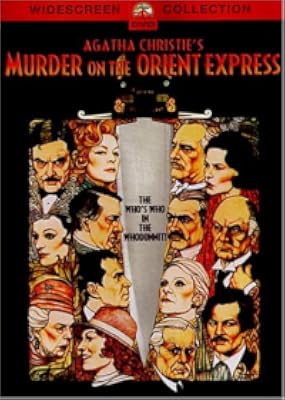
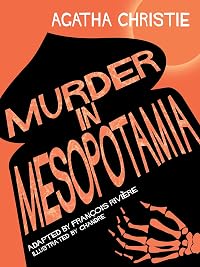


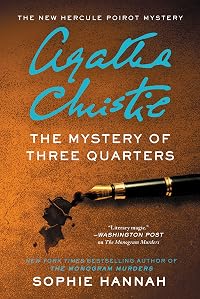

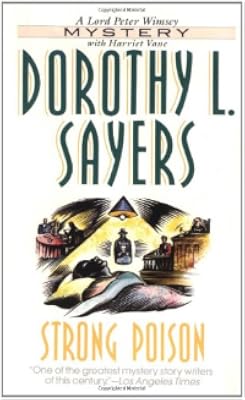
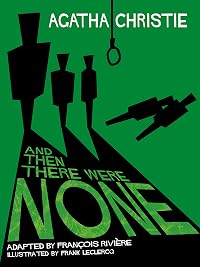







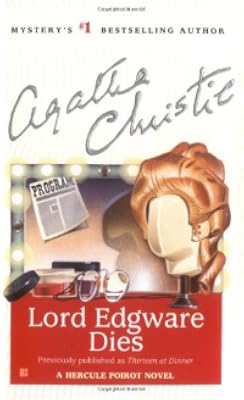
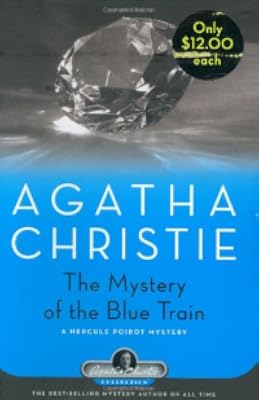
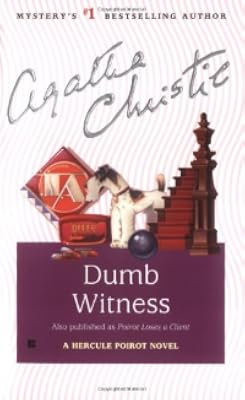
Member Recommendations
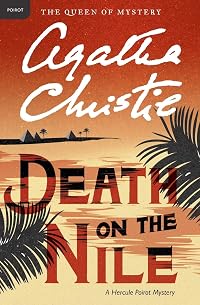
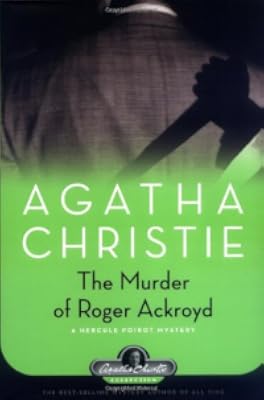
Ludi_Ling Both Christie classics, where no-one and everyone could have done the murder.
150

Member Reviews
I'd never read 'Murder On The Orient Express' or seen any of the movies so all I knew about it was that there was a murder on the Orient Express with Poirot conveniently aboard to investigate it and that it's a favourite book for many Agatha Christie fans.
I had a great time reading the book, going in blind. So, in case you haven't read it either, I'm not going to share any plot points here. I'm just going to talk about what made the books such fun.
What I liked most about this book was how playful it was. The humour starts from the first scene with Poirot engaged in an uncomfortable conversation about the weather with the French officer assigned to see him off on the train. It's a cinematic opening to the novel that dwells not on any show more sense of foreboding, or even on how exciting long-distance train travel across two continents could be but rather on the embarrassment caused to two men with nothing in common but the need to be polite to one another.
This sense of playfulness continues with small comedy of manners pieces throughout the book but the most playful aspect of the book is the puzzle itself.
The plot had the potential to be deeply boring. Someone gets killed. It seems likely that only people on a certain carriage on the train would have had the opportunity to commit the murder. You interview all the people one at a time in the dining car until you find out who did it. How static and tedious would that have been?
Christie turns it into something lively by having a set of characters, passengers and crew, of different nationalities, social class, trustworthiness and confidence and then adding a plot where every new piece of information seems to eliminate one or more of the suspects until, apart from the fact that there is a dead body, it would seem to have been impossible for the murder to have been committed. I found myself imagining Christie grinning as she twisted the plot one more time, challenging the reader to work it out.
The Orient Express, or at least the concept of the privilege and luxury and the unashamed 'we're here for the rich and titled' attitude, became a character in the book. The train, pushing through the winter snow on the mountains, became more like a ship far from shore.
Then there was the ending. It was perfect. I was grinning with childish delight when the solution to the puzzle was revealed. It was satisfying not just as an answer to a puzzle but as a solution I could cheer for.
I even liked Poirot in this book. Perhaps it was the absence of Hastings or the presence of so many larger-than-life characters, or that the people around him knew his reputation, but he seemed to do less grandstanding and made less reference to his 'method'. He just got on with the job and showed his skill for interviewing people and for analysing the information he gained from them. Not that any of that helped me solve the puzzle but it was fun to watch.
My enjoyment of the book was enhanced by listening to the audiobook version narrated by Dan Stevens. There are a couple of other audible versions around, one by Suchet and one by Branagh but I wanted a version that wasn't just a reprise of 'when I played Poirot'. After all, Poirot is rarely the most interesting character in the book. He works best as a mildly eccentric Dues ex Machina obsessed with the voluptuous richness of his moustaches. Dan Stevens did an excellent job of bringing the large and diverse cast of characters alive. Click on the SoundCloud link below to hear a sample.
https://soundcloud.com/harpercollinspublishers/murder-on-the-orient-express-1 show less
Likely one of Christie's most iconic mysteries, this Poirot venture sees him setting out on the titular train. When one of the passengers is found murdered, Poirot lends a hand to the train company owner and leads the investigation.
While I had never read the book before, I had seen an adaptation or two and, as the resolution for this particular whodunnit is quite memorable, this is one of the rare times where I wasn't trying to solve the case along with Poirot. As a result, the novel didn't sparkle for me quite as much as I'd hoped but it is still an excellent mystery and definitely one that should not be missed if it's still on your TBR.
While I had never read the book before, I had seen an adaptation or two and, as the resolution for this particular whodunnit is quite memorable, this is one of the rare times where I wasn't trying to solve the case along with Poirot. As a result, the novel didn't sparkle for me quite as much as I'd hoped but it is still an excellent mystery and definitely one that should not be missed if it's still on your TBR.
It's a race against time when an avalanche stops the Orient Express on it's tracks just as a murder has been committed. The world's greatest detective, Hercule Poirot, must search for clues, interrogate all the passengers and solve the mystery before the train starts back up and the murderer can escape.
And that, ladies and gentlemen, is how you do a locked room mystery! There is a reason why this whodunit is such a classic. While I have read other Agatha Christie books in the past, this was my first Poirot book that I remember. His deductive style and this story in general is one of those that defined a genre. It's no wonder there have been so many homages over the years. The murder solution was both elegant and completely surprising. I show more did not expect that at all!
I listened to the audio book narrated by Kenneth Branagh. His performance is extraordinary and he does a wonderful job of bringing all the characters to life. If you're a fan of Branagh as an actor, you'll love him as a narrator. show less
And that, ladies and gentlemen, is how you do a locked room mystery! There is a reason why this whodunit is such a classic. While I have read other Agatha Christie books in the past, this was my first Poirot book that I remember. His deductive style and this story in general is one of those that defined a genre. It's no wonder there have been so many homages over the years. The murder solution was both elegant and completely surprising. I show more did not expect that at all!
I listened to the audio book narrated by Kenneth Branagh. His performance is extraordinary and he does a wonderful job of bringing all the characters to life. If you're a fan of Branagh as an actor, you'll love him as a narrator. show less
I suppose I must've been around 10 at the time when I started digging into my dad's collection of horror stories and thrillers, most of which were old classic tales (mostly compilations of horror short stories, including Poe and the like and detectives like Simenon or Christie), supplemented by my own R.L. Stine era horror. We also watched a lot of detective series on TV: A Touch of Frost, Silent Witness and my favourite: Poirot!
Now I don't remember for sure if I started reading Christie because I enjoyed the TV series or if the two just coincided; the series has been running since the late 80s and is now close to having covered every Poirot story ever written. Unfortunately the latest installments seem to have turned Poirot into a show more grumpy, religious old man rather than the clever and quirky Poirot I grew up loving. It's still great to watch though, David Suchet's Poirot is perfect. In fact, whenever I see a different actor portraying him, it makes me physically sick.
Anyway, I loved the series, I loved Christie, or more specifically I loved Poirot, because I scanned the back covers of all the Christie omnibi to see which stories or novels included Poirot, because I sure as hell wasn't going to waste my precious time on Miss Marple!
Obviously, seeing as I was 10 (this is a rough estimate, I always have a lot of trouble sticking an age on life events, so I might have been 8, or 12 or something), I read all these stories in Dutch translation, which works quite well for old horror stories and detectives and either way my English proficiency wasn't quite up to scratch yet.
A while ago, I decided to revisit my old love and again searched through my dad's dusty long-time-no-read collection of books, I think it was induced by seeing half of a Poirot episode on TV or by listening to the old Poirot theme.
Please enjoy the smooth jazzy sounds of the exquisite Poirot theme song and savour the sight of David Suchet's big, bald, smiley head kaleidoscopically embracing your screen. I get a big nostalgia orgasm every time.
Soon enough, I found Moord in de Oriënt-express, which I remembered liking a lot. I started reading it, but quickly realised I couldn't deal with Poirot speaking Dutch. I tried to move past it, but I could only see David Suchet's face in my head, uttering Dutch lines, and it was just wrong, so wrong. So I put it away and ordered a used copy in English online. I don't think my dad would be too pleased if he found out I'm ordering books he already has. Tssk.
I'm happy to say, I still love Poirot. Not that he is all that loveable, really. He's an arrogant, elitist know-it-all, with a slightly worrying psychopathic streak. Sure, he doesn't kill anyone, but this guy adores murder and death. If some poor soul got brutally stabbed or viciously beaten to death everywhere Hercule went, he'd be a happy camper. One scene in particular made me laugh:
At one point in the beginning of the novel, when no one has been killed yet (spoilers! someone totally dies!), Poirot is sitting in the dining wagon with his friend, having a nice meal. His friend, Mr. Bouc, I believe, is mentioning to Poirot how nice it is that so many people of different nationalities and class are gathered here together, enjoying their voyage, only to go their separate ways again. Poirot then ventures an alternative turn of events, where all this lovey-dovey harmony is struck down SHOULD someone have a little accident, or you know, get brutally murdered.
What a buzzkill, that Hercule. A little creepy too. There you are eating a nice meal and celebrating the joys of life when your moustached friend starts getting all morbid. Now what Mr. Bouc should have said was probably something like: "Huh? What! Murdered? What are you on about? We're having a nice meal here and you can't shut up about lethal accidents and murder. What the fuck is wrong with you, dude?"
Sure enough, though, Poirot was right, one of those people, did get murdered. Funny how that works. Sometimes I think that Poirot sets up every murder he solves, just for the hell of it. It's awfully suspicious how he's always around murders and when he just plainly starts predicting them out of the blue, I wouldn't feel safe anymore.
There's some flaws in this, sure. Having been written in the 30s, it uses a lot of discriminating stereotypes when it comes to European ethnicities. Italians are passionate people, they stab. English people are basically robots, they'd never stab. Things like that, but in the end all these "facts" are not relevant to the solution, so to me it's only interesting to read a book in the 30s mindset. Besides, I'm Belgian, I come off fucking great. You won't hear me complaining.
Poirot's deductions and revelations are sometimes on the verge of psychic, which, I suppose, somewhat thwarts the reader in his quest to the solution. I did figure out the solution before I finished, but I'm guessing I didn't really solve it but just remembered the unravelling from when I read it so many years ago. I can't imagine that I actually figured it out. Quite unlikely, because, in my vision, it's not really a bad thing that you can't figure out the full array of things, because Poirot is supposed to outsmart everyone. He's supposed to know things you don't know, and draw conclusions you never would. If I weren't hopelessly outsmarted by Hercule Poirot, what kind of life would this be? Who would I look up to? Poirot is smarter than you and that's just how it should be, and I'm glad.
Finally, I'd like to say that I'm pretty sure that I wouldn't have enjoyed this nearly as much as if it weren't for David Suchet. Even when Poirot is being a pompous dick, Suchet's comforting face appears in my head and everything he does turns from annoying to eccentrically charming and all is right with the world.
Je vous remercie, monsieur Suchet, mon ami. May your little grey cells continue to rage in full force. show less
Now I don't remember for sure if I started reading Christie because I enjoyed the TV series or if the two just coincided; the series has been running since the late 80s and is now close to having covered every Poirot story ever written. Unfortunately the latest installments seem to have turned Poirot into a show more grumpy, religious old man rather than the clever and quirky Poirot I grew up loving. It's still great to watch though, David Suchet's Poirot is perfect. In fact, whenever I see a different actor portraying him, it makes me physically sick.
Anyway, I loved the series, I loved Christie, or more specifically I loved Poirot, because I scanned the back covers of all the Christie omnibi to see which stories or novels included Poirot, because I sure as hell wasn't going to waste my precious time on Miss Marple!
Obviously, seeing as I was 10 (this is a rough estimate, I always have a lot of trouble sticking an age on life events, so I might have been 8, or 12 or something), I read all these stories in Dutch translation, which works quite well for old horror stories and detectives and either way my English proficiency wasn't quite up to scratch yet.
A while ago, I decided to revisit my old love and again searched through my dad's dusty long-time-no-read collection of books, I think it was induced by seeing half of a Poirot episode on TV or by listening to the old Poirot theme.
Please enjoy the smooth jazzy sounds of the exquisite Poirot theme song and savour the sight of David Suchet's big, bald, smiley head kaleidoscopically embracing your screen. I get a big nostalgia orgasm every time.
Soon enough, I found Moord in de Oriënt-express, which I remembered liking a lot. I started reading it, but quickly realised I couldn't deal with Poirot speaking Dutch. I tried to move past it, but I could only see David Suchet's face in my head, uttering Dutch lines, and it was just wrong, so wrong. So I put it away and ordered a used copy in English online. I don't think my dad would be too pleased if he found out I'm ordering books he already has. Tssk.
I'm happy to say, I still love Poirot. Not that he is all that loveable, really. He's an arrogant, elitist know-it-all, with a slightly worrying psychopathic streak. Sure, he doesn't kill anyone, but this guy adores murder and death. If some poor soul got brutally stabbed or viciously beaten to death everywhere Hercule went, he'd be a happy camper. One scene in particular made me laugh:
At one point in the beginning of the novel, when no one has been killed yet (spoilers! someone totally dies!), Poirot is sitting in the dining wagon with his friend, having a nice meal. His friend, Mr. Bouc, I believe, is mentioning to Poirot how nice it is that so many people of different nationalities and class are gathered here together, enjoying their voyage, only to go their separate ways again. Poirot then ventures an alternative turn of events, where all this lovey-dovey harmony is struck down SHOULD someone have a little accident, or you know, get brutally murdered.
What a buzzkill, that Hercule. A little creepy too. There you are eating a nice meal and celebrating the joys of life when your moustached friend starts getting all morbid. Now what Mr. Bouc should have said was probably something like: "Huh? What! Murdered? What are you on about? We're having a nice meal here and you can't shut up about lethal accidents and murder. What the fuck is wrong with you, dude?"
Sure enough, though, Poirot was right, one of those people, did get murdered. Funny how that works. Sometimes I think that Poirot sets up every murder he solves, just for the hell of it. It's awfully suspicious how he's always around murders and when he just plainly starts predicting them out of the blue, I wouldn't feel safe anymore.
There's some flaws in this, sure. Having been written in the 30s, it uses a lot of discriminating stereotypes when it comes to European ethnicities. Italians are passionate people, they stab. English people are basically robots, they'd never stab. Things like that, but in the end all these "facts" are not relevant to the solution, so to me it's only interesting to read a book in the 30s mindset. Besides, I'm Belgian, I come off fucking great. You won't hear me complaining.
Poirot's deductions and revelations are sometimes on the verge of psychic, which, I suppose, somewhat thwarts the reader in his quest to the solution. I did figure out the solution before I finished, but I'm guessing I didn't really solve it but just remembered the unravelling from when I read it so many years ago. I can't imagine that I actually figured it out. Quite unlikely, because, in my vision, it's not really a bad thing that you can't figure out the full array of things, because Poirot is supposed to outsmart everyone. He's supposed to know things you don't know, and draw conclusions you never would. If I weren't hopelessly outsmarted by Hercule Poirot, what kind of life would this be? Who would I look up to? Poirot is smarter than you and that's just how it should be, and I'm glad.
Finally, I'd like to say that I'm pretty sure that I wouldn't have enjoyed this nearly as much as if it weren't for David Suchet. Even when Poirot is being a pompous dick, Suchet's comforting face appears in my head and everything he does turns from annoying to eccentrically charming and all is right with the world.
Je vous remercie, monsieur Suchet, mon ami. May your little grey cells continue to rage in full force. show less
‘’Some crimes God does not forgive!’’
Last week, I watched (for the gazillionth time…) ITV’s 2010 production of ‘’Murder on the Orient Express’’ with the inimitable David Suchet in the role of our beloved Hercule Poirot and it prompted certain thoughts in my mind. Why is this considered one of Christie’s finest creations? Many say that, arguably, it is her best work and this view I do share.
I don’t think any of us need a synopsis. To say the story is well-known would be an understatement. Even people who haven’t read the book know of the outstanding outcome and the resolution of, possibly, the most controversial murder (but is it a ‘’crime’’?) in Christie’s marvellous works. So what is it that makes show more this novel by the Lady of Crime so iconic and a point of reference?
Is is the exceptional cast of characters, each one battling with the demons of the past? Is it the wintry atmosphere? The intense feeling of claustrophobia, of being trapped in a train, within a snowstorm, in a foreign country with a dead body lying in a compartment? Or is it the absolute, ultimate questioning of the moral values we have come to adopt? What is right and wrong? When injustice isn’t punished, to what extent can we bend the human limits? God and Law can’t always protect us...Here, Hercule discovers that his little grey cells are only a small part of the solution. It is his heart that has to do the rest.
This is a jewel not only of Crime Fiction, but of Literature in general, regardless of the genre. A work that doesn’t ask the reader to think of the ‘’who has done it’’ question, but to contemplate on the ‘’what would you have done’’ issue. And as for me, I fully agree with Greta Ohlsson. Some crimes God doesn’t forgive…. show less
Last week, I watched (for the gazillionth time…) ITV’s 2010 production of ‘’Murder on the Orient Express’’ with the inimitable David Suchet in the role of our beloved Hercule Poirot and it prompted certain thoughts in my mind. Why is this considered one of Christie’s finest creations? Many say that, arguably, it is her best work and this view I do share.
I don’t think any of us need a synopsis. To say the story is well-known would be an understatement. Even people who haven’t read the book know of the outstanding outcome and the resolution of, possibly, the most controversial murder (but is it a ‘’crime’’?) in Christie’s marvellous works. So what is it that makes show more this novel by the Lady of Crime so iconic and a point of reference?
Is is the exceptional cast of characters, each one battling with the demons of the past? Is it the wintry atmosphere? The intense feeling of claustrophobia, of being trapped in a train, within a snowstorm, in a foreign country with a dead body lying in a compartment? Or is it the absolute, ultimate questioning of the moral values we have come to adopt? What is right and wrong? When injustice isn’t punished, to what extent can we bend the human limits? God and Law can’t always protect us...Here, Hercule discovers that his little grey cells are only a small part of the solution. It is his heart that has to do the rest.
This is a jewel not only of Crime Fiction, but of Literature in general, regardless of the genre. A work that doesn’t ask the reader to think of the ‘’who has done it’’ question, but to contemplate on the ‘’what would you have done’’ issue. And as for me, I fully agree with Greta Ohlsson. Some crimes God doesn’t forgive…. show less
My only knowledge of Agatha Christie before this novel was that she wrote for the near-elderly: her stories encompassed the small paperbacks my grandmother had read cover to cover, these said paperbacks made an equal multitude of PBS dramas ripe for the over 50 crowd, and these Poirot-Marple stories felt like an impossible canon to work through. Think if you will staring in awe at the Magic Treehouse series as a small child, the beat up spines lining up like an invading army on that sad, school bookshelf. That was my feeling looking at Christie's novels. The age thing didn't help me either, and it was just something I was going to pass on, unfortunately.
But alas, bookclub got me reading something I wouldn't have picked up had the show more opportunity not arisen, and paired with my interest at the current film, I chose it. The story is simple — a man is murdered that the reader has interacted with for a scene or two — and then it's up to our master detective to figure out what ensued. I like the neatness of the plot and the simplicity that Christie writes in, and it let me get into thick of the plot more so than I usually do. The smattering of french was also welcome, and threw me for a loop on one or two verbs (quel scandale!). I'd watched a travel video or two on the Simplon-Orient Express that runs through Europe, and I had a lot of fun imagining the drama ensuing between the lacquered wood walls and sleek elegance of the train car by the equally opulent characters that inhabited then.
As you can gather, this was my first Agatha Christie book — and I completely fell in love with it. The biggest thing that separates 4s from 5s is how much i get into it. I found myself barely looking at how many pages I had left in a chapter, and bringing it everywhere I could once things got good. I think the reason why I loved it so much was the neat and riveting plot, and I don't read books like that often! I've always felt like I had to get through as much of the literary canon as I could before I read purely for "pleasure", and it shows sorely in my read list. I joined my school's book club to start reading things out of my usual genres, and though this fall a bit on the "historical" and "classic" side, I probably wouldn't have picked it up because of what I'd heard about Christie novels.
There were only 2 things that I didn't like about the novel, and that was the lack of clues given to us to piece together beforehand and the resolution of the drama. I've read about a quarter of the Sherlock Holmes canon and I can't tell you how much I resented the stories where I had no semblance of a chance of figuring the mystery out; things like that make the story out to be the shoddy BBC Sherlock deus ex machinas we all grew to hate. I argued a little with another book-clubber on my last point as well, but I didn't like the abruptness of the end. To go 300 pages investing in the drama of the characters and death, following a detective determined to find the killer and bring them to justice only to wrap it up on 1 page felt too lazy. I understand and appreciated the characters getting off for the vigilante justice aspect of the case, but... that's it? I felt cheated. I almost wanted them all to go the big house, at least I'd get the satisfaction of "justice" I'd been hell-bent on since Poirot took the case. A twist ending and peaceful resolution? Sure, but for me, it was still a letdown.
I don't know if I'll pick up an Agatha Christie book in the immediate future, but I'd definitely like to read some of her others when I have the time. Thanks bookclub, thanks grandma for reassuring me they are in fact good, and thanks Hollywood for making an interesting enough trailer for me to read to finally read it :") show less
But alas, bookclub got me reading something I wouldn't have picked up had the show more opportunity not arisen, and paired with my interest at the current film, I chose it. The story is simple — a man is murdered that the reader has interacted with for a scene or two — and then it's up to our master detective to figure out what ensued. I like the neatness of the plot and the simplicity that Christie writes in, and it let me get into thick of the plot more so than I usually do. The smattering of french was also welcome, and threw me for a loop on one or two verbs (quel scandale!). I'd watched a travel video or two on the Simplon-Orient Express that runs through Europe, and I had a lot of fun imagining the drama ensuing between the lacquered wood walls and sleek elegance of the train car by the equally opulent characters that inhabited then.
As you can gather, this was my first Agatha Christie book — and I completely fell in love with it. The biggest thing that separates 4s from 5s is how much i get into it. I found myself barely looking at how many pages I had left in a chapter, and bringing it everywhere I could once things got good. I think the reason why I loved it so much was the neat and riveting plot, and I don't read books like that often! I've always felt like I had to get through as much of the literary canon as I could before I read purely for "pleasure", and it shows sorely in my read list. I joined my school's book club to start reading things out of my usual genres, and though this fall a bit on the "historical" and "classic" side, I probably wouldn't have picked it up because of what I'd heard about Christie novels.
There were only 2 things that I didn't like about the novel, and that was the lack of clues given to us to piece together beforehand and the resolution of the drama. I've read about a quarter of the Sherlock Holmes canon and I can't tell you how much I resented the stories where I had no semblance of a chance of figuring the mystery out; things like that make the story out to be the shoddy BBC Sherlock deus ex machinas we all grew to hate. I argued a little with another book-clubber on my last point as well, but I didn't like the abruptness of the end. To go 300 pages investing in the drama of the characters and death, following a detective determined to find the killer and bring them to justice only to wrap it up on 1 page felt too lazy. I understand and appreciated the characters getting off for the vigilante justice aspect of the case, but... that's it? I felt cheated. I almost wanted them all to go the big house, at least I'd get the satisfaction of "justice" I'd been hell-bent on since Poirot took the case. A twist ending and peaceful resolution? Sure, but for me, it was still a letdown.
I don't know if I'll pick up an Agatha Christie book in the immediate future, but I'd definitely like to read some of her others when I have the time. Thanks bookclub, thanks grandma for reassuring me they are in fact good, and thanks Hollywood for making an interesting enough trailer for me to read to finally read it :") show less
Hercule Poirot is returning by train from Syria after solving one case and rushing to England to attend to another when he finds himself in the midst of still a third case when a suspicious gentleman is murdered on the Orient Express. With no police on board and their progress halted by a snowdrift, it falls to Poirot to gather the evidence of the many potential suspects traveling in the Stamboul-Calais carriage. Interviewing everyone from the victim's secretary to the honorable Princess Dragomiroff to a Colonel and a young woman from England he'd had a chance encounter with on his previous train, Poirot has to discern the lies from the truth to discover the secrets of both the killed and the killer.
A relative minimum of reliable show more evidence, an abundance of characters who don't seem quite shady enough for murder, and a healthy dose of lucky guesses make Murder on the Orient Express a fun whodunit. Its exotic locale in the midst of a snow storm combined with the sinister atmosphere of a marooned train that almost certainly contains a killer adds to its attraction.
I've always been and still am a fan of the sort of deductive reason, psychologically based crime-solving that marks Poirot's style. Sure, modern forensics are great, but isn't it more fun to cleverly manipulate potential subjects into tipping their proverbial hands? There's no doubt that Christie is a master of the genre, and Murder on the Orient Express kept me guessing until the very end when the good detective finally untangles the improbable truth. show less
A relative minimum of reliable show more evidence, an abundance of characters who don't seem quite shady enough for murder, and a healthy dose of lucky guesses make Murder on the Orient Express a fun whodunit. Its exotic locale in the midst of a snow storm combined with the sinister atmosphere of a marooned train that almost certainly contains a killer adds to its attraction.
I've always been and still am a fan of the sort of deductive reason, psychologically based crime-solving that marks Poirot's style. Sure, modern forensics are great, but isn't it more fun to cleverly manipulate potential subjects into tipping their proverbial hands? There's no doubt that Christie is a master of the genre, and Murder on the Orient Express kept me guessing until the very end when the good detective finally untangles the improbable truth. show less
Members
- Recently Added By
Published Reviews
ThingScore 100
The book is filled with entertaining and descriptive events that will leave readers anticipating more.
added by mikeg2
Estambul, pleno invierno. Poirot decide tomar el Orient Express que en esta época suele hacer su recorrido prácticamente vacío. Pero aquel día, el tren va lleno y sólo gracias a una buena amiga consigue una litera en el coche-cama. A la mañana siguiente se despierta, descubre que una tormenta de nieve ha obligado a detener el tren y que un americano, llamado Ratcher, ha sido apuñalado show more salvajemente. Aparentemente nadie ha entrado ni ha salido del coche-cama. El asesino, sin duda, es alguno de los ocupantes entre los que se encuentra una altiva princesa rusa y una institutriz inglesa. show less
added by Pakoniet
Lists

Read the book and saw the movie
1,170 works; 195 members

Best Crime Fiction
262 works; 39 members

100 Mysteries and Thrillers to Read in a Lifetime
99 works; 22 members

Survey of Mysteries and Crime Fiction
96 works; 17 members

The Telegraph's 110 Best Books: The Perfect Library
101 works; 18 members

Top 100 Mystery Novels of All Time
98 works; 9 members

Crime and Mysteries to Read
746 works; 31 members

Best Private Eye stories
28 works; 8 members

In or About the 1930s
198 works; 27 members

Murder Mysteries
57 works; 11 members
British Mystery
469 works; 14 members

Best Revenge Stories
69 works; 9 members
Survey of Classic Crime
39 works; 7 members

Best of British Literature
226 works; 41 members
Best public-transport fiction
72 works; 17 members

H.R.F. Keating's 100 Best Crime & Mystery Books
100 works; 8 members
Female Author
1,234 works; 64 members

Books About Murder
313 works; 7 members

Winter Books
127 works; 17 members

NPRs audience picks: 100 best beach reads
105 works; 12 members
Agatha Christie Poirot
43 works; 2 members

Teresa's favorite mystery series and authors
55 works; 2 members
Detective Stories
343 works; 5 members
Stories where trains play a supporting character
13 works; 2 members

Top 100 to Read before you Die
109 works; 7 members

Favorite Books from the 1920s
33 works; 3 members

Fiction: Crime, Detective, Mystery
350 works; 3 members

Reading Glasses Podcast
410 works; 3 members

Books We Love to Reread
688 works; 296 members
Best Mysteries With a Historical Setting
292 works; 160 members

Great Films Based on Books
319 works; 140 members

Books Read in 2024
4,712 works; 127 members

Recommended Reading : 600 Classics Reviewed, Editors of Salem Press, 2015
634 works; 6 members

Books Read in 2023
5,617 works; 146 members

Books Read in 2022
5,218 works; 114 members

BBC World Book Club
265 works; 5 members
Favourite Books
1,819 works; 316 members
Tozai Mystery Best 100 | The Top 100 Mystery Novels
111 works; 3 members
Las 10 mejores novelas negras para comenzar a leer novela negra
10 works; 1 member
Art Bourgeau's Favorites [Mystery Lovers Companion, 1986]
124 works; 2 members
Best Audiobooks
240 works; 114 members

Widely acclaimed, one book per year
105 works; 3 members

Books Read in 2025
4,092 works; 98 members

Books We Want To Read Again For The First Time
384 works; 160 members

el
1,139 works; 1 member

Agatha Christie Chronology
93 works; 1 member

Books With Complete Sentence Titles
502 works; 17 members
Agatha Christie Poirot Books
6 works; 1 member
501 Must-Read Books
529 works; 72 members
Must Read Detective Stories (Nick Fuller)
278 works; 2 members
Overdue Podcast
806 works; 9 members

A Novel Cure
742 works; 23 members
Five star books
1,767 works; 110 members
500 Great Books by Women
507 works; 60 members
My list of 100 books to read next
100 works; 4 members

Sonlight Books
1,487 works; 25 members

CCE 1000 Good Books List
1,033 works; 12 members

20th Century Literature
1,161 works; 55 members

Best Books About Journeys and Quests
117 works; 30 members

Books Read in 2017
4,249 works; 130 members
Books tagged favorites
390 works; 30 members

Asia
178 works; 7 members
PS: 43 Books to Read Before They're Movies
18 works; 5 members

Europe
205 works; 6 members

1930s
262 works; 5 members

Books Read in 2018
4,360 works; 110 members

Novels Set on Trains
11 works; 3 members

Books Read in 2009
464 works; 11 members

Classics you know you should have read but probably haven't
421 works; 409 members

Unread books
1,063 works; 86 members
Books available on Open Library
171 works; 4 members
Ten Train Thrillers
10 works; 1 member

Books Read in 2020
4,379 works; 124 members

Literary Witches
86 works; 4 members

Books Read in 2021
5,361 works; 114 members

World Book Club (BBC World Service)
212 works; 1 member
Author Information

2,158+ Works 441,029 Members
One of the most successful and beloved writer of mystery stories, Agatha Mary Clarissa Christie was born in 1890 in Torquay, County Devon, England. She wrote her first novel, The Mysterious Affair at Styles, in 1920, launching a literary career that spanned decades. In her lifetime, she authored 79 crime novels and a short story collection, 19 show more plays, and six novels written under the name of Mary Westmacott. Her books have sold over a billion copies in the English language with another billion in 44 foreign languages. Some of her most famous titles include Murder on the Orient Express, Mystery of the Blue Train, And Then There Were None, 13 at Dinner and The Sittaford Mystery. Noted for clever and surprising twists of plot, many of Christie's mysteries feature two unconventional fictional detectives named Hercule Poirot and Miss Jane Marple. Poirot, in particular, plays the hero of many of her works, including the classic, The Murder of Roger Ackroyd (1926), and Curtain (1975), one of her last works in which the famed detective dies. Over the years, her travels took her to the Middle East where she met noted English archaeologist Sir Max Mallowan. They married in 1930. Christie accompanied Mallowan on annual expeditions to Iraq and Syria, which served as material for Murder in Mesopotamia (1930), Death on the Nile (1937), and Appointment with Death (1938). Christie's credits also include the plays, The Mousetrap and Witness for the Prosecution (1953; film 1957). Christie received the New York Drama Critics' Circle Award for 1954-1955 for Witness. She was also named Dame Commander of the Order of the British Empire in 1971. Christie died in 1976. (Bowker Author Biography) show less
Some Editions
Awards and Honors
Distinctions
Notable Lists
Series

Belongs to Publisher Series
Work Relationships
Is contained in
Agatha Christie: Five Complete Hercule Poirot Novels - Murder on the Orient Express / Thirteen at Dinner / The ABC Murders / Cards on the Table / Death on the Nile by Agatha Christie
Agatha Christie Collection: They Do it with Mirrors, a Pocket Full of Rye, Murder on the Orient Express, Evil Under the Sun, Death on the Nile by Agatha Christie
The Mysterious Affair at Styles / Murder on the Orient Express / The A.B.C. Murders / Death on the Nile by Agatha Christie
Agatha Christie Crime Collection: Murder on the Orient Express / Death in the Clouds / Why Didn't They Ask Evans? by Agatha Christie
After the Funeral / Death in the Clouds / Murder on the Orient Express / Why Didn’t They Ask Evans? by Agatha Christie
Agatha Christie Boxed Set: Includes Murder on the Orient Express, Death on the Nile, the Mirror Cracked, the Murder of Roger Ackroyd by Agatha Christie
And Then There Were None | At Bertram’s Hotel | The Murder of Roger Ackroyd | Murder on the Orient Express by Agatha Christie
The World's Favourite: And Then There Were None, Murder on the Orient Express, the Murder of Roger Ackroyd by Agatha Christie
Dame Agatha Abroad: Murder on the Orient Express / Murder in Mesopotamia / They Came to Bagdad by Agatha Christie
Four Novels: Murder on the Orient Express, Cards on the Table, Five Little Pigs, Hercule Poirot's Christmas by Agatha Christie
The Best of Poirot: Murder on the Orient Express, Cards on the Table, Hercule Poirot's Christmas, Five Little Pigs, The Labours of Hercules by Agatha Christie
Hickory Dickory Death / Murder on the Orient Express / The Mystery of the Blue Train / A Pocket Full of Rye by Agatha Christie
Murder on the Orient Express / The Murder of Roger Ackroyd / Curtain: Poirot's Last Case by Agatha Christie
Sleeping Murder, Postmark Murder, The ABC Murders, Murder On The orient Express, And Then There Were None by Agatha Christie
Murder on the Orient Express / Hercule Poirot's Christmas / Curtain: Poirot's Last Case by Agatha Christie
The Murder of Roger Ackroyd / Murder on the Orient Express / Murder in the Mews / Hercule Poirot's Christmas by Agatha Christie
Has the adaptation
Is abridged in
Inspired
Has as a student's study guide
Has as a teacher's guide
Common Knowledge
- Canonical title
- Murder on the Orient Express
- Original title
- Murder on the Orient Express
- Alternate titles
- Murder in the Calais Coach [US title]
- Original publication date
- 1934-01-01
- People/Characters
- Hercule Poirot; Mary Debenham; Countess Helena Maria Andrenyi; Caroline Martha Hubbard; Count Rudolph Andrenyi; Greta Ohlsson (show all 18); Colonel Arbuthnot; Monsieur Bouc; Pierre Michel; Dr. Constantine; Princess Dragomiroff; Lieutenant Dubosc; Hector MacQueen; Antonio Foscarelli; Hildegard Schmidt; Cyrus Hardman; Edward Henry Masterman (Beddoes in the film adaptation); Samuel Ratchett
- Important places
- Yugoslavia; Paris, France; Istanbul, Turkey; Orient Express (train)
- Related movies
- Murder on the Orient Express (1974 | IMDb); Murder on the Orient Express (2001 | IMDb); Making 'Murder on the Orient Express' (2004 | IMDb); Agatha Christie: Murder on the Orient Express (2006 | IMDb); Murder on the Orient Express (2010 | IMDb); Murder on the Orient Express (2017 | IMDb)
- Dedication
- To
M.E.L.M.
Arpachiyah, 1933 - First words
- It was five o'clock on a winter's morning in Syria.
- Quotations
- "Colonel Arbuthnot smokes a pipe," he said. "In the compartment of Mr. Ratchett I found a pipe-cleaner. Mr. Ratchett smoked only cigars."...
Poirot shook his head violently. "That is just it...it is impossible—quite impo... (show all)ssible—that an honourable, slightly stupid, upright Englishman should stab an enemy twelve times with a knife! Do you not feel, my friends, how impossible it is?" "That is the psychology," said M. Bouc. "And one must respect the psychology. This crime has a signature, and it is certainly not the signature of Colonel Arbuthnot." (p. 121, 122). - Last words
- (Click to show. Warning: May contain spoilers.)"Then," said Poirot, "having placed my solution before you, I have the honour to retire from the case...."
- Blurbers
- James, P.D.; Rankin, Ian; Attenborough, Richard; Sayers, Dorothy L.
- Original language
- English
- Disambiguation notice
- aka Murder in the Calais Coach
Classifications
Statistics
- Members
- 20,731
- Popularity
- 275
- Reviews
- 473
- Rating
- (4.07)
- Languages
- 36 — Breton, Bulgarian, Catalan, Czech, Danish, Dutch, English, Esperanto, Estonian, Finnish, French, German, Galician, Greek, Gujarati, Hebrew, Hungarian, Indonesian, Italian, Japanese, Korean, Lithuanian, Maltese, Norwegian (Bokmål), Norwegian, Polish, Romanian, Russian, Serbian, Slovenian, Spanish, Swedish, Turkish, Ukrainian, Portuguese (Portugal), Chinese, traditional
- Media
- Paper, Audiobook, Ebook
- ISBNs
- 437
- UPCs
- 4
- ASINs
- 198