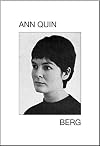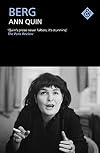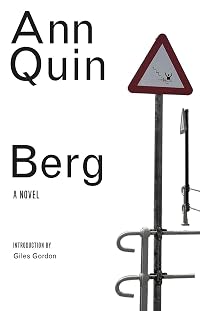
Berg
by Ann Quin
On This Page
Description
Alistair Berg, hair restorer, shares a mistress with his father, He will, he decides, eliminate his rival. After mutilating a ventriloquists dummy, he finds himself accidentally seduced by the man he needs to kill.Tags
Recommendations












Member Reviews
Hair-tonic salesman Aly Berg, alias Greb, comes to a South Coast resort in the depths of winter to murder the father who abandoned him and his mother twenty-eight years earlier. The result is a strange, dark farce, obviously strongly inspired by Beckett, but with more than a hint of the Tony Hancock/Monty Python tradition (making copious use of props like a ventriloquist's dummy and a number of dead pets). There's so much confusion with the dummy that we — and Berg — lose track of whether the father is actually dead yet or whether it's the dummy that Berg has murdered yet again; when the actual murder does take place, it hardly seems significant any more.
Berg/Greb is clearly deep in Oedipus country, attracted to his father's show more repulsive girlfriend Judy and in love with his possessive offstage mother, but there's also a bizarre episode where he dresses up in Judy's clothes for no obvious reason and his father tries to make love to him, and various same-sex episodes hinted at in his past.
All very odd, but with a bouncy kind of energy that doesn't feel Beckettish at all, and full of unexpected language.
A good argument for not visiting Brighton (or wherever it is), perhaps, but also a good argument for reading more Quin. show less
Berg/Greb is clearly deep in Oedipus country, attracted to his father's show more repulsive girlfriend Judy and in love with his possessive offstage mother, but there's also a bizarre episode where he dresses up in Judy's clothes for no obvious reason and his father tries to make love to him, and various same-sex episodes hinted at in his past.
All very odd, but with a bouncy kind of energy that doesn't feel Beckettish at all, and full of unexpected language.
A good argument for not visiting Brighton (or wherever it is), perhaps, but also a good argument for reading more Quin. show less
Like reading absurdist theatre. Berg changes his name to become Greb, goes to a seaside town to find his father and kill him. So, the theatrical staple of identity and deception is played out in an Oedipal subject.
Berg-Greb is a screwed-up guy. Depraved thoughts dovetail seamlessly with dialogue and endlessly shifting action. You really move along between fantasy and reality here.
Why does Berg want to kill his father? He’s a loser, his father is a bounder-loser who abandoned him as a baby. He’s shacked up with Judith, a divorcee, Berg as Greb becomes aroused by Judith, too. Why? He’s just kind of depraved, or craving love, or angry at his father.
There’s a ventriloquist dummy too that we identify with the father for a long show more time, too. It’s weird, circus-like, panto-like, absurd.
Mostly I sensed the menacing Harold Pinter like motivations of characters who act on impulses have understood and never fully explained to the audience. We know Berg is pissed at his father, and yet he craves his love too. But you can’t say that, which leads to theatrical action.
The language is terrific, never dull, always dynamic, vivid, thrilling. Ann Quin sadly was another tragic death of a writer too young from booze and being screwed up by someone once upon a time. Great to see enough people cared enough to bring her back on the stage. show less
Berg-Greb is a screwed-up guy. Depraved thoughts dovetail seamlessly with dialogue and endlessly shifting action. You really move along between fantasy and reality here.
Why does Berg want to kill his father? He’s a loser, his father is a bounder-loser who abandoned him as a baby. He’s shacked up with Judith, a divorcee, Berg as Greb becomes aroused by Judith, too. Why? He’s just kind of depraved, or craving love, or angry at his father.
There’s a ventriloquist dummy too that we identify with the father for a long show more time, too. It’s weird, circus-like, panto-like, absurd.
Mostly I sensed the menacing Harold Pinter like motivations of characters who act on impulses have understood and never fully explained to the audience. We know Berg is pissed at his father, and yet he craves his love too. But you can’t say that, which leads to theatrical action.
The language is terrific, never dull, always dynamic, vivid, thrilling. Ann Quin sadly was another tragic death of a writer too young from booze and being screwed up by someone once upon a time. Great to see enough people cared enough to bring her back on the stage. show less
I'll try to keep this short, as I don't have anything very fresh to say about this cult classic of 60s experimental fiction, Ann Quin's debut novel, which was republished earlier this year by And Other Stories.
The first line is justifiably famous, and gets a page to itself: "A man called Berg, who changed his name to Greb, came to a seaside town intending to kill his father".
What follows is more of an acquired taste, a farcical nightmare story in which the boundaries between reality and Berg's feverish imagination are not always clear. The writing is impressive throughout, but I struggled a little to find any sympathy for any of the three main characters. An interesting read nonetheless.
The first line is justifiably famous, and gets a page to itself: "A man called Berg, who changed his name to Greb, came to a seaside town intending to kill his father".
What follows is more of an acquired taste, a farcical nightmare story in which the boundaries between reality and Berg's feverish imagination are not always clear. The writing is impressive throughout, but I struggled a little to find any sympathy for any of the three main characters. An interesting read nonetheless.
A stream of consciousness decades after the death of JJ and VW and Nightwood and so on (though Sarraute was rather fresh) can hardly be called experimental writing, but the kind of farce of it not taking itself too seriously can. Top-notch modernism, slim and frisky.
Ratings
Members
- Recently Added By
Lists

Backlisted
109 works; 9 members

Cooper
79 works; 1 member

Schwob Nederland
207 works; 2 members

Kirkus Starred Fiction Reviews of Books Published in 2019
411 works; 12 members
Backlisted Podcast
65 works; 3 members
Author Information

8+ Works 777 Members
Series
Belongs to Publisher Series
Common Knowledge
- Canonical title
- Berg
- Original publication date
- 1964
- Original language
- English
Classifications
Statistics
- Members
- 308
- Popularity
- 104,126
- Reviews
- 5
- Rating
- (3.63)
- Languages
- Dutch, English, French, Spanish
- Media
- Paper, Ebook
- ISBNs
- 10
- ASINs
- 4