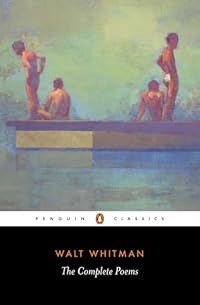
The Complete Poems
by Walt Whitman
On This Page
Description
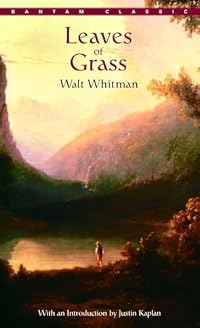
With the first publication of "Leaves of Grass" in 1855, Walt Whitman was solidified as an American poet of undeniable importance. The poems contained in that slim volume candidly spoke of politics, slavery, sexuality, consciousness, and the spiritual world. His content was as radical as his form; he utilized free verse unlike anyone before, creating a poetic tongue that was unique and personal yet universal and cosmic. Born in New York in 1819, Whitman came to represent the spirit of an show more American poet. Influenced heavily by early 19th century Transcendentalism, Whitman befriended Ralph Waldo Emerson who would help shape his literary voice and vision. This volume contains the complete poetic works of Walt Whitman. Through his poems 'Song of Myself', 'Sleepers', 'To A Stranger', 'The Sleepers', and 'I Sing the Body Electric' we see a poet of great range and endless influence, one who is a "poet of democracy". Whitman's legacy is strong, influencing the beat movement, and countless poets of today. His verse is as layered and textured as the American soil he wrote on, becoming an essential part of America's cultural heritage. This edition of his complete poems is sure to satisfy the curious reader as well as the scholar. Whitman's poems are as vital and resonant today as ever, proving to be timeless and permanent fixtures of literary history. show lessTags
Recommendations











Member Reviews
I love having the complete works all in one cover. I own other Whitman books that are more focused, but this is my "go-to copy." For one thing, it's edited better than so many versions of any poet's work. (N.B. The minus one half has to do with a couple small problems in the editing, rather than with the poetry itself.) With Whitman making changes constantly in his early "printings" of Leaves of Grass and adding onto it through his lifetime, it's impossible to know exactly what he wanted. (Perhaps on different days, he wanted different things.) It also should give any aspiring poet some good vibes to know that "the quintessential American poet" was forced to publish his own poetry. I'm enthralled by some of the notes here, despite the show more age of them. I love reading the various changes in his work and sometimes understanding exactly why, other times thinking he'd have done well to leave it alone (no pun intended.) No matter how many other copies I get, this one will remain in my forever library. It's not only a good edition of the complete works, but it's a helpful resource for lovers of poetry or students reading this work for the first time. It's also a joy to simply pop open a page and read. I've not perused every single edition of the complete poems, but for a simple reader who loves poetry, this edition offers a lot.
I haven't spoken much about the work itself, and that is because I think every reader will discover whether or not this poetry (or any poetry) is a "good fit" for themselves. There is a lot to discover between these two covers. Not all of Whitman's poetry is as trumpet-like as "Song of Myself" or "I sing the Body Electric." So if it's more quiet intensity or solemnity you seek, that can be found here as well. Even at his worst, (and in any complete collection, there will be some "worsts,") Whitman has a stunning command of diction, describes beauty and sensuality in a way that catches my breath. Lyrical, expansive, mournful then euphoric, his rhythms are flexible yet measured and often demand reading aloud. In moments of despair, I learned to whisper poetry to myself in my youth, and some of Whitman's are in that memorized repertoire. Certain poems never cease to make shivers run down my back. There's a freedom, an open sensuality and gusto that live in these words. Add to it all of the information about Whitman's sexuality and what must have been a much restricted world, and the joy and freedom become even more astonishing. Everyone American should read Walt Whitman. We don't have to like him, but at least we can recognize how much of an historical figure he truly is. I believe this volume will open many eyes to exactly that. show less
I haven't spoken much about the work itself, and that is because I think every reader will discover whether or not this poetry (or any poetry) is a "good fit" for themselves. There is a lot to discover between these two covers. Not all of Whitman's poetry is as trumpet-like as "Song of Myself" or "I sing the Body Electric." So if it's more quiet intensity or solemnity you seek, that can be found here as well. Even at his worst, (and in any complete collection, there will be some "worsts,") Whitman has a stunning command of diction, describes beauty and sensuality in a way that catches my breath. Lyrical, expansive, mournful then euphoric, his rhythms are flexible yet measured and often demand reading aloud. In moments of despair, I learned to whisper poetry to myself in my youth, and some of Whitman's are in that memorized repertoire. Certain poems never cease to make shivers run down my back. There's a freedom, an open sensuality and gusto that live in these words. Add to it all of the information about Whitman's sexuality and what must have been a much restricted world, and the joy and freedom become even more astonishing. Everyone American should read Walt Whitman. We don't have to like him, but at least we can recognize how much of an historical figure he truly is. I believe this volume will open many eyes to exactly that. show less
Whitman is THE American poet. He is flightly, obnoxious, full of himself and thoroughly delightful. this is a wonderful collection. Sometimes I wish I had a pocket edition of Song of Myself, but then everytime I open this, I find a new gem.
Walt Whitman is what he is, the poetic version of the american idol and someone who USA would need like forever to shout what the americans need to remember and europe would need to observe shouting.
He have had is own things but if someone wants to "make america great again" this is a must have and if someone want to be american or shouted like one this would be a gift
He have had is own things but if someone wants to "make america great again" this is a must have and if someone want to be american or shouted like one this would be a gift
Whitman is the best at what he does. He had great talent. I love reading his work.
Edición bilingue en cuatro tomos.
Love Whitman and everything he wrote.
Jun 2, 2026Spanish
Ratings
Members
- Recently Added By
Lists

Northern Exposure's Chris in the Morning Reading List
31 works; 1 member

Harold Bloom - The Western Canon: C. The Democratic Age
336 works; 15 members

Trinity College Booklist (1951): Class Ten, English Literature
358 works; 5 members

Well-Educated Mind
150 works; 3 members
Author Information

625+ Works 32,158 Members
Walt Whitman was born on Long Island and raised in Brooklyn, New York, the son of a carpenter. He left school when he was 11 years old to take a variety of jobs. By the time he was 15, Whitman was living on his own in New York City, working as a printer and writing short pieces for newspapers. He spent a few years teaching, but most of his work show more was either in journalism or politics. Gradually, Whitman became a regular contributor to a variety of Democratic Party newspapers and reviews, and early in his career established a rather eccentric way of life, spending a great deal of time walking the streets, absorbing life and talking with laborers. Extremely fond of the opera, he used his press pass to spend many evenings in the theater. In 1846, Whitman became editor of the Brooklyn Eagle, a leading Democratic newspaper. Two years later, he was fired for opposing the expansion of slavery into the west. Whitman's career as a poet began in 1885, with the publication of the first edition of his poetry collection, Leaves of Grass. The book was self-published (Whitman probably set some of the type himself), and despite his efforts to publicize it - including writing his own reviews - few people read it. One reader who did appreciate it was essayist Ralph Waldo Emerson, who wrote a letter greeting Whitman at "the beginning of a great career." Whitman's poetry was unlike any verse that had ever been seen. Written without rhyme, in long, loose lines, filled with poetic lists and exclamations taken from Whitman's reading of the Bible, Homer, and Asian poets, these poems were totally unlike conventional poetry. Their subject matter, too, was unusual - the celebration of a free-spirited individualist whose love for all things and people seemed at times disturbingly sensual. In 1860, with the publication of the third edition on Leaves of Grass, Whitman alienated conventional thinkers and writers even more. When he went to Boston to meet Emerson, poet Henry Wadsworth Longfellow, essayist Oliver Wendell Holmes, and poet James Russell Lowell, they all objected to the visit. With the outbreak of the Civil War, Whitman's attentions turned almost exclusively to that conflict. Some of the greatest poetry of his career, including Drum Taps (1865) and his magnificent elegy for President Abraham Lincoln, "When Last in the Dooryard Bloom'd" (1865), was written during this period. In 1862, his brother George was wounded in battle, and Whitman went to Washington to nurse him. He continued as a hospital volunteer throughout the war, nursing other wounded soldiers and acting as a benevolent father-figure and confidant. Parts of his memoir Specimen Days (1882) record this period. After the war, Whitman stayed on in Washington, working as a government clerk and continuing to write. In 1873 he suffered a stroke and retired to Camden, New Jersey, where he lived as an invalid for the rest of his life. Ironically, his reputation began to grow during this period, as the public became more receptive to his poetic and personal eccentricities. Whitman tried to capture the spirit of America in a new poetic form. His poetry is rough, colloquial, sweeping in its vistas - a poetic equivalent of the vast land and its varied peoples. Critic Louis Untermeyer has written, "In spite of Whitman's perplexing mannerisms, the poems justify their boundless contradictions. They shake themselves free from rant and bombastic audacities and rise into the clear air of major poetry. Such poetry is not large but self-assured; it knows, as Whitman asserted, the amplitude of time and laughs at dissolution. It contains continents; it unfolds the new heaven and new earth of the Western world." American poetry has never been the same since Whitman tore it away from its formal and thematic constraints, and he is considered by virtually all critics today to be one of the greatest poets the country has ever produced. (Bowker Author Biography) show less
Some Editions
Awards and Honors
Notable Lists
Series
Belongs to Publisher Series
Work Relationships
Common Knowledge
- Canonical title
- The Complete Poems
- Original publication date
- 1867 (Rossetti compilation) (Rossetti compilation)
- People/Characters
- Walt Whitman
- Important events
- 19th century
- First words
- One's-Self I sing, a simple separate person, / Yet utter the word Democratic, the word En-Masse.
- Last words
- (Click to show. Warning: May contain spoilers.)Concluding with two items for the imaginative genius of the West, when it worthily rises—First, what Herder taught to the young Goethe, that really great poetry is always (like the Homeric or Biblical canticles) the result of a national spirit, and not the privilege of a polish'd and select few; Second, that the strongest and sweetest songs yet remain to be sung.
Classifications
Statistics
- Members
- 1,612
- Popularity
- 13,941
- Reviews
- 6
- Rating
- (4.20)
- Languages
- 6 — Czech, English, French, German, Multiple languages, Spanish
- Media
- Paper, Ebook
- ISBNs
- 16
- ASINs
- 9