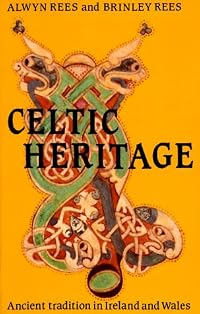
Celtic Heritage
by Alwyn Rees, Brinley Rees
On This Page
Description
Reinterpretation of Celtic tradition in the light of advances made in the comparative study of religion, mythology and anthropology. Part One considers the distinguishing features of the various Cycle of tales and the personages who figure most prominently in them. Part Two reveals the cosmological framework within which the action of the tales takes place. Part Three consists of a discussion of the themes of certain classes of stories which tell of Conceptions and Births, Supernatural show more Adventures, Courtships and Marriages, Violent Deaths and Voyages to the Other World, and an attempt is made to understand their religious function and glimpse their transcendent meaning. show lessTags
Recommendations






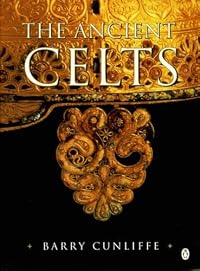
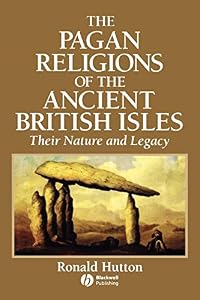









Member Recommendations
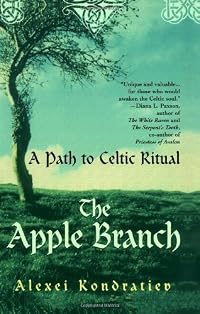
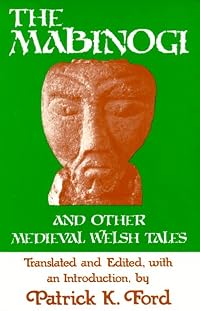
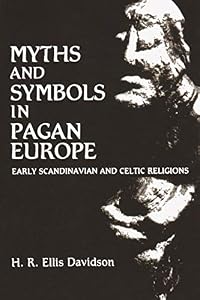
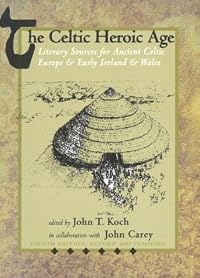
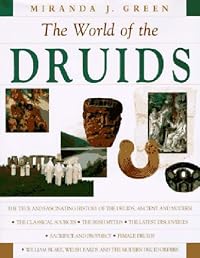
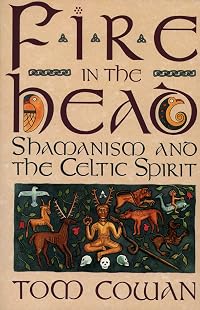
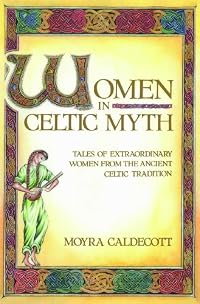
ed.pendragon Contrasting studies examining ancient pagan traditions in Britain on the one hand and revived paganism on the other.

Member Reviews
In terms of its usefulness to the study of Irish and Welsh mythology, folklore and ancient culture, this book is comparable to The Golden Bough's usefulness to the study of mythology and magic in general.
Although archaeology has supplied us with much more information than was available in the 1960s, Rees and Rees did an impressive job of analysing the information they did have and making conclusions based upon the scholarship of the time.
Although archaeology has supplied us with much more information than was available in the 1960s, Rees and Rees did an impressive job of analysing the information they did have and making conclusions based upon the scholarship of the time.
This contains three parts - "The Tradition"; "The World of Meaning" and "The Meaning of Story". In the first part the authors look at the various story cycles in Celtic mythology; in the second certain themes are covered and in the third various stories are linked by theme.
As the stories only survive in oral tradition or as written by medieval monks a lot has been lost or given a Christian slant. The Reeses have connected certain themes back to Indo-European sources and show the similarities to stories told in India and elsewhere in the world.
This is not the book for you if you are just looking for the stories but if you are interested in how stories survive and adapt this is a very interesting and readable book.
As the stories only survive in oral tradition or as written by medieval monks a lot has been lost or given a Christian slant. The Reeses have connected certain themes back to Indo-European sources and show the similarities to stories told in India and elsewhere in the world.
This is not the book for you if you are just looking for the stories but if you are interested in how stories survive and adapt this is a very interesting and readable book.
Surprisingly, a real page-turner for most of its length. At times a given topic is delved into at more length than the average reader might want but then the pace picks up again and never is the effort wasted. Very important book for clarifying the sources and themes of Irish and Welsh mytholology.
I read this probably not long after it was re-issued in 1989. I remember it as giving a deep insight into the pagan Celtic life and mind-set, relying heavily on the limited amount of Celtic literature that remains to us and within that most heavily on the Irish works as having been least Romanised/Christianised but also delving into historical and archaeological findings.
I have no idea how the scholarship stands up to current scrutiny.
I have no idea how the scholarship stands up to current scrutiny.
Ratings
Members
- Recently Added By
Author Information

5 Works 593 Members
1+ Work 567 Members
Series
Belongs to Publisher Series
Myth and man (1961)
Common Knowledge
- Canonical title
- Celtic Heritage
- Original title
- Celtic Heritage: Ancient Tradition in Ireland and Wales
- Original publication date
- 1961
- People/Characters
- King Arthur; Conchubur son of Ness; Cormac Mac Art; Cuchulain; Finn MacCumhaill; Lug
- Important places
- Ireland; Wales, UK; Hill of Uisneach, County Westmeath, Ireland; Hill of Tara, County Meath, Ireland
- Epigraph
- '... for as God uses the help of our reason to illuminate us, so should we likewise turn it every way, that we may be more capable of understanding His mysteries; provided only that the mind be enlarged, according to its capa... (show all)city, to the grandeur of the mysteries, and not the mysteries contracted to the narrowness of the mind.'
FRANCIS BACON
Chapter I. Introduction.
... and God divided the light from the darkness. And God called the light Day, and the darkness he called Night.
GENESIS, I, 4-5.
Chapter III. Darkness and light.
'Bear us across the Sea as in a ship, thou Comprehensor.'
RIG VEDA, IX, 70, 10.
Chapter IV. Coming into existence.
'Whatever exists is fivefold.'
TAITTIRÎYAKA-UPANISHAD, I, 7.
Chapter V. A hierarchy of provinces.
'Every moment beginneth existence, around every "Here" rolleth the ball "There". The middle is everywhere.'
NIETZSCHE
Chapter IX. Numbers.
'Now I suppose most people will think I am but entertaining myself with a toy, and using much the same kind of licence in expounding the poets' fables which the poets themselves did in inventing them. ... But that is not my ... (show all)meaning. Not but that I know very well what pliant stuff fable is made of, how freely it will follow any way you please to draw it, and how easily wih a little dexterity and discourse of wit meanings which it was never meant to bear may plausibly be put upon it ... All this I have duly examined and weighed ...'
FRANCIS BACON
Chapter X. The storyteller's repertoire.
'... trailing clouds of glory do we come
From God, who is our home.'
WORDSWORTH
Chapter XI. Births.
'To separate us two is to separate children of one home,
it is to separate body from soul ...'
Gráinne's sleep-song for Diarmaid
Chapter XIV. Elopements.
'Oh build your ship of death. Oh build it! for you will need it. For the voyage of oblivion awaits you.'
D. H. LAWRENCE
Chapter XVI. Voyages.
'Whatever is here, that is there; what is there, the same is here. He who seeth here as different, meeteth death after death.'
KATHA UPANISHAD
'And for this cause it were right for thee to buy the poems of the poe... (show all)ts, and to keep the poets in Ireland, and since all the world is but a story, it were well for thee to buy the more enduring story, rather than the story that is less enduring.'
JUDGEMENT OF ST COLUM CILLE
Chapter XVIII. Epilogue. - Dedication
- [None]
- First words
- The bibliographical references at the end of the book give some indication of what we owe to the Celtic scholars who have edited, translated and otherwise studied the medieval texts in which irish and Welsh traditions are ens... (show all)hrined, and to those scholars who have made the translations of other peoples accessible to us.
Preface.
In a certain parish in Galway there are more good storytellers than are to be found anywhere else in Western Europe.
Chapter I. Introduction. - Last words
- (Click to show. Warning: May contain spoilers.)And strange as these paradoxes may appear, they do not lack points of contact with our own tradition, in which God is both One and Three, in which the Saviour is both God and Man, and in which the central rite is to partake of bread which is not bread, and wine which is not wine.
- Original language
- English
Classifications
- Genres
- Nonfiction, History, Anthropology, General Nonfiction, Religion & Spirituality
- DDC/MDS
- 398.209415 — Society, Government, and Culture Customs, etiquette & folklore Folklore & Folktales Folk literature History, geographic treatment, biography European folktales Folklore of the British Isles (other than England) Folklore of Ireland
- LCC
- GR137 .R43 — Geography, Anthropology and Recreation Folklore Folklore By region or country
- BISAC
Statistics
- Members
- 572
- Popularity
- 51,295
- Reviews
- 4
- Rating
- (3.83)
- Languages
- English
- Media
- Paper
- ISBNs
- 2
- ASINs
- 6