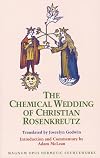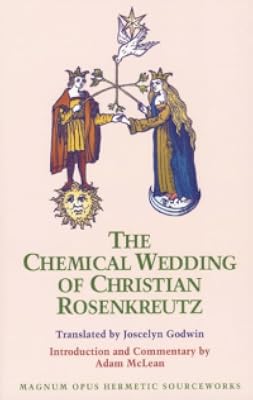
The Chemical Wedding of Christian Rosenkreutz (Magnum Opus Hermetic Sourceworks Series: No. 18)
by Johannes Valentinus Andreae
On This Page
Description
The Chemical Wedding of Christian Rosenkreutz, often looked upon as the third Rosicrucian manifesto, has an entirely different tone from the other Rosicrucian documents. Unlike the Rosicrucian manifestoes, which address the transformation of society, The Chemical Wedding is concerned with the inner transformation of the soul. It is a deeply interior work, one which asks the reader to step into its world of symbols and walk with Christian Rosenkreutz along his path of transformation. Despite show more its importance as a key text of the Western esoteric traditions, this is the first ever contemporary English translation of The Chemical Wedding, made especially for this edition by Joscelyn Godwin. Also included in this edition is an introduction and commentary by Adam McLean, which illuminates the transformative symbolism. show lessTags
Recommendations







Member Recommendations

Member Reviews
Alchemical parables and allegories are horror stories with happy endings. They detail the terror and disgust of death … decay, dissolution, suffering … and linger over descriptions of living tissue reduced to foul waste. Then the alchemist distills any remaining liquid, burns the solid material to ash, recombines this into a paste, stuffs it into a human mold, cooks it some more, and - voila! - resurrection.
The Chemical Wedding is a chemical allegory first published in 1616 as the third Rosicrucian manifesto. Supposedly it was a lost manuscript "unearthed" from the tomb of its author, Christian Rosenkreutz, 120 years after his death. Fake manuscripts were all the rage in occult literature. This edition has a marvelous commentary by show more Adam McLean.
For a taste of its horror, here is the creepiest of 7 creepy conundrums shared during an after-dinner game of riddles:
“‘In my youth I loved a beautiful, virtuous girl from the bottom of my heart, and she loved me, but her kinsman would not give permission for us to marry. So she was married to another man, honest and upright, who kept her with modesty and affection until she came to childbed, and was so ill that everyone thought she had died. With great sorrow, they gave her a magnificent burial. Then I thought to myself: if this person could not be yours in life, at least you can embrace her in death and kiss her to your heart’s content. So I took my servant with me, and dug her up again by night. When I opened the coffin and took her in my arms, I felt her heart and discovered that it was still beating a little. As I warmed her it became stronger and stronger, until I could see that she was indeed still alive. Then I silently took her home with me and, after warming her frozen body with a bath of precious herbs, committed her to the care of my mother until she gave birth to a fine son, whom I cared for as lovingly as I had the mother. After two days, since she was greatly confused, I revealed to her all that had occurred, and asked her to live as my wife from now on. But she was greatly worried that it might give grief to her husband, who had treated her well and honorably. However, as such things will turn out, she now felt no less obligated to one as to the other.
“‘After two months, being then obliged to travel elsewhere, I invited her husband as a guest and asked him among other things whether he would take back his dead wife, if she were to come home again. He affirmed it with tears and lamentations. Finally I brought his wife to him, together with her son, told him all that had happened, and asked him to give consent for my intended marriage. After a long argument he could not shake my claim, and so had to leave the wife with me. Then came the battle over the son…’
“The Virgin [hostess of the dinner party] here interrupted him and said: ‘I am surprised that you could thus increase the poor man’s misery.’
“‘What?’ he answered, ‘Was I not concerned about it?’
“Thereupon an argument arose among us, in which most of us were of the opinion that he had done right. But he said: ‘Not at all: I gave him back both wife and son! Now tell me, gentlemen, which was the greater: my integrity or this man’s happiness?’” pp. 54-55 show less
The Chemical Wedding is a chemical allegory first published in 1616 as the third Rosicrucian manifesto. Supposedly it was a lost manuscript "unearthed" from the tomb of its author, Christian Rosenkreutz, 120 years after his death. Fake manuscripts were all the rage in occult literature. This edition has a marvelous commentary by show more Adam McLean.
For a taste of its horror, here is the creepiest of 7 creepy conundrums shared during an after-dinner game of riddles:
“‘In my youth I loved a beautiful, virtuous girl from the bottom of my heart, and she loved me, but her kinsman would not give permission for us to marry. So she was married to another man, honest and upright, who kept her with modesty and affection until she came to childbed, and was so ill that everyone thought she had died. With great sorrow, they gave her a magnificent burial. Then I thought to myself: if this person could not be yours in life, at least you can embrace her in death and kiss her to your heart’s content. So I took my servant with me, and dug her up again by night. When I opened the coffin and took her in my arms, I felt her heart and discovered that it was still beating a little. As I warmed her it became stronger and stronger, until I could see that she was indeed still alive. Then I silently took her home with me and, after warming her frozen body with a bath of precious herbs, committed her to the care of my mother until she gave birth to a fine son, whom I cared for as lovingly as I had the mother. After two days, since she was greatly confused, I revealed to her all that had occurred, and asked her to live as my wife from now on. But she was greatly worried that it might give grief to her husband, who had treated her well and honorably. However, as such things will turn out, she now felt no less obligated to one as to the other.
“‘After two months, being then obliged to travel elsewhere, I invited her husband as a guest and asked him among other things whether he would take back his dead wife, if she were to come home again. He affirmed it with tears and lamentations. Finally I brought his wife to him, together with her son, told him all that had happened, and asked him to give consent for my intended marriage. After a long argument he could not shake my claim, and so had to leave the wife with me. Then came the battle over the son…’
“The Virgin [hostess of the dinner party] here interrupted him and said: ‘I am surprised that you could thus increase the poor man’s misery.’
“‘What?’ he answered, ‘Was I not concerned about it?’
“Thereupon an argument arose among us, in which most of us were of the opinion that he had done right. But he said: ‘Not at all: I gave him back both wife and son! Now tell me, gentlemen, which was the greater: my integrity or this man’s happiness?’” pp. 54-55 show less
A blend of Stunning alchemical symbolism, unpredictable twists and turns in the story-line, built in puzzles, and spiritual catharsis. An allegorical tale that takes pondering to unpack the lessons inside. I really enjoyed it. The translation by Joscelyn Godwin is great. I will definitely revisit this one again.
Not very readable according to modern standards, but infinitely more so than many alchemical texts. If you're interested in the spiritual side of alchemy, this is one of the seminal texts.
A blend of Stunning alchemical symbolism, unpredictable twists and turns in the story-line, built in puzzles, and spiritual catharsis. An allegorical tale that takes pondering to unpack the lessons inside. I really enjoyed it. The translation by Joscelyn Godwin is great. I will definitely revisit this one again.
Rozenkrojcerski manifesti su se pojavili u sedamnaestom veku, ali ni do dan-danas nisu prestali da privlače pažnju, pogotovu Alhemijsko venčanje. U ponudama svetskih izdavačkih kuća, sada i na Internetu, nalaze se mnogi prevodi ovih dela; takođe su brojna i tumačenja, od autora koji su se za to osetili pozvani bilo na osnovu svog poznavanja alhemije ili hermetičke filozofije, bilo na osnovu stupnja sopstvene duhovnosti. Među njima ima i vrlo poznatih imena, kao što je na primer, Rudolf Štajner.
Namera ovog predgovora, međutim, nije bila da čitaocu servira ta postojeća, gotova rešenja; već da mu donekle približi vreme i okolnosti pod kojima je jedna duhovna poruka koja je, prenoseći se kroz mnoge epohe i razne kulture, show more menjajući neprestano svoju formu kako bi zadržala suštinu, iskazala sebe jezikom Bratstva Ružinog krsta. Zanemariti sopstveni uvid (i to na način duhovnih tumačenja jednog smrtnog čoveka koji nije ni prorok ni posvećenik), bilo bi, uostalom, u potpunom neskladu sa hermetičkim saznajnim principom, vrlo lepo pokazanim u drugoj knjizi Corpus hermeticum, kada se Hermes obraća Pimanderu, Bogu u sebi, sledećim rečima:
“Bilo je mnogo govora s različitih stajališta o sveukupnosti i o Bogu, ali su mišljenja bila protivurečna, tako da nisam mogao da razaberem istinu u tome. Hoćeš li mi ti, o Gospode, to protumačiti? Verovaću jedino onome što mi ti otkriješ.”
Mnogi duhovni tragaoci verovali su i veruju da rozenkrojcerski manifesti mogu povesti čoveka da pronađe usnulog Boga u sebi, koji onda, napokon probuđen, počinje da mu se otkriva. – (Iz predgovora)
M. Krković show less
Namera ovog predgovora, međutim, nije bila da čitaocu servira ta postojeća, gotova rešenja; već da mu donekle približi vreme i okolnosti pod kojima je jedna duhovna poruka koja je, prenoseći se kroz mnoge epohe i razne kulture, show more menjajući neprestano svoju formu kako bi zadržala suštinu, iskazala sebe jezikom Bratstva Ružinog krsta. Zanemariti sopstveni uvid (i to na način duhovnih tumačenja jednog smrtnog čoveka koji nije ni prorok ni posvećenik), bilo bi, uostalom, u potpunom neskladu sa hermetičkim saznajnim principom, vrlo lepo pokazanim u drugoj knjizi Corpus hermeticum, kada se Hermes obraća Pimanderu, Bogu u sebi, sledećim rečima:
“Bilo je mnogo govora s različitih stajališta o sveukupnosti i o Bogu, ali su mišljenja bila protivurečna, tako da nisam mogao da razaberem istinu u tome. Hoćeš li mi ti, o Gospode, to protumačiti? Verovaću jedino onome što mi ti otkriješ.”
Mnogi duhovni tragaoci verovali su i veruju da rozenkrojcerski manifesti mogu povesti čoveka da pronađe usnulog Boga u sebi, koji onda, napokon probuđen, počinje da mu se otkriva. – (Iz predgovora)
M. Krković show less
Sorry, I just found this too boring to stick with. Maybe if I had had a readers' guide showing me the meaning of each "field" "flower" "road" etc, it would have been tolerable, but not for me.
LAS BODAS QUIMICAS DE CHRISTIAN ROSENKRUTZ
Texto fundamental del movimiento Rosacruz, Las bodas alquímicas de Christian Rosacruz es una novela iniciática de una belleza y una riqueza simbólicas inigualables.
Este libro alcanzó en su época un éxito inesperado y ejerció una influencia enorme sobre las fraternidades esotéricas europeas. No se puede comprender el simbolismo de ciertos grados de la Masonería sin haber leído Las bodas alquímicas de Christian Rosacruz.
Dividido en siete jornadas alegóricas, Las bodas alquímicas de Christian Rosacruz contiene la descripción simbólica de los procesos de la iniciación y de la Gran Obra.
Juan Valentín Andreae nació en 1586. Pastor luterano, nos ha dejado varias obras de gran show more interés esotérico, entre las que destacan Cristianópolis y Las bodas alquímicas de Christian Rosacruz. Andreae fue perseguido por sus ideas liberales y humanitarias.
BIOGRAFIA:
1586-1654
Un pastor protestante llamado Johann Valentin Andreae publicó la trilogía clásica de libros rosacruces: la Fama Fraternitatis (1614), la Confessio Fraternitatis (1615) y Las bodas químicas de Christian Rosenkreutz (1616). En estos libros, publicados de forma anónima, se habla de una supuesta Orden llamada rosacruz que pretende llevar a los hombres a una mayor espiritualidad por medio de principios esotéricos. Es de notar la iniciación espiritual y alquímica en los supuestos misterios de Oriente, recibida por el alegórico Christian Rosenkreutz en la tercera obra mencionada, y también es notable la conclusión de la Fama, donde se invita a los sabios a exponer sus conocimientos para ver si son dignos de ingresar a la sociedad rosacruz y recibir la sabiduría total. La broma de Andreae fue creída por muchos ingenuos, que empezaron a buscar a los rosacruces por todas partes, y también por algunos astutos que, aprovechando la inexistencia de la Orden, empezaron a afirmar ser miembros de ella. show less
Texto fundamental del movimiento Rosacruz, Las bodas alquímicas de Christian Rosacruz es una novela iniciática de una belleza y una riqueza simbólicas inigualables.
Este libro alcanzó en su época un éxito inesperado y ejerció una influencia enorme sobre las fraternidades esotéricas europeas. No se puede comprender el simbolismo de ciertos grados de la Masonería sin haber leído Las bodas alquímicas de Christian Rosacruz.
Dividido en siete jornadas alegóricas, Las bodas alquímicas de Christian Rosacruz contiene la descripción simbólica de los procesos de la iniciación y de la Gran Obra.
Juan Valentín Andreae nació en 1586. Pastor luterano, nos ha dejado varias obras de gran show more interés esotérico, entre las que destacan Cristianópolis y Las bodas alquímicas de Christian Rosacruz. Andreae fue perseguido por sus ideas liberales y humanitarias.
BIOGRAFIA:
1586-1654
Un pastor protestante llamado Johann Valentin Andreae publicó la trilogía clásica de libros rosacruces: la Fama Fraternitatis (1614), la Confessio Fraternitatis (1615) y Las bodas químicas de Christian Rosenkreutz (1616). En estos libros, publicados de forma anónima, se habla de una supuesta Orden llamada rosacruz que pretende llevar a los hombres a una mayor espiritualidad por medio de principios esotéricos. Es de notar la iniciación espiritual y alquímica en los supuestos misterios de Oriente, recibida por el alegórico Christian Rosenkreutz en la tercera obra mencionada, y también es notable la conclusión de la Fama, donde se invita a los sabios a exponer sus conocimientos para ver si son dignos de ingresar a la sociedad rosacruz y recibir la sabiduría total. La broma de Andreae fue creída por muchos ingenuos, que empezaron a buscar a los rosacruces por todas partes, y también por algunos astutos que, aprovechando la inexistencia de la Orden, empezaron a afirmar ser miembros de ella. show less
May 25, 2024Spanish
Members
- Recently Added By
Author Information

26+ Works 491 Members
Some Editions
Series
Belongs to Publisher Series
Work Relationships
Common Knowledge
- Original publication date
- 1459
Classifications
Statistics
- Members
- 285
- Popularity
- 112,985
- Reviews
- 13
- Rating
- (3.93)
- Languages
- 11 — Danish, Dutch, English, French, German, Greek, Italian, Romanian, Serbian, Spanish, Swedish
- Media
- Paper, Audiobook, Ebook
- ISBNs
- 28
- UPCs
- 1
- ASINs
- 5